Results for “C number”
Type a name: scientific, common, or one a species used to go by. Or narrow the catalogue with the filters.
Filters
Lates angustifronsTanganyika Lates
authority not recorded
Max length2000mm SL79in SLTanknot recordedTemp22–28°C72–82°FpH7.5–9.5We've included this species on the site purely because there have been an alarming number of juvenile fish showing up in some aquatic stores, and as a result, in hobbyists tanks. This species is simply not suited to captive life in any respect. If you see one for sale, and they are undeniably an attractive fish, please don't be tempted to buy it. As responsible fishkeepers, we should consider the long term well-being of any fish that we buy, and housing a L. angustifrons for life is ev...
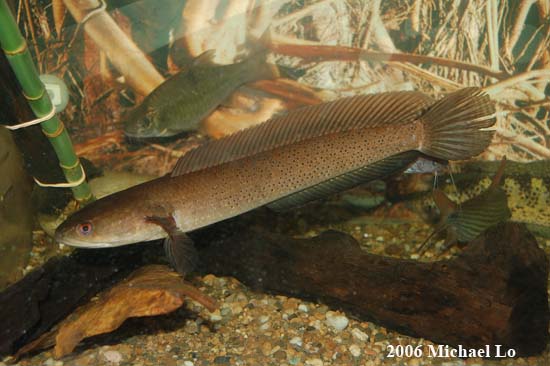
Channa baramensisBaram Snakehead
Steindachner, 1901
Max length220mm SL9in SLTank120 × 45cm48 × 18inTemp22–28°C72–82°FpHnot recordedThis species was considered a synonym of Channa melasoma for a number of years prior to its revalidation by Ng. et al. (1996). Specimens larger than around 120 mm SL can be distinguished by possession of a black spot in the centre of numerous body scales and a barred caudal-fin pattern, characters which are missing in both C. melasoma and the similar-looking C. cyanospilos.
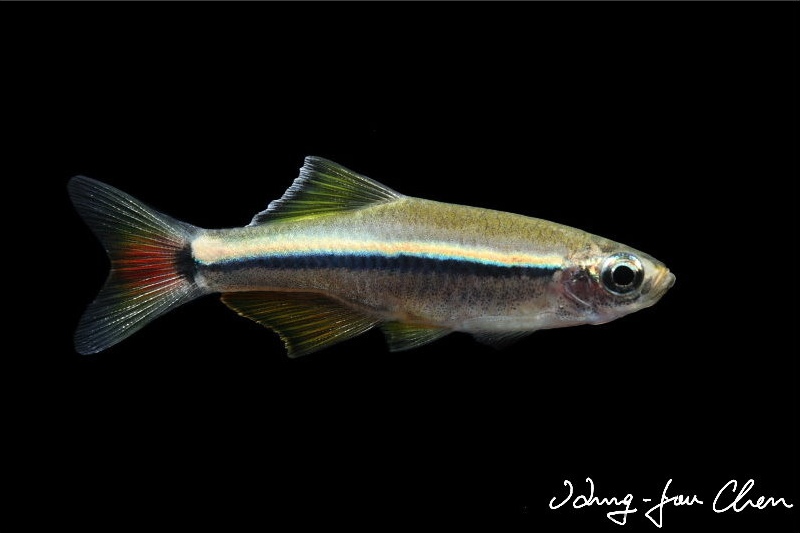
Tanichthys sp. 'Vietnam'
authority not recorded
Max length30mm SL1.2in SLTank45 × 30cm18 × 12inTemp18–25°C64–77°FpH6.0–7.5This fish was first collected in 2009 and limited numbers have been available in the aquarium trade. Though additional exports may be unlikely it's proven easy to breed in captivity and there's a fair chance it will become established in the hobby. It's sold under several names including T. sp. 'lemon' or 'yellow white cloud', and has also been misidentified as the congener T. thacbaensis, a valid species occurring much further north in Vietnam.
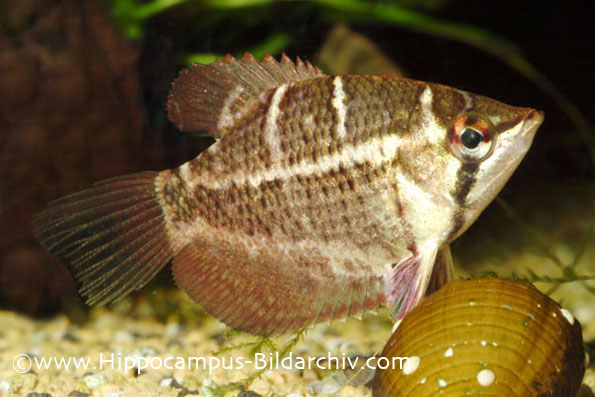
Sphaerichthys selatanensisCrossband Chocolate Gourami
Vierke, 1979
Max length45mm SL1.8in SLTank60 × 30cm24 × 12inTemp26–31°C79–88°FpH4.0–6.5This species is only occasionally seen in the hobby and sometimes sold as 'cherry chocolate gourami'. It was originally described as a subspecies of S. osphromenoides since the two are very similar-looking but has been considered a species in its own right since the late 1980s. The two differ in the number ofrays (7 in S. selatanensis vs. 9-10 in S. osphromenoides),rays (7 vs. 8),...
Chaetostoma formosaeStriped Bulldog Pleco
Ballen, 2011
Max length105mm SL4in SLTank120 × 30cm48 × 12inTemp20–24°C68–75°FpH6.5–7.8This species is traded under a number of English vernacular names, of which some others include 'blonde bulldog pleco', 'blonde rubber pleco', 'blonde rubbernose pleco', 'striped rubber pleco', and 'striped rubbernose pleco'. It may also be seen referred to as 'L146', 'L146a', or 'L187b', these codes having been used for it in the Aqualog series of books. It can be told apart from all congeners except C. anale and C. jegui by...
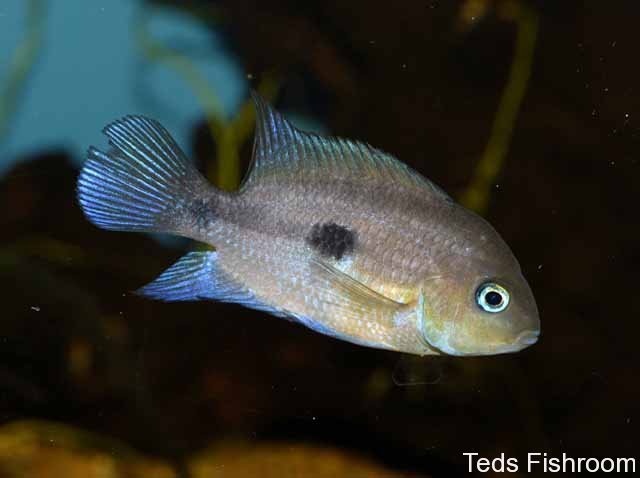
Cryptoheros myrnae
Loiselle, 1997
Max length♂ 100 · ♀ 80mm SL♂ 3.9 · ♀ 3.1in SLTank90 × 30cm36 × 12inTemp23–26°C73–79°FpH7.0–8.5In its natural waters, females have been observed caring for mixed broods containing both their own fry and those of another cichlid, Amphilophus bussingi. It is unknown if these are mixed by accident (as the two species have also been recorded tending broods in close proximity to one another) or if this represents an adaptive behaviour to increase numbers in a brood and therefore decrease the chance of predation.
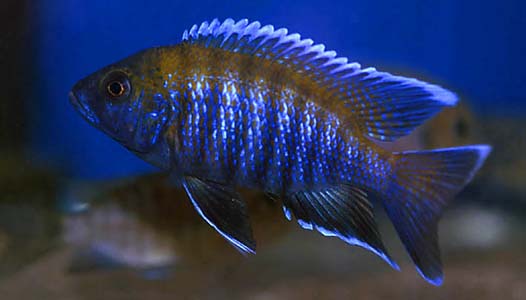
Aulonocara sp. 'walteri'Blue-faced Peacock
authority not recorded
Max length130mm SL5in SLTank120 × 45cm48 × 18inTemp25–29°C77–84°FpH7.5–9.0This fish has been known in the aquarium hobby for a number of years but remains undescribed to science despite the confusing trade name which has resulted in it often being referred to incorrectly as 'Aulonocara walteri'. It's known only from Chizumulu Island and Likoma Island in Lake Malawi, both located off the eastern shoreline of the central part of the lake (Mozambique). There is a similar-looking, potentially conspecific, fish which can be found between the coastal settlements of Meponda (Mozambique) and Ntekete (Malawi) further south, and has been referred to A. sp. 'trematocranus masinje'.
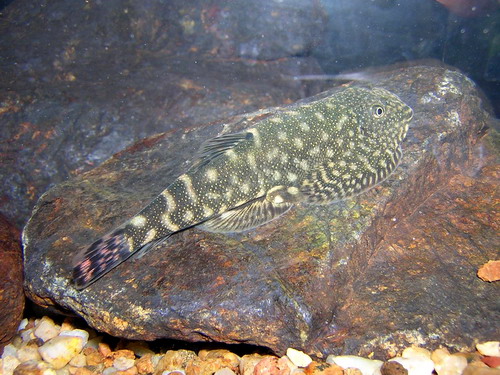
Gastromyzon sp. 'SK01'
authority not recorded
Max length50mm SL2.0in SLTank60 × 30cm24 × 12inTemp20–24°C68–75°FpH6.5–8.0This undescribed species has probably not been seen in the aquarium trade yet but is occasionally maintained private collectors. The 'SK' numbering system used here refers to 'South Kalimantan', home to several unidentified members of the genus. Gastromyzon spp. are placed into various 'species groups' (artificial assemblages of species which may or may not be monophyletic) for ease of reference, and based on colour and patterning G. sp. 'SK01' appears similar to members of the G. ridens group which also includes G. crenastus, G. stellatus and G. zebrinus.
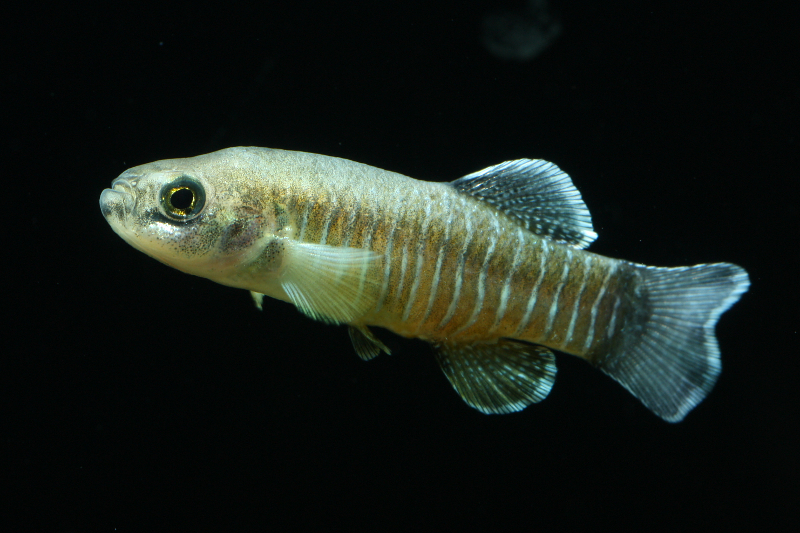
Esmaeilius arakensisArak Toothcarp
Teimori, Esmaeili, Gholami, Zarei, & Reichenbacher, 2012
Max length35mm SL1.4in SLTank120 × 30cm48 × 12inTemp8–32°C46–90°FpH7.0–8.5This species was available in the aquarium hobby for a number of years prior to publication of the official description and was generally referred to as A. sp. 'Namak' or A. sp. 'Namak River'. It can be distinguished from other members of the genus by the following combination of characters: 10–12 anal-fin rays; 28–32 lateral line scales, 10–13 caudal peduncle scales; 8–10 gill rakers; 12–19, commonly 1...
Neolamprologus brevis
authority not recorded
Max length60mm SL2.4in SLTanknot recordedTemp23–27°C73–81°FpH7.5–9.0N. brevis is one of the commoner species of shell dweller available in the hobby. Several colour morphs are available including "sunspot", "katabe" and "sambia". As mentioned above, it is often found in areas within Lake Tanganyika where relatively few snail shells collect and in these areas, pairs of fish will share the same shell. This behaviour may or may not be observed in the aquarium, depending on the number of shells provided and the individual fish. The terr...
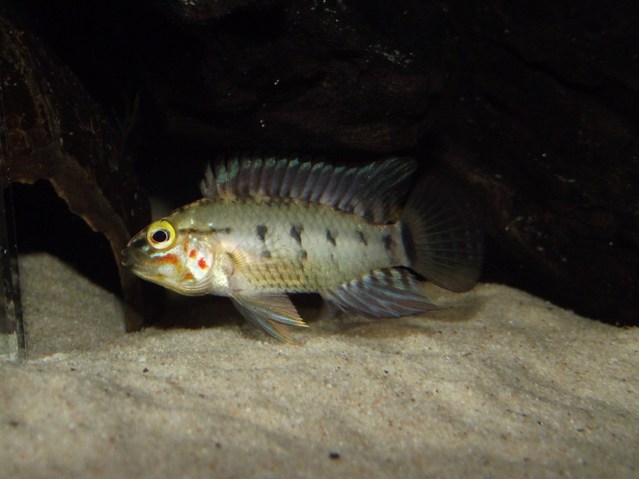
Apistogramma paulmuelleriA52
Römer, Beninde, Duponchelle, García Dávila, Vela Díaz & Renno, 2013
Max length♂ 42 · ♀ 33mm SL♂ 1.7 · ♀ 1.3in SLTank45 × 30cm18 × 12inTemp22–31°C72–88°FpH4.0–6.5This species is assigned the code A52 under the DATZ 'A' number system and is also known by the trade names A. sp. 'Apache', A. sp. 'Peru (II)', A. sp. 'Peru-regani', A. sp. cf. regani (Belém) and A. sp. 'carapintada'. Apistogramma is among the most speciose of South American cichlid genera with around 70 species valid at present but many more awaiting description. In addition many species exist in two or more geographical colour forms which may or ma...
Potamotrygon scobinaMosaic Stingray
authority not recorded
Max length350mm SL14in SLTank180 × 75cm72 × 30inTemp24–26°C75–79°FpH6.0–7.5There are currently three genera in the family Potamotrygonidae, all of which hail from South America. Paratrygon and Plesiotrygon are both monotypic genera (contain only a single described species) and are rarely seen in the hobby. The vast majority of captive rays belong to the biggest genus, Potamotrygon. This contains 17 species at present, and its members are sometimes referred to as "big-eyed" stingrays for fairly obvious reasons. There are also a number of undescribed species th...
Rasbora paucisqualis
authority not recorded
Max length40mm SL1.6in SLTank60 × 30cm24 × 12inTemp22.2–25.6°C72–78°FpHnot recordedRainboth's 'Fishes of the Cambodian Mekong' characterised members of Rasbora by possession of an unbranched, non-spiny firstray and seven soft dorsal rays, origin of thein the middle of the body, five branchedrays, a small mouth not extending below the eye and a lack of barbels. It's long been recognised as a polyphyletic lineage as noted by Kottelat (1999) amongst others, and in 2010 the results of a phylogenetic analysis by T. Y. Liao et al. suggested a number of changes in...
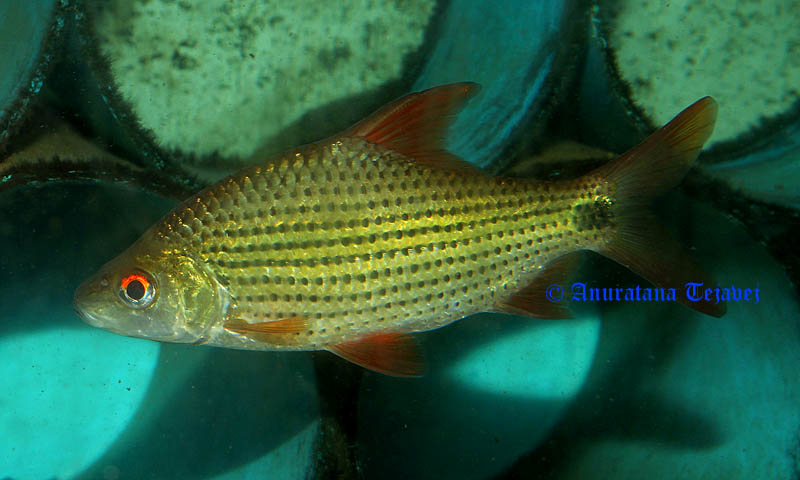
Cyclocheilichthys apogonBeardless Barb
Valenciennes, 1842
Max length180mm SL7in SLTank180 × 45cm72 × 18inTemp20–27°C68–81°FpH5.5–8.0In the aquarium trade this species may also be seen on sale as 'skinhead barb'. As with others in the genus little has been written regarding its captive care but it makes a peaceful and unusual addition to larger aquaria. The best way of obtaining it may be to keep an eye on shipments of wild fishes from Indochina and the Greater Sunda Islands as it's rarely imported in large numbers and most often arrives as bycatch.