Lates angustifrons
Tanganyika Lates
On this page11 sections
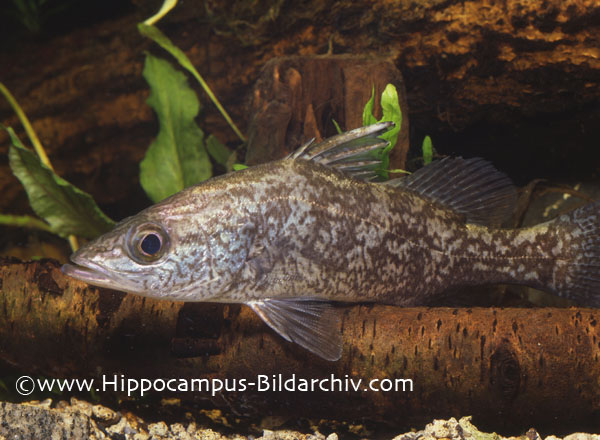
Quick facts
Difficulty3 of 8 measures
More bars, more demanding. Hardiness is not averaged with the rest.
- Space
- very large tank
- Water
- tap water
- Temp
- unfussy
- Diet
- unknown
- Temperament
- unknown
- Social
- unknown
- Compatibility
- unknown
Hardiness on its own can raise the rating, whatever the measures above say.
- Hardiness
- unknown
We've included this species on the site purely because there have been an alarming number of juvenile fish showing up in some aquatic stores, and as a result, in hobbyists tanks. This species is simply not suited to captive life in any respect. If you see one for sale, and they are undeniably an attractive fish, please don't be tempted to buy it. As responsible fishkeepers, we should consider the long term well-being of any fish that we buy, and housing a L. angustifrons for life is ev...
Distribution
Endemic to Lake Tanganyika.
Habitat
Young fish can be found around the shoreline of the lake, but adults are found throughout it, usually around the lake bed.
Aquarium size
A truly humongous tank (or pond) would be required by an adult specimen. Something in the region of 20' x 6' x 10' would be considered a bare minimum. A tank like this would hold over 30,000 litres of water!
Maintenance
Speaking hypothetically, decor would not be critical. Obviously, an enormous filtration system would be needed to cope with the massive amounts of biological waste a fish like this produces.
Water conditions
Temperature: 22 – 28 °C72 – 82 °F
pH: 7.5-9.5
Hardness: 20-40°H
Diet
Highly piscivorous in nature, feeding mainly on various cichlid species, juvenile captive specimens have been known to accept prawns, lancefish etc. An adult fish would need large amounts of fish such as whole trout. An expensive proposition!
Behaviour and compatibility
Will not eat anything it can't fit into its mouth, but this doesn't leave many available species that can be housed with it long term. Young fish have been seen cohabiting with large tankmates such as Cichla, arowana and tankbusting catfish.
Sexual dimorphism
Unknown.
Reproduction
Surely impossible in aquaria. Should not even be considered an option.
Notes
We've included this species on the site purely because there have been an alarming number of juvenile fish showing up in some aquatic stores, and as a result, in hobbyists tanks. This species is simply not suited to captive life in any respect. If you see one for sale, and they are undeniably an attractive fish, please don't be tempted to buy it. As responsible fishkeepers, we should consider the long term well-being of any fish that we buy, and housing a L. angustifrons for life is even beyond the reach of most public aquaria. Sadly, owning this species and others like it seems to be fashionable at the moment, with some aquarists even viewing them as a status symbol. We can only hope this situation can be rectified in the future, as surely all these aquarium specimens are doomed to a premature death.
Species images · 2
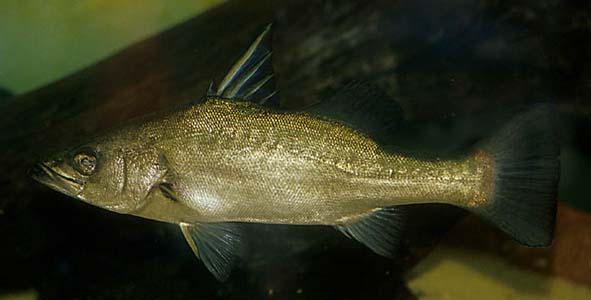
Used with the photographer’s permission. Not licensed for reuse.
Profile completeness16 of 24
67% complete
Also missing: aquarium size, a recorded distribution, taxonomic authority, etymology.
Community
Questions about Lates angustifrons?
Ask on Discord