Search the catalogue
Type a name: scientific, common, or one a species used to go by. Or narrow the catalogue with the filters.
Filters
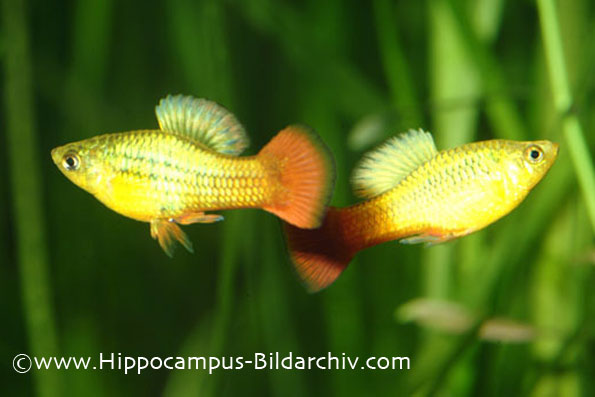
Xiphophorus variatusVariable Platy
Meek, 1904
Max length50mm SL2.0in SLTank60 × 30cm24 × 12inTemp20–26°C68–79°FpH7.0–8.2Another massively popular aquarium fish, with dozens of selectively bred varieties available. Some of these are produced by crossbreeding with X.helleri or X. maculatus. Unfortunately many commercially bred platies are not very hardy due to inbreeding and over-production and are prone to disease and premature death. The wild X. variatus can be distinguished from X. maculatus by its slimmer, more elongated body shape and slightly longer dorsal fin. This last feature has been seized upon by many...
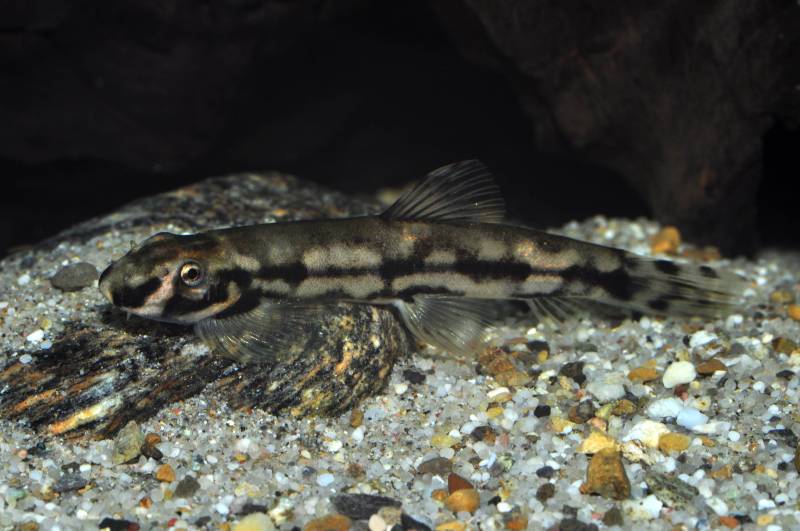
Yaoshania pachychilusPanda Loach
Chen, 1980
Max length60mm SL2.4in SLTank60 × 30cm24 × 12inTemp15.5–24°C60–75°FpH6.5–7.5Juvenile specimens were first exported for the aquarium hobby during 2009 and have since been available on a sporadic basis with prices generally reflecting its rarity and, hopefully, number of specimens being collected. The striking black-and-white-striped juvenile colour pattern inspired the vernacular name although it's sometimes labelled as 'panda goby' rather than 'panda loach'.
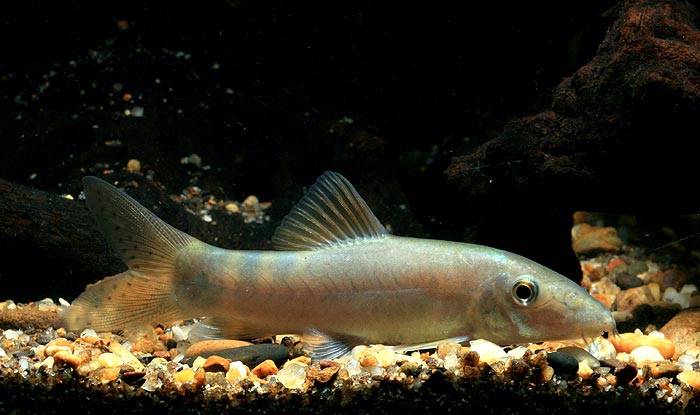
Yasuhikotakia caudipunctataSpeckle-tailed Loach
Taki & Doi, 1995
Max length100mm SL3.9in SLTank120 × 30cm48 × 12inTemp23–30°C73–86°FpH6.0–7.5This specie is relatively rare in the aquarium trade and much sought after by enthusiasts as a result. It looks relatively similar to Y. splendida but can be told apart from it, and indeed all other members of the genus, by the following combination of characters: possession of 8 branched dorsal-fin rays; 32-33 vertebrae; one or two small, brownish, vertically-orientated markings on the dorsal part of the body posterior to the dorsal fi...
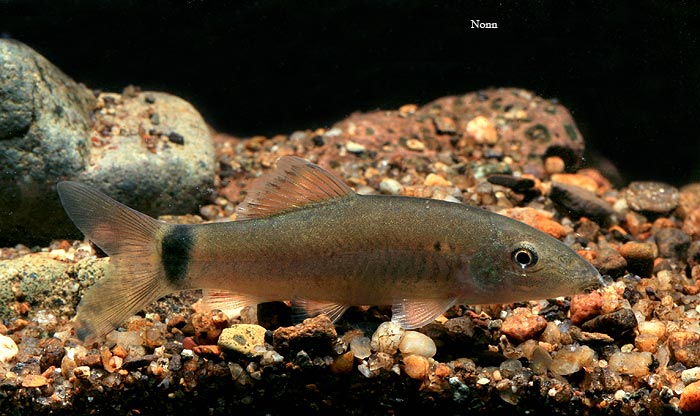
Yasuhikotakia eosSun Loach
Taki, 1972
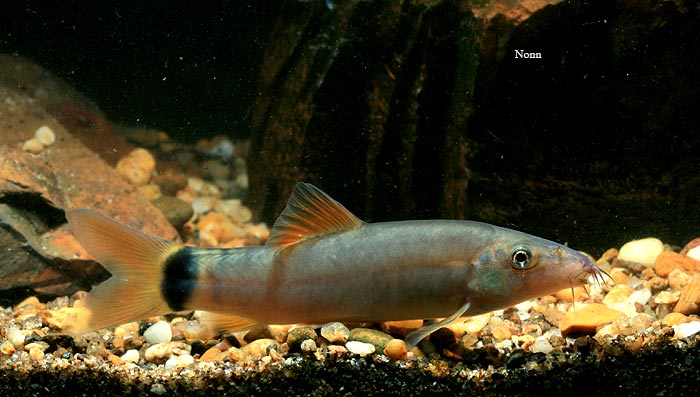
Max length110mm SL4in SLTank120 × 30cm48 × 12inTemp23–28°C73–82°FpH6.0–7.5Y. eos isn't as commonly-traded as it once was but is still available occasionally. It's difficult to confuse with any other member of the genus due to its colour pattern consisting of yellow to reddish brown base body colour (can appear greyish in some specimens, especially post-import or when introduced to a new aquarium) with a metallic green/blue golden sheen and large darkish marking on either side of the caudal peduncle. The fins can be yellowish to reddish, and the dorsal and c...
Yasuhikotakia leconteiSilver Loach
Fowler, 1937
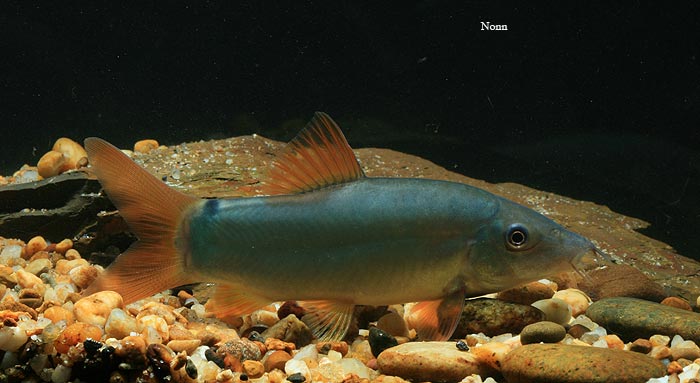
Max length150mm SL6in SLTank120 × 45cm48 × 18inTemp23–28°C73–82°FpH6.0–8.0This species is sometimes confused with Y. modesta though in reality the two are readily distinguishable from one another by body shape since Y. lecontei is a slimmer, more elongate fish. Further, in Y. lecontei the overall body colouration is usually brownish with a gold/green sheen and the dark markings...
Yasuhikotakia modestaRedtail Loach
Bleeker, 1864
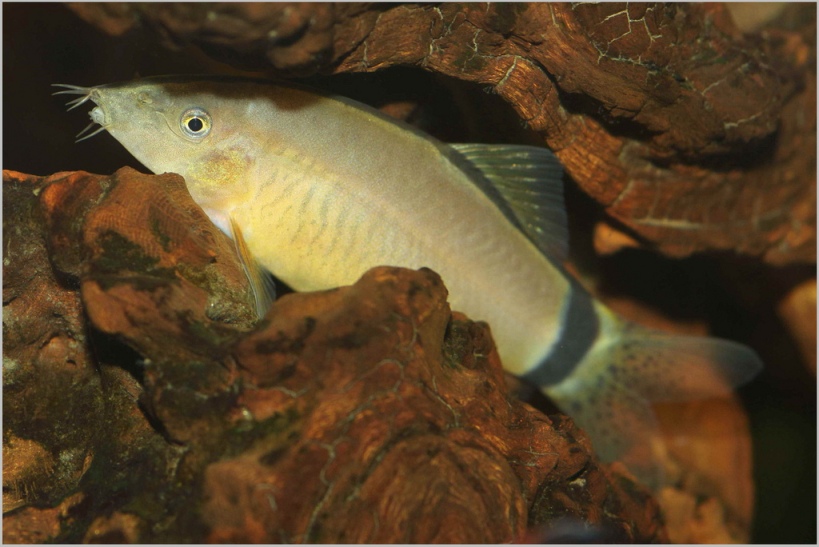
Max length250mm SL10in SLTank150 × 45cm60 × 18inTemp23–28°C73–82°FpH6.0–8.0This species is one of the more commonly-encountered botiids in the hobby and is also sold as 'blue', 'orange-finned', or 'red-finned' botia/loach. It's sometimes subject to artificial colouring with bright blue or purple dyes and we strongly recommend you do not purchase such fish (they're illegal in several countries).
Yasuhikotakia morletiSkunk Loach
Tirant, 1855
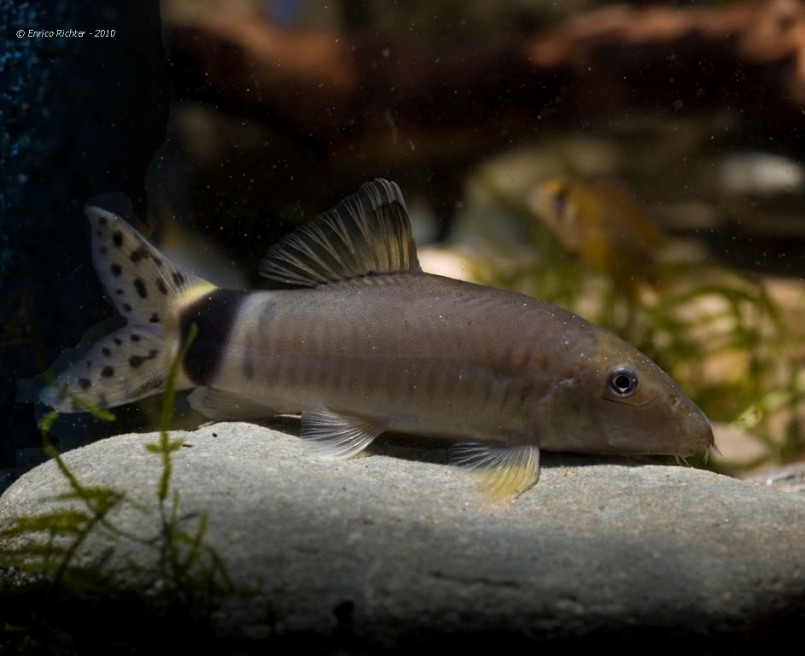
Max length85mm SL3.3in SLTank120 × 30cm48 × 12inTemp23–28°C73–82°FpH6.0–7.5This species is common in the hobby and also sold as 'skunk botia' or 'Hora's loach', the latter in reference to Botia horae Smith, 1931, currently considered a synonym of Y. morleti. It's similar in appearance to the rarely-seen Y. longidorsalis but can be told apart by the fact it has a dark stripe running over the dorsal surface (this giving rise to the vernacular name 'skunk loach') which is lacking in its relative. The two can be further separated...
Yasuhikotakia splendida
Roberts, 1995
Max length100mm SL3.9in SLTank120 × 30cm48 × 12inTemp20–28°C68–82°FpH6.0–7.5This species first appeared in the trade during 2009 with prices initially variable but in the main prohibitively expensive, and it remains expensive when available. We've seen it on sale under various names including 'jaguar loach', 'splendid loach' and 'yellow-tail polka dot loach'. It appears superficially similar to Y. caudipunctata, Y. longidorsalis and Y. morleti but can be distinguished from all by a combination of characters of which the most immedia...
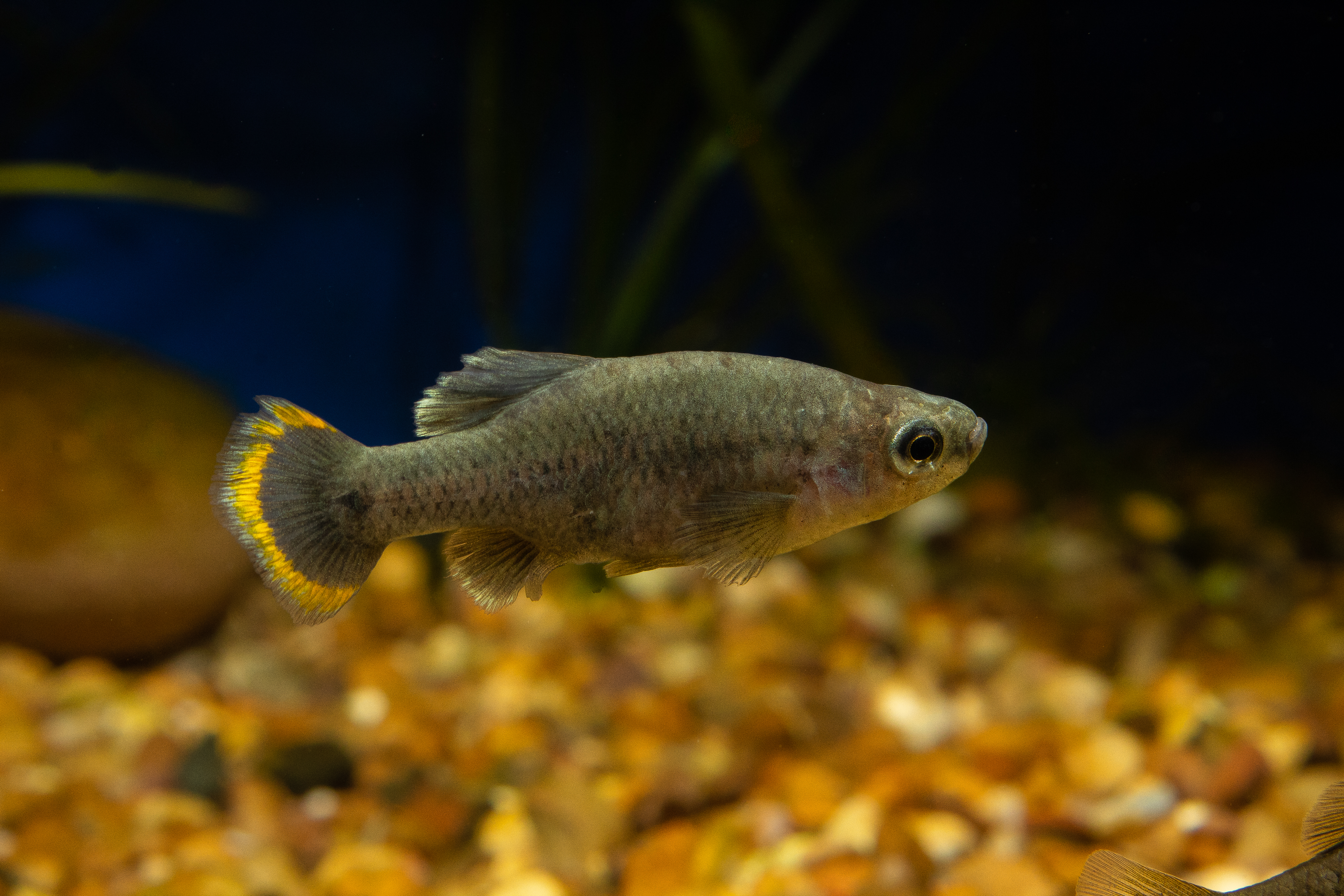
Zoogoneticus tequilaTequila Splitfin
Webb & Miller, 1998
Max length♂ 30 · ♀ 50mm SL♂ 1.2 · ♀ 2.0in SLTank90 × 30cm36 × 12inTemp17–27°C63–81°FpH6.8–7.6A single male of the Tequila Splitfin was sampled in 1955 by Miller and Greenbank, but identified erroneously as Zoogoneticus quitzeoensis, with which species it was collected and found sympatrically . Many years later, the mistake was detected, the fish identified as a new species and finally, 43 years after the first capture, described by Webb and Miller. In 2001, a wild population of this species was rediscovered in a very small spring pool (3 x 4m in diameter). The population there was composed of only a handful of adult fish and a few tens of juveniles (De la Vega-Salazar et al., 2003). In 2007, N. W. Bailey et al showed, that the allelic richness of this population (though it was comparable in size to an aquatic stock) was higher than in any aquatic stock. In 2013 the loss of this population was reported (pers. comm. Domínguez), so there is not much hope that this species is still persisting in the wild.