Results for “genetics”
Type a name: scientific, common, or one a species used to go by. Or narrow the catalogue with the filters.
Filters
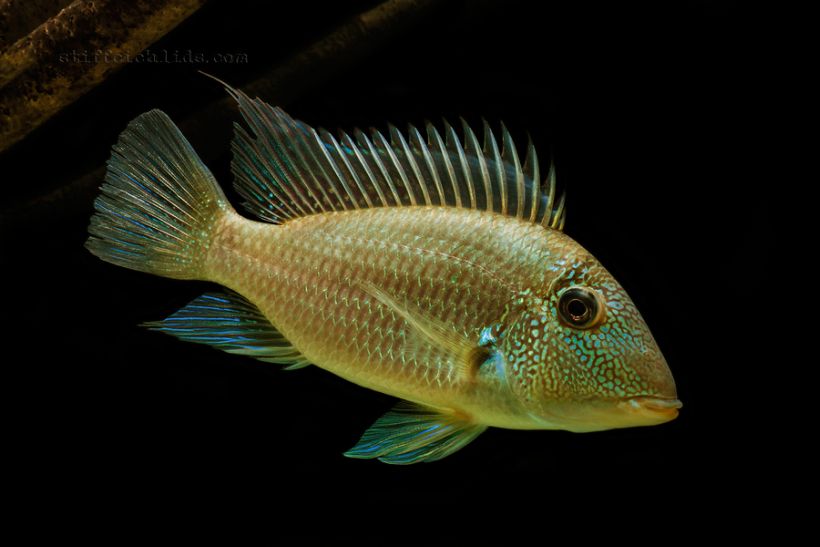
Satanoperca mapiritensis
Fernández-Yépez, 1950
Max length150mm SL6in SLTank180 × 60cm72 × 24inTemp22–28°C72–82°FpH5.5–7.5Recent genetic research has revealed there to be a possibility that although S. mapiritensis is genetically distinct from S. leucosticta, it may turn out to be conspecific with S. jurupari and S. rhynchitis. There appears to be no clear genetic separation between these three putative species nor a form known to aquarists as S. sp. 'Negro-Alto Orinoco' which replaces S. mapiritensis in the middle and upper Orinoco, Casiquiare Canal, and upper rio Negro.
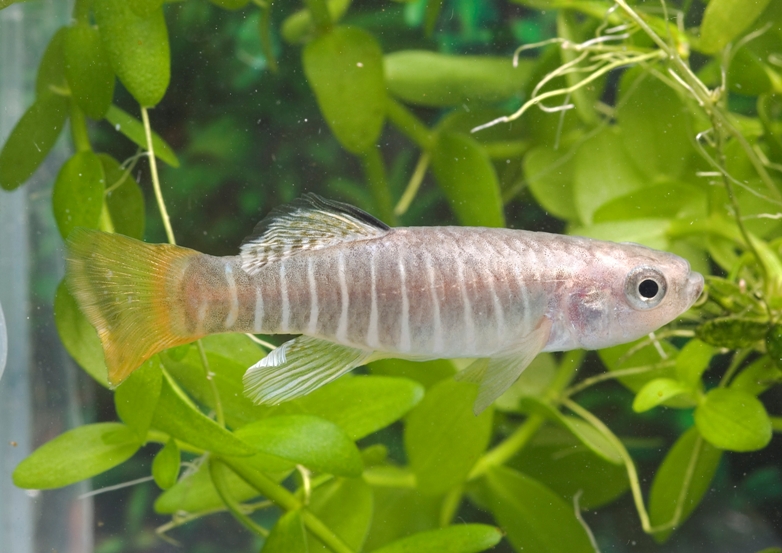
Aphanius fasciatusMediterranean Toothcarp
Valenciennes, 1821
Max length55mm SL2.2in SLTank120 × 30cm48 × 12inTemp2–30°C36–86°FpH7.5–9.0A 2003 phylogenetic study by Hrbek and Meyer showed that in genetic terms specimens of A. fasciatus collected from different localities do not vary as much as with other members of the genus. The latter tend to exist in geographically separated populations and exhibit localised differentiation. While A. fasciatus does show certain disparities in appearance depending on locality it is thought that periodic migration events have restricted the development of genetic diversity within the species to...
Melanotaenia australisWestern rainbowfish
authority not recorded
Max length120mm SL5in SLTank120 × 30cm48 × 12inTemp22–27°C72–81°FpH6.5–8.0This species was formerly classified as part of the Melanotaenia splendida complex, but more recent research into the genetics of the species has shown that not only is M. australis genetically dissimilar to the splendida group, but also that there are 2 clear lineages within australis This may yet result in another official member of the genus. M. australis exhibits a wide variation in colour and patterning depending on locality, and is probably the commonest rainbowfish species in Australi...
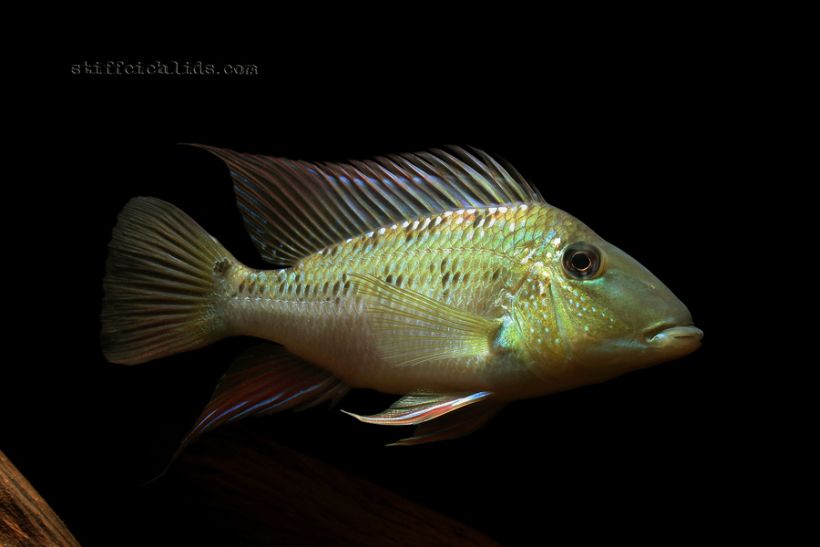
Satanoperca pappaterraPantanal Eartheater
Heckel, 1840
Max length200mm SL8in SLTank210 × 60cm84 × 24inTemp20–28°C68–82°FpH5.5–7.5S. pappaterra is relatively rare in the ornamental trade and much sought after by enthusiasts. It is easily distinguished from all known congeners by presence of a series of prominent black blotches beneath the dorsal-fin, plus a well-defined dark band extending along the side of the body. In recent genetic analyses its genetic distinctness was strongly supported, with S. jurupari and S. leucosticta its closest relatives.
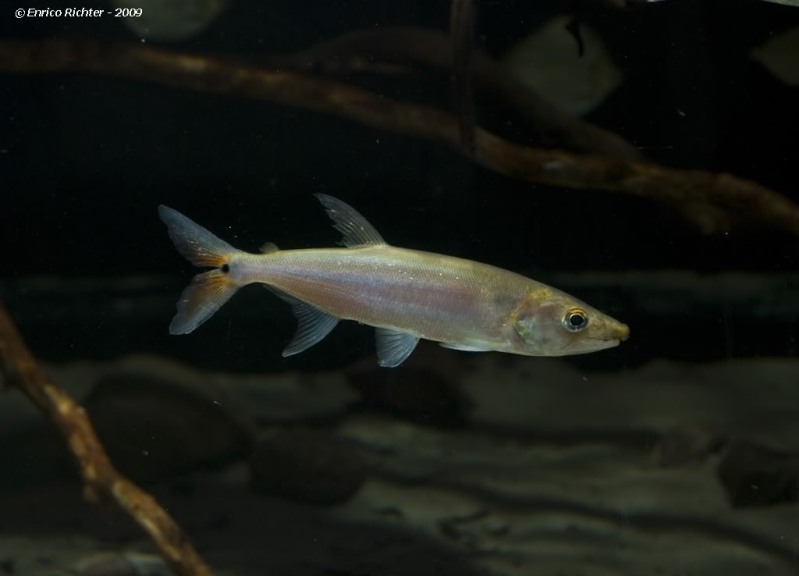
Acestrorhynchus falcatusRed-Tailed Freshwater Barracuda
Bloch, 1794
Max length275mm SL11in SLTank250 × 90cm98 × 36inTemp22–28°C72–82°FpH6.0–7.5The vernacular name of this fish is derived from its appearance and behaviour, rather than a genetic association with the marine barracuda, and it's also sometimes referred to as 'pike characin' or 'spotted cachorro' with local vernacular names including 'Grand dent-chien' (French Guiana), ' Cachorrinho' or 'Ueua' (Brazil). Although most species of Acestrorhynchus appear superficially similar to one another most exhibit distinguishable external chara...
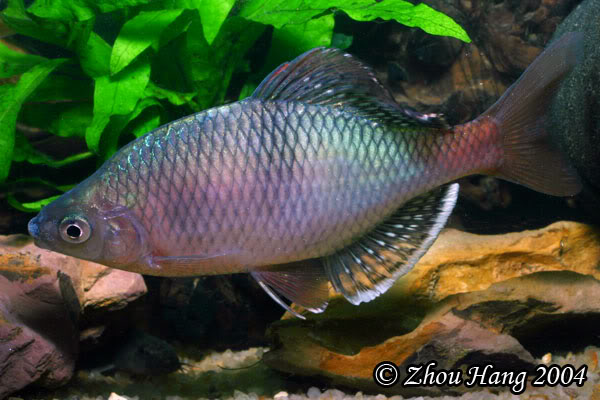
Acheilognathus macropterusGiant Chinese Bitterling
Bleeker, 1871
Max length275mm SL11in SLTank180 × 60cm72 × 24inTemp14–22°C57–72°FpH6.0–8.0A. macropterus appears in the ornamental trade on an irregular basis and should only be considered by more experienced aquarists with sufficiently large facilities. Given its wide geographical distribution there is a possibility that it represents a group of closely-related species, with genetic studies indicating the existence of several distinct clades.
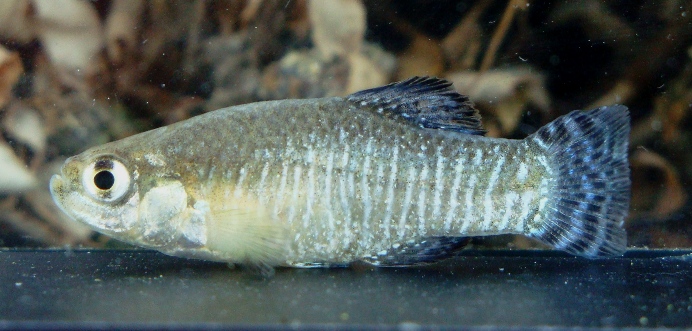
Apricaphanius baeticusBaetican Toothcarp
Doadrio, Carmona & Fernández-Delgado, 2002
Max length50mm SL2.0in SLTank120 × 30cm48 × 12inTemp2–30°C36–86°FpH7.0–9.0Prior to its description this species was considered a geographic variant of A. iberus but the 2002 paper revealed the pair to be genetically quite distinct and also highlighted some morphological differences. It is distinguished from A. iberus by possessing 8-9 (usually 8 ) branched dorsal-fin rays (vs. 8-9, sometimes 10), 9-11 branched anal-fin rays (vs. 8-9), a deeper, more elongate body shape, noticeably shorter snout, relatively thick (vs. thin) vertical bars in males and a flank patterning consisting of a few la...
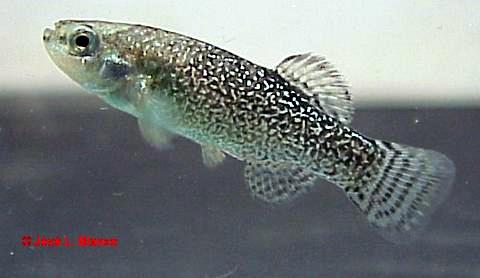
Apricaphanius saourensisSahara Toothcarp
Blanco, Hrbek & Doadrio, 2006
Max length45mm SL1.8in SLTank120 × 30cm48 × 12inTemp2–30°C36–86°FpH7.5–9.0All Algerian Aphanius populations were considered to be representative of A. iberus until this species was described in 2006. It differs both morphologically and genetically from A. iberusand A. baeticus, probably diverging about 5.3 million years ago during the opening of the Straits of Gibraltar. It is most easily distinguished by the distinct mottled body patterning which in males of the other two species forms distinct vertical bars and in females dark spot-like markings. A. iberusis now k...
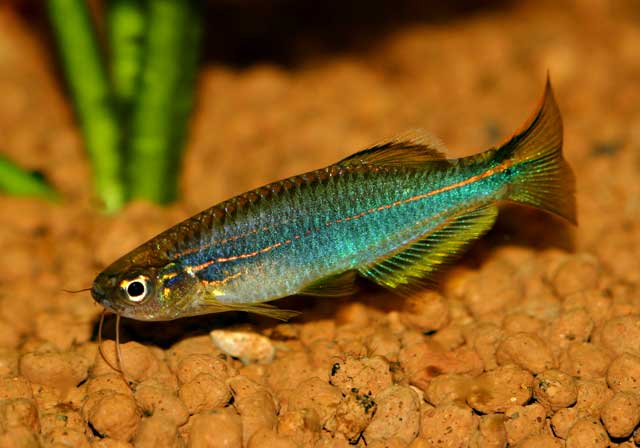
Brachydanio sp. 'hikari'Hikari 'Danio'
authority not recorded
Max length65mm SL2.6in SLTank120 × 30cm48 × 12inTemp18–26°C64–79°FpH6.5–7.5This potentially-undescribed species first became available in 2002, and males and females were marketed as 'Danio sp. hikari yellow' and 'D. sp. hikari blue', respectively. Subsequent DNA testing in the United States revealed them to be the same species and genetically distinct from the very similar B. kerri. It can be told apart as the central body (P) stripe always extends into the caudal fin whereas in B. kerri it terminates at the caudal peduncle. Only a single population of B. kerri was sampled in the stu...
Characodon lateralisRainbow Characodon
Günther, 1866
Max length65mm SL2.6in SLTank120 × 30cm48 × 12inTemp18–24°C64–75°FpH6.0–8.0Restricted to a series of small habitats below the waterfall known as 'El Salto' in the upper Río Mezquital basin, Durango state, central Mexico. It was previously considered to occur throughout much of the upper Río Mezquital in both Durango and Coahuila states, but genetic analyses suggest otherwise and have resulted in taxonomic confusion (see 'Notes').
Craterocephalus stercusmuscarum stercusmuscarumFly-specked Hardyhead
authority not recorded
Max length70mm SL2.8in SLTank76 × 30cm30 × 12inTempnot recordedpHnot recordedA rarely seen species in the trade, although it's kept quite often by Australian hobbyists. Members of this genus are thought to have a more ancient association with Australian freshwaters than most others found in these habitats. Craterocephalus also contains the most species of any Australian freshwater fish genus. It has been shown that there are quite large genetic differences between groups of the species living in close proximity to each other, and even sharing the same waters. In ...
Erythrinus erythrinusRed Wolf Fish
authority not recorded
Max length200mm SL8in SLTank120 × 30cm48 × 12inTemp22–26°C72–79°FpH5.5–7.5A species for the specialist, E. erythrinus is also known as the rainbow wolf fish or red hi-fin wolf fish. It is quite variable in colour and pattern depending on collection locality. There is a variant from Peru that has a bright orange belly. Recent studies have highlighted genetic differences in these different populations, suggesting that E. erythrinus is actually a species complex, rather than a single species. There is currently one other recognised species in the genus, E. kessleri, but ...
Hypsophrys nicaraguensisNicaragua Cichlid
authority not recorded
Max length250mm SL10in SLTank120 × 45cm48 × 18inTemp23–28°C73–82°FpH7.0–8.0Also known as the Spilotum or Moga, this is a popular and beautiful cichlid that exists in several different colour forms, depending on collection locality. It has also been hybridised with the convict cichlid (Archocentrus nigrofasciatus), although this is not to be encouraged. A study in 2004 found an apparent close genetic association between this species and Neetroplus nematopus, another cichlid found in the same area in nature. The 2 show remarkable similarities strategy, patterning and uni...
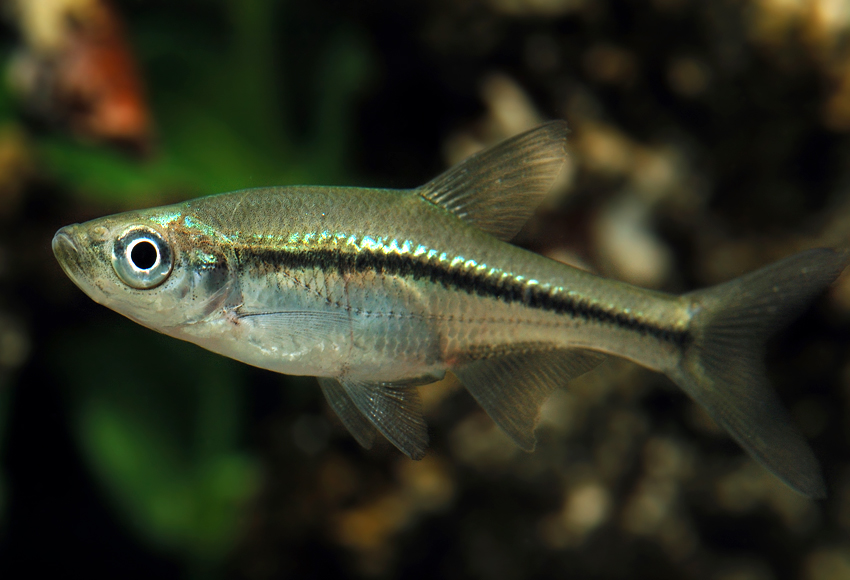
Metzia formosae
Oshima, 1920
Max length75mm SL3.0in SLTanknot recordedTempnot recordedpHnot recordedAlthough it is included in the genus Metzia this grouping remains somewhat unresolved in terms of taxonomy and it may contain more than a single genetic lineage. For example, members share a number of characters with the genera Ischikauia Jordan and Snyder 1900, Hemiculterella Warpachowski 1887, and several species of Anabarilius Cockerell 1923, including a bipartite gas bladder, a non-spinous dorsal-fin ray, and a sharp ventral keel between the pelvic-fin insertion and anus.
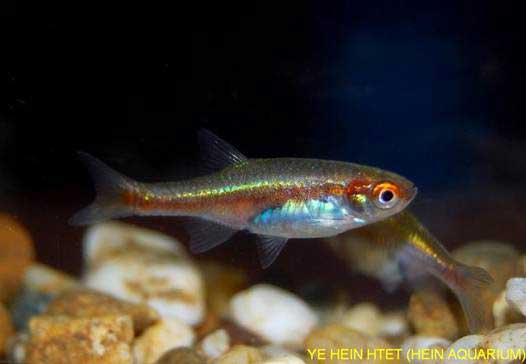
Microrasbora cf. rubescensFlame Red 'Rasbora'
authority not recorded
Max length40mm SL1.6in SLTank60 × 30cm24 × 12inTemp20–26°C68–79°FpH6.5–7.5This is possibly an undescribed species and has been marketed as 'Asian Cardinal Rasbora', 'flame red rasbora', M. sp. 'rose blue line' or M. 'thuzari' in the ornamental trade. It differs from M. rubescens by its larger adult size, possession of a greenish to bluish lateral stripe, and lesser extent of orange pigmentation on the body. It also appears to represent a distinct genetic lineage (Collins et al., 2012).
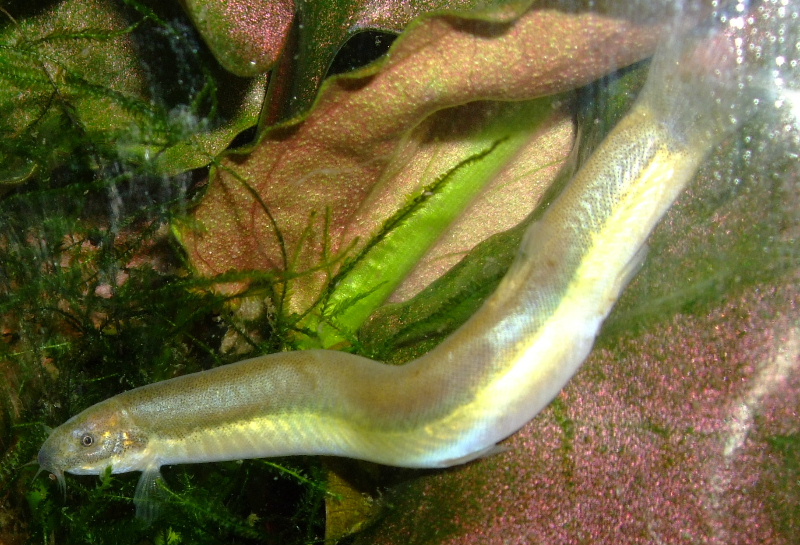
Pangio sp. 'PAN02'
authority not recorded
Max length50mm SL2.0in SLTank60 × 30cm24 × 12inTemp21–26°C70–79°FpH3.5–7.0The fish in our images don't correspond to any of the described members of the genus but can be assigned to the P. oblonga species group with a degree of certainty. It's apparently exported as a contaminant among shipments of a uniformly brown-coloured fish with unpublished genetic analyses suggesting the two might be variants of the same species (J. Bohlen, pers. comm.). Among congeners it may be related to P. alcoides Kottela...
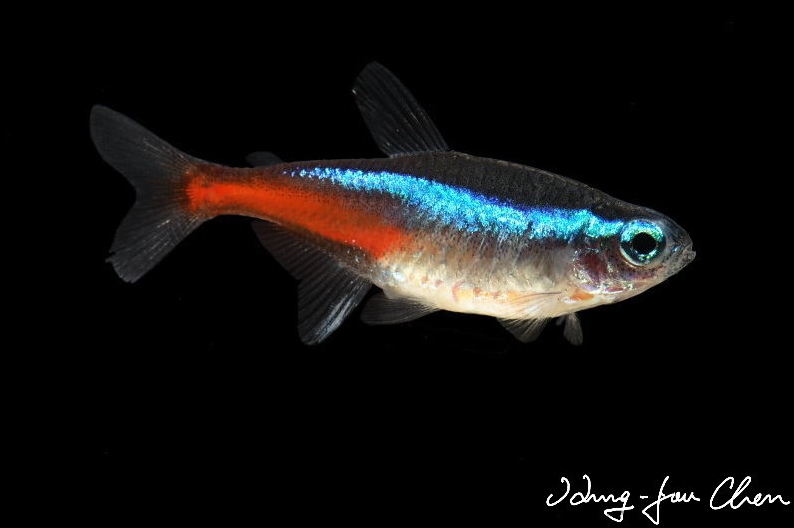
Paracheirodon innesiNeon Tetra
Myers, 1936
Max length30mm SL1.2in SLTank60 × 30cm24 × 12inTemp21–25°C70–77°FpH4.0–7.5One of the most popular and instantly recognisable fishes in the aquarium hobby, this species has been selectively-bred to produce a number of additional strains including albino, 'golden' (leucistic), short-bodied, long-finned and 'diamond' (in which the dorsal surface is covered in reflective scales). Unfortunately years of commercial breeding have somewhat affected the genetic vigour of the ornamental strain meaning morphological defects an...
Sundadanio axelrodi
authority not recorded
Max length22mm SL0.9in SLTank30 × 20cm12 × 8inTemp23–26°C73–79°FpHnot recordedThis species was initially described as Rasbora axelrodi and is referred to as such in older literature, but in 1999 was moved into the new genus Sundadanio where it remains the monotype. Its wider placement within the family Cyprinidae is still not fully resolved. Following Rüber et al. (2007) it is most closely-related to the miniature species of the genus Paedocypris, the two genera characteristically lacking bones in the roof of the skull as well as exhibiting genetic similarities. Howe...
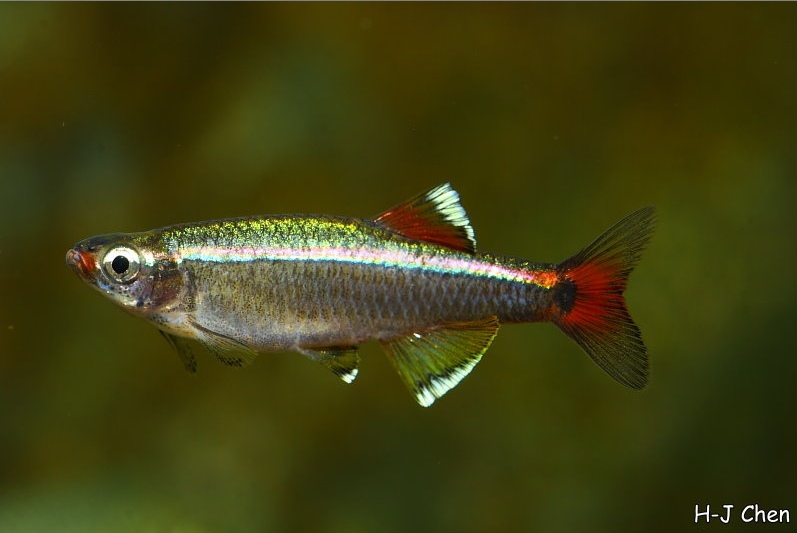
Tanichthys albonubesWhite Cloud Mountain Minnow
Lin, 1932
Max length40mm SL1.6in SLTank60 × 30cm24 × 12inTemp14–22°C57–72°FpH6.0–8.5One of the most ubiquitous species in the hobby and several ornamental strains are available including 'long-finned', 'golden', 'albino', and 'super red', for which care is identical to that of the 'standard' fish. Unfortunately the degree of inbreeding amongst farm-bred stock has resulted in a situation whereby many of the fish available today are genetically weak and prone to disease or develop physical deformities.