Results for “grow out”
Type a name: scientific, common, or one a species used to go by. Or narrow the catalogue with the filters.
Filters
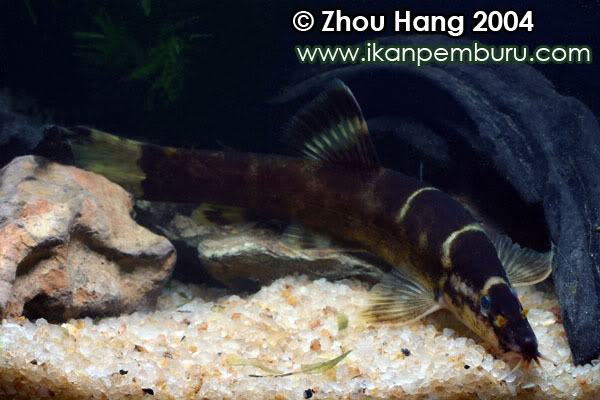
Leptobotia rubrilabris
Dabry de Thiersant, 1872
Max length150mm SL6in SLTank120 × 45cm48 × 18inTemp15.5–21°C60–70°FpH6.5–7.5Should be kept in a set-up designed to resemble a flowing stream with a substrate of variably-sized rocks, gravel and some water-worn boulders. This can be further furnished with driftwood roots and branches arranged to form some shaded spots while lengths of PVC piping or similar can be used to provide additional cover. Although most plant species will fail to thrive in such surroundings hardy genera such as Microsorum, Bolbitis or Anubias spp. can be grown attached to the décor and bright lighting will promote the growth of aufwuchs.
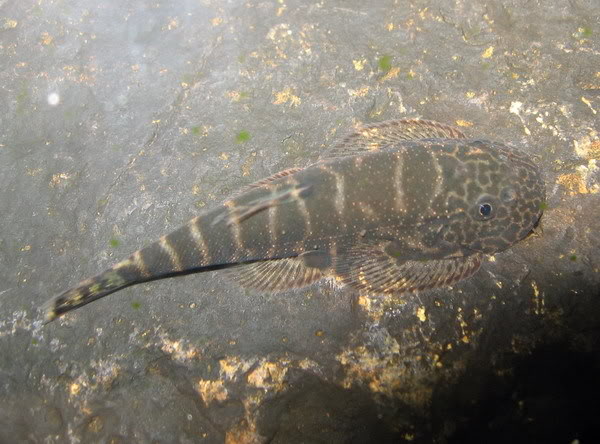
Gastromyzon sp. 'SK04'
authority not recorded
Max length65mm SL2.6in SLTank75 × 30cm30 × 12inTemp20–24°C68–75°FpH6.5–8.0For long-term success it's best to provide a mature aquarium with a plentiful supply of algae-covered rocks and other surfaces. If unable to grow sufficient algae in the main tank or you have a community containing numerous herbivorous fishes which consume what's available quickly it may be necessary to maintain a separate tank in which to grow algae on rocks and switch them with those in the main tank on a cyclical basis.
Rhynchodoras woodsiParrot Doradid
authority not recorded
Max length110mm SL4in SLTank90 × 38cm36 × 15inTemp24–26°C75–79°FpH5.8–7.0An interesting but rare species in the hobby, R. woodsi is nicknamed the "parrot doradid" due to its inquisitive feeding habits, and the curious bony growth extending from the upper mouthparts. The precise use of the bony growth isn't known, although one theory suggests it provides protection for the delicate barbels. Another hypothesis considers that it's some sort of feeding tool, possibly being used to lever aquatic invertebrates from crevices in submerged logs and roots....
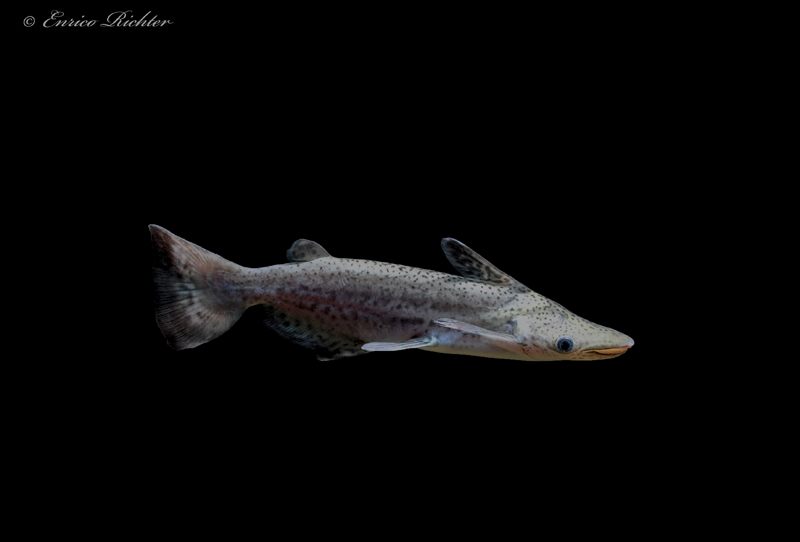
Ageneiosus marmoratusBottlenose Catfish
Eigenmann, 1912
Max length185mm SL7in SLTank150 × 60cm60 × 24inTemp22.5–26°C73–79°FpH6.0–7.0This species may also be seen on sale as 'Guyana slopehead catfish' 'dolphin catfish' or 'hammerhead catfish'. The attractive juvenile patterning is largely lost as the fish grow but this nevertheless remains an impressive predatory species for the larger aquarium. The genus Ageneiosus was at one point classified in the family Ageneiosidae alongside the genus Tetranematichthys, but this was not accepted by all...
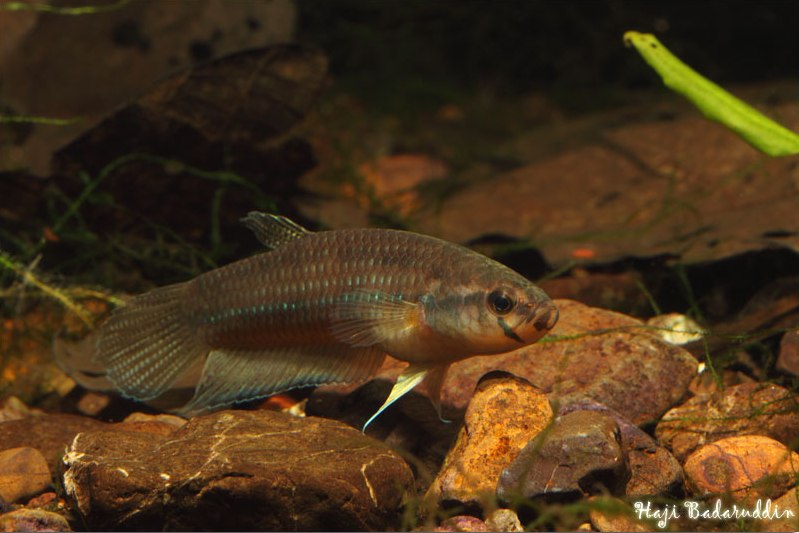
Betta antoni
Tan & Ng, 2006
Max length50mm SL2.0in SLTank60 × 30cm24 × 12inTemp22–27°C72–81°FpH5.5–7.0The genus Betta is the most speciose within the family Osphronemidae with almost 70 recognised members and looks set to grow further with new ones continuing to be described on a regular basis since the turn of the century. Member species have successfully adapted to inhabit a variety of ecological niches from stagnant ditches to flowing hill streams including some extreme environments such as highly acidic peat swamp forests.
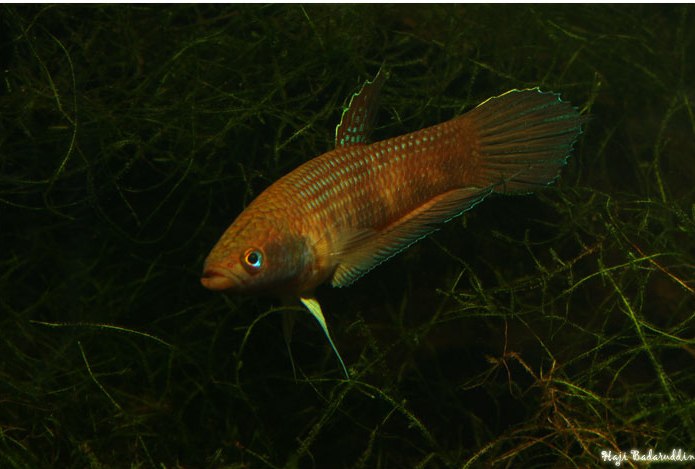
Betta cracens
Tan & Ng, 2005
Max length60mm SL2.4in SLTank80 × 30cm31 × 12inTemp22–27°C72–81°FpH5.5–6.5The type locality is a stream in a forest swamp with dense growth of Barclaya motleyi at intervals, part of which had been turned over to cultivation of rubber trees in 1997. The water depth varied between 5-80 cm, pH was 5.8 and syntopic species included 'Puntius' banksi, Rasbora einthoveni, Trigonopoma pauciperforatum, Hemirhamphodon pogonognathus, Betta pugnax, Sphaerichthys osphromenoides, Trichogaster trichopterus, Channa gachua and C. lucius.
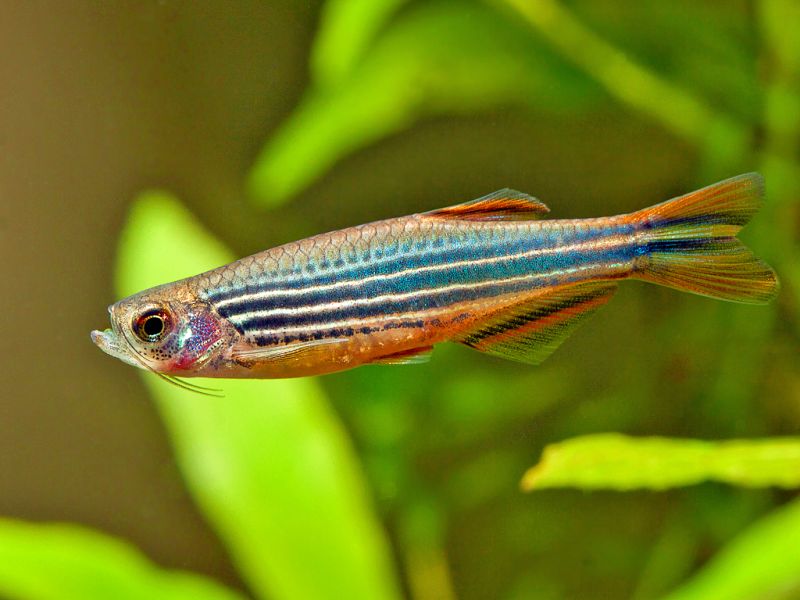
Brachydanio kyathitOrange-Finned 'Danio'
Fang, 1998
Max length45mm SL1.8in SLTank90 × 30cm36 × 12inTemp16–26°C61–79°FpH6.5–7.5At least two similar-looking fishes have been available in the aquarium trade; one, usually referred to as 'Danio sp redfin', resembles the striped form of B. kyathit but is a smaller fish and the red pigmentation in the fins is comparatively more intense. The other is also striped with red fins but grows larger; it's usually labelled as 'Danio sp. KP01' or 'Burmese zebra danio'. It remains unclear whether these are regional variants of B. kyathit or undescribed species.
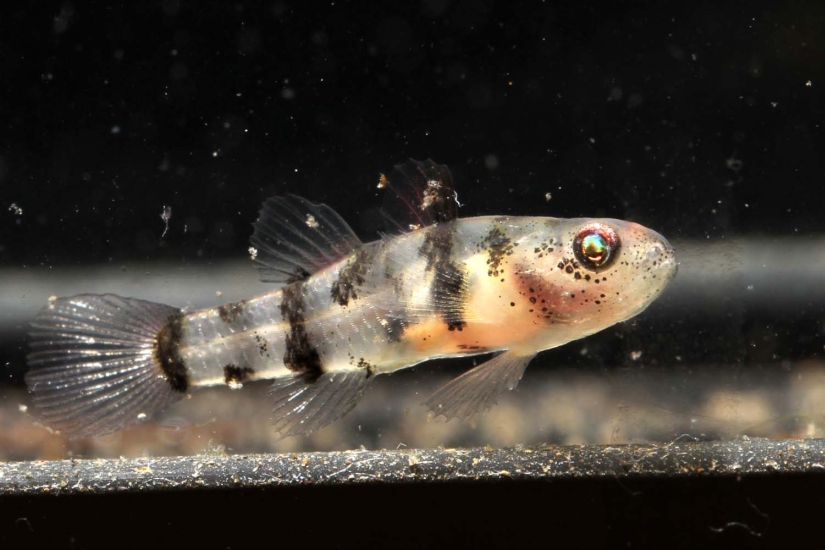
Brachygobius mekongensisMekong Bumblebee Goby
Larson & Vidthayanon, 2000
Max length18mm SL0.7in SLTank45 × 30cm18 × 12inTemp22–28°C72–82°FpH5.5–7.5Apparently restricted to slow-moving or standing freshwater habitats such as marshes, temporal swamps and floodplains where aquatic vegetation and submerged grasses proliferate. One locality consisted of undisturbed marshland with lightly tannin-stained water and dense growth of Vallisneria spp.
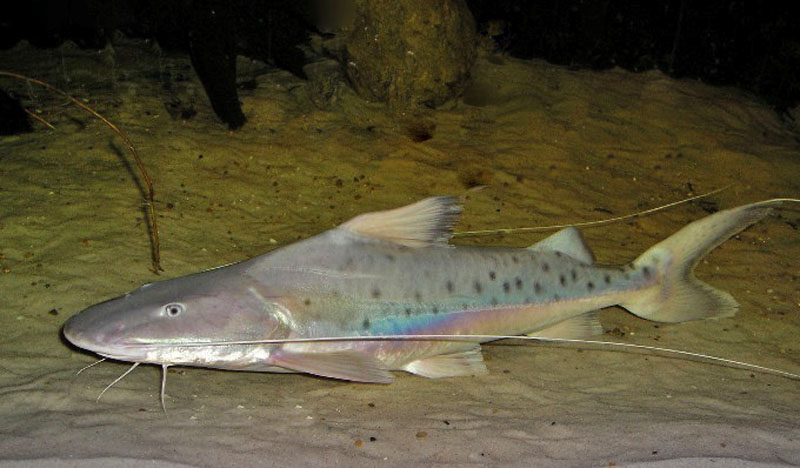
Brachyplatystoma capapretum
Lundberg & Akama, 2005
Max length880mm SL35in SLTanknot recordedTemp22–28°C72–82°FpH6.0–8.0This species can be told apart from the very similar-looking congener B. filamentosum by its smaller adult size (B. filamentosum can grow to almost 3 m in length), shorter maxillary barbels (never extending beyond base of adipose fin (vs. extending beyond base of adipose fin), moderately-forked with lobes of equal size (vs. deeply-forked caudal fin with upper lobe usually longer than the lower) and body col...
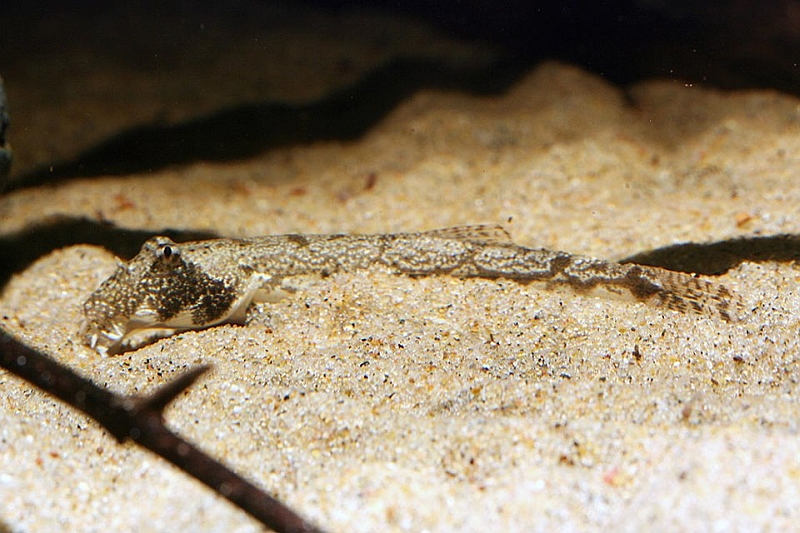
Canthophrys gongotaMoose-faced Loach
Hamilton, 1822
Max length110mm SL4in SLTank90 × 30cm36 × 12inTemp18–22°C64–72°FpH6.0–7.0Mostly known from slow-moving, relatively shallow tributaries and minor rivers with substrates of mud, sand or gravel. Aquatic plants are only occasionally present but riparian vegetation apparently grows thickly at some localities. In the Schutunga River, part of the Mansai River drinage which is itself a tributary of the Brahmaputra in West Bengal state, In...
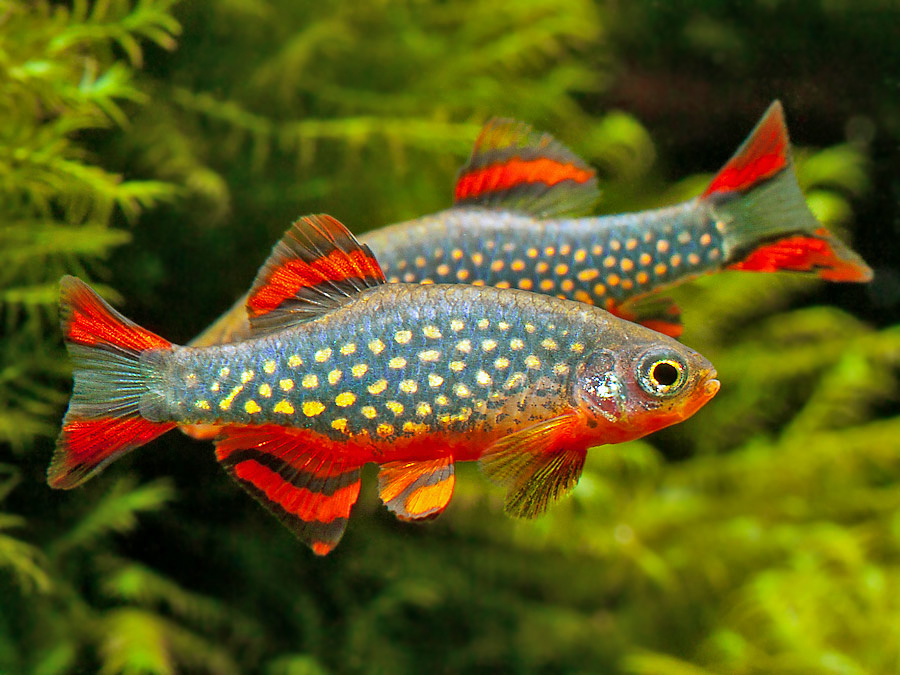
Celestichthys margaritatusCelestial Pearl 'Danio'
Roberts, 2007
Max length21mm SL0.8in SLTank45 × 30cm18 × 12inTemp20–26°C68–79°FpH6.5–7.5The type locality is an area of permanently-flooded grassland formed by the damming of a spring for agricultural purposes. The water is only around 30cm deep, transparent and supports dense growths of aquatic plants, mostly from the family Hydrocharitaceae which includes such genera as Elodea, Egeria and Blyxa. Sympatric species included Devario sondhii, a Microrasbora very similar to M. rubescens, an undescribed Yunnanilus known to aquarists as the 'rosy' loach and Channa harcourtbutleri.
Cichlasoma festaeRed Terror
authority not recorded
Max length508mm SL20in SLTank210 × 60cm84 × 24inTemp25–29°C77–84°FpH6.0–8.0The Red Terror can be troublesome to breed due to pairing problems - if a pair of fish are incompatible and are housed together for any length of time, it is likely that the weaker fish will be killed. The best way of getting a true pair is to grow 6 juveniles up until a noticeably strong pair has formed. Also, its size means finding an aquarium and suitable breeding surfaces can be difficult. As previously mentioned, rocks (siliconed if necessary) and bits of slate used to create man-made caves...
Clarotes laticepsWidehead Catfish
authority not recorded
Max length800mm SL31in SLTank150 × 60cm60 × 24inTemp20–26°C68–79°FpH6.5–8.0This is not a particularly common species in the trade, probably as it's not especially attractive to look at and grows very large. It's unsuitable for all but the biggest aquaria.
Colossoma macropomumBlack Pacu
authority not recorded
Max length600mm SL24in SLTank300 × 90cm118 × 36inTemp22–28°C72–82°FpH5.5–7.5Known as the tambaqui in its native countries, this is the second largest species of scaled fish found in the Amazon basin. This alone should tell you much of what you need to know about its suitability as an aquarium inhabitant. In reality, it's debatable as to whether the species should be considered an aquarium subject at all. While pacu rarely reach their maximum size in captivity, they're still easily capable of growing to a couple of feet in length. The myth that fish will only g...
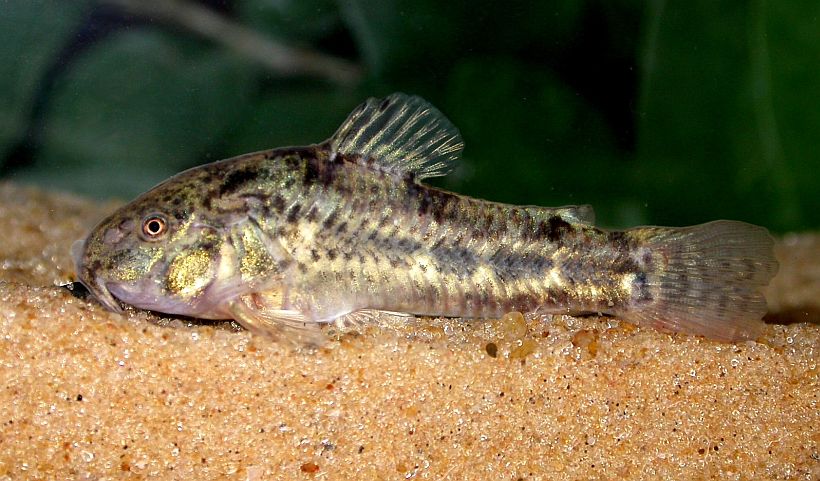
Corydoras gladysae
Calviño & Alonso, 2010
Max length38mm SL1.5in SLTank60 × 30cm24 × 12inTemp8–16°C46–61°FpH7.5–8.5The Río Calchaquí rises at almost 6000 m AMSL and flows swiftly through a mountainous valley where it is largely fed by snow melt. The climate is semi-arid and cool with an air temperature of 12-18°C, while rainfall is largely concentrated during summer when the flow can be torrential. The water is hard and rich in salts, with pH measured at 8.04 during the month of August. Aquatic vegetation and filamentous algae grow around the margins and in tributaries.
Crenicichla lugubrisAtabo Red Pike Cichlid
authority not recorded
Max length400mm SL16in SLTank180 × 60cm72 × 24inTemp27–29°C81–84°FpH5.5–6.5An attractive and colourful fish when small, this species quickly grows into a large aggressive adult, requiring a large tank.
Cyprichromis leptosomaSardine Cichlid
authority not recorded
Max length125mm SL5in SLTank120 × 45cm48 × 18inTemp24–27°C75–81°FpH7.8–9.0One of the favourite Tanganyikan cichlids among hobbyists, this species occurs in several geographical morphs. Each of these further exists in both blue and yellow-tailed forms. They congregate in large shoals of several thousand in nature, preying on zooplankton. In the hobby you may also see C. leptosoma sp. "Jumbo" for sale. These fish grow to the size quoted above, whilst the "true" leptosoma only reaches around 4" in length. Although it's likely we are deal...
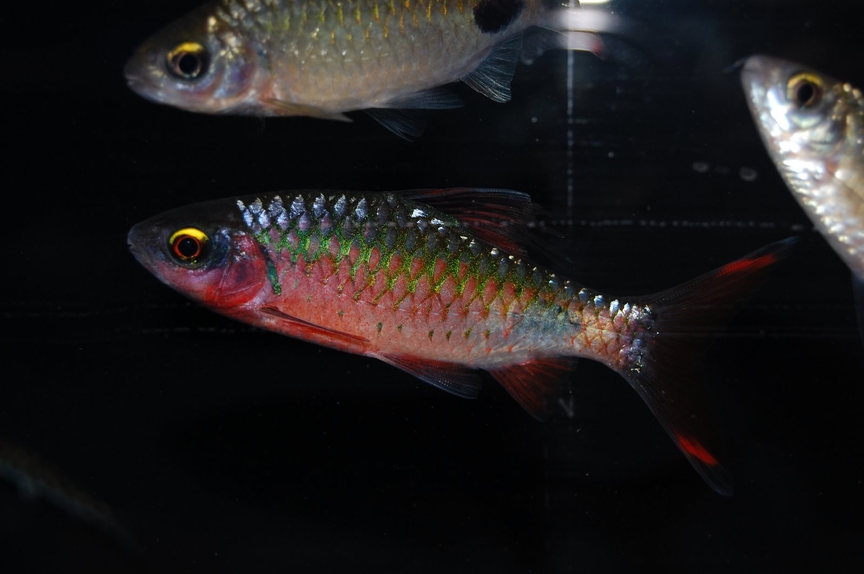
Dawkinsia filamentosaFilament Barb
Valenciennes, 1844
Max length120mm SL5in SLTank120 × 45cm48 × 18inTemp20–25°C68–77°FpH6.0–7.0Not difficult to keep in a well-maintained set-up, though we recommend aquascaping the tank to resemble a flowing stream/river with a substrate of variably-sized, water-worn rocks, sand, fine gravel and perhaps some small boulders. This can be further furnished with driftwood roots or branches, and while the majority of aquatic plants will fail to thrive in such surroundings hardy types such as Microsorum, Bolbitis or Anubias spp. can be grown attached to the décor.
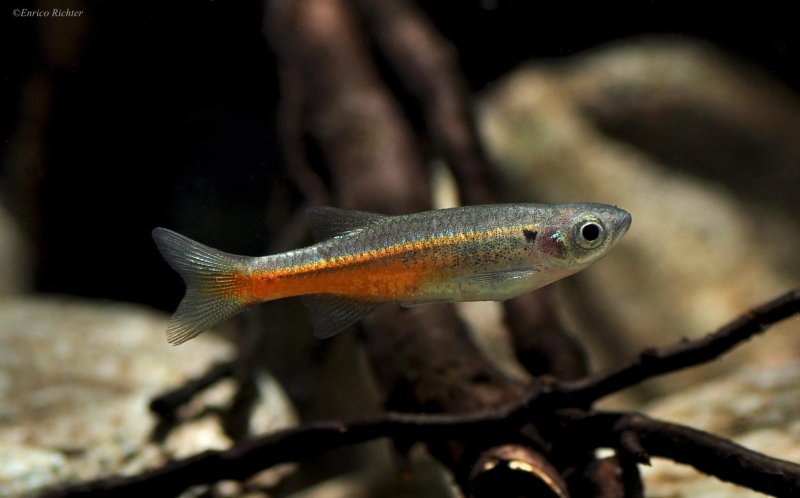
Devario sondhiiFireline Devario
Hora & Mukerji, 1934
Max length45mm SL1.8in SLTank75 × 30cm30 × 12inTemp20–26°C68–79°FpH6.5–7.5The habitat near Hopong is an area of permanently-flooded grassland formed by the damming of a spring for agricultural purposes and is around 1,040 metres AMSL. The water is only around 30cm deep, transparent and supports dense growths of aquatic plants, mostly from the family Hydrocharitaceae which includes such genera as Elodea, Egeria and Blyxa.
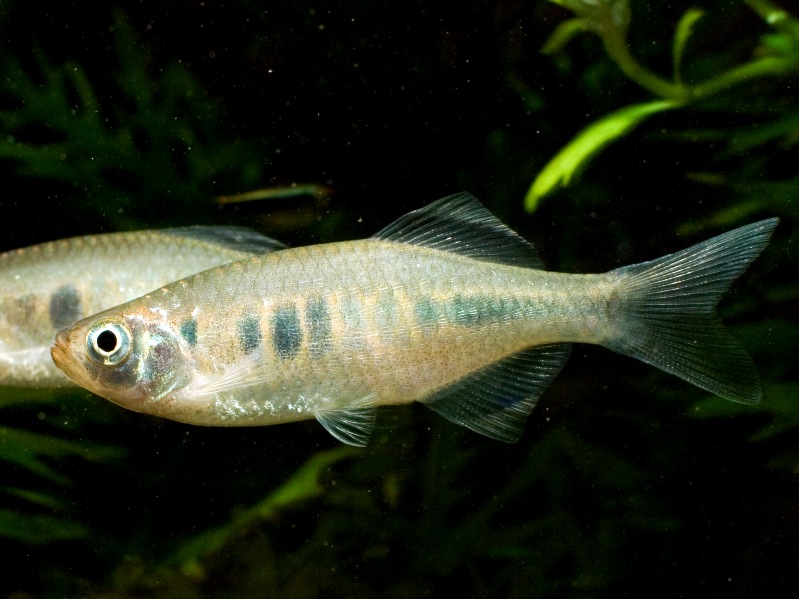
Devario xyropsBlue Moon 'Danio'
Fang & Kullander, 2009
Max length80mm SL3.1in SLTank120 × 45cm48 × 18inTemp18–26°C64–79°FpH6.0–8.0Thrives in an aquarium set up to resemble a flowing stream or river with a substrate of variably-sized, water-worn rocks, sand, fine gravel and perhaps some small boulders. This can be further furnished with driftwood roots or branches, and while the majority of aquatic plants will fail to thrive in such surroundings hardy types such as Microsorum, Bolbitis or Anubias spp. can be grown attached to the décor.