Results for “lateral”
Type a name: scientific, common, or one a species used to go by. Or narrow the catalogue with the filters.
Filters
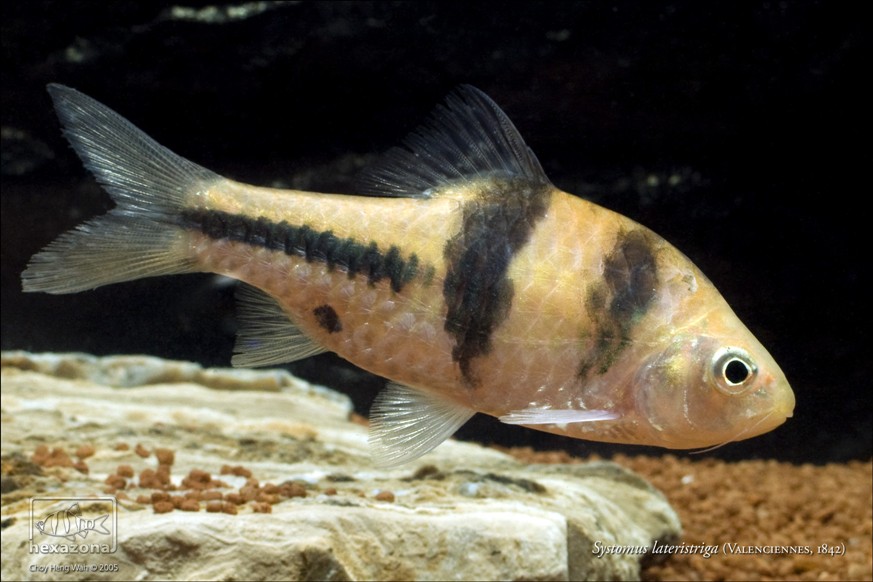
Barbodes lateristrigaSpanner Barb
Valenciennes, 1842
Matched on Barbus lateristriga, a name it was formerly known by
Max length150mm SL6in SLTank150 × 45cm60 × 18inTemp20–28°C68–82°FpH6.0–8.0This species is commonly-referred to as 'T-barb' in some countries. It's closely-affiliated with and sometimes traded as the congener B. kuchingensis but that species can be told apart by colour pattern comprising a prominent row of dark spots along the lateral line, plus a short, horizontally-orientated streak extending from the upper part of the operculum. In B. lateristriga the lateral markings usually form a solid stripe and there is no streak extending from the operculum.
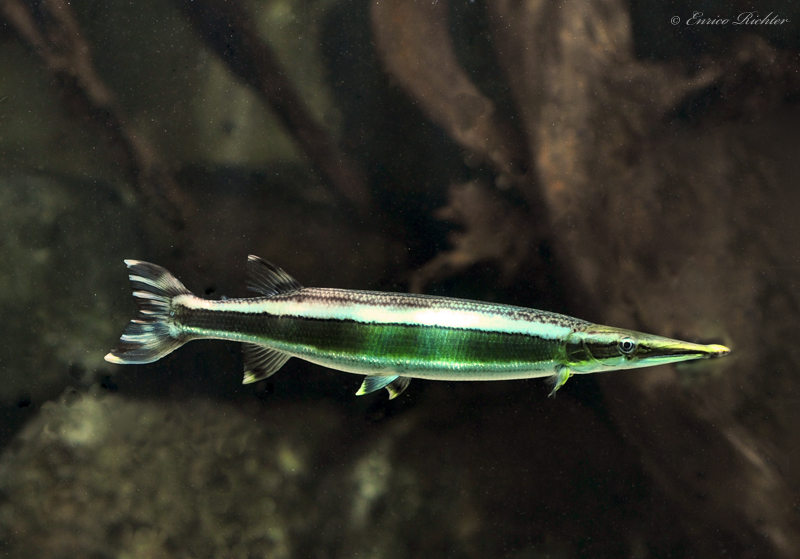
Boulengerella lateristrigaStriped Pike 'Characin'
Boulenger, 1895
Matched on Xiphostoma lateristriga, a name it was formerly known by
Max length258mm SL10in SLTank240 × 90cm96 × 36inTemp22–28°C72–82°FpH4.0–7.0Boulengerella differs from Ctenolucia, the only other genus currently contained in the family Ctenolucidae, by a series of derived features including possession of 87-124 (vs. 45-50) lateral line scales, presence of a strongly (vs. weakly) developed fleshy appendage at the tip of the snout and absence (vs. presence) of fleshy flaps on the lower jaw. Within the order Characiformes the family Ctenoluciidae is also distinguished by a set o...
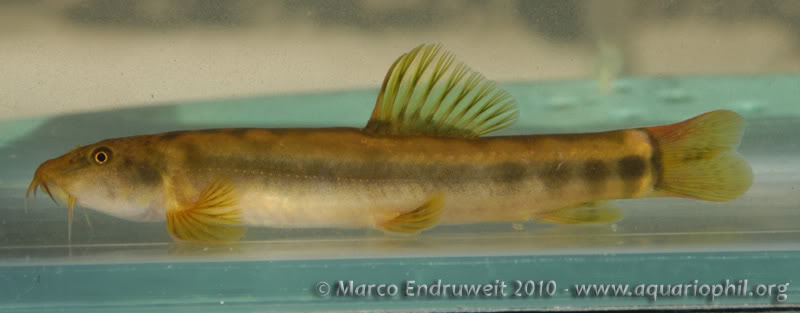
Schistura laterivittata
Zhu & Wang, 1985
Matched on Noemacheilus laterivittatus, a name it was formerly known by
Max length80mm SL3.1in SLTank120 × 30cm48 × 12inTemp10–22°C50–72°FpH7.0–9.0It's been considered a synonym of Schistura caudofurca (Mai, 1978) by the majority of recent authors following Kottelat (2001) but this appears to be a case of misidentification since the two species exhibit several notable differences based on their respective descriptions (Endruweit, 2010).
Characodon lateralisRainbow Characodon
Günther, 1866
Max length65mm SL2.6in SLTank120 × 30cm48 × 12inTemp18–24°C64–75°FpH6.0–8.0Restricted to a series of small habitats below the waterfall known as 'El Salto' in the upper Río Mezquital basin, Durango state, central Mexico. It was previously considered to occur throughout much of the upper Río Mezquital in both Durango and Coahuila states, but genetic analyses suggest otherwise and have resulted in taxonomic confusion (see 'Notes').
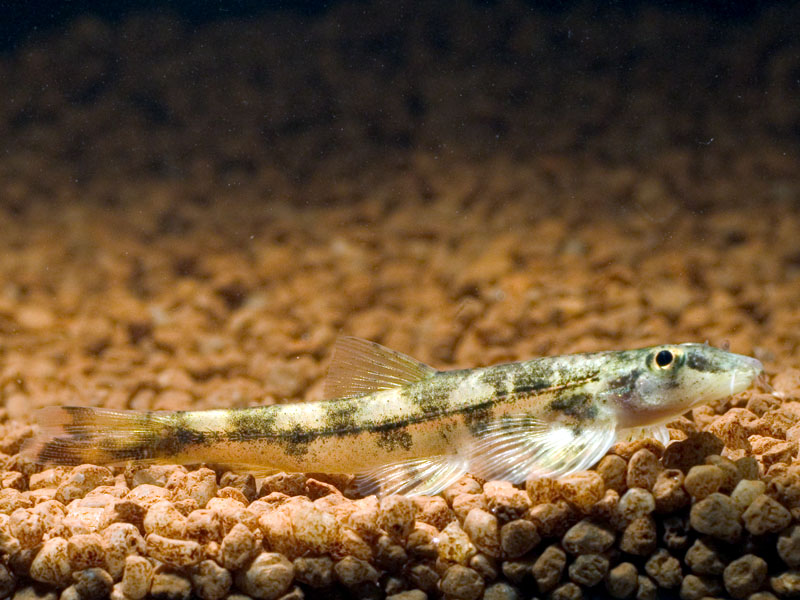
Homalopteroides nebulosus
Alfred, 1969
Max length36mm SL1.4in SLTank60 × 30cm24 × 12inTemp20–25.5°C68–78°FpH6.0–7.5The genus Homalopteroides was revalidated by Randall and Page (2012) and is told apart from the related Homaloptera by the following character combination: dorsal-fin origin above pelvic-fin; ≤ 60 lateral-line scales; ≤ 30 predorsal scales; oral morphology consisting of two thin and widely separated rostral barbels on each side of the mouth, thin crescent-shaped lips, the absence of any structure such as a mental pad or lobes between the lateral portions of the lower lip, and a chin that extends anterior to the lateral portions of the lower lip.
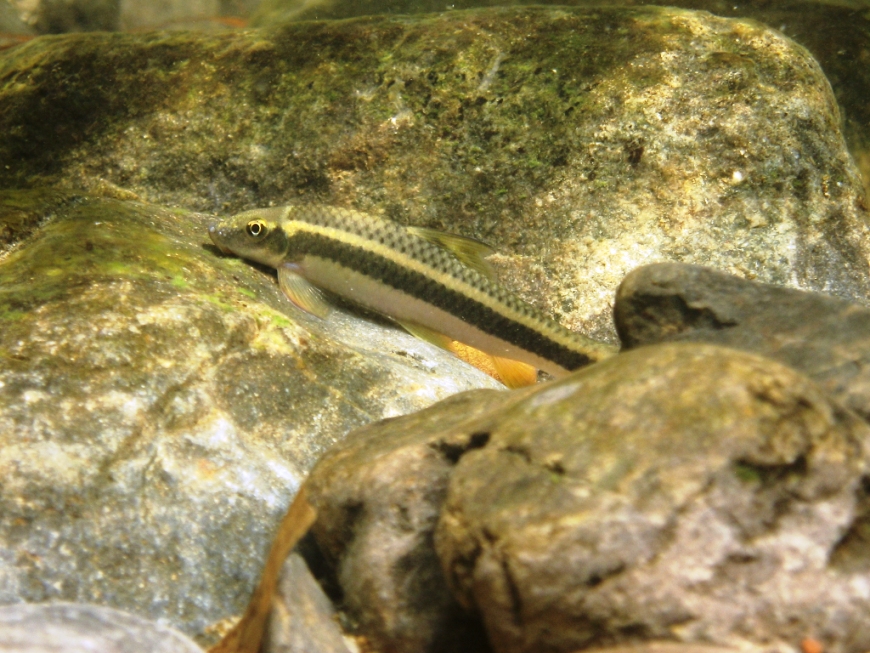
Garra cambodgiensisFalse SAE
Tirant, 1883
Max length150mm SL6in SLTank120 × 45cm48 × 18inTemp20–27°C68–81°FpH6.0–7.5Also known by the vernacular names ''black band garra', 'stone-lapping minnow' or 'false flying fox' and continues to be traded as Garra taeniata, an invalid name synonymous with G. cambodgiensis. It is often confused with those laterally-striped members of the genus Crossocheilus sold as 'Siamese algae eater' or 'Siamese flying fox', but in those species the dark lateral body stripe continues into the caudal-fin whereas in G. cambodgiensis it terminates...
Rasbora einthoveniiBrilliant Rasbora
authority not recorded
Max length90mm SL3.5in SLTank120 × 30cm48 × 12inTemp22–26°C72–79°FpHnot recordedThis is one of the more commonly-seen rasboras in the hobby and is ideal for the medium-sized community set-up. It shares some close similarities with R. jacobsoni but can be most easily identified by the fact it lacks dark reticulated scales above the lateral stripe. This stripe also has noticeably more uneven or "crinkly" edges in R. einthovenii than in R. jacobsoni or indeed any other species of laterally-striped Rasbora. A further distinguishing combination of characters for both t...
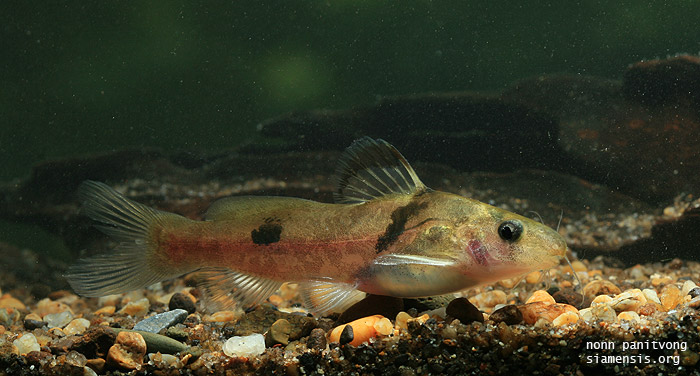
Batasio fluviatilis
Day, 1888
Max length72mm SL2.8in SLTank120 × 30cm48 × 12inTemp16–24°C61–75°FpH6.0–7.0Batasio havmolleri (Smith, 1931) is currently considered a junior synonym of B. fluviatilis. Members of the genus Batasio are characterised by the following combination of characters; laterally-compressed body shape; presence of large sensory pores on the head; a narrow mental region; a pair of prominent posterior proces...
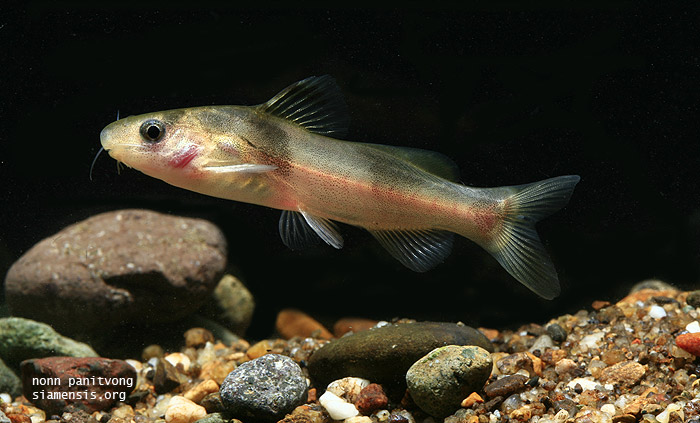
Batasio tigrinus
Ng & Kottelat, 2001
Max length80mm SL3.1in SLTank120 × 30cm48 × 12inTemp17–23°C63–73°FpH6.0–7.0Members of the genus Batasio are characterised by the following combination of characters; laterally-compressed body shape; presence of large sensory pores on the head; a narrow mental region; a pair of prominent posterior processes on the anterior portion of the vomer; a transversely elongated, bar-like entopterygoid; close contact between the metapterygoid and quadrate.
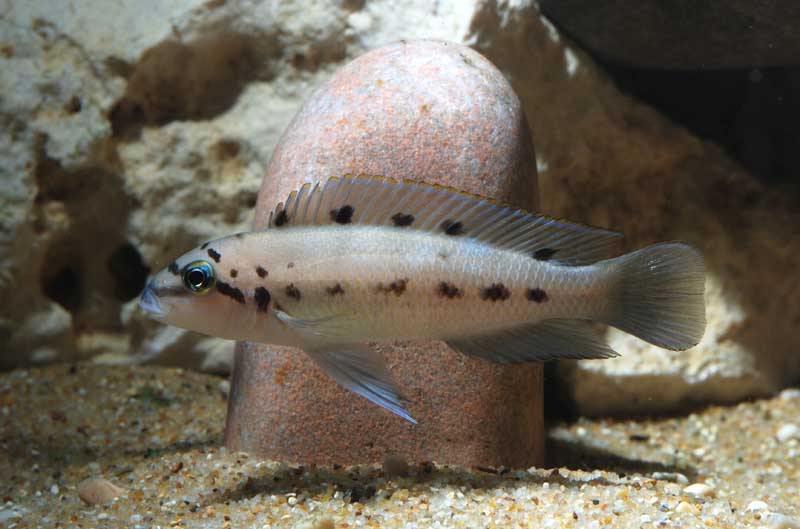
Chalinochromis sp. 'ndobhoi'
authority not recorded
Max length120mm SL5in SLTank120 × 45cm48 × 18inTemp24–28°C75–82°FpH8.0–9.0This undescribed species is also traded as C. sp. 'ndoboi' or 'ndobnoi', and despite its lack of official recognition it's the most commonly-encountered member of the genus in the aquarium trade at time of writing. It can be easily-distinguished from the congeners C. brichardi and C. popelini by its adult body patterning which comprises two or three series of irregular, dark, laterally-orientated blotches, the upper of which is often contained entirely within the dorsal ...
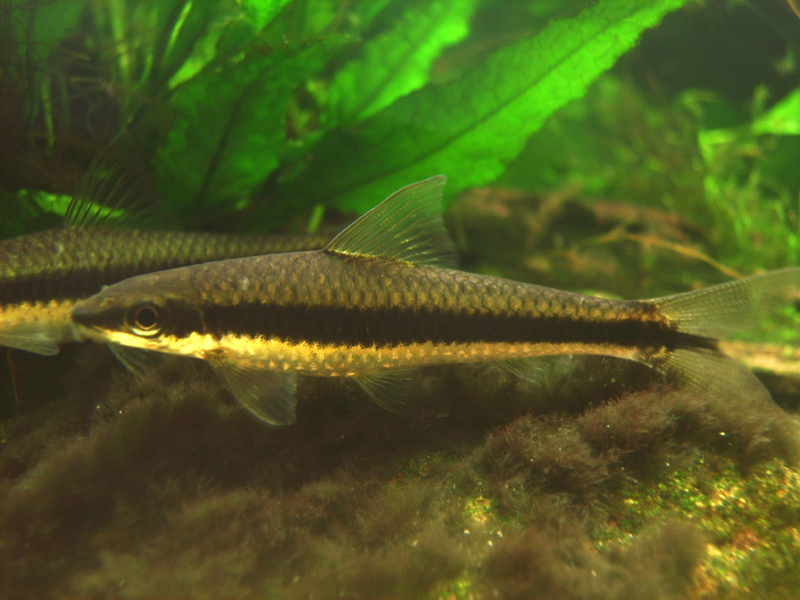
Crossocheilus langeiSiamese Algae Eater
Bleeker, 1860
Max length150mm SL6in SLTank150 × 45cm60 × 18inTemp20–26°C68–79°FpH6.0–7.5C. oblongus is another name widely misused in the trade but that species has seemingly never been exported and was described as a blueish fish with yellow fins. It's native to streams of Gunung Salak mountain in Bogor Regency, West Java, Indonesia where collecting of ornamental fishes is almost non-existent. Other species of laterally-striped Crossocheilus also exist and may be available from time-to-time but are more easily told apart from the group described above.
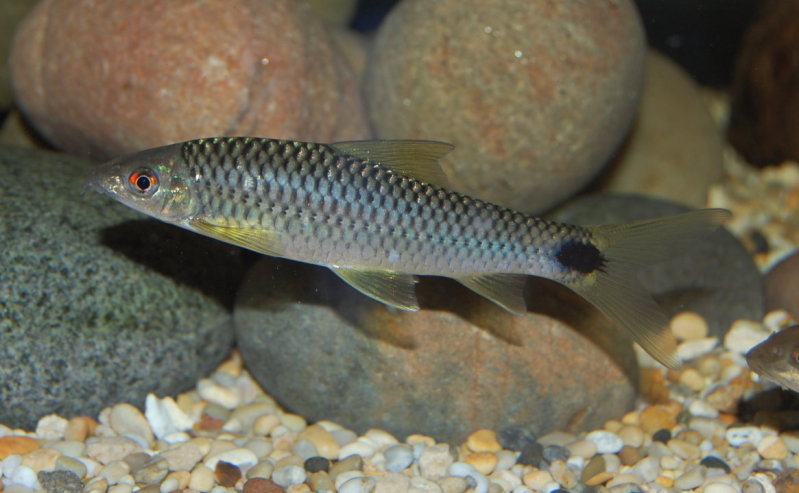
Crossocheilus reticulatus
Fowler, 1934
Max length170mm SL7in SLTank180 × 45cm72 × 18inTemp16–24°C61–75°FpH6.0–7.5While some laterally-striped members of the genus look very similar to one another the combination of silvery body, dark-edged scales and dark caudal peduncle blotch set C. reticulatus uniquely apart. The names Crossocheilus tchangi, Epalzeorhynchos coatesi and E. stigmaeus are all now considered synonyms of the species but were erected because the fish vary, most often in minor aspects of patt...
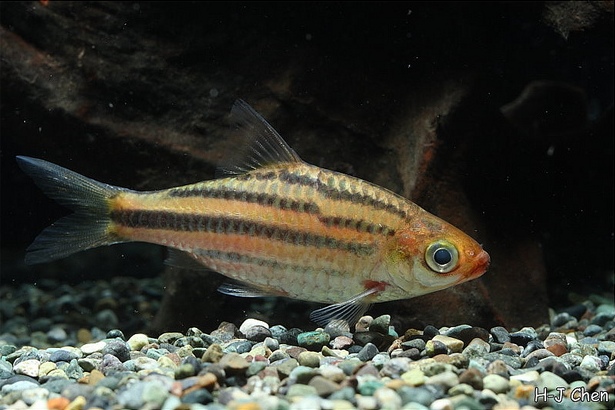
Desmopuntius trifasciatus
Kottelat, 1996
Max length100mm SL3.9in SLTank120 × 45cm48 × 18inTemp20–25°C68–77°FpH5.0–7.0This species is one of three similar-looking members of the genus alongside D. johorensis and D. trifasciatus, while it may also be confused with Striuntius lineatus. Juveniles of all except S. lineatus exhibit a vertically-barred rather than laterally-striped colour pattern, the metamorphosis to adult patterning beginning at around 20 mm SL and normally being complete by 30-40 mm.
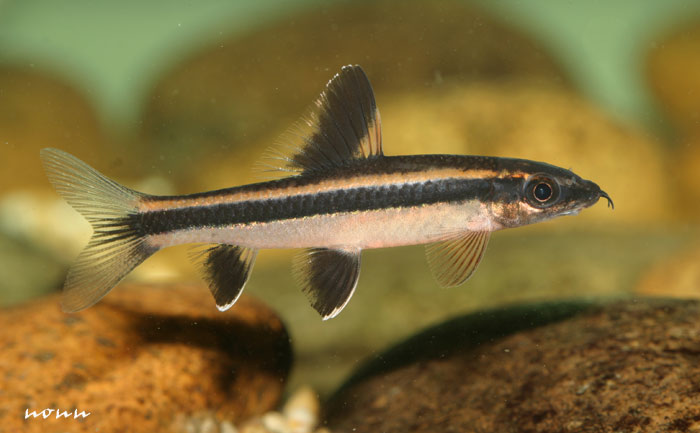
Epalzeorhynchos kalopterumFlying Fox
Bleeker, 1850
Max length160mm SL6in SLTank120 × 45cm48 × 18inTemp20–26°C68–79°FpH6.0–7.5Confusion with similar-looking fishes from other genera, such as Garra cambodgiensis, laterally-striped Crossocheilus spp. or Gyrinocheilus aymonieri is not uncommon, and are largely attributable to the use of trade names such as 'false flying fox' or 'Siamese flying fox'. When compared with the other species E. kalopterus exhibits several unique characters but perhaps the simplest way to identify it is by the characteristic white-edged, red and black coloured fins and the presence of two pairs of barbels.
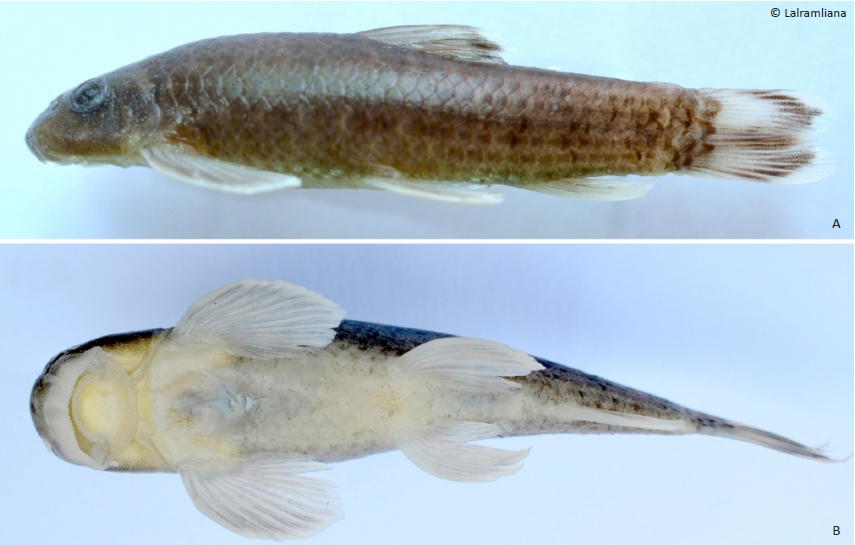
Garra dampaensis
Laironunga, Lainuntluanga & Lairamliana, 2013
Max length55mm SL2.2in SLTanknot recordedTempnot recordedpHnot recordedThis species can be told apart from Indian congeners by the following combination of characters: no transverse groove or proboscis on the snout; tip of dorsal fin falcate; long axillary scale present at the base of pelvic fin, reaching base of last pelvic fin ray; 27–29 lateral-line scales, 10–11 regularly arranged predorsal scales; W-shaped black band across middle of caudal fin; presence of scales on the abdomen.
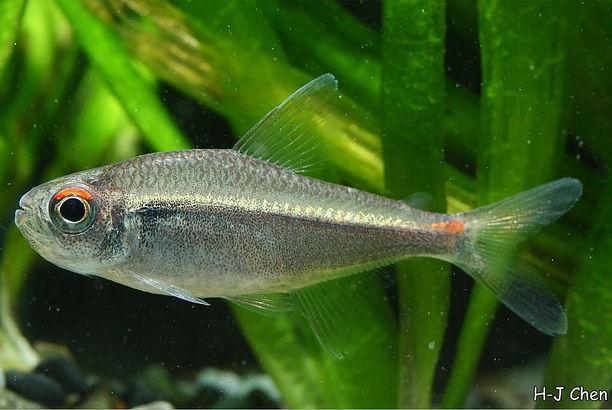
Hyphessobrycon agulha
Fowler, 1913
Max length42mm SL1.7in SLTank80 × 30cm31 × 12inTemp20–28°C68–82°FpH5.5–7.5This species is relatively rare in the aquarium hobby but is occasionally traded as 'red-tailed flag tetra'. It lends its name to the H. aghula group of closely-related species within the genus as proposed by Géry (1977, see below) of which members share the following characters which set them apart from other characids: lower half of the body dark, especially above the anal-fin; usually possessing a laterally-elongate humeral spot, more-or-less united wit...
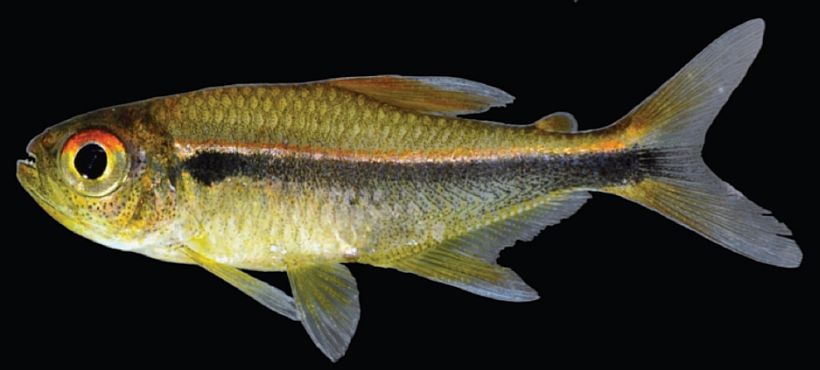
Hyphessobrycon eschwartzae
Román-Valencia & Ortega, 2013
Max lengthnot recordedTanknot recordedTempnot recordedpHnot recordedH. eschwartzae is told apart from other laterally-striped Hyphessobrycon species from the Madre de Dios watershed by the following characters: 4 simple anal-fin rays (vs. 3 in other species listed); 13-15 dentary teeth (vs. 5-11); 6 teeth in the internal premaxillary ro...
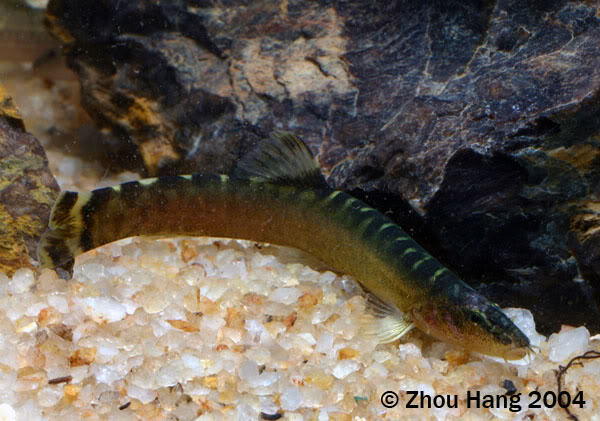
Leptobotia guilinensis
Chen, 1980
Max length100mm SL3.9in SLTank120 × 30cm48 × 12inTemp15.5–21°C60–70°FpH6.5–7.5L. elongata is the type species of the genus but according to current knowledge there exist 13 members in total, all of which are endemic to China and northern Vietnam. They're diagnosable by the following shared characters: possession of a simple (non-bifurcated), short sub-ocular spine not extending beyond the posterior edge of the eye; a laterally-compressed body; relatively deep caudal peduncle; pelvic fins reaching origin of anal-fin; anus below base of dorsal-fin and equidistant between pelvic and anal-fin origins.
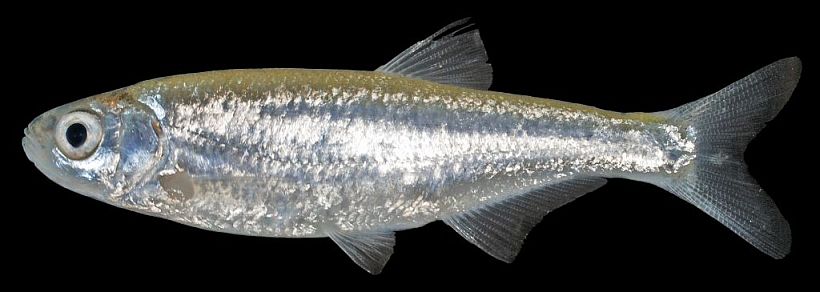
Metzia bounthobi
Shibukawa, Phousavanh, Phongsa & Iwata, 2012
Max length61mm SL2.4in SLTanknot recordedTempnot recordedpHnot recordedThis species can be distinguished from congeners by the following combination of characters: 18–20 (vs. 10-18) branched anal-fin rays; 49–55 (vs. 35-48) lateral-line scale rows; 33–36 (vs. 15-20) predorsal sca...
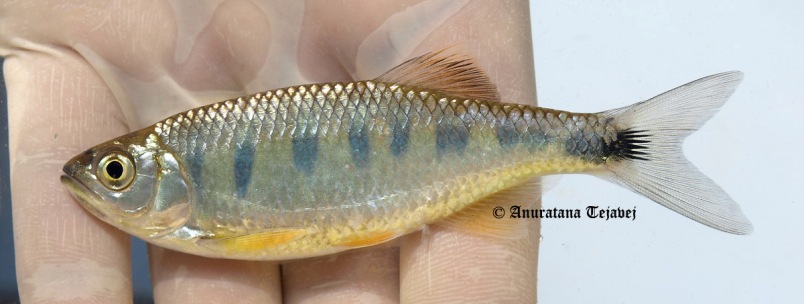
Opsarius signicaudus
Tejavej, 2012
Max length100mm SL3.9in SLTank120 × 45cm48 × 18inTemp18–26°C64–79°FpH6.0–8.0O. dogarsinghi and O. bernatziki are the only two Southeast Asian congeners to possess a large blotch at the caudal-fin base but in the former the blotch is vertically-orientated and hardly extends onto the fin itself (vs. laterally-elongate and extending onto the basal fin rays) and long (vs. short) barbels, while th...