Results for “lateral series”
Type a name: scientific, common, or one a species used to go by. Or narrow the catalogue with the filters.
Filters
Characodon lateralisRainbow Characodon
Günther, 1866
Max length65mm SL2.6in SLTank120 × 30cm48 × 12inTemp18–24°C64–75°FpH6.0–8.0Restricted to a series of small habitats below the waterfall known as 'El Salto' in the upper Río Mezquital basin, Durango state, central Mexico. It was previously considered to occur throughout much of the upper Río Mezquital in both Durango and Coahuila states, but genetic analyses suggest otherwise and have resulted in taxonomic confusion (see 'Notes').
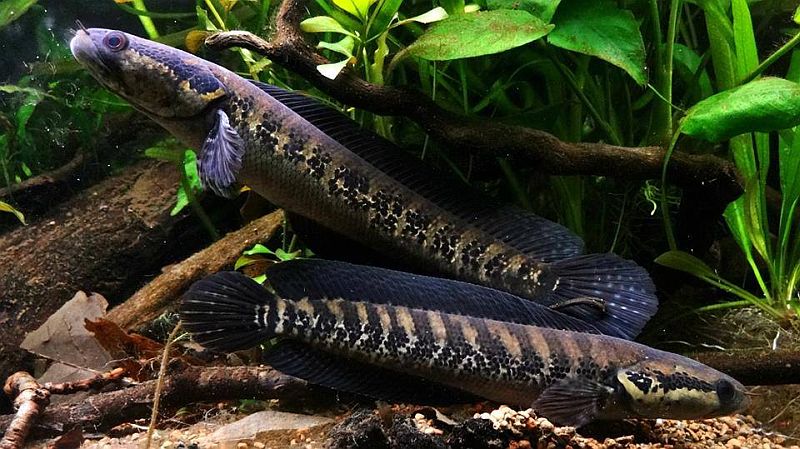
Parachanna africana
Steindachner, 1879
Max length300mm SL12in SLTank120 × 60cm48 × 24inTemp20–25°C68–77°FpH5.0–7.5Following Bonou and Teugels (1985), P. africana can be distinguished from congeners by the following combination of characters: colour pattern unique, comprising a series of 8-11 dark, chevron-shaped markings extending along the body posterior to the pectoral fins; 19-24 scales in the transverse series; lateral line complete with 73-83 pored scales; 45-48 dorsal-fin rays 45-48; 32-35 anal-fin rays.
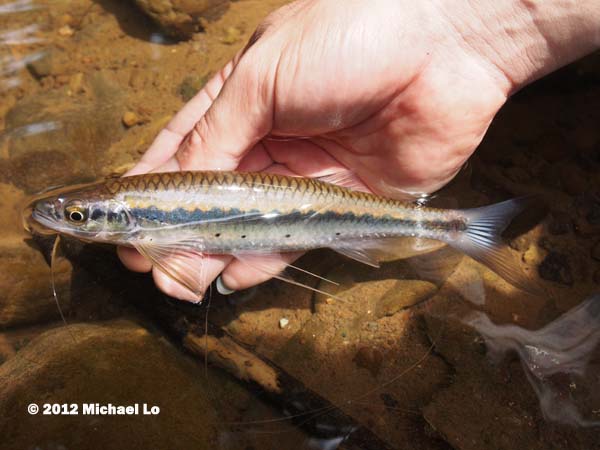
Luciosoma pellegrinii
Popta, 1905
Max length170mm SL7in SLTanknot recordedTempnot recordedpHnot recordedThe five species which currently comprise Luciosoma can be distinguished by elements of colour pattern. Popta described the colour pattern of L. pellegrinii as follows: body colour olive dorsally, with dark-edged scales, yellow ventrally; a lateral series of dark spots on the flank forming a midlateral band which extends onto the opercle but not the head; 4-8 blackish-brown, distinctly-separate spots on the lateral line; fins yellow; dorsal and anal fins with a blackish-brown band; anterior half of some pectoral-fin rays blackish-brown...
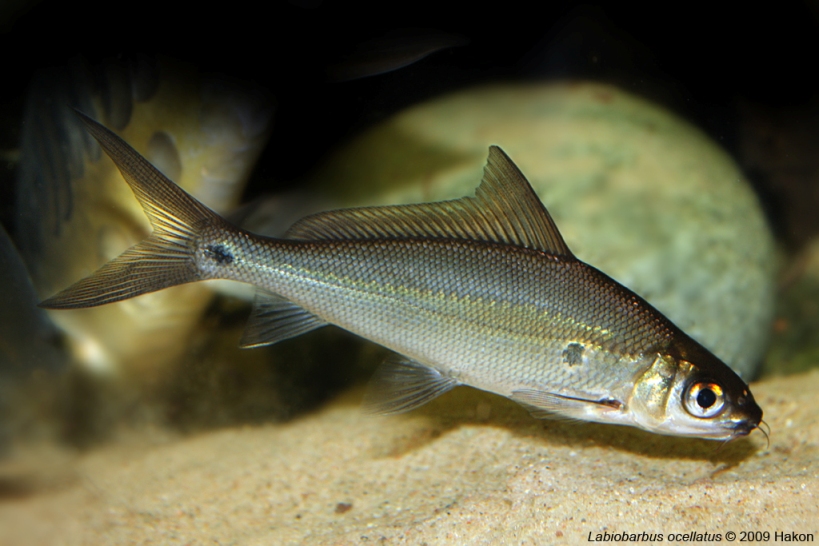
Labiobarbus ocellatus
Heckel, 1843
Max length180mm SL7in SLTank150 × 45cm60 × 18inTemp20–28°C68–82°FpH6.0–7.5It can be distinguished from congeners by the following combination of characters: 61-68 scales in the lateral series; a small, well-defined, sometimes ocellated black spot on the shoulder and another in the centre of the caudal peduncle; body without longitudinal stripes formed by spots on scales; caudal fin uniformly dusky or colourless, lobes without stripes or black margins.
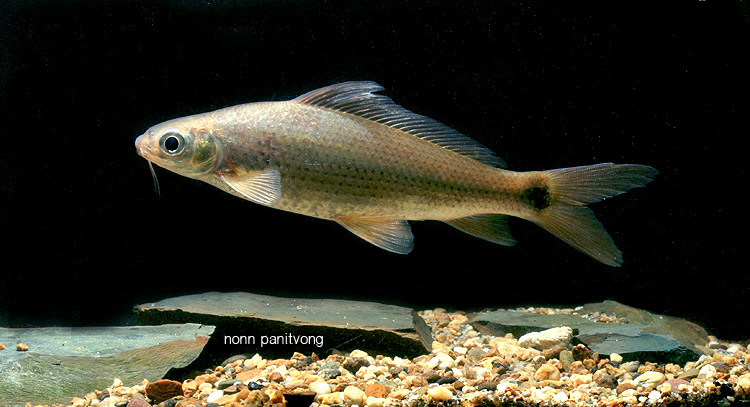
Labiobarbus siamensis
Sauvage, 1881
Max length200mm SL8in SLTanknot recordedTempnot recordedpHnot recordedL. siamensis can be distinguished from congeners by the following combination of characters: 39-42 scales in the lateral series; shoulder spot usually absent, but sometimes well-defined; body with longitudinal stripes formed by a spot on each scale; dorsal fin with dusky median stripe and no red coloration; caudal fin dusky, sometimes with reddish coloration, but no well-defined stripes; 20-23 circumpeduncular scales...
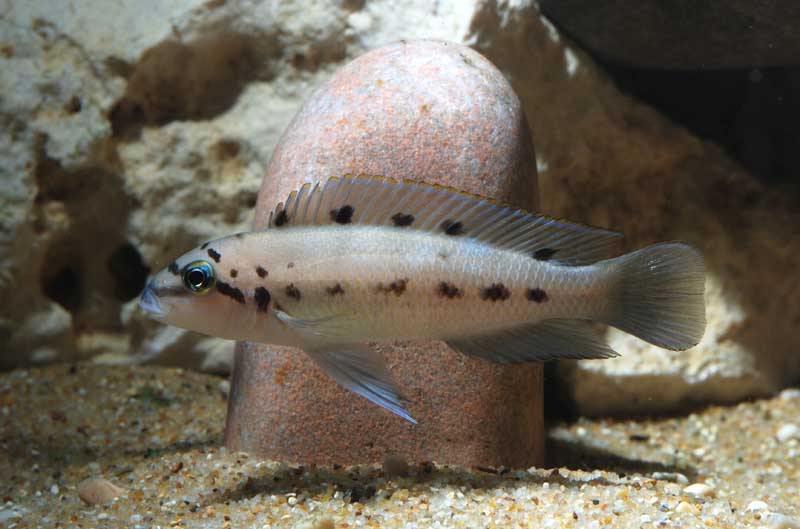
Chalinochromis sp. 'ndobhoi'
authority not recorded
Max length120mm SL5in SLTank120 × 45cm48 × 18inTemp24–28°C75–82°FpH8.0–9.0This undescribed species is also traded as C. sp. 'ndoboi' or 'ndobnoi', and despite its lack of official recognition it's the most commonly-encountered member of the genus in the aquarium trade at time of writing. It can be easily-distinguished from the congeners C. brichardi and C. popelini by its adult body patterning which comprises two or three series of irregular, dark, laterally-orientated blotches, the upper of which is often contained entirely within the dorsal ...
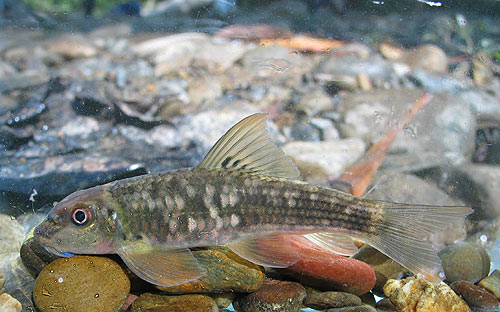
Garra notata
Blyth, 1860
Max length120mm SL5in SLTanknot recordedTempnot recordedpHnot recordedG. notata is one of a number of congeners to lack both a transverse groove and a proboscis on the snout. It also possesses 33-34 lateral line scales and a series of dark spots at the base of the dorsal-fin rays, and lacks scales on the lower portion of the body and abdomen. The genus Garra is a particularly enigmatic grouping with new taxa...
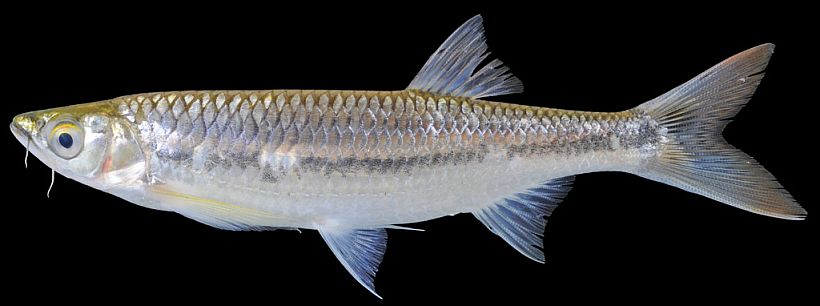
Luciosoma bleekeri
Steindachner, 1878
Max length210mm SL8in SLTank240 × 60cm96 × 24inTemp20–26°C68–79°FpH6.0–8.0L. bleekeri is most-easily distinguished from the congener L. setigerum, with which it is frequently confused, by absence (vs. presence) of a series of black spots on the lateral line scales.
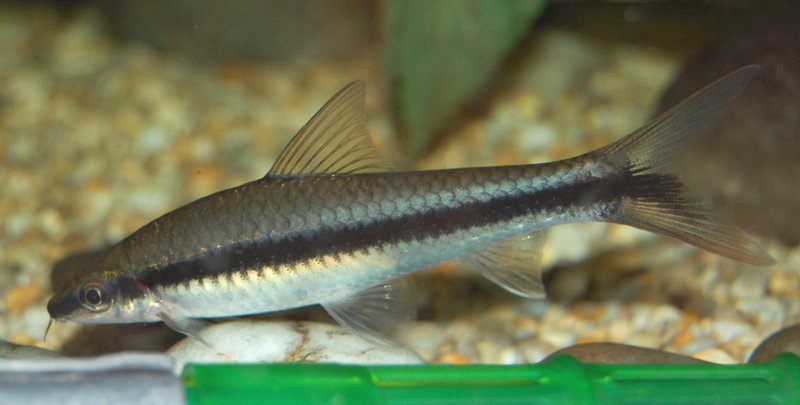
Crossocheilus nigriloba
Popta, 1904
Max length150mm SL6in SLTank150 × 45cm60 × 18inTemp20–26°C68–79°FpH6.0–7.5While separating some of the fish that may be found on sale as 'C. siamensis' is a tricky task, C. nigriloba is quite simple to identify. The dark lateral body stripe uniquely breaks up into a series of blotches when the fish are sparring, stressed or sleeping and the lower caudal fin lobe contains dark pigmentation suffused with red. The latter feature has given rise to the trade name of 'penguin flying fox'.
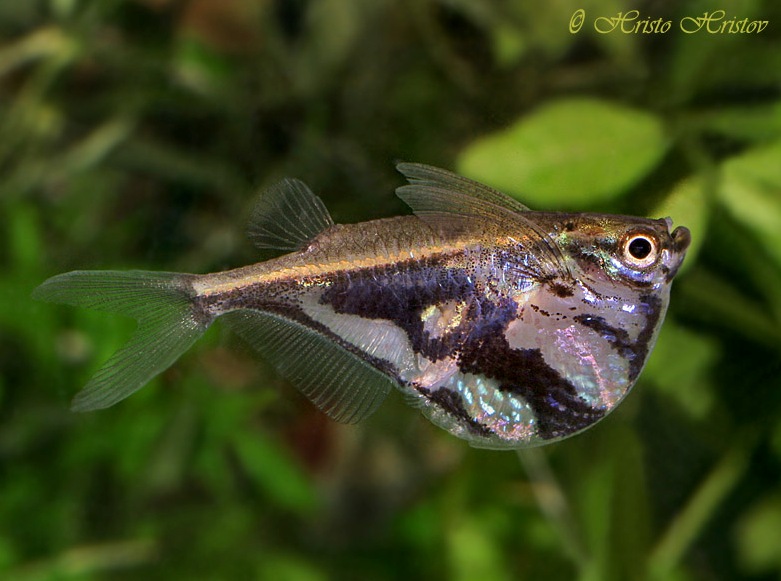
Carnegiella strigataMarbled Hatchetfish
Günther, 1864
Max length35mm SL1.4in SLTank75 × 30cm30 × 12inTemp20–28°C68–82°FpH4.0–7.0C. strigata is an enduringly popular species in the aquarium hobby but is not bred on a commercial basis with all fish offered for sale collected in the wild. It can be told apart from other members of the genus by its larger adult size and dark, marbled colour pattern appearing as a series of dark and light stripes running diagonally across the body below the lateral line. This colour pattern is variable and popul...
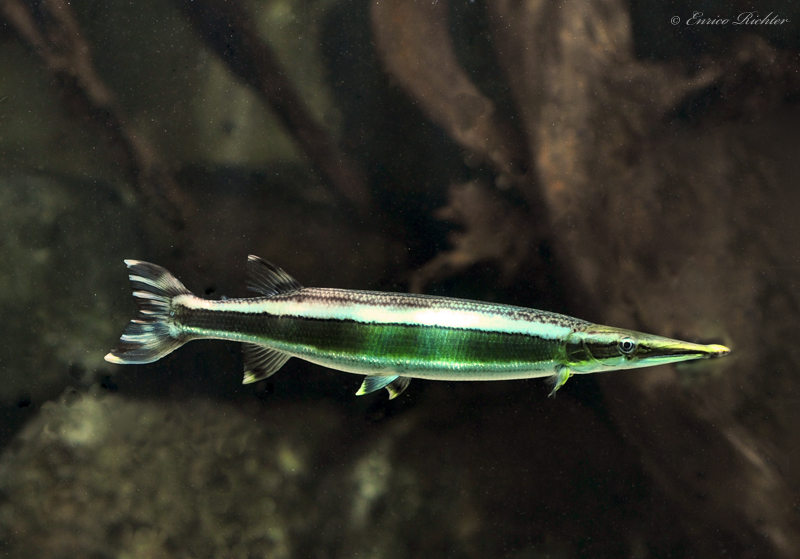
Boulengerella lateristrigaStriped Pike 'Characin'
Boulenger, 1895
Max length258mm SL10in SLTank240 × 90cm96 × 36inTemp22–28°C72–82°FpH4.0–7.0Boulengerella differs from Ctenolucia, the only other genus currently contained in the family Ctenolucidae, by a series of derived features including possession of 87-124 (vs. 45-50) lateral line scales, presence of a strongly (vs. weakly) developed fleshy appendage at the tip of the snout and absence (vs. presence) of fleshy flaps on the lower jaw. Within the order Characiformes the family Ctenoluciidae is also distinguished by a set o...
Rasbora cephalotaeniaPorthole Rasbora
authority not recorded
Max length130mm SL5in SLTank120 × 45cm48 × 18inTemp22–25°C72–77°FpHnot recordedThis species is not often exported which is a shame as it makes an elegant, peaceful resident of the larger community tank. It can be easily distinguished from similar-looking congeners such as R. einthovenii and R. jacobsoni by examining the dark lateral stripe that extends lengthways along the body of the fish as in R. cephalotaenia it is composed of a series of dark spots whereas in the other species it forms a continous solid line. Rainboth's 'Fishes of the Cambodian Mekong'...
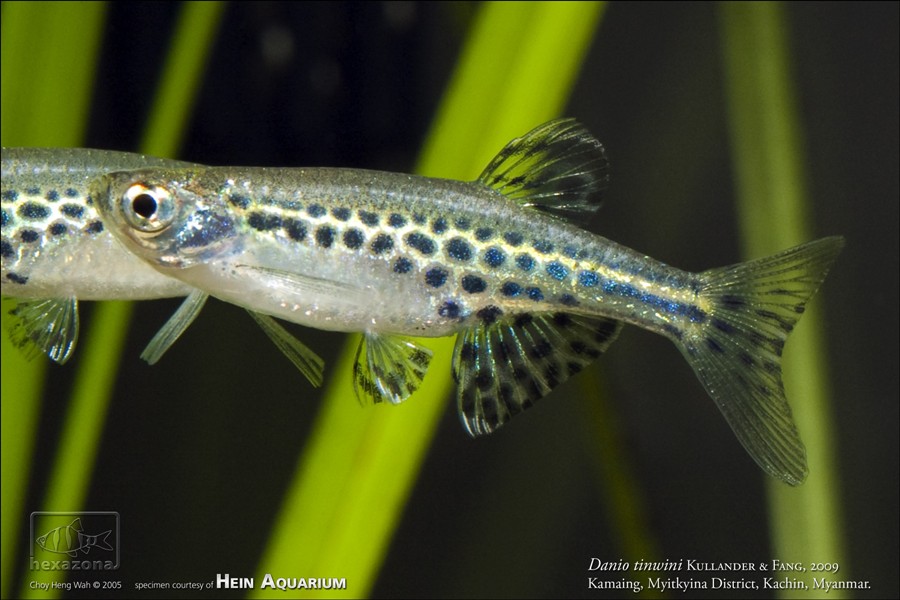
Brachydanio tinwiniGold Ring 'Danio'
Kullander & Fang, 2009
Max length30mm SL1.2in SLTank45 × 30cm18 × 12inTemp18–26°C64–79°FpH6.5–7.5Adult size is comparable to B. nigrofasciata, and in the description paper the authors hypothesise that the two are closely-related given they share other features such as similar barbel length (plus some additional merisitic counts), absent lateral line and spotted pelvic fins. The two are easy to tell apart, however, since in B. tinwini the P+1 stripe is composed of a series of spots (vs. solid), it possesses an indistinct P+2 str...
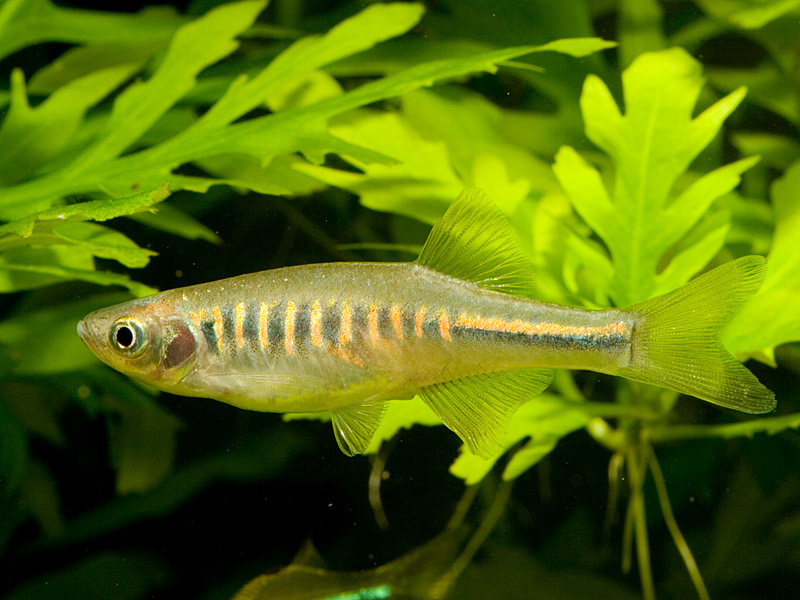
'Inlecypris' shanensis
Hora, 1928
Max length60mm SL2.4in SLTank80 × 30cm31 × 12inTemp18–26°C64–79°FpH6.0–8.0This species is sometimes referred to as 'Hora danio' or Salween danio'. It is distinguished from similar-looking species by a combination of characters as follows: lateral line complete or incomplete with 22-33 pored scales; absence of infraorbital process; 7 branched dorsal-fin rays; usually 10 or 11 branched anal-fin rays; barbels absent or rudimentary; flank markings comprising a series of narrow vertical bars on the anterior portion of each flank, fol...