Results for “mature”
Type a name: scientific, common, or one a species used to go by. Or narrow the catalogue with the filters.
Filters
Brachyplatystoma rousseauxiiDourada
Castelnau, 1855
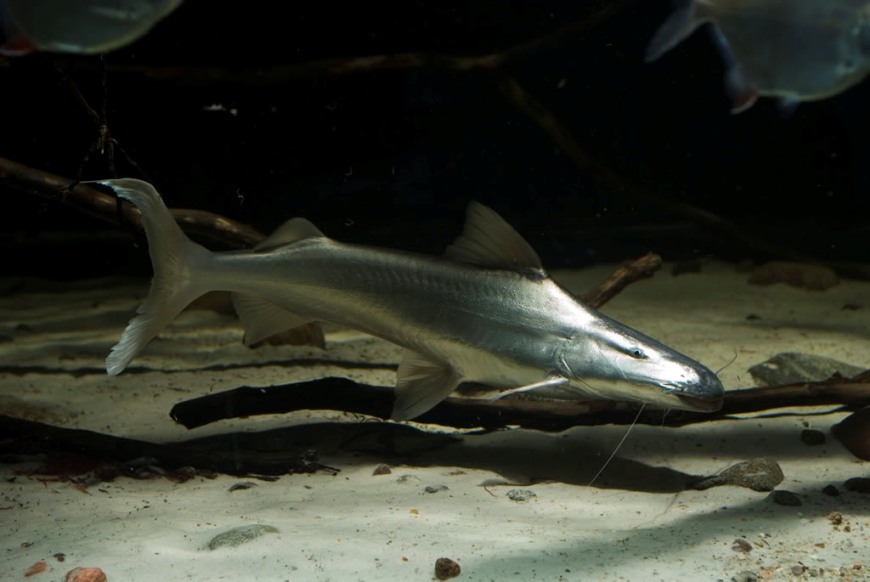
Max length1900mm SL75in SLTanknot recordedTemp22–28°C72–82°FpH6.0–8.0Study of B. rousseauxii has revealed that sexually mature adults are found only in the western Amazon, with no mature individual ever recorded east of Manaus despite the intensive commercial fishery operating there. The total distance covered by some populations during migration from the delta was as much as 5500 km, making it the longest known in any freshwater fish species.
Gymnocorymbus bondiSilver Tetra
authority not recorded
Max length50mm SL2.0in SLTank60 × 38cm24 × 15inTemp22–27°C72–81°FpH5.5–7.5Not often seen in the hobby, probably because it's a fairly bland species when mature. Juveniles are more attractive, possessing reddish unpaired fins, but these fade as the fish mature. It is, however, both peaceful and hardy and is a good choice for the beginner. It is sometimes seen labelled as G. socolofi. This name is now considered a junior synonym of G. bondi....
Acanthicus adonisPolka Dot Lyre Tail Pleco
Isbrücker & Nijssen, 1988
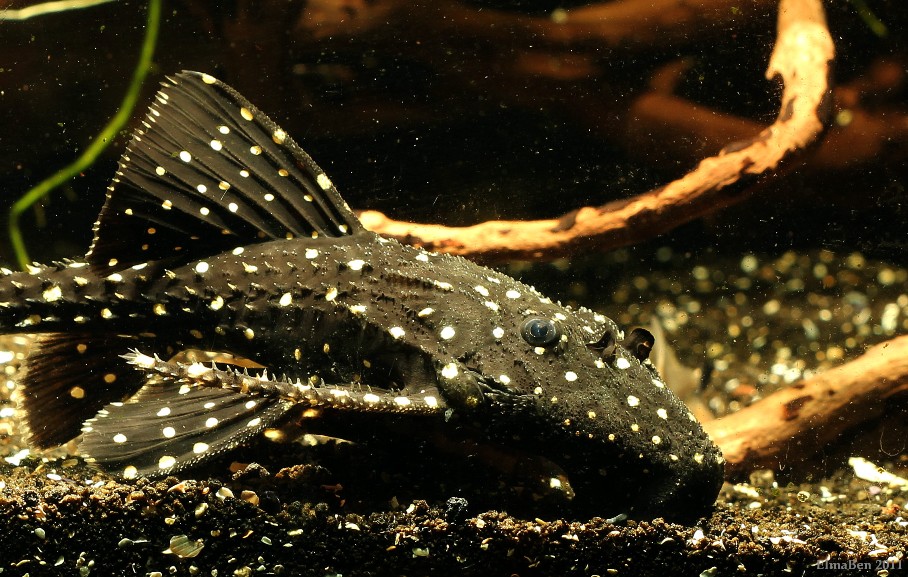
Max length1000mm SL39in SLTank600 × 200cm236 × 79inTemp23–30°C73–86°FpH6.0–7.5Despite its patent unsuitability as an aquarium subject attractively-coloured juvenile specimens of this species are traded in quite large numbers, although the scarcity of privately-maintained adults would suggest that most fail to reach their potential. The striking, spotted patterning also disappears as this species matures, and since it also becomes increasingly bellligerent with age it can only be recommended to owners of the largest private aquaria or tropical ponds. There exists an albino...
Acanthicus hystrixL155
Spix & Agassiz, 1829
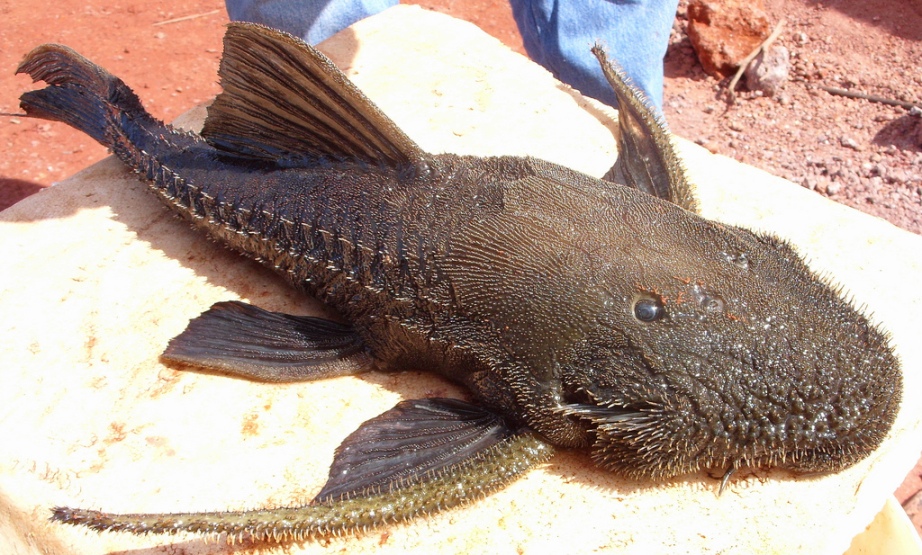
Max length1000mm SL39in SLTank600 × 200cm236 × 79inTemp23–30°C73–86°FpH6.0–7.5Despite its patent unsuitability as an aquarium subject attractively-coloured juvenile specimens of this species are traded in quite large numbers, although the scarcity of privately-maintained adults would suggest that most fail to reach their potential. The striking, spotted patterning also disappears as this species matures, and since it also becomes increasingly bellligerent with age it can only be recommended to owners of the largest private aquaria or tropical ponds. There exists an albino...
Ancistrus ranunculusL034
Muller, Rapp Py-Daniel & Zuanon, 1994
Max length130mm SL5in SLTank80 × 30cm31 × 12inTemp25–30°C77–86°FpH6.0–7.0A somehwhat odd-looking species with a distinctive wide head and overall flattened profile. Unfortunately this fish is not the easiest fish to keep alive in the aquarium since it requires rather specialised conditions and is often in poor condition post-import. As a juvenile, it often sports a pattern of light spots on the body, leading to confusion with the similarly shaped L255 species.In A. ranunculus, these spots fade as the fish mature,...
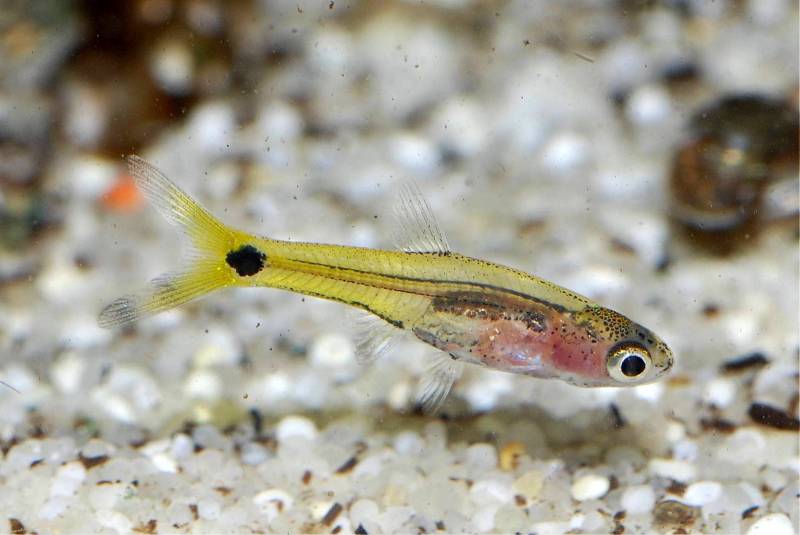
Barboides gracilis
Brüning, 1929
Max length18mm SL0.7in SLTank45 × 20cm18 × 8inTemp21–26°C70–79°FpH6.0–7.0This species is still very rare in the hobby although it has built up something of a following among enthusiasts of planted 'nano' aquaria and you may see it on sale under the trade names of 'dwarf amber/ember barb'. Its small adult size evolved via a process known as miniaturisation characterised by sexually mature adults with a significantly reduced size of less than 20mm SL. Among bony fishes cyprinids are one of the few groups in which this phenomenon occurs repeated...
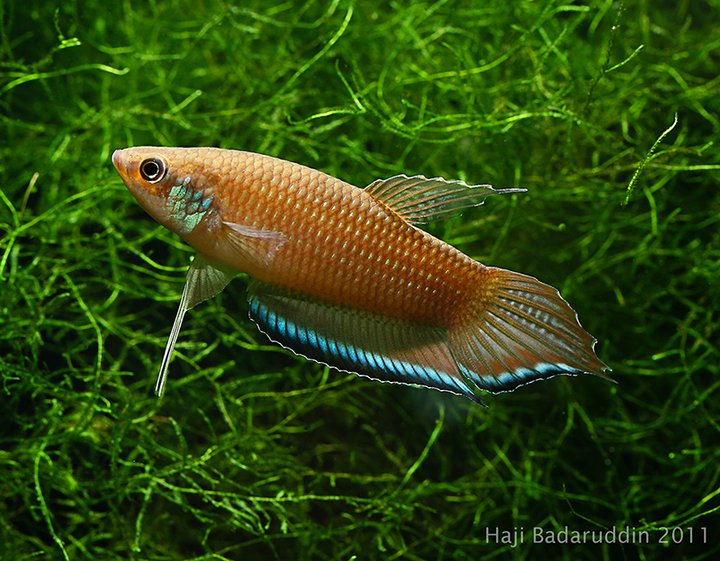
Betta enisae
Kottelat, 1995
Max length60mm SL2.4in SLTank45 × 30cm18 × 12inTemp21–24°C70–75°FpH5.5–7.0This species is included in the B. pugnax complex of closely-related species within the genus, an assemblage of which members are notoriously difficult to tell apart from one another, but which can be characterised collectively by the following set of shared characters: relatively large head measuring 28-40% SL; live colouration usually brown with green or blue iridescent spots; male with similarly-coloured scales on opercle, sometimes extending to abdomen; juveniles and females usually brown with two central body stripes and a dark marking on the caudal peduncle; anal-fin in mature specimens pointed and often elongated; caudal-fin lanceolate.
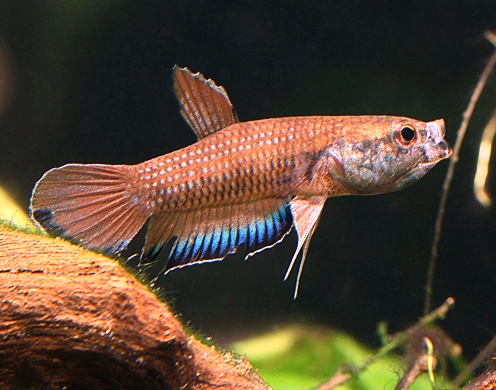
Betta falx
Tan & Kottelat, 1998
Max length50mm SL2.0in SLTank60 × 30cm24 × 12inTemp22–27°C72–81°FpH4.7–6.8B. falx is included in the Betta picta group/complex of closely-related species within the genus, an assemblage comprising species with the following shared characters: unpaired fins rounded (anal-fin sometimes tapering to a blunt point); anal-fin rays I-III, 18-24; dark marginal band on anal and caudal fins, more pronounced in mature males; presence of pre-orbital and post-orbital stripes; presence of chin bar on throat; iridescent green, gold, or blue scales on opercle.
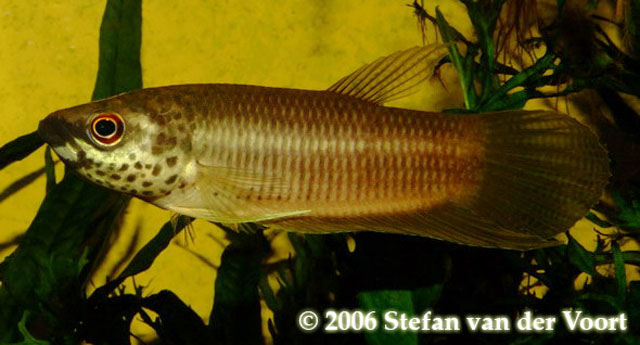
Betta pardalotos
Tan, 2009
Max length90mm SL3.5in SLTank80 × 30cm31 × 12inTemp22–27°C72–81°FpH4.0–6.5This species is included in the Betta waseri group/complex of closely-related species within the genus, an assemblage which also includes a handful of unidentified fishes such as B. sp. 'Medas' on an unofficial basis. Group members share the following combination of characters: base body colouration clay yellow; opercle scales iridescent gold in mature males of all species except ...
Betta pi
Tan, 1998
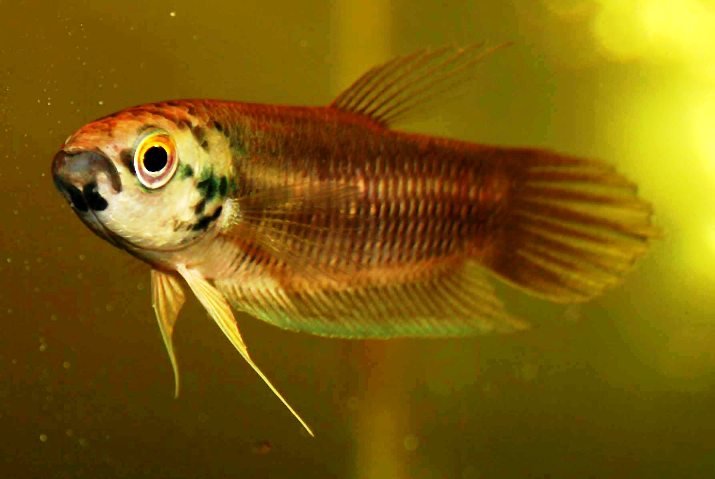
Max length90mm SL3.5in SLTank90 × 30cm36 × 12inTemp22–28°C72–82°FpH4.0–6.5B. pi is included in the Betta waseri group of closely-related species within the genus, an assemblage within which members share the following combination of characters: base body colouration clay yellow; opercle scales iridescent gold in mature males of all species except B. tomi; throat with black markings which join with black lower jaw in some species; no chin bar.
Betta pictaSpotted Betta
Valenciennes, 1846
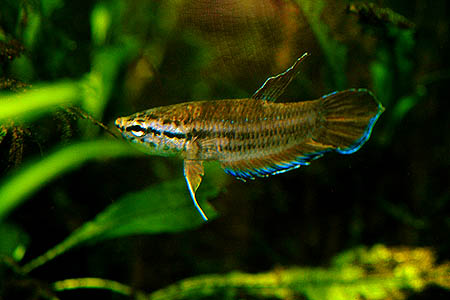
Max length50mm SL2.0in SLTank60 × 30cm24 × 12inTemp22–28°C72–82°FpH5.5–7.5This species lends its name to the Betta picta complex of closely-related species, an assemblage of which members share the following combination of characters: unpaired fins rounded (anal fin sometimes pointed): I-III, 18-24 anal-fin rays; anal and caudal fins with dark distal margins, most pronounced in mature males; pre- and post-orbital stripes present; chin bar present; opercle with iridescent blue, green, or gold scales.
Betta pinguis
Tan & Kottelat, 1998
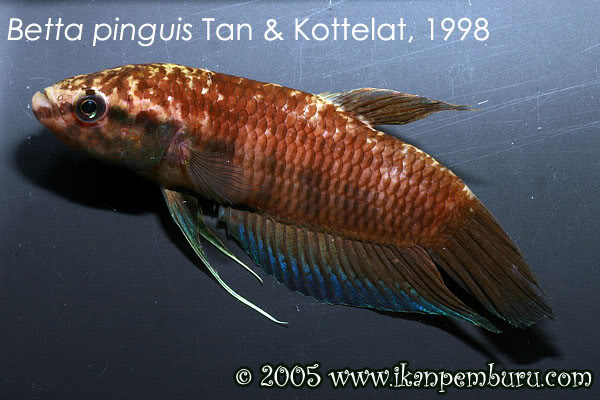
Max length80mm SL3.1in SLTank80 × 30cm31 × 12inTemp22–27°C72–81°FpH5.0–7.0B. pinguis is included in the Betta akarensis group/complex of closely-related species within the genus, of which members share the following set of characters: possession of pre-orbital and post-orbital stripes (the post-orbital stripe is faint or interrupted in some species); chin bar present; caudal-fin lanceolate with highly extended median rays in mature males; caudal fin usually with transverse bars; greenish or bluish iridescent scales on body of males in some species; opercle without iridescent scales except in juveniles.
Betta raja
Tan & Ng, 2005
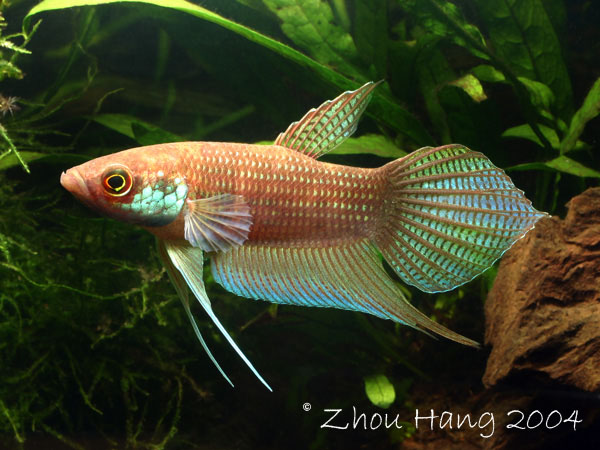
Max length70mm SL2.8in SLTank80 × 30cm31 × 12inTemp22–27°C72–81°FpH4.0–7.0It should be noted that not all authors consider the B. pugnax group to contain the same species, with some placed in the B. picta complex by Schindler and Schmidt (2006), for example. B. raja can be told apart from other members of the B. pugnax group by the following characters: mature males with very long pelvic fins covering 15-23 anal-fin rays or even longer than the base of the anal-fin in some cases; anal-fin and lower caudal-fin with black marginal bands; 25-28 anal-fin rays; 30-32 lat...
Betta renata
Tan, 1998
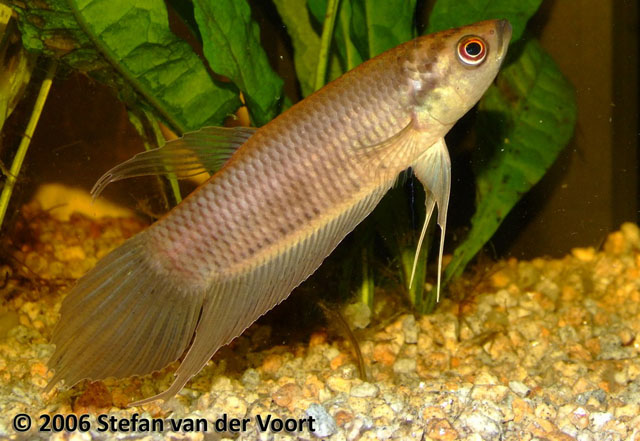
Max length85mm SL3.3in SLTank90 × 30cm36 × 12inTemp23–27°C73–81°FpH4.0–6.0This species is included in the Betta waseri group/complex of closely-related species within the genus, an assemblage which also includes a handful of potentially new species such as B. sp. 'Medas' on an unofficial basis. Group members share the following combination of characters: base body colouration clay yellow; opercle scales iridescent gold in mature males of all species except B. tomi; throat with black markings which join with black lower jaw in some species; no chin bar.
Betta simplex
Kottelat, 1994
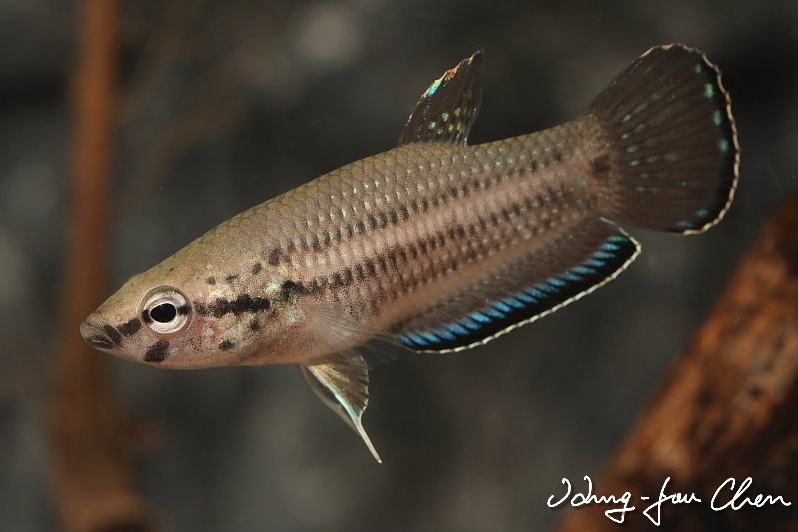
Max length60mm SL2.4in SLTank60 × 30cm24 × 12inTemp20–28°C68–82°FpH7.0–8.0B. simplex is included in the Betta picta group/complex of closely-related species within the genus, an assemblage comprising species with the following shared characters: unpaired fins rounded (anal-fin sometimes tapering to a blunt point); anal-fin rays I-III, 18-24; dark marginal band on anal and caudal fins, more pronounced in mature males; presence of pre-orbital and post-orbital stripes; presence of chin bar on throat; iridescent green, gold, or blue scales on opercle.
Brachyplatystoma vaillantii
Valenciennes, 1840
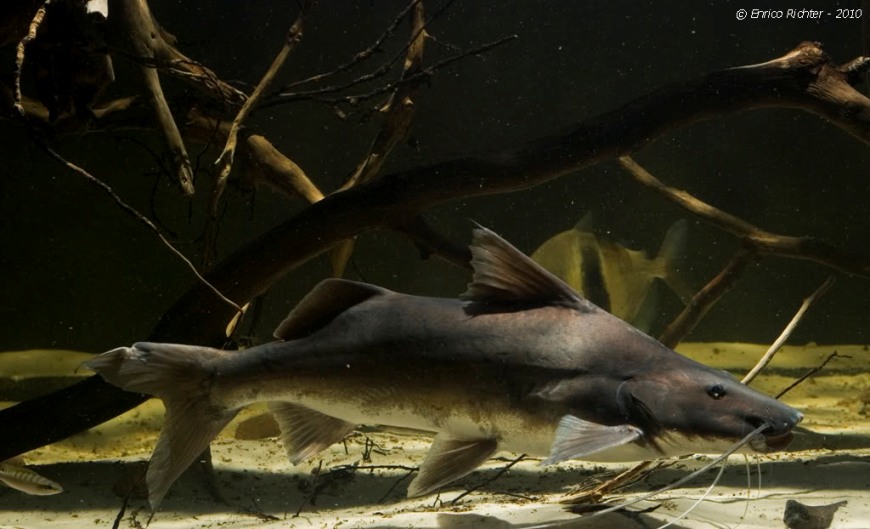
Max length1050mm SL41in SLTanknot recordedTemp22–28°C72–82°FpH6.0–8.0This rich feeding ground is exploited until the sea water returns, at which point the catfishes begin to migrate upstream in massive numbers, moving up the Amazon and its tributaries. Sexually mature individuals are not normally recorded during these events so they're thought related to feeding and dispersal rather than spawning. The fish are subject to intensive capture by commercial and artisanal fishing operations during this upstream movement.
Buccochromis lepturusSlender Tail Hap
authority not recorded
Max length400mm SL16in SLTank150 × 45cm60 × 18inTemp24–27°C75–81°FpH7.5–8.8Also known as the green lepturus, this is a stunning species when mature. Unfortunately, it is rarely seen for sale. Its pelagic nature means it is difficult to catch for export. As a result it can be quite expensive when it is available....
Centromochlus macracanthus
Soares-Porto, 2000
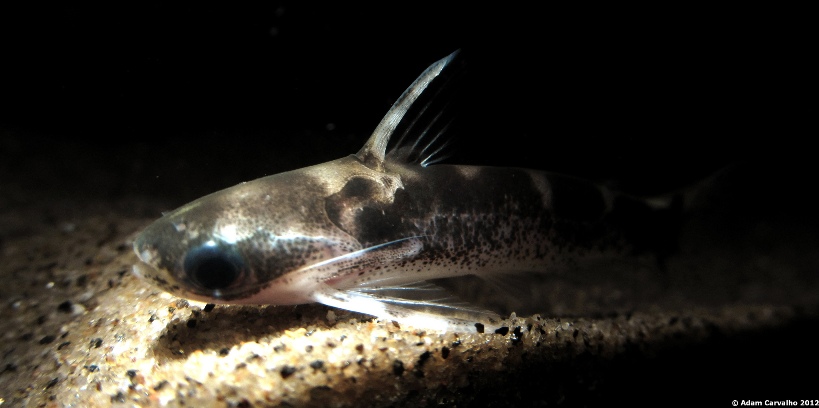
Max length71mm SL2.8in SLTank80 × 30cm31 × 12inTemp22–28°C72–82°FpH4.0–7.0All members of the family Auchenipteridae are thought to practise internal insemination and females can carry mature, unfertilised eggs and sperm packets inside the body for unspecified periods of time. When conditions are satisfactory fertilisation is triggered and the eggs deposited, and there is n...
Cichlasoma salviniSalvini
authority not recorded
Max length152mm SL6in SLTank90 × 30cm36 × 12inTemp22–26°C72–79°FpH6.5–8.0Salvin's Cichlid has a well deserved reputation for aggression, especially when breeding. They are regularly available in the trade and make an extremely colourful addition to any north/central American aggression tank. Take care when choosing tank mates, however. If only this species is kept in the tank, it will be quite shy until mature or until the natural domination order has been established. If a single fish of this species is kept alone, it will be extremely shy, usually choosing ...
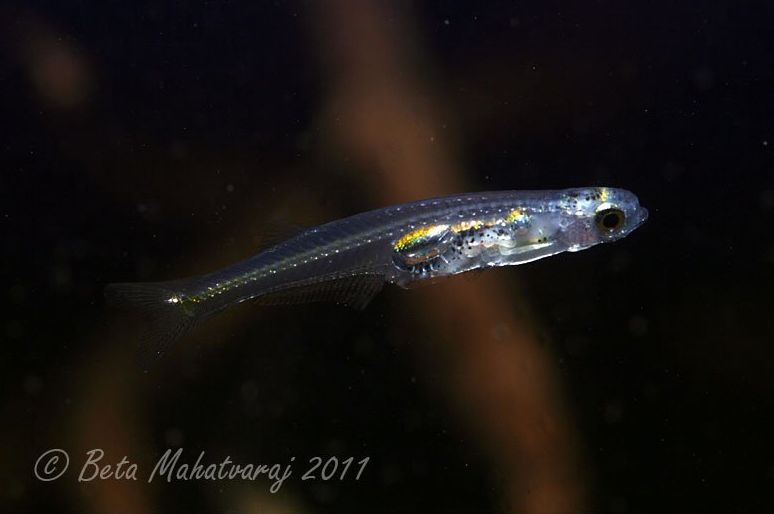
Danionella priapus
Britz, 2009
Max length16mm SL0.6in SLTank45 × 30cm18 × 12inTemp18–24°C64–75°FpH6.0–8.0As far as we know this species has not been bred in aquaria although Pete Liptrot and Paul Dixon of the Bolton Museum Aquarium, UK, have achieved great success with an unidentified congener. They first noticed fry from their group of 24 adults after moving the school to a dedicated set-up planted with mature Java moss and have since rewarded with regular batches of fry.