Ancistrus ranunculus
L034 · Medusa Pleco · Monsterantennenwels
Last revised 2026Edit this page
On this page12 sections
Quick factsEdit
Difficulty5 of 8 measures
Rated moderate because it needs a well-established tank and stable water.
- Space
- medium tank
- Water
- needs a steady pH
- Temp
- needs a steady temperature
- Diet
- unknown
- Temperament
- peaceful
- Social
- unknown
- Compatibility
- unknown
Other demands
Each of these can raise the rating on its own, whatever the measures above say.
- Hardiness
- needs a well-established tank
- Needs strong current, with the filter turning the tank over 8–12 times an hour
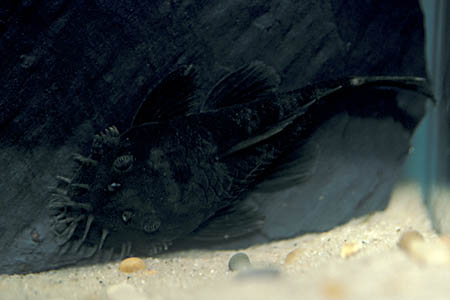
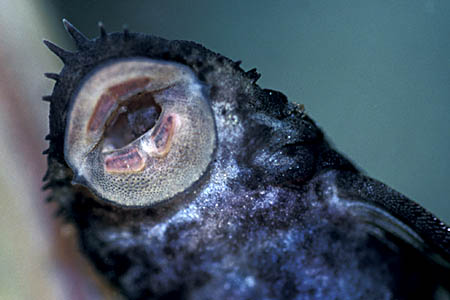
Ancistrus ranunculus, the medusa pleco (L034), is a wide-headed, flattened suckermouth catfish from the rio Xingu and rio Tocantins basins in Brazil. It lives among rocks in shallow, fast-flowing water, needs well-oxygenated water with plenty of movement and a protein-rich diet, and is often in poor condition after import. Juveniles carry light spots like the similarly shaped L255, but in A. ranunculus these fade as the fish matures.
Etymology
EditAncistrus: etymology not explained, but understood to be derived from the Greek άγκιστρο ágkistron (Gr. ἄγκιστρον), meaning 'fish hook, hook of a spindle', in reference to the hooked interopercular odontodes possessed by genus members.
ranunculus: a diminutive of the Latin rana, meaning 'frog', in allusion to the vernacular name of "Tadpole Ancistrus", which was sometimes used in the ornamental trade around the time of its description.
Distribution
EditHabitat
Write a noteEditInhabits shallow, fast flowing waters, where it lives among the rocky substrates.
Aquarium size
Write a noteEditA tank with a base measuring 80 ∗ 30 cm31 ∗ 12 in or equivalent is sufficient to house a couple of specimens. Larger quarters would be required for a group.
Maintenance
Write a noteEditA stream-type setup with a gravel or sand substrate and rounded stones and rocks would simulate its natural biotope, but it's equally at home in a planted tank. It does need well-oxygenated water with a lot of movement, though, and live plants tend not to do so well under these conditions. It will not do well without a degree of current running through the tank.
Water conditions
EditThese recommendations come from this profile’s own figures. They contain affiliate links, so we may earn a commission.
Diet
Write a noteEditPrefers a more protein-rich diet than the majority of Ancistrus spp., so supplement quality, sinking dried foods with regular offerings of live and frozen foods such as bloodworm, chopped mussel, prawn and similar.
Behaviour and compatibility
Write a noteEditA generally peaceful species. In a biotope setup good tankmates include characins such as Anostomus, Hemiodus, Semaprochilodus and Metynnis species, reophilic cichlids such as Retroculus and other Loricariids requiring similar conditions. Despite its peaceful nature, this species not the best for a general community, due to its rather specialised requirements. If you're keeping more than one, ensure each has its own refuge to call home and expect some territorial bickering.
Sexual dimorphism
Write a noteEditOnly males develop the full, bushy growth of tentacles covering the head.
Reproduction
Write a noteEditNot an easy species to breed. It's therefore best to set up a separate spawning tank for a serious attempt. The best way to obtain a pair is to buy a group of at least 6 fish and grow them on together. A tank around 30" x 12" x 12" will be needed to allow the males to develop territories.
Furnish the tank with plenty of caves and refuges as, like other Ancistrus, this is a cave spawner. Rock is the preferred material for the caves, but the fish will spawn in flowerpots, lengths of pvc piping etc. if no rock is available. What is important is that the entrances must be only slightly larger than the fish. The water should be soft, acidic, very well oxygenated and turbulent. The pH should be around 6.0-6.5, and the temperature 26.5 – 29 °C80 – 84 °F. There is no need to use a substrate.
Condition the fish with plenty of live and frozen foods. Once the fish sex out you may wish to leave just a single male in the tank with 2 or more females, or much fighting can occur, and the fish might not breed.
If the fish are kept in the correct conditions and fed a good diet, they'll often spawn without any further interference. The males will choose caves and defend them vigorously against other males, whilst conversely trying to entice females inside. A successful male will be ejected from his cave briefly, whilst the female goes inside to lay her eggs. When she's finished the male re-enters the cave and fertilises them. The female plays no further part in broodcare. The male assuming sole responsibility for defending the cave against intruders, and tending to the eggs. This he does almost constantly, fanning them vigorously with his fins.
The male may also allow more females to deposit their eggs in the cave and will care for all diligently. In fact it has been suggested that females are more likely to spawn with a male that is already guarding eggs or fry.It has been hypothesised that the characteristic tentacles on the head of male Ancistrus are lures to prospective mates, being designed to resemble juvenile fish.
The eggs are large and orange, and hatch in 4-5 days. The fry then remain in the cave, under the protection of the male for another few days, until they've used up their yolk sacs. At this point brood care usually, though not always, ceases. The fry will need heavy feedings of greenstuffs, such as blanched spinach, cucumber slices and algae wafers and small aquatic invertebrates such as microworm or brine shrimp nauplii. Ensure that food is available at all times, as the fry are voracious feeders and can easily starve if not provided with a constant supply of food. They can be left in the spawning tank if you wish, as the adults will not harm them, or they can bew moved to a separate rearing tank containing identical water. Brood size can vary, but expect at least 40-50 fry. Be prepared to move some of them to separate tanks if differences in growth rate become apparent, as the larger fish will outcompete the smaller for food.
If you're having trouble spawning these, try conducting a large (50-70%) water change with cool water, simulating the infux of colder water the rainy season brings in nature. Repeat every few days until the fish spawn.
Notes
EditA somewhat odd-looking species with a distinctive wide head and overall flattened profile. Unfortunately this fish is not the easiest fish to keep alive in the aquarium since it requires rather specialised conditions and is often in poor condition post-import.
As a juvenile, it often sports a pattern of light spots on the body leading to confusion with the similarly shaped L255. In A. ranunculus these spots fade as the fish matures, but are retained throughout life in L255.
When buying Loricariids always check that the fish has a rounded belly and that its eyes aren't sunken, as these are classic signs of emaciation in newly imported specimens. One final point to note is that extreme care should be taken when netting Ancistrus spp. as the cheek odontotes (spines that can be raised in aggression or defence, found on either side of the head) and pectoral spines can easily become entangled in the mesh of aquarium nets.
Species images · 2
These photographs are used with each photographer's permission.
Send a photographDistribution
Profile completeness20 of 24
83% complete
Also missing: water condition notes.
Community
Questions about Ancistrus ranunculus?
Ask on Discord