Results for “monophyletic”
Type a name: scientific, common, or one a species used to go by. Or narrow the catalogue with the filters.
Filters
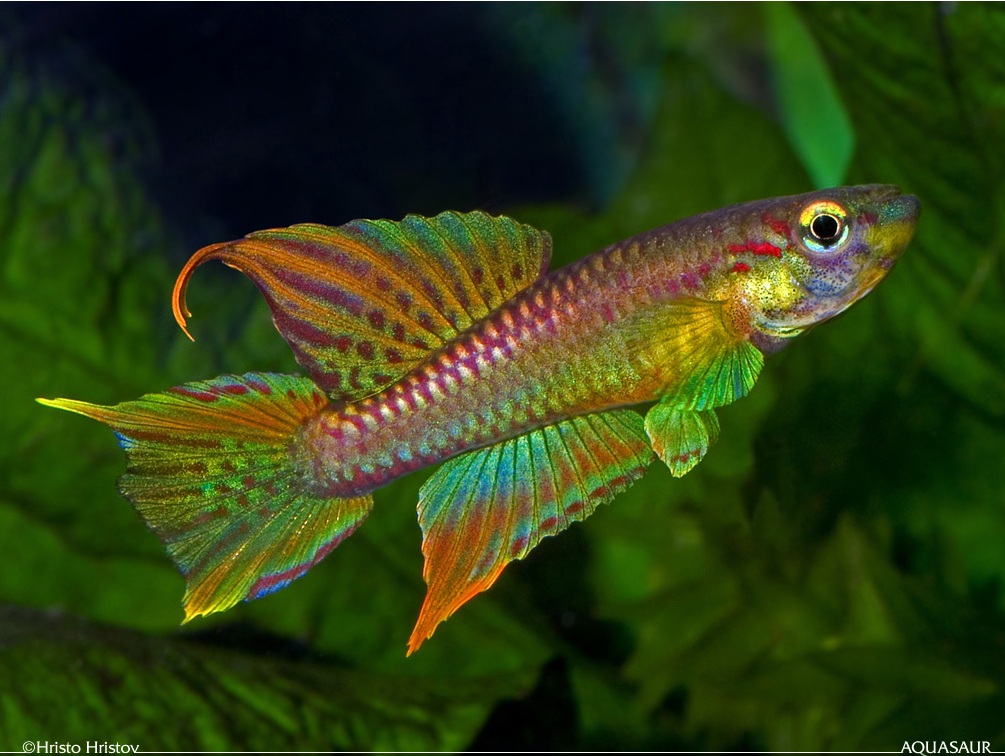
Aphyosemion splendopleureSplendid Lyretail
Brüning, 1929
Max length60mm SL2.4in SLTank45 × 25cm18 × 10inTemp22–26°C72–79°FpH6.0–7.2There exist several different colour forms of this species depending on collection locality, and these should not be kept together in order to prevent hybridisation and preserve bloodlines. It has been classified in the subgenus Chromaphyosemion by some authors who consider that nominal grouping to represent a monophyletic branch of a paraphyletic Aphyosemion.
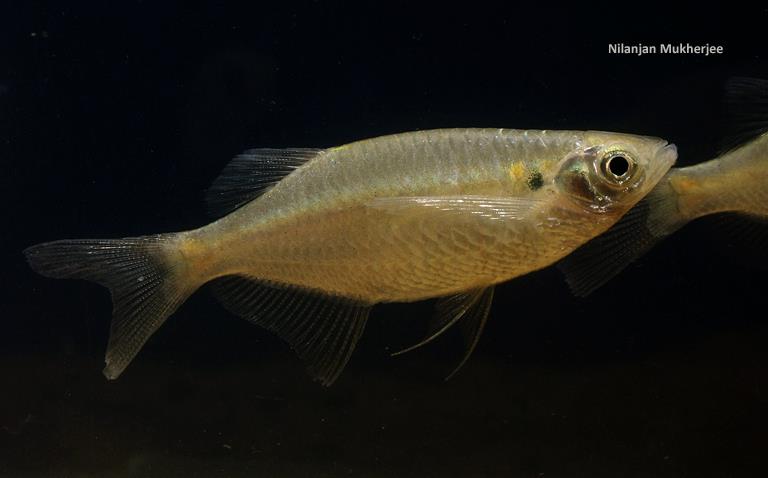
Chela cachiusNeon Hatchet Fish
Hamilton, 1822
Max length50mm SL2.0in SLTank90 × 30cm36 × 12inTemp18–24°C64–75°FpH6.0–8.0It is currently the only valid member of the genus but it is possible that additional taxa exist, particularly in Myanmar, while a number of former species are contained within the Laubuka assemblage, to which C. cachius is closely related. Phylogenetic studies suggest the existence of a monophyletic clade consisting of the genera Devario, Chela, Laubuca, Microdevario and Microrasbora plus the genus Betadevario.
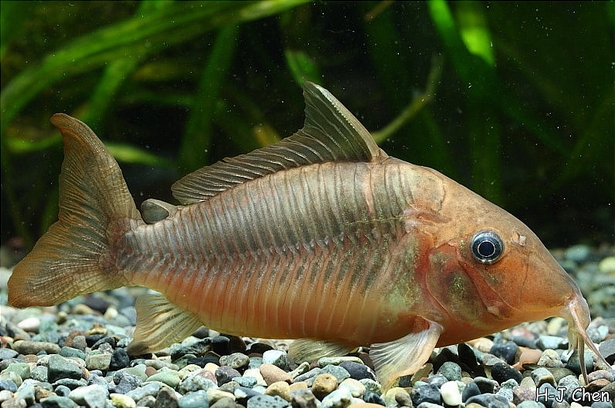
Corydoras britskiiGiant Brochis
Nijssen & Isbrücker, 1983
Max length90mm SL3.5in SLTank120 × 45cm48 × 18inTemp20–26°C68–79°FpH6.0–7.0Brochis was first synonymised with Corydoras by Britto (2003), since the latter genus cannot be considered monophyletic if the former is accepted as valid. This decision has been supported in subsequent phylogenetic studies by Shimabukuro-Dias et al. (2004) and Alexandrou et al. (2011), although the name Brochis is still common in aquarium literature. It is likely that the genus will be revalidated and expanded in the future following a required taxonomic review of the subfamily Corydoradinae as suggested by Alexandrou and Taylor (2011).
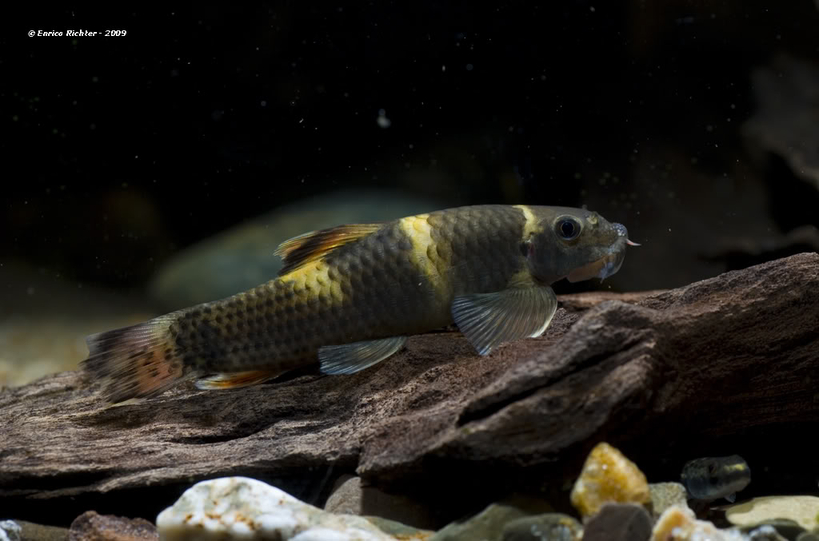
Garra flavatraPanda Garra
Kullander & Fang, 2004
Max length90mm SL3.5in SLTank90 × 30cm36 × 12inTemp22–27°C72–81°FpH6.5–7.5Garra species are usually included in the subfamily Labeoninae/Cyprininae (name varies with author) which by current thinking is further divided into several tribes and subtribes (Stiassny and Getahun, 2007). The putatively monophyletic subtribe Garraina comprises Garra plus numerous other genera including the well-known Crossocheilus and Epalzeorhynchos. Within this division their closest relatives are members of Discogobio, Discocheilus and Placocheilus (the lat...
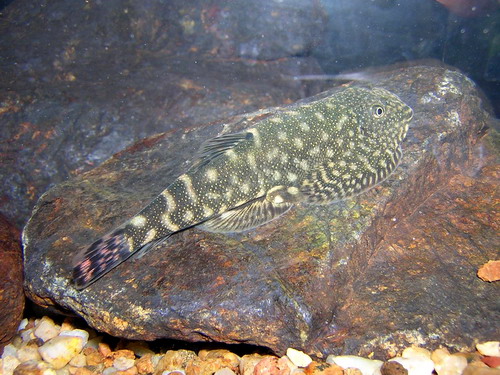
Gastromyzon sp. 'SK01'
authority not recorded
Max length50mm SL2.0in SLTank60 × 30cm24 × 12inTemp20–24°C68–75°FpH6.5–8.0This undescribed species has probably not been seen in the aquarium trade yet but is occasionally maintained private collectors. The 'SK' numbering system used here refers to 'South Kalimantan', home to several unidentified members of the genus. Gastromyzon spp. are placed into various 'species groups' (artificial assemblages of species which may or may not be monophyletic) for ease of reference, and based on colour and patterning G. sp. 'SK01' appears similar to members of the G. ridens group which also includes G. crenastus, G. stellatus and G. zebrinus.
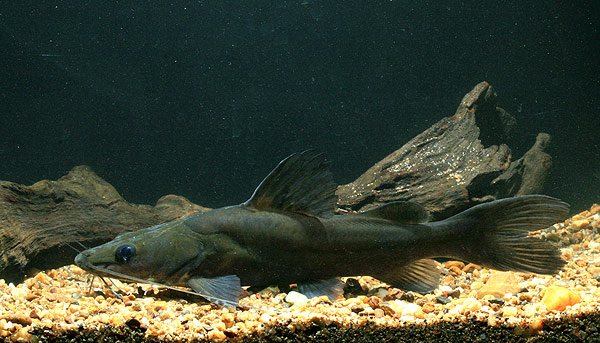
Hemibagrus filamentus
Fang & Chaux, 1949
Max length420mm SL17in SLTanknot recordedTempnot recordedpHnot recordedThis species appears to be unknown in the aquarium trade but is a valued food fish within its native range. Hemibagrus has been divided into a number of putative species groups which may or may not represent monophyletic assemblages, and following a major review by Ng and Kottelat (2013) H. filamentus is included in the H. nemurus group.
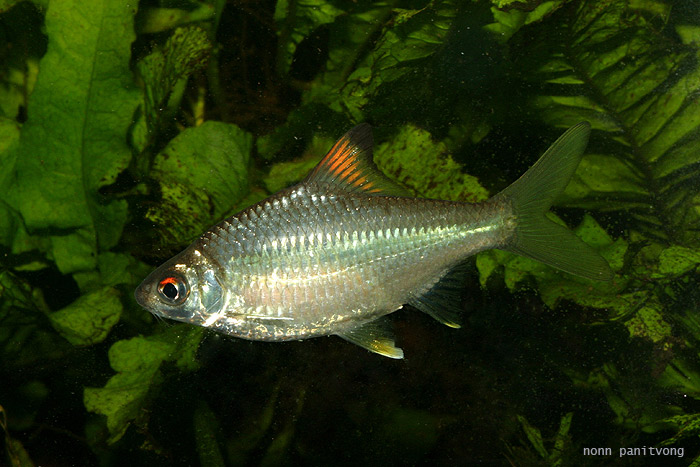
Mystacoleucus argenteus
Day, 1888
Max length140mm SL6in SLTank120 × 45cm48 × 18inTemp20–27°C68–81°FpH6.0–7.5All Mystacoleucus species possess a procumbent predorsal spine orientated towards the head, though it can be difficult to spot with the naked eye. This can become entangled in an aquarium net so care must be taken when handling the fish. The trait is shared by members of Tor, Spinibarbus and Paraspinibarbus although there exists no strong evidence to suggest that these genera form a monophyletic lineage and it is...
Nannocharax brevisAfrican Darter Characin
authority not recorded
Max length45mm SL1.8in SLTank45 × 30cm18 × 12inTemp23–27°C73–81°FpH6.0–7.5There are currently 25 described species in the genus Nannocharax, these forming a monophyletic group with members of the very similar Hemigrammocharax. None can be described as particularly common in the hobby but N. brevis and N. fasciatus are the most often seen. They are notoriously tricky to identify though, and it's quite possible that more than two species are being sold under these names. In nature these fish occupy a similar ecological niche to the South American darter characi...