Results for “reticulation”
Type a name: scientific, common, or one a species used to go by. Or narrow the catalogue with the filters.
Filters
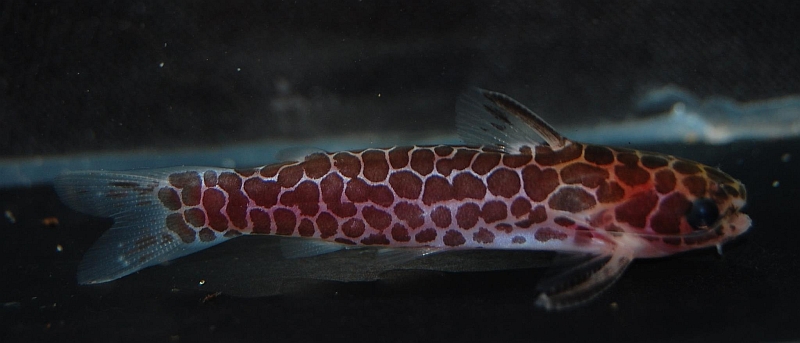
Centromochlus reticulatusReticulated Driftwood Catfish
Mees, 1974
Matched on Tatia reticulata, a name it was formerly known by
Max length27mm SL1.1in SLTank60 × 30cm24 × 12inTemp22–28°C72–82°FpH5.0–7.5The genus Centromochlus is diagnosable by members having the proximal anal-fin radials enlarged and fused to each other at the base, forming a single ossified structure. It's sometimes included in the putative subfa...
Corydoras reticulatusReticulated Cory
authority not recorded
Matched on the common name Reticulated Cory
Max length60mm SL2.4in SLTank60 × 38cm24 × 15inTemp22–26°C72–79°FpH6.0–7.2Also known as the network cory, this is one of the commoner species seen in dealers tanks, and is a good cory for the beginner.
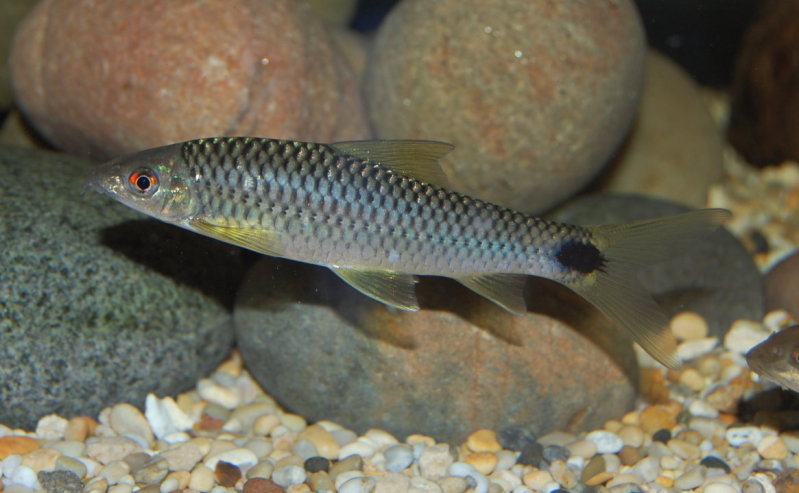
Crossocheilus reticulatus
Fowler, 1934
Matched on Holotylognathus reticulatus, a name it was formerly known by
Max length170mm SL7in SLTank180 × 45cm72 × 18inTemp16–24°C61–75°FpH6.0–7.5While some laterally-striped members of the genus look very similar to one another the combination of silvery body, dark-edged scales and dark caudal peduncle blotch set C. reticulatus uniquely apart. The names Crossocheilus tchangi, Epalzeorhynchos coatesi and E. stigmaeus are all now considered synonyms of the species but were erected because the fish vary, most often in minor aspects of patt...
Papyrocranus aferArowana Knifefish
authority not recorded
Matched on the common name Reticulate Knifefish
Max length800mm SL31in SLTank210 × 90cm84 × 36inTemp24–28°C75–82°FpH6.5–7.5Like other members of the family Notopteridae this species differs from Gymnotiform knifefish in that its anal and caudal fins are fused together into one long, undulating fin running along the underside of the fish. There is only one other species in the genus. P. congoensis is a smaller, plain brown coloured fish found only in the Democratic Republic of Congo and is very rare in the hobby. P. afer is also infrequently imported and is one of the rarer knifefish species in the hobby. It can dev...
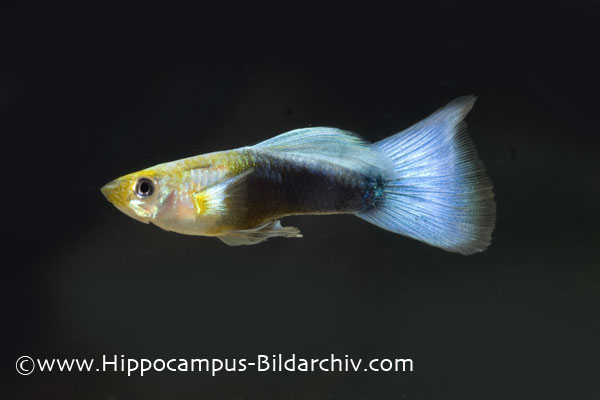
Poecilia reticulataGuppy
Peters, 1859
Max length60mm SL2.4in SLTank45 × 30cm18 × 12inTemp17–28°C63–82°FpH7.0–8.5One of the most popular aquarium fish in the world, the guppy is instantly recognisable to most people. There are many aquarium bred varieties of this species available, most have elongated finnage and gaudy colouration. The wild form is seldom seen for sale. Unfortunately many commercially bred guppies are not very hardy due to inbreeding and over-production and are prone to disease and premature death. We therefore recommend the purchase of quality stock from breeders or society auctions. P. ...
Rasbora vulcanus
authority not recorded
Max length40mm SL1.6in SLTank60 × 38cm24 × 15inTemp23–26°C73–79°FpHnot recordedThis species was described in 1999 and may still occasionally be seen on sale under the incorrect names R. reticulata or R. cf. reticulata as well as the trade name 'volcano rasbora'. The real reticulata is endemic to the small island of Nias which lies off Sumatra's northwestern coast and is virtually inaccessible to fish collectors so is unlikely to be in the hobby although it may have been exported on a couple of occasions. It's a deeper-bodied fish and does not exhibit th...
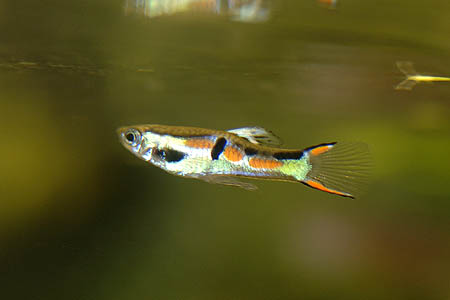
Poecilia wingeiEndler's Livebearer
Poeser, Kempkes & Isbrucker, 2005
Max length25mm SL1.0in SLTank45 × 30cm18 × 12inTemp24–30°C75–86°FpH7.0–8.5Endler's Livebearer was actually discovered in 1937 by Franklyn F. Bond before being rediscovered by John Endler in 1975 in Laguna de Patos, Cumana, northeastern Venezuela. It was found coexisting, but not interbreeding with, a wild form of P. reticulata. Both species are native to this area of Venezuela, but P. reticulata was much less common in areas where P. wingei was thriving. This is thought to be partially related to habitat type, as guppies are usually found in colder, running water...
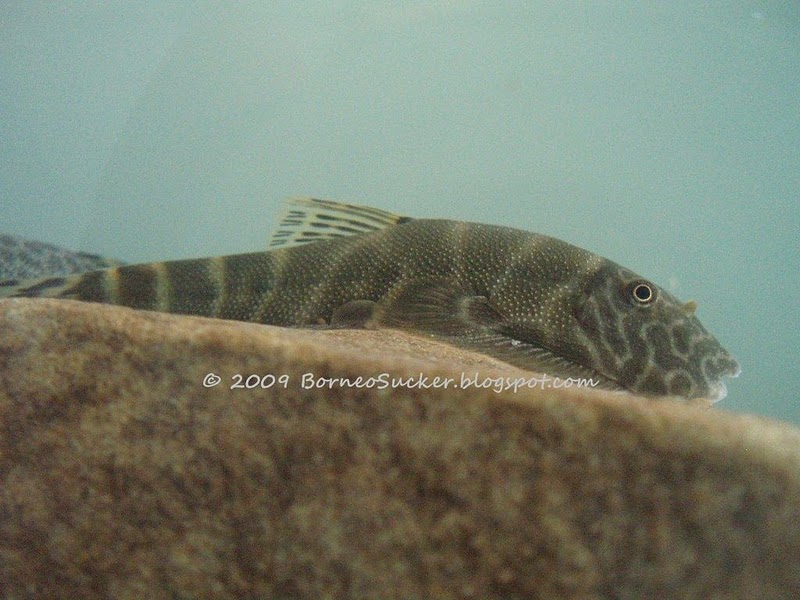
Gastromyzon extrorsus
Tan, 2006
Max length80mm SL3.1in SLTank75 × 30cm30 × 12inTemp20–24°C68–75°FpH6.0–8.0This species has probably not been seen in the aquarium trade yet but has been maintained by a few private collectors. It can be distinguished from congeners by the following combination of characters: secondary rostrum present; complete postoral pouch present; body colour brown with up to 9 thin gold stripes; head dorsum dark brown with gold reticulate pattern; subopercular groove absent; gill slit vertical; sublacrymal groove present; sno...
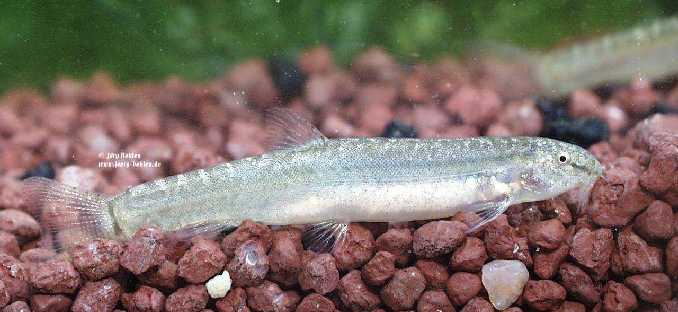
Lepidocephalichthys cf. irrorataLoktak Loach
Hora, 1921
Max length30mm SL1.2in SLTank45 × 30cm18 × 12inTemp20–25°C68–77°FpH5.5–7.5This species is not traded often but may occasionally be exported as bycatch among shipments of other species. It can be distinguished from congeners by the following combination of characters: presence of large, exposed scales on top of head; dorsal-fin origin posterior to pelvic-fin origin; moderate to small size (to 29 mm SL); caudal-fin emarginate and with dark reticulations; caudal-fin lobes with dark, elongated spots along upper and lower edges.
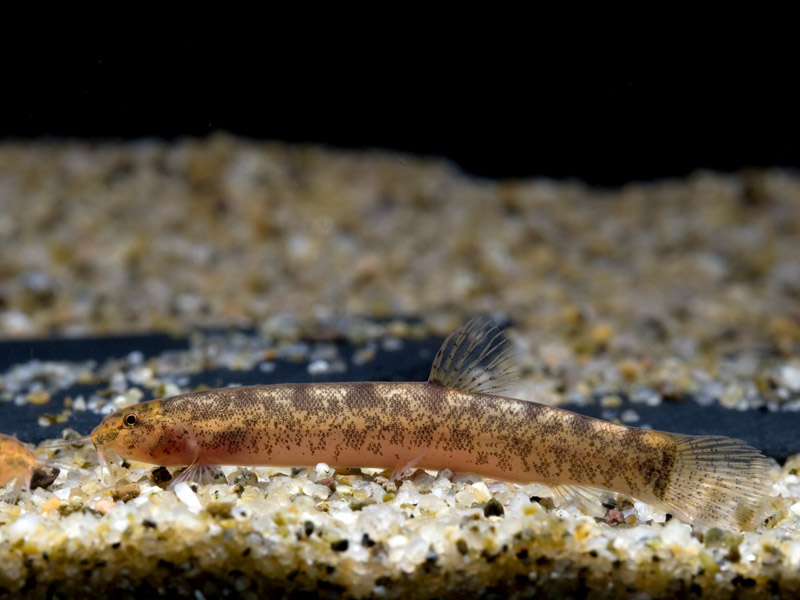
Lepidocephalichthys tomaculum
Kottelat & Lim, 1992
Max length39mm SL1.5in SLTank45 × 30cm18 × 12inTemp23–29°C73–84°FpH3.5–7.0This species is not traded often but may be available occasionally bycatch among shipments of other species. It can be told apart from congeners most easily by the following combination of characters: truncate caudal-fin; scaleless patch on top of head; caudal-fin with reticulated patterning, sometimes appearing as a series of thin vertical bars; body reddish brown with darker markings; 3-7 predorsal and 3-6 postdorsal thin, transverse dark bars running across the dorsal surface; relatively deep...
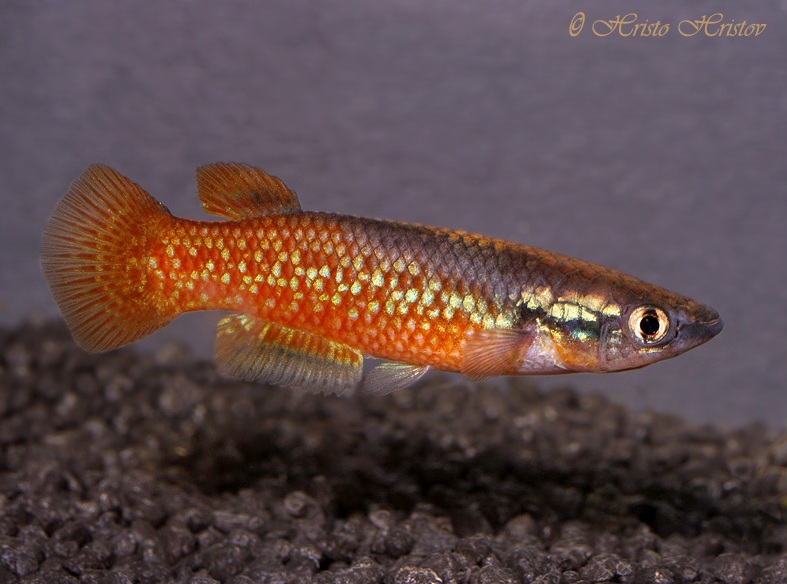
Pachypanchax sakaramyiMadagascar Panchax
Holly, 1928
Max length90mm SL3.5in SLTank90 × 30cm36 × 12inTemp20–24°C68–75°FpH6.5–7.5The majority of original populations have already been extirpated due to introduction of invasive species such as Gambusia holbrooki and Poecilia reticulata, ongoing deforestation of the Ambohitra Massif, and physical diversion of the source of the Sakaramy River for domestic use by locals. An additional population may exist in a stream on the southern slope of the Ambohitra Massif on the road between Bobasokoa and Anivorano, near the village of Andranotohiliny, but this requires verification.
Potamotrygon yepeziMaracaibo River Stingray
authority not recorded
Max length400mm SL16in SLTanknot recordedTemp23–29°C73–84°FpHnot recordedThis species is often confused with P. reticulata, P. humerosa and P. scobina. Such specimens are usually imported and sold as "teacup" stingrays and it is important to correctly identify what you are buying. There is also a ray sold as P. sp. "Nazca" that is often said to be P. yepezi; unlikely given that it is imported from Peru. This latter fish is one of the commonest rays seen in the trade and is usually quite reasonably priced, making it a good choice for newcomers to k...
Rasbora caudimaculataGreater Scissortail Rasbora
authority not recorded
Max length150mm SL6in SLTank150 × 45cm60 × 18inTemp20–26°C68–79°FpHnot recordedThis striking species may also be seen on sale with the trade name of 'red scissortail'. It can be distinguished from the similar-looking R. trilineata by the presence of orange/red colouration in the with other diagnostic features including black tips to the caudal lobes, 11-12 predorsal scale rows and a dark reticulated pattern to the edges of the scales. The 'scissortail' moniker is derived from the characteristic twitching motion of the when the fish is at rest. Rainb...
Rasbora einthoveniiBrilliant Rasbora
authority not recorded
Max length90mm SL3.5in SLTank120 × 30cm48 × 12inTemp22–26°C72–79°FpHnot recordedThis is one of the more commonly-seen rasboras in the hobby and is ideal for the medium-sized community set-up. It shares some close similarities with R. jacobsoni but can be most easily identified by the fact it lacks dark reticulated scales above the lateral stripe. This stripe also has noticeably more uneven or "crinkly" edges in R. einthovenii than in R. jacobsoni or indeed any other species of laterally-striped Rasbora. A further distinguishing combination of characters for both t...
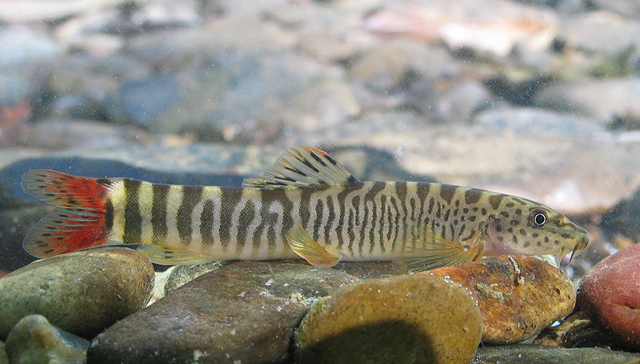
Schistura vinciguerrae
Hora, 1935
Max length75mm SL3.0in SLTank90 × 30cm36 × 12inTemp20–26°C68–79°FpH6.0–7.5This species is traded on a fairly regular basis and is similar in appearance to some congeners, most notably S. bella, S. mahnerti, S. multifasciata, S. poculi, S. reticulata, S. longa, S. conirostris and S. udomritthiruji. This assemblage has been referred to as the Schistura multifasciata 'group', and members share a...
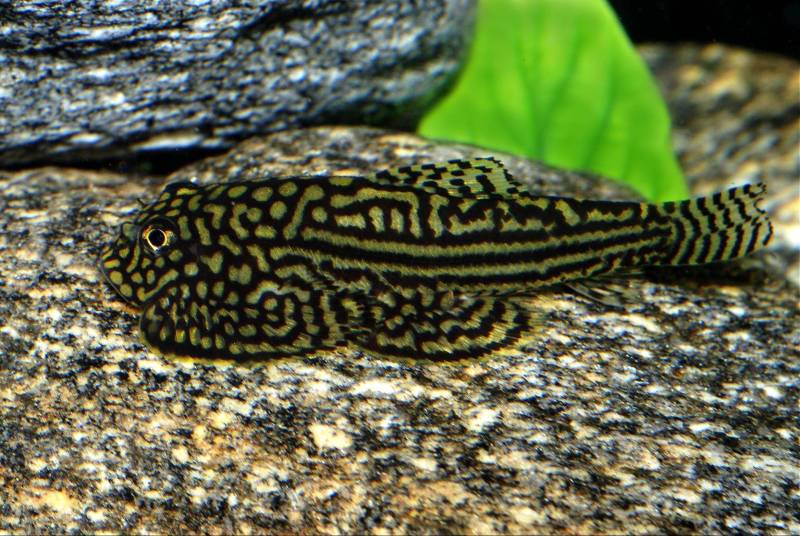
Sewellia lineolataTiger Hillstream Loach
Valenciennes, 1846
Max length65mm SL2.6in SLTank75 × 30cm30 × 12inTemp20–24°C68–75°FpH6.0–7.5S. lineolata was first recorded by Diard over 150 years prior to its 'rediscovery' in the early-1990s. It became available to the aquarium trade in the mid-2000s and swiftly established itself as one of the more popular balitorids in the hobby due to its attractive body markings and ease of breeding. It's also sold under the names 'reticulated hillstream loach', 'Vietnamese hillstream loach' and 'gold ring butterfly sucker'. It's difficult to...
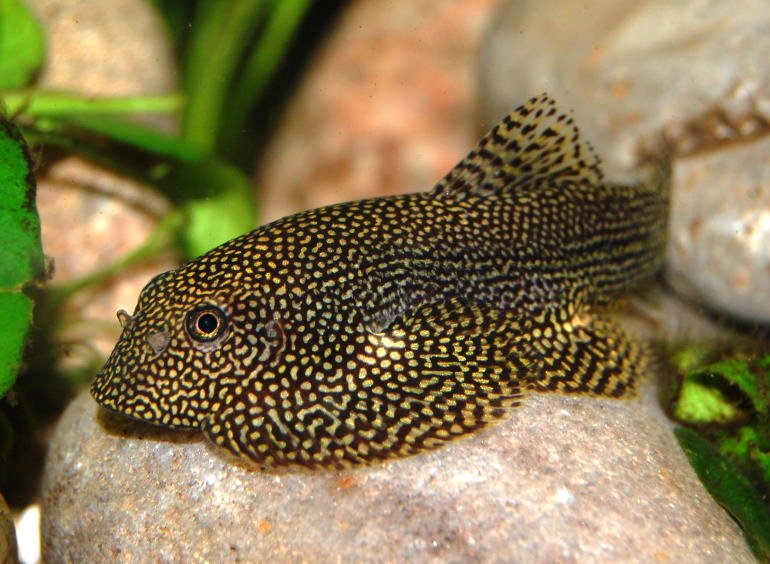
Sewellia sp. 'SEW01'Spotted Butterfly Loach
authority not recorded
Max length80mm SL3.1in SLTank90 × 30cm36 × 12inTemp20–24°C68–75°FpH6.0–7.5This is one of the more readily-available members of the genus and popularly referred to as S. sp. 'spotted' or S. sp. 'special'. It's superficially similar in appearance to S. albisuera but in that species body patterning consists of a network of irregular dark lines forming a complicated series of reticulations vs. many small, light spots on a dark background in S. sp. 'SEW01'. It's been suggested that these two may represent the same species but this...
Synodontis eupteraFeatherfin Synodontis
authority not recorded
Max length300mm SL12in SLTank120 × 30cm48 × 12inTemp22–27°C72–81°FpH6.0–7.5One of the most popular and commonly seen Synos in the hobby, S. eupterus is usually offered for sale as a small (1-3") juvenile with no information regarding its potential size. These young fish are often sold as Synodontis "Network" due to their attractive reticulated patterning. This patterning breaks up as the fish mature and adult specimens have a simple spotted colouration. The characteristic 'feathered' dorsal also develops with age, with the first few rays develo...
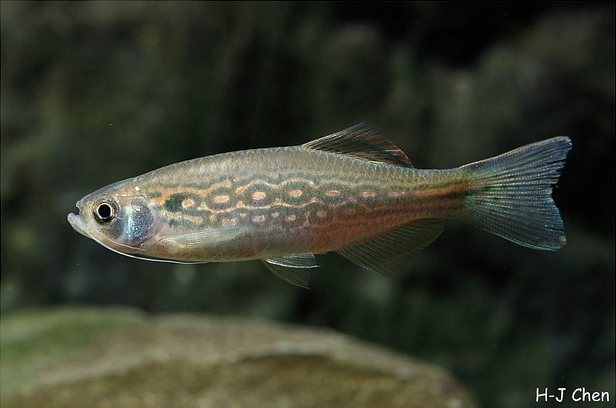
Danio dangilaMoustached Danio
Hamilton, 1822
Matched on Perilampus reticulatus, a name it was formerly known by
Max length130mm SL5in SLTank120 × 45cm48 × 18inTemp16–24°C61–75°FpH6.5–7.5In the Barak River drainage, which flows through the north-east Indian states of Nagaland and Assam before bifurcating at the Bangladesh border, symaptric species include Barilius bakeri, B. barna, B. bendelisis, B. dogarsinghi, Laubuca laubuca, Esomus danricus, Devario aequipinnatus, D. annandalei, D. devario, Rasbora daniconius, R. rasbora,...
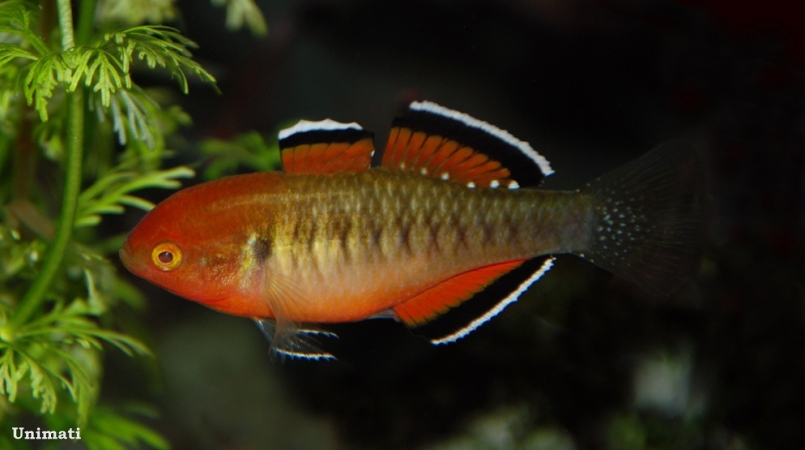
Hypseleotris compressaEmpire Gudgeon
Krefft, 1864
Matched on Eleotris reticulatus, a name it was formerly known by
Max length120mm SL5in SLTank80 × 30cm31 × 12inTemp20–35°C68–95°FpH5.0–9.1Occurs in northern and eastern Australia and southern New Guinea. In the former its range extends from the Pilbara and Kimberley regions of Western Australia state around the northern and eastern coastlines of the continent as far as the Towamba river system in New South Wales state.