Results for “riverine”
Type a name: scientific, common, or one a species used to go by. Or narrow the catalogue with the filters.
Filters
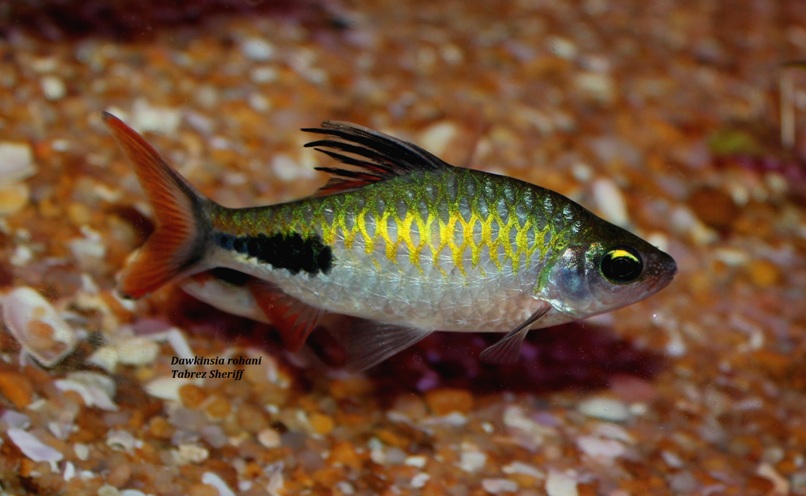
Dawkinsia rohani
Rema Devi, Indra & Knight, 2010
Max length95mm SL3.7in SLTank120 × 45cm48 × 18inTemp19–25°C66–77°FpH6.0–7.5Known only from Kanyakumari District, Tamil Nadu state, at the southern tip of the Indian peninsula. Type locality is the Kodayar River drainage and it's also been collected in the Paralayar and Pamburivaikal river systems. No precise data is available but it's certainly a pelagic, riverine species with habitats likely to vary depending on locality and time o...
Gobioides broussonnetiiViolet Goby
authority not recorded
Max length625mm SL25in SLTank120 × 60cm48 × 24inTemp22–26°C72–79°FpH7.5–9.0This fish is also commonly sold as the dragon or Peruvian goby, or dragon fish, and its bizarre appearance has made it popular in the trade. This is unfortunate, as not only does it grow very large, but it has specialised feeding requirements and does not survive for very long in freshwater. When provided with the correct conditions, however, it makes a unique and fascinating captive subject. There is a smaller species in the genus, G. peruanus, that does survive in freshwater, being a riverine ...
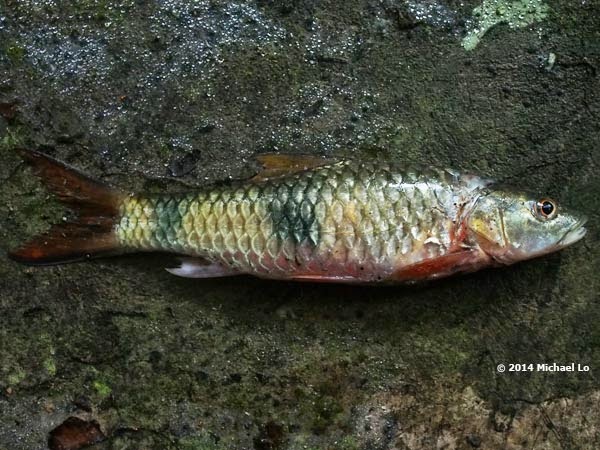
Hampala bimaculata
Popta, 1905
Max length500mm SL20in SLTanknot recordedTempnot recordedpHnot recordedPredominantly a riverine fish preferring clear, well-oxygenated, running waters with substrates of sand, gravel, rock or mud, typically flowing through tropical forest. In the habitat seen in our images sympatric fish species included Barbonymus balleroides, B. collingwoodi, Cyclocheilichthys repasson, C. apogon, Diplocheilichthys pleurotaenia, Garra borneensis, Leptobarbus hosii, and an unidentified Gastromyzon sp.
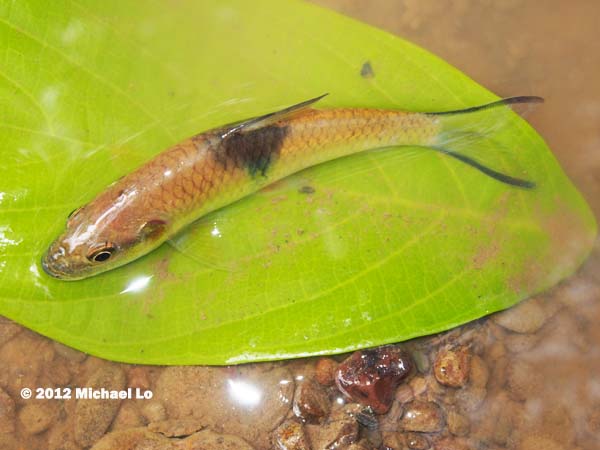
Hampala sabana
Inger & Chin, 1962
Max length410mm SL16in SLTanknot recordedTempnot recordedpHnot recordedPredominantly a riverine fish preferring clear, well-oxygenated, running waters with substrates of sand, gravel, rock or mud, and apparently displays a preference for deeper, slower-moving stretches. In Sabah such habitats typically flow through tropical forest, although in recent years freshwater habitats throughout much of the state have been extensively modified by human activity such as conversion to palm or rubber plantations.
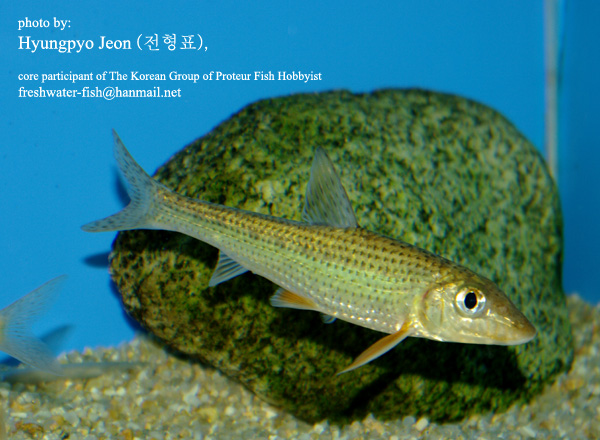
Hemibarbus longirostris
Regan, 1908
Max length250mm SL10in SLTanknot recordedTempnot recordedpHnot recordedA predominantly riverine fish preferring clear, well-oxygenated, running waters with substrates of sand, gravel, rock or mud, where adults tend to form schools just above the substrate in slower-moving sections.
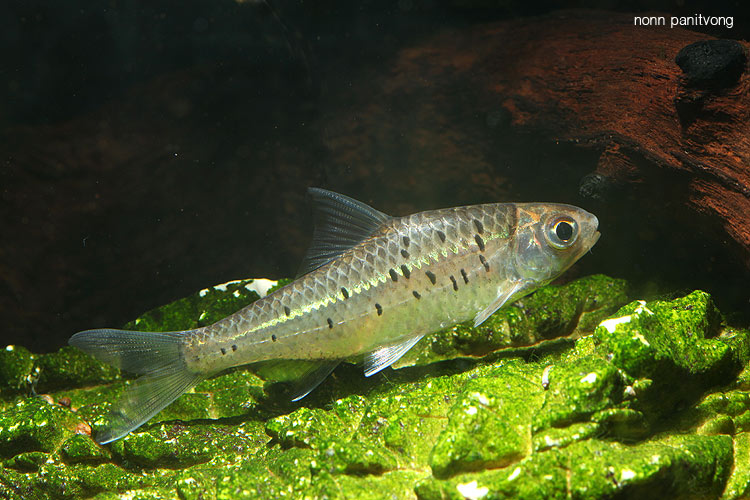
Mystacoleucus greenwayi
Pellegrin & Fang, 1940
Max length100mm SL3.9in SLTank120 × 45cm48 × 18inTemp20–27°C68–81°FpH6.0–7.5Predominantly a riverine fish favouring clear, well-oxygenated, running water with substrates of sand or gravel and often present in rock and boulder-filled headwater streams. In the Mun River, close to the Pak Mun dam, Thailand, sympatric species included Hampala dispar, Cyclocheilichthys apogon, Osteochilus hasseltii,...