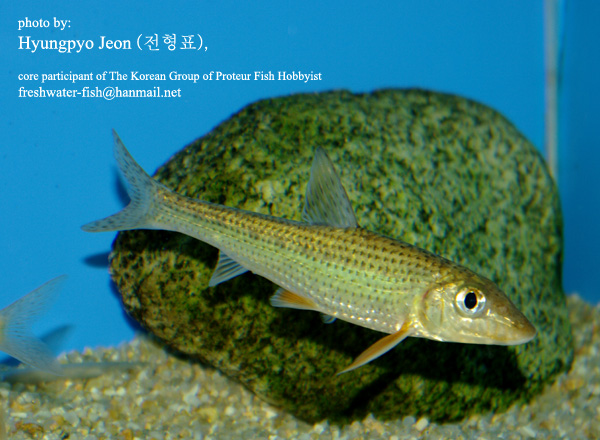
Hemibarbus longirostris
Formerly Acanthogobio longirostris Regan, 1908 · Hemibarbus shingtsonensis Shaw, 1930 · Paraleucogobio cheni Wu, 1931
On this page6 sections
Quick facts
Difficulty3 of 8 measures
More bars, more demanding. Hardiness is not averaged with the rest.
- Space
- very large tank
- Water
- unknown
- Temp
- unknown
- Diet
- unknown
- Temperament
- unknown
- Social
- shoal
- Compatibility
- community tank
Hardiness on its own can raise the rating, whatever the measures above say.
- Hardiness
- unknown
A predominantly riverine fish preferring clear, well-oxygenated, running waters with substrates of sand, gravel, rock or mud, where adults tend to form schools just above the substrate in slower-moving sections.
Etymology
Hemibarbus: from the Ancient Greek ἡμι- (hēmi-), meaning 'half', and the generic name Barbus, to which members appear similar.
longirostris: from the Latin longus, meaning 'long', and rostrum, meaning 'snout', in allusion to this species' extended snout.
Distribution
Native to far eastern Asia, including northeastern China, southeastern Russia, the Korean peninsula, and Japan.
Type locality is 'Chong-ju, South Korea'.
Habitat
Diet
Wild individuals are known to feed on benthic crustaceans, insects, molluscs, and other macroinvertebrates.
References
- Regan, C. T. (1908). The Duke of Bedford's Zoological Exploration in eastern Asia - VIII. A collection of freshwater fishes from Corea. Proceedings of the Zoological Society of London 1908 (pt 1), 59-63
- Jang, M.-H., M. C. Lucas and G.-J. Joo (2003). The fish fauna of mountain streams in South Korean national parks and its significance to conservation of regional freshwater fish biodiversity. Biological Conservation 114, 115-126
Species images · 4
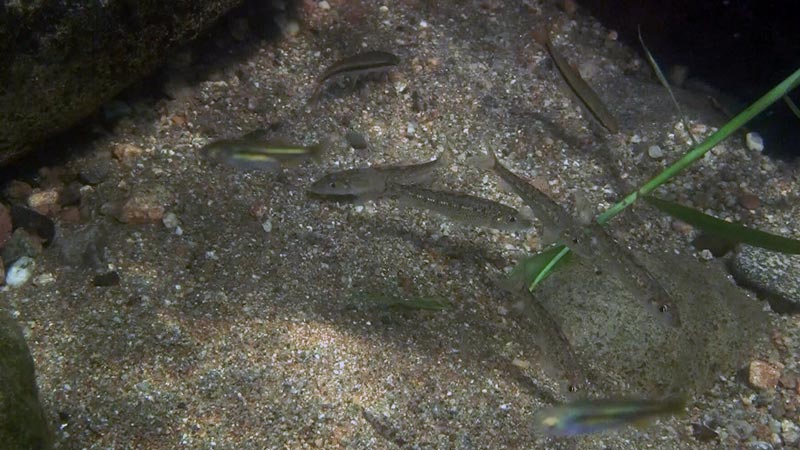
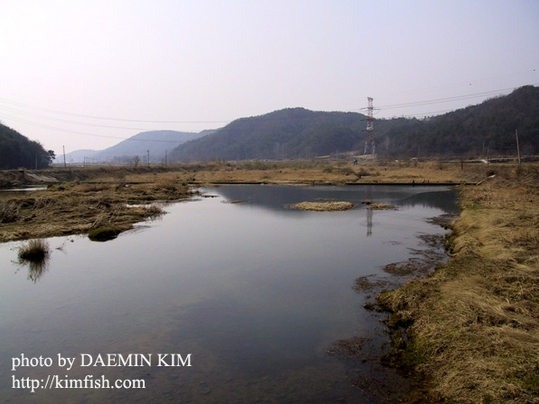
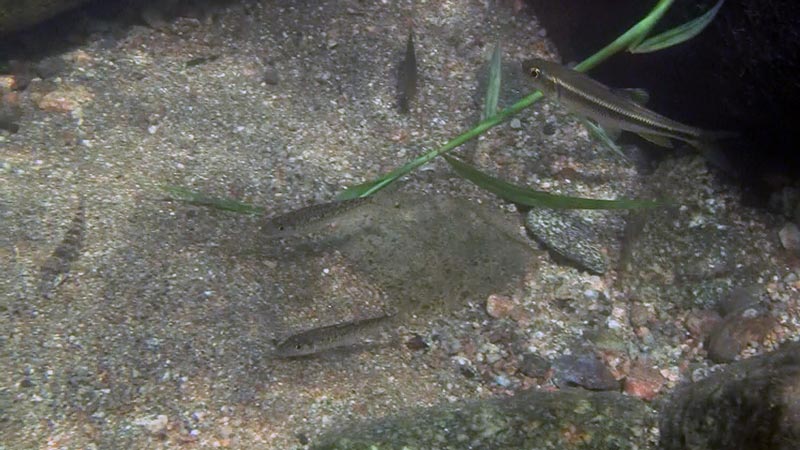
Used with the photographer’s permission. Not licensed for reuse.
Distribution
Profile completeness12 of 24
50% complete
Also missing: aquarium size, a common name, aquarium notes, maintenance, water condition notes, behaviour and compatibility, sexual dimorphism, reproduction, notes.
Community
Questions about Hemibarbus longirostris?
Ask on Discord