Results for “schooling”
Type a name: scientific, common, or one a species used to go by. Or narrow the catalogue with the filters.
Filters
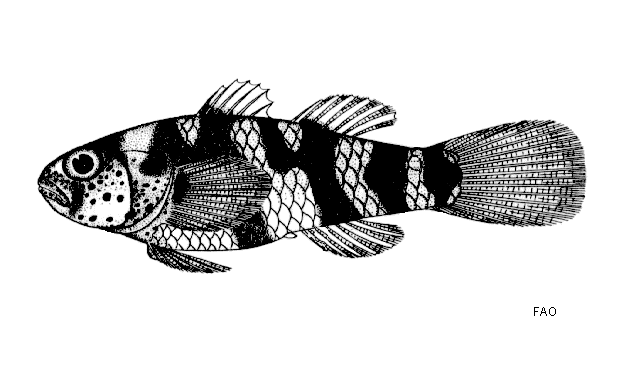
Brachygobius aggregatusSchooling Bumblebee Goby
Herre, 1940
Matched on the common name Schooling Bumblebee Goby
Max length44mm SL1.7in SLTank45 × 30cm18 × 12inTemp22–28°C72–82°FpHnot recordedThough this species appears on ornamental trade lists quite often the name appears to be routinely misapplied to other species, particularly B. doriae. It can be diagnosed as follows: <30 lateral scales; two black body bands reaching ventral midline posterior to anal-fin; band above anal-fin als...
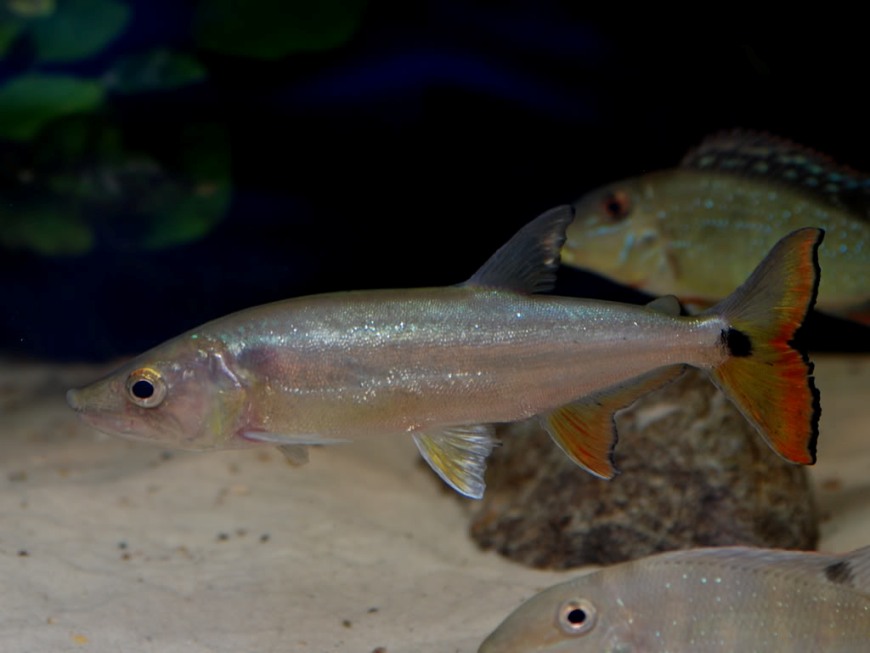
Acestrorhynchus altusRed Barracuda Tetra
Menezes, 1969
Max length233mm SL9in SLTank250 × 90cm98 × 36inTemp22–28°C72–82°FpH6.0–7.5This species is not normally aggressive towards conspecifics with juveniles in particular exhibiting a marked schooling instinct. Older individuals tend to be more solitary but still group together from time-to-time, and it's best maintained in numbers of four or more. One important point to note is that acestrorhynchids are can...
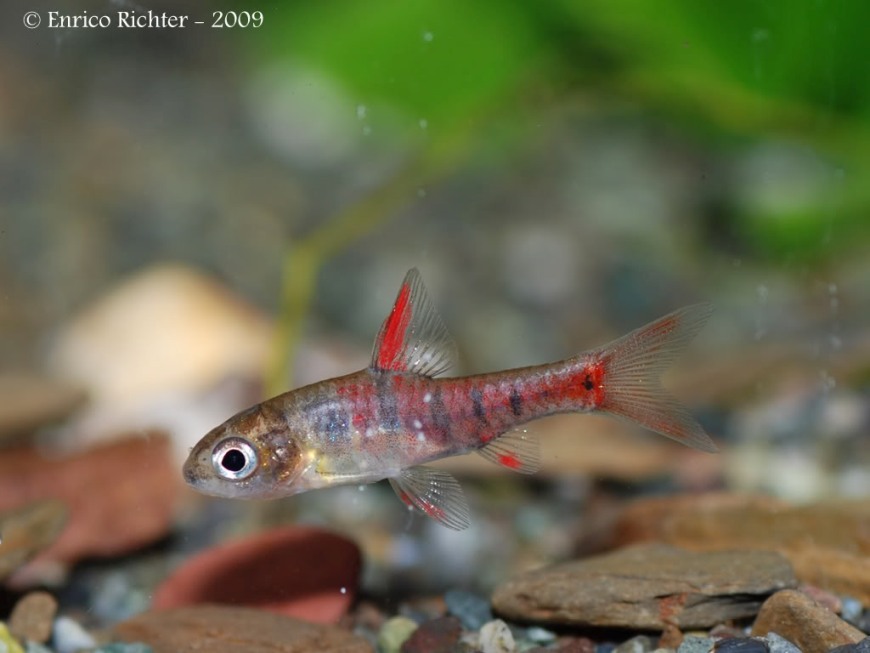
'Barbus' jae
Boulenger, 1903
Max length40mm SL1.6in SLTank45 × 30cm18 × 12inTemp17–24°C63–75°FpH5.0–6.5Although gregarious by nature it is a shoaling rather than schooling species which develops a distinct pecking order between males. It should ideally be maintained in a group of 8 or more but the tank must be of a sufficient size which will allow weaker individuals some respite from dominant conspecifics and decorated in such a way that many broken lines of sight are provided. Conversely if kept singly, in a very small group or in cramped conditions it can become withdrawn and subdominant fish may be bullied incessantly.
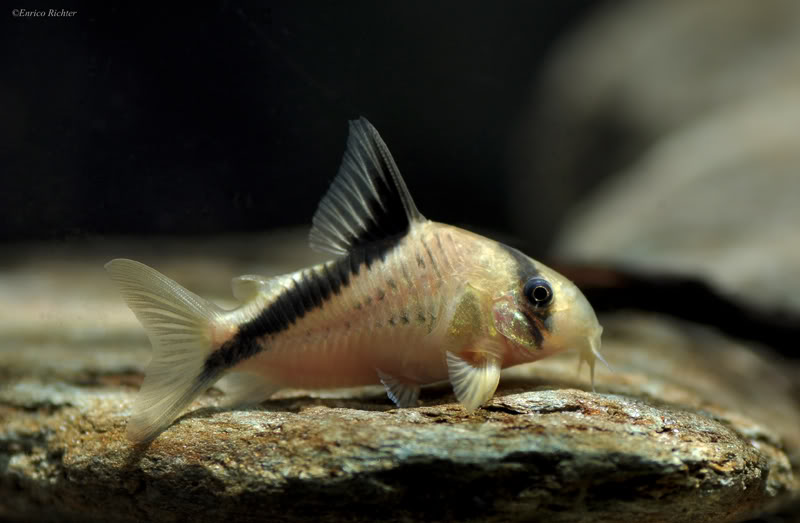
Corydoras meliniFalse Bandit Cory
Lönnberg & Rendahl, 1930
Max length50mm SL2.0in SLTank80 × 30cm31 × 12inTemp20–26°C68–79°FpH4.0–7.0In the aquarium hobby, the population from the rio Tiquié has been referred to as 'C084', while a similar, but larger, form from the Río Huallaga in Peru is known as 'C085'. Both forms have been marketed as C. sp. 'mega metae'. The existence of multiple, similarly-coloured species which coexist and sometimes form mixed schools is relatively common in the genus.
Corydoras oiapoquensisFlag-tailed Panda Cory
authority not recorded
Max length55mm SL2.2in SLTank45 × 38cm18 × 15inTemp23–28°C73–82°FpH6.0–7.2This species occurs alongside a near-identical congener, C. condiscipulus in nature. In fact condiscipulus literally means 'schoolmate', as the species are often found shoaling together. The only external difference between the 2 seems to be the longer snout and wider distribution within the Rio Oyapock of condiscipulus....
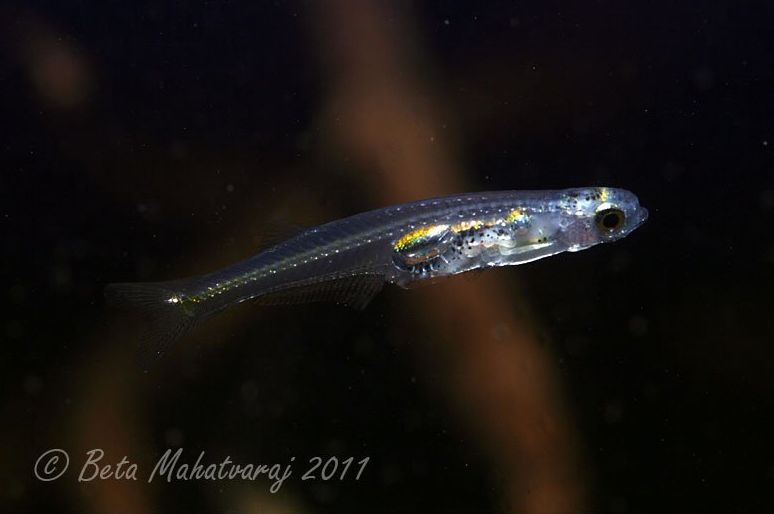
Danionella priapus
Britz, 2009
Max length16mm SL0.6in SLTank45 × 30cm18 × 12inTemp18–24°C64–75°FpH6.0–8.0As far as we know this species has not been bred in aquaria although Pete Liptrot and Paul Dixon of the Bolton Museum Aquarium, UK, have achieved great success with an unidentified congener. They first noticed fry from their group of 24 adults after moving the school to a dedicated set-up planted with mature Java moss and have since rewarded with regular batches of fry.
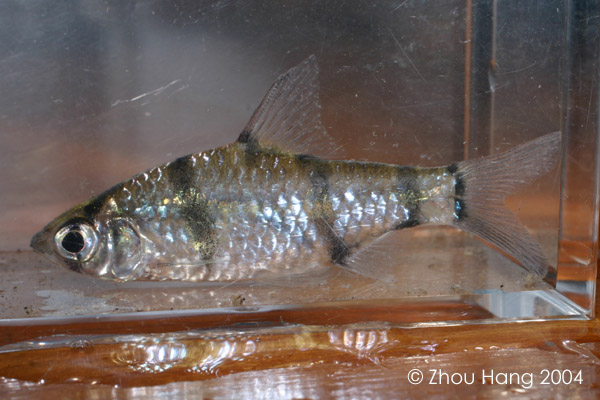
Desmopuntius endecanalis
Roberts, 1989
Max length50mm SL2.0in SLTank75 × 30cm30 × 12inTemp19–26°C66–79°FpH4.0–7.0Probably a micropredator feeding on small insects, worms, crustaceans and other zooplankton in nature. In the aquarium it will accept dried foods of a suitable size but should not be fed these exclusively. Daily meals of small live and frozen fare such as Daphnia, Artemia, and suchlike will result in the best colouration and encourage the fish to come into breeding condition. It's a schooling species by natur...
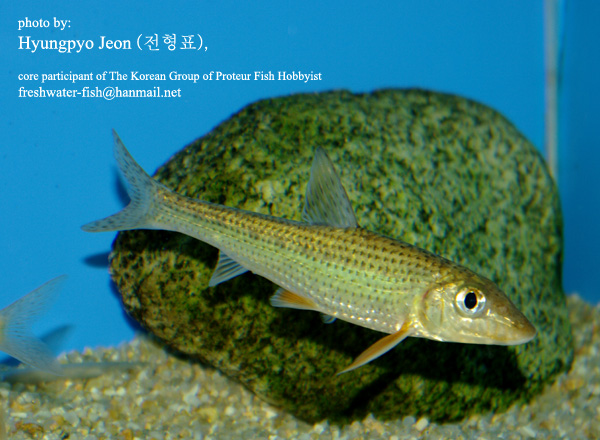
Hemibarbus longirostris
Regan, 1908
Max length250mm SL10in SLTanknot recordedTempnot recordedpHnot recordedA predominantly riverine fish preferring clear, well-oxygenated, running waters with substrates of sand, gravel, rock or mud, where adults tend to form schools just above the substrate in slower-moving sections.
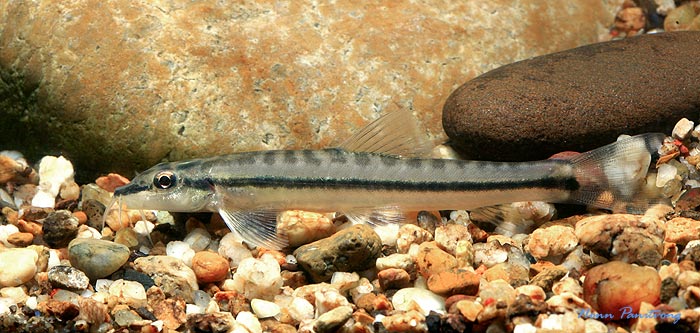
Nemacheilus longistriatusLaos Blackline Torpedo Loach
Kottelat, 1990
Max length125mm SL5in SLTank90 × 30cm36 × 12inTemp23–26°C73–79°FpH6.5–7.5Fishes which inhabit similar biotopes in nature constitute the best options, especially peaceful, open water-dwelling cyprinids since the presence of one or two schools can make a visible difference to the confidence of this naturally reclusive loach. Other possibilities include rheoph...
Ompok eugeneiatusBorneo Glass Catfish
authority not recorded
Max length165mm SL6in SLTank120 × 30cm48 × 12inTemp20–28°C68–82°FpH6.0–7.0Not often encountered in the hobby, but makes an ideal schooling catfish for a community of medium to large peaceful fish.
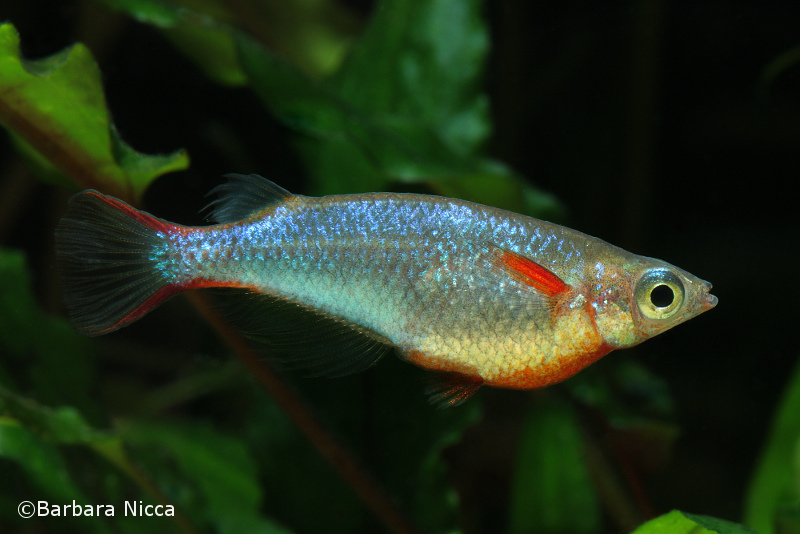
Oryzias woworaeDaisy's Ricefish
Parenti & Hadiaty, 2010
Max length30mm SL1.2in SLTank45 × 30cm18 × 12inTemp23–27°C73–81°FpH6.0–7.5The type locality is a karstic freshwater stream flowing under 80% forest cover with a mixed substrate of mud and sand plus patches of leaf litter. O. woworae was collected from a still pool around 3-4 m deep, opposite an affluent spring, where it was schooling with a species of Nomorhamphus which may turn out to be a form of N. ebrardtii but has subsequently appeared in the aquarium trad...
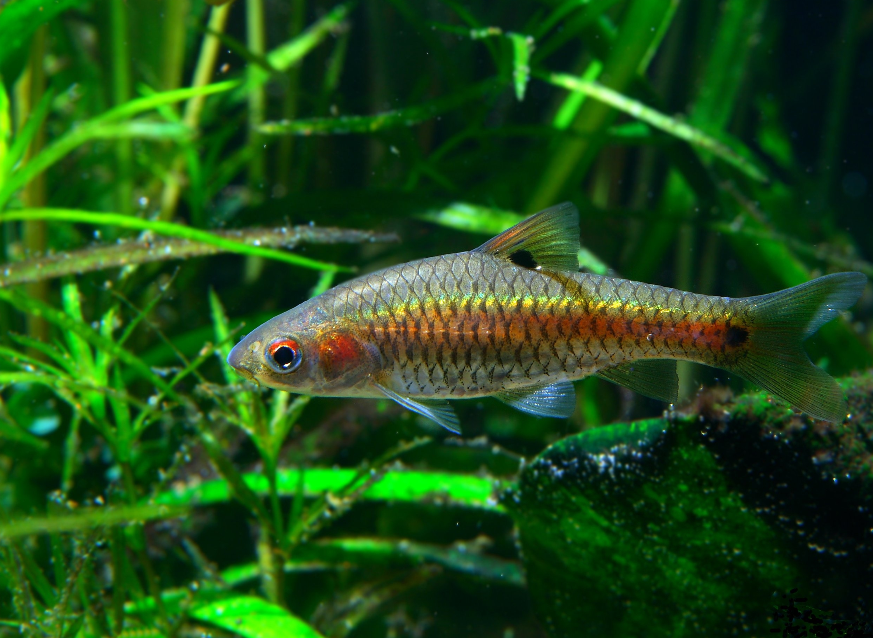
Puntius bimaculatusTwo-spotted Barb
Bleeker, 1863
Max length50mm SL2.0in SLTank60 × 30cm24 × 12inTemp18–24°C64–75°FpH6.0–7.5Generally very peaceful making it an ideal resident of the well-researched community tank. As it places no special demands in terms of water chemistry it can be combined with many of the most popular fish in the hobby including other small cyprinids as well as tetras, livebearers, rainbowfishes, anabantoids, catfishes and loaches. It's a schooling species by nature, and at least 6-10 specimens should be purchased. Maintaining it in such...
Rasbora borapetensisRed-tailed Rasbora
authority not recorded
Max length50mm SL2.0in SLTank60 × 38cm24 × 15inTemp22–26°C72–79°FpHnot recordedR. borapetensis is one of the more commonly-encountered rasboras in stores and is particularly recommended for newcomers to the hobby. While it can appear a little plain or 'washed' of colour when seen on sale once settled and in good condition it is an eye-catching little fish that often schools quite closely. It's sometimes sold with the alternative trade names of black-line or magnificent rasbora. R. rubrodorsalis is a very similar-looking congener that occurs sympatrically...
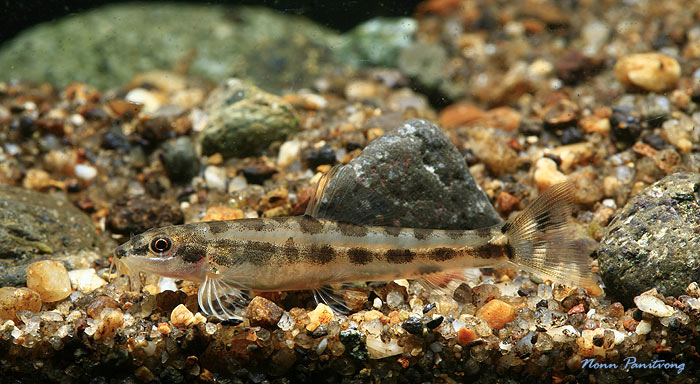
Schistura geisleri
Kottelat, 1990
Max length35mm SL1.4in SLTank60 × 30cm24 × 12inTemp21–26°C70–79°FpH6.0–7.5Fishes which inhabit similar biotopes in nature constitute the best options, especially peaceful, open water-dwelling cyprinids since the presence of one or two schools can make a visible difference to the confidence of this naturally reclusive loach.