Results for “speckled”
Type a name: scientific, common, or one a species used to go by. Or narrow the catalogue with the filters.
Filters
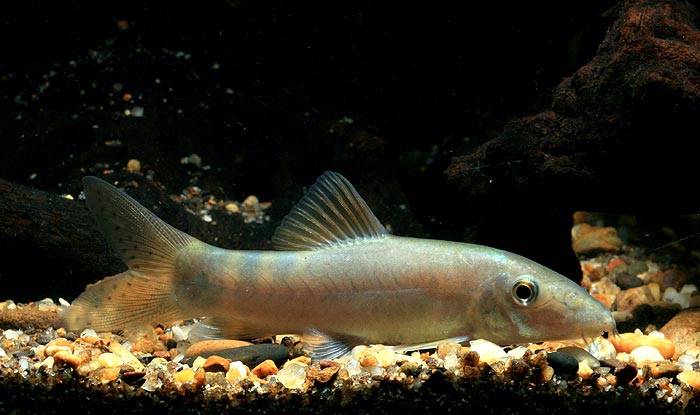
Yasuhikotakia caudipunctataSpeckle-tailed Loach
Taki & Doi, 1995
Matched on the common name Speckle-tailed Loach
Max length100mm SL3.9in SLTank120 × 30cm48 × 12inTemp23–30°C73–86°FpH6.0–7.5This specie is relatively rare in the aquarium trade and much sought after by enthusiasts as a result. It looks relatively similar to Y. splendida but can be told apart from it, and indeed all other members of the genus, by the following combination of characters: possession of 8 branched dorsal-fin rays; 32-33 vertebrae; one or two small, brownish, vertically-orientated markings on the dorsal part of the body posterior to the dorsal fi...
Cichla temensisSpeckled Pavon
authority not recorded
Matched on the common name Speckled Pavon
Max length990mm SL39in SLTanknot recordedTemp27–29°C81–84°FpH5.5–6.5One of the largest cichla species. Due to their large size, Peacock Bass are only really recommended for the experienced fishkeeper that can house them adequately. That said, they are a hardy and robust species that will adapt to a variety of conditions. Peacock Bass are becoming much more available in the hobby and are often seen for sale as cute 2" babies, often tempting people into buying a fish they will not be able to care for in the long term. Peacock Bass are also fished as...
Polypterus retropinnisWest African Bichir
authority not recorded
Max length350mm SL14in SLTank120 × 45cm48 × 18inTemp25–28°C77–82°FpH6.0–8.0Also known as the Speckled Bichir, this is an incredibly hardy, nocturnal species with very poor vision. P. retropinnis relies on its excellent sense of smell to locate food. This species along with others of its genus are some of the last surviving relatives of very ancient species. Fossils of earlier relatives have been found that date back to the Triassic Period, which occured during the early development of the dinosaurs more than 200 million years ago. They have several interesting adapt...