Results for “spp.”
Type a name: scientific, common, or one a species used to go by. Or narrow the catalogue with the filters.
Filters
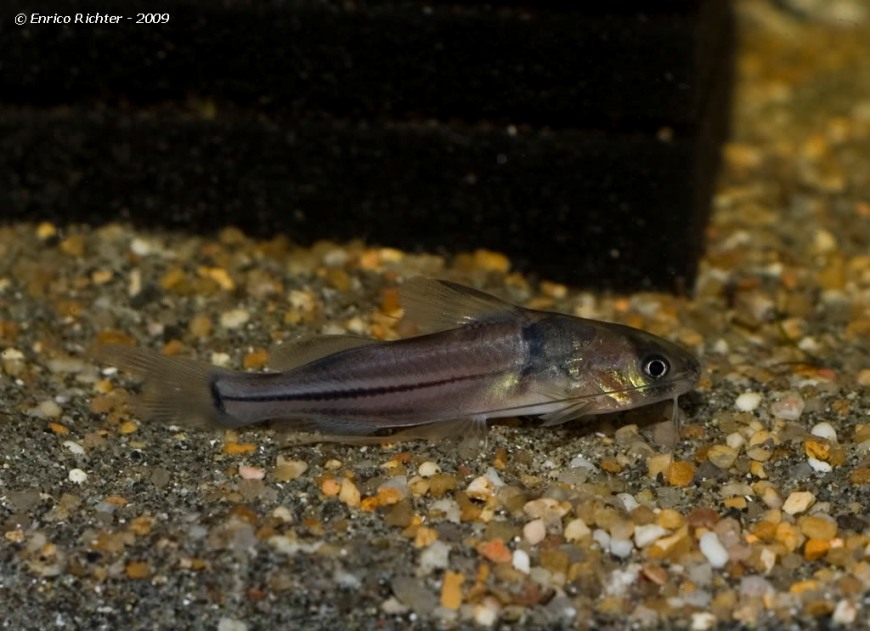
Brachyrhamdia meesi
Sands & Black, 1985
Max length61mm SL2.4in SLTank80 × 30cm31 × 12inTemp24–28°C75–82°FpH6.0–7.5Several Brachyrhamdia species have developed colour patterns that mimic syntopically-occurring Corydoras spp. throughout the life-cycle, and the remainder, including B. meesi, may mimic Otocinclus or smaller Corydoras spp. when juvenile. They're easily told apart from Corydoras by their significantly longer barbels and lack of scute-like plates on the body.
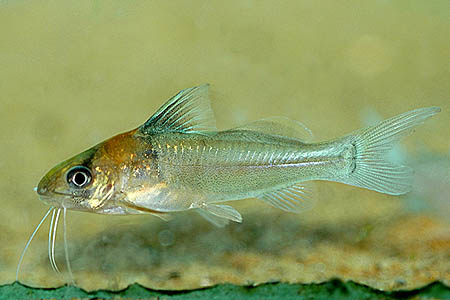
Brachyrhamdia rambarraniFalse Adolfoi
Axelrod & Burgess, 1987
Max length55mm SL2.2in SLTank80 × 30cm31 × 12inTemp24–28°C75–82°FpH4.0–7.0Several Brachyrhamdia species have developed colour patterns that mimic syntopically-occurring Corydoras spp. throughout the life-cycle, and the remainder may mimic Otocinclus or smaller Corydoras spp. when juvenile. Among other catfishes they're closely-related to members of the genus Pimelodella, but differ in...
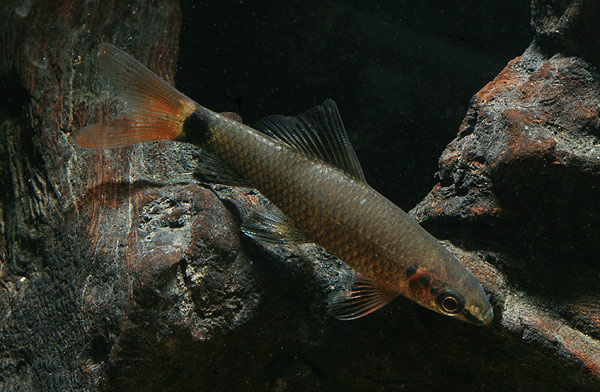
Epalzeorhynchos munense
Smith, 1934
Max length120mm SL5in SLTank120 × 45cm48 × 18inTemp20–26°C68–79°FpH6.5–7.5This species does not appear to be in the aquarium hobby at time of writing though it may have been in the past, when exports of wild Epalzeorhynchos spp. still took place. Most members of the genus were formerly regarded as Labeo spp. and are thus referred to as such in older literature. According to Rainboth (1996) they're characterised by absence of a dorsal spine, possession of 10-13 branched dorsal fin rays, a thin membrane...
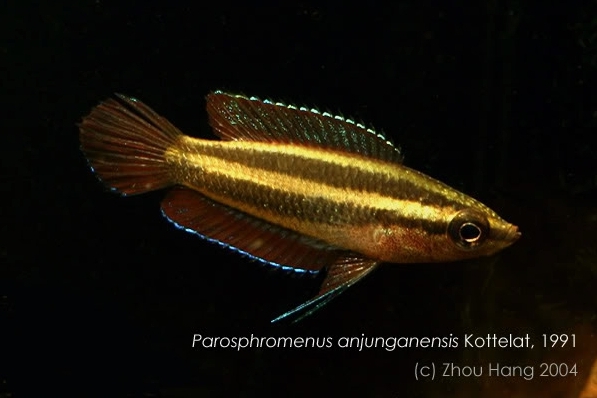
Parosphromenus anjunganensis
Kottelat, 1991
Max length35mm SL1.4in SLTank40 × 20cm16 × 8inTemp22–28°C72–82°FpH3.0–6.5It's care requirements, disposition, and especially conservation status dictate that it should be maintained alone or alongside a group of small, peaceful cyprinids such as Boraras or Sundadanio spp. Likewise, different Parosphromenus spp. should not be kept together since the females of many are very difficult to tell apart and some are undoubtedly capable of hybridising.
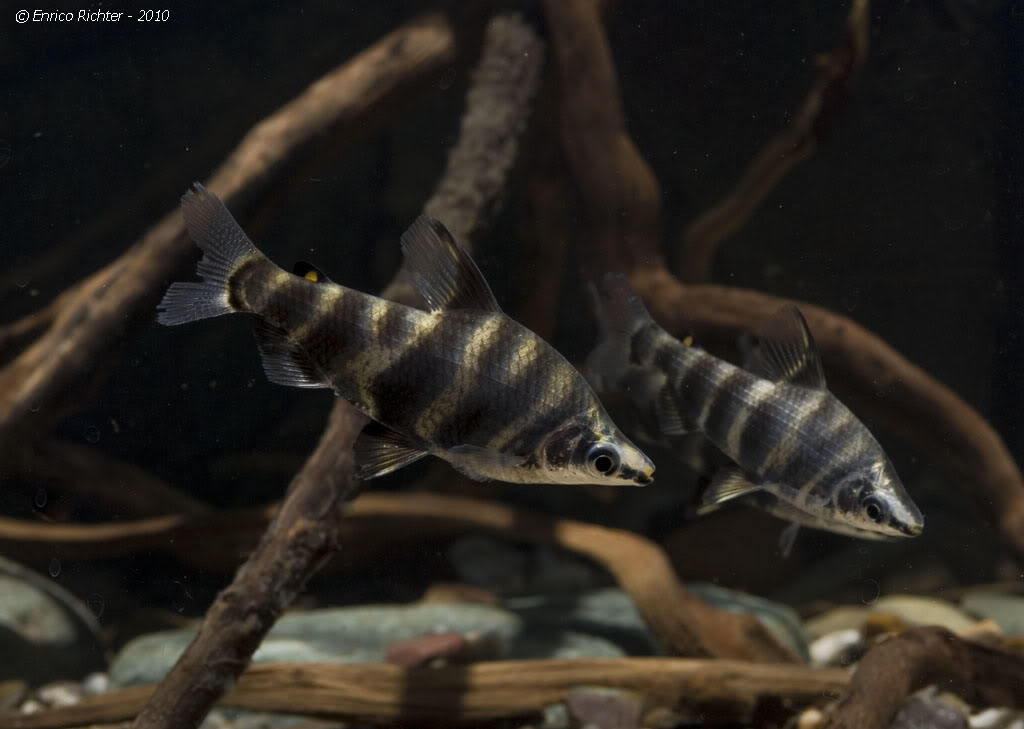
Abramites hypselonotusMarbled Headstander
Günther, 1868
Max length140mm SL6in SLTank120 × 30cm48 × 12inTemp20–30°C68–86°FpH5.5–7.5Abramites spp. are separated from other anostomids primarily on the basis of their relatively deeper bodies and presence of a prominent, post-pelvic median keel, a feature unique to the genus. At time of writing A. eques is the only other species recognised and is native to the Río Magdalena drainage in western Colombia. It can be distinguished by possession of 13-14 bra...
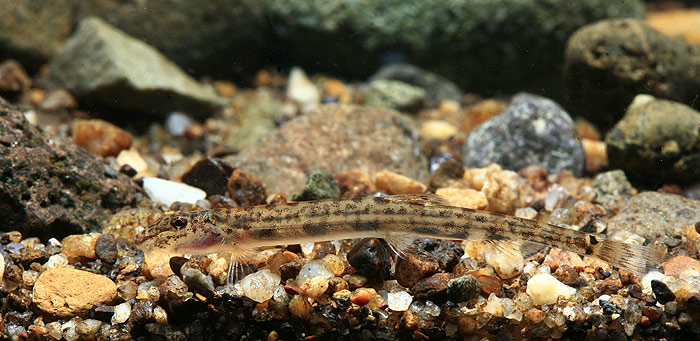
Acanthopsoides molobrion
Siebert, 1991
Max length50mm SL2.0in SLTank60 × 30cm24 × 12inTemp20–24°C68–75°FpH5.5–7.0Acanthopsoides spp. are most closely related to the horse-faced loaches of the genus Acantopsis with which they often co-occur in nature, and thus commonly referred to as 'dwarf horse-face loaches'. The genus currently comprises five species of which four were described by Siebert (1991); these were discovered in existing museum holdings...
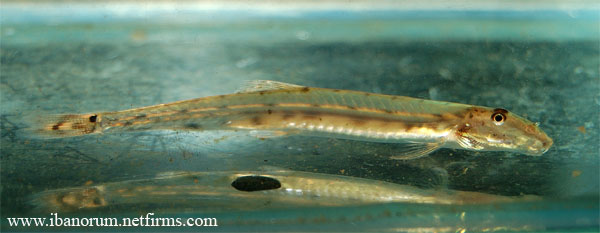
Acanthopsoides robertsi
Siebert, 1991
Max length75mm SL3.0in SLTank60 × 30cm24 × 12inTemp20–24°C68–75°FpH5.5–7.0Acanthopsoides spp. are most closely related to the horse-faced loaches of the genus Acantopsis with which they often co-occur in nature, and thus commonly referred to as 'dwarf horse-face loaches'. Most are very difficult to tell apart but A. robertsi is quite easily identified since it's the only...
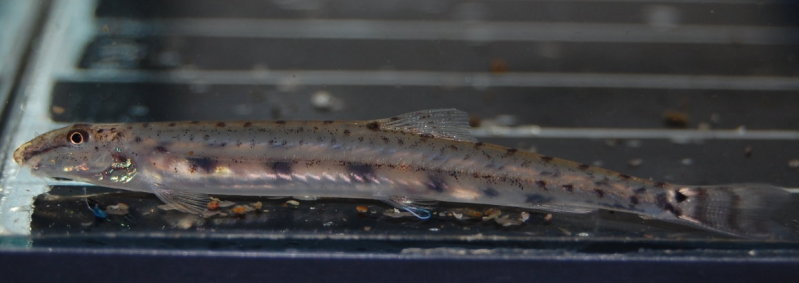
Acanthopsoides sp. 'A01'
authority not recorded
Max length65mm SL2.6in SLTank60 × 30cm24 × 12inTemp20–24°C68–75°FpH5.5–7.0Acanthopsoides spp. are most closely related to the horse-faced loaches of the genus Acantopsis with which they often co-occur in nature, and thus commonly referred to as 'dwarf horse-face loaches'.
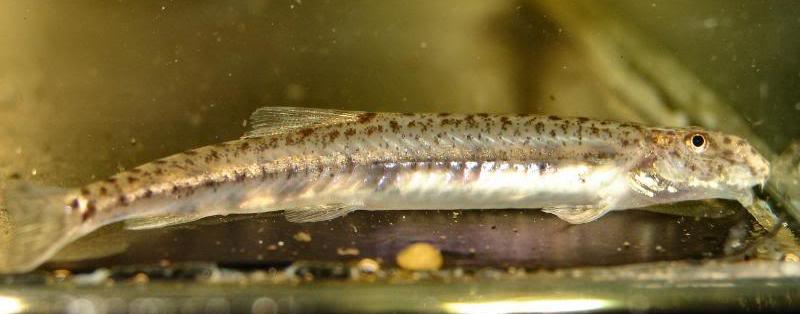
Acanthopsoides sp. 'A02'
authority not recorded
Max length55mm SL2.2in SLTank60 × 30cm24 × 12inTemp20–24°C68–75°FpH5.5–7.0Acanthopsoides spp. are most closely related to the horse-faced loaches of the genus Acantopsis with which they often co-occur in nature, and thus commonly referred to as 'dwarf horse-face loaches'. The genus currently comprises five species of which four were described by Siebert (1991);...
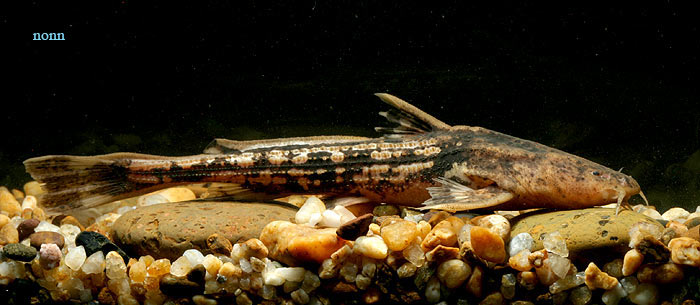
Acrochordonichthys gyrinusFalcate Chameleon Catfish
Vidthayanon & Ng, 2003
Max length80mm SL3.1in SLTank75 × 30cm30 × 12inTemp17.5–24°C64–75°FpH5.0–7.0As in other members of the genus body colouration in this species is variable, even among individuals collected from a single locality, although a few regularities have been observed which can be used to distinguish certain species from one another. This is thought related to the fact that Acrochordonichthys spp. periodically shed their skins and appear paler post-moulting.
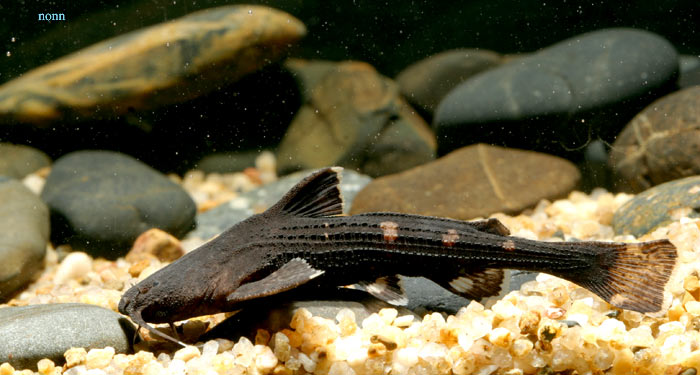
Acrochordonichthys rugosusAsian Banjo Catfish
Bleeker, 1846
Max length110mm SL4in SLTank90 × 30cm36 × 12inTemp17.5–24°C64–75°FpH5.0–7.0This is the most commonly-encountered representative of the genus in the aquatic trade though is by no means common. As in other members of the genus body colouration is highly variable, even among individuals collected from a single locality, although a few useful regularities have been observed which can be used to distinguish certain species. This is thought related to the fact that Acrochordonichthys spp. periodically shed their skins and appear paler post-moulting. A. rugosus lends its ...
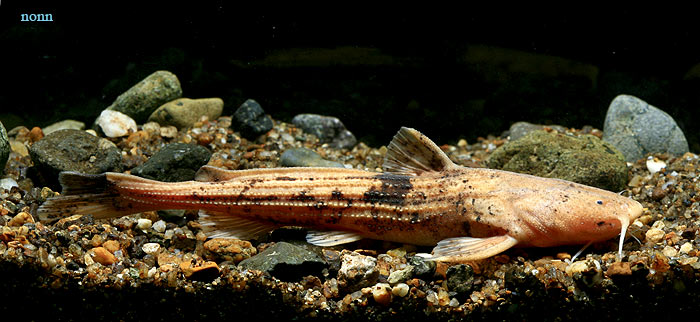
Acrochordonichthys septentrionalisMae Klong Chameleon Catfish
Ng & Ng, 2001
Max length100mm SL3.9in SLTank90 × 30cm36 × 12inTemp17.5–24°C64–75°FpH5.0–7.0As in other members of the genus body colouration in this species is variable, even among individuals collected from a single locality, although a few regularities have been observed which can be used to distinguish certain species from one another. This is thought related to the fact that Acrochordonichthys spp. periodically shed their skins and appear paler post-moulting.
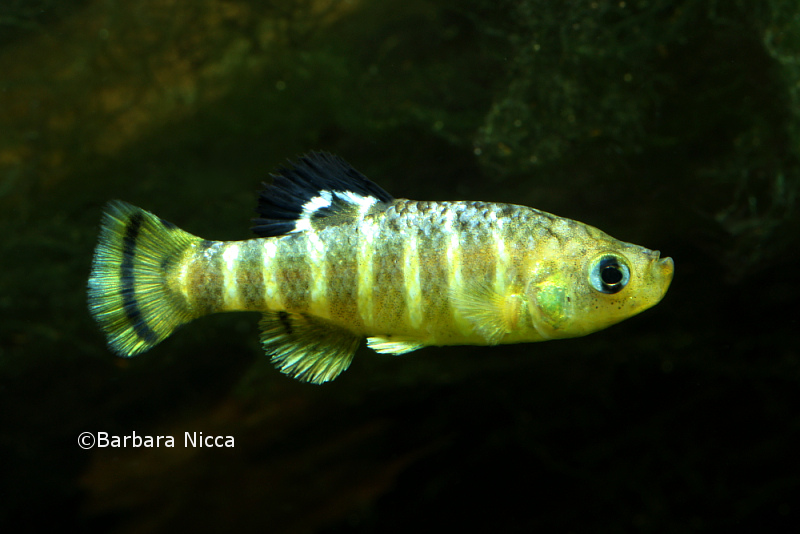
Anatolichthys anatoliaeAnatolian Toothcarp
Leidenfrost, 1912
Max length55mm SL2.2in SLTank120 × 30cm48 × 12inTemp2–30°C36–86°FpH7.0–8.5A. anatoliae is the most widely-distributed of the Anatolian Aphanius species although like most of its congeners is not easy to come by in the hobby. You are unlikely to find it on sale in aquatic stores although it may be available via specialist breeders or associations from time-to-time. While Aphanius spp. are certainly not as colourful as some of their relatives their interesting behaviour and continuous activity make them fascinating aquarium subjects and well worth a try if you possess the de...
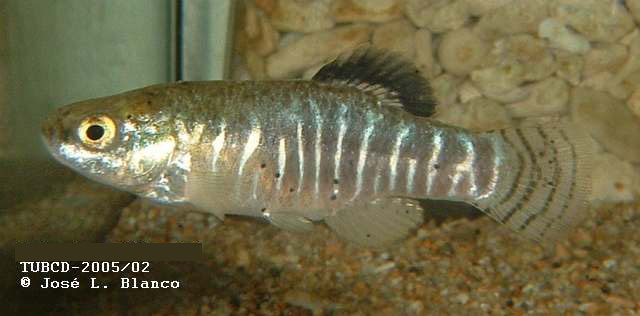
Anatolichthys villwockiSakarya Toothcarp
Hrbek & Wildekamp, 2003
Max length60mm SL2.4in SLTank120 × 30cm48 × 12inTemp2–30°C36–86°FpH6.5–8.5Prior to its description this species had been considered a form of A. anatoliae and also referred to as A. sp. aff. danfordii but collections in the early part of this century motivated new studies and resulted in its elevation to full species level. Phylogenetic analyses have shown it to represent the sister group to all other Anatolian Aphanius spp. The Anatolia region represents a centre of diversity for the genus with ten endemic species described to date. These are thought to have diverged ...
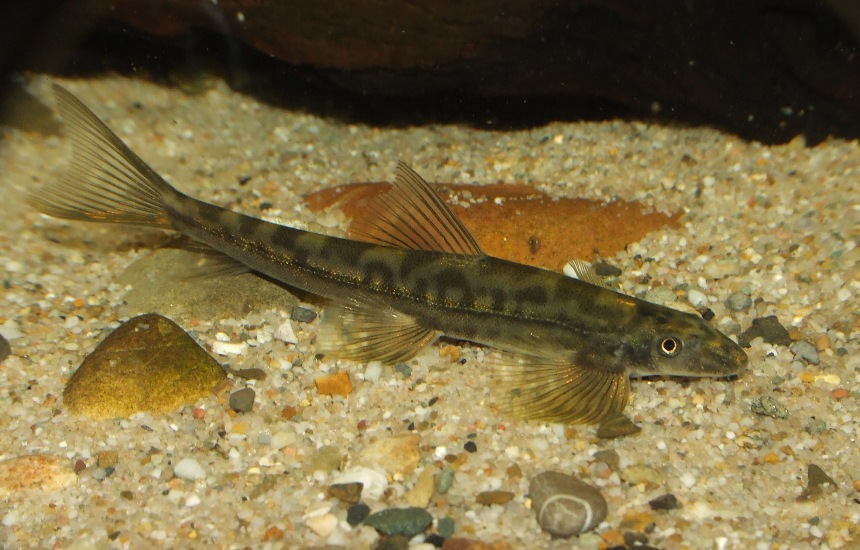
Annamia cf. thuathienensis
Nguyen, 2005
Max length100mm SL3.9in SLTank120 × 30cm48 × 12inTemp16–22°C61–72°FpH6.0–7.5Annamia spp. may be confused with related genera such as those of the genus Balitoropsis. They can be identified by their more depressed body shape, elongate lower caudal-fin lobe, and the presence of a single unbranched ray in the pectoral and pelvic fins. At least one undescribed member of the genus is thought to exist.
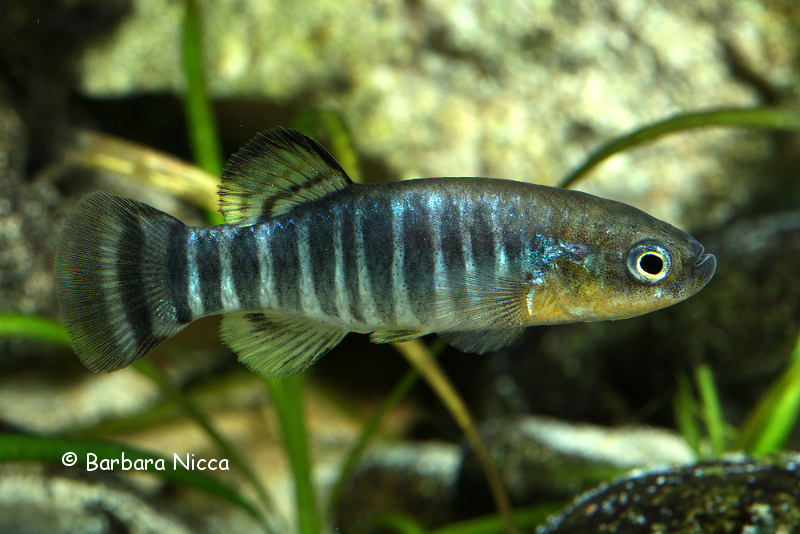
Aphaniops sirhaniAzraq Toothcarp
Villwock, Scholl & Krupp, 1983
Max length50mm SL2.0in SLTank120 × 30cm48 × 12inTemp10–35°C50–95°FpH7.0–8.5Phylogenetic studies have shown this species to be most closely related to A. dispar, A. richardsoni and A. ginaonis within the genus. It probably became isolated when the Red Sea flooded the Wadi Sirhan around 13 million years ago. You 're unlikely to find it on sale in aquatic stores although it may be available via specialist breeders or associations from time-to-time. While Aphanius spp. are certainly not as colourful as some of their relatives their interesting behaviour and continuous acti...
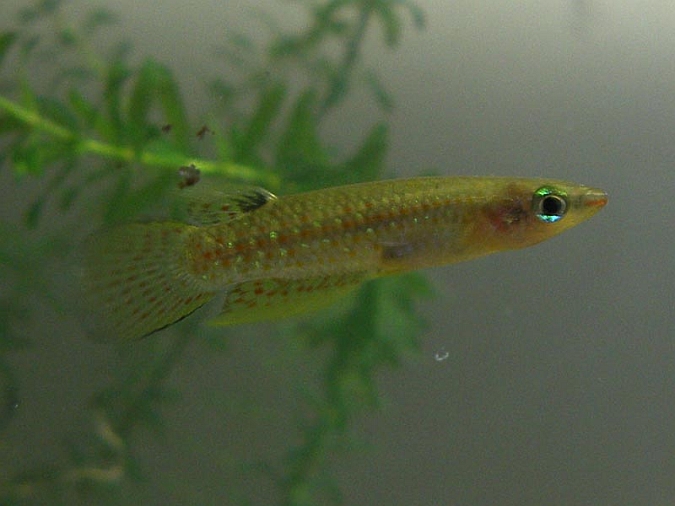
Aplocheilus parvusDwarf Panchax
Sundara Raj, 1916
Max length40mm SL1.6in SLTank45 × 30cm18 × 12inTemp20–28°C68–82°FpH6.0–8.5Aplocheilus spp. are surface-dwelling predators preying on both aquatic and terrestrial invertebrates. In the aquarium they will learn to accept dried foods in most cases but should also be offered regular meals of small live or frozen fare such as Artemia, Daphnia, chironomid larvae (bloodworm), etc.
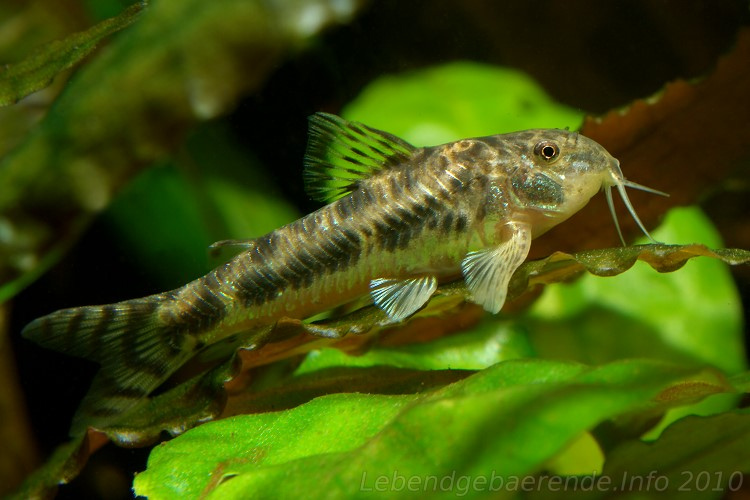
Aspidoras spilotusC125
Nijssen & Isbrücker, 1976
Max length45mm SL1.8in SLTank60 × 30cm24 × 12inTemp20–25°C68–77°FpH6.0–7.5Aspidoras spp. are foraging omnivores and will accept most sinking dried foods, as well as small live and frozen varieties such as chironomid larvae (bloodworm), Tubifex, etc. Feeding a varied diet will ensure the fish are in optimum condition.
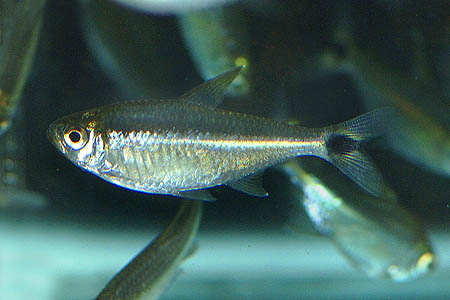
Astyanax kennedyiKennedy's Tetra
Géry, 1964
Max length50mm SL2.0in SLTank80 × 30cm31 × 12inTemp26–29°C79–84°FpH5.5–7.0Endemic to pthe upper Amazon basin in Peru, around the city of Iquitos. Most Astyanax spp. are not popular in the aquarium hobby, though the genus is among the most speciose within the family Characidae. A. kennedyi is no exception; you'll rarely see it offered for sale but may find the occasional specimen mixed among other species in shipments of wild fishes from Peru.
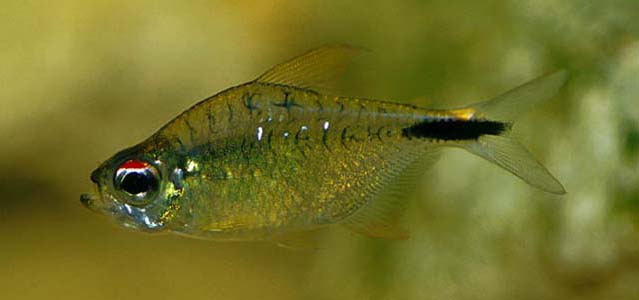
Astyanax leopoldiLeopold's Tetra
Géry, Planquette & Le Bail, 1988
Max length60mm SL2.4in SLTank60 × 30cm24 × 12inTemp23–27°C73–81°FpH5.5–7.0Most Astyanax spp. are not popular in the aquarium hobby, though the genus is among the most speciose within the family Characidae. A. leopoldi is no exception in that you'll rarely see it offered for sale but may find the occasional specimen mixed among other species in shipments of wild fishes from Peru.