Results for “tropics”
Type a name: scientific, common, or one a species used to go by. Or narrow the catalogue with the filters.
Filters
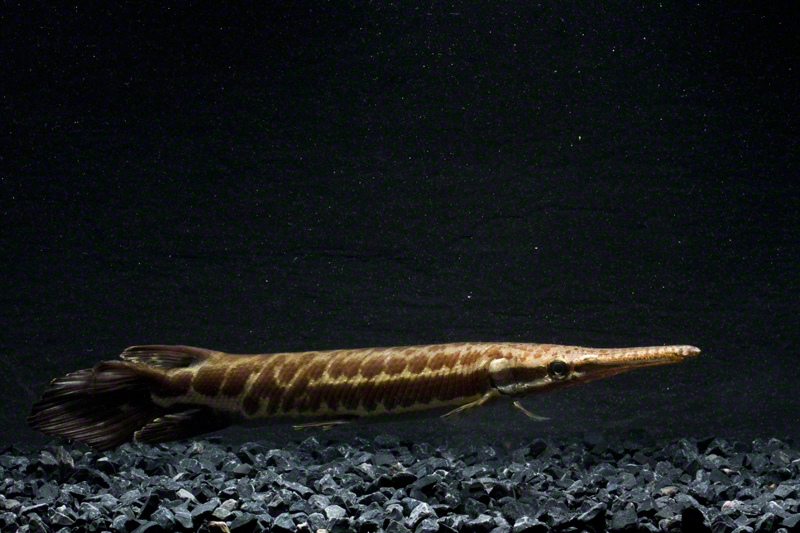
Atractosteus tropicusTropical Gar
Gill, 1863
Matched on the common name Tropical Gar
Max length1250mm SL49in SLTanknot recordedTemp22–28°C72–82°FpH6.0–8.5Found in both Caribbean and Pacific-slope drainage basins in Central America, from southern Mexico through Belize, Guatemala, Honduras and Nicaragua, and into Costa Rica. This species clearly shouldn't be considered a home aquarium subject at all given its eventual size and the fact it can live for several decades.
Pterophyllum altumAltum Angel
authority not recorded
Max length178mm SL7in SLTanknot recordedTemp28–32°C82–90°FpH4.8–6.2Altum Angels are a lot less common in the trade than their well known (arguably the best known tropical fish) relatives Pterophyllum Scalare, the common Angelfish. However, they are still available from some of the better tropical fish suppliers. They are a challenge to keep - they share all of their relatives' difficulties (susceptible to hole-in-the-head disease, very weak to nitrate buildups, extremely prone to stress-related diseases, commonly eat their own spawns etc.) and have a fe...
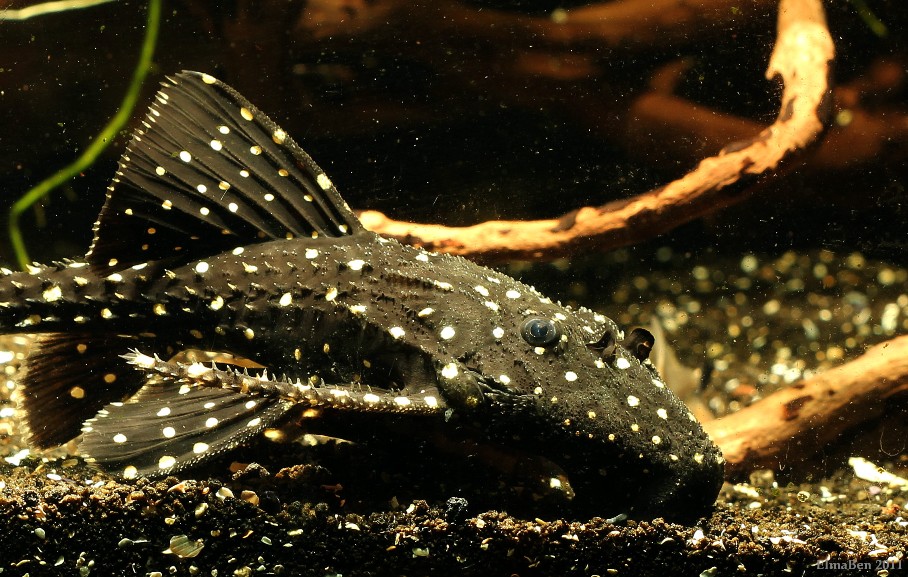
Acanthicus adonisPolka Dot Lyre Tail Pleco
Isbrücker & Nijssen, 1988
Max length1000mm SL39in SLTank600 × 200cm236 × 79inTemp23–30°C73–86°FpH6.0–7.5Despite its patent unsuitability as an aquarium subject attractively-coloured juvenile specimens of this species are traded in quite large numbers, although the scarcity of privately-maintained adults would suggest that most fail to reach their potential. The striking, spotted patterning also disappears as this species matures, and since it also becomes increasingly bellligerent with age it can only be recommended to owners of the largest private aquaria or tropical ponds. There exists an albino...
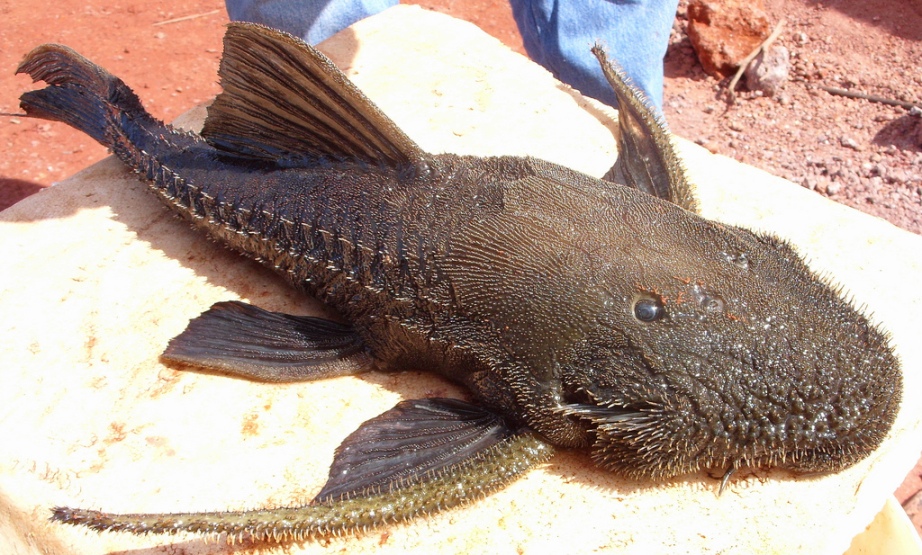
Acanthicus hystrixL155
Spix & Agassiz, 1829
Max length1000mm SL39in SLTank600 × 200cm236 × 79inTemp23–30°C73–86°FpH6.0–7.5Despite its patent unsuitability as an aquarium subject attractively-coloured juvenile specimens of this species are traded in quite large numbers, although the scarcity of privately-maintained adults would suggest that most fail to reach their potential. The striking, spotted patterning also disappears as this species matures, and since it also becomes increasingly bellligerent with age it can only be recommended to owners of the largest private aquaria or tropical ponds. There exists an albino...
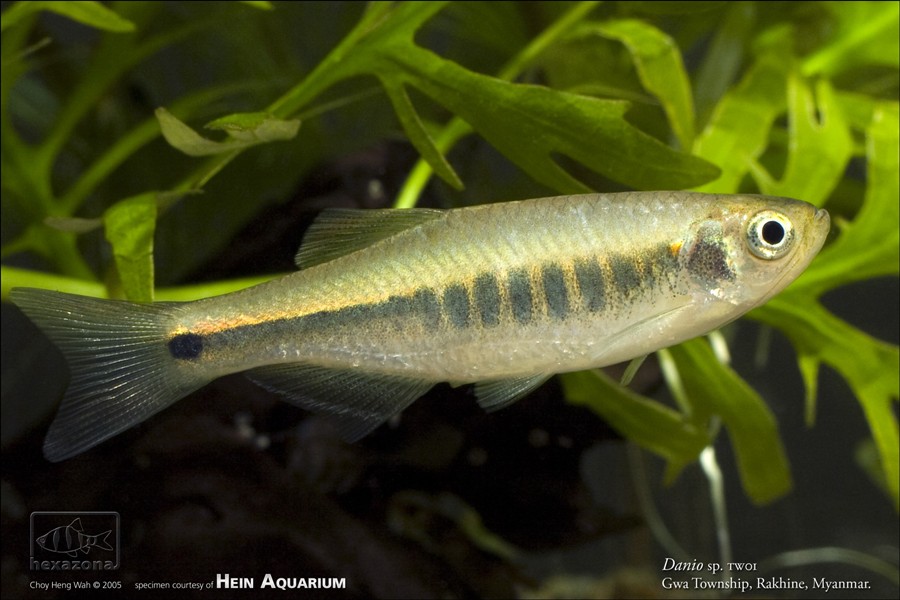
Brachydanio sp. 'TW01'Black-barred 'Danio'
authority not recorded
Max length65mm SL2.6in SLTank120 × 30cm48 × 12inTemp18–26°C64–79°FpH6.0–7.5Apparently discovered close to the coastal town of Gwa in Rakhine State, western Myanmar. Rakhine is largely cut off from the rest of the country by the Rakhine Yoma/Arakan mountains which form a natural barrier along its eastern side. Rakhine is located within a tropical monsoon region and has a pronounced rainy season between May and October, while at other times it can be quite dry. The streams thus swell in depth by a metre or mo...
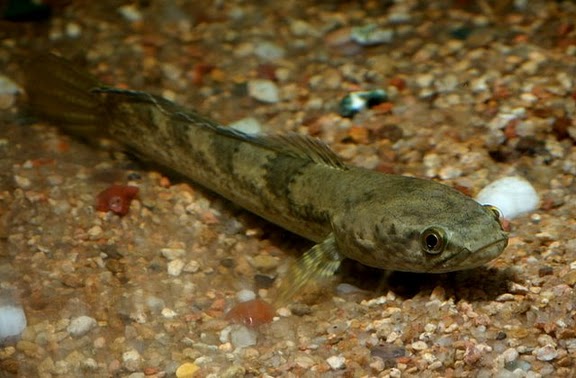
Channa sp. 'five stripe'
authority not recorded
Max lengthnot recordedTank90 × 30cm36 × 12inTemp15–28°C59–82°FpH6.0–8.0Based on its colour pattern and limited details regarding its natural habitat this species may be adapted to dwelling between and under rocks. Alipurduar lies in the moist tropical region of floodplains and foothills of the eastern Himalayas commonly referred to as the Dooars or Duars, traditionally considered the gateway to Bhutan.
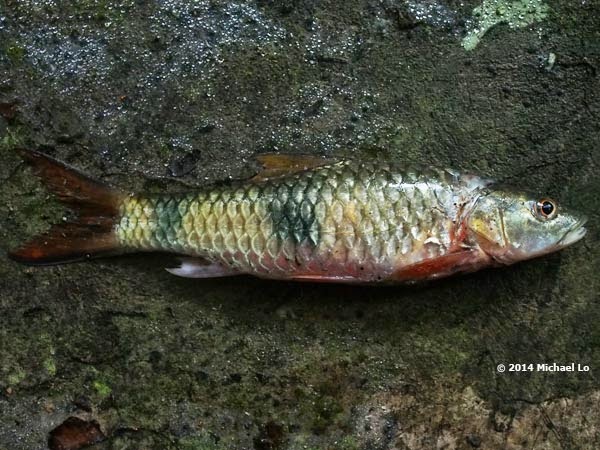
Hampala bimaculata
Popta, 1905
Max length500mm SL20in SLTanknot recordedTempnot recordedpHnot recordedPredominantly a riverine fish preferring clear, well-oxygenated, running waters with substrates of sand, gravel, rock or mud, typically flowing through tropical forest. In the habitat seen in our images sympatric fish species included Barbonymus balleroides, B. collingwoodi, Cyclocheilichthys repasson, C. apogon, Diplocheilichthys pleurotaenia, Garra borneensis, Leptobarbus hosii, and an unidentified Gastromyzon sp.
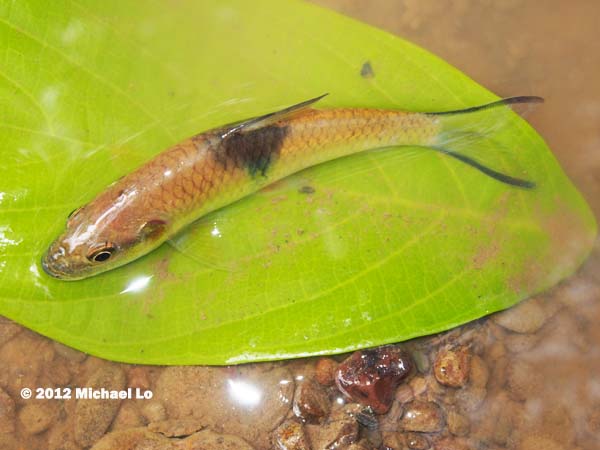
Hampala sabana
Inger & Chin, 1962
Max length410mm SL16in SLTanknot recordedTempnot recordedpHnot recordedPredominantly a riverine fish preferring clear, well-oxygenated, running waters with substrates of sand, gravel, rock or mud, and apparently displays a preference for deeper, slower-moving stretches. In Sabah such habitats typically flow through tropical forest, although in recent years freshwater habitats throughout much of the state have been extensively modified by human activity such as conversion to palm or rubber plantations.
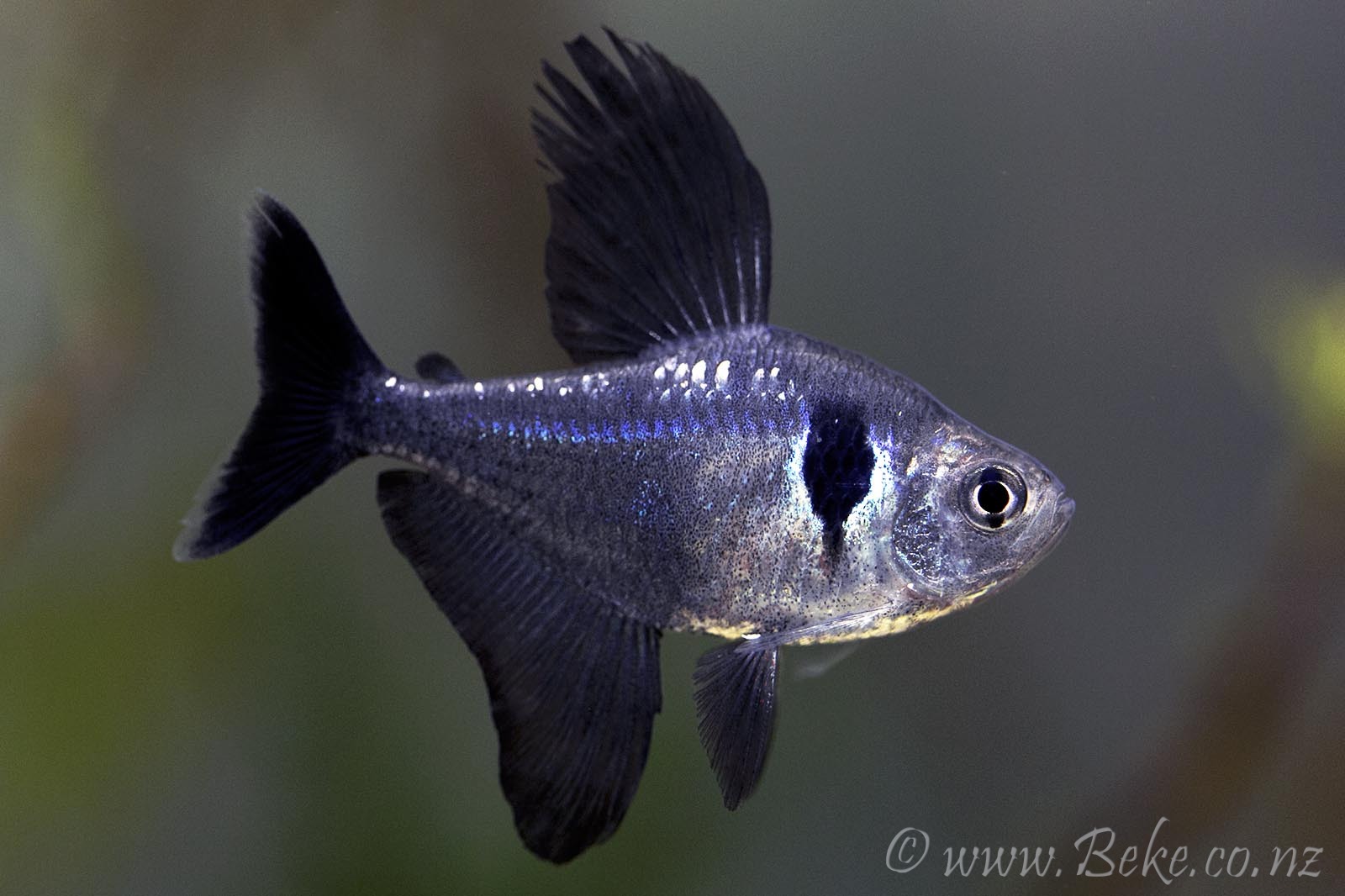
Hyphessobrycon megalopterusBlack Phantom Tetra
Eigenmann, 1915
Max length36mm SL1.4in SLTank80 × 30cm31 × 12inTemp20–28°C68–82°FpH5.0–7.0The majority of records pertain to the rio Guaporé (Río Iténez in Bolivia), the main affluent of the rio Mamoré, which drains the vast tropical wetland known as the Pantanal, and the upper rio Paraguai, which also has its headwaters in the Pantanal but flows in the opposite direction. The Guaporé and Paraguai are connected due to rising water levels during the annual wet season.
Mastacembelus armatusTyre-Track Eel
authority not recorded
Max length910mm SL36in SLTank120 × 60cm48 × 24inTemp24–28°C75–82°FpH6.0–7.0The tyre track eel is also referred to as the white-spotted spiny eel. A member of the spiny eel family, which range across tropical Asia and Africa, Mastacembelus armatus is one of the more common species available to the hobby, along with the peacock eel ((Macrognathus siamensis)and the fire eel (Mastacembelus erythrotaenia). These species are all from Asia but there are some members of the family from Africa that are occasionally seen for sale. These majority of these species are from the ...
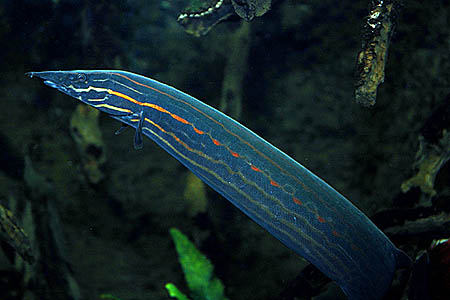
Mastacembelus erythrotaeniaFire Eel
authority not recorded
Max length1000mm SL39in SLTank120 × 60cm48 × 24inTemp24–28°C75–82°FpH6.0–7.0A member of the spiny eel family, which range across tropical Asia and Africa, Mastacembelus erythrotaenia is one of the more common species available to the hobby, along with the peacock eel (Macrognathus siamensis)and the tyre-track eel (Mastacembelus favus). These species are all from Asia but there are some members of the family from Africa that are occasionally seen for sale. These majority of these species are from the Afromastacembelus genus, with the most common representative being the...
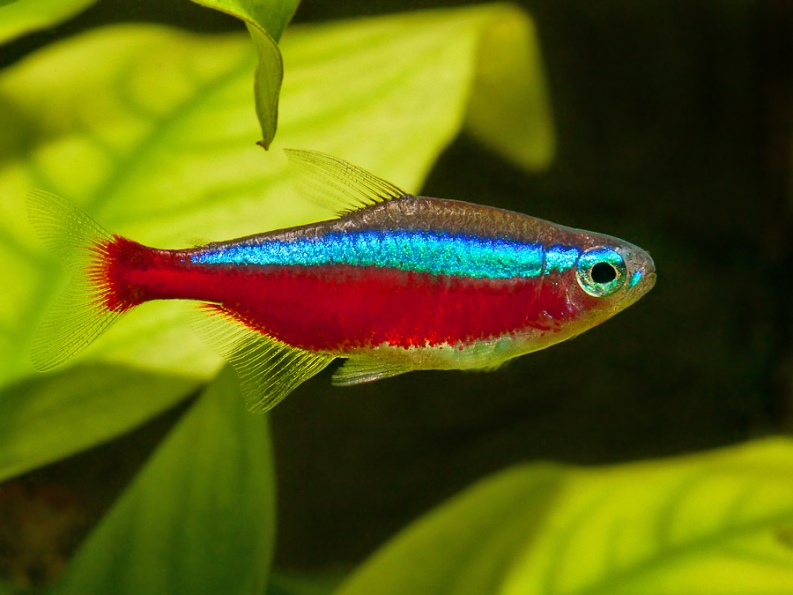
Paracheirodon axelrodiCardinal Tetra
Schultz, 1956
Max length35mm SL1.4in SLTank60 × 30cm24 × 12inTemp23–29°C73–84°FpH3.5–7.5It was initially going to be described as Hyphessobrycon cardinalis by Myers and Weitzman (1956) but just before this was due to be published Schultz presented an alternative description in the hobbyist magazine 'Tropical Fish Hobbyist' and named the fish after the publication's founder, Dr. Herbert R. Axelrod. A significant proportion of the fish available in the aquarium trade are still wild caught or derive from community-led breeding projects such as Project Piaba in the middle Negro region, where this sp...
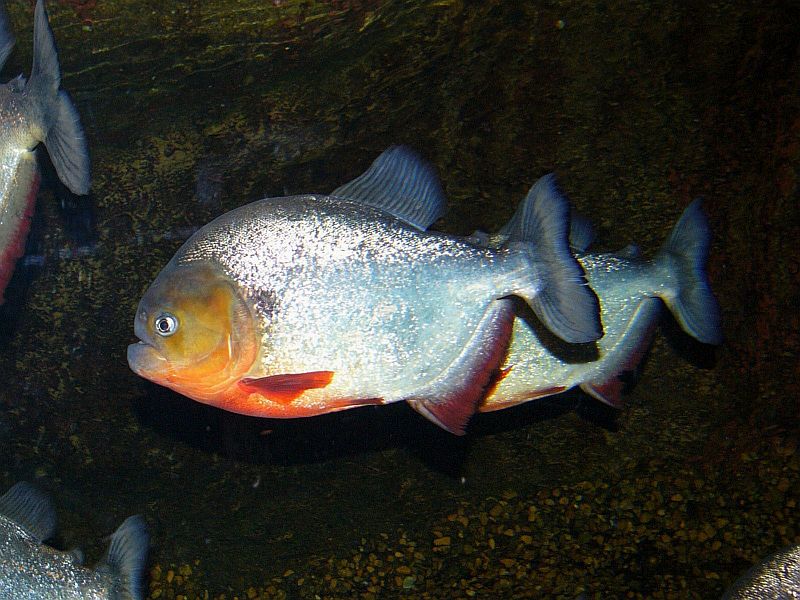
Pygocentrus caribaBlack Spot Piranha
Humboldt, 1821
Max length350mm SL14in SLTank240 × 90cm96 × 36inTemp20–28°C68–82°FpH4.0–7.0Has been recorded from major river channels, smaller tributaries, and floodplain lakes, many of which comprise acidic, mineral-poor blackwater environments with brownish, tannin-stained water, although it has been observed to inhabit clear waters as well. Many of its habitats lie within the Venezuelan and Colombian llanos, a vast, highly biodiverse system of tropical savannah grasslands, seasonally-flooded plains and forests covering an area measuring almost 600,000 square kilo...
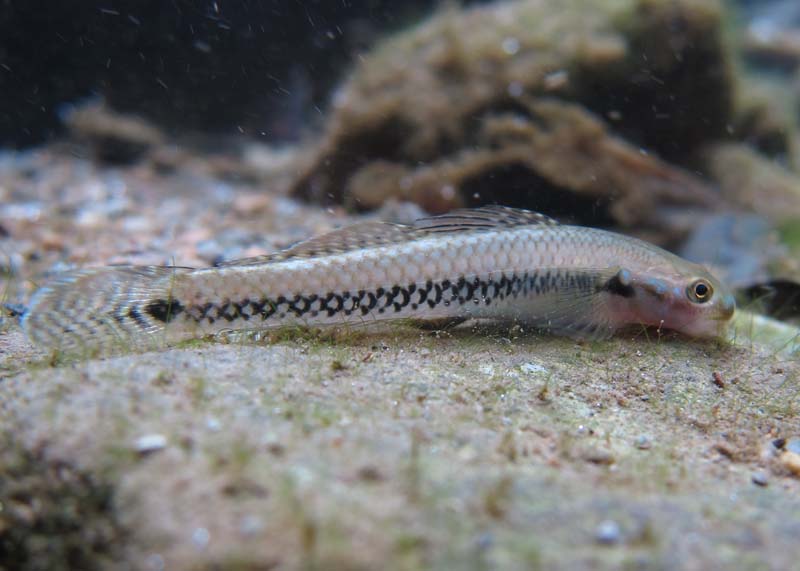
Stiphodon alcedo
Maeda, Mukai & Tachihara, 2011
Max length50mm SL2.0in SLTanknot recordedTemp22–28°C72–82°FpH6.5–7.5Known only from the Ryukyu Islands, Japan, and thus far recorded from just 4 streams on Okinawa island and two on Iriomote island. The type series derived from both islands with Okinawa given as type locality. It may be more widely-distributed than this however, and was possibly transported to the Ryukyu Islands via the Kuroshio Current, an ocean current similar to the Gulf Stream transporting warm, tropical water northward from an area east of Taiwan past Japan towards the polar region.