Results for “fin”
Type a name: scientific, common, or one a species used to go by. Or narrow the catalogue with the filters.
Filters
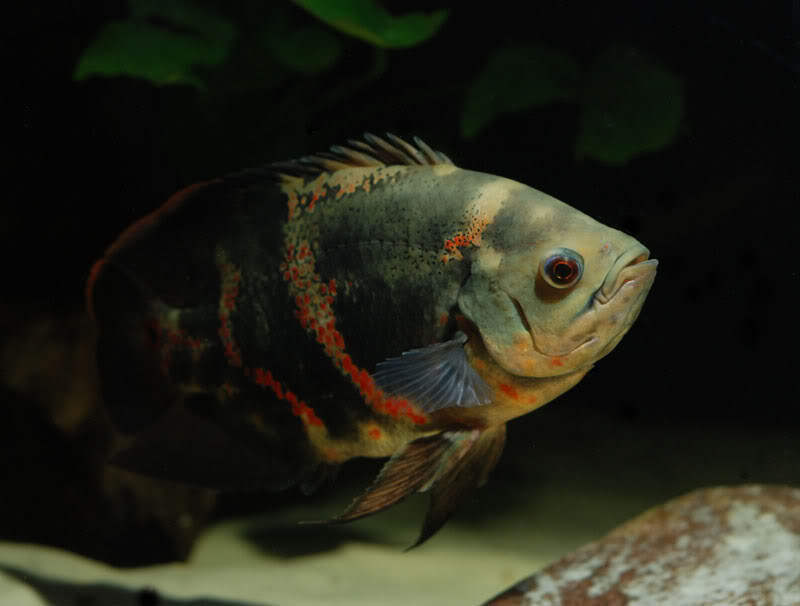
Astronotus ocellatusOscar
Agassiz, 1831
Max length350mm SL14in SLTank150 × 60cm60 × 24inTemp20–28°C68–82°FpH6.0–7.5This species is also referred to as 'velvet cichlid', 'red oscar', 'tiger oscar', or 'marble cichlid'. It is a popular aquarium fish although its adult size and typical life-span of 10-20 years must be taken into account before purchase. Numerous ornamental strains are now available, and while care is more-or-less identical for all of them a degree of additional care must be taken with the 'long-finned' variety which is a little less competitive than other forms.
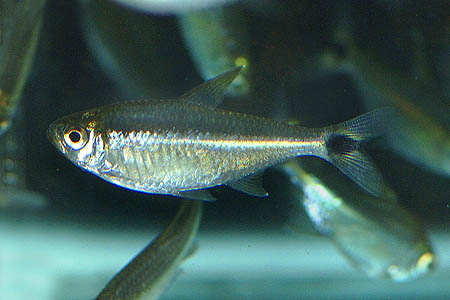
Astyanax kennedyiKennedy's Tetra
Géry, 1964
Max length50mm SL2.0in SLTank80 × 30cm31 × 12inTemp26–29°C79–84°FpH5.5–7.0Endemic to pthe upper Amazon basin in Peru, around the city of Iquitos. Most Astyanax spp. are not popular in the aquarium hobby, though the genus is among the most speciose within the family Characidae. A. kennedyi is no exception; you'll rarely see it offered for sale but may find the occasional specimen mixed among other species in shipments of wild fishes from Peru.
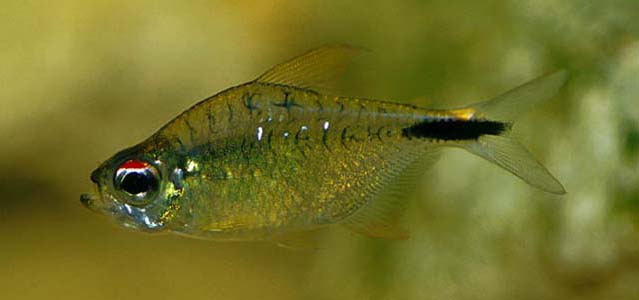
Astyanax leopoldiLeopold's Tetra
Géry, Planquette & Le Bail, 1988
Max length60mm SL2.4in SLTank60 × 30cm24 × 12inTemp23–27°C73–81°FpH5.5–7.0Most Astyanax spp. are not popular in the aquarium hobby, though the genus is among the most speciose within the family Characidae. A. leopoldi is no exception in that you'll rarely see it offered for sale but may find the occasional specimen mixed among other species in shipments of wild fishes from Peru.
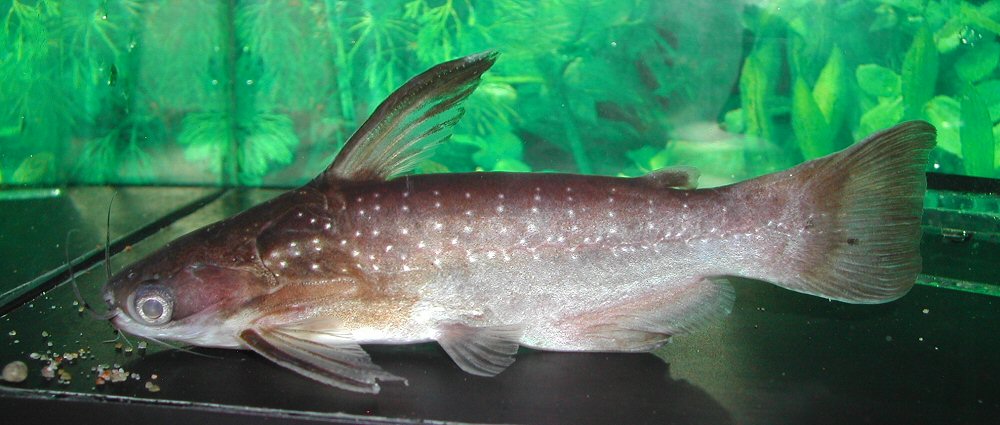
Auchenipterichthys coracoideusMidnight Catfish
Eigenmann & Allen, 1942
Max length110mm SL4in SLTank80 × 30cm31 × 12inTemp22–25°C72–77°FpH6.0–7.2This species is also known by the alternative vernacular name of 'Zamora woodcat', and is often misidentified as A. thoracatus. The latter is a valid species and very similar to A. coracoideus in that the coracoid bone is exposed ventrally and covered only by a thin layer of integument in both species. The two differ principally in the number of anal fin rays...
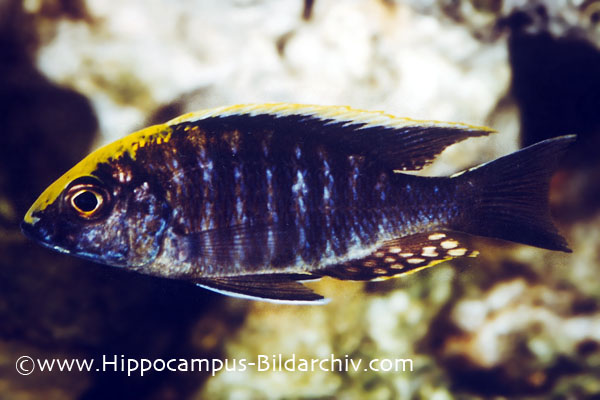
Aulonocara maylandiSulphurhead Peacock
Trewavas, 1984
Max length100mm SL3.9in SLTank120 × 30cm48 × 12inTemp25–29°C77–84°FpH7.5–9.0This species exists in two distinctive phenotypes, with male individuals from West reef and Eccles reef possessing a bright yellow stripe of colour running from the tip of the snout over the anterior portion of the dorsal surface and along the distal margin of the dorsal fin. This form is commonly referred to as 'sulphurhead' or 'sulfurhead' in the aquarium hobby. At Kande Island males exhibit a similar overall colour patterm but the dorsal stripe is whitish in colour and both males and females possess an enlarged lower pharyngeal bone. This population was described...
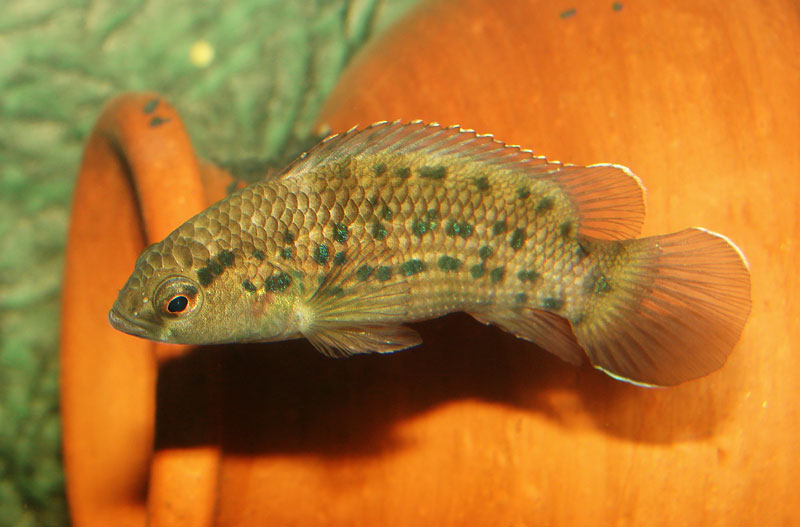
Badis assamensis
Ahl, 1937
Max length75mm SL3.0in SLTank75 × 30cm30 × 12inTemp15–25°C59–77°FpH6.0–7.5Like most badids this species is poorly documented and has yet to find significant popularity in the aquarium hobby. It is easily confused with B. blosyrus at first glance as the body patterning of the two is almost identical but can be distinguished by its slightly larger adult size, noticeably shorter jaw profile and some other, mostly internal, meristic characters. Prior to 2002 the family Badidae inc...
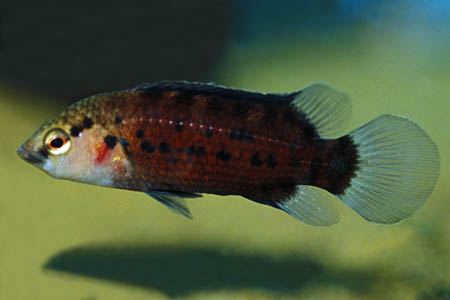
Badis blosyrus
Kullander & Britz, 2002
Max length70mm SL2.8in SLTank75 × 30cm30 × 12inTemp15–25°C59–77°FpH6.0–7.5Like most badids this species is poorly documented and has yet to find significant popularity in the aquarium hobby. It is easily confused with B. assamensis at first glance as the body patterning of the two is almost identical but can be distinguished by its slightly smaller adult size, noticeably elongated, more well-developed jaw profile and some other, mostly internal, meristic characters.
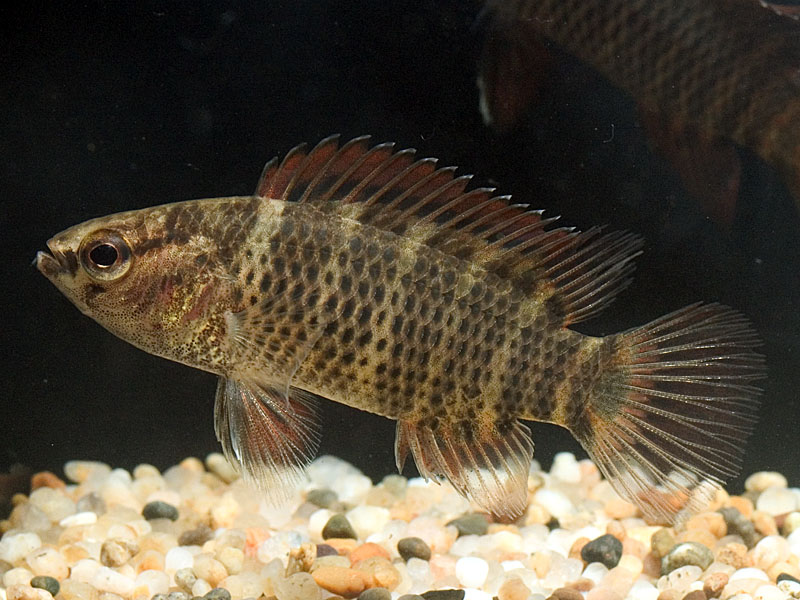
Badis corycaeus
Kullander & Britz, 2002
Max length60mm SL2.4in SLTank60 × 30cm24 × 12inTemp15–25°C59–77°FpH6.5–7.5Like most badids this species is poorly documented and has yet to find significant popularity in the aquarium hobby. Within the genus it is most closely-related to B. pyema but the two are unlikely to be confused as B. corycaeus is much the deeper, darker-bodied fish. Prior to 2002 the family Badidae included just five species of which only B. badis and, to a lesser extent, Badis dario (referred to as B. bengalensis by some sources) were popular in the aquarium hobby. However an extensive rev...
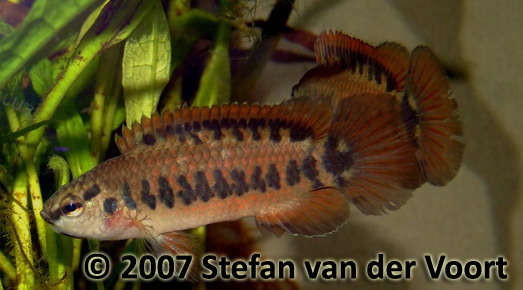
Badis ferrarisi
Kullander & Britz, 2002
Max length60mm SL2.4in SLTank60 × 30cm24 × 12inTemp15–25°C59–77°FpH6.5–7.5Like most badids this species is poorly documented and has yet to find significant popularity in the aquarium hobby. It is arguably the most attractive member of the genus and we hope to see it more widely available; the fish in our images representing what is thought to be the only batch exported from Myanmar to date. It is most closely related...
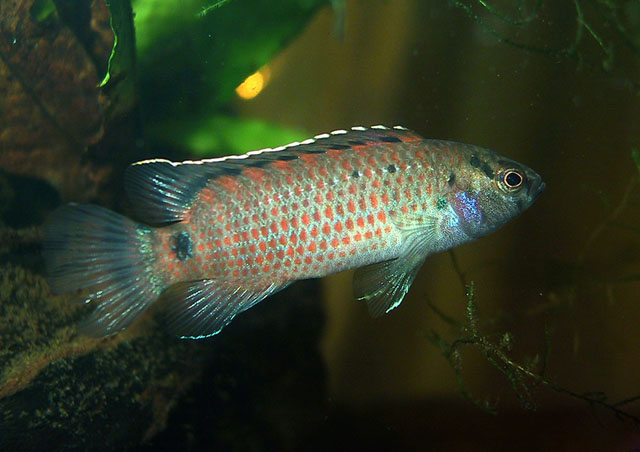
Badis khwae
Kullander & Britz, 2002
Max length60mm SL2.4in SLTank60 × 30cm24 × 12inTemp22–26°C72–79°FpH6.5–7.5Like most badids this species is poorly documented and has yet to find significant popularity in the aquarium hobby, though given its restricted natural distribution it is unlikely ever to be available in large numbers. Within the genus it is most easily confused with B. ruber and B. siamensis but both these species have rows of dark spot-like markings on the flanks which are lacking in B. khwae. The three also differ in the shape of the dark marking on the caudal peduncle; in B. ruber it is rel...
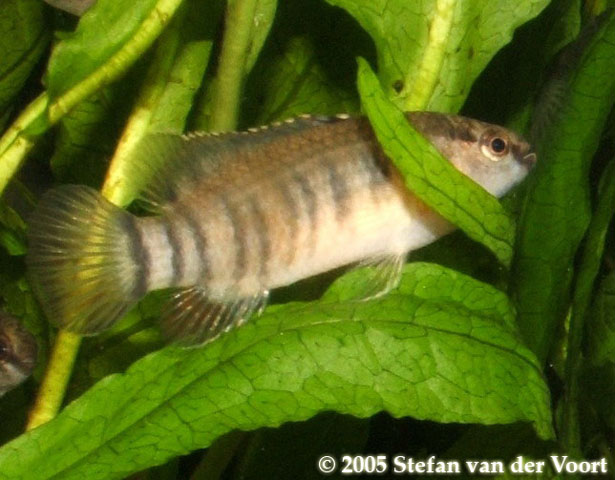
Badis kyar
Kullander & Britz, 2002
Max length60mm SL2.4in SLTank60 × 30cm24 × 12inTemp15–25°C59–77°FpH7.0–9.0Like most badids B. kyar is poorly documented in aquarium literature and has yet to find significant popularity in the hobby, though given its restricted natural distribution it is unlikely ever to be available in large numbers. The fish in our image is a specimen included in the only batch of this species known to have been exported to date. This species has a very slender body shape (which may be an adaptation to its habitat) and in this respect is similar to B. pyema. However B. kyar possesse...
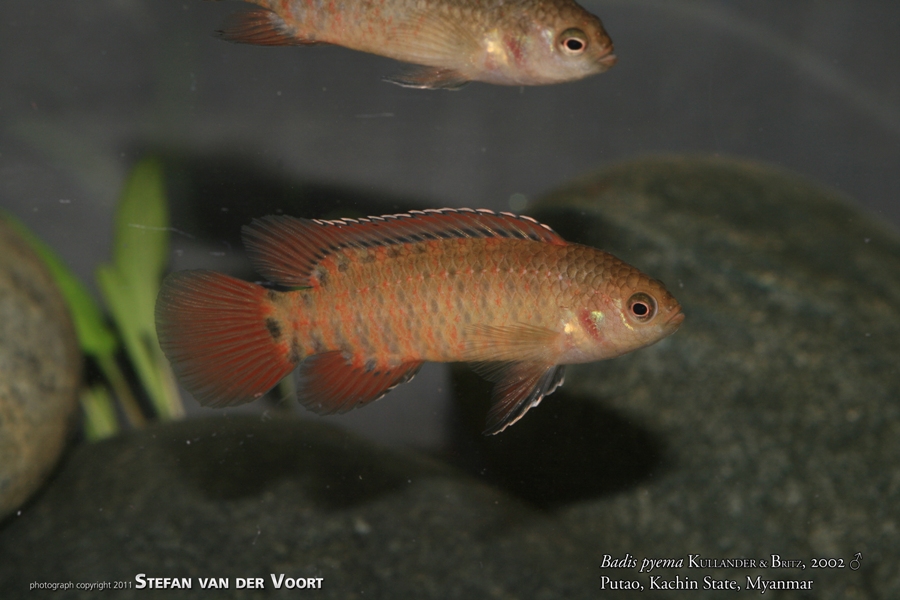
Badis pyema
Kullander & Britz, 2002
Max length45mm SL1.8in SLTank60 × 30cm24 × 12inTemp15–25°C59–77°FpH6.5–7.5Like most badids B. pyema is poorly documented in aquarium literature and has yet to find significant popularity in the hobby, though given its restricted natural distribution it is unlikely ever to be available in large numbers and has only been collected on three occasions to date. It has a very slender body shape, likely an adaptation to its habitat, and in this respect is similar to B. kyar. However B. kyar possesses relatively solid dark, uniform vertical bars on the flanks whereas in B. p...
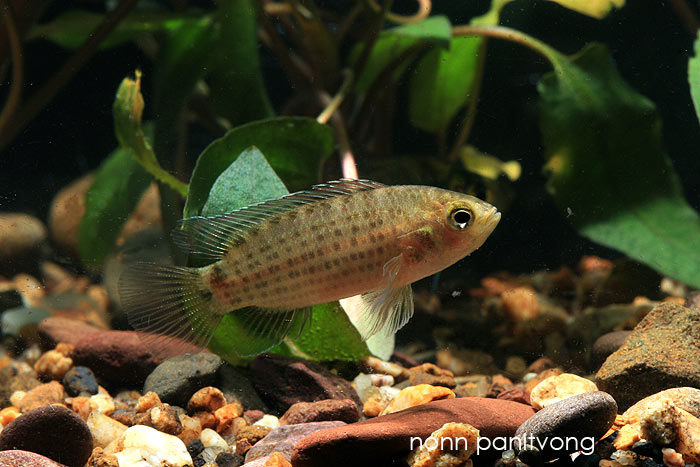
Badis siamensis
Klausewitz, 1957
Max length60mm SL2.4in SLTank60 × 30cm24 × 12inTemp22–26°C72–79°FpH6.5–7.5Like most badids this species is poorly documented and has yet to find significant popularity in the aquarium hobby; to date it has only been exported in very limited numbers. It was for a number of years known as Badis badis siamensis and will be seen labelled as such in older literature. Within the genus it is most easily confused with B. khwae and B. ruber but can be identified by the flank patterning which consists of rows of horizontally-arranged dark markings. In B. ruber these appear mor...
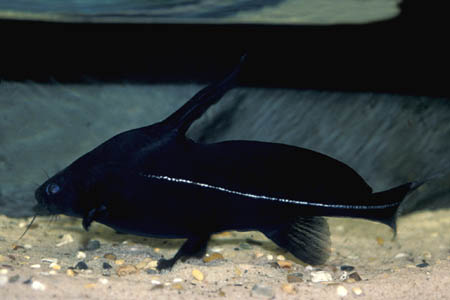
Bagrichthys macracanthusBlack Lancer
Bleeker, 1854
Max length230mm SL9in SLTank120 × 45cm48 × 18inTemp24–28°C75–82°FpH5.5–7.0The vernacular name 'lancer' is derived from the extended dorsal spine possessed by several members of the genus, which currently contains 7 species. Among them B. macracanthus is most similar to B. majusculus and B. vaillantii but can be told apart from the former by possession of shorter pectoral spines (13.3 - 16.2% SL vs. 15.8 - 20.7%), shorter adipose fin (46.0 - 58.0% SL vs. 38.8 - 45.8%), less deep caudal peduncle (7.1 - 7.5% SL vs. 5.6-7.0%) and larger adult size. From B. vaillantii it di...
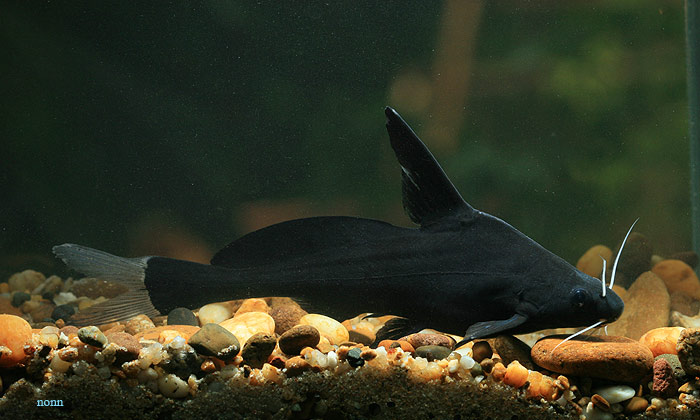
Bagrichthys majusculusWhite-Whisker Lancer
Ng, 2002
Max length177mm SL7in SLTank120 × 45cm48 × 18inTemp24–28°C75–82°FpH5.5–7.0The vernacular name 'lancer' is derived from the extended dorsal spine possessed by several members of the genus, which currently contains 7 species. Among them B. majusculus is most similar to B. macracanthus and B. vaillantii but can be told apart from both by possession of longer pectoral-fin spines (length 15.8 - 20.7 % SL vs. 11.5 - 16.2 %), from the former by possession of a larger adipose fi...
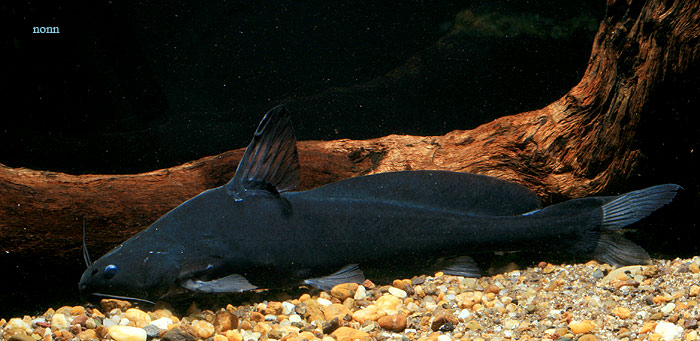
Bagrichthys obscurus
Ng, 1999
Max length249mm SL10in SLTank120 × 45cm48 × 18inTemp24–28°C75–82°FpH5.5–7.0The vernacular name 'lancer' is derived from the extended dorsal spine possessed by several members of the genus, which currently contains 7 species. B. obscurus is diagnosable from congerners by the following combination of characters: mouth opening relatively small and narrow; oral dentition significantly reduced; dorsal-fin spi...
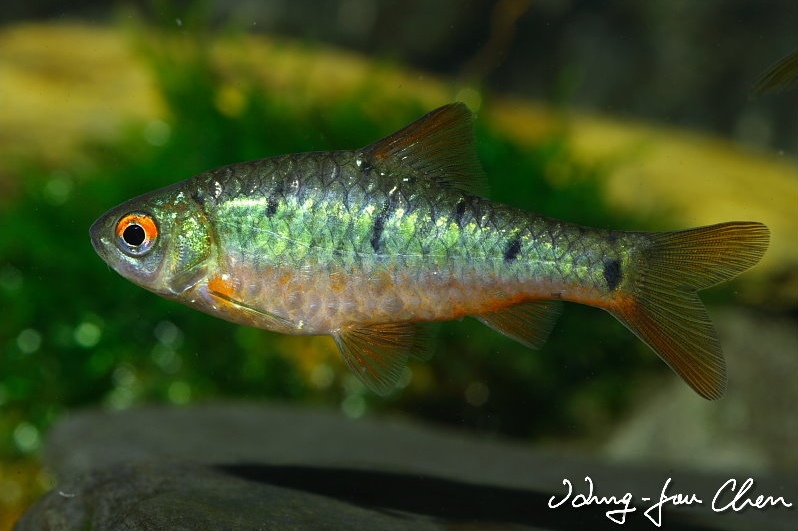
Barbodes semifasciolatusGolden Barb*
Günther, 1868
Max length75mm SL3.0in SLTank90 × 30cm36 × 12inTemp16–24°C61–75°FpH6.0–8.0This species is also known by the alternative names 'green' or 'Chinese' barb. The natural 'green' form is an infrequent find in the aquarium trade whereas the selectively-bred 'golden' variant is farmed in huge numbers and is among the most popular of freshwater aquarium fish. The latter was first produced in the 1960s and is now so ubiquitous that many hobbyists are initially unaware that it is not the natural form.
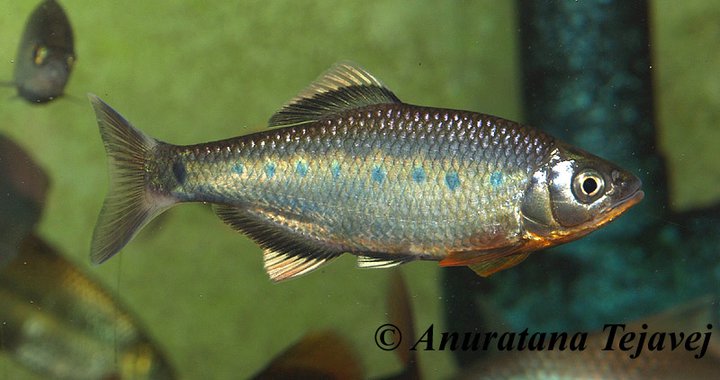
Barilius bakeri
Day, 1865
Max length130mm SL5in SLTank150 × 60cm60 × 24inTemp18–26°C64–79°FpH6.0–7.5This species is traded under several names including 'royal danio', 'blue-spotted hill trout', and 'blue-dotted mirror fish'. It can be distinguished from congeners by possessing a single row of bluish-green spots along the length of the body, white margins on the dorsal and anal fins, 37-38+1 lateral line scales, and fleshy rudi...
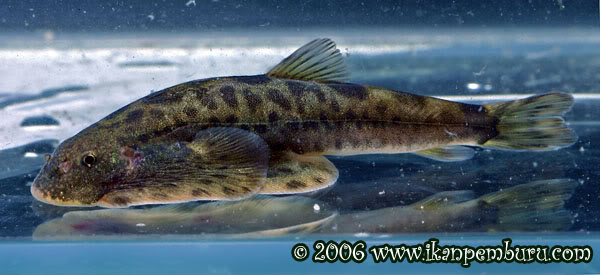
Beaufortia szechuanensis
Fang, 1930
Max length69mm SL2.7in SLTank75 × 30cm30 × 12inTemp16–24°C61–75°FpH6.5–8.0At time of writing there exist 18 recognised members of the genus though only B. kweichowensis is well-known in the trade with B. szechuanensis unlikely to have been exported. According to Chen, Huang and Yang (2009) it can be distinguished from similar congeners by the following suite of characters: 1 branched and 17-20 simple pectoral-fin rays...
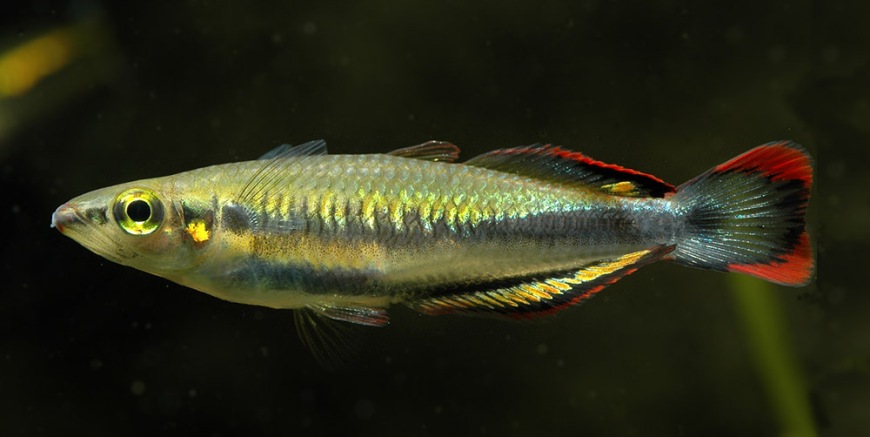
Bedotia madagascarensisMadagascan Rainbow Fish
Regan, 1903
Max length100mm SL3.9in SLTank120 × 30cm48 × 12inTemp23–32°C73–90°FpH4.5–7.5This species was first imported for the aquarium hobby during the 1950s and was for many years misidentified and traded as Bedotia geayi, a valid, but different-looking congener native to the Mananjary River system, south of the range of B. madagascarensis. In terms of external characters, the two are most easily told apart by differences in colour pattern, particularly that of the unpaired fins, and some morphometric counts.