Results for “fin”
Type a name: scientific, common, or one a species used to go by. Or narrow the catalogue with the filters.
Filters
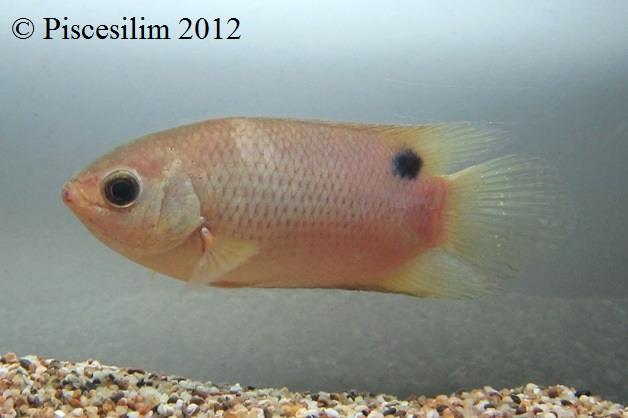
Belontia hasseltiJava Combtail
Cuvier, 1831
Max length200mm SL8in SLTank120 × 30cm48 × 12inTemp21–26°C70–79°FpH4.5–8.5This species is also referred to by the vernacular name 'Malay combtail'. In terms of external characters it differs most obviously from its only congener, B. signata by its overal brownish grey (vs. reddish) body colouration and presence of a mosaic-type patterning in the unpaired fins (vs. absence). The position of relatedness of the genus Belontia with respect to other anabantoids remains somewhat...
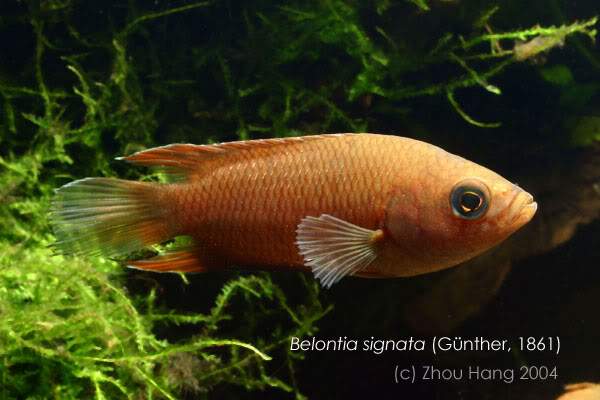
Belontia signataCeylonese Combtail
Günther, 1861
Max length120mm SL5in SLTank120 × 30cm48 × 12inTemp20–27°C68–81°FpH6.0–7.5This species is also traded/referred to by the vernacular name 'Ceylon fighting fish'. It differs from its only congener, B. hasselti, by its overall reddish (vs. brownish-grey) body colouration, and absence (vs. presence) of a mosaic-like patterning in the unpaired fins. At least three putative phenotypes have been recorded. The nominative, and commonest, mostly inhabits clear streams in rainier zones...
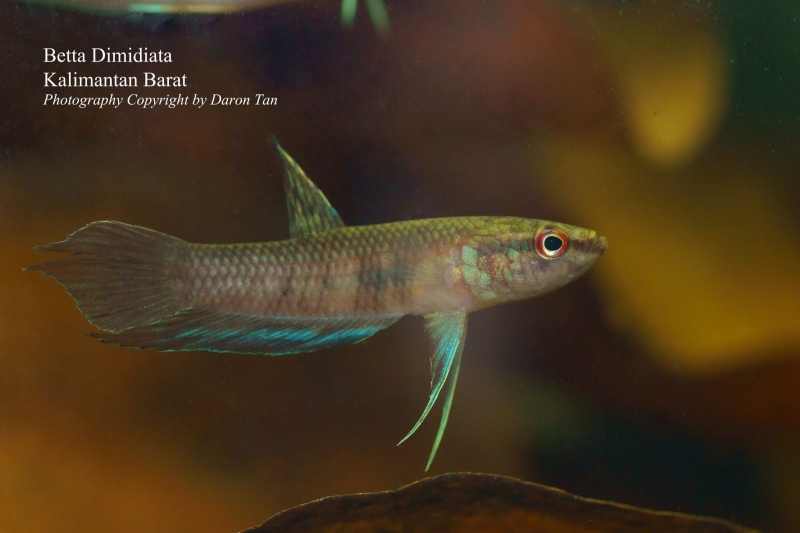
Betta dimidiata
Roberts, 1989
Max length40mm SL1.6in SLTank45 × 30cm18 × 12inTemp22–27°C72–81°FpH5.2–6.5This species is often confused with B. krataios in the aquarium trade, the latter having been known as B. sp. 'Kapuas' prior to description. The two can easily be told apart as the caudal-fin is rounded in B. krataios but spade-shaped and in adults, highly-extended in B. dimidiata. Together these two comprise the B. dimidiata group of closely-related species within the gen...
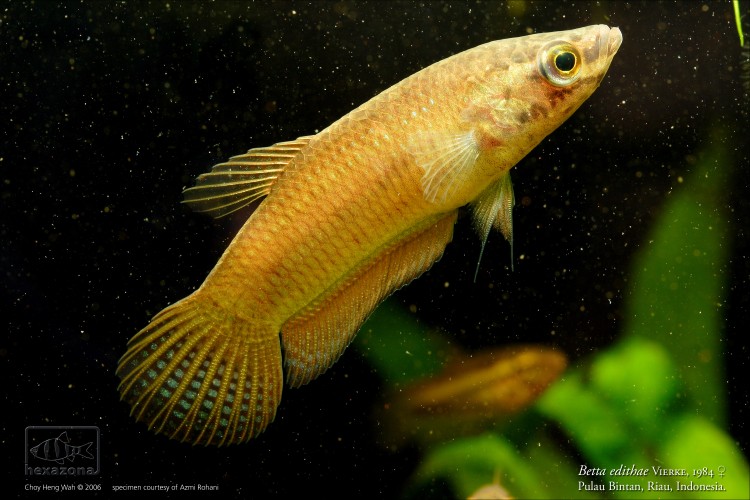
Betta edithae
Vierke, 1984
Max length60mm SL2.4in SLTank80 × 30cm31 × 12inTemp20–27°C68–81°FpH5.0–7.0This species is the only member of the B. edithae group within the genus, and separated from all other Betta spp. by the fact that the branchiostegal membrane and posterior portion of the opercle are opaque or translucent. The original diagnosis by Vierke also states that it has relatively small eyes and short fins with a typical pattern of partial barring.
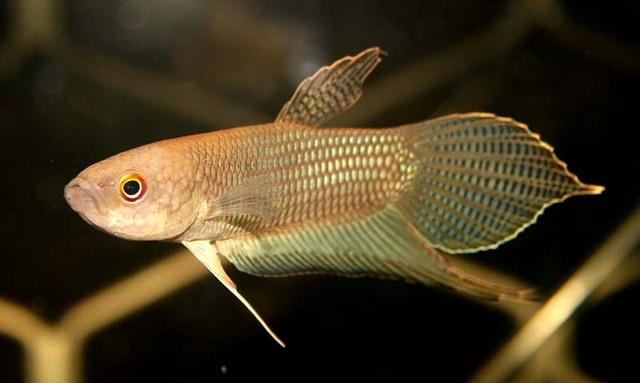
Betta ibanorum
Tan & Ng, 2004
Max length85mm SL3.3in SLTank80 × 30cm31 × 12inTemp24–28°C75–82°FpH4.0–7.0B. ibanorum is uncommon in the hobby and is apparently more frequently fished for food than the aquarium trade. It's included in the Betta akarensis group/complex of closely-related species within the genus, of which members share the following set of characters: possession of pre-orbital and post-orbital stripes (the post-orbital stripe is faint or interrupted in some species); chin bar present; caudal-fin lance...
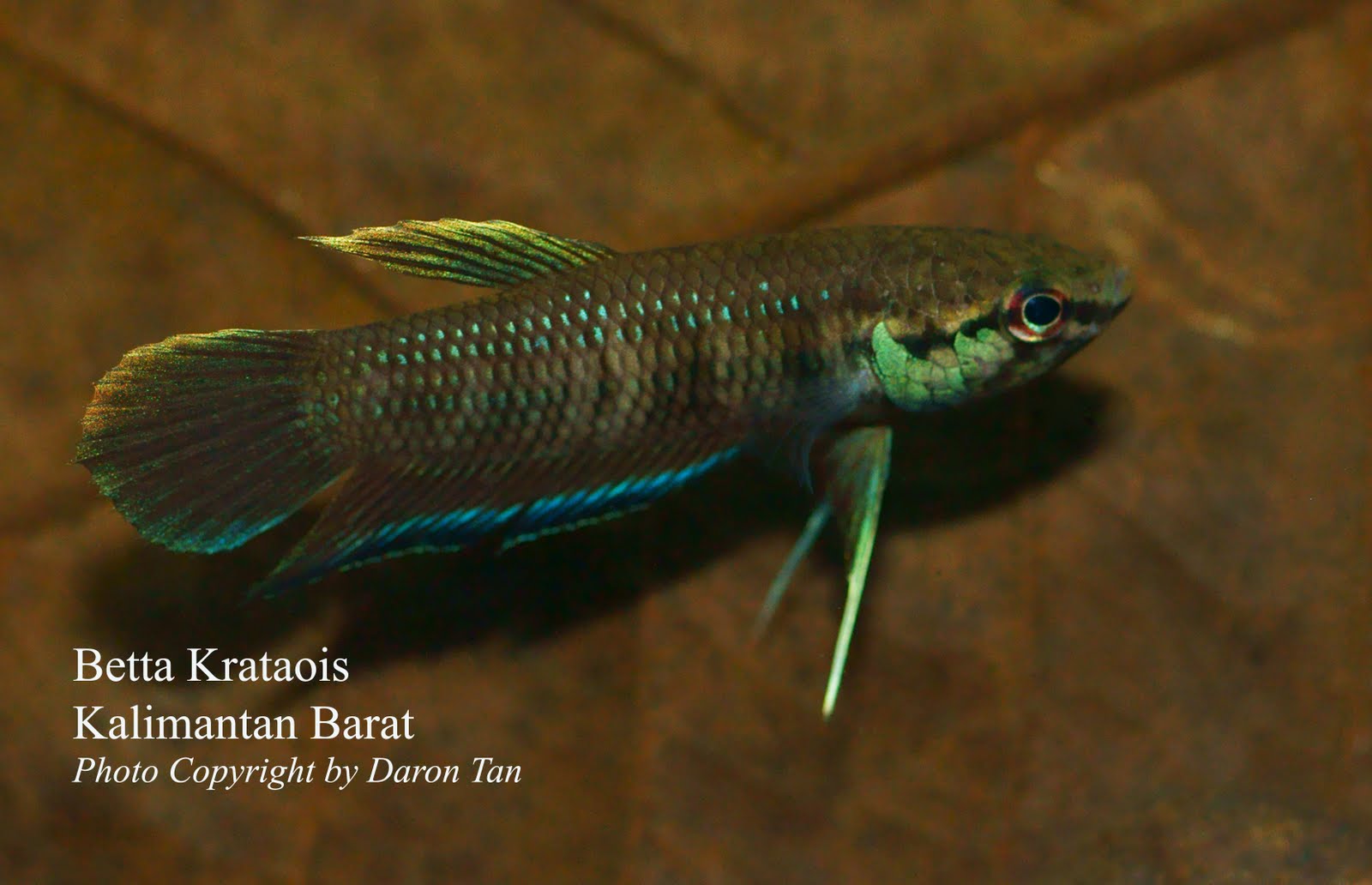
Betta krataios
Tan & Ng, 2006
Max length45mm SL1.8in SLTank45 × 30cm18 × 12inTemp22–28°C72–82°FpH5.0–7.0This species was traded as B. sp. 'Kapuas' prior to its formal description and continues to be mislabelled B. dimidiata. The two can easily be told apart as the caudal-fin is rounded in B. krataios but spade-shaped and in adults, highly-extended in B. dimidiata. Together these two comprise the B. dimidiata group/complex of closely-related species within the genus, members of which can be characterised b...
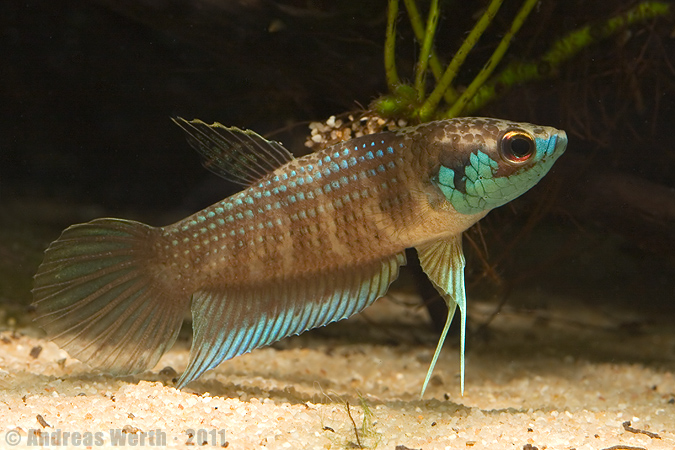
Betta kuehnei
Schindler & Schmidt, 2008
Max length60mm SL2.4in SLTank60 × 30cm24 × 12inTemp21–25°C70–77°FpH6.0–7.5It can be told apart from other members of the B. pugnax group by the following characters: caudal fin rounded in both males and females; chin bar and second postorbital stripe absent; adult males possess intensive blue or bluish-green iridescent (blackish in preservation) colouration on the sides of the head and throat extending from the snout tip to posterior edge of opercle; possession of two central body stripes, the upper extending from the pec...
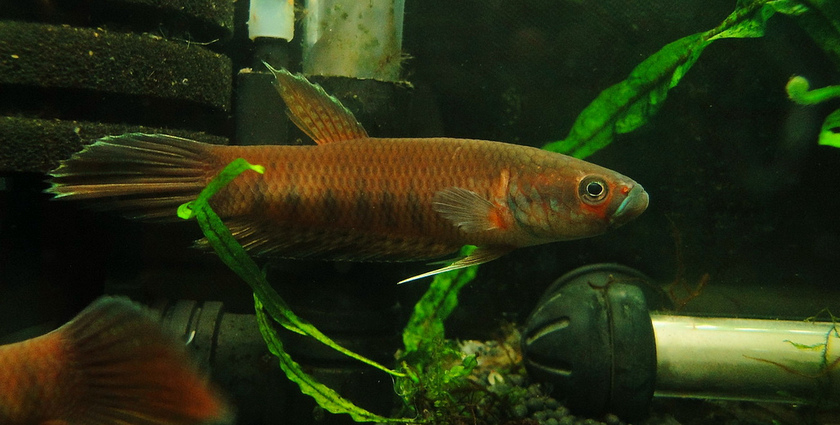
Betta patoti
Weber & de Beaufort, 1922
Max length100mm SL3.9in SLTank80 × 30cm31 × 12inTemp21–27°C70–81°FpH4.0–7.0This species is included in the Betta unimaculata complex of closely-related species within the genus, of which members share the following set of characters: body long and slender with depth at dorsal fin origin 18-25 % SL; head large and blunt with width 19-24 % SL; long maxilla and lower lip with distance from tip of lower jaw to poste...
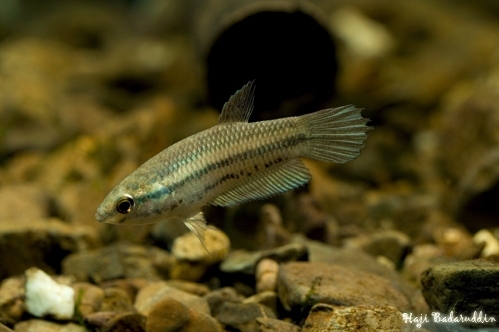
Betta prima
Kottelat, 1994
Max length50mm SL2.0in SLTank60 × 30cm24 × 12inTemp23–27°C73–81°FpH4.0–7.0It can be told apart from other members of the B. pugnax group by the following characters: second postorbital stripe on opercle complete; no transverse bars in caudal-fin; 20-22 predorsal scales; preanal length 50.6-54.8 % SL. Not all authors consider it a member of this group, however, with some placing it in the B. picta complex, e.g., Schindler and Schmidt (2006). The genus is th...
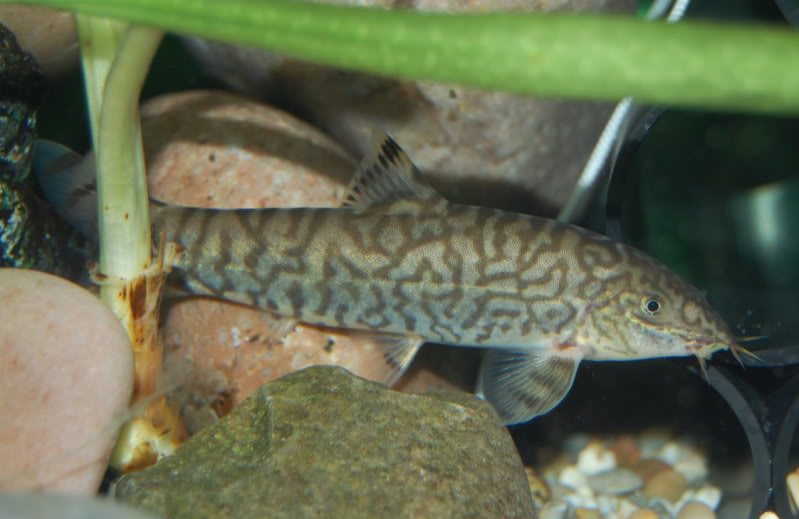
Botia almorhaeYo-Yo Loach
Gray, 1831
Max length160mm SL6in SLTank120 × 45cm48 × 18inTemp19–27.5°C66–82°FpH6.0–7.5The physical appearance of B. almorhae sensu stricto is something of a mystery. No pictures of live specimens appear in any scientific publications we've read and we've been unable to find a certified image of one anywhere meaning it's possibly never been seen in the aquarium trade. Instead the most commonly available members of the nominal species grouping seem to be B. lohachata, B. sp. 'Kosi' and B. sp. 'Teesta' (see individual notes below), plus the assorted hybrids that have appeared since the turn of the century (Grant, 2007).
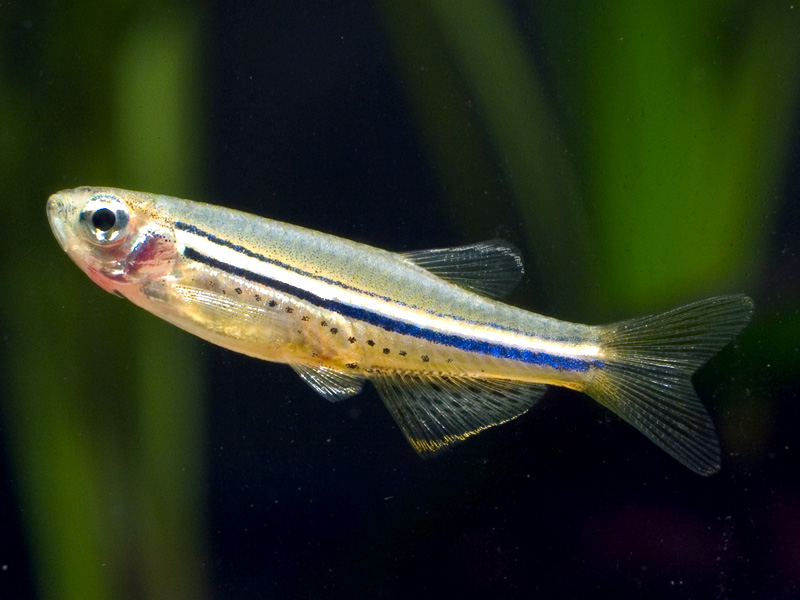
Brachydanio nigrofasciataDwarf Spotted 'Danio'
Day, 1870
Max length40mm SL1.6in SLTank60 × 30cm24 × 12inTemp18–26°C64–79°FpH6.0–7.5The genus Danio contains only the type species, D. dangila, separated on the basis of its larger size and the shape of the caudal-fin, which in adults is only slightly emarginate or even truncate in shape, a feature it shares only with Tinca tinca (the common tench) among other cyprinids. The remaining species, of which B. rerio is thought to be the most ancient, are included in the revalidated genus Brachydanio Weber & de Beaufort, 1916.
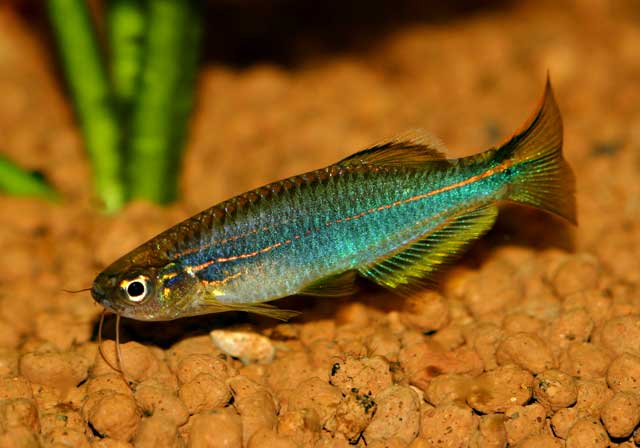
Brachydanio sp. 'hikari'Hikari 'Danio'
authority not recorded
Max length65mm SL2.6in SLTank120 × 30cm48 × 12inTemp18–26°C64–79°FpH6.5–7.5This potentially-undescribed species first became available in 2002, and males and females were marketed as 'Danio sp. hikari yellow' and 'D. sp. hikari blue', respectively. Subsequent DNA testing in the United States revealed them to be the same species and genetically distinct from the very similar B. kerri. It can be told apart as the central body (P) stripe always extends into the caudal fin whereas in B. kerri it terminates at the caudal peduncle. Only a single population of B. kerri was sampled in the stu...
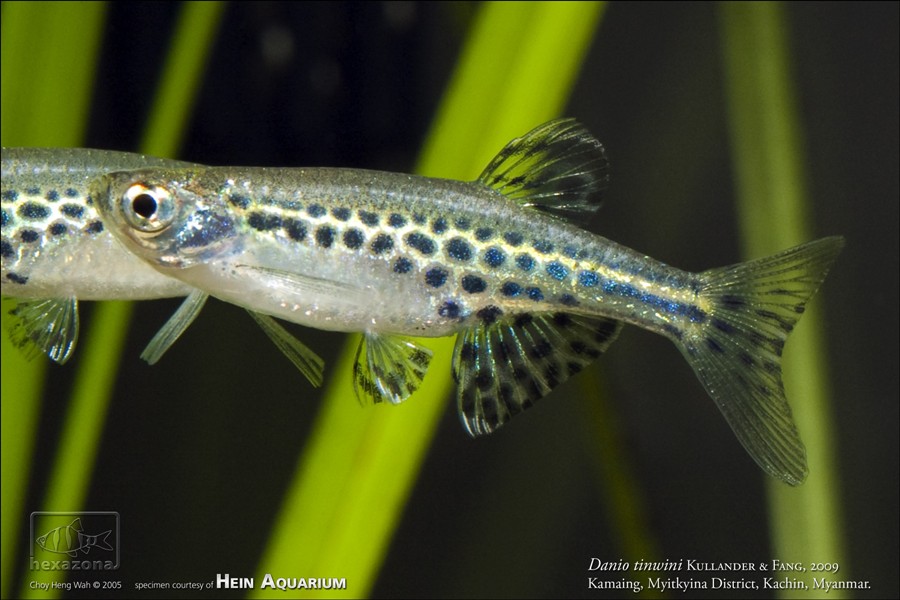
Brachydanio tinwiniGold Ring 'Danio'
Kullander & Fang, 2009
Max length30mm SL1.2in SLTank45 × 30cm18 × 12inTemp18–26°C64–79°FpH6.5–7.5Adult size is comparable to B. nigrofasciata, and in the description paper the authors hypothesise that the two are closely-related given they share other features such as similar barbel length (plus some additional merisitic counts), absent lateral line and spotted pelvic fins. The two are easy to tell apart, however, since in B. tinwini the P+1 stripe is composed of a series of spots (vs. solid), it possesses an indistinct P+2 str...
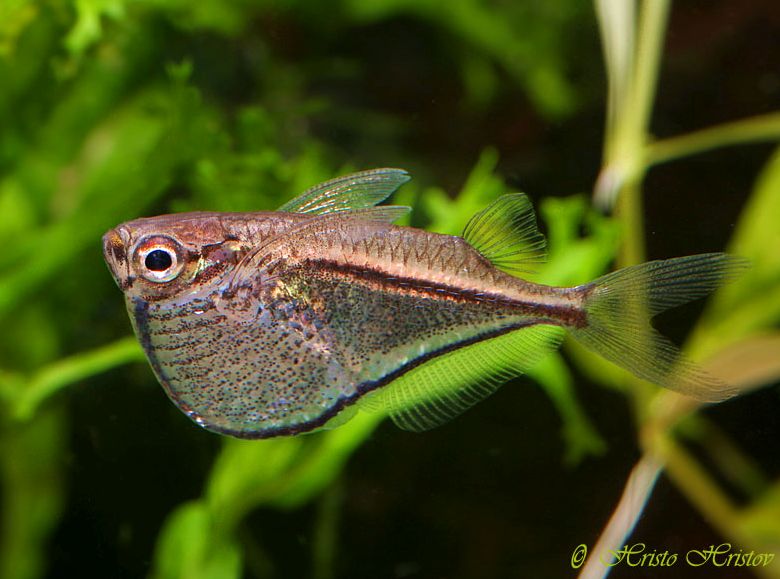
Carnegiella marthaeBlackwing Hatchetfish
Myers, 1927
Max length28mm SL1.1in SLTank60 × 30cm24 × 12inTemp20–28°C68–82°FpH4.0–7.0Gasteropelecids are commonly-referred to as 'freshwater hatchetfishes' due to their heavily-keeled body shape which has evolved in such a way due to possessing an enlarged, heavily-muscled pectoral girdle, and which resembles the shape of a hatchet head. They are sometimes said to be capable of propelled flight above the water surface by beating their pectoral fins but in fact this is not the case and was disproven by Wiest (1995) who used...
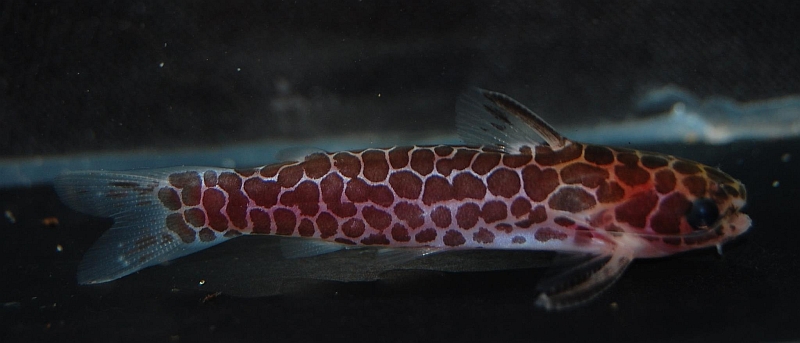
Centromochlus reticulatusReticulated Driftwood Catfish
Mees, 1974
Max length27mm SL1.1in SLTank60 × 30cm24 × 12inTemp22–28°C72–82°FpH5.0–7.5The genus Centromochlus is diagnosable by members having the proximal anal-fin radials enlarged and fused to each other at the base, forming a single ossified structure. It's sometimes included in the putative subfa...
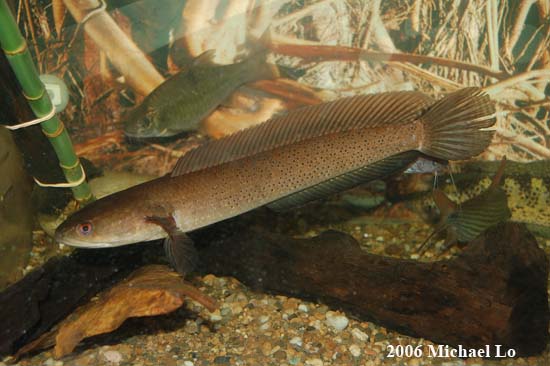
Channa baramensisBaram Snakehead
Steindachner, 1901
Max length220mm SL9in SLTank120 × 45cm48 × 18inTemp22–28°C72–82°FpHnot recordedThis species was considered a synonym of Channa melasoma for a number of years prior to its revalidation by Ng. et al. (1996). Specimens larger than around 120 mm SL can be distinguished by possession of a black spot in the centre of numerous body scales and a barred caudal-fin pattern, characters which are missing in both C. melasoma and the similar-looking C. cyanospilos.
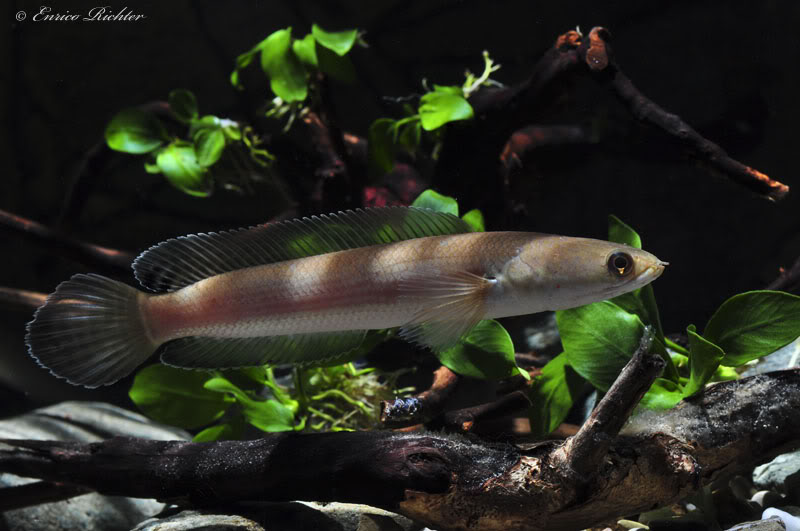
Channa melasomaBlack Snakehead
Bleeker, 1851
Max length300mm SL12in SLTank120 × 45cm48 × 18inTemp22–32°C72–90°FpH4.0–7.0This species can be told apart from the similar-looking congener C. baramensis (once considered synonymous with C. melasoma) by absence (vs. presence) of a black spot in the centre of numerous body scales and absence (vs. presence in specimens larger than 120 mm SL) of a barred caudal-fin pattern.
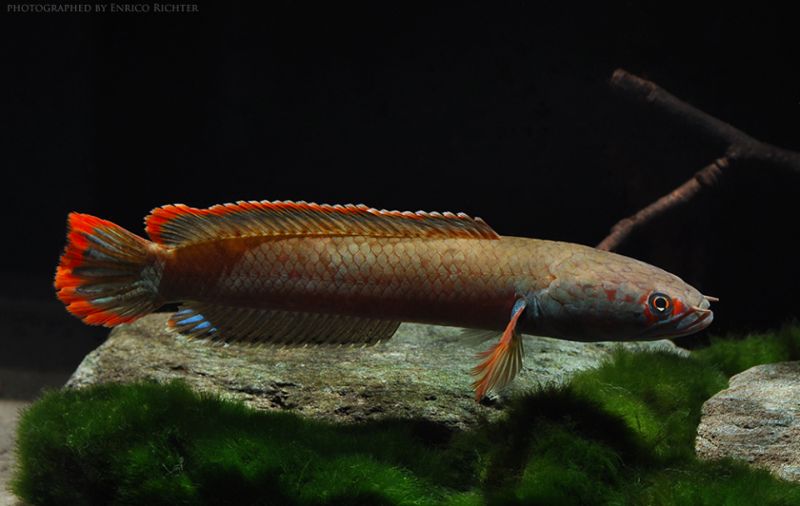
Channa sp. 'fire and ice'
authority not recorded
Max length150mm SL6in SLTank120 × 30cm48 × 12inTemp22–28°C72–82°FpH6.0–7.5This unidentified species first appeared in the aquarium trade during 2009. It's easily told apart from similar-looking congeners by the patches of vivid red pigmentation surrounding the eye and sides of the mouth plus the thick, reddish, marginal band in the caudal-fin.
Chiloglanis polypogonAfrican Suckermouth Catfish
authority not recorded
Max length55mm SL2.2in SLTank45 × 30cm18 × 12inTemp22–26°C72–79°FpH6.5–7.0This fish belongs to a very distinctive genus of mochokid. There are almost 50 species of Chiloglanis described to science, but most are never imported and even the commoner species, such as this one, are seen only rarely. They are very difficult to identify down to species level, as many are very similar in looks. Some are strongly sexually dimorphic with the males having thickened or enlarged anal and caudal fins. Chiloglanis are also sometimes confused with the other 2 genera of African sucke...
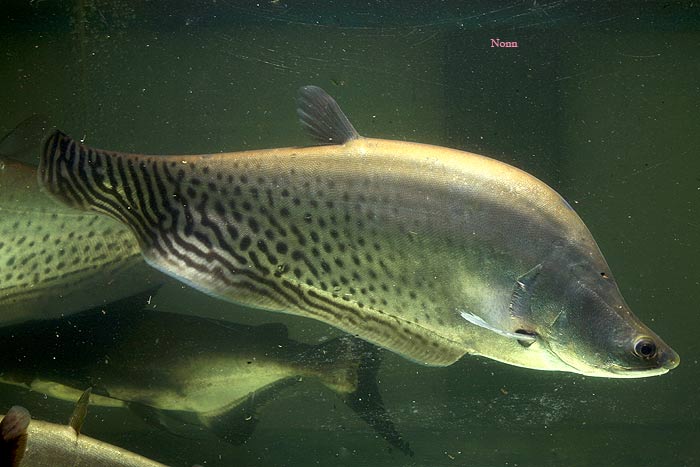
Chitala blanciRoyal Featherback
d'Aubenton, 1965
Max length1200mm SL47in SLTanknot recordedTemp20–28°C68–82°FpH6.0–8.0This species is also referred to as 'royal knifefish' in the aquarium trade but arguably has no place in the ornamental hobby given its adult size and specialised requirements. It can be distinguished from congeners by presence of many small, dark spots on the anterior portion of the body which merge to form oblique, irregular stripes extending onto the anal and caudal fins posteriorly.