Results for “species name”
Type a name: scientific, common, or one a species used to go by. Or narrow the catalogue with the filters.
Filters
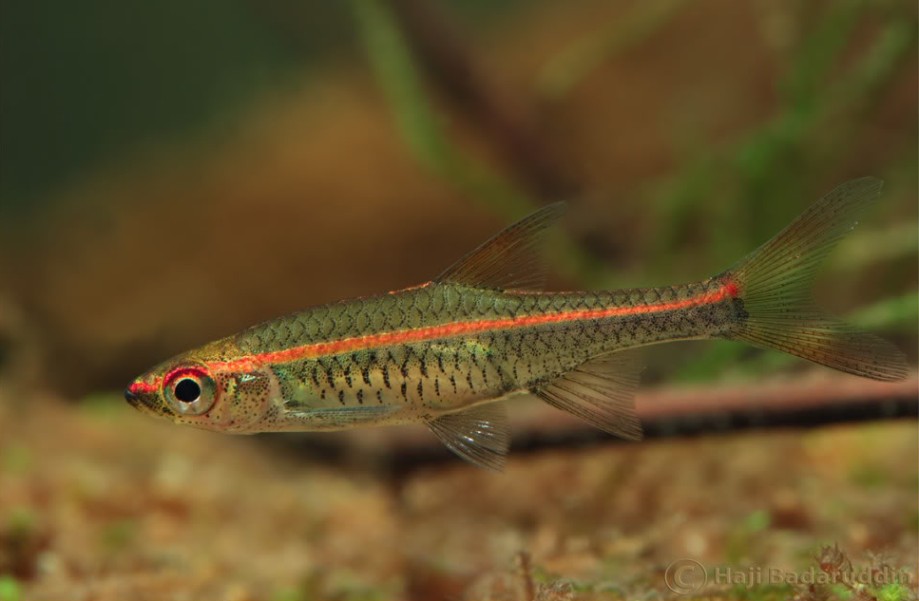
Trigonopoma pauciperforatumGlowlight Rasbora
Weber & de Beaufort, 1916
Max length60mm SL2.4in SLTank90 × 30cm36 × 12inTemp21–26°C70–79°FpH4.0–7.5This species is also sold as the 'redline' rasbora which is something of a misnomer as in reality the colour of the lateral stripe that gives rise to the name can vary from deep orange to golden depending upon the collection locality of the fish as well as diet, condition, and even mood. Some specimens also have a second, darkish stripe beneath the other which seems to vary in length and intensity depending on a similar array of factors. Older fish tend to possess a greater degree of black edging to the scales, especially in the ventral portion of the body.
Polypterus weeksiiMottled Bichir
authority not recorded
Max length550mm SL22in SLTank150 × 60cm60 × 24inTempnot recordedpHnot recordedP. weeksii is one of the "upper-jawed" tribe of polypterids so named on account of the upper jaw being longer than or equal in length to the lower jaw. It is one of the rarer bichir species in the hobby. Like other bichirs it is an incredibly hardy, nocturnal species with very poor vision, relying on its excellent sense of smell to locate food. This species along with others of its genus are some of the last surviving relatives of very ancient species. Fossils of earlier relatives have...
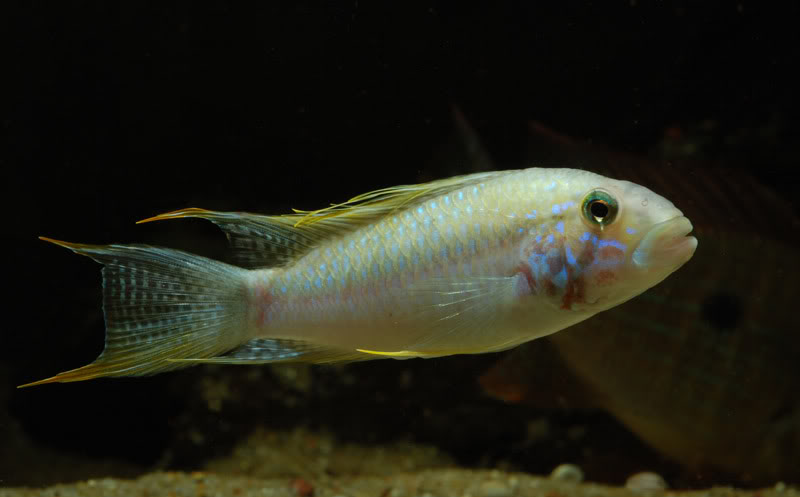
Apistogramma sp. 'Kelleri'
authority not recorded
Max length♂ 80 · ♀ 65mm SL♂ 3.1 · ♀ 2.6in SLTank60 × 30cm24 × 12inTemp22–29°C72–84°FpH4.0–6.0This undescribed species was first collected and subsequently appeared in the aquarium hobby during 2008. It was exported again in late 2009 and early 2010 under the names A. sp. 'Jutai' and A. sp. 'diamond face', and said to have been collected in the Río Jutai, Amazonas state, Brazil. The Jutai is a south bank tributary of the Solimões but lies several hundred kilometres downstream of Leticia so this information, from a purportedly trustworthy source, initiall...
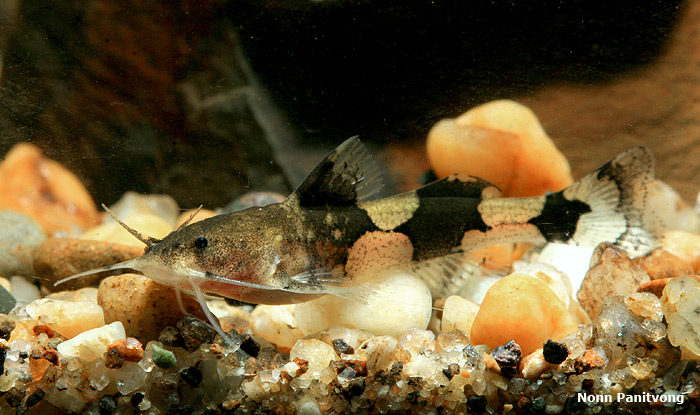
Akysis vespaOrange-Banded Stream Catfish
Ng & Kottelat, 2004
Max length31mm SL1.2in SLTank45 × 30cm18 × 12inTemp16.5–23.5°C62–74°FpH6.0–7.5This species is among the few members of the family to be exported for the aquarium hobby and we've also seen it on sale under various names such as 'orange-banded stone catfish', 'orange micro bumblebee catfish', 'Burmese orange mini bee catfish' or more simply 'wasp catfish'. Though the majority of forms are yellowish to orange in colouration there appears to exist a bright red variant which to date we've only seen in photos.
Synodontis contractaBig-nosed Upside-down Catfish
authority not recorded
Max length75mm SL3.0in SLTank60 × 30cm24 × 12inTemp22–27°C72–81°FpH6.2–7.2Often confused with the similar S.nigriventris, this species is imported infrequently. It is easily distinguished from nigriventris by its larger eyes and broad mouth and head. These features give rise to the common name "Big-nosed upside-down catfish". S. contracta spends the majority of its time swimming in an inverted position and this, along with its exaggerated facial features,make it a characterful and interesting addition to the community aquarium. It is also known as the Bug-e...
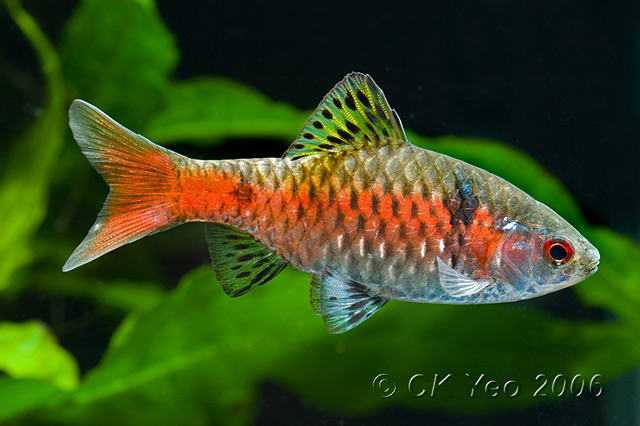
Pethia padamyaOdessa Barb
Kullander & Britz, 2008
Max length46mm SL1.8in SLTank80 × 30cm31 × 12inTemp16–25°C61–77°FpH6.5–8.5This species has been in the aquarium trade since the early 1970s but its precise origin was a mystery until 2003. It first appeared in Ukraine, the common name 'Odessa' being derived from the port city of that name, and when it arrived in western Europe was widely considered a hybrid of similar-looking congeners such as P. conchonius, P. ticto and P. cumingii. It was also hypothesised as a subspecies of P. ticto or P. conchonius, and some suggested the fish to be artificially dyed.
Haplochromis latifasciatus
authority not recorded
Max length125mm SL5in SLTank120 × 30cm48 × 12inTemp23–28°C73–82°FpH7.2–8.2This beautiful species is critically endangered in nature but is not that rare in the hobby being quite easily bred. Many sources refer to it by the invalid scientific name Astatotilapia latifasciata and may also be seen for sale as Haplochromis sp. "zebra obliquidens" or H. obliquidens. Sadly it's thought that the latter fish has never even been exported and is extinct in nature. Furthermore, H. obliquidens is a Victorian species and does not even inhabit the same lake as H. l...
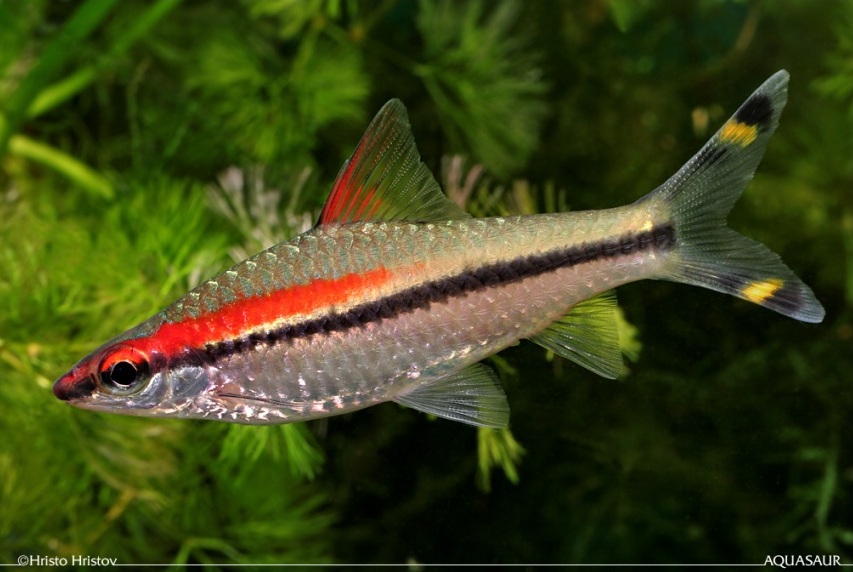
Sahyadria denisoniiRed-line Torpedo Barb
Day, 1865
Max length110mm SL4in SLTank120 × 45cm48 × 18inTemp15–25°C59–77°FpH6.5–7.8This species has become an extremely popular aquarium fish since it first appeared in the ornamental trade during the late 1990s, and it has been sold under various names including 'Denison's barb', 'denisoni barb', 'Denison's flying fox', 'rose line shark', 'bleeding-eye barb', 'red flash barb', and 'Indian flasher barb'. In India it is known locally as 'Miss Kerala' and 'Chorai Kanni' ( literally 'bleeding eyes').
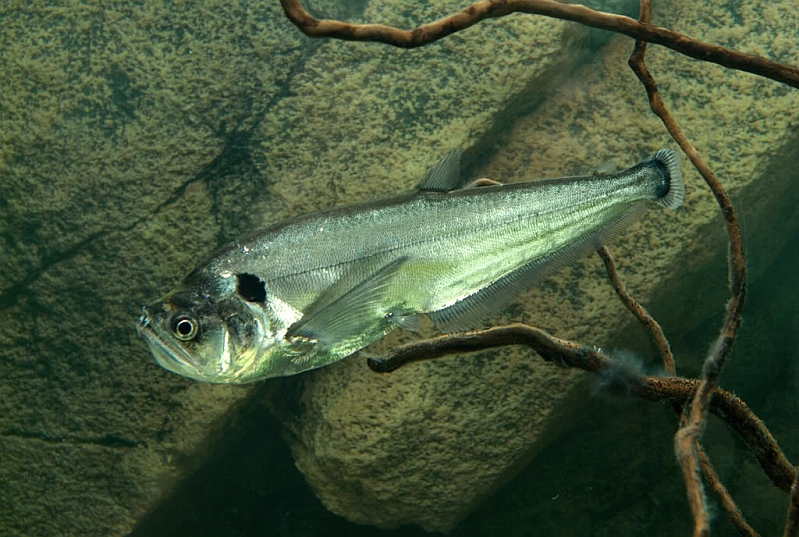
Cynodon gibbus
Agassiz, 1829
Max length280mm SL11in SLTank210 × 75cm84 × 30inTemp24–28°C75–82°FpH6.0–8.0This species is rare in the aquarium trade but is arguably more suitable for the home aquarium than some of its better-known relatives given its adult size and relatively docile behaviour. Other vernacular names include 'Dientón' (Peru), 'Perrito' (Ecuador), 'Payara-chata' or 'Payarin' (Venezuela) and 'Icanga', 'Minguilista' or 'Peice-cachorro' (Brazil), some of which are also applied to related species.
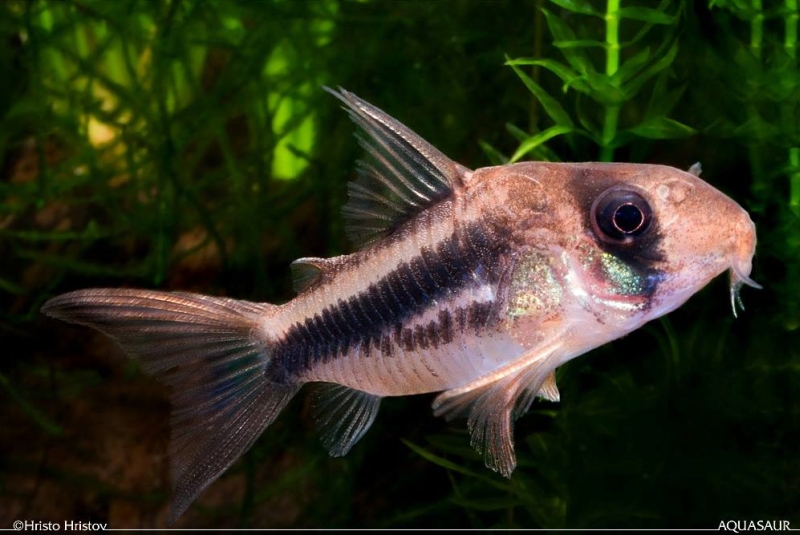
Corydoras axelrodiAxelrod's Cory
Rössel, 1962
Max length50mm SL2.0in SLTanknot recordedTemp22–26°C72–79°FpH5.0–7.0This species is somewhat variable in appearance and can have between 1-3 dark lateral stripes on each flank, for example. It's also known by the alternative common name 'pink corydoras'. It looks similar to the congener C. loxozonus plus unidentified fishes which have been assigned the codes C003 and CW021, and all four are sometimes traded under the fabricated names C. 'deckeri' or C. sp. 'decker/deker'.
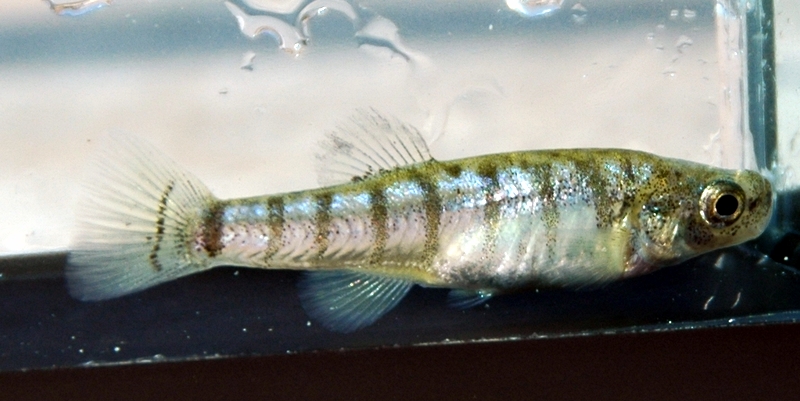
Anatolichthys saldaeSalda Toothcarp
Akşiray, 1955
Max length50mm SL2.0in SLTank120 × 30cm48 × 12inTemp6.5–22°C44–72°FpH8.0–10.0The elongated, slender body profile, angular lower jaw and reduced scalation exhibited by this little-known subspecies have seen it placed in the disused genera Anatolichthys and Kosswigichthys in the past and it's still inexplicably listed as a species of Lebias by some sources (for the record Lebias has long been considered a synonym of Cyprinodon by most authorities and an ICZN committee voted to suppress the name in favour of Aphanius as recently as 2003). You're unlikely to find i...
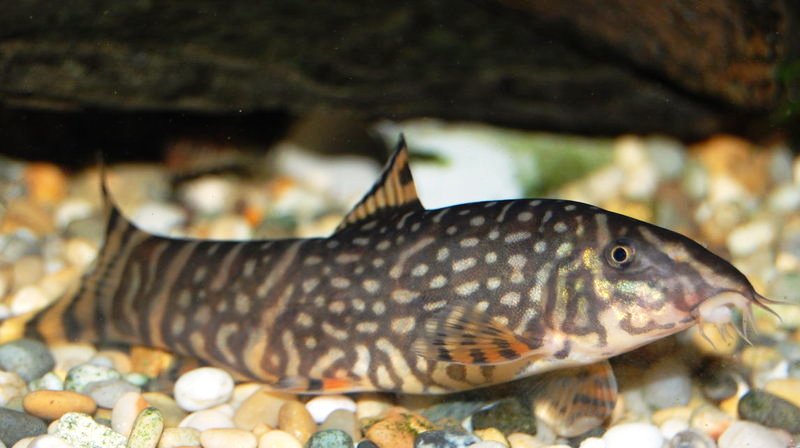
Botia rostrata
Günther, 1868
Max length120mm SL5in SLTank120 × 45cm48 × 18inTemp19–27°C66–81°FpH6.0–7.5Within the nominal species grouping suggested by Grant (2007) almost all B. rostrata sold in the hobby are B. sp. 'upper Brahmaputra' with B. rostrata sensu stricto rarely, if ever, available. Trade names include 'Gangetic loach', 'twin-banded loach' and 'ladder loach'. The defining characters of the group are "Pattern consisiting of 8-10 black to dark brown body bars that exhibit pale and numerous spots in juveniles, and in adults the bars can anast...
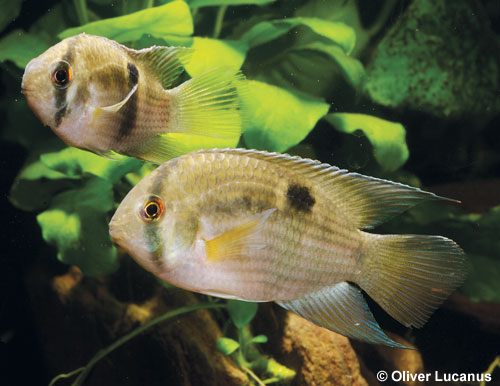
Cleithracara maroniiKeyhole Cichlid
Steindachner, 1881
Max length110mm SL4in SLTank90 × 30cm36 × 12inTemp21–28°C70–82°FpH4.0–7.5This species can be told apart from relatives by the characteristic 'keyhole' shaped marking on each side of the body. It's one of few fishes in which the current generic name is derived from the common name popularised in the aquarium hobby with 'Cleithracara' a combination of the Greek kleithron, meaning lock, and, acará, the Guaraní word for cichlids.
Piabucus dentatusPiabuco Tetra
authority not recorded
Max length130mm SL5in SLTank120 × 30cm48 × 12inTemp20–25°C68–77°FpH6.0–7.5There are only three species in this little known genus, all of which are rarely seen in the hobby. In 2007 an apparently undescribed Piabucus was seen on sale in the UK under the name "chin tetra", in reference to the black marking on the lower jaw of the fish....
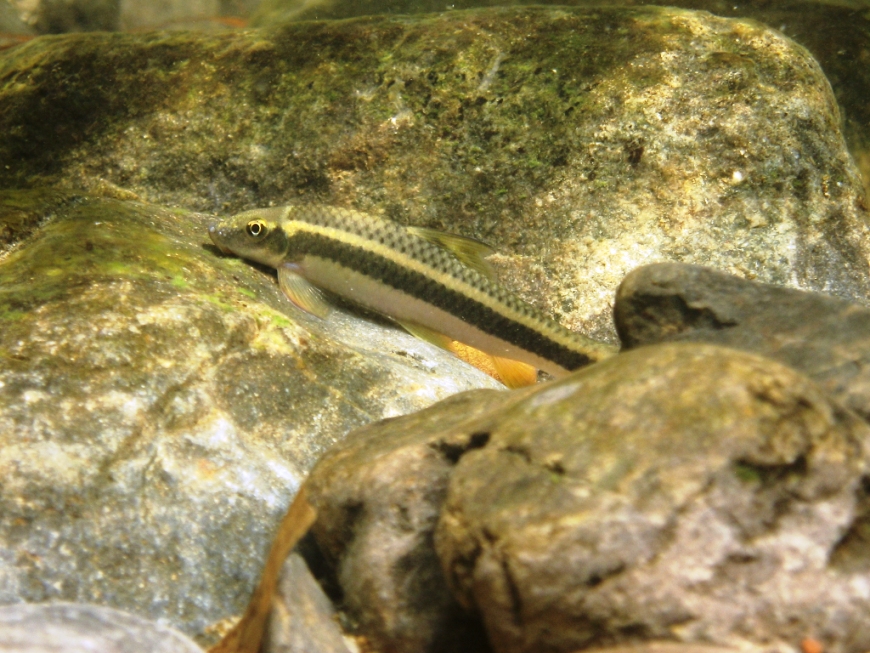
Garra cambodgiensisFalse SAE
Tirant, 1883
Max length150mm SL6in SLTank120 × 45cm48 × 18inTemp20–27°C68–81°FpH6.0–7.5Also known by the vernacular names ''black band garra', 'stone-lapping minnow' or 'false flying fox' and continues to be traded as Garra taeniata, an invalid name synonymous with G. cambodgiensis. It is often confused with those laterally-striped members of the genus Crossocheilus sold as 'Siamese algae eater' or 'Siamese flying fox', but in those species the dark lateral body stripe continues into the caudal-fin whereas in G. cambodgiensis it terminates...
Xenotilapia melanogenysBlack-Chinned Xenotilapia
authority not recorded
Max length160mm SL6in SLTank120 × 38cm48 × 15inTemp24–27°C75–81°FpH7.5–9.0This fish feeds in a similar way to Geophagus species in that it will sift sand through its gills to extract invertebrates and morsels hidden in the substrate. It was until recently classified in the genus Enatiopus and is still named as such in much of the available literature. There are slight geographical variations in colour but these are not major. Interestingly, the shoals in which these fish live in nature appear to be fixed. That is, that an individual will remain in the same group for ...
Hara jerdoniAsian Stone Catfish
authority not recorded
Max length30mm SL1.2in SLTank30 × 20cm12 × 8inTemp18–24°C64–75°FpH5.6–7.6This delightful little species can be distinguished from others in the genus by its elongated pectoral spines. It, and others in the genus (and also the closely related genus Erithistes), also go by the common name of moth catfish due to their patterning and shape when viewed from above....
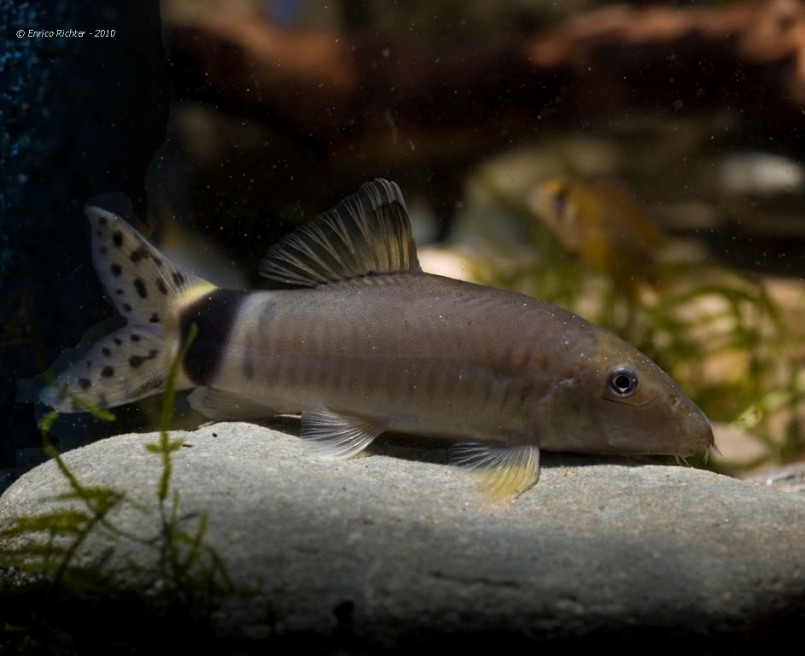
Yasuhikotakia splendida
Roberts, 1995
Max length100mm SL3.9in SLTank120 × 30cm48 × 12inTemp20–28°C68–82°FpH6.0–7.5This species first appeared in the trade during 2009 with prices initially variable but in the main prohibitively expensive, and it remains expensive when available. We've seen it on sale under various names including 'jaguar loach', 'splendid loach' and 'yellow-tail polka dot loach'. It appears superficially similar to Y. caudipunctata, Y. longidorsalis and Y. morleti but can be distinguished from all by a combination of characters of which the most immedia...
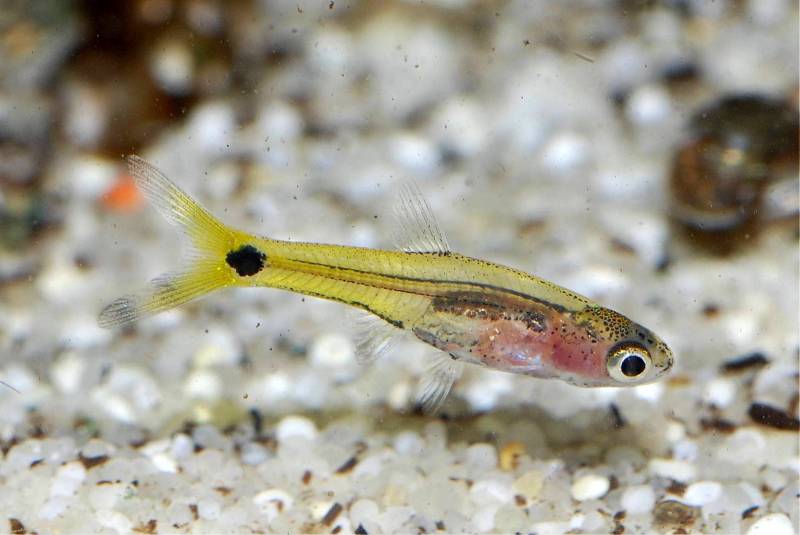
Barboides gracilis
Brüning, 1929
Max length18mm SL0.7in SLTank45 × 20cm18 × 8inTemp21–26°C70–79°FpH6.0–7.0This species is still very rare in the hobby although it has built up something of a following among enthusiasts of planted 'nano' aquaria and you may see it on sale under the trade names of 'dwarf amber/ember barb'. Its small adult size evolved via a process known as miniaturisation characterised by sexually mature adults with a significantly reduced size of less than 20mm SL. Among bony fishes cyprinids are one of the few groups in which this phenomenon occurs repeated...
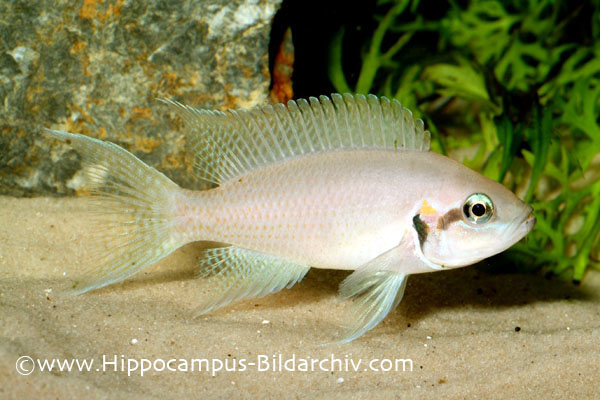
Neolamprologus pulcherBrichardi
Trewavas & Poll, 1952
Max length90mm SL3.5in SLTank120 × 30cm48 × 12inTemp23–27°C73–81°FpH8.0–9.0Deservedly one of the most popular Tanganyikan species available in the hobby, N. brichardi is ideal for newcomers to both Rift Lake cichlids and cichlids in general, being beautiful and easy to keep and breed. It is seen for sale under several common names including "Fairy Cichlid", "Lyretail Cichlid" and "Princess of Burundi". There are several colour morphs available, although these do not vary much in patterning, and an albino form is also occasionally available...