Results for “bar”
Type a name: scientific, common, or one a species used to go by. Or narrow the catalogue with the filters.
Filters
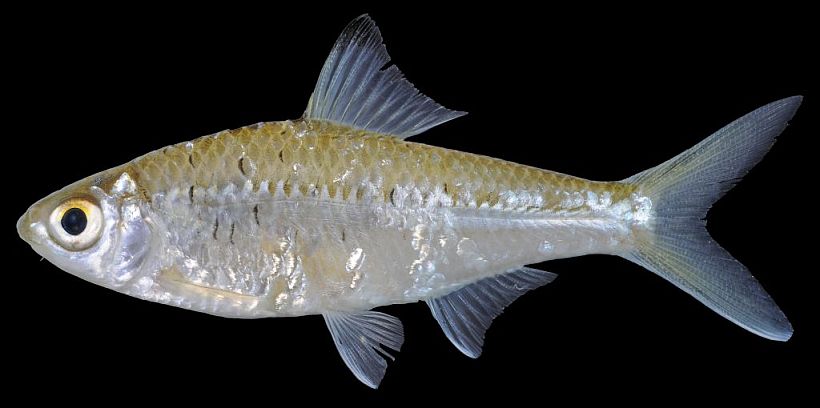
Mystacoleucus lepturus
Huang, 1979
Max length95mm SL3.7in SLTanknot recordedTempnot recordedpHnot recordedThis species can be distinguished from congeners by the following combination of characters: body relatively slender, depth fitting 3.4-3.8 times in SL; 32-33 + 2 lateral line scales; 14 circumpeduncular scale rows; presence of a single pair of barbels; black distal margin on dorsal-fin; numerous body scales with dark, crescent-shaped markings.
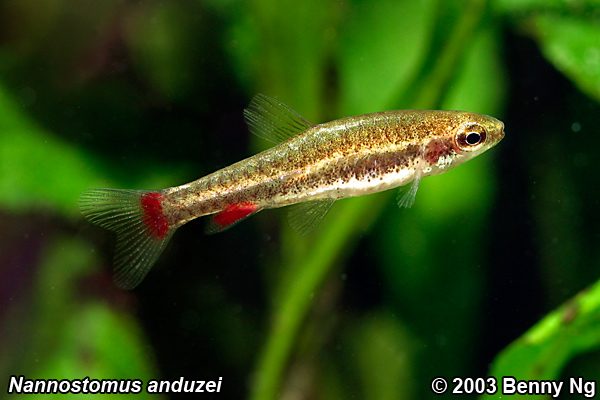
Nannostomus anduzei
Fernandez & Weitzman, 1987
Max length16mm SL0.6in SLTank45 × 30cm18 × 12inTemp22–28°C72–82°FpH5.0–7.0This is the smallest member of the genus and rarely traded in numbers, though it's a relatively common contaminant among shipments of wild fishes from Manaus. Unlike other Nannostomus spp. it does not exhibit a specific colour pattern of spots or bars at night-time, rather displaying an overall paleness. The family Lebiasinidae is included in the order Characiformes and sometimes split into the nominal subfamilies Lebiasininae a...
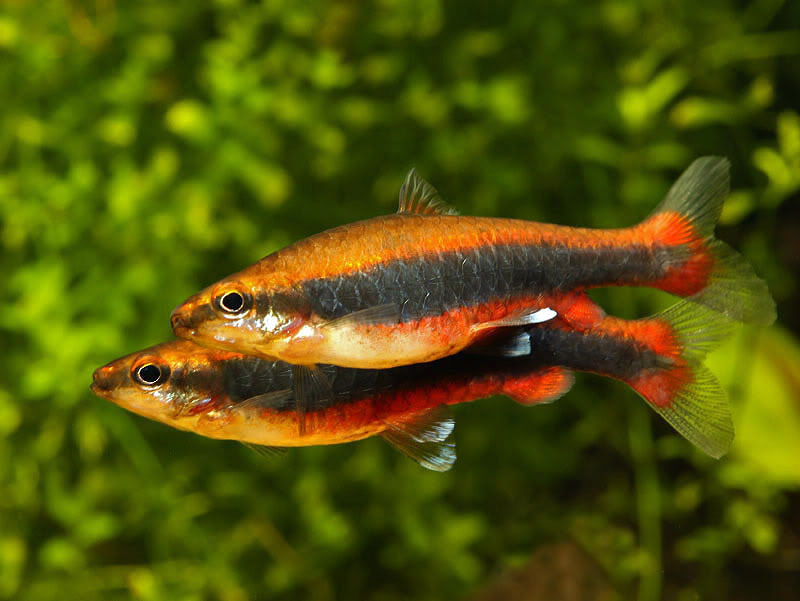
Nannostomus beckfordiGolden Pencilfish
Günther, 1872
Max length65mm SL2.6in SLTank45 × 30cm18 × 12inTemp21–27°C70–81°FpH5.0–8.0This is the type species of the genus, fairly ubiquitous in the aquarium trade, and represents an excellent choice for the newcomer to fishkeeping since it's less demanding than most congeners. It's sometimes referred to as 'Beckford's pencil fish' or 'brown pencilfish'. Don't worry if your fish look different when you switch on the aquarium lights after dark or in the morning as like most Nannostomus species it assumes a cryptic, vertically-barred colour pattern at ni...
Nanochromis nudiceps
authority not recorded
Max length80mm SL3.1in SLTanknot recordedTemp24–27°C75–81°FpH5.0–7.0This species is rarely imported. It is easily confused with N. parilus but can be distinguished by the fact that male fish lack the barring seen in the upper part of the of parilus and have dark edges to the scales on the body. Females can be distinguished by the spotting in the lower part of the caudal, which is unpatterned in parilus. We do not recommend this species to the beginner due to its very specific water and care requirements....
Nanochromis parilus
authority not recorded
Max length80mm SL3.1in SLTanknot recordedTemp22–25°C72–77°FpH6.0–7.0N. parilus is one of the commoner Nanochromis in the hobby as it is more easily collected from its natural waters than most species. It is easily confused with the less often seen N. nudiceps but can be distinguished by the fact that male fish exhibit a barred patterning inn the upper half of the which is not present in nudiceps. Females can be distinguished by the unpatterned lower part of the caudal, which is spotted in nudiceps. There are a couple of geographical variants available. We do ...
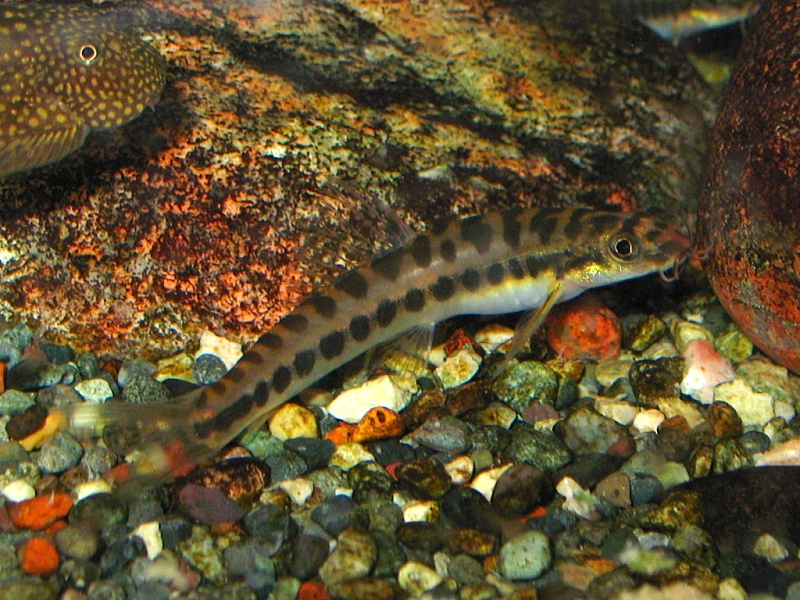
Nemacheilus masyaeArrow Loach
Smith, 1933
Max length70mm SL2.8in SLTank60 × 30cm24 × 12inTemp23–26°C73–79°FpH6.0–7.5This species was originally named Nemacheilus masyae but following ICZN rules the spelling was later corrected to N. masyai because it's named after a man. It can be distinguished from the majority of congeners by body patterning comprising 14-18 short, dark vertical bars on each flank, 12-17 saddle-like markings running along the dorsal surface, a dark spot on the caudal peduncle at the termination of the lateral line and a dark blotch in the lower half of the first few dorsal-fin rays.
Nemacheilus pallidus
Kottelat, 1990
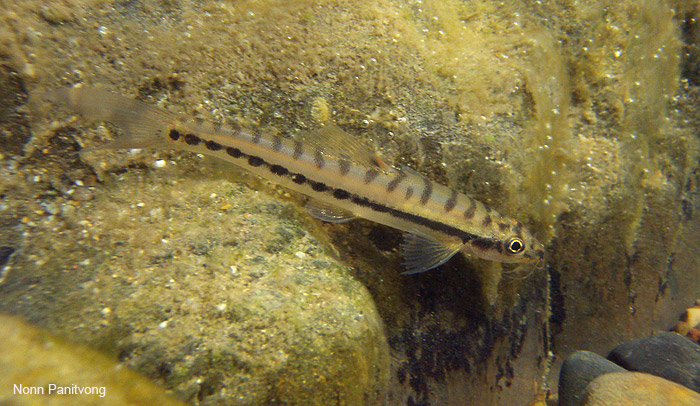
Max length60mm SL2.4in SLTank60 × 30cm24 × 12inTemp23–26°C73–79°FpH6.0–7.5The similar-looking N. masyai is sometimes traded as N. pallidus, but the two can be told apart by body depth (14.8-19.1 % in N. pallidus vs. 12.6-17.6 % SL in N. masyai), interorbital width (5.7-8.0 % vs. 4.9-6.8 % SL) and the fact that in N. pallidus the dark body bars and saddles are thinner than the light-coloured interspaces between (vs. wider in N. masyai).
Nemacheilus platiceps
Kottelat, 1990
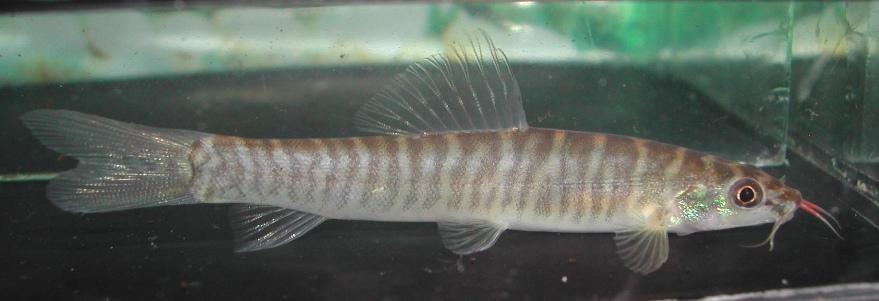
Max length61mm SL2.4in SLTank60 × 30cm24 × 12inTemp23–26°C73–79°FpH6.0–7.5This species is only traded occasionally. It's distinguished from congeners by a combination of characters including: 12-16 dark, irregular, vertical bars on body, usually split vertically; lips without furrows; inco...
Nemachilichthys rueppelli
Sykes, 1839
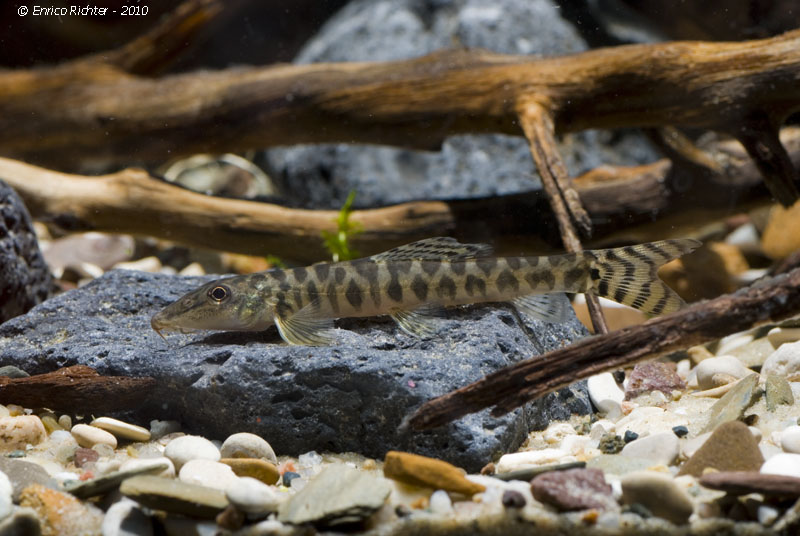
Max length85mm SL3.3in SLTank90 × 30cm36 × 12inTemp20–25°C68–77°FpH7.0–7.5This species is frequently misidentified as Nemachilichthys rueppelli (Sykes, 1839) but that species was described from close to Pune in Maharashtra state, well over 500 km north of Shimoga. Further, in his description of N. rueppeli Sykes states that the body colour is 'greenish yellow' and 'the lateral line marked with short dark bars'. Narayan Rao described the colour pattern of...
Nematabramis alestes
Seale & Bean, 1907
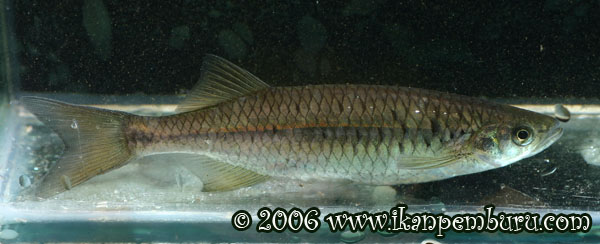
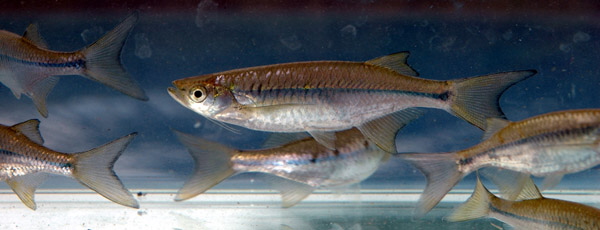
Max length105mm SL4in SLTanknot recordedTempnot recordedpHnot recordedN. alestes is the only member of the genus in which the barbels are shorter than the head, with additional diagnostic characters as follows: 8-9 branched dorsal-fin rays; 12-14 branched anal-fin rays; 22-23 predorsal scales; body with a pronounced ventral keel.
Nematabramis borneensis
Inger & Chin, 1962
Max length105mm SL4in SLTanknot recordedTempnot recordedpHnot recordedIt looks particularly similar to N. alestes with both species possessing a colour pattern comprising a dark lateral stripe on the body, but can be distinguished immediately by possessing barbels longer than the head (vs. shorter than the head in N. alestes).
Neolamprologus savoryiStriped Brichardi
authority not recorded
Max length80mm SL3.1in SLTanknot recordedTemp23–27°C73–81°FpH7.5–9.0This species is included in the so-called "Brichardi complex", which also includes N. brichardi, crassus, falcicula, gracilis, helianthus, olivaceous, pulcher, and splendens. These should not be mixed in aquaria as they will hybridise freely. N. savoryi can be distinguished from others in the complex by it's distinctive patterning of vertical bars....
Neolamprologus similis
authority not recorded
Max length45mm SL1.8in SLTanknot recordedTemp24–27°C75–81°FpH7.5–9.0N. similis is one of the less frequently seen shelldwellers in the hobby but has no less personality than its cousins. The territories it establishes are very small, usually measuring no more than 6" across, but they are defended vigorously. The tiny fish will even bite hands or fingers that invade their 'personal space'! It can be distinguished from the similar N. multifasciatus by the presence of additional barring on the head and neck and also in this species the stripes appear...
Opsarius signicaudus
Tejavej, 2012
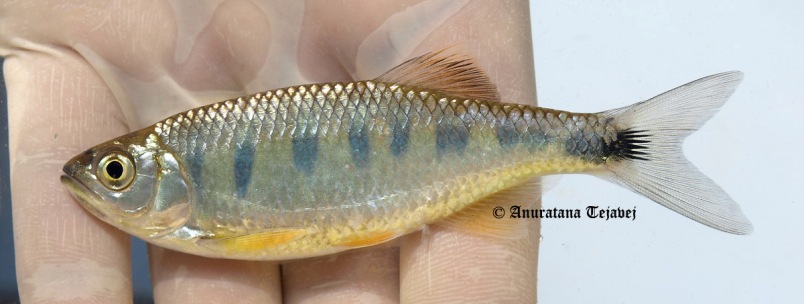
Max length100mm SL3.9in SLTank120 × 45cm48 × 18inTemp18–26°C64–79°FpH6.0–8.0O. dogarsinghi and O. bernatziki are the only two Southeast Asian congeners to possess a large blotch at the caudal-fin base but in the former the blotch is vertically-orientated and hardly extends onto the fin itself (vs. laterally-elongate and extending onto the basal fin rays) and long (vs. short) barbels, while th...
Osphronemus goramyGiant Gourami
authority not recorded
Max length700mm SL28in SLTank183 × 61cm72 × 24inTemp20–30°C68–86°FpH6.5–8.0An incredibly hardy, long-lived fish which can survive for over 20 years in captivity. These fish develop real personality and can learn to recognise their owner. They are often sold as cute juveniles in aquatic shops with no information provided as to their adult size. The young have an attractive barred patterning which fades as the fish grow, which they do very quickly. A golden variety also exists in aquaria. O. goramy is cultured commercially for food on a large scale in several countrie...
Osteochilus nashii
authority not recorded
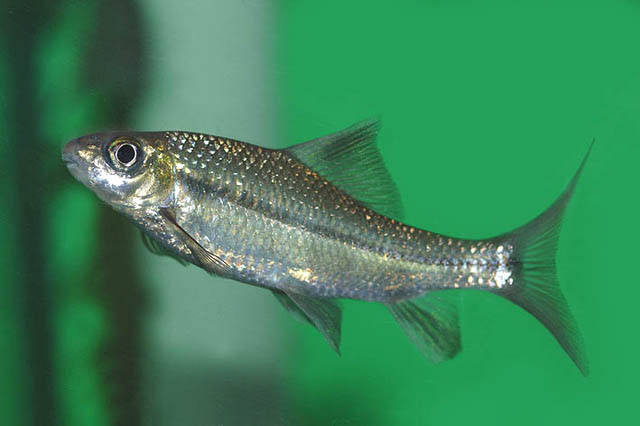
Max length180mm SL7in SLTank120 × 45cm48 × 18inTemp22–25°C72–77°FpH6.5–7.5This species is very scarce in the trade indeed and you're most likely to see it on sale as a contaminant among import of other Indian species. There are currently 34 described species of Osteochilus although none can be considered popular in the aquarium hobby. According to Rainboth's 'Fishes of the Cambodian Mekong' members of the genus are characterised by lack of aspine, presence of 11-18rays, large rostral and maxillary barbels, papillae on both upper and lower lips,...
Pangasianodon gigasGiant Mekong Catifish
authority not recorded
Max length3000mm SL118in SLTanknot recordedTemp20–28°C68–82°FpH6.5–7.5Pangasianodon is separated from other pangasiid generea primarily on the basis of some morphological differences including a lack of teeth and massively reduced barbels in adult specimens. Sadly it's numbers are declining rapidly in nature, through a combination of unsustainable fisheries, damming and habitat destruction. Since 1990 wild stocks are thought to have undergone a decrease of over 80%. From an annual catch of over 60 specimens in 1990, only 8-11 were being caught per year in ...
Pangio malayana
Tweedie, 1956
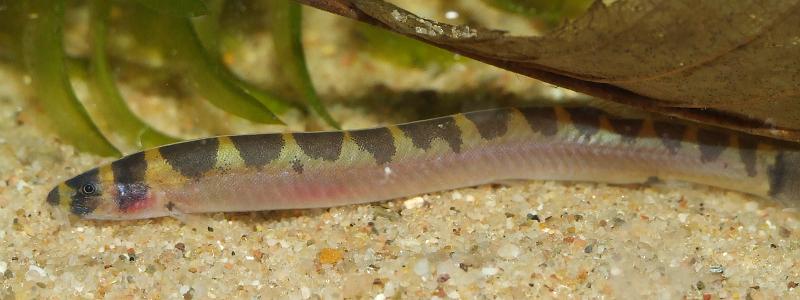
Max length60mm SL2.4in SLTank45 × 30cm18 × 12inTemp21–26°C70–79°FpH3.5–7.0Originally known only from Johor and Pahang states, Peninsular Malaysia but since recorded from the Batang Hari river drainage, Sumatra and the Kapuas system, Kalimantan Barat (West Kalimantan) province, Indonesian Borneo. Type locality is 'Tahan River, Pahang, Malaysia'.
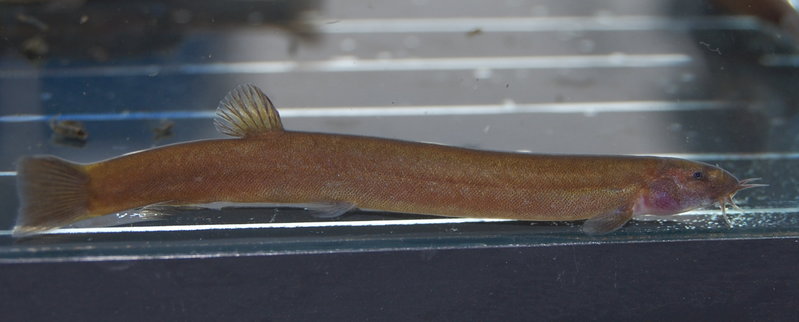
Pangio oblongaBlack Kuhli Loach
Valenciennes, 1846
Max length80mm SL3.1in SLTank60 × 30cm24 × 12inTemp21–26°C70–79°FpH3.5–7.0Described from close to the city of Bogor, Jawa Barat (West Java) province on the island of Java, Indonesia, but currently considered widespread with recorded occurrences on Java, Sumatra, Borneo and mainland Peninsular Malaysia. Some populations exhibit lighter...
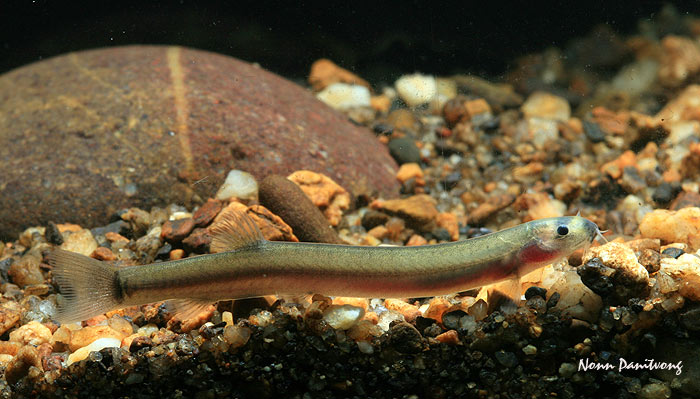
Pangio sp. 'PAN04'Panda Loach
authority not recorded
Max length80mm SL3.1in SLTank60 × 30cm24 × 12inTemp21–26°C70–79°FpH3.5–7.0This unidentified species has been traded since the mid-00s and appears to be a member of the P. khulii-oblonga species group as per Bohlen et al. (2011). There are two similar-looking forms; one has a darker body, dark pigmentation in the pectoral fins and barbels and a blue sheen on the head, while the...