Results for “Maracyn-2”
Type a name: scientific, common, or one a species used to go by. Or narrow the catalogue with the filters.
Filters
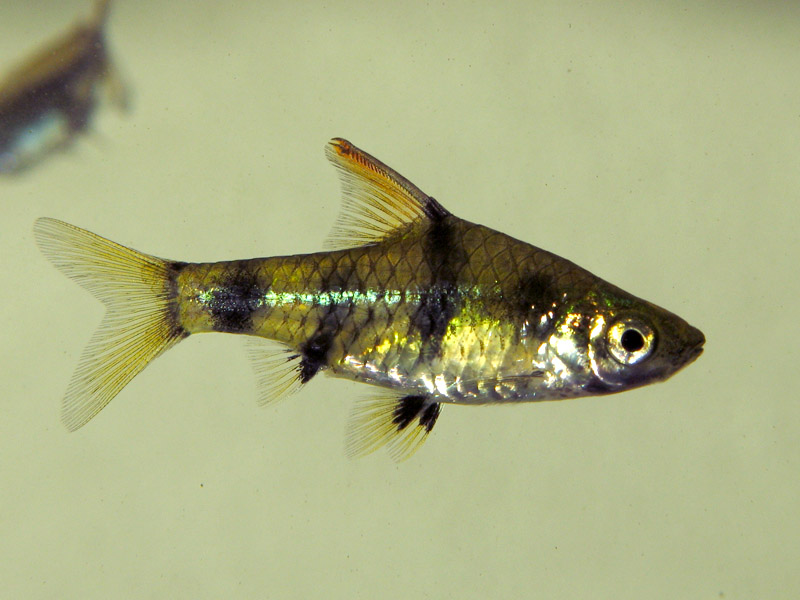
Pethia canius
Hamilton, 1822
Max length30mm SL1.2in SLTank60 × 30cm24 × 12inTemp18–24°C64–75°FpH6.0–7.0This species' identity was settled and a neotype designated by Knight (2013), with its validity having been discussed since the late 19th century. P. canius and the closely-related P. gelius were both described by Hamilton (1822) and share the type locality of 'northeastern Bengal'. Although Hamilton did not provide drawings M'Clelland (1839) included colour illustrations depicting two quite different-looking species.
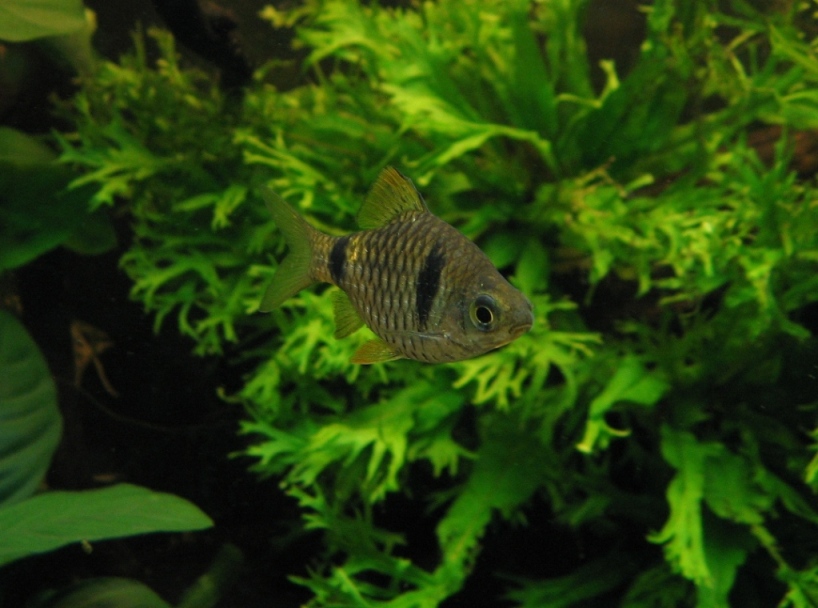
Pethia cumingiiCuming's Barb
Günther, 1868
Max length41mm SL1.6in SLTank60 × 30cm24 × 12inTemp20–27°C68–81°FpH5.5–7.0For many years this species was considered to occur in two colour forms with yellow or red dorsal, anal, and pelvic fins, respectively, but the red-finned variant has now been elevated to full species status as P. reval (Meegaskumbura et al. 2008). The latter is a smaller fish with a maximum SL of 33.6 mm recorded to date. As well as the obvious differences in body size and fin colour P. cumingii can be told apart from P. reval by the following...
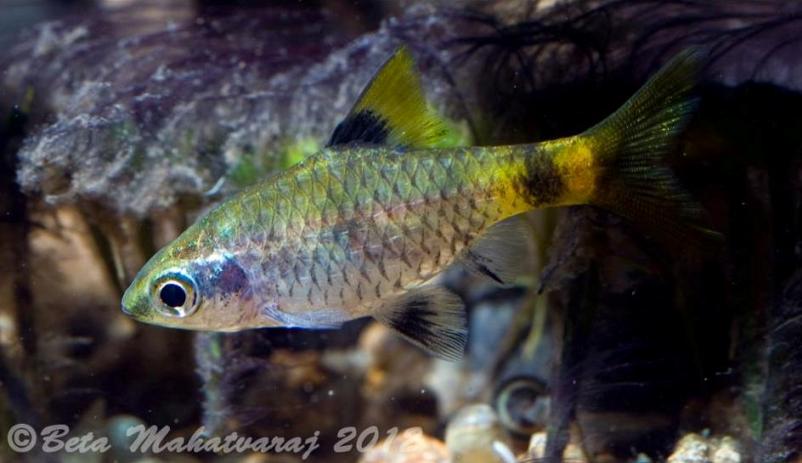
Pethia geliusGolden Dwarf Barb
Hamilton, 1822
Max length40mm SL1.6in SLTank60 × 30cm24 × 12inTemp18–24°C64–75°FpH6.0–7.0This species' identity was settled and a neotype designated by Knight (2013) who also revalidated the congener P. canius (Hamilton, 1822) and described the closely-related P. aurea. These three had previously been considered to represent geographic forms of P. gelius, albeit on a tentative basis, with the validity of P. canius having been discussed since the late 19th century.
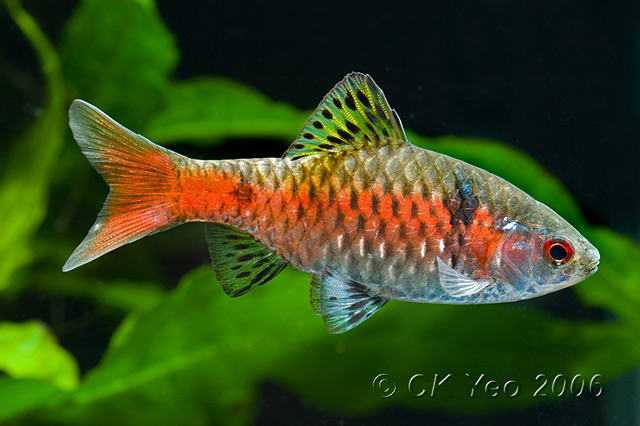
Pethia padamyaOdessa Barb
Kullander & Britz, 2008
Max length46mm SL1.8in SLTank80 × 30cm31 × 12inTemp16–25°C61–77°FpH6.5–8.5This species has been in the aquarium trade since the early 1970s but its precise origin was a mystery until 2003. It first appeared in Ukraine, the common name 'Odessa' being derived from the port city of that name, and when it arrived in western Europe was widely considered a hybrid of similar-looking congeners such as P. conchonius, P. ticto and P. cumingii. It was also hypothesised as a subspecies of P. ticto or P. conchonius, and some suggested the fish to be artificially dyed.
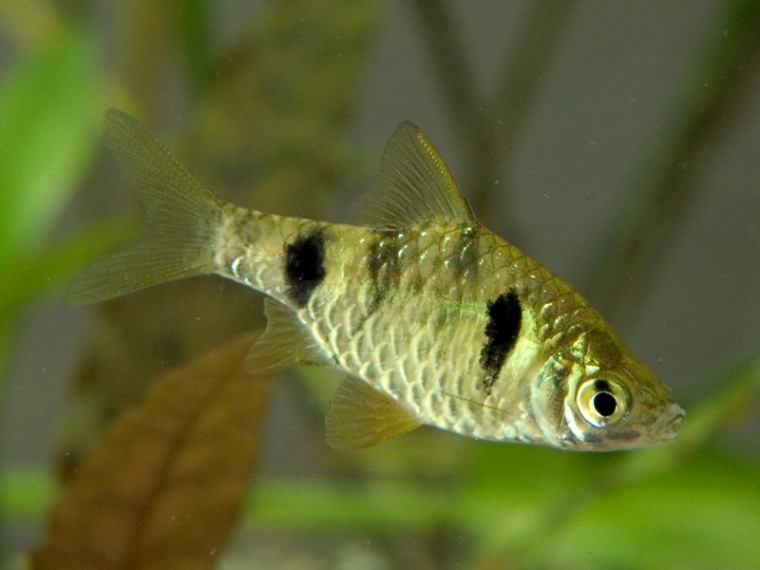
Pethia phutunioDwarf Barb
Hamilton, 1822
Max length30mm SL1.2in SLTank60 × 30cm24 × 12inTemp21–26°C70–79°FpH6.0–7.0In P. phutonio the flank markings comprise two black, vertically-orientated blotches, one posterior to the operculum and the other on the caudal peduncle, and within the P. conchonius group this patterning is shared with P. bandula, P. cumingii, P. didi, P. meingangbii, P. padamya, and P. tiantian. It can be told apart from these by the following combination of characters: smaller adult size of 25 - 30 mm vs. at least 35 - 40 mm; minute maxillary barbels; incomplete lateral line with ab...
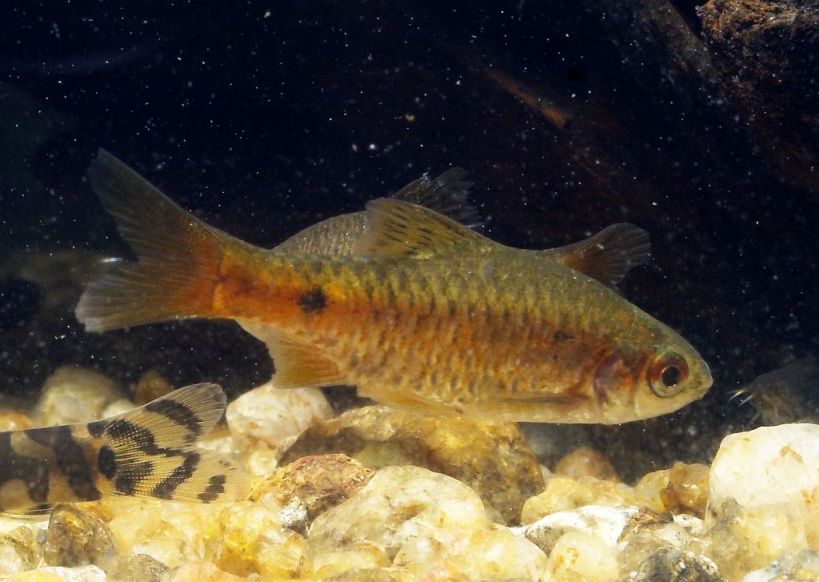
Pethia pookodensisPookode Lake Barb
Mercy & Jacob, 2007
Max length42mm SL1.7in SLTank75 × 30cm30 × 12inTemp20–25°C68–77°FpH5.5–7.5Described from Pookode Lake in Wayanad district, Kerala state, southern India and possibly endemic there although some unconfirmed records exist from within the surrounding Wayanad Wildlife Sanctuary. Pookode is a small freshwater lake surrounded by forest with a surface area of around 2 km² and is the source of the Panamaram River, a tributary within the much larger Kabani system. Its maximum depth is around 6.5 metres and in marginal areas dense patches of water lilies can be found.
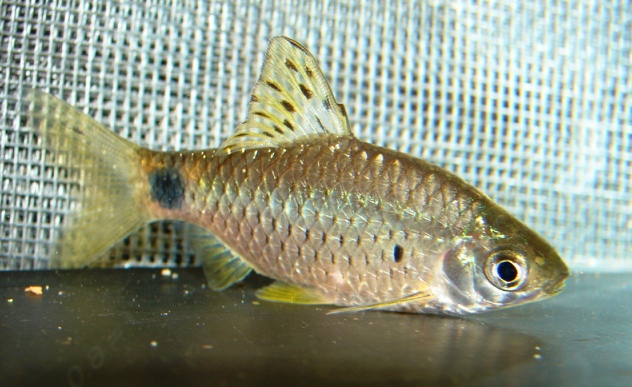
Pethia punctata
Day, 1865
Max length55mm SL2.2in SLTank75 × 30cm30 × 12inTemp21–26°C70–79°FpH6.0–7.5This species is poorly-known in the aquarium hobby and has a confusing taxonomic history having been considered both synonymous with or a subspecies of the congener P. ticto in the past. It can be distinguished from other members of the genus by the following combination of characters: lateral line complete with 27 scales (following Day); body with two dark blotches; anterior spot one scale row below lateral line; dorsal-fin with rows of spots.
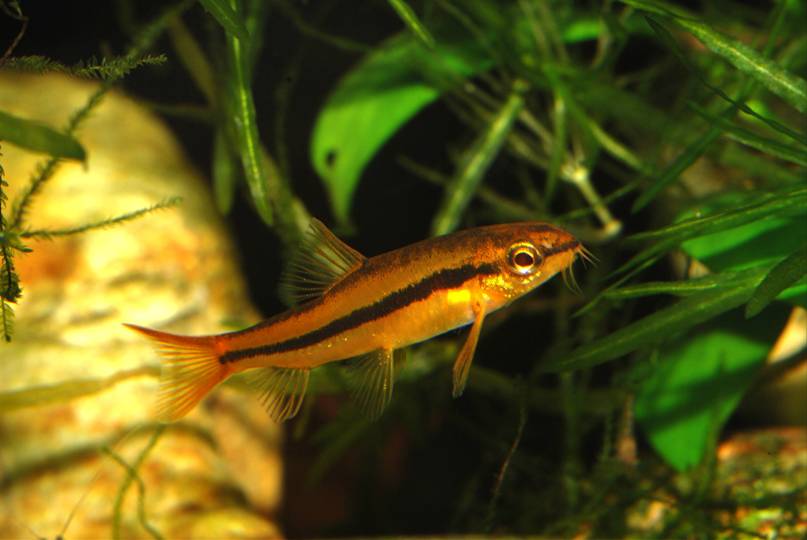
Petruichthys sp. 'rosy'Rosy Loach
authority not recorded
Max length30mm SL1.2in SLTank60 × 30cm24 × 12inTemp20–26°C68–79°FpH6.5–8.0This species continues to be referred to by the fictitious scientific name 'Tuberoschistura arakensis' but actually appears to be an undescribed Yunnanilus sp. and is also sometimes traded as Y. sp. 'orange' or 'Burmese pink loach' but appears to be a member of the genus Petruichthys as per Kottelat (2012). There exist more than 30 described Yunnanilus spp., the...
Phalacronotus apogon
Bleeker, 1851
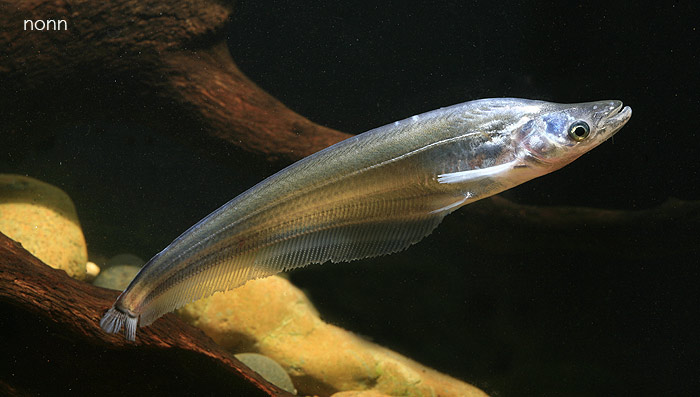
Max length700mm SL28in SLTanknot recordedTemp20–27°C68–81°FpH6.0–7.5P. apogon has formerly been placed within the genera Kryptopterus, Micronema (Rainboth, 1996) and more recently Phalacronotus (Ferraris, 2007) and is an important food fish across much of its native range. It's very similar to P. micronema but can be told apart by its longer head (HL fits 4.6± 5.3 times in...
Phalloceros caudimaculatusDusky Millions Fish
Hensel, 1868
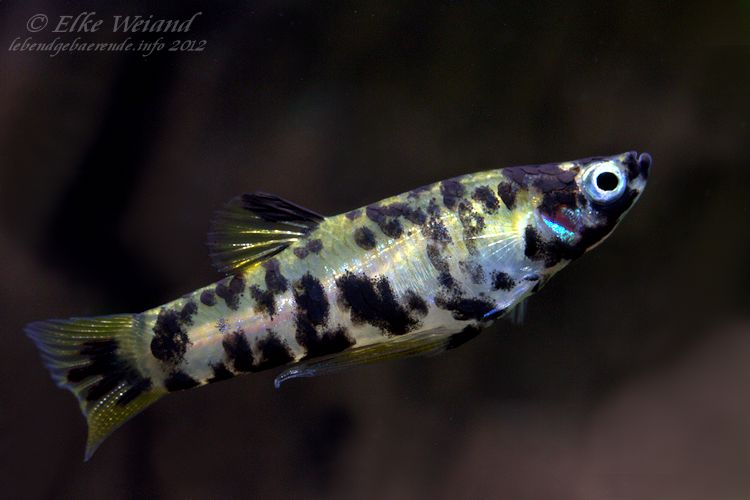
Max length70mm SL2.8in SLTanknot recordedTemp16–22°C61–72°FpH7.0–8.0Occurs naturally in Brazil, Paraguay, Uruguay and Argentina with feral populations in Australia, New Zealand, Ethiopia and Malawi which were purportedly introduced for purposes of mosquito control but are now considered invasive. Following Lucinda (2008) its natural range comprises the Lagoa dos Patos system, lower rio Uruguai, rio Tramandaí, and rio Mampituba in Rio Grande do Sul st...
Phenacogaster tegatus
Eigenmann, 1911
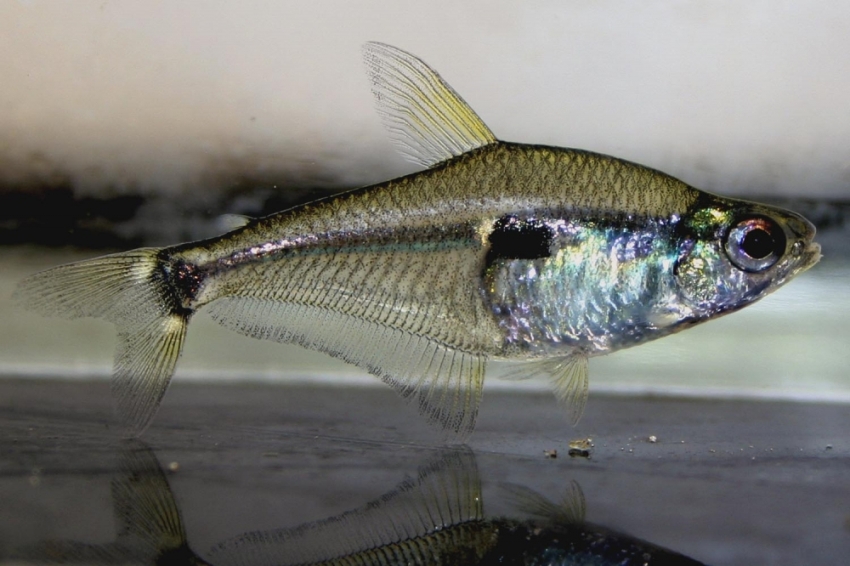
Max length45mm SL1.8in SLTank60 × 30cm24 × 12inTemp20–28°C68–82°FpH6.0–7.5This species has been traded as 'six-eyed tetra' in reference to its colour pattern comprising two dark spots on each flank plus the eye. Based on the extensive review of the genus by Lucena and Malabarba (2010), in which nine new species were described, P. tegatus can be told apart from congeners by the following combination of characters: lateral line incomplete with 8-13 perforated scales; laterally elongate humera...
Piabucus dentatusPiabuco Tetra
authority not recorded
Max length130mm SL5in SLTank120 × 30cm48 × 12inTemp20–25°C68–77°FpH6.0–7.5There are only three species in this little known genus, all of which are rarely seen in the hobby. In 2007 an apparently undescribed Piabucus was seen on sale in the UK under the name "chin tetra", in reference to the black marking on the lower jaw of the fish....
Poecilia sphenopsShort-finned Molly/Black Molly
Valenciennes, 1846
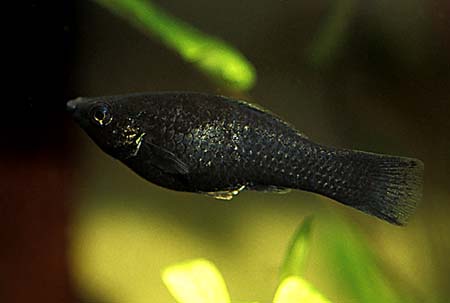
Max length80mm SL3.1in SLTank90 × 30cm36 × 12inTemp21–28°C70–82°FpH7.0–8.5A hugely popular aquarium fish. Many aquarium-bred colour morphs of this species are available, including the ubiquitous black molly. There are also Gold, Green, Lyretail, Silver and Dalmation varieties. Some of these are the results of P. sphenops being crossed with P. latipinnis. The 2 species will also interbreed readily in the aquarium and in order to avoid this we suggest keeping only one of them per tank. There also exists a (in our opinion) grotesque 'balloon' variety of this fi...
Polypterus endlicheri endlicheriSaddled Bichir
authority not recorded
Max length750mm SL30in SLTank210 × 120cm84 × 48inTemp22–27°C72–81°FpH6.0–8.0An incredibly hardy, nocturnal species with very poor vision, P. endlicheri endlicheri relies on its excellent sense of smell to locate food. This species, along with others of its genus, are some of the last surviving relatives of very ancient species. Fossils of earlier relatives have been found that date back to the Triassic Period, which occured during the early development of the dinosaurs more than 200 million years ago. They have several interesting adaptations. The swim bladder is div...
Polypterus ornatapinnisOrnate Bichir
authority not recorded
Max length600mm SL24in SLTank180 × 60cm72 × 24inTemp25–28°C77–82°FpH6.0–8.0An incredibly hardy, nocturnal species with very poor vision, []iP. ornatapinnis relies on its excellent sense of smell to locate food. This species along with others of its genus are some of the last surviving relatives of very ancient species. Fossils of earlier relatives have been found that date back to the Triassic Period, which occured during the early development of the dinosaurs more than 200 million years ago. They have several interesting adaptations. The swim bladder is divided int...
Polypterus retropinnisWest African Bichir
authority not recorded
Max length350mm SL14in SLTank120 × 45cm48 × 18inTemp25–28°C77–82°FpH6.0–8.0Also known as the Speckled Bichir, this is an incredibly hardy, nocturnal species with very poor vision. P. retropinnis relies on its excellent sense of smell to locate food. This species along with others of its genus are some of the last surviving relatives of very ancient species. Fossils of earlier relatives have been found that date back to the Triassic Period, which occured during the early development of the dinosaurs more than 200 million years ago. They have several interesting adapt...
Pseudocrenilabrus multicolorDwarf Egyptian Mouth-brooder
authority not recorded
Max length80mm SL3.1in SLTanknot recordedTemp20–26°C68–79°FpH6.5–7.2This species was one of the first cichlid species to be spawned in captivity and has been in the hobby for over a century. It is less popular than it once was but remains a good choice for the beginner as it is tolerant of a wide range of water conditions and is easily bred. There currently exist 2 subspecies, Pseudocrenilabrus multicolor multicolor and P. m. victoriae. These are quite distinct in terms of colouration and patterning and exist as separate populations in nature. Both subspecie...
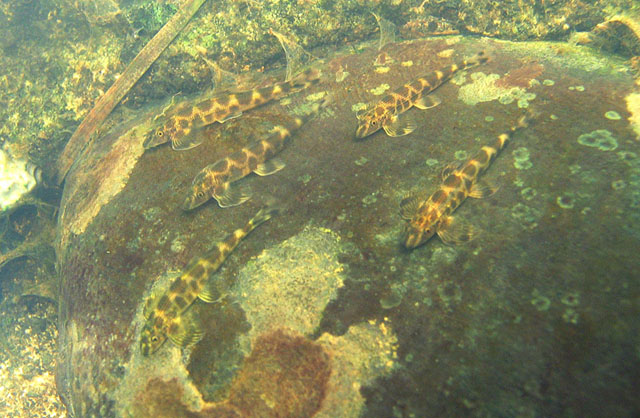
Pseudohomaloptera sexmaculata
Fowler, 1934
Max length70mm SL2.8in SLTank80 × 30cm31 × 12inTemp20–25.5°C68–78°FpH6.0–7.5H. sexmaculata is very similar to H. leonardi but can be told apart since it possesses 2 simple and 12-14 branched pectoral-fin rays (versus 6 simple and 11 branched rays). Both of these species are sometimes misidentified as H. yunnanensis which has 7 simple and 12 branched pectoral-fin rays.
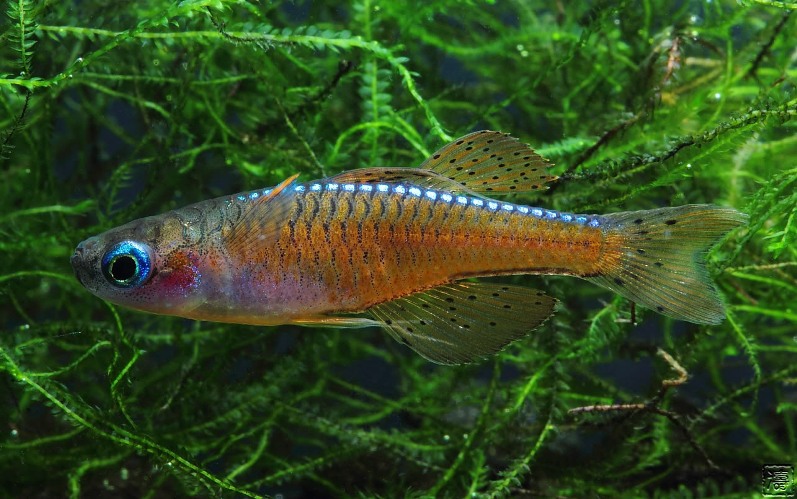
Pseudomugil sp. 'red neon'
authority not recorded
Max length35mm SL1.4in SLTank45 × 30cm18 × 12inTemp18–26°C64–79°FpH6.5–7.5This fish first appeared in the aquarium hobby in 2011 and has been traded under various names including P. sp. cf. paskai, P. sp. 'red orange neon', P. sp. 'neon orange', P. sp. 'Irian' and P. 'iriani'. The majority of fish available tend to be male, presumably due to their brighter colour pattern. It was initially suspected to be a hybrid or sele...
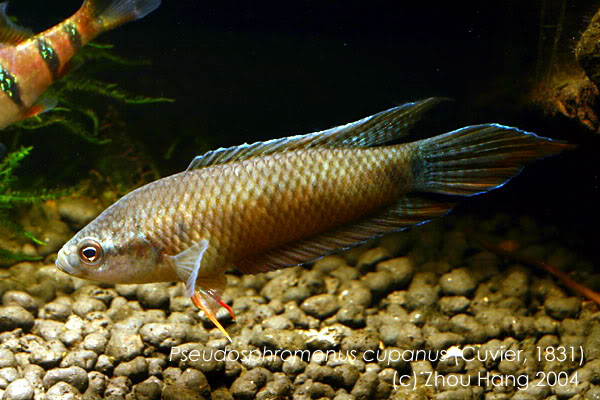
Pseudosphromenus cupanusSpiketail Paradisefish
Cuvier, 1831
Max length65mm SL2.6in SLTank60 × 30cm24 × 12inTemp20–28°C68–82°FpH6.0–7.5This species is most easily told apart from its only congener P. dayi by lacking (vs. possessing) two dark, irregular lateral stripes on the head and body, and a shorter caudal-fin in males. The results of phylogenetic analyses by Rüber et al. (2006) suggest that Pseudosphromenus is most closely-related to Malpulutta in an evolutionary sense.