Results for “genus”
Type a name: scientific, common, or one a species used to go by. Or narrow the catalogue with the filters.
Filters
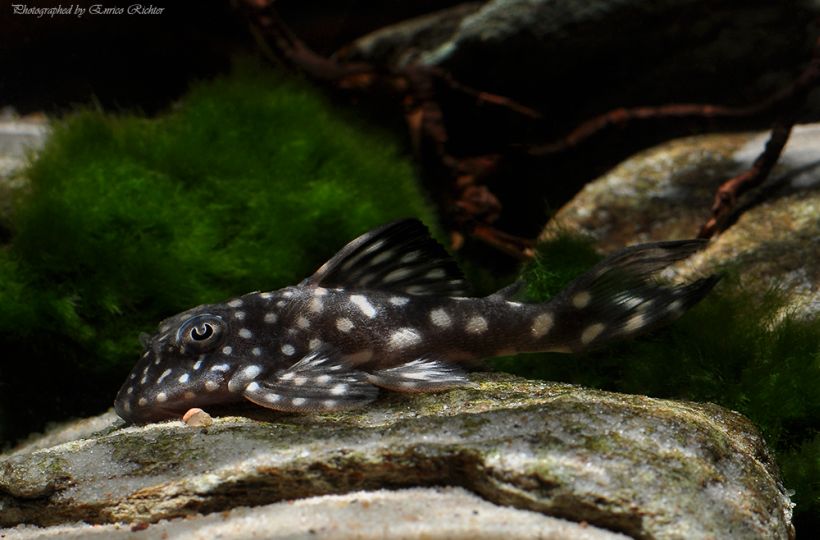
Hypancistrus inspectorL102
Armbruster, 2002
Max length160mm SL6in SLTank120 × 45cm48 × 18inTemp22–30°C72–86°FpH5.0–7.5H. inspector can be told apart from other described species in the genus by the following combination of characters: colour pattern comprising brown to black base with large whitish to yellow spots; adpressed dorsal-fin not reaching the adipose-fin spine; spots on head much smaller than on rest of body; spots in the upper caudal-fin lobe combining to form bands in adults; 24 plates in the mid-ventral series.
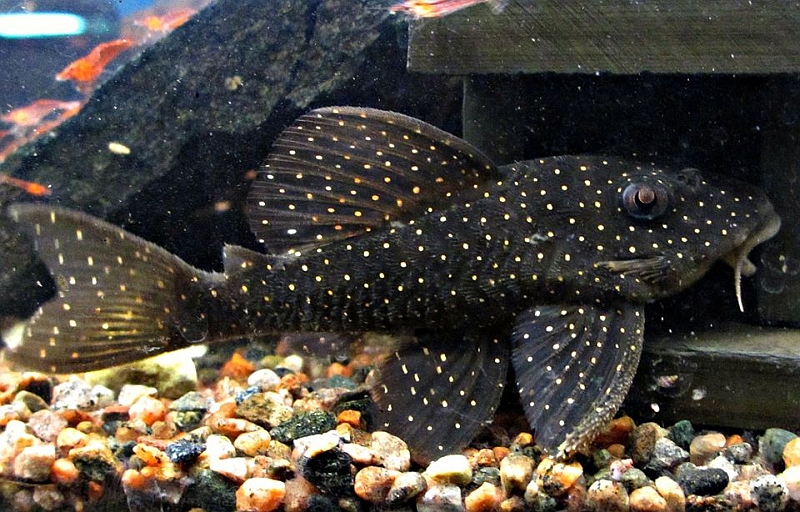
Hypancistrus sp.L004
authority not recorded
Max length100mm SL3.9in SLTank120 × 30cm48 × 12inTemp26–30°C79–86°FpH5.5–7.5The genus Hypancistrus is diagnosed from all other loricariids by a wide separation between the metapterygoid and lateral ethmoid, presence of a sharply angled adductor palatini crest of the hyomandibula, and no lateral wall in the metapterygoid channel. More useful for aquarists is the fact that in Hypancistrus the dentary teeth are about twice a...
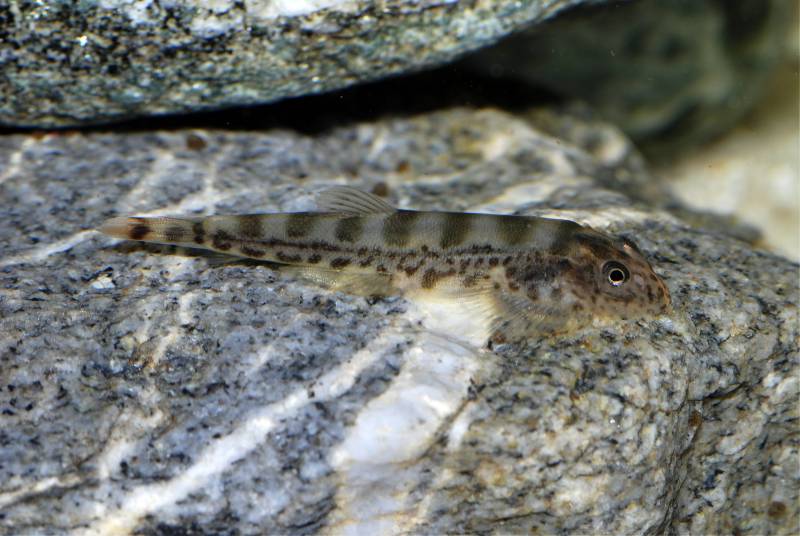
Hypergastromyzon humilis
Roberts, 1989
Max length35mm SL1.4in SLTank45 × 30cm18 × 12inTemp20–24°C68–75°FpH6.0–7.5The differences in pelvic-fin structure and gill openings led Roberts to redefine the genus when describing H. eubranchus, whereas Tan (2006) expressed doubts that the two are even congeneric but was unable to reach a definitive conclusion in the absence of fresh material. At any rate both species can be easily differentiated from Gastromyzon and Neogastromyzon spp. by observing the mo...
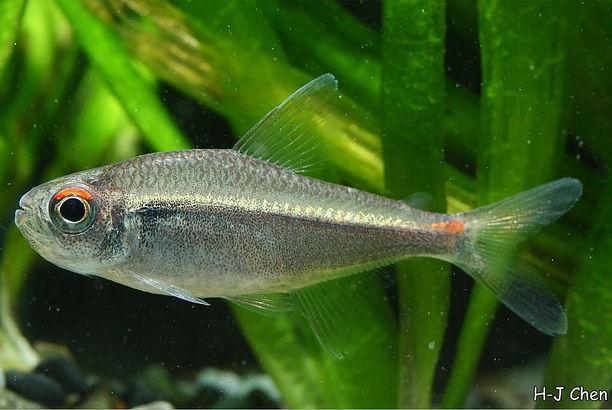
Hyphessobrycon agulha
Fowler, 1913
Max length42mm SL1.7in SLTank80 × 30cm31 × 12inTemp20–28°C68–82°FpH5.5–7.5This species is relatively rare in the aquarium hobby but is occasionally traded as 'red-tailed flag tetra'. It lends its name to the H. aghula group of closely-related species within the genus as proposed by Géry (1977, see below) of which members share the following characters which set them apart from other characids: lower half of the body dark, especially above the anal-fin; usually possessing a laterally-elongate humeral spot, more-or-less united wit...
Hyphessobrycon borealis
Zarske, Le Bail & Géry, 2006
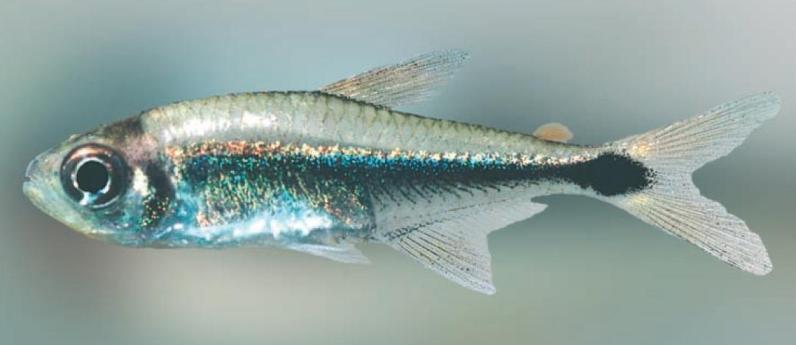
Max length28mm SL1.1in SLTanknot recordedTempnot recordedpHnot recordedH. borealis is a member of the putative ‘H. heterorhabdus-group’ of closely-related species within the genus as proposed by Géry (1977). There are around 15 members characterised by a 'longitudinal pattern' consisting of a thin, usu...
Hyphessobrycon columbianusColombian Tetra
Zarske & Géry, 2002
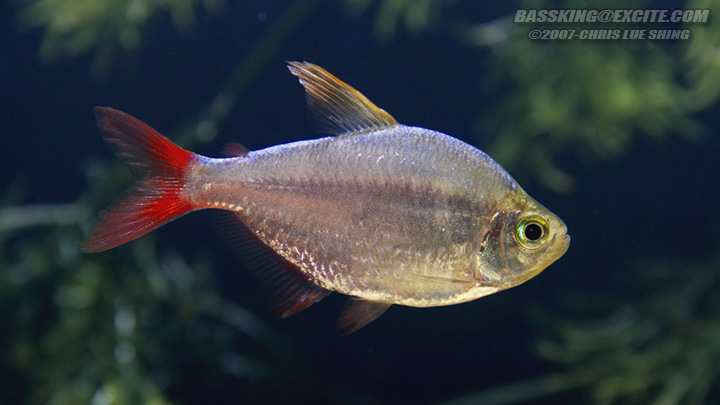
Max length65mm SL2.6in SLTank90 × 30cm36 × 12inTemp20–28°C68–82°FpH5.0–7.5This species is also traded as 'blue flame', 'blue-red', and 'Colombian red fin' tetra, and was misidentified as H. ecuadorensis for several years prior to its description. Within the genus it appears to be most closely related to the Costa Rica endemic H. savagei Bussing, 1967 but differs in a number of characters as fol...
Hyphessobrycon compressusMayan Tetra
Meek, 1904
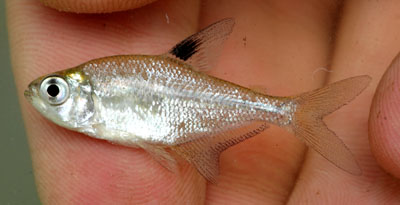
Max length45mm SL1.8in SLTanknot recordedTemp20–26°C68–79°FpH6.5–8.0H. compressus is the type species of the genus Hyphessobrycon but is not well-known in the ornamental trade. Hyphessobrycon was raised by Durbin in Eigenmann (1908) as a subgenus of Hemigrammus, differing from the latter by the absence of scales on the caudal-fin.
Hyphessobrycon rosaceusRosy Tetra
Durbin, 1909
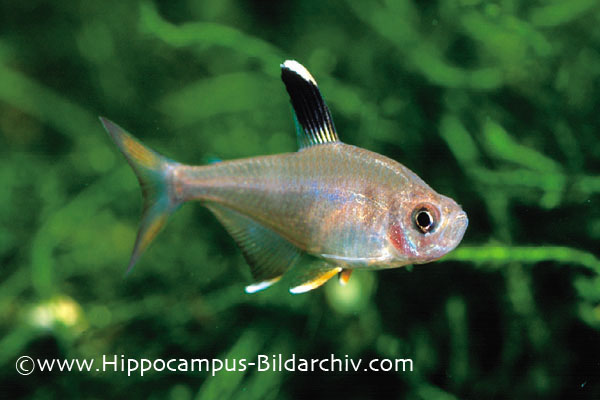
Max length40mm SL1.6in SLTank60 × 38cm24 × 15inTemp24–28°C75–82°FpH5.5–7.5A beautiful species that is very similar to a host of others in the genus, some of which are undescribed. The most common of these in the hobby is H. bentosi. The two are so similar in appearance that H. rosaceus was once considered to be a subspecies of H. bentosi. The easiest way to distinguish them is by the presence of a dark marking just behind the operculum in H. bentosi, which is lacking in H. rosaceus. As with the closely related Hemigrammus, the taxonomic status of all species in the...
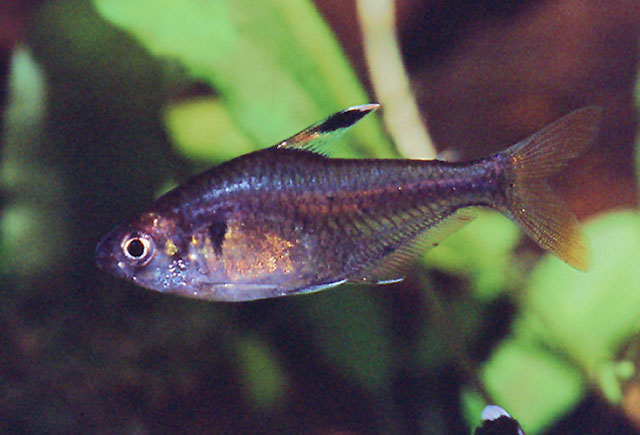
Hyphessobrycon simulatusFalse X-ray Tetra
Géry, 1960
Max length35mm SL1.4in SLTank80 × 30cm31 × 12inTemp20–28°C68–82°FpH5.0–7.0This species is uncommon in the aquarium trade although its name is sometimes applied to other species. It was originally described in the monotypic genus Pseudopristella, and can be distinguished from the vaguely similar Pristella maxillaris by possession of a relatively large (vs. relatively small) humeral spot and having black pigmentation in the anal-fin restricted to the first ray (vs. a prominent distal blotch).
Hypselecara coryphaenoidesRio Negro Chocolate Cichlid
authority not recorded
Max length150mm SL6in SLTank120 × 45cm48 × 18inTemp24–30°C75–86°FpH5.0–6.5This species is much rarer in the trade than the only other member of the genus, H. temporalis. If the collection locality of the fish is known, identification of the species is easy, as the distribution of the two appears not to overlap in nature. Failing this, distinguishing physical characteristics include body shape, as H. coryphaenoides is a more elongate fish than the quite squat-looking H. temporalis. There are also differences in colour and patterning, although these are less reliable me...
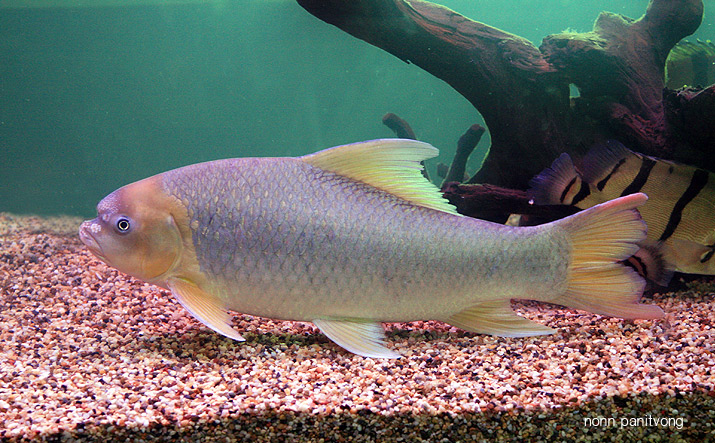
Incisilabeo behri
Fowler, 1937
Max length550mm SL22in SLTanknot recordedTemp20–26°C68–79°FpH6.0–8.0The monotypic genus Incisilabeo is separated from the closely-related taxon Bangana by presence of a unique and conspicuous transverse notch across the top of the head, comparable in position to the ethmoid furrow in Bangana species. This notch approaches the eye, and the top of the head bulges forward, with the nostrils located partially beneath this projection and immediately anterior to the eyes. Tubercles cover the upper portion of the rostral fold, lower part of the notch, and upper surface of the forehead projection...
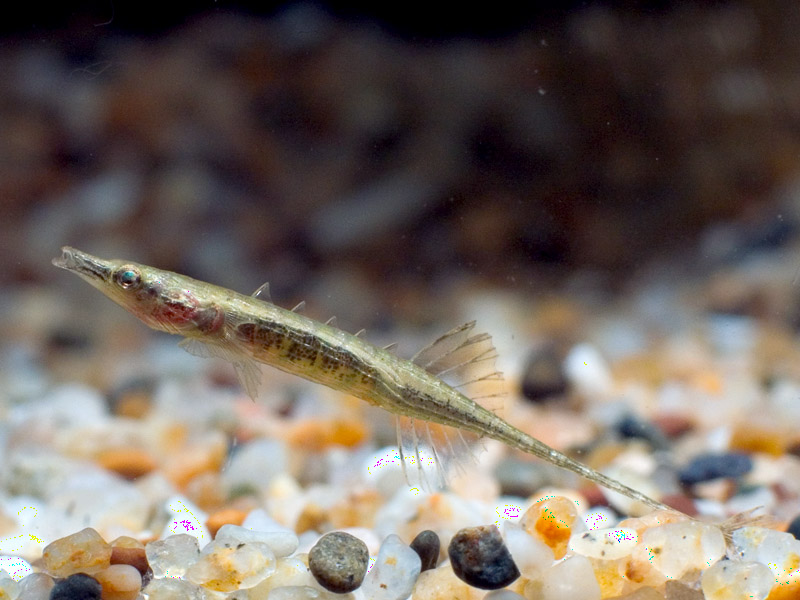
Indostomus paradoxusArmoured Stickleback
Prashad & Mukerji, 1929
Max length30mm SL1.2in SLTank40 × 20cm16 × 8inTemp22–27°C72–81°FpH6.5–7.5This species is rare in the aquarium hobby though its name is often misapplied to the closely-related I. crocodilus. It can be told apart from congeners by the following characters: dorsal and anal fins without dark markings, with a light brown bar in breeding males; ventral surface light brown; throat white, occasionally with a few brown spots; ridges of head bones weakly serrated or not serrated, depending on the bone. The family Indostomidae currently contains just a single genus with three species of which I. paradoxus is the type. It was raised alongside both family...
Inpaichthys kerriPurple Emperor Tetra
authority not recorded
Max length35mm SL1.4in SLTank60 × 38cm24 × 15inTemp24–27°C75–81°FpH5.5–7.0This pretty little species can be seen for sale with various common names, including the 'blue emperor', 'regal' or 'royal' tetra. It's sometimes confused with the emperor tetra, Nematobrycon palmeri but can be easily distinguished as it possesses an adipose fin, whilst Nematobrycon species do not. The genus Inpaichthys is currently monotypic (contains only one species), and like other related genera such as Hyphessobrycon its taxonomic status is Incertae s...
Iodotropheus sprengeraeRusty Cichlid
authority not recorded
Max length100mm SL3.9in SLTank90 × 30cm36 × 12inTemp25–29°C77–84°FpH7.5–8.8This lovely dwarf mbuna makes a great choice for newcomers to Mbuna due to its temperament, subdued but unique colouration and the fact it can be kept in smaller tanks. Iodotropheus is the only genus of Mbuna which has a very limited distribution within Lake Malawi, with its three (possibly two; the validity of I. declivitas is disputed by some experts) members being restricted to the south eastern arm of the lake. I. sprengerae is sometimes confused with certain populations of the similar looki...
Ivanacara adoketaZebra Acara
authority not recorded
Max length130mm SL5in SLTanknot recordedTemp22.2–28.9°C72–84°FpHnot recordedThis species was previously included in the genus Nannacara before being moved to the newly-erected taxon Ivanacara by Römer and Hahn (2006)....
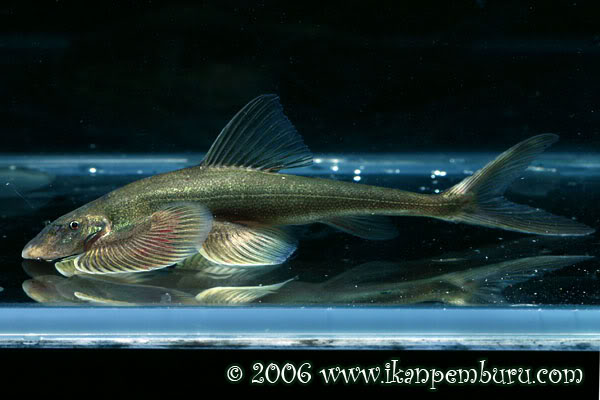
Jinshaia sinensis
Sauvage & Dabry de Thiersant, 1874
Max length75mm SL3.0in SLTank90 × 30cm36 × 12inTemp20–24°C68–75°FpH6.0–7.5This species may not yet have been seen in the aquarium trade outside its native country but has been maintained by a few private collectors. There are currently three species recognised in the genus, all endemic to the Yangtze river drainage, and they're separated from other balitorids by a combination of characters including: relatively long, deeply-forked caudal-fin; roun...
Julidochromis dickfeldiBrown Julie
authority not recorded
Max length80mm SL3.1in SLTank75 × 30cm30 × 12inTemp23–27°C73–81°FpH8.0–9.2Julidochromis are commonly known as "Julies" in the hobby. As with other Julies, large water changes should be avoided as this can cause mated pairs to turn on one another. There is some speculation as to whether this species has been placed in the correct genus. It has a different shape to other Julidochromis, having a pointed snout. It also exhibits different patterning, with blue edging to the dorsal and anal fins, and the horizontal stripes are very dark in colour. Furthermore i...
Julidochromis reganiRegan's Julie
authority not recorded
Max length300mm SL12in SLTank120 × 30cm48 × 12inTemp23–27°C73–81°FpH7.5–9.0Julidochromis are commonly known as "Julies" in the hobby. Despite being the largest species of Julie this is actually the least aggressive member of the genus. As with other Julies, large water changes should be avoided as it can cause mated pairs to turn on one another. J.regani may also be seen for sale labelled as Striped Julie or Convict Julie. Several geographical morphs are available. Apparently, the yellower of these are found in shallower water with the darker forms inhabit...
Knodus borkiBlue Tetra
authority not recorded
Max length50mm SL2.0in SLTank75 × 38cm30 × 15inTemp22–26°C72–79°FpH5.5–7.0The colour of this species is often so intense that many who first see it for sale assume it to be artificially coloured. It is currently the only representative of the genus known.
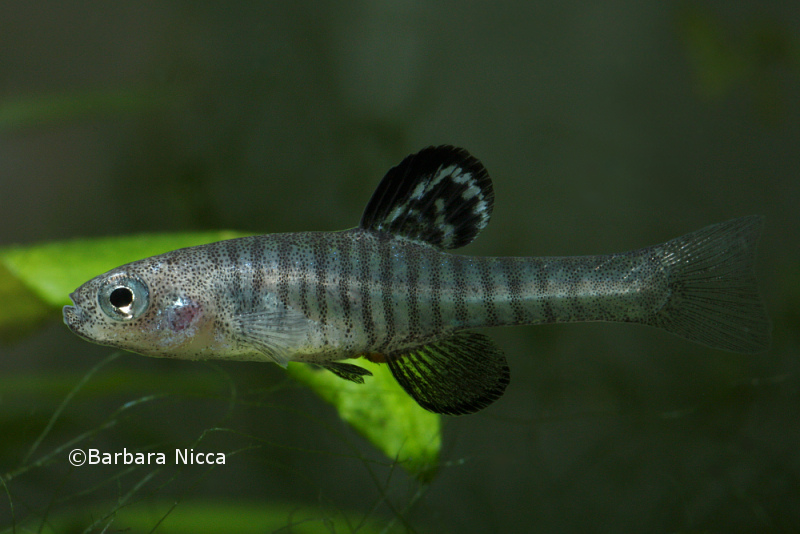
Kosswigichthys asquamatusHazar Toothcarp
Sözer, 1942
Max length40mm SL1.6in SLTank120 × 30cm48 × 12inTemp12–28°C54–82°FpHnot recordedThis little-known, relict species possesses some unique morphological and behavioural traits when compared with its congeners and the genus Kosswigichthys was erected for it in the original description. It has a much more elongate body profile than other Aphanius spp., almost total absence of scalation on the body and three rows of conical (as opposed to tricuspid in all other species) teeth which set it apart. Work by Franz and Villwock in the 1970s revealed it to be a member of Aphanius and showed ...