Results for “pre-”
Type a name: scientific, common, or one a species used to go by. Or narrow the catalogue with the filters.
Filters
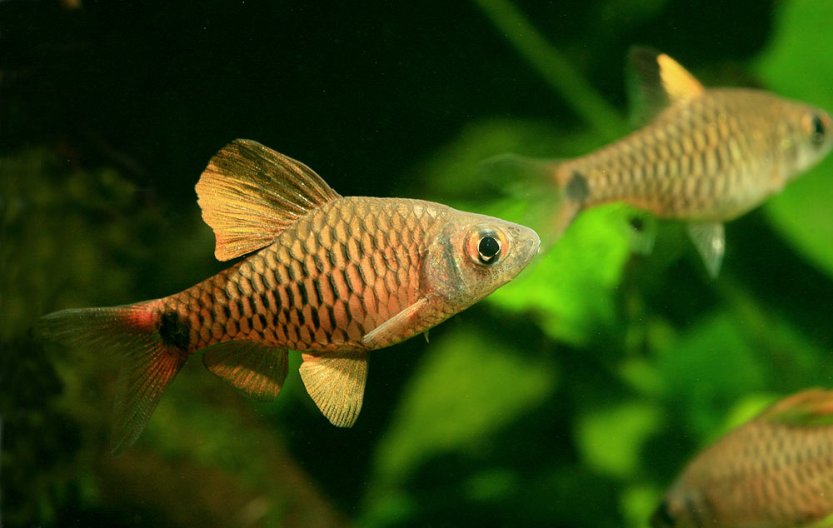
Oreichthys sp. 'Myanmar Redfin'
authority not recorded
Max length40mm SL1.6in SLTank60 × 30cm24 × 12inTemp24–28°C75–82°FpH6.5–7.5This fish is one of several sometimes imported and sold as Oreichthys cosuatis or O. parvus which has led to considerable confusion. It appears to be an undescribed species and can be most easily identified by the absence of a dark marking in the dorsal-fin of adult males (vs. presence in O. cosuatis and O. parvus) and possession of a large, well-defined black blotch on the caudal peduncle ( vs. absent in O. cosuatis, smaller and less well-defined in O. parvus).
Orthochromis stormsi
authority not recorded
Max length120mm SL5in SLTank120 × 30cm48 × 12inTemp22–27°C72–81°FpH6.5–7.5O. stormsi was previously classified as Schwetzochromis stormsi and is still named as such by many sources. Its swimbladder is modified, being much reduced in size. This makes the fish less buoyant and therefore less likely to be swept away by the strong currents in its natural habitat. In the aquarium it spends most of its time on the substrate, where it swims in a characteristic 'hopping' fashion. Unfortunately, it is rather rare in the hobby....
Osteochilus hasseltiiHard-lipped Barb
authority not recorded
Max length320mm SL13in SLTank180 × 60cm72 × 24inTemp22–25°C72–77°FpHnot recordedThere are currently 34 described species of Osteochilus although none can be considered popular in the aquarium hobby. According to Rainboth's 'Fishes of the Cambodian Mekong' members of the genus are characterised by lack of aspine, presence of 11-18rays, large rostral and maxillary barbels, papillae on both upper and lower lips, darkened but not black median fins and the fact that the lower lip is not separated from the isthmus by a deep post-labial groove. O. hasseltii can be f...
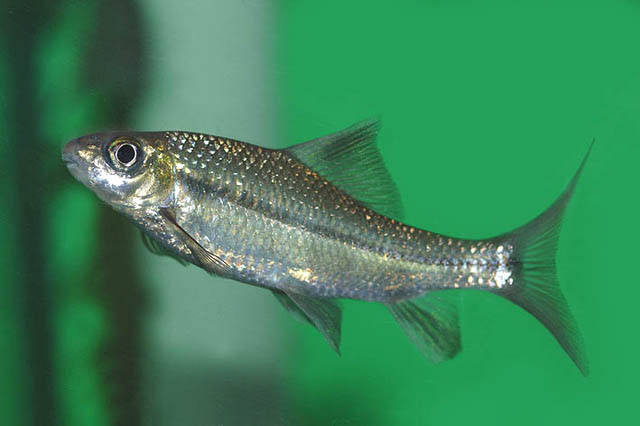
Osteochilus nashii
authority not recorded
Max length180mm SL7in SLTank120 × 45cm48 × 18inTemp22–25°C72–77°FpH6.5–7.5This species is very scarce in the trade indeed and you're most likely to see it on sale as a contaminant among import of other Indian species. There are currently 34 described species of Osteochilus although none can be considered popular in the aquarium hobby. According to Rainboth's 'Fishes of the Cambodian Mekong' members of the genus are characterised by lack of aspine, presence of 11-18rays, large rostral and maxillary barbels, papillae on both upper and lower lips,...
Oxydoras nigerRipsaw Catfish
authority not recorded
Max length900mm SL35in SLTank240 × 60cm96 × 24inTempnot recordedpH6.0–7.0Previously referred to a Pseudodoras niger, the Ripsaw Cat is a fish only for the experienced fishkeeper due to its large adult size. Although a visually stunning fish, realistically, it is best suited to public aquaria. Much more peaceful than its common name suggests, which it gets from the spines that run down the lateral line of the fish. This fish is becoming more readily available to the hobby and prices are also falling, meaning that many fishkeepers are being tempted into buying a fis...
Oxyeleotris marmorataMarbled Goby
authority not recorded
Max length650mm SL26in SLTank150 × 60cm60 × 24inTemp22–28°C72–82°FpH6.5–7.5One of the largest goby species in the world, O. marmoratus is unsuitable for the vast majority of aquaria, but is an interesting oddball for the true enthusiast with the facilities to house it properly. It is a nocturnal ambush predator and generally remains motionless during daylight hours unless striking at food. It is a popular food fish in some of its native countries, where it is known as soon hock....
Pangasionodon hypophthalmusIridescent Shark Catfish
authority not recorded
Max length1300mm SL51in SLTanknot recordedTemp22–26°C72–79°FpH6.5–7.5Previously referred to as Pangasius sutchi, this is the commonest of the Pangasiid catfish seen in the aquatic trade. It's usually seen for sale as a cute silvery-blue 2-3" youngster, most often without adequate information regarding its long term care requirements and potential size. Unfortunately this means it makes it's way into many a beginner's community tank, as it's undeniably attractive when small. The use of common names such as the one stated here don't he...
Pantodon buchholziAfrican Butterfly Fish
authority not recorded
Max length120mm SL5in SLTank90 × 30cm36 × 12inTemp23–30°C73–86°FpH6.0–7.5The common name of this surface-dwelling species is derived from it's appearance when viewed from above, the large pectoral fins giving it the appearance of a butterfly. In reality, these fins serve a dual purpose. They help to camouflage the fish, making it look like a dead leaf floating on the surface, and along with the caudal fin, power the incredible jumps that it is capable of making. The fish jumps from the water to catch flying insects or to escape potential predators and it can mak...
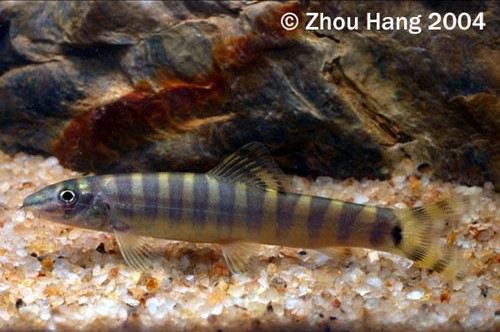
Parabotia lijiangensis
Chen, 1980
Max length83mm SL3.3in SLTank120 × 30cm48 × 12inTemp20–24°C68–75°FpH6.0–7.5It's told apart from congeners by a combination of characters as follows: large scales present on body and sides of head; caudal fin deeply forked with subequal lobes; 10-13 dark, vertical bars on the body; a dark, ocellated spot in the centre of the caudal-fin base; two bars on top of head, dorsal-fin with two rows of greyish spots; caudal-fin lobes with 3-4 dark bands on each; anal-fin with one indistinct band and another, more distinct, submarginal band; ventral fins with two indistinct bands.
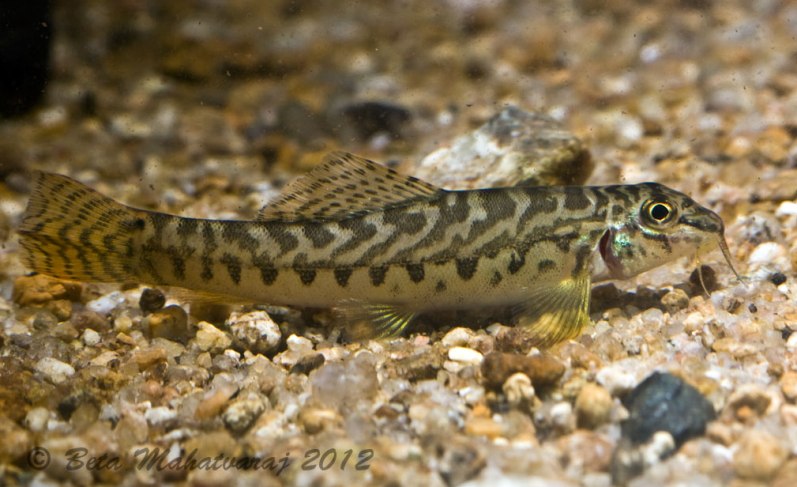
Paracanthocobitis botiaZipper Loach
Hamilton, 1822
Max length152mm SL6in SLTank75 × 30cm30 × 12inTemp21–26°C70–79°FpH6.0–7.5Traded under various names including 'mottled', 'eyepot', 'sand' and 'striped' loach. It's perhaps one of the better choices for those new to keeping nemacheilids being relatively hardy, peaceful and exhibiting some quirky behavioural traits. The characteristic ocellus, a dark marking at the top of the caudal peduncle that resembles an eye, is thought to have some function in predator distraction and is normally more intense in younger specimens.
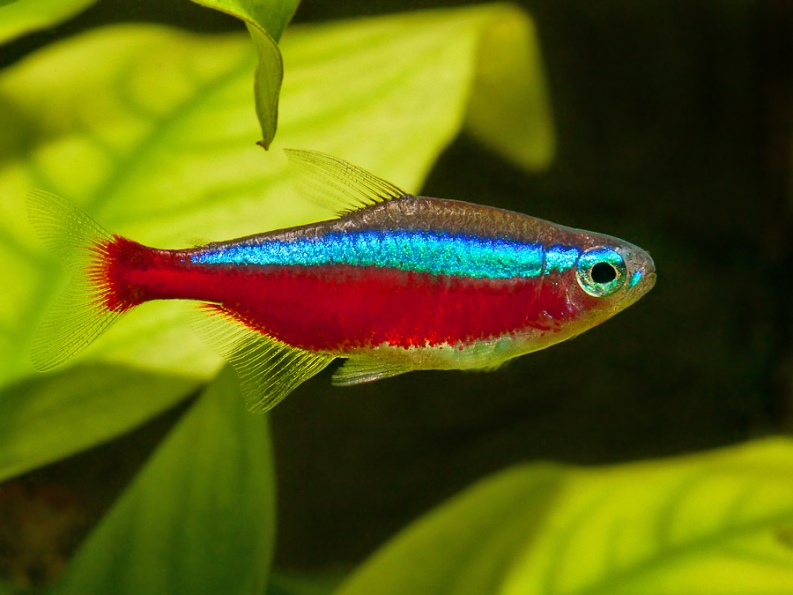
Paracheirodon axelrodiCardinal Tetra
Schultz, 1956
Max length35mm SL1.4in SLTank60 × 30cm24 × 12inTemp23–29°C73–84°FpH3.5–7.5It was initially going to be described as Hyphessobrycon cardinalis by Myers and Weitzman (1956) but just before this was due to be published Schultz presented an alternative description in the hobbyist magazine 'Tropical Fish Hobbyist' and named the fish after the publication's founder, Dr. Herbert R. Axelrod. A significant proportion of the fish available in the aquarium trade are still wild caught or derive from community-led breeding projects such as Project Piaba in the middle Negro region, where this sp...
Parachromis managuensisJaguar Cichlid
authority not recorded
Max length610mm SL24in SLTank120 × 38cm48 × 15inTemp23–25°C73–77°FpH6.0–8.0Parachromis Managuense are your typical north/central American large predatory cichlid. They are extremely attractive, but a large aquarium is required. They are not difficult to look after, as long as filtration is up to standard. Choose tankmates carefully - if you are hoping to breed Managuense, house a breeding pair or grow 6 juveniles up until a pair is formed. One of the biggest problems with breeding Managuense is the fact that a single spawn from 12" parents can produce 3000 f...
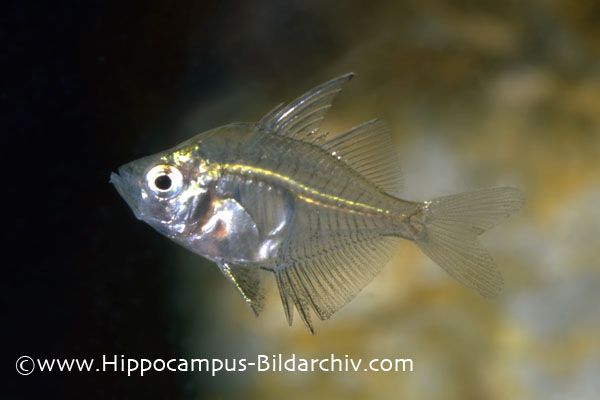
Parambassis rangaIndian Glass Fish
authority not recorded
Max length80mm SL3.1in SLTank80 × 30cm31 × 12inTemp20–30°C68–86°FpH6.5–8.0Previously known as Chanda ranga, the common name of this species arose because it's translucent skin means that the bone structure and internal organs are clearly visible. For many years it has been artificially injected with luminous dyes on fish farms in Asia and then sold as "Painted" glass fish or "Disco fish". This abhorrent act involves injecting the fish repeatedly with a large needle and most fish do not survive more than a few months afterwards. Whilst painted ...
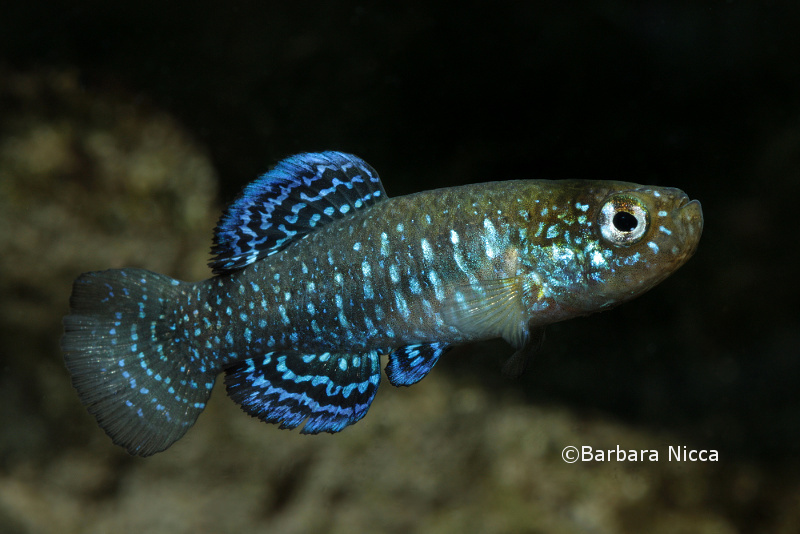
Paraphanius mentoIridescent Toothcarp
Heckel, 1843
Max length70mm SL2.8in SLTank120 × 30cm48 × 12inTemp2–30°C36–86°FpH7.5–9.0This species has something of a confused history having been previously been considered synonymous with both A. sophiae (a separate species native to Iraq and Iran) and A. cypris (currently considered a junior synonym of A. mento). Although some populations occur close to and even sympatric with other members of the genus in Turkey phylogenetic studies have shown it to be more closely-related to the Middle Eastern species A. dispar dispar, A. d. richardsoni, A. ginaonis and A. sirhani. It's...
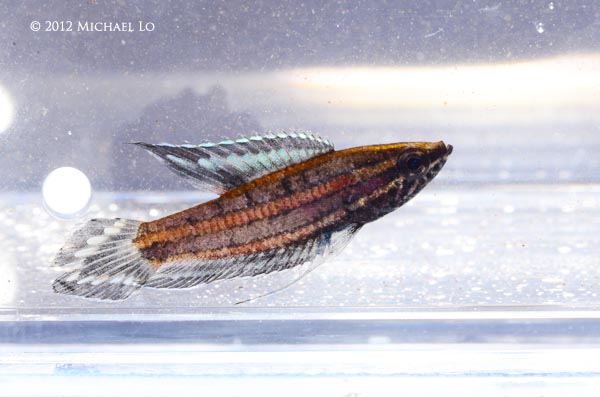
Parosphromenus deissneriDeissner's Liquorice Gourami
Bleeker, 1859
Max length40mm SL1.6in SLTank40 × 20cm16 × 8inTemp22–28°C72–82°FpH3.0–6.5P. deissneri was the only recognised member of the genus for almost a century following its description in 1859. As a result its name has and continues to be widely misapplied in both aquarium and ichthyological literature although it's probably always been very rare in the hobby, while a number of fishes previously identified under the name from other pa...
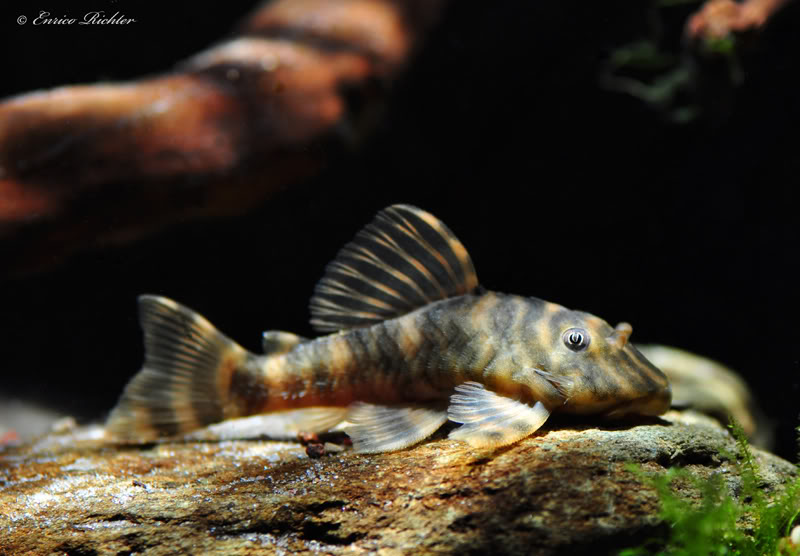
Peckoltia sp.L038
authority not recorded
Max length120mm SL5in SLTank120 × 30cm48 × 12inTemp23–29°C73–84°FpH6.0–7.5Wild specimens are probably omnivorous foragers but with a preference for aquatic invertebrates and suchlike. In the aquarium it does best when offered a varied diet comprising sinking dried foods, frozen Daphnia, mosquito larvae, chironomid larvae (bloodworm), and prawn/shrimp, for, example, plus some fresh fruit, parboiled potato, etc.
Periophthalmus barbarusAtlantic Mudskipper
authority not recorded
Max length150mm SL6in SLTanknot recordedTemp25–30°C77–86°FpH7.0–8.5Due to its highly amphibious nature this must be one of the most interesting, endearing species that can be kept in aquaria. Some specimens rarely enter deep water, preferring to sit in the shallows with the body submerged and eyes protruding above the surface. Others seem to favour resting completely exposed on rocks, sand or bogwood, returning to the water periodically to wet themselves. Subdominant individuals (those that are unable to secure a favourable territory) tend to attach themselves ...
Periophthalmus novemradiatusDwarf Indian Mudskipper
authority not recorded
Max length100mm SL3.9in SLTanknot recordedTemp25–30°C77–86°FpH7.0–8.5Due to its highly amphibious nature this must be one of the most interesting, endearing species that can be kept in aquaria. Some specimens rarely enter deep water, preferring to sit in the shallows with the body submerged and eyes protruding above the surface. Others seem to favour resting completely exposed on rocks, sand or bogwood, returning to the water periodically to wet themselves. Subdominant individuals (those that are unable to secure a favourable territory) tend to attach themselves ...
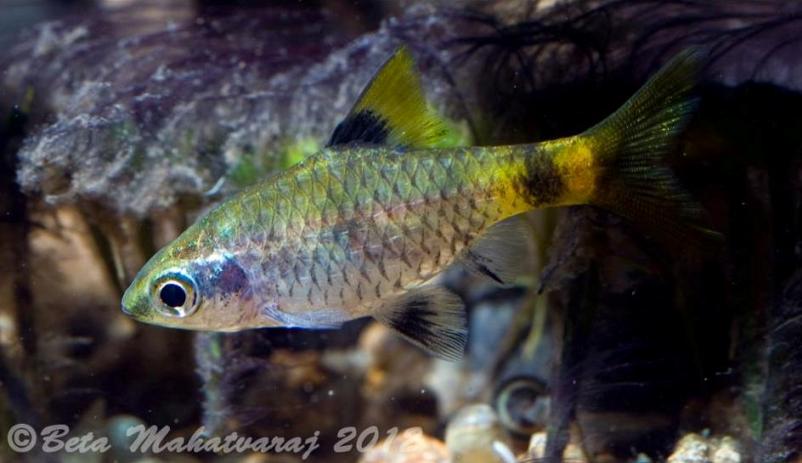
Pethia geliusGolden Dwarf Barb
Hamilton, 1822
Max length40mm SL1.6in SLTank60 × 30cm24 × 12inTemp18–24°C64–75°FpH6.0–7.0This species' identity was settled and a neotype designated by Knight (2013) who also revalidated the congener P. canius (Hamilton, 1822) and described the closely-related P. aurea. These three had previously been considered to represent geographic forms of P. gelius, albeit on a tentative basis, with the validity of P. canius having been discussed since the late 19th century.
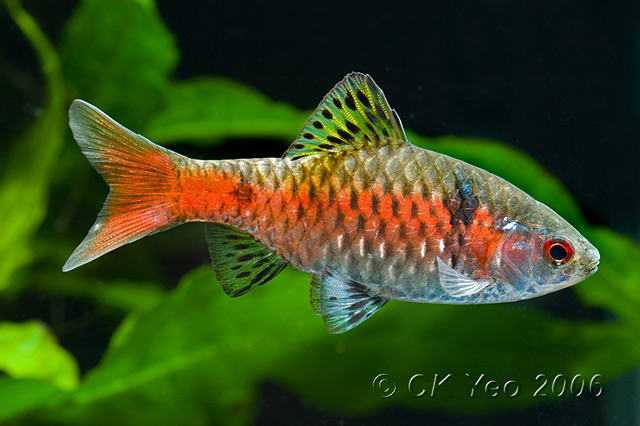
Pethia padamyaOdessa Barb
Kullander & Britz, 2008
Max length46mm SL1.8in SLTank80 × 30cm31 × 12inTemp16–25°C61–77°FpH6.5–8.5This species has been in the aquarium trade since the early 1970s but its precise origin was a mystery until 2003. It first appeared in Ukraine, the common name 'Odessa' being derived from the port city of that name, and when it arrived in western Europe was widely considered a hybrid of similar-looking congeners such as P. conchonius, P. ticto and P. cumingii. It was also hypothesised as a subspecies of P. ticto or P. conchonius, and some suggested the fish to be artificially dyed.