Results for “sp.”
Type a name: scientific, common, or one a species used to go by. Or narrow the catalogue with the filters.
Filters
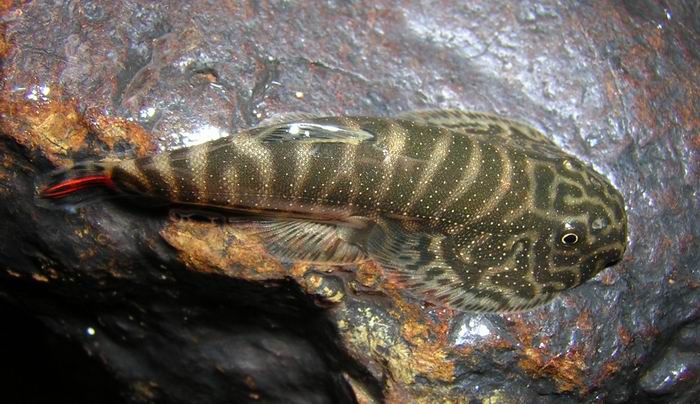
Gastromyzon sp. 'SK02'
authority not recorded
Max length50mm SL2.0in SLTank60 × 30cm24 × 12inTemp20–24°C68–75°FpH6.5–8.0Known only from headwaters of the Sungai (river) Amandit, a tributary of the larger Barito basin in the Meratus mountain range, Kalimantan Selatan (South Kalimantan) province, Indonesian Borneo. There currently exist 36 officially-described members of the genus, all of which are endemic to the island with over half restricted to a single river basin or sub-basin.
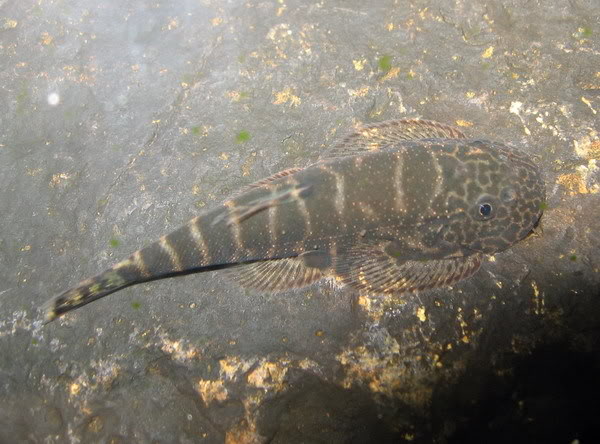
Gastromyzon sp. 'SK04'
authority not recorded
Max length65mm SL2.6in SLTank75 × 30cm30 × 12inTemp20–24°C68–75°FpH6.5–8.0For long-term success it's best to provide a mature aquarium with a plentiful supply of algae-covered rocks and other surfaces. If unable to grow sufficient algae in the main tank or you have a community containing numerous herbivorous fishes which consume what's available quickly it may be necessary to maintain a separate tank in which to grow algae on rocks and switch them with those in the main tank on a cyclical basis.
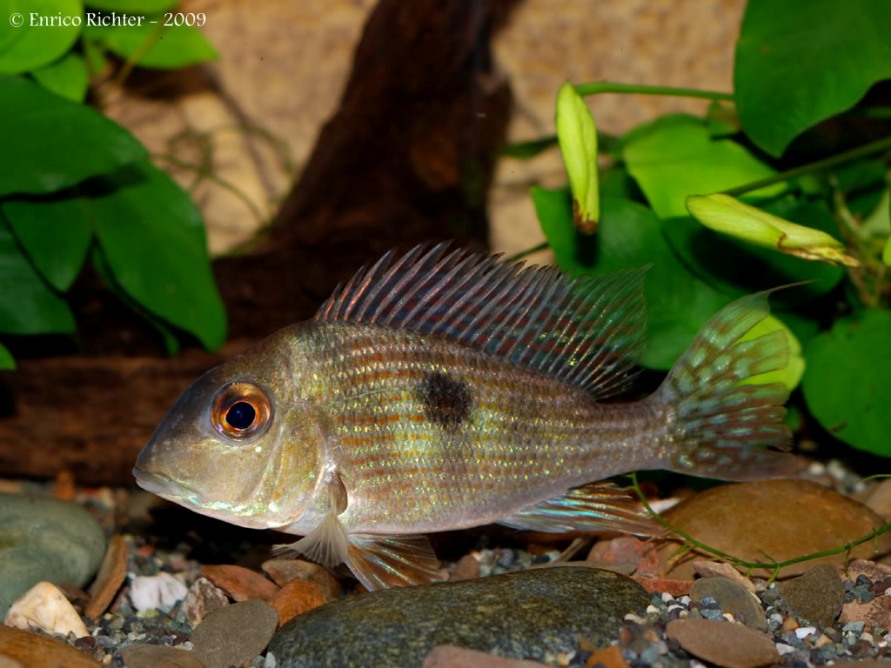
Geophagus sp. 'Pindaré'
authority not recorded
Max length150mm SL6in SLTank150 × 45cm60 × 18inTemp26–29°C79–84°FpH6.0–7.0Known only from the rio Pindaré in Maranhão state, north-eastern Brazil which drains into the Baía de São Marcos (St. Mark's Bay) along with the rios Mearim, of which it is sometimes considered a tributary, and Grajaú. Some sections of the Pindaré have been heavily degraded via removal of riparian vegetation for agriculture and habitats destroyed due to resultant siltation. The river is poorly-studied and the conservation status of its fishes mostly unconfirmed so su...
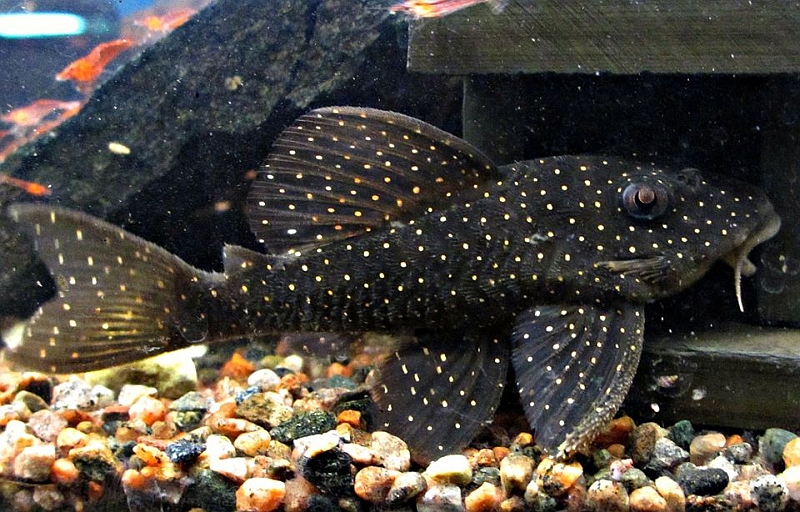
Hypancistrus sp.L004
authority not recorded
Max length100mm SL3.9in SLTank120 × 30cm48 × 12inTemp26–30°C79–86°FpH5.5–7.5The genus Hypancistrus is diagnosed from all other loricariids by a wide separation between the metapterygoid and lateral ethmoid, presence of a sharply angled adductor palatini crest of the hyomandibula, and no lateral wall in the metapterygoid channel. More useful for aquarists is the fact that in Hypancistrus the dentary teeth are about twice a...
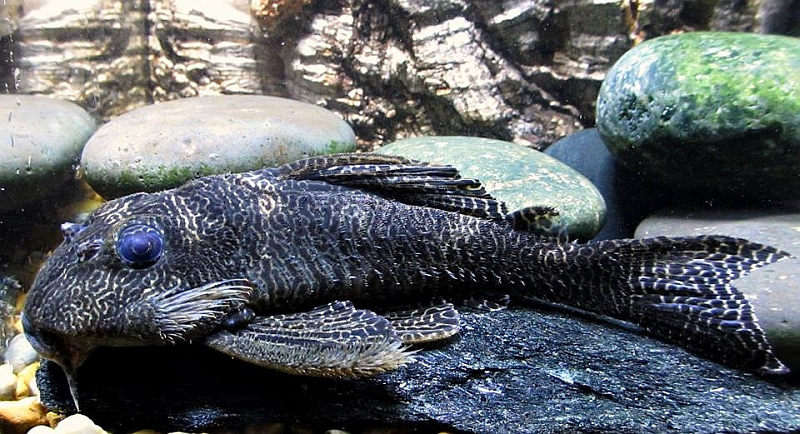
Hypancistrus sp.L066
authority not recorded
Max length140mm SL6in SLTank120 × 45cm48 × 18inTemp26–30°C79–86°FpH5.0–7.0Collected from the rio Xingu downstream and in the vicinity of Belo Monte, Pará state, northern Brazil. The majority of its natural habitat is likely to be severely degraded in the near future due to ongoing construction of the Belo Monte dam.
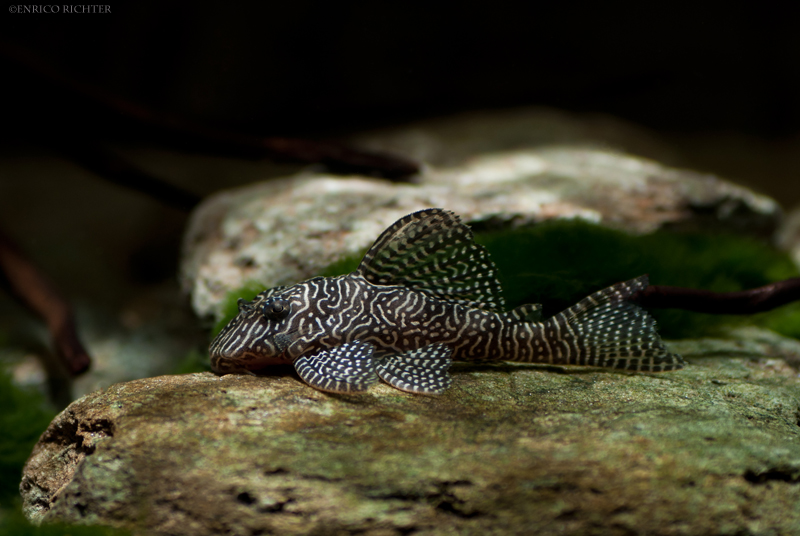
Hypancistrus sp.L260
authority not recorded
Max length90mm SL3.5in SLTank90 × 30cm36 × 12inTemp24–30°C75–86°FpH5.5–7.5A similar-looking, larger form from the rio Jarí, which enters the Amazon from the opposite bank a few hundred kilometres downstream from the Tapajós has been assigned the code L411. The two can be told apart relatively easily since in L260 the white vermiculations on the body are significantly finer than in L411, in which the black and white components of the colour pattern are of more-or-less equivalent width.
Hypostomus reganiGiant White Spot Plec
authority not recorded
Matched on the common name Giant White Spot Plec
Max length400mm SL16in SLTanknot recordedTemp24–28°C75–82°FpH6.0–7.0An attractive and very hardy larger plec.
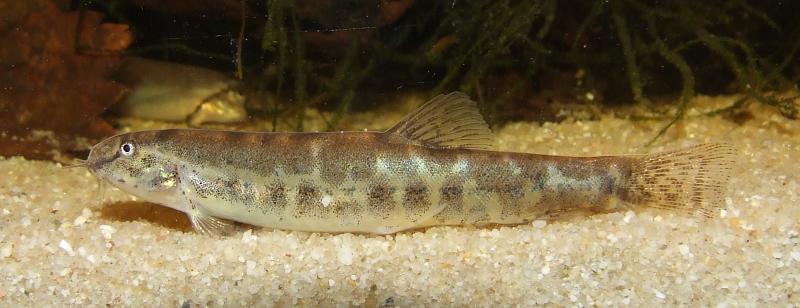
Lepidocephalichthys sp. 'LE1'Vietnamese Marbled Hog-faced Loach
authority not recorded
Max length55mm SL2.2in SLTank45 × 30cm18 × 12inTemp23–26°C73–79°FpH6.0–7.5This fish has only been traded on a handful of occasions to date. It's been referred to as Lepidocephalichthys cf. hasselti and Lepidocephalus cf. thermalis but appears to be an undescribed member of the former genus. Following a...
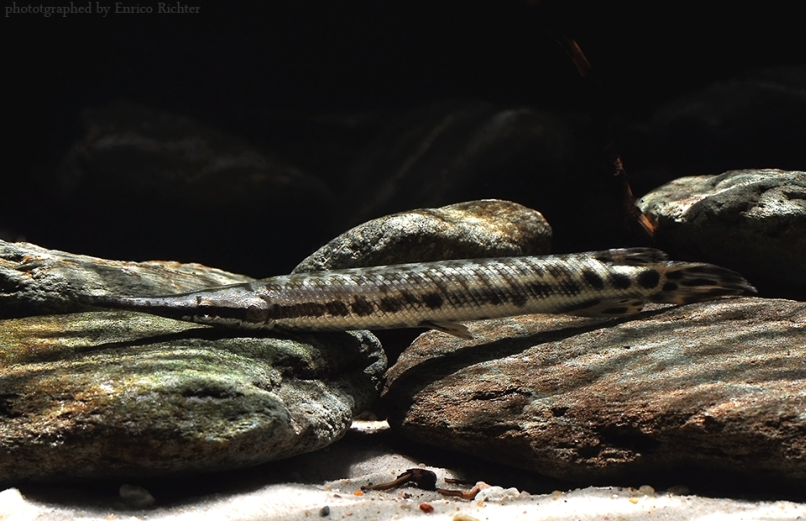
Lepisosteus oculatusSpotted Gar
Winchell, 1864
Matched on the common name Spotted Gar
Max length1250mm SL49in SLTanknot recordedTemp12–20°C54–68°FpH6.0–8.0Known from Great Lakes Erie and Michigan with distribution extending south through the Mississippi River basin to the Gulf of Mexico drainages where it's said to occur between the lower Apalachicola River in Florida and the Nueces River in Texas. It may also be found in the Rio Grande which forms the border between Mexico and the United States further south where records include Falcon International Reservoir, for example.
Megalechis thoracataSpotted Hoplo
authority not recorded
Matched on the common name Spotted Hoplo
Max length150mm SL6in SLTank120 × 38cm48 × 15inTemp18–28°C64–82°FpH6.0–8.0Still widely referred to as hoplosternum thoracatum the hoplo cat is a popular and hardy fish. These fish have the ability to breathe atmospheric air by gulping down mouthfuls of air and the oxygen is then absorbed into the bloodstream through the intestine. This allows the fish to endure poor conditions in the wild but it can still be observed exhibiting this behaviour in captivity. The hoplo is also eaten as a food fish in parts of South America....
Metynnis maculatusSpotted Metynnis
Kner, 1858
Matched on the common name Spotted Metynnis
Max length148mm SL6in SLTank180 × 45cm72 × 18inTemp20–28°C68–82°FpH5.0–7.5Metynnis maculatus
Neolamprologus leleupiLemon Cichlid
authority not recorded
Max length100mm SL3.9in SLTanknot recordedTemp23–27°C73–81°FpH7.5–9.0One of the most popular Tanganyikan species in the hobby, N. leleupi is a stunning fish when in good condition. However, it is not as easy to maintain as its popularity suggests, due to its disagreeable attitude towards conspecifics and its sensitivity to deteriorating water conditions. It is a solitary species in nature, with male fish entering females' caves as they find them and spawning with receptive females. This explains the weak pair bond formed by spawning fish in aquaria and also ...
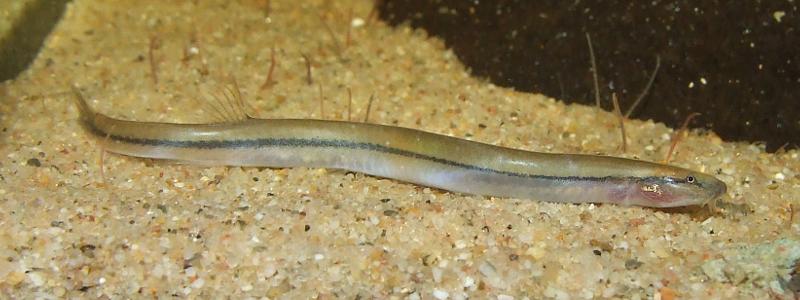
Pangio sp. 'PAN05'
authority not recorded
Max length80mm SL3.1in SLTank60 × 30cm24 × 12inTemp21–26°C70–79°FpH6.0–7.5Unclear but usually imported for the aquarium trade alongside P. anguillaris which according to current knowledge has an irregular distribution including Laos, Cambodia, Vietnam, Thailand, Peninsular Malaysia, and the Greater Sunda Islands of Sumatra and Borneo.
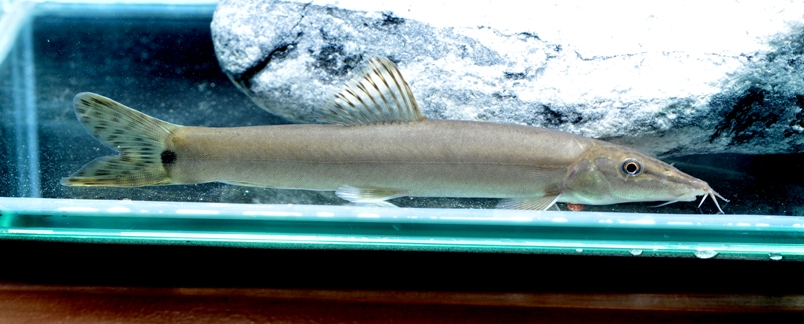
Parabotia sp. 'PB01'
authority not recorded
Max length100mm SL3.9in SLTank120 × 45cm48 × 18inTemp20–24°C68–75°FpH6.0–7.5The name of this fish is unclear with the fact that diagnoses for several members of this genus do not appear to exist in the English language making identification even trickier. It's not common in the aquarium trade, either.
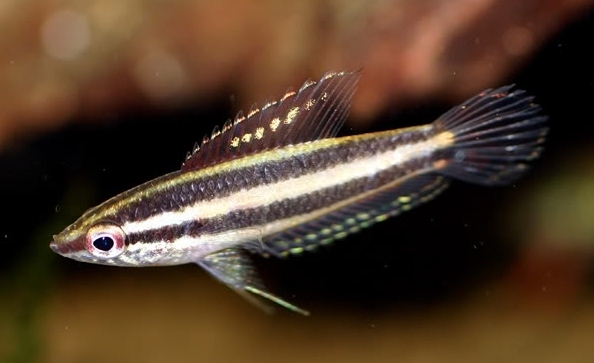
Parosphromenus bintan
Kottelat & Ng, 1998
Max length26mm SL1.0in SLTank40 × 20cm16 × 8inTemp22–28°C72–82°FpH3.0–6.5This species is not generally available in the aquarium hobby on a commercial basis but is occasionally collected and distributed by private aquarists. It's name is sometimes misapplied to commercial shipments of other species, and there also exist a number of other fish with rounded caudal-fins that may or may not be conspecific, including P. sp. 'blue line' and P. sp. 'Selatan' from Sumatra.
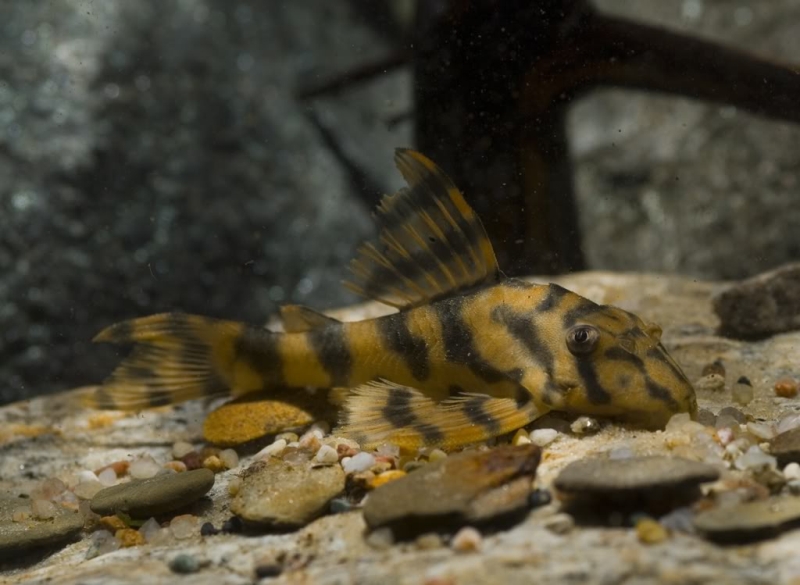
Peckoltia sp.L288
authority not recorded
Max length100mm SL3.9in SLTank80 × 30cm31 × 12inTemp26–30°C79–86°FpH5.0–7.0Currently known only from the rios Curuá Una and Uruará in Pará state, Brazil. The Curuá Una is a tributary flowing into the main lower Amazon channel downstream of Santarém and there is a large hydroelectric power plant constructed on it which supplies power to the city. The Uruará joins the Curuá Una around 30 km upstream of its mouth and confluence with the Amazon.
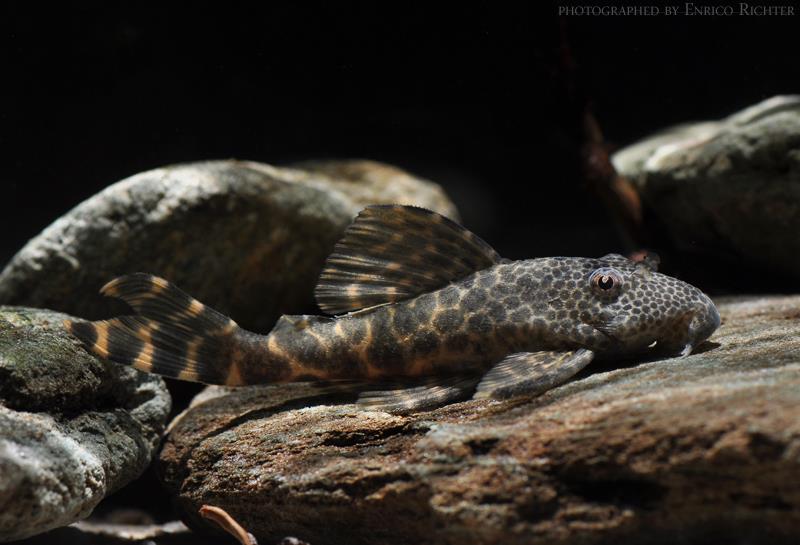
Peckoltia sp.L147
authority not recorded
Max length150mm SL6in SLTank120 × 45cm48 × 18inTemp22–30°C72–86°FpH5.0–7.5Known with certainty from tributaries of the middle Río Orinoco between the city of Puerto Ayacucho, Amazonas state, Venezuela and the lower Río Meta, Colombia. It may have a wider distribution within the Meta system since some reports suggest it to occur around Villavicencia, Colombia, some 600 km upriver.
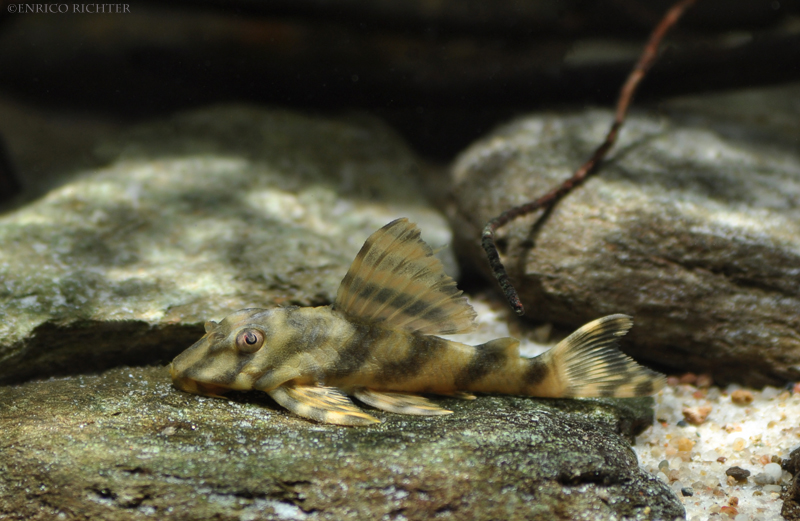
Peckoltia sp.L243
authority not recorded
Max length120mm SL5in SLTank120 × 30cm48 × 12inTemp25–29°C77–84°FpH5.5–7.5Known only from parts of the Río Orinoco drainage in Amazonas state, southern Venezuela. Sometimes confused with Peckoltia lineola (Armbruster, 2008) alongside which it's often exported for the aquarium trade.
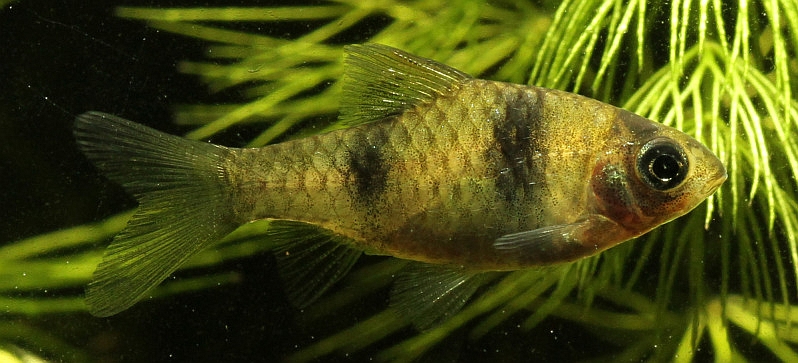
Pethia sp. 'Myanmar'
authority not recorded
Max length55mm SL2.2in SLTank75 × 30cm30 × 12inTemp18–24°C64–75°FpH6.0–7.5This fish has been widely misidentified and sold as the congener P. tiantian and its vernacular name of 'Burmese bumble-bee barb' but actually appears to be an undescribed member of the genus Pethia. This assemblage was erected by Pethiy...
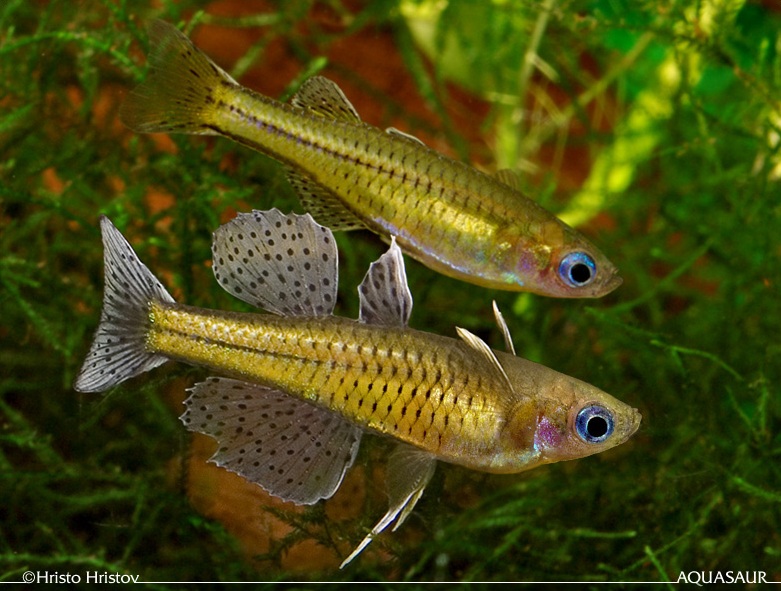
Pseudomugil gertrudaeSpotted Blue-eye
Weber, 1911
Matched on the common name Spotted Blue-eye
Max length38mm SL1.5in SLTank45 × 30cm18 × 12inTemp21–28°C70–82°FpH4.5–7.5Described from 'Rivulet in sago forest at Ngaiguli, Terangan, Aru Island, Aru Islands, Maluku, Indonesia', corresponding to the island now normally referred to as 'Trangan' in the Aru Islands group, eastern Indonesia. The islands are located in the Arafura Sea, with western New Guinea to the north and the Arnhem Land Region of Australia's Northern Territory to the south, and though they lie within Maluku province of eastern Indonesia, are part of the Australian continent in a geological sense.