Results for “ex gr.”
Type a name: scientific, common, or one a species used to go by. Or narrow the catalogue with the filters.
Filters
Maylandia callainosCobalt Blue Zebra
authority not recorded
Max length135mm SL5in SLTank120 × 30cm48 × 12inTemp24–28°C75–82°FpH7.6–8.8This species was formerly classified as Pseudotropheus callainos and Metriaclima callainos and is still named as one of these by many sources. It has also been seen for sale as Pseudotropheus zebra "pearly". The genus name Maylandia is now used to describe all former members of the 'zebra' group of Pseudotropheus. It exists in three main colour forms, namely "cobalt blue", "orange blotch" and "pearl zebra". It is very easily confused with similar...
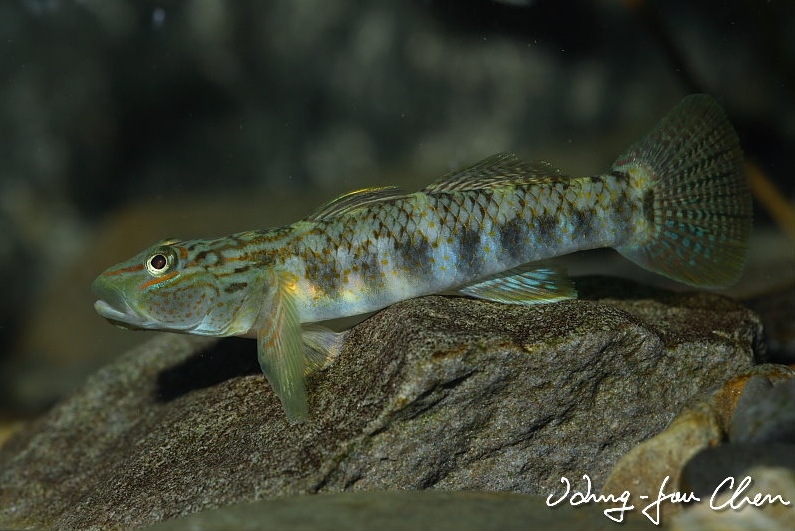
Rhinogobius lanyuensis
Chen, Miller & Fang, 1998
Max length67mm SL2.6in SLTank80 × 30cm31 × 12inTemp18–25°C64–77°FpH6.0–8.0Presumably inhabits small rivers, tributaries and streams with substrates of gravel, rocks, boulders, and exposed bedrock which undergo seasonal variations in water flow rate, depth and turbidity. Lanyu Island is volcanic, measures just 45 km² and has no major rivers or large settlements with a permanent human population of around 4000, although there is a large nuclear waste storage facility at its southern end.
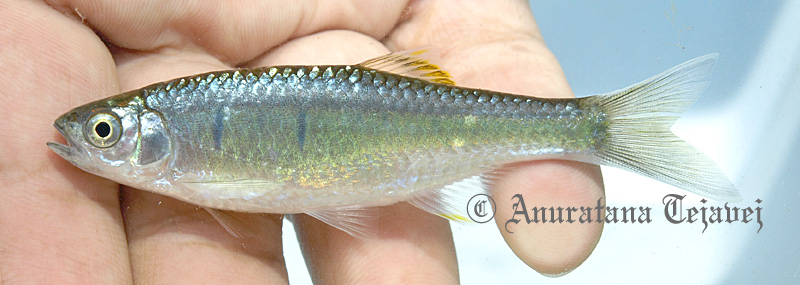
Opsarius koratensis
Smith, 1931
Max length100mm SL3.9in SLTank150 × 45cm60 × 18inTemp22–30°C72–86°FpH6.0–8.0Inhabits well-oxygenated, low-to-medium gradient, slow to moderate-flowing rivers and streams with substrates of gravel, cobbles, larger boulders and exposed bedrock. At the habitat in our image pH was 7.5, temperature 26°C and cond...
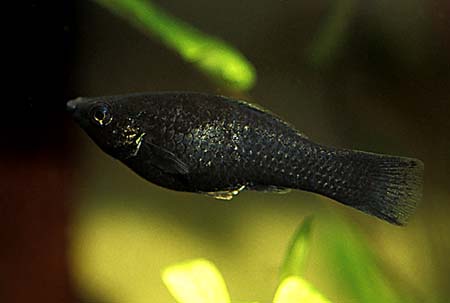
Poecilia sphenopsShort-finned Molly/Black Molly
Valenciennes, 1846
Max length80mm SL3.1in SLTank90 × 30cm36 × 12inTemp21–28°C70–82°FpH7.0–8.5A hugely popular aquarium fish. Many aquarium-bred colour morphs of this species are available, including the ubiquitous black molly. There are also Gold, Green, Lyretail, Silver and Dalmation varieties. Some of these are the results of P. sphenops being crossed with P. latipinnis. The 2 species will also interbreed readily in the aquarium and in order to avoid this we suggest keeping only one of them per tank. There also exists a (in our opinion) grotesque 'balloon' variety of this fi...
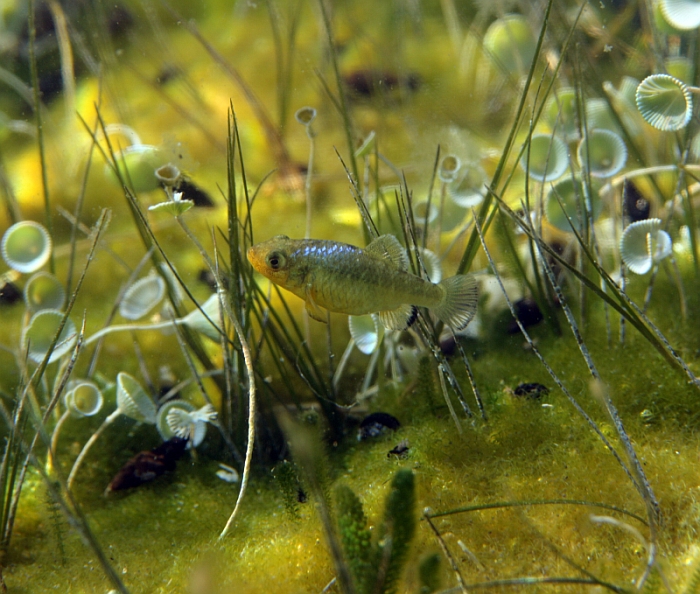
Cyprinodon variegatusSheepshead 'Minnow'
Lacepède, 1803
Max length50mm SL2.0in SLTank60 × 30cm24 × 12inTempnot recordedpHnot recordedTends to be most common in brackish to hypersaline environments such as coastal salt marshes, lagoons and estuaries. On San Salvador Island, Bahamas, it appears to be the parent of a species group occurring in sympatry and exploiting diverse but specific resources with some spectacular morphological adaptations.
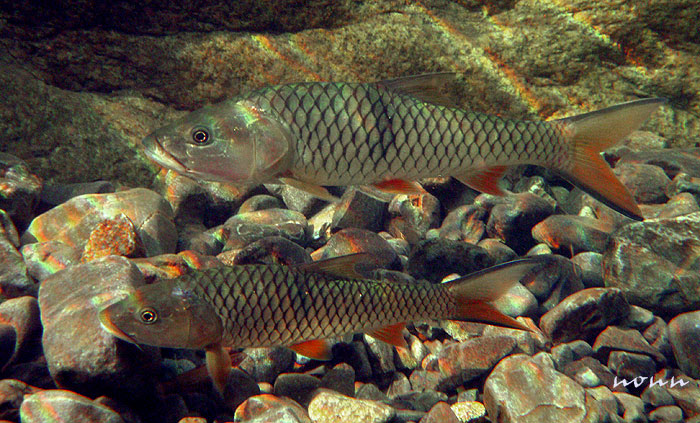
Hampala macrolepidotaHampala Barb
Kuhl & van Hasselt, 1823
Max length700mm SL28in SLTanknot recordedTemp20–26°C68–79°FpH5.5–8.0This species is also known by the vernacular 'jungle perch' or 'sidebar barb' and should not be considered an aquarium subject in all but the most extreme circumstances since it can grow to over 2 feet in length, weigh in excess of 5 kg and is a powerful, pelagic predator. It's also a popular sport fish with a reputation for striking hard.
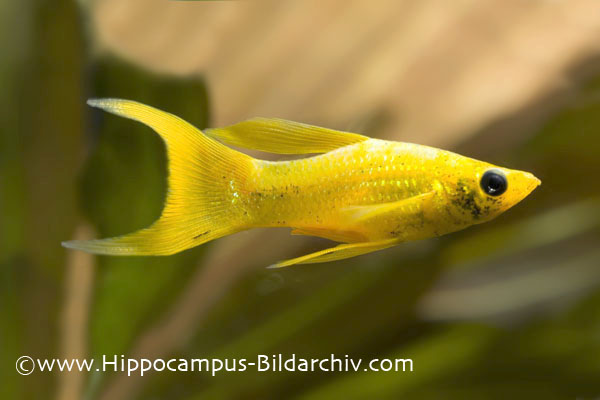
Poecilia latipinnaSailfin Molly
Lesueur, 1821
Max length125mm SL5in SLTank76 × 38cm30 × 15inTemp21–26°C70–79°FpH7.0–8.5The wild fish can exhibit several different types of patterning. P. latipinna has been selectively bred into many different colour morphs for the aquarium trade, and has also been crossbred with other molly species, particularly P. sphenops. They will also interbreed readily in the aquarium and in order to avoid this we suggest keeping only one species of molly per tank. There also exists a (in our opinion) grotesque 'balloon' variety of this fish in which the body is malformed and rou...
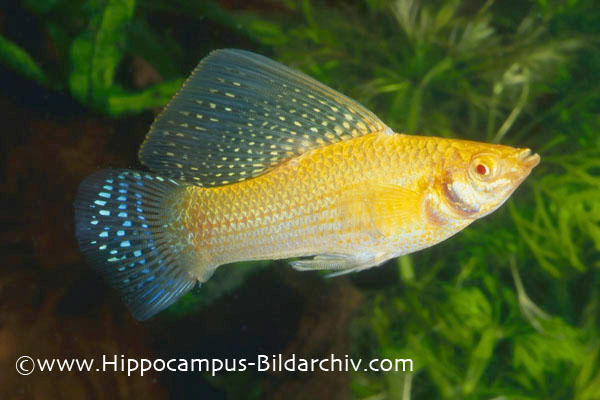
Poecilia veliferaGiant Sailfin Molly
Regan, 1914
Max length150mm SL6in SLTank91 × 38cm36 × 15inTemp22–28°C72–82°FpH7.0–8.5Another popular molly in the hobby, and another that has been selectively bred to produce several different varieties, such as albino, black, red etc. Some of these are the result of cross breeding with P.latipinna. There also exists a (in our opinion) grotesque 'balloon' variety of this fish in which the body is malformed and rounded, giving a balloon-like appearance. This condition can cause swimbladder and digestive problems and may bring about premature death. It is difficult to...
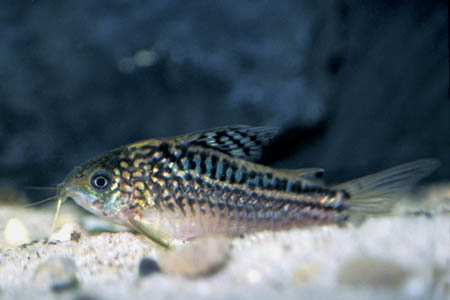
Corydoras elegansElegant Cory
Steindachner, 1876
Max length55mm SL2.2in SLTanknot recordedTemp20–26°C68–79°FpH6.0–7.5This species is popular in the aquarium hobby and unlike the majority of congeners tends to spend a fair amount of time away from the substrate, often forming groups in midwater. It has been placed in the unofficial 'C. elegans group', which contains a number of species exhibiting similarities in morphology and colour pattern, some of which remain unidentified in scientific terms.
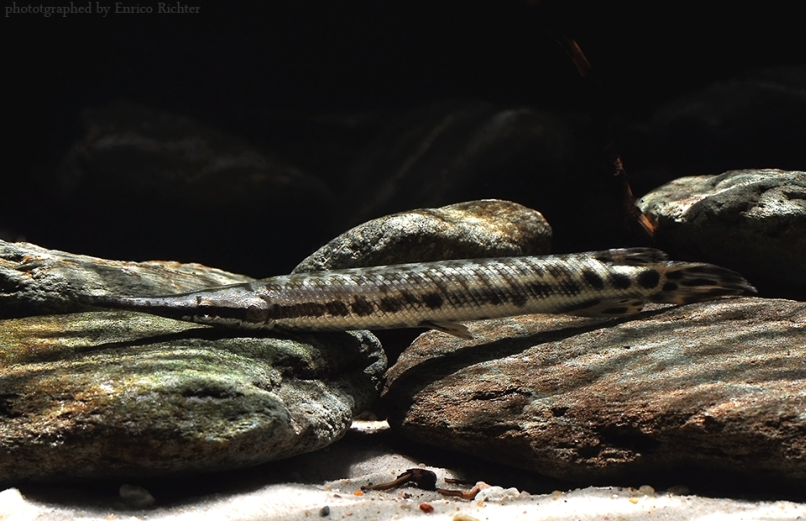
Lepisosteus oculatusSpotted Gar
Winchell, 1864
Max length1250mm SL49in SLTanknot recordedTemp12–20°C54–68°FpH6.0–8.0Known from Great Lakes Erie and Michigan with distribution extending south through the Mississippi River basin to the Gulf of Mexico drainages where it's said to occur between the lower Apalachicola River in Florida and the Nueces River in Texas. It may also be found in the Rio Grande which forms the border between Mexico and the United States further south where records include Falcon International Reservoir, for example.
Herichthys carpintisPearlscale Cichlid
authority not recorded
Max length305mm SL12in SLTank120 × 38cm48 × 15inTemp24–26°C75–79°FpH7.0The Pearlscale Cichlid is an extremely attractive fish, showing some gorgeous bluey green hues and reflective flecks on their flanks. They aren't difficult to look after or breed, but be careful when choosing tankmates. The only problem with spawning is that the male may become aggressive towards the female - it is certainly wise to have a tank divider, just in case. Look out for Pearlscale Cichlids labelled as Texas Cichlids, as it is a misleading common name that is often given to Heri...
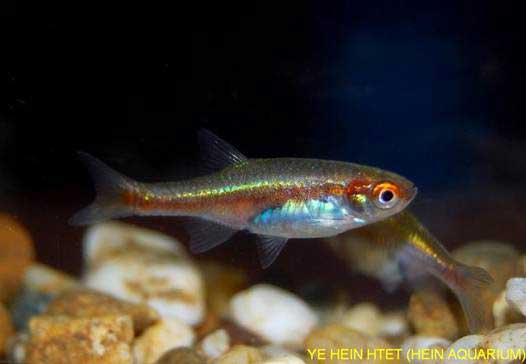
Microrasbora cf. rubescensFlame Red 'Rasbora'
authority not recorded
Max length40mm SL1.6in SLTank60 × 30cm24 × 12inTemp20–26°C68–79°FpH6.5–7.5This is possibly an undescribed species and has been marketed as 'Asian Cardinal Rasbora', 'flame red rasbora', M. sp. 'rose blue line' or M. 'thuzari' in the ornamental trade. It differs from M. rubescens by its larger adult size, possession of a greenish to bluish lateral stripe, and lesser extent of orange pigmentation on the body. It also appears to represent a distinct genetic lineage (Collins et al., 2012).
Potamotrygon falkneriLarge Spot Stingray
authority not recorded
Max length470mm SL19in SLTank180 × 60cm72 × 24inTemp23.9–28.9°C75–84°FpH6.0–7.5P. falkneri is arguably among the most beautiful Potamotrygonids seen in the hobby. It's not imported with any great degree of regularity, and is usually expensive when available. There are currently three genera in the family Potamotrygonidae, all of which hail from South America. Paratrygon and Plesiotrygon are both monotypic genera (contain only a single described species) and are rarely seen in the hobby. The vast majority of imported rays belong to the biggest genus, Potamotrygon. T...
Rasbosoma spilocercaDwarf Scissortail Rasbora
authority not recorded
Max length30mm SL1.2in SLTank45 × 30cm18 × 12inTemp22–26°C72–79°FpHnot recordedThis miniature look-a-like of the popular Rasbora trilineata is rarely seen in the aquatic hobby, probably as a result of its relatively plain patterning and rather delicate nature. However if a group is well looked-after they will exhibit some interesting behaviour and surprising colour. As it also makes an ideal resident of the ornamental planted aquaria that are currently so popular in the hobby we'd love to see it become more widely-available. The genus is currently monotypic and dis...
Osphronemus laticlaviusGiant Red Tail Gourami
authority not recorded
Max length500mm SL20in SLTank180 × 60cm72 × 24inTemp20–30°C68–86°FpH6.5–8.0Still relatively rare in the hobby, this fish was only described to science in the early 1990s. It's not yet being mass-produced in any great numbers, and demand is high, so it's quite pricey when it is available. It's a stunning fish when adult, developing bright red fin edges with filamentous extensions, and a body colour varying between blue-green and almost black. It makes a great pet as it can develop real personality and learn to recognise its owner....
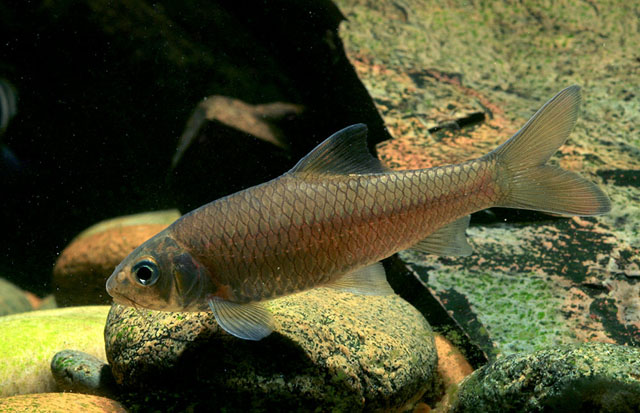
Discherodontus schroederi
Smith, 1945
Max length100mm SL3.9in SLTank120 × 30cm48 × 12inTemp23–26°C73–79°FpH6.0–7.5It's also been collected in more open areas but wherever it is found the substrate is composed of boulders, smaller stones, sand and/or gravel along with decomposing plant material. From images we've seen typical habitats are composed of short sections of rocky rapids interspersed by deeper pools with exposed bedrock. Rainboth describes how he collected a large group of...
Maylandia greshakeiRed Top Ice Blue Zebra
authority not recorded
Max length135mm SL5in SLTank90 × 45cm36 × 18inTemp24–28°C75–82°FpH7.6–8.8This species was formerly classified as Pseudotropheus greshakei and Metriaclima greshakei and is still named as either of these by many sources. The genus name Maylandia is now used to describe all former members of the 'zebra' group of Pseudotropheus. An albino form of this species exists in aquaria and is occasionally available....
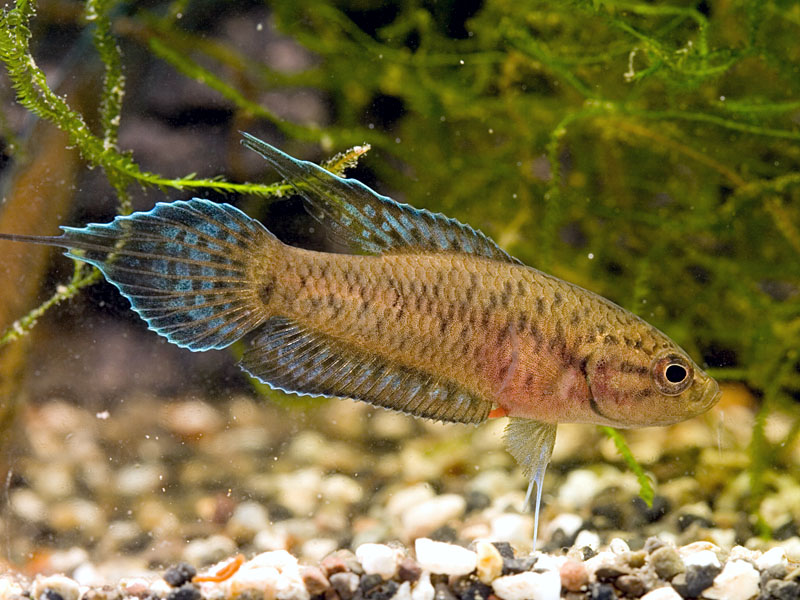
Malpulutta kretseriOrnate Paradisefish
Deraniyagala, 1937
Max length50mm SL2.0in SLTank40 × 20cm16 × 8inTemp16–22°C61–72°FpH5.0–7.5This species is also referred to as 'Kretser's paradisefish' and 'spotted gourami'. There exist three colour forms, two of which exhibit a greater degree of reddish or violet pigmentation in the fins, respectively. The third is more bluish and was described as M. kretseri minor by Deraniyagala (1958).
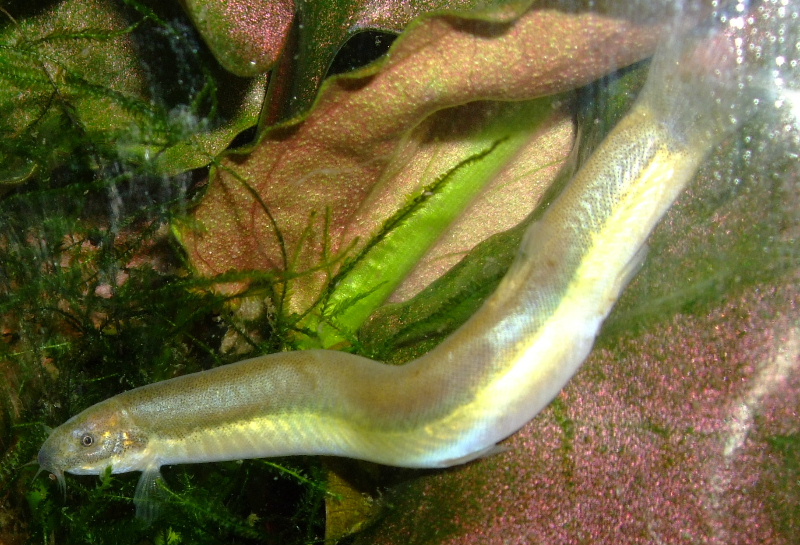
Pangio sp. 'PAN02'
authority not recorded
Max length50mm SL2.0in SLTank60 × 30cm24 × 12inTemp21–26°C70–79°FpH3.5–7.0The fish in our images don't correspond to any of the described members of the genus but can be assigned to the P. oblonga species group with a degree of certainty. It's apparently exported as a contaminant among shipments of a uniformly brown-coloured fish with unpublished genetic analyses suggesting the two might be variants of the same species (J. Bohlen, pers. comm.). Among congeners it may be related to P. alcoides Kottela...
Potamotrygon henleiBlack Stingray
authority not recorded
Max length600mm SL24in SLTanknot recordedTemp23–28°C73–82°FpHnot recordedP. henlei is one of the more sought after ray species in the hobby due to its striking colours and impressive adult size. A fully grown one of these makes a stunning sight. Sadly exports from Brazil are now illegal under the IBAMA regulations, although captive bred fish are available occasionally. The price tends to be very expensive as a result. The species exists in various colour forms, with either white or yellow spots and a background colour varying between black and dark brown. The patt...