Results for “ex gr.”
Type a name: scientific, common, or one a species used to go by. Or narrow the catalogue with the filters.
Filters
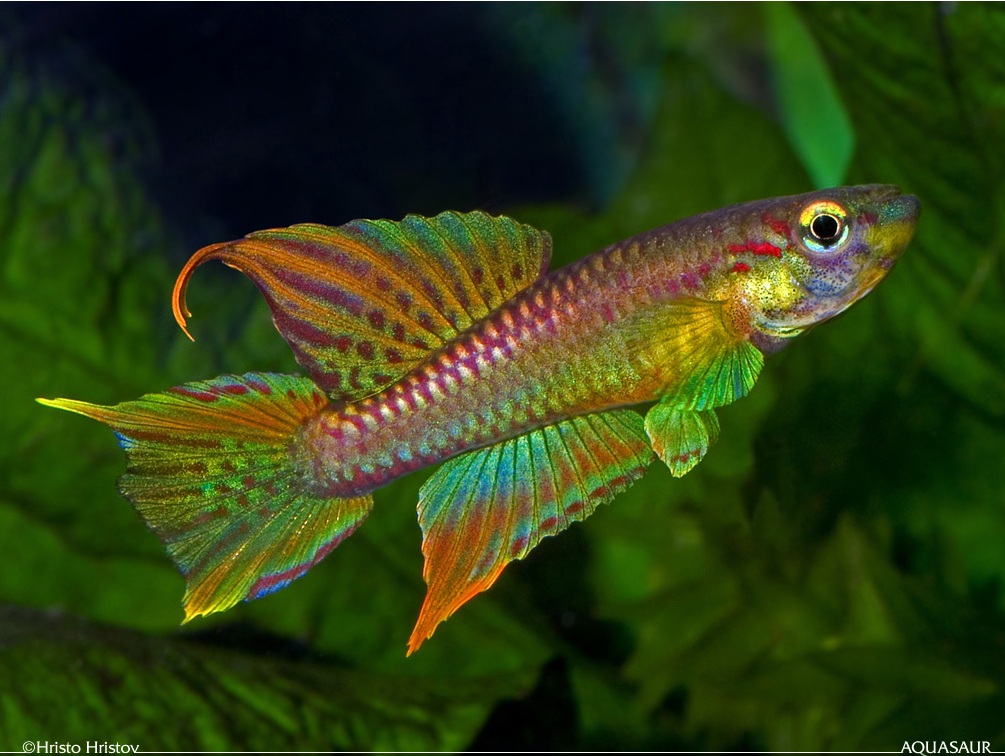
Aphyosemion splendopleureSplendid Lyretail
Brüning, 1929
Max length60mm SL2.4in SLTank45 × 25cm18 × 10inTemp22–26°C72–79°FpH6.0–7.2There exist several different colour forms of this species depending on collection locality, and these should not be kept together in order to prevent hybridisation and preserve bloodlines. It has been classified in the subgenus Chromaphyosemion by some authors who consider that nominal grouping to represent a monophyletic branch of a paraphyletic Aphyosemion.
Osphronemus exodonElephant Ear Gourami
authority not recorded
Max length600mm SL24in SLTank180 × 60cm72 × 24inTemp20–30°C68–86°FpH6.5–8.0A bizarre and very recent addition to the genus, O. exodon is infrequently imported to the hobby, but has been seen occasionally. It has specially adapted mouthparts whereby it has greatly enlarged teeth. An extra set of teeth can also be seen growing in concentric bands on the outer lips! These are used in nature to literally 'pick' fruit from overhanging branches, with the fish often leaping from the water to grab a particularly juicy fig or other fruit. When the mouth of the fish is...
Rhynchodoras woodsiParrot Doradid
authority not recorded
Max length110mm SL4in SLTank90 × 38cm36 × 15inTemp24–26°C75–79°FpH5.8–7.0An interesting but rare species in the hobby, R. woodsi is nicknamed the "parrot doradid" due to its inquisitive feeding habits, and the curious bony growth extending from the upper mouthparts. The precise use of the bony growth isn't known, although one theory suggests it provides protection for the delicate barbels. Another hypothesis considers that it's some sort of feeding tool, possibly being used to lever aquatic invertebrates from crevices in submerged logs and roots....
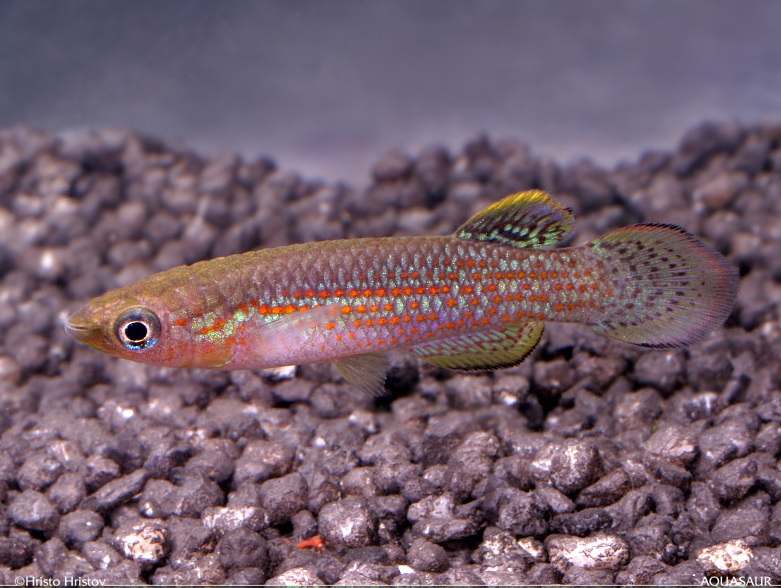
Pachypanchax playfairiiPlayfair's Panchax
Günther, 1866
Max length100mm SL3.9in SLTanknot recordedTemp18–24°C64–75°FpH6.0–8.0Type locality is given simply as 'Seychelles' and this species was originally endemic to the Granitic Seychelles, i.e., those islands in the centre of the group composed chiefly of granite rock. A translocated population now exists on Zanzibar while in the Seychelles it's known from the islands of Mahé, Praslin, Silhouette and La Digue.
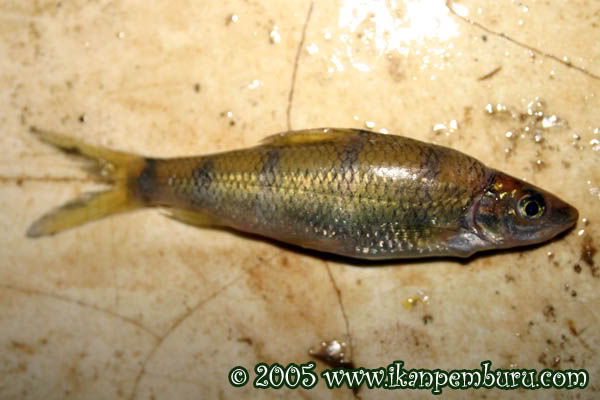
Acrossocheilus iridescens
Nichols & Pope, 1927
Max length300mm SL12in SLTanknot recordedTempnot recordedpHnot recordedA. iridescens and its closest relative A. longipinnis can be distinguished from all other barred species of Acrossocheilus by the following characters: wider (vs. narrower) black vertical bars on the flank in adults, each five to eight (vs. no more than four) scales in width; a horse-shoe shaped (vs. arched) mouth gape; rostral barbel located posteriorly (vs. anteriorly) to a horizontal line through the anteriormost margin of the lower jaw; two postlabial grooves extending anteromedially beyond (vs. away from) a horizontal line through the roots of the rostral barbels.
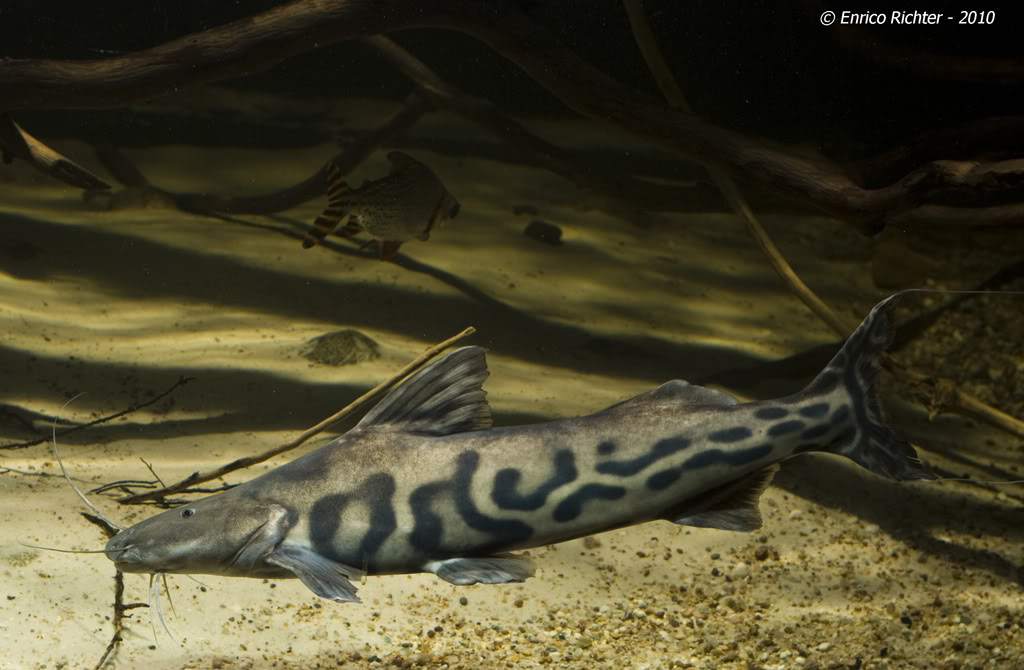
Brachyplatystoma juruenseGold Zebra Catfish
Boulenger, 1898
Max length600mm SL24in SLTanknot recordedTemp22–27°C72–81°FpH6.0–7.5Brachyplatystoma spp. are distinguished from all other catfishes by two synapomorphies. The first comprises several morphological characters relating to the skull, specifically that the mandibular suspensorium (that which connects the lower jaw bone to the skull) is greatly expanded mediodorsally to form a large plate approaching the parasphenoid bone, with the hyomandibula and metapterygoid similarly enlarged.
Copadichromis azureus
authority not recorded
Max length160mm SL6in SLTank150 × 45cm60 × 18inTemp26–28°C79–82°FpH7.5–8.5Together with the recently erected genus Mchenga, Copadichromis species form an exclusive group of Malawian cichlids commonly referred to as "Utaka" (prounounced "ooh-taw-kuh"). They're specialised to a pelagic lifestyle, and can be found living in huge numbers throughout much of Lake Malawi. Some tend to remain in the proximity of underwater reefs or rocky shorelines, while others occur mainly in more featureless, sandy habitats. Here they face the oncoming current, us...
Copadichromis borleyi
authority not recorded
Max length200mm SL8in SLTank150 × 45cm60 × 18inTemp25–29°C77–84°FpH7.5–8.5Together with the recently erected genus Mchenga, Copadichromis species form an exclusive group of Malawian cichlids commonly referred to as "Utaka" (prounounced "ooh-taw-kuh"). They're specialised to a pelagic lifestyle, and can be found living in huge numbers throughout much of Lake Malawi. Some tend to remain in the proximity of underwater reefs or rocky shorelines, while others occur mainly in more featureless, sandy habitats. Here they face the oncoming current, usi...
Copadichromis chrysonotus
authority not recorded
Max length160mm SL6in SLTank150 × 45cm60 × 18inTemp25–29°C77–84°FpH7.5–8.5Together with the recently erected genus Mchenga, Copadichromis species form an exclusive group of Malawian cichlids commonly referred to as "Utaka" (prounounced "ooh-taw-kuh"). They're specialised to a pelagic lifestyle, and can be found living in huge numbers throughout much of Lake Malawi. Some tend to remain in the proximity of underwater reefs or rocky shorelines, while others occur mainly in more featureless, sandy habitats. Here they face the oncoming current, usi...
Copadichromis ilesi
authority not recorded
Max length175mm SL7in SLTank150 × 45cm60 × 18inTemp25–29°C77–84°FpH7.5–8.5Together with the recently erected genus Mchenga, Copadichromis species form an exclusive group of Malawian cichlids commonly referred to as "Utaka" (prounounced "ooh-taw-kuh"). They're specialised to a pelagic lifestyle, and can be found living in huge numbers throughout much of Lake Malawi. Some tend to remain in the proximity of underwater reefs or rocky shorelines, while others occur mainly in more featureless, sandy habitats. Here they face the oncoming current, usi...
Copadichromis virginalis
authority not recorded
Max length130mm SL5in SLTank150 × 45cm60 × 18inTemp25–29°C77–84°FpH7.5–8.5Together with the recently erected genus Mchenga, Copadichromis species form an exclusive group of Malawian cichlids commonly referred to as "Utaka" (prounounced "ooh-taw-kuh"). They're specialised to a pelagic lifestyle, and can be found living in huge numbers throughout much of Lake Malawi. Some tend to remain in the proximity of underwater reefs or rocky shorelines, while others occur mainly in more featureless, sandy habitats. Here they face the oncoming current, usi...
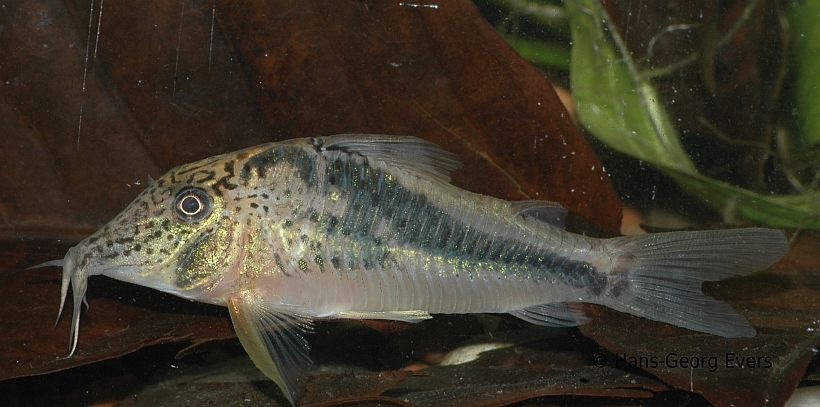
Corydoras fowleriFowler's Cory
Böhlke, 1950
Max length70mm SL2.8in SLTank120 × 45cm48 × 18inTemp20–28°C68–82°FpH5.0–7.5In addition, the colour pattern in aquarium fish traded or identified as C. fowleri is highly variable, but it is unclear whether such differences represent diversity within or between populations. Nevertheless, colour pattern is typically used to distinguish them, with fish from Peru possessing a greater extent of dark pigmentation on the body generally referred to...
Mchenga flavimanus
authority not recorded
Max length120mm SL5in SLTank120 × 45cm48 × 18inTemp25–29°C77–84°FpH7.5–8.5The genus Mchenga was erected in 2006 by Stauffer and Konings and currently numbers half a dozen species, all of which are previous members of Copadichromis. The reclassification was based on various morphological and behavioural traits, including habitat preference and breeding strategy. Together with Copadichromis, Mchenga spp. form an exclusive group of Malawian cichlids commonly referred to as "Utaka" (prounounced "ooh-taw-kuh"). They're specialised to a pelagic l...
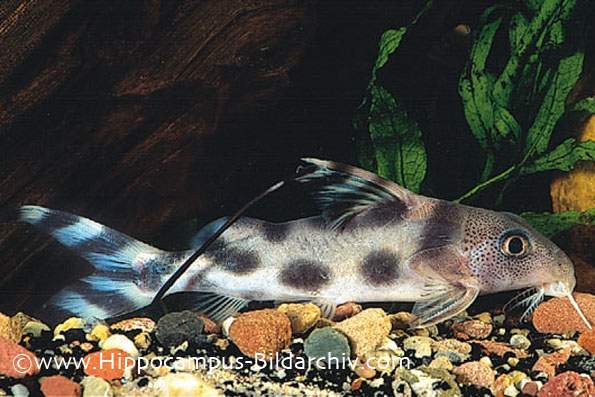
Synodontis decorusClown Synodontis
Boulenger, 1899
Max length300mm SL12in SLTank120 × 45cm48 × 18inTemp22–27°C72–81°FpH6.0–8.0Also known as both the Clown Squeaker and Decorated Synodontis, the first ray of theis greatly extended in this species. It is one of the more secretive, nocturnal Synos and if you wish to observe it regularly we recommend the addition of a 'moon' light or a red bulb timed to come on for a couple of hours after the main tank lights go off. If some food is added to the tank under these lighting conditions it should emerge to feed. This is one of only 3 members of the genus to exhibit...
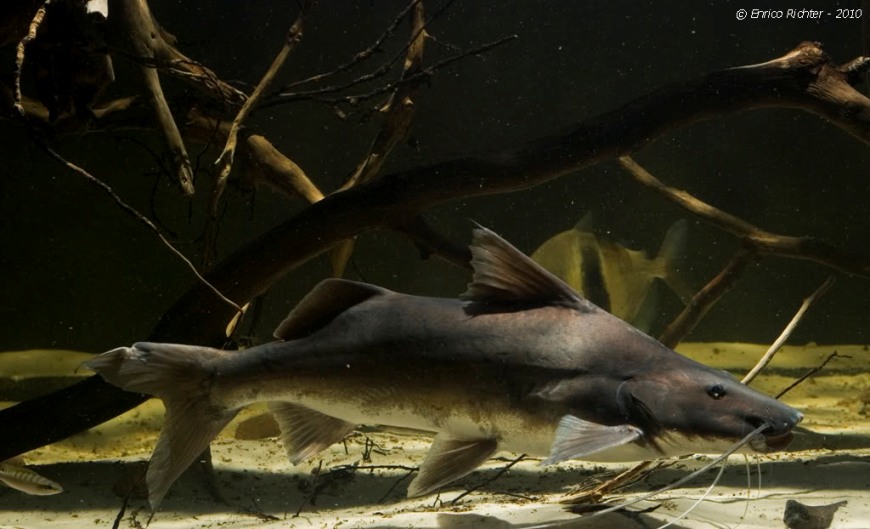
Brachyplatystoma vaillantii
Valenciennes, 1840
Max length1050mm SL41in SLTanknot recordedTemp22–28°C72–82°FpH6.0–8.0This rich feeding ground is exploited until the sea water returns, at which point the catfishes begin to migrate upstream in massive numbers, moving up the Amazon and its tributaries. Sexually mature individuals are not normally recorded during these events so they're thought related to feeding and dispersal rather than spawning. The fish are subject to intensive capture by commercial and artisanal fishing operations during this upstream movement.
Ophthalmotilapia nasuta
authority not recorded
Max length200mm SL8in SLTank150 × 45cm60 × 18inTemp23–27°C73–81°FpH7.5–9.0O. nasuta can be distinguished from other members of the genus primarily by the fleshy proboscis-like growth that extends beyond the upper lip. It exists in several different geographical morphs including "Kachese", "Mpimbwe", "Cape Tembwe" and "Chamba", among others. These should not be mixed in aquaria as they will hybridise freely....
Synodontis robbianus
authority not recorded
Max length130mm SL5in SLTank90 × 30cm36 × 12inTemp22–25°C72–77°FpH6.0–7.5S. robbianus is often confused with the similar but larger S. nigrita. They can be distinguished by the brownish base colour of this species as opposed to the greyer patterning exhibited by S. nigrita. It is also similar to several other Syno species, especially when juvenile. A hardy, adaptable species ideal for the newcomer to Synodontis but not often seen for sale....
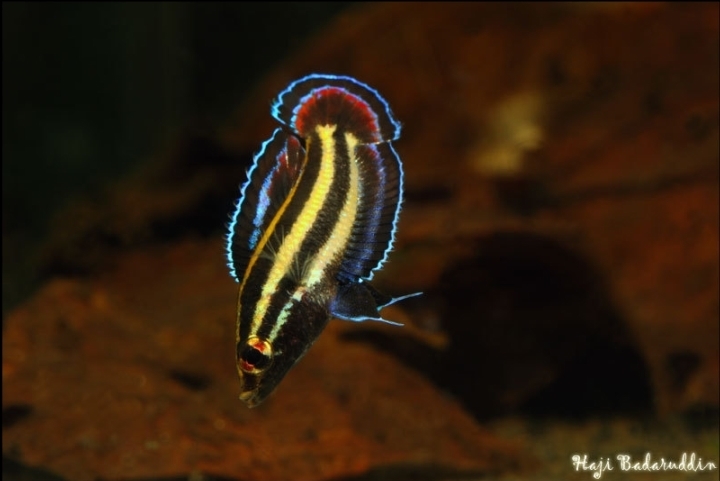
Parosphromenus alfredi
Kottelat & Ng, 2005
Max length26mm SL1.0in SLTank40 × 20cm16 × 8inTemp22–28°C72–82°FpH3.0–6.5Type locality is 'Kota Tinggi, Mawai-Desaru road, Johor, Peninsula Malaysia' and this species is endemic to a small portion of eastern Johor state, Peninsular Malaysia around the towns of Kota Tinggi, Mawai and Desaru. A great deal of its original habitat has been lost via deforestation and other human alterations and it's considered in grave danger of extinction.
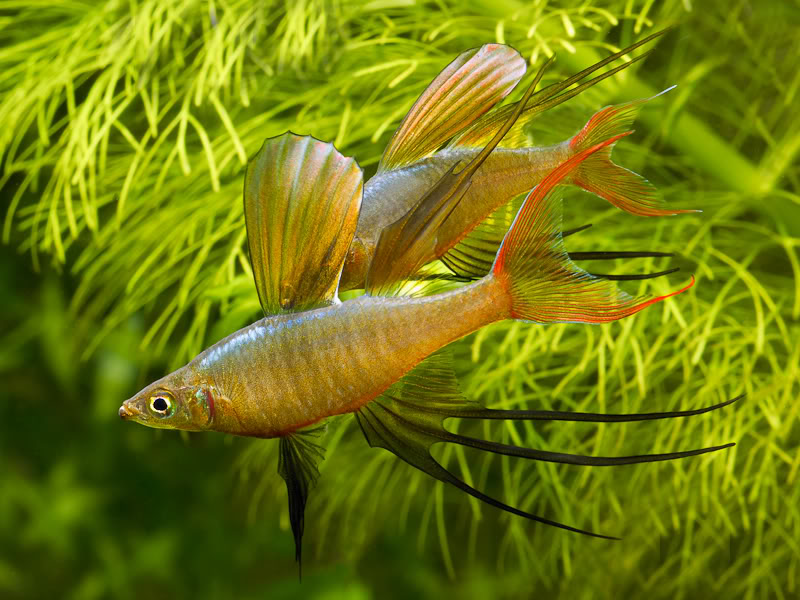
Iriatherina werneriThreadfin Rainbowfish
Meinken, 1974
Max length40mm SL1.6in SLTank60 × 30cm24 × 12inTemp22–30°C72–86°FpH5.0–8.0There also exists a sister-group relationship between the Melanotaeniidae and Malagasy family Bedotiidae, which may seem surprising given their respective modern-day distributional patterns. The precise origin and subsequent dispersal of the two families has been the subject of debate, with some palentologists suggesting that Madagascar's freshwater fishes derived froma trans-oceanic dispersal during the Cenozoic Era, but the most compelling arguments currently indicate a freshwater radiation which occurred during the Mezozoic break-up of Gondwana.
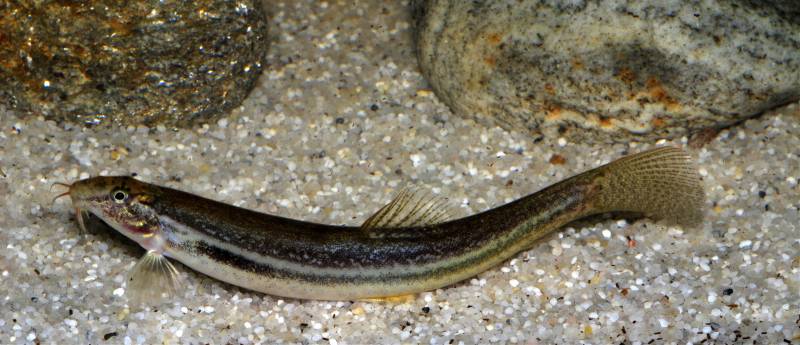
Lepidocephalichthys guntea
Hamilton, 1822
Max length150mm SL6in SLTank80 × 30cm31 × 12inTemp20–25°C68–77°FpH6.0–8.0This is one of the most frequently-traded members of the group and is an excellent choice for those new to keeping loaches. It's distinguishable from congeners by a combination of characters including: rounded/truncate caudal-fin; a scaleless patch on top of the head; relatively large adult size; flanks with spotted patterning in females and a solid...