Results for “fin”
Type a name: scientific, common, or one a species used to go by. Or narrow the catalogue with the filters.
Filters
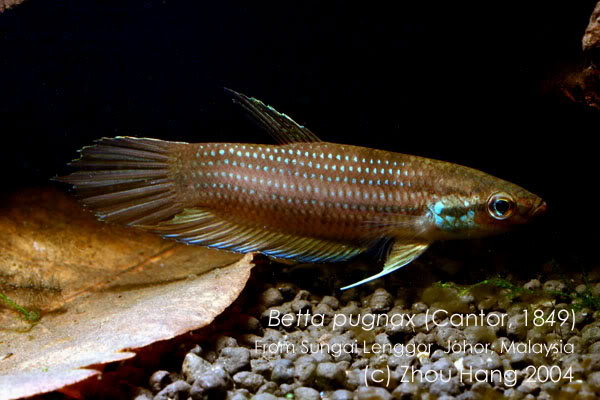
Betta pugnax
Cantor, 1849
Max length70mm SL2.8in SLTank80 × 30cm31 × 12inTemp22–28°C72–82°FpH4.0–7.5It can be told apart from other members of the B. pugnax group by the following characters: chin bar present; no complete second postorbital stripe on opercle; presence of transverse bars in caudal-fin of males; caudal-fin in males broadly lanceolate; opercle scales iridescent blue; anal-fin with reddish subdistal band and black margin; caudal-fin without dark margin; 25-28 anal-fin rays; 28-31 lateral scales; 11-12 postdorsal scales; length of pelvic fins 26.6-43.8 % SL; length of head 27.5-35.2 % SL; inter-orbital width 32.4-53.0 % HL.
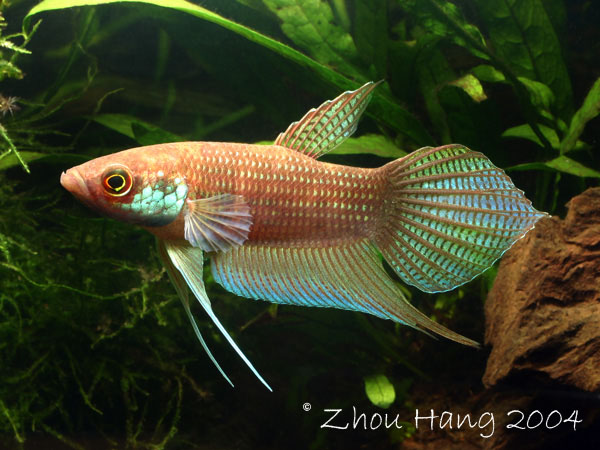
Betta raja
Tan & Ng, 2005
Max length70mm SL2.8in SLTank80 × 30cm31 × 12inTemp22–27°C72–81°FpH4.0–7.0It should be noted that not all authors consider the B. pugnax group to contain the same species, with some placed in the B. picta complex by Schindler and Schmidt (2006), for example. B. raja can be told apart from other members of the B. pugnax group by the following characters: mature males with very long pelvic fins covering 15-23 anal-fin rays or even longer than the base of the anal-fin in some cases; anal-fin and lower caudal-fin with black marginal bands; 25-28 anal-fin rays; 30-32 lat...
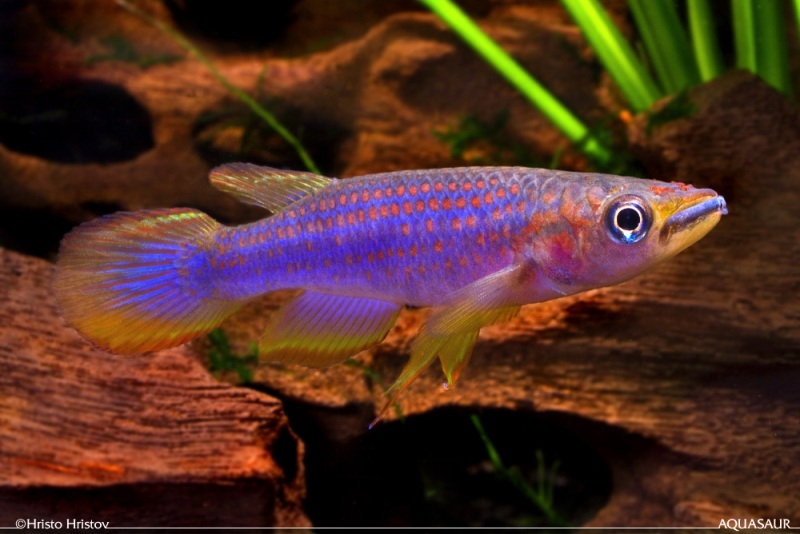
Epiplatys lamotteiRed-spotted Panchax
Daget, 1954
Max length60mm SL2.4in SLTank80 × 30cm31 × 12inTemp18–23°C64–73°FpH5.0–7.0Following the key of Romand (1992) this species can be told apart from congeners by the following combination of characters: adult size > 40 mm SL; large, dark, transverse bars and some reddish-brown pigmentation on flanks; longitudinal bands more-or-less defined; longitudinal bands composed of small red spots; caudal-fin subquadrangular caudal fin; 11-13 anal-fin rays; 16-17 dorsal-fin rays; 7-8 anal-fin rays located anterior to dorsal-fin origin.
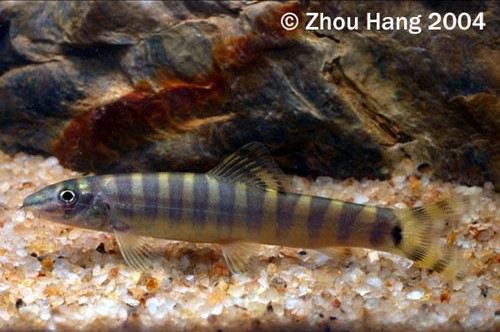
Parabotia lijiangensis
Chen, 1980
Max length83mm SL3.3in SLTank120 × 30cm48 × 12inTemp20–24°C68–75°FpH6.0–7.5It's told apart from congeners by a combination of characters as follows: large scales present on body and sides of head; caudal fin deeply forked with subequal lobes; 10-13 dark, vertical bars on the body; a dark, ocellated spot in the centre of the caudal-fin base; two bars on top of head, dorsal-fin with two rows of greyish spots; caudal-fin lobes with 3-4 dark bands on each; anal-fin with one indistinct band and another, more distinct, submarginal band; ventral fins with two indistinct bands.
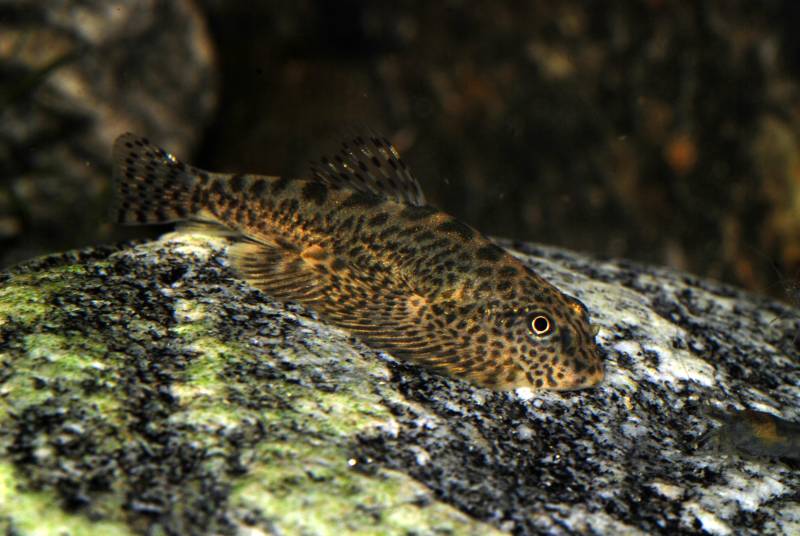
Sewellia speciosa
Roberts, 1998
Max length55mm SL2.2in SLTank75 × 30cm30 × 12inTemp20–24°C68–75°FpH6.0–7.5This species first became available in early 2010 and sometimes appears on trade lists under the vernacular names 'Laos sucker' or 'Laos Sakura sucker'. It's distinguishable from other members of the genus by the following combination of characters: body spotted and without stripes; no concentric bands on paired fins; origin of pelvic-fin below origin of dorsal-fin; origin of pectoral-fin posterior to corner of mouth; pelvic fin reaching origin of anal fin; small elevated ...
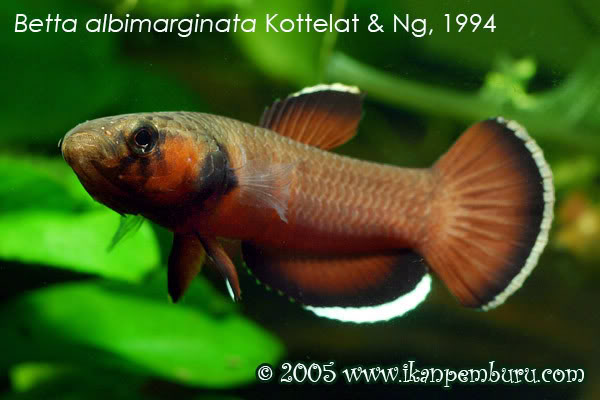
Betta albimarginata
Kottelat & Ng, 1994
Max length30mm SL1.2in SLTank45 × 30cm18 × 12inTemp23–28°C73–82°FpH4.0–6.5Additonally, fin patterning in B. albimarginata, except the pectoral fins, consists of a broad white distal band, broad dark submarginal band with sharp outer margin and less sharp inner margin, and a plain red inner portion, while in B. channoides the dorsal fin is almost entirely red with only a thin white distal band and the dark submarginal band in the caudal fin does not extend into the uppermost portion of the fin. Base body colouration tends towards a brick-red shade in displaying male B. albimarginata, scarlet in B. channoides (pers. obv.).
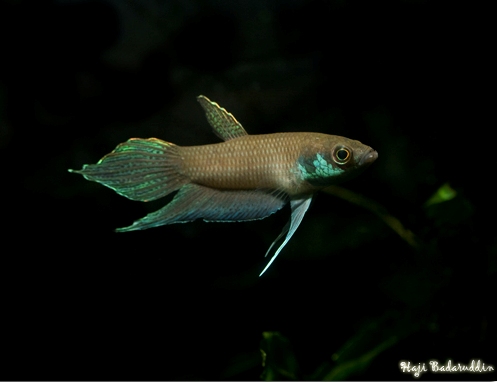
Betta lehi
Tan & Ng, 2005
Max length61mm SL2.4in SLTank60 × 30cm24 × 12inTemp22–27°C72–81°FpH4.0–7.0It can be told apart from other members of the B. pugnax group by the following characters: chin bar absent; prsence of transverse bars in the dorsal-fin; no transverse bars in caudal-fin; green iridescent scales present on opercle and body; anal fin with iridescent, light blue distal band; a pair black markings below the postorbital stripe on the opercle of females and juveniles; anal-fin rays 25-29 (mode 28); lateral scales 28-30 (mode 29); postdorsal scales 10-11 (mode 12); pelvic-fin length 34.8-50.6% SL; head length 33.4-36.8% SL; inter-orbital width 31.7-37.4% HL.
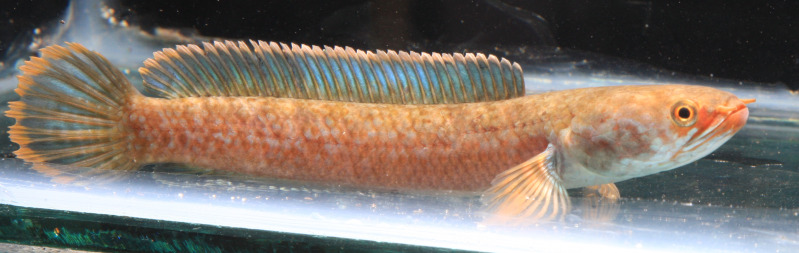
Channa burmanica
Chaudhuri, 1919
Max length200mm SL8in SLTank120 × 45cm48 × 18inTemp10–22°C50–72°FpH6.0–8.0It's one of several genus members to lack pelvic fins and following Chaudhuri (1919) also has 51 lateral line scales, 38 dorsal-fin rays, 28 anal-fin rays, 12 caudal-fin rays, 15 predorsal scales, pectoral-fins with alternating dark and light bands, and white-tipped dorsal...
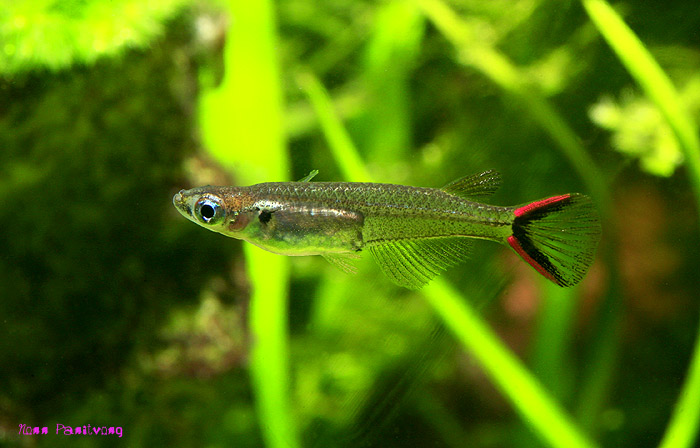
Oryzias mekongensisMekong Ricefish
Uwa & Magtoon, 1986
Max length21mm SL0.8in SLTank40 × 20cm16 × 8inTemp23–27°C73–81°FpH6.0–7.5It can be further distinguished from congeners by the following combination of characters: small adult size; bright orange-red marginal bands on caudal-fin lobes in males; caudal-fin rounded and elongate; 5-7 dorsal-fin rays; relatively few (13-18) anal-fin rays without bony contact organs, the last ray branched; 6-8 pectoral-fin rays. Members of the family Adrianichthyidae are...
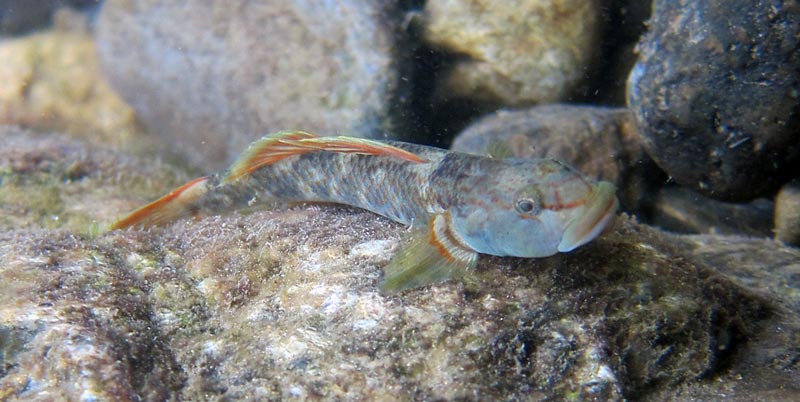
Rhinogobius flumineus
Mizuno, 1960
Max length60mm SL2.4in SLTank75 × 30cm30 × 12inTemp18–25°C64–77°FpH6.0–8.0In addition, there appear to exist two colour forms based on male dorsal-fin morphology and patterning; one in which the 4th ray of the first dorsal-fin is longest with a square bluish-black blotch on the anterior ⅔ of the fin, and a second in which the 2nd and 3rd rays of the first dorsal-fin are longest with the fin itself paler and lacking dark markings.
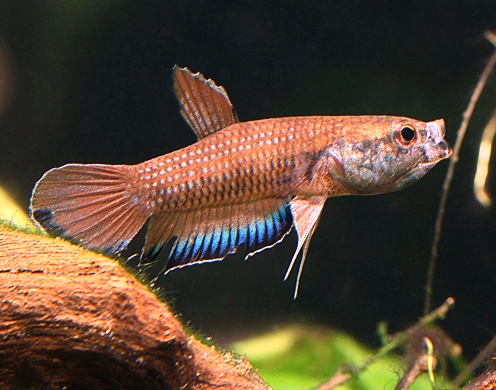
Betta falx
Tan & Kottelat, 1998
Max length50mm SL2.0in SLTank60 × 30cm24 × 12inTemp22–27°C72–81°FpH4.7–6.8B. falx is included in the Betta picta group/complex of closely-related species within the genus, an assemblage comprising species with the following shared characters: unpaired fins rounded (anal-fin sometimes tapering to a blunt point); anal-fin rays I-III, 18-24; dark marginal band on anal and caudal fins, more pronounced in mature males; presence of pre-orbital and post-orbital stripes; presence of chin bar on throat; iridescent green, gold, or blue scales on opercle.
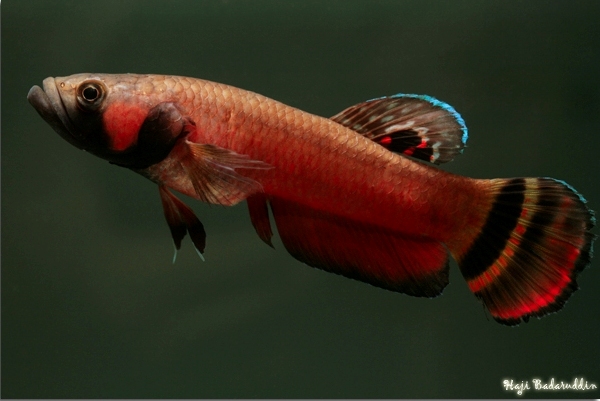
Betta macrostomaBrunei Beauty
Regan, 1910
Max length100mm SL3.9in SLTank80 × 30cm31 × 12inTemp20–25°C68–77°FpH4.0–6.0B. macrostoma is included in the Betta unimaculata complex of closely-related species within the genus, of which members share the following set of characters: body long and slender with depth at dorsal fin origin 18-25 % SL; head large and blunt with width 19-24 % SL; long maxilla and lower lip with distance from tip of lower jaw to posterior end of maxilla 27-54 % HL; caudal-fin rounded in shape, occasionally with elongated median rays; pelvic-fin short and filamentous; dorsal and anal fins relatively pointed.
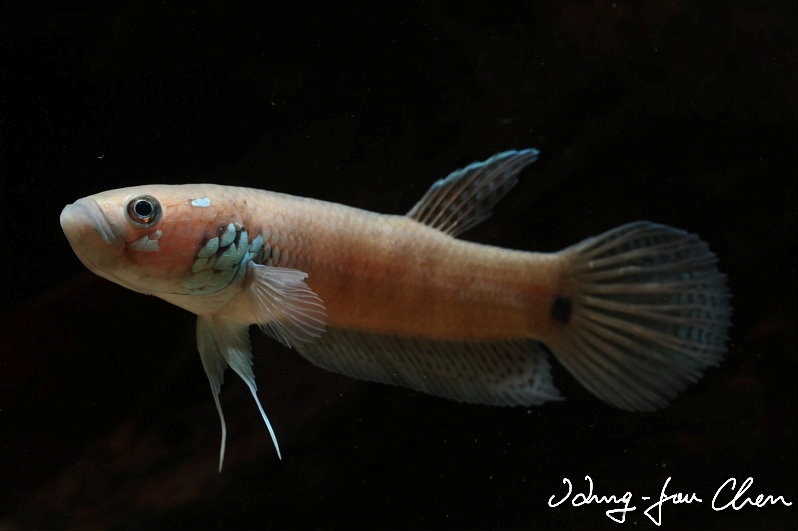
Betta ocellata
de Beaufort, 1933
Max length90mm SL3.5in SLTank80 × 30cm31 × 12inTemp21–25°C70–77°FpH5.5–7.5This species is included in the Betta unimaculata complex of closely-related species within the genus, of which members share the following set of characters: body long and slender with depth at dorsal fin origin 18-25 % SL; head large and blunt with width 19-24 % SL; long maxilla and lower lip with distance from tip of lower jaw to posterior end of maxilla 27-54 % HL; caudal-fin rounded in shape, occasionally with elongated median rays; pelvic-fin short and filamentous; dorsal and anal fins relatively pointed.
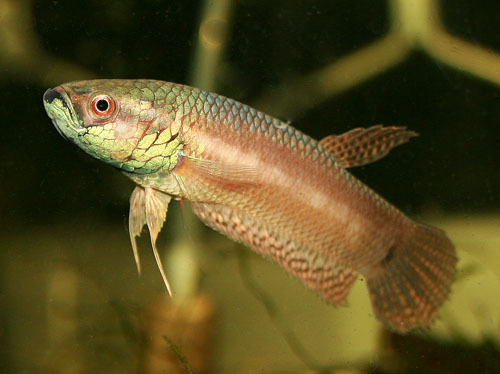
Betta pallifina
Tan & Ng, 2005
Max length90mm SL3.5in SLTanknot recordedTemp22–27°C72–81°FpH5.5–7.5This species is included in the Betta unimaculata complex of closely-related species within the genus, of which members share the following set of characters: body long and slender with depth at dorsal fin origin 18-25 % SL; head large and blunt with width 19-24 % SL; long maxilla and lower lip with distance from tip of lower jaw to posterior end of maxilla 27-54 % HL; caudal-fin rounded in shape, occasionally with elongated median rays; pelvic-fin short and filamentous; dorsal and anal fins relatively pointed.
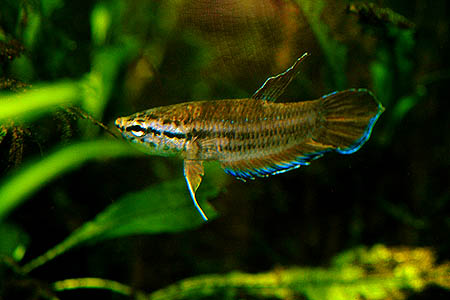
Betta pictaSpotted Betta
Valenciennes, 1846
Max length50mm SL2.0in SLTank60 × 30cm24 × 12inTemp22–28°C72–82°FpH5.5–7.5This species lends its name to the Betta picta complex of closely-related species, an assemblage of which members share the following combination of characters: unpaired fins rounded (anal fin sometimes pointed): I-III, 18-24 anal-fin rays; anal and caudal fins with dark distal margins, most pronounced in mature males; pre- and post-orbital stripes present; chin bar present; opercle with iridescent blue, green, or gold scales.
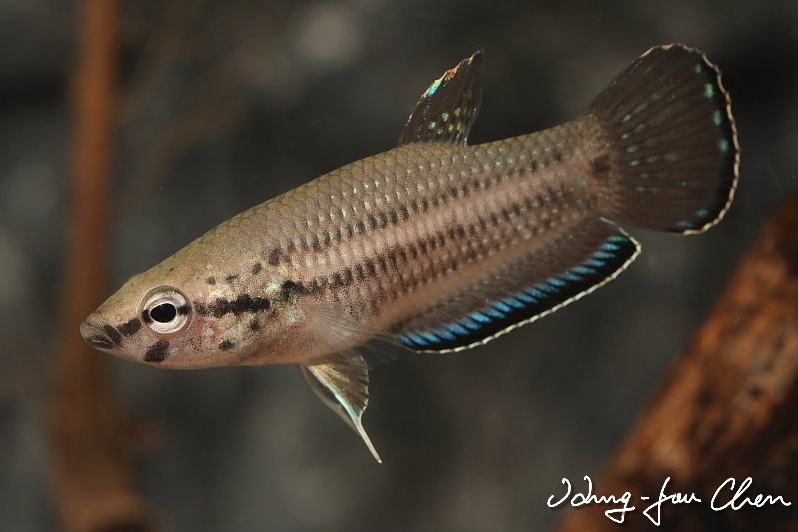
Betta simplex
Kottelat, 1994
Max length60mm SL2.4in SLTank60 × 30cm24 × 12inTemp20–28°C68–82°FpH7.0–8.0B. simplex is included in the Betta picta group/complex of closely-related species within the genus, an assemblage comprising species with the following shared characters: unpaired fins rounded (anal-fin sometimes tapering to a blunt point); anal-fin rays I-III, 18-24; dark marginal band on anal and caudal fins, more pronounced in mature males; presence of pre-orbital and post-orbital stripes; presence of chin bar on throat; iridescent green, gold, or blue scales on opercle.
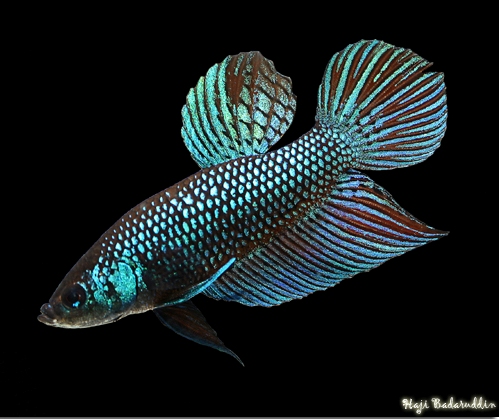
Betta smaragdinaEmerald Betta
Ladiges, 1972
Max length60mm SL2.4in SLTank45 × 30cm18 × 12inTemp22–28°C72–82°FpH5.5–7.5This species is included in the Betta splendens complex of closely-related species within the genus, of which members share the following set of characters: head length short 22-31 % SL; often a brightly-coloured body; iris of the eye with iridescent green or blue patches; body elongate or slender; opercles parallel when head viewed dorsally; caudal-fin rays red or brown and contrasting with the iridescent interradial membranes; unpaired fins without an iridescent margin; opercle with red or blue vertical bars in males; dorsal-fin rays 0-II, 7-9; anal-fin rays II-V, 21-26.
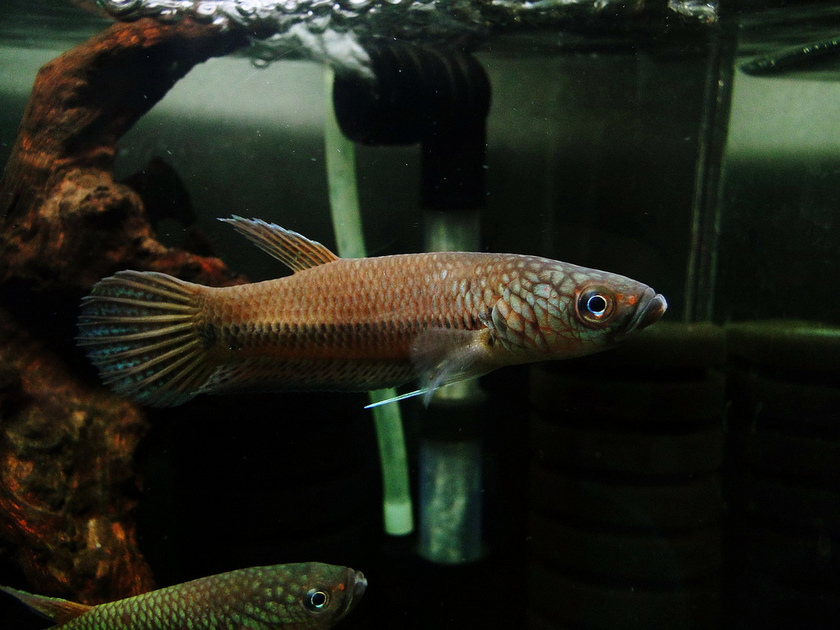
Betta sp. 'Antuta/Bulungan'
authority not recorded
Max length100mm SL3.9in SLTank80 × 30cm31 × 12inTemp21–27°C70–81°FpH5.5–7.5This hypothetically-undescribed species appears to be a member of the Betta unimaculata complex of closely-related species within the genus, of which members share the following set of characters: body long and slender with depth at dorsal fin origin 18-25 % SL; head large and blunt with width 19-24 % SL; long maxilla and lower lip with distance from tip of lower jaw to posterior end of maxilla 27-54 % HL; caudal-fin rounded in shape, occasionally with elongated median rays; pelvic-fin short and filamentous; dorsal and anal fins relatively pointed.
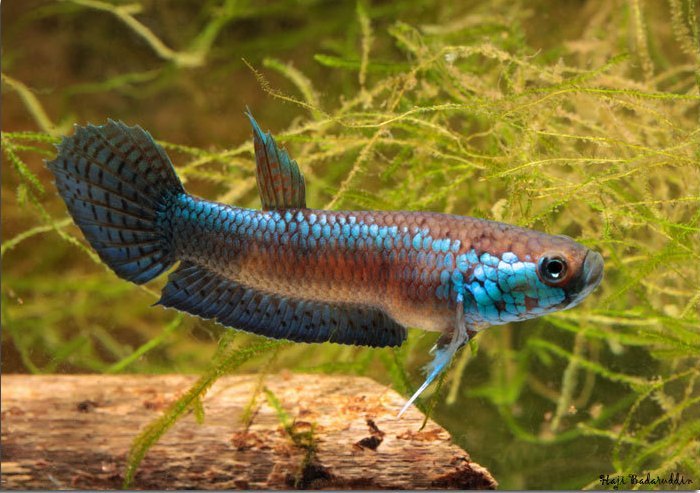
Betta unimaculata
Popta, 1905
Max length115mm SL5in SLTank80 × 30cm31 × 12inTemp21–26°C70–79°FpH5.0–7.5This species is included in the Betta unimaculata complex of closely-related species within the genus, of which members share the following set of characters: body long and slender with depth at dorsal fin origin 18-25 % SL; head large and blunt with width 19-24 % SL; long maxilla and lower lip with distance from tip of lower jaw to posterior end of maxilla 27-54 % HL; caudal-fin rounded in shape, occasionally with elongated median rays; pelvic-fin short and filamentous; dorsal and anal fins relatively pointed.
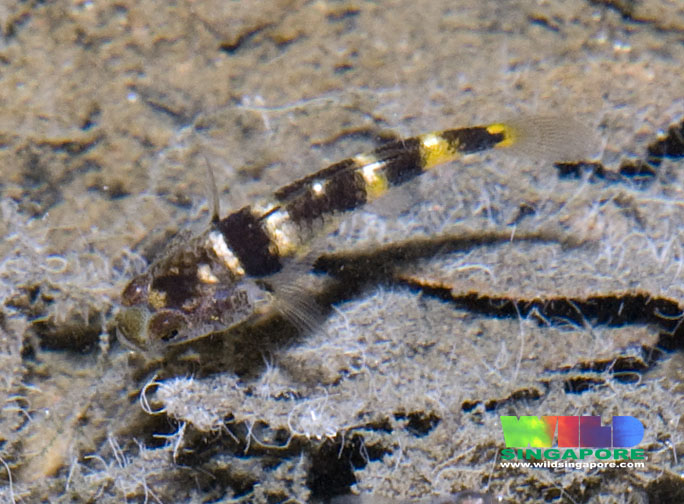
Brachygobius kabiliensisKabili bumblebee goby
Inger, 1958
Max length18mm SL0.7in SLTank45 × 30cm18 × 12inTemp22–28°C72–82°FpHnot recordedIt can be diagnosed as follows: <30 lateral scales; two black body bands reaching ventral midline posterior to anal-fin; band above anal-fin also reaching ventral midline no black band on head, though the first band may touch the posterior margin of the eye; band above anal-fin not reaching ventral midline; 6 branched anal-fin rays; 7-8 predorsal scales. Brachygobius currently contains 9 described species but is likely to prove more diverse should a review be carried out. Alt...