Brachygobius kabiliensis
Kabili bumblebee goby
Last revised 2026Edit this page
On this page10 sections
Quick factsEdit
Difficulty5 of 8 measures
- Space
- medium tank
- Water
- unknown
- Temp
- flexible
- Diet
- unknown
- Temperament
- needs a tank of its own
- Social
- needs to be in a group
- Compatibility
- choose tankmates carefully
Other demands
Each of these can raise the rating on its own, whatever the measures above say.
- Hardiness
- unknown
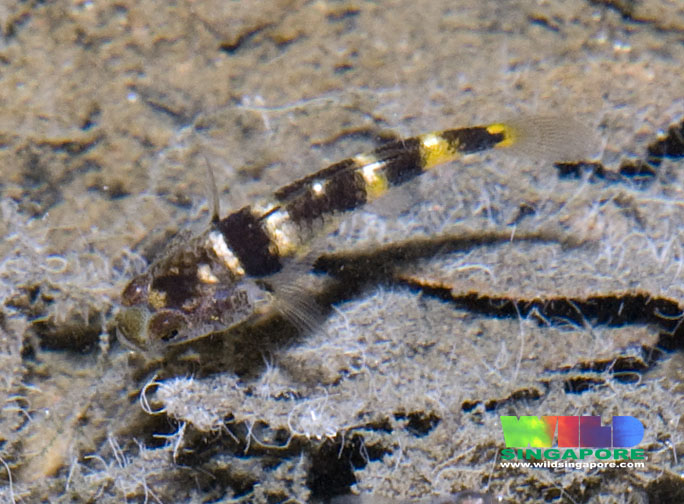
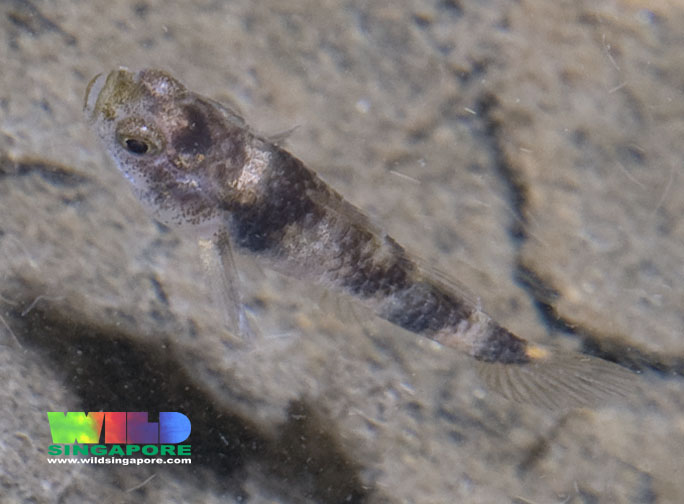
The Kabili bumblebee goby, Brachygobius kabiliensis, is a tiny goby described from the Kabili River in Sabah, northeastern Borneo. Its reported range is disjunct, with records from Brunei, Singapore and the lower Mekong in Vietnam and Cambodia. The name is often misapplied to B. doriae-type fishes in the trade. It lives in fresh and brackish lowland coastal habitats and prefers harder water than some congeners. It grows to just 15 to 18 mm.
Distribution
EditThe distribution of B. kabiliensis as currently reported is somewhat disjunct since the type locality is the Kabili River in Sandakan Division, Sabah state, Malaysia (northeastern Borneo), and it's also been collected in Brunei Darussalam, Singapore, and the lower Mekong River basin in Vietnam and Cambodia.
Habitat
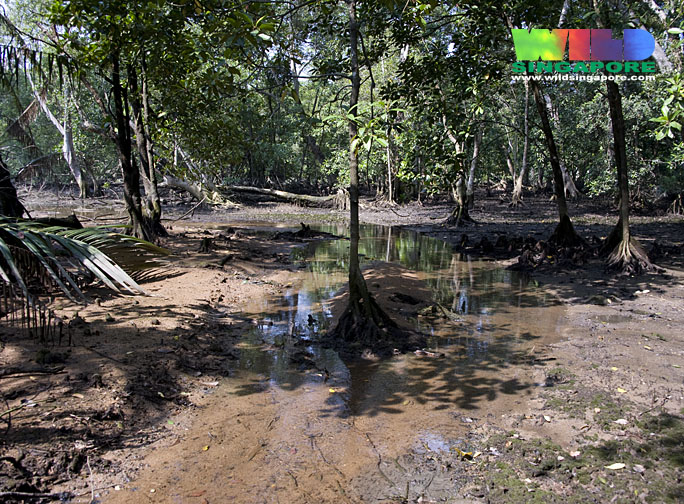
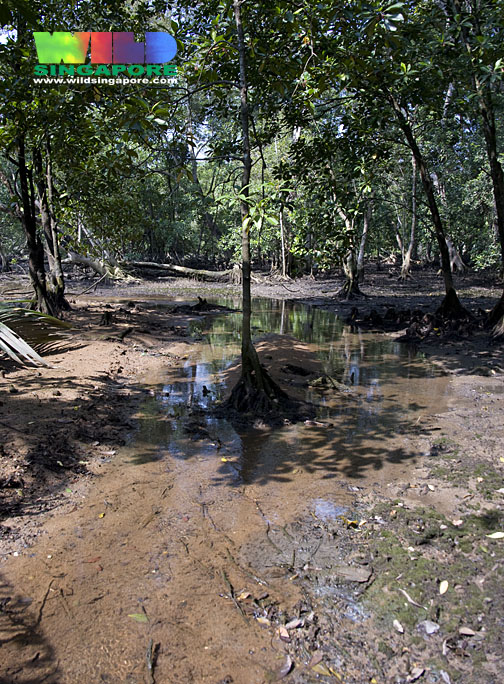
Write a noteEditInhabits both fresh and brackish water, and generally restricted to lowland, coastal environments including mangrove swamps, estuaries, and tidal streams.
Substrates thus tend to be composed of mud, sand and silt with overlying organic material such as leaf litter, mangrove roots, and submerged driftwood.
Aquarium size
Write a noteEditBase dimensions of 45 ∗ 30 cm18 ∗ 12 in or equivalent should be the minimum considered.
Maintenance
Write a noteEditProvide plenty of hiding places and cover, and bear in mind that this species prefers harder water than some congeners.
Crushed coral or coral sand can be mixed into the substrate to act as a buffer if necessary, or marine salt added at a dose of around 2 grams per litre.
Filtration should not be strong with an air-powered sponge-type unit ideal.
Water conditions
EditThese recommendations come from this profile’s own figures. They contain affiliate links, so we may earn a commission.
Diet
Write a noteEditSmall live foods such as Artemia, Daphnia, etc., should be considered essential although some specimens will learn to accept frozen alternatives. Dried products are normally ignored.
Behaviour and compatibility
Write a noteEditUnlikely to make an ideal community fish and should do best in a species-specific set-up.
Notes
EditThough this species' name appears on ornamental trade lists quite often it appears to be routinely misapplied to other species, particularly B. doriae-type fishes, though sensu stricto the two are not difficult to tell apart from one another.
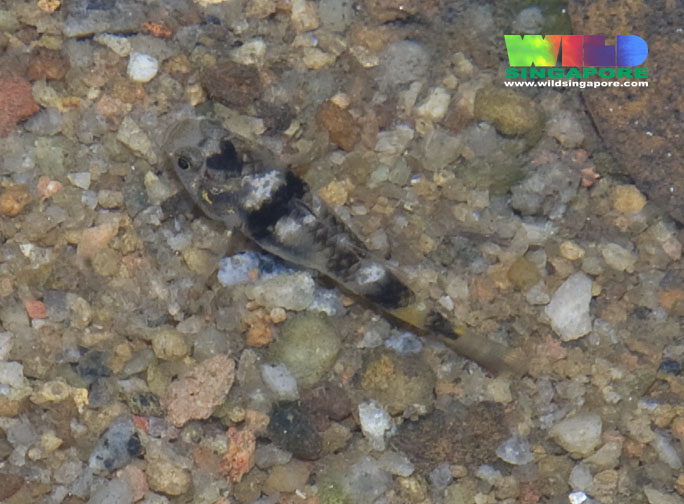
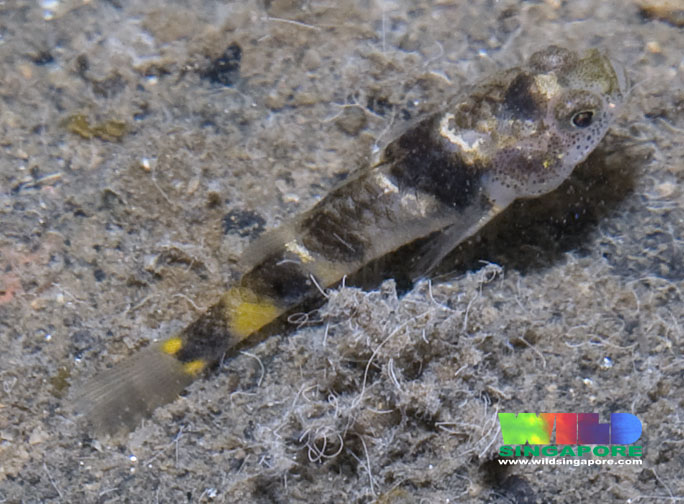
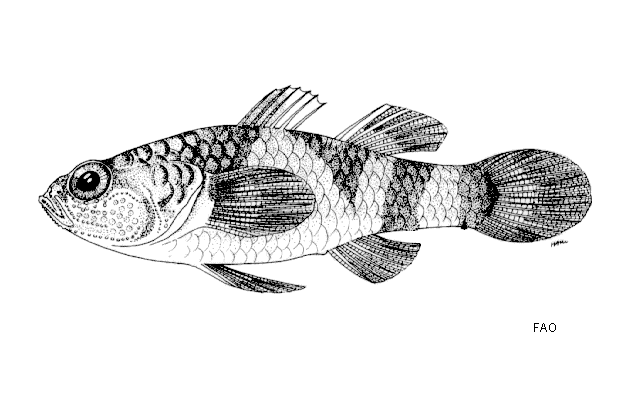
According to current knowledge it can be diagnosed as follows: <30 lateral scales; two black body bands reaching ventral midline posterior to anal-fin; no black band on head, though the first band may touch the posterior margin of the eye; band above anal-fin not reaching ventral midline; 6 branched anal-fin rays; 7-8 predorsal scales.
67 specimens of B. kabiliensis were listed as paratypes in the original description of the congener B. aggregatus. These two are very similar-looking but can be told apart from one another by the fact that the black body bar above the anal-fin extends to the ventral midline in B. aggregatus, but in B. kabiliensis terminates around midbody. B. kabiliensis also possesses predorsal scales while B. aggregatus does not.
Both are best considered as nominal taxa for the time being since several species might be involved. Therefore, although we've assigned images to profiles based on how well they match the key of Inger (1958) their identification can only be thought of as tentative pending publication of a forthcoming review.
Brachygobius currently contains 9 described species, and although all are referred to collectively as 'bumblebee' gobies only B. doriae and B. sabanus are commonly-available in the ornamental trade.
The grouping is often included in the subfamily Gobionellinae alongside genera such as Chlamydogobius, Mugilogobius, Pseudogobiopsis, Rhinogobius, Schismatogobius, and Stigmatogobius.
It's considered most closely-related to the genus Pandaka with the two sharing numerous characters but differing in the morphology of the head lateral line system and number of epurals present.
References
- Miller, P. J. (1989). The classification of bumble-bee gobies (Brachygobius and associated genera) (Teleostei: Gobiidae). Cybium 13(4), 375-383
- Inger, R. F. (1958). Notes on the fishes of the genus Brachygobius. Fieldiana Zoology 39(14), 107-117
- Randall, J. E. and K. K. P. Lim (2000). A checklist of the fishes of the South China Sea. The Raffles Bulletin of Zoology Supplement 8, 569-667
- Rainboth, W. J. (1996). Fishes of the Cambodian Mekong. FAO Species Identification Field Guide for Fishery Purposes. FAO, Rome, 1-265
Species images · 7
These photographs are used with each photographer's permission.
Send a photographDistribution
Profile completeness18 of 24
75% complete
Also missing: water condition notes, sexual dimorphism, reproduction, etymology.
Community
Questions about Brachygobius kabiliensis?
Ask on Discord