Results for “native”
Type a name: scientific, common, or one a species used to go by. Or narrow the catalogue with the filters.
Filters
Dermogenys pusillaWrestling Halfbeak
authority not recorded
Max length55mm SL2.2in SLTank60 × 38cm24 × 15inTemp24–28°C75–82°FpH6.5–8.0Halfbeaks derive their common name from the elongated lower jaw shared by all species. The 'wrestling' moniker given to this particular species is due to the tendency of males to fight with each other, often locking jaws in the process. It is used as a fighting fish in some of its native countries, with wagers being placed on the outcome of fights between males. The two fish are placed in a small container for fighting purposes, as they will spar incessantly in such confined conditions...
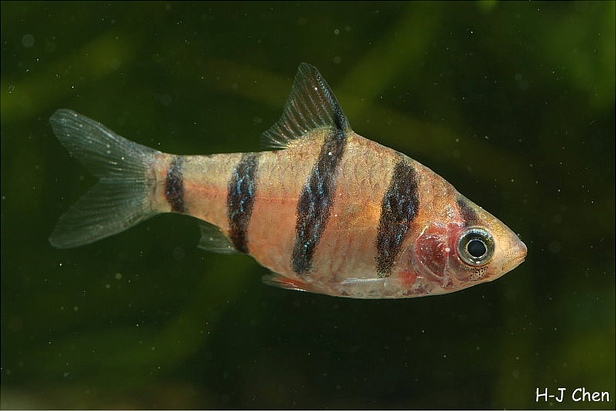
Desmopuntius hexazona'Pentazona' Barb
Weber & de Beaufort, 1912
Max length55mm SL2.2in SLTank80 × 30cm31 × 12inTemp20–26°C68–79°FpH4.0–7.0Native to parts of southern Borneo, eastern Sumatra, Singapore, and the Malay Peninsula. In Singapore it's considered highly-endangered and is now restricted to the Central Catchment nature reserve. Type locality is 'Tuluk and Gunung Sahilan, Sumatra, Indonesia' which appears to correspond to localities within the Kampar River drainage of which the former is now known as Teluk Meranti and is o...
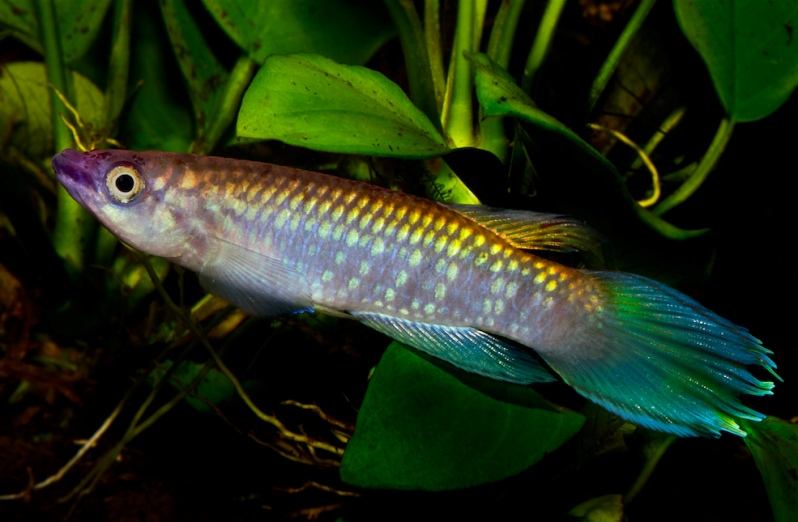
Epiplatys fasciolatusBanded Epiplatys
Günther, 1866
Max length80mm SL3.1in SLTank80 × 30cm31 × 12inTemp20–27°C68–81°FpH5.0–7.0Native to northwestern Africa with a range extending southwards from Guinea-Bissau through coastal parts of Guinea and Sierra Leone as far as western Liberia, around the city of Monrovia. Type locality was originally given as 'Sierra Leone' and 'Upper Nile' but this was later changed to 'Freetown, 8°30'N, 13°15'W, Sierra Leon', referring to the capital of Sierra Leone.
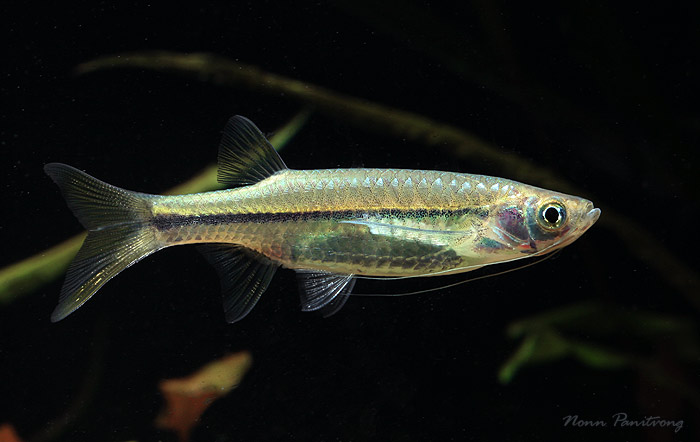
Esomus metallicusStriped Flying Barb
Ahl, 1923
Max length75mm SL3.0in SLTank120 × 30cm48 × 12inTemp20–26°C68–79°FpH6.0–7.0There currently exist a dozen described Esomus spp. alhough few are seen in the aquarium trade and none are especially popular. Most are commonplace in their native countries and also quite plainly-patterned so generally overlooked by collectors. Their most common use in some areas is actually as a feeder fish in the aquaculture of larger species. They're characterised by greatly-enlarged pectoral fins and two pairs of barbels, of which the maxillary pair are extremely long and usually reach the pectoral fins.
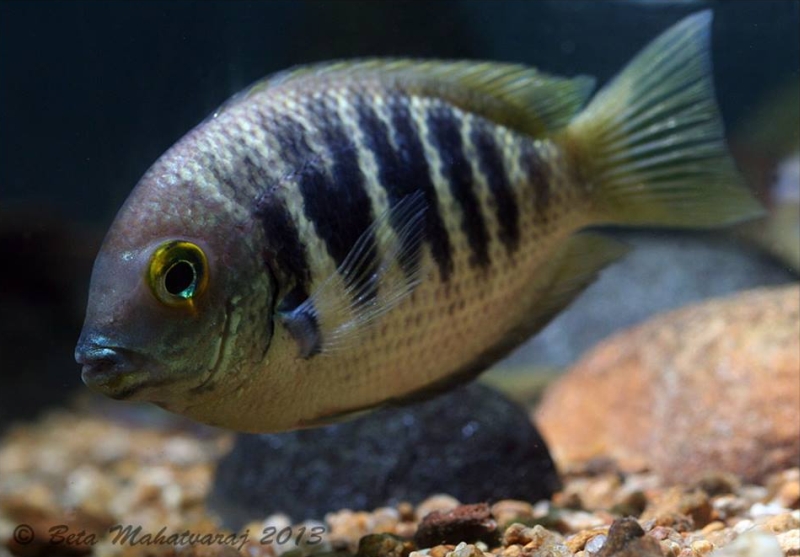
Etroplus canarensisCanara Pearlspot Cichlid
Day, 1877
Max length110mm SL4in SLTank120 × 45cm48 × 18inTemp22–32°C72–90°FpH6.0–7.5Etroplus is the only cichlid genus native to the Indian subcontinent and Sri Lanka and currently comprises three species among which E. canarensis is uniquely limited to freshwater and restricted in range. Its congeners E. maculatus and E. suratensis are both euryhaline inhabiting estuaries, coastal lagoons and the lower reaches of rivers around coastlines of western and southern India plus northern Sri Lanka.
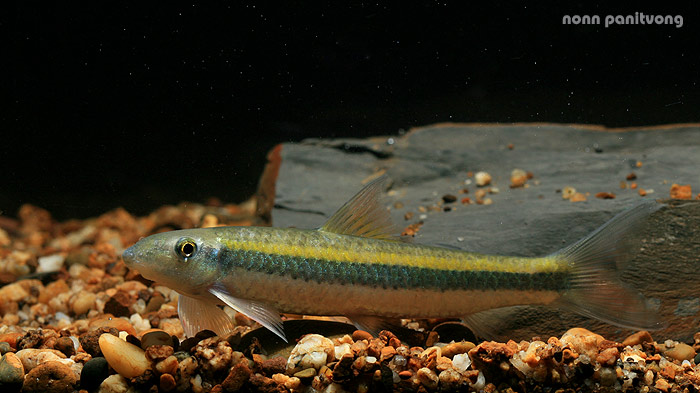
Garra fasciacauda
Fowler, 1937
Max length110mm SL4in SLTank120 × 45cm48 × 18inTemp20–26°C68–79°FpH6.0–8.0Native to the Mekong river system in Thailand, Laos, Vietnam, and Cambodia, including the Tonlé Sap basin. Type locality is 'Kemarat, Thailand', which corresponds to the Mekoong River in Khemmarat district, Ubon Ratchathani province, northeastern Thailand.
Glossolepis wanamensisLake Wanam Rainbowfish
authority not recorded
Max length100mm SL3.9in SLTank90 × 30cm36 × 12inTemp25–30°C77–86°FpH7.0–8.0Lake Wanam has been the subject of a management project co-ordinated by famous aquarist Heiko Bleher, who became concerned by an apparent drop in numbers of both this species and the barred rainbowfish (Chilatherina fasciata), which is also found in the lake. The drop in numbers is thought to be a result of the introduction of non-native Tilapia, Gambusia and carp species into the lake, along with a significant increase in the number of humans living in the area. G. wanamensis is now considered ...
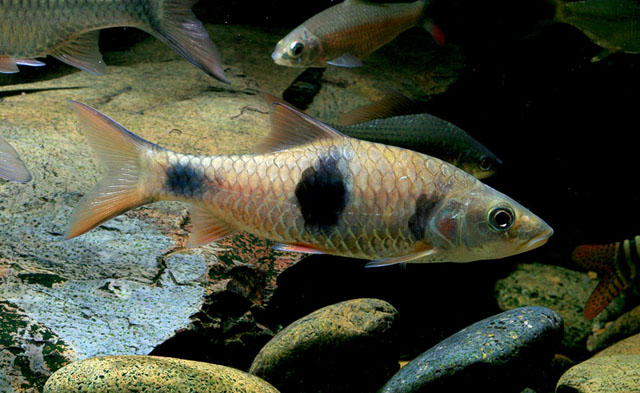
Hampala salweenensis
Doi & Taki, 1994
Max length201mm SL8in SLTank240 × 60cm96 × 24inTemp20–26°C68–79°FpH6.0–8.0This species is poorly-known in the aquarium hobby and may have never been maintained outside its native countries. It can be distinguished from congeners by the following combination of characters: 26-27 lateral line scales; two roundish, dark blotches on each flank, one beneath dorsal-fin origin and above the lateral line, the other on the caudal peduncle and passing thro...
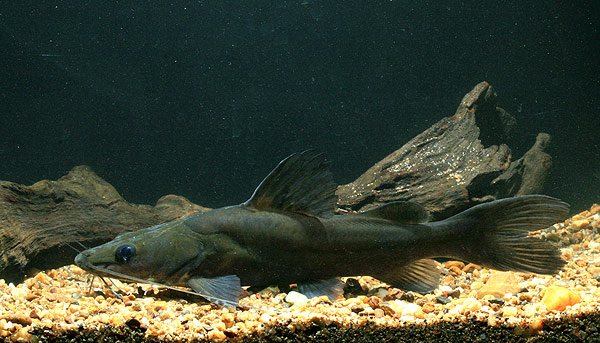
Hemibagrus filamentus
Fang & Chaux, 1949
Max length420mm SL17in SLTanknot recordedTempnot recordedpHnot recordedThis species appears to be unknown in the aquarium trade but is a valued food fish within its native range. Hemibagrus has been divided into a number of putative species groups which may or may not represent monophyletic assemblages, and following a major review by Ng and Kottelat (2013) H. filamentus is included in the H. nemurus group.
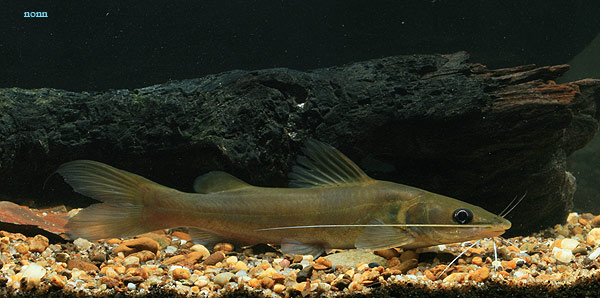
Hemibagrus spilopterus
Ng & Rainboth, 1999
Max length500mm SL20in SLTanknot recordedTemp20–27°C68–81°FpH6.0–8.0This species is relatively common in the aquarium trade but has been widely misidentified as the congener H. nemurus which is native to Java and may never have been exported for ornamental purposes. Hemibagrus has been divided into a number of putative species groups which may or may not rep...
Hemichromis elongatusFive Star General
authority not recorded
Max length150mm SL6in SLTanknot recordedTemp22–25°C72–77°FpH6.5–7.5A real bruiser of a cichlid, H. elongatus is not seen for sale very often, and with good reason. Pound for pound it must rank as one of the most aggressive cichlids available in the hobby. It is such an efficient predator that, in some of its native countries, it is used to control populations of Tilapia. As a result it's definitely not recommended for the inexperienced aquarist. The common name is derived from the row of 5 dark markings that run laterally along the flanks of the fish. I...
Hydrocynus vittatusAfrican Tiger Fish
authority not recorded
Max length1050mm SL41in SLTank300 × 90cm118 × 36inTemp24–28°C75–82°FpH6.5–8.0A voracious piscivore that hunts in large shoals in the wild, this species is perfectly designed for its lifestyle. It is very streamlined and muscular and has one of the most amazing sets of teeth of any freshwater fish. These are dagger-shaped and interlock, meaning the fish can rip chunks out of its prey. The teeth are visible even when the animal's mouth is closed, which makes for a fearsome sight. It is a popular game fish in its native range, with the largest specimen caught weighi...
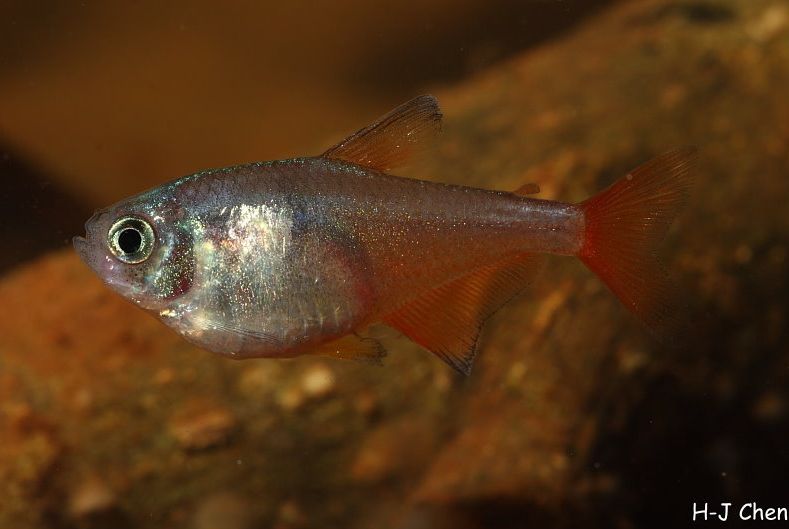
Hyphessobrycon flammeusFlame Tetra
Myers, 1924
Max length25mm SL1.0in SLTank60 × 30cm24 × 12inTemp20–26°C68–79°FpH5.5–7.5Its native rivers flow through one of the most densely-populated and industrialised parts of Brazil, and have suffered greatly from dam construction, water abstraction, pollution, introduced species (including over 40 exotic freshwater fishes in the rio Paraíba do Sul alone), and other forms of anthropogenic degradation. H. flammeus is now uncommon or even extinct across much of its putative natural range, and in Rio de Janeiro state only a handful of highly-fragmented populations remain at best, with the mo...
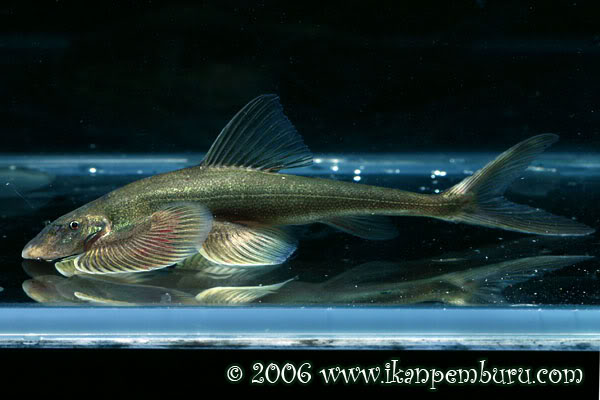
Jinshaia sinensis
Sauvage & Dabry de Thiersant, 1874
Max length75mm SL3.0in SLTank90 × 30cm36 × 12inTemp20–24°C68–75°FpH6.0–7.5This species may not yet have been seen in the aquarium trade outside its native country but has been maintained by a few private collectors. There are currently three species recognised in the genus, all endemic to the Yangtze river drainage, and they're separated from other balitorids by a combination of characters including: relatively long, deeply-forked caudal-fin; roun...
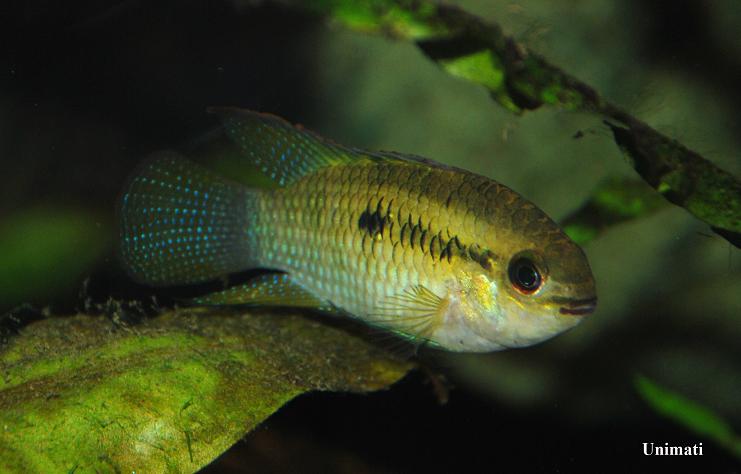
Laetacara curvicepsDwarf Flag Cichlid
Ahl, 1924
Max length50mm SL2.0in SLTanknot recordedTemp20–28°C68–82°FpH4.5–7.5Native to the lower Amazon river basin in Brazil with some populations exhibiting differences in colour pattern to one another, particularly in respect of the degree of red and blue pigmentation on the body and fins. Type locality is given simply as 'Amazon River, Brazil'. Field observations suggest it to display a pref...
Lepidosiren paradoxaSouth American Lungfish
authority not recorded
Max length1250mm SL49in SLTank240 × 90cm96 × 36inTemp24–28°C75–82°FpH6.0–8.0Lungfish are among the most intriguing of "oddball" aquarium species, being able to survive in extreme conditions. They are very ancient fish, having remained virtually unchanged for millions of years. This is the only species known from South America, and is the sole representative of its genus. Most hail from Africa, with a single species native to Australia. They belong to the class Sarcopterygii (lobe-finned fishes), members of which are actually more closely related to terrestrial...
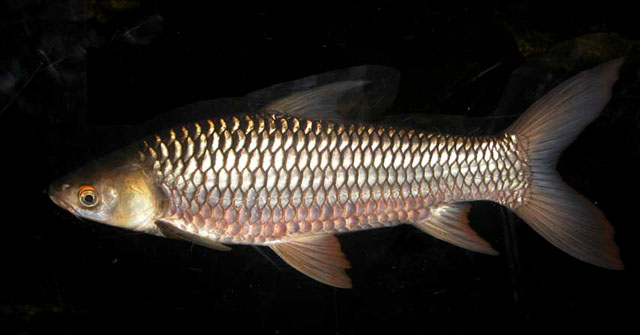
Leptobarbus hoeveniiMad Barb
Bleeker, 1851
Max length1000mm SL39in SLTanknot recordedTemp20–26°C68–79°FpH6.0–8.0Apparently native to Peninsular Malaysia plus the Greater Sunda Islands of Borneo, Sumatra, and Java. Reports of this species from the Mekong, Chao Phraya, and other rivers in Indochina refer to the congener L. rubripinna (see 'Notes'). Type locality is 'Indonesia: Borneo: Kalimantan Selatan: Banjarmasin'.
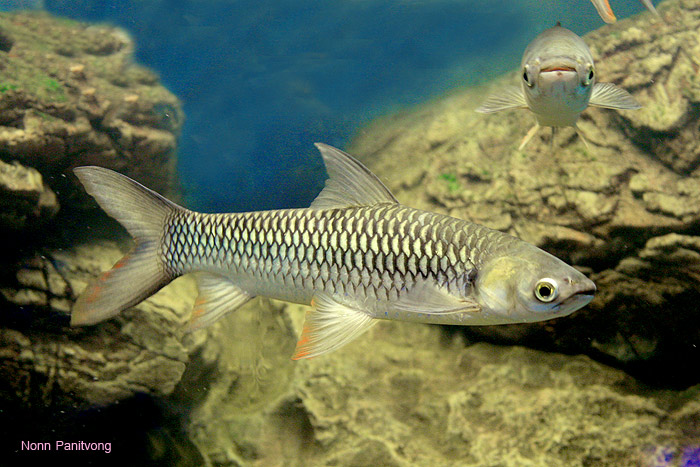
Leptobarbus rubripinnaRed-finned Cigar Shark
Fowler, 1937
Max length1000mm SL39in SLTanknot recordedTemp20–26°C68–79°FpH6.0–8.0This species was referred to as its congener Leptobarbus hoevenii for a number of decades and continues to be misidentified as such in the aquarium hobby, with both species traded under the same name. It is a popular sport fish in its native countries and is wholly unsuitable for private aquaria. Unfortunately it is...
Marosatherina ladigesiCelebes Rainbowfish
authority not recorded
Max length80mm SL3.1in SLTank76 × 30cm30 × 12inTemp22–28°C72–82°FpH7.0–8.0For many years, this species was included in the genus Telmatherina, and is still listed as such in much of the avilable literature. In fact it's now the only species in the recently erected genus Marosatherina. Unfortunately, it has been overfished for the aquarium trade in its native waters and is listed as 'vulnerable' on the IUCN red list of threatened species. Thankfully, it's now being mass-produced on fish farms in both the Far East and Eastern Europe, meaning that few...
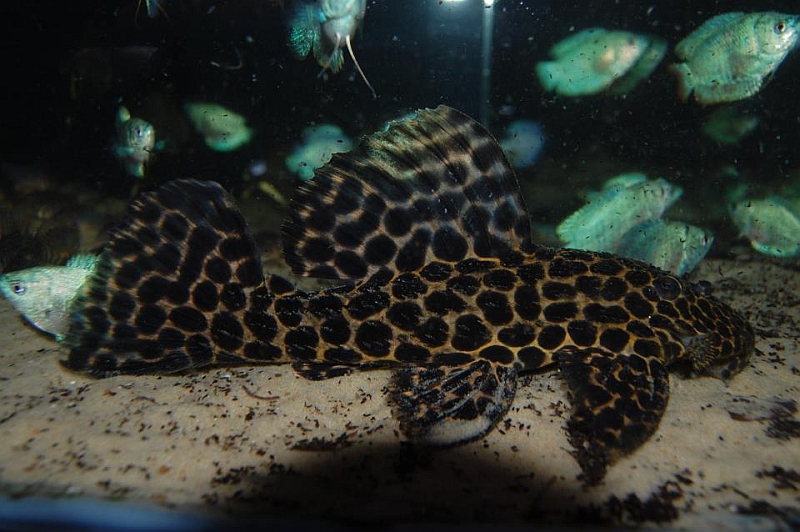
Megalancistrus parananusL113
Peters, 1881
Max length588mm SL23in SLTanknot recordedTemp20–28°C68–82°FpH6.0–7.5This species was formerly considered to be represented by the L-numbers L113 and L234 but it appears that only the former is native to the Paraná, Paraguay and Uruguay drainages, whereas L234 is collected in the rio São Francisco in eastern Brazil. M. barrae and M. sp. 'LDA097' are also exported from the São Francisco system.