Results for “sand”
Type a name: scientific, common, or one a species used to go by. Or narrow the catalogue with the filters.
Filters
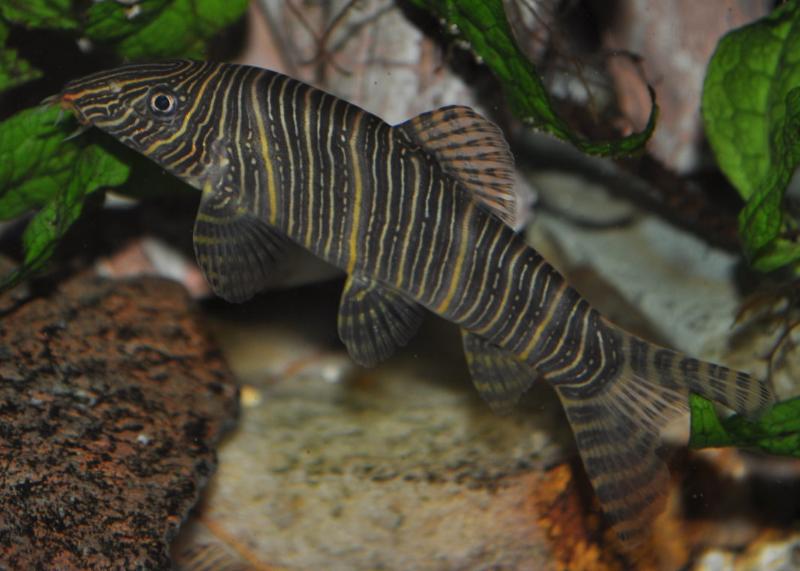
Botia striataZebra Loach
Narayan Rao, 1920
Max length90mm SL3.5in SLTank120 × 30cm48 × 12inTemp21–26°C70–79°FpH6.0–7.5In a survey of fish diversity in the Bhadra River (which joins the Tunga to form the Tungabhadra) it was recorded alongside numerous other species including Puntius chola, Balitora mysorensis, and Mystus armatus. Dry season water paramaters were temperature 69.8°F/21°C, pH 7.0, hardness ~ 2.5°. The substrate was composed of bedrock, boulders, cobbles, gravel, sand and leaf litter in descending order of abundance with a maximum depth of around...
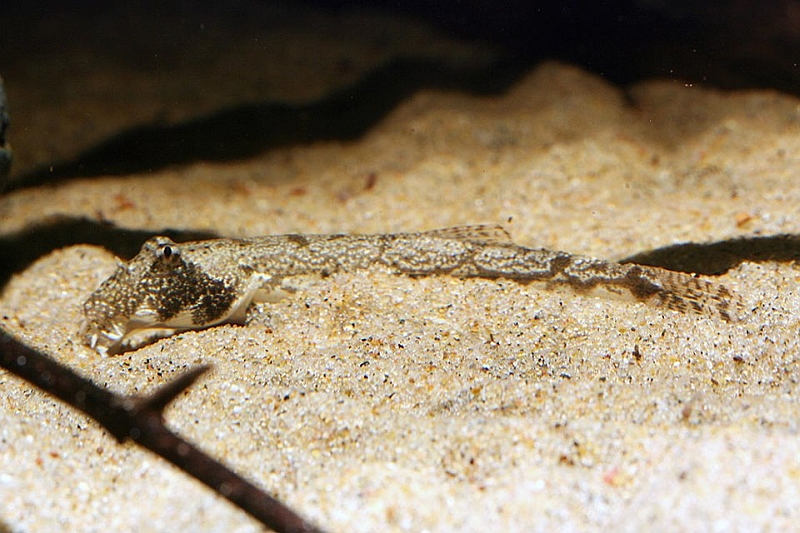
Canthophrys gongotaMoose-faced Loach
Hamilton, 1822
Max length110mm SL4in SLTank90 × 30cm36 × 12inTemp18–22°C64–72°FpH6.0–7.0Mostly known from slow-moving, relatively shallow tributaries and minor rivers with substrates of mud, sand or gravel. Aquatic plants are only occasionally present but riparian vegetation apparently grows thickly at some localities. In the Schutunga River, part of the Mansai River drinage which is itself a tributary of the Brahmaputra in West Bengal state, In...
Copadichromis azureus
authority not recorded
Max length160mm SL6in SLTank150 × 45cm60 × 18inTemp26–28°C79–82°FpH7.5–8.5Together with the recently erected genus Mchenga, Copadichromis species form an exclusive group of Malawian cichlids commonly referred to as "Utaka" (prounounced "ooh-taw-kuh"). They're specialised to a pelagic lifestyle, and can be found living in huge numbers throughout much of Lake Malawi. Some tend to remain in the proximity of underwater reefs or rocky shorelines, while others occur mainly in more featureless, sandy habitats. Here they face the oncoming current, us...
Copadichromis borleyi
authority not recorded
Max length200mm SL8in SLTank150 × 45cm60 × 18inTemp25–29°C77–84°FpH7.5–8.5Together with the recently erected genus Mchenga, Copadichromis species form an exclusive group of Malawian cichlids commonly referred to as "Utaka" (prounounced "ooh-taw-kuh"). They're specialised to a pelagic lifestyle, and can be found living in huge numbers throughout much of Lake Malawi. Some tend to remain in the proximity of underwater reefs or rocky shorelines, while others occur mainly in more featureless, sandy habitats. Here they face the oncoming current, usi...
Copadichromis chrysonotus
authority not recorded
Max length160mm SL6in SLTank150 × 45cm60 × 18inTemp25–29°C77–84°FpH7.5–8.5Together with the recently erected genus Mchenga, Copadichromis species form an exclusive group of Malawian cichlids commonly referred to as "Utaka" (prounounced "ooh-taw-kuh"). They're specialised to a pelagic lifestyle, and can be found living in huge numbers throughout much of Lake Malawi. Some tend to remain in the proximity of underwater reefs or rocky shorelines, while others occur mainly in more featureless, sandy habitats. Here they face the oncoming current, usi...
Copadichromis ilesi
authority not recorded
Max length175mm SL7in SLTank150 × 45cm60 × 18inTemp25–29°C77–84°FpH7.5–8.5Together with the recently erected genus Mchenga, Copadichromis species form an exclusive group of Malawian cichlids commonly referred to as "Utaka" (prounounced "ooh-taw-kuh"). They're specialised to a pelagic lifestyle, and can be found living in huge numbers throughout much of Lake Malawi. Some tend to remain in the proximity of underwater reefs or rocky shorelines, while others occur mainly in more featureless, sandy habitats. Here they face the oncoming current, usi...
Copadichromis virginalis
authority not recorded
Max length130mm SL5in SLTank150 × 45cm60 × 18inTemp25–29°C77–84°FpH7.5–8.5Together with the recently erected genus Mchenga, Copadichromis species form an exclusive group of Malawian cichlids commonly referred to as "Utaka" (prounounced "ooh-taw-kuh"). They're specialised to a pelagic lifestyle, and can be found living in huge numbers throughout much of Lake Malawi. Some tend to remain in the proximity of underwater reefs or rocky shorelines, while others occur mainly in more featureless, sandy habitats. Here they face the oncoming current, usi...
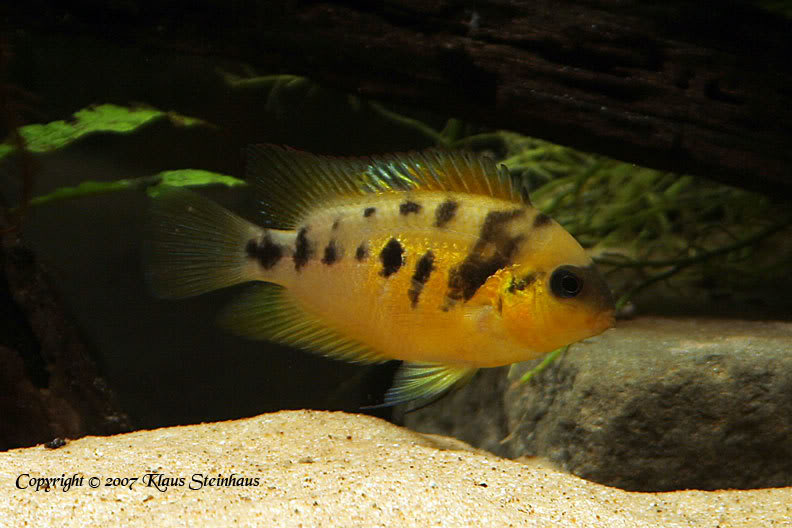
Cryptoheros nanoluteus
Allgayer, 1994
Max length65mm SL2.6in SLTank90 × 30cm36 × 12inTemp23–26°C73–79°FpH5.0–7.5Inhabits moderate to fast-flowing, well-oxygenated, lowland streams and rivers with pH measured to range between 5.4 and 8.0 and temperature 22-31°C/71.6-87.8°F, while conductivity at one habitat was 600 µS. Substrates may be composed of open mud or sand, or strewn with variably-sized boulders depending on locality, while aquatic plants have not been observed. It occurs sympatrically with the convict cichlid, Amatitlania nigrofasciata with oth...
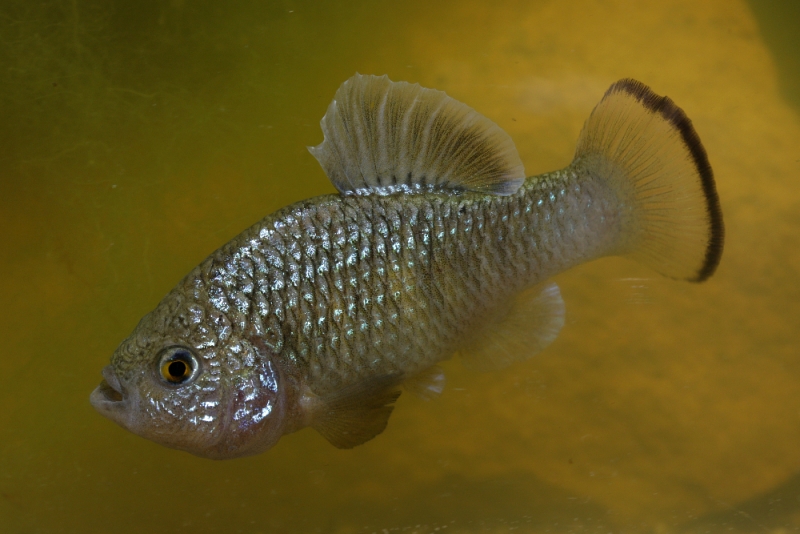
Cyprinodon veronicaeCharco Palma Pupfish
Lozano-Vilano & Contreras-Balderas, 1993
Max length50mm SL2.0in SLTank60 × 30cm24 × 12inTempnot recordedpHnot recordedThe surrounding area is semi-arid and the Bolsón de Sandia was once a beautiful oasis with a number of springs, abundant vegetation and diverse wildlife but has dried up over the last twenty to thirty years due to indiscriminate water extraction for agriculture and other human uses. Three endemic species of Cyprinodon, namely C. veronicae, C. longidorsalis and C. ceciliae, have been described from separate springs within the system...
Cyrtocara mooriiMalawi Blue Dolphin
authority not recorded
Max length250mm SL10in SLTank150 × 38cm60 × 15inTemp25–29°C77–84°FpH7.5–8.8A gentle giant ideal for the larger community of Malawi cichlids, this species was formerly named Haplochromis moorii. It is occasionally referred to by the common name, "Humphead Mouthbrooder". In nature, it exhibits an interesting feeding behaviour in which it will be attracted to clouds of sand thrown up by the activity of substrate-sifting species such as Fossorochromis rostratus or Taeniolethrinops praeorbitalis. Shoals of C. moorii will follow these species and feast on any mo...
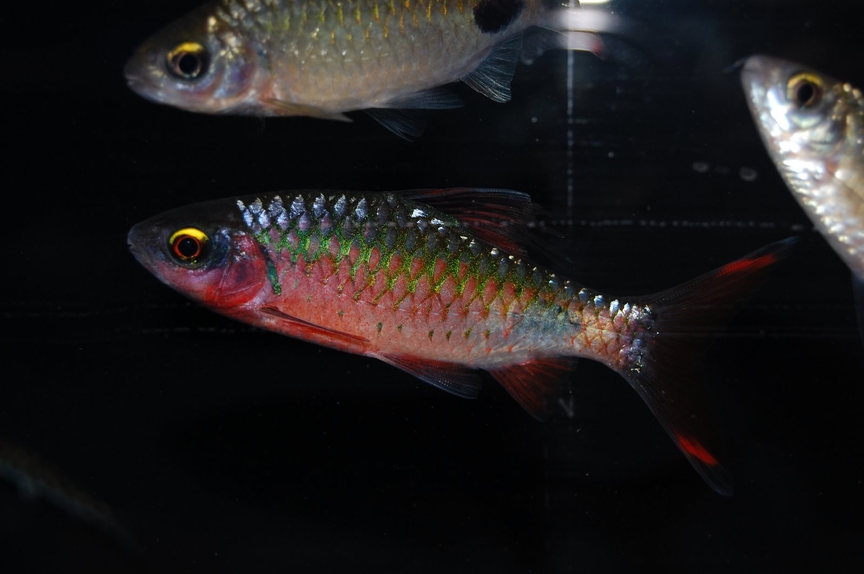
Dawkinsia filamentosaFilament Barb
Valenciennes, 1844
Max length120mm SL5in SLTank120 × 45cm48 × 18inTemp20–25°C68–77°FpH6.0–7.0Not difficult to keep in a well-maintained set-up, though we recommend aquascaping the tank to resemble a flowing stream/river with a substrate of variably-sized, water-worn rocks, sand, fine gravel and perhaps some small boulders. This can be further furnished with driftwood roots or branches, and while the majority of aquatic plants will fail to thrive in such surroundings hardy types such as Microsorum, Bolbitis or Anubias spp. can be grown attached to the décor.
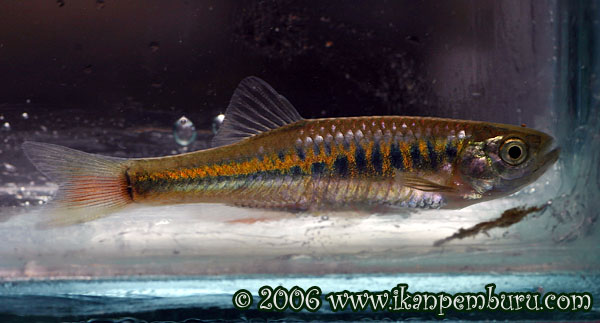
Devario interruptus
Day, 1870
Max length60mm SL2.4in SLTank75 × 30cm30 × 12inTemp16–21°C61–70°FpH6.5–7.5This species has mostly been collected from small (1-2 metres wide, 20-40 cm deep), moderate-to-swiftly-flowing streams with clear water, substrates of sand, gravel and rocks and no aquatic vegetation. Marginal vegetation was present in some cases, offering a degree of shade, and sympatric species included an unidentified Schistura sp., S. vinciguerrae, Misgurnus anguillicaudatus, Garra qiaojiensis,...
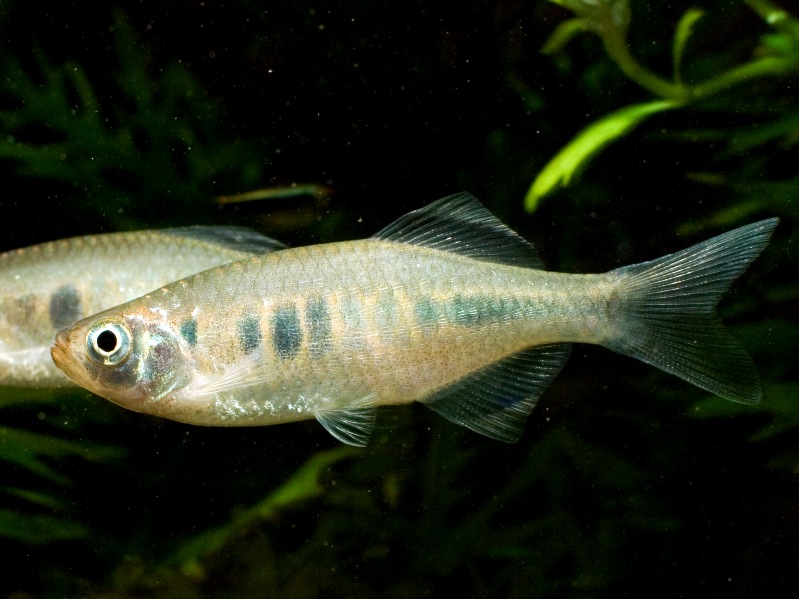
Devario xyropsBlue Moon 'Danio'
Fang & Kullander, 2009
Max length80mm SL3.1in SLTank120 × 45cm48 × 18inTemp18–26°C64–79°FpH6.0–8.0Thrives in an aquarium set up to resemble a flowing stream or river with a substrate of variably-sized, water-worn rocks, sand, fine gravel and perhaps some small boulders. This can be further furnished with driftwood roots or branches, and while the majority of aquatic plants will fail to thrive in such surroundings hardy types such as Microsorum, Bolbitis or Anubias spp. can be grown attached to the décor.
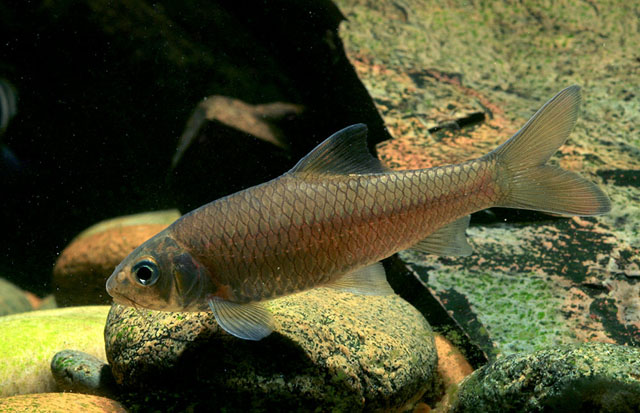
Discherodontus schroederi
Smith, 1945
Max length100mm SL3.9in SLTank120 × 30cm48 × 12inTemp23–26°C73–79°FpH6.0–7.5It's also been collected in more open areas but wherever it is found the substrate is composed of boulders, smaller stones, sand and/or gravel along with decomposing plant material. From images we've seen typical habitats are composed of short sections of rocky rapids interspersed by deeper pools with exposed bedrock. Rainboth describes how he collected a large group of...
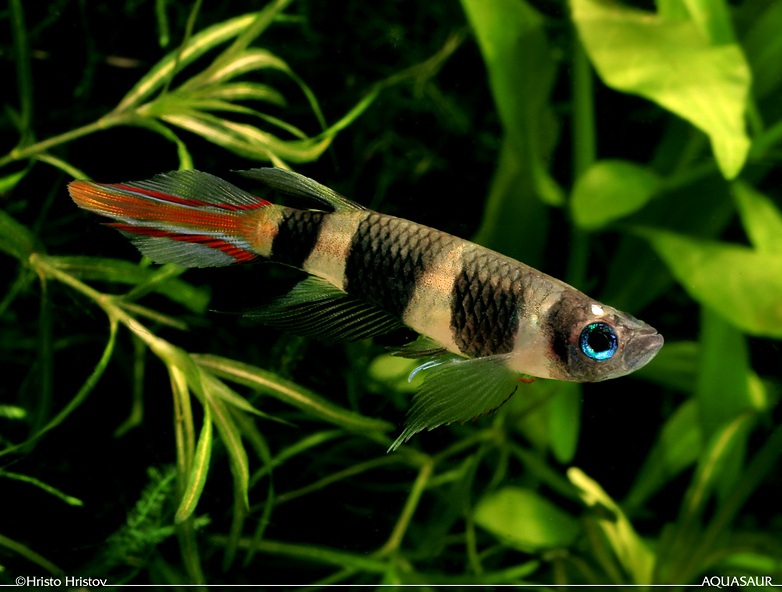
Epiplatys annulatusClown Killifish
Boulenger, 1915
Max length35mm SL1.4in SLTank45 × 30cm18 × 12inTemp20–26°C68–79°FpH4.0–7.0Perhaps looks best in a heavily-planted set-up or natural-style arrangement comprising a sandy substrate plus some driftwood roots and branches. The addition of dried leaf litter would further emphasise the natural feel and as well as offering additional cover for the fish brings with it the growth of microbe colonies as decomposition occurs. These can provide a valuable secondary food source for fry and the humic su...
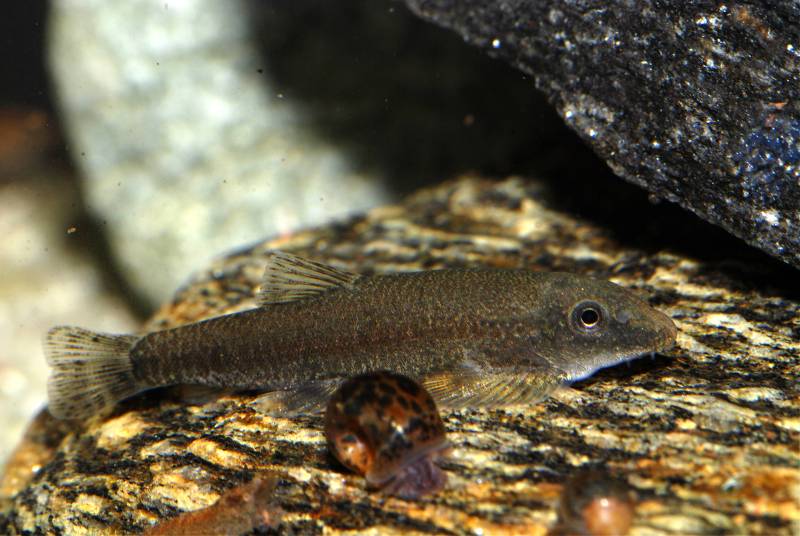
Erromyzon sp. 'ER01'
authority not recorded
Max length45mm SL1.8in SLTank60 × 30cm24 × 12inTemp18–24°C64–75°FpH6.5–8.0Erromyzon spp. are obligate dwellers of shallow, fast-flowing, highly-oxygenated headwaters/minor tributaries characterised by stretches of riffles and runs broken up by pools or cascades in some cases. Substrates are normally composed of smaller rocks, sand and gravel with jumbles of boulders, and while riparian/stream-side vegetation and patches of submerged leaf litter are common features aquatic plants aren't usually present.
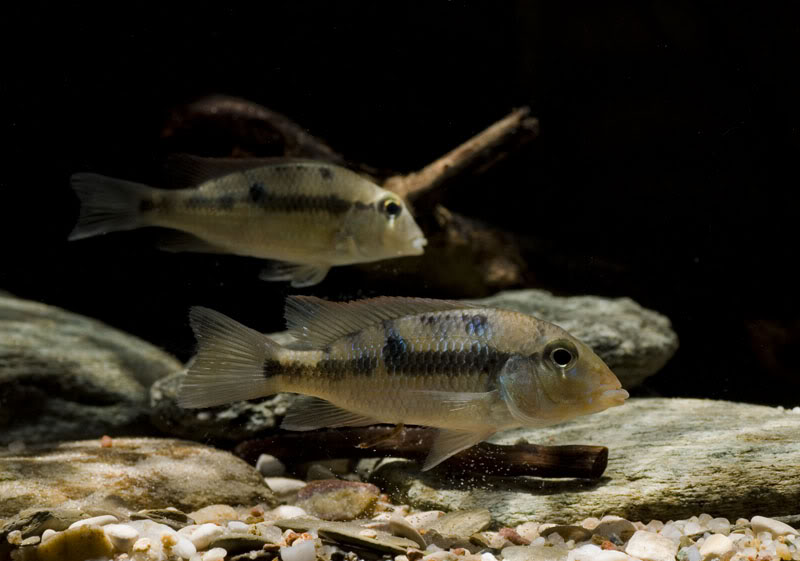
'Geophagus' crassilabrisPanamanian Eartheater
Steindachner, 1876
Max length240mm SL9in SLTank180 × 60cm72 × 24inTemp22–30°C72–86°FpH6.0–8.0The most essential item of décor is a soft, sandy substrate so that the fish can browse naturally (see 'Diet'). Coarser materials such as gravel or small pebbles can inhibit feeding, damage gill filaments and even be ingested with the potential of internal damage or blockages. Additional furnishings ar...
Gnathochromis permaxillaris
authority not recorded
Max length150mm SL6in SLTank120 × 30cm48 × 12inTemp22–27°C72–81°FpH7.5–9.0This species was originally classified in the genus Limnochromis. There are a couple of colour morphs available and these should not be mixed in aquaria, as they may hybridise. In nature, this fish feeds in a similar way to Geophagus species, in that it will sift sand through its gills to extract invertebrates hidden in the substrate. It is a deep water fish and has been recorded foraging at depths of up to 200 metres. These movements seem to be related to the presence of the plankton on which...
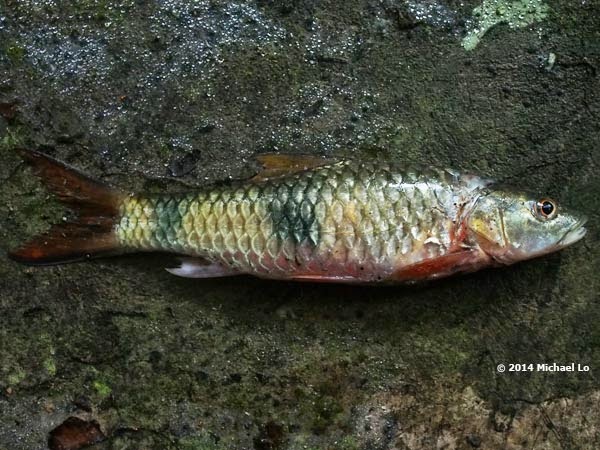
Hampala bimaculata
Popta, 1905
Max length500mm SL20in SLTanknot recordedTempnot recordedpHnot recordedPredominantly a riverine fish preferring clear, well-oxygenated, running waters with substrates of sand, gravel, rock or mud, typically flowing through tropical forest. In the habitat seen in our images sympatric fish species included Barbonymus balleroides, B. collingwoodi, Cyclocheilichthys repasson, C. apogon, Diplocheilichthys pleurotaenia, Garra borneensis, Leptobarbus hosii, and an unidentified Gastromyzon sp.
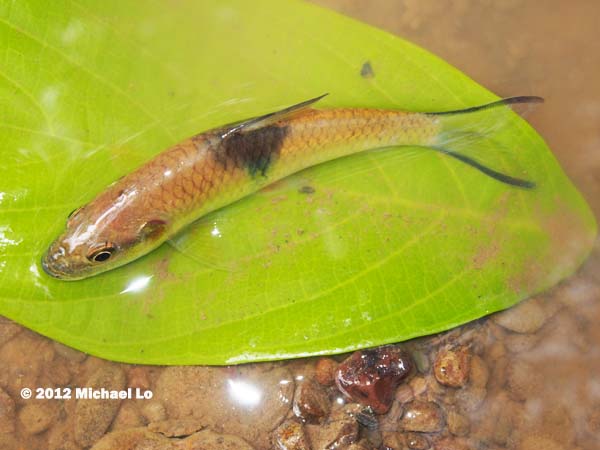
Hampala sabana
Inger & Chin, 1962
Max length410mm SL16in SLTanknot recordedTempnot recordedpHnot recordedPredominantly a riverine fish preferring clear, well-oxygenated, running waters with substrates of sand, gravel, rock or mud, and apparently displays a preference for deeper, slower-moving stretches. In Sabah such habitats typically flow through tropical forest, although in recent years freshwater habitats throughout much of the state have been extensively modified by human activity such as conversion to palm or rubber plantations.