Results for “substrate”
Type a name: scientific, common, or one a species used to go by. Or narrow the catalogue with the filters.
Filters
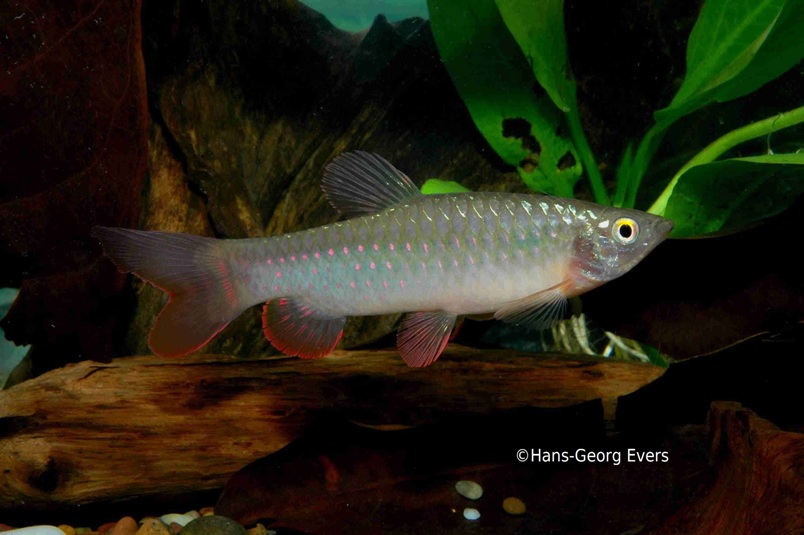
Copeina guttataRed-spotted Tetra
Steindachner, 1876
Max length76mm SL3.0in SLTank120 × 30cm48 × 12inTemp20–28°C68–82°FpH4.0–7.5Known from the middle and upper Amazon river basins in Brazil, Peru, Ecuador and Colombia. Type locality is 'Amazon River at Obidos, Cudajas, and Tabatinga; Rio Negro, Brazil.' It apparently practises an interesting reproductive strategy in which the eggs are deposited in a shallow depression excavated from the substrate and guarded by the male.
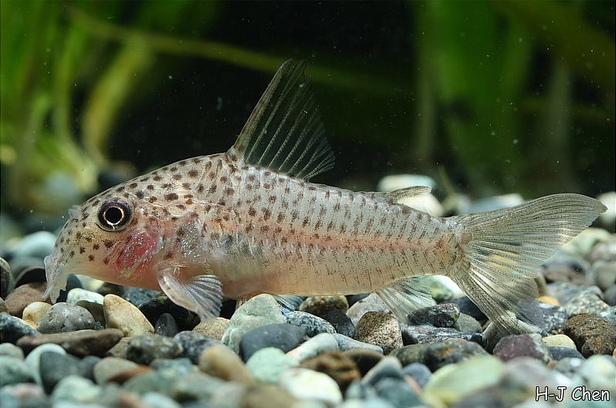
Corydoras albolineatusC056
Knaack, 2004
Max length50mm SL2.0in SLTanknot recordedTemp22–32°C72–90°FpH6.0–7.5In the upper Iténez it most commonly inhabits riparian zones with sandy substrates or edges of sand banks, although it's also been collected in smaller streams and residual flood waters. It typically forms large aggregations of up to several thousand individuals and at the confluence of the ríos Paraguá and Iténez occurs sympatrically with the congener C. paragua.
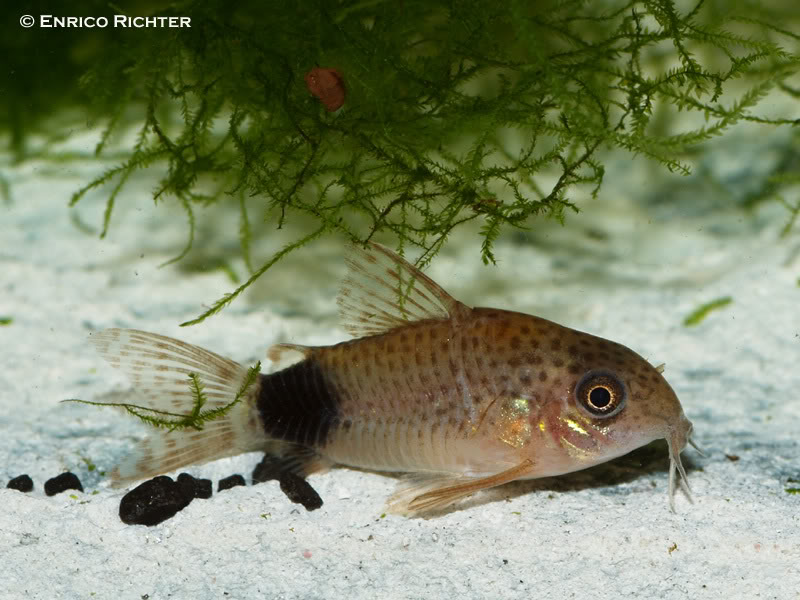
Corydoras caudimaculatusTailspot Cory
Rössel, 1961
Max length50mm SL2.0in SLTanknot recordedTemp20–26°C68–79°FpH6.0–7.0C. caudimaculatus may be confused with the congener C. similis but can be told apart by possession of a well-defined, blackish spot on the caudal peduncle vs. a 'smudged' bluish marking. C. guapore also has a comparable colour pattern but possesses a distinctly rounded snout and tends to swim above the substrate.
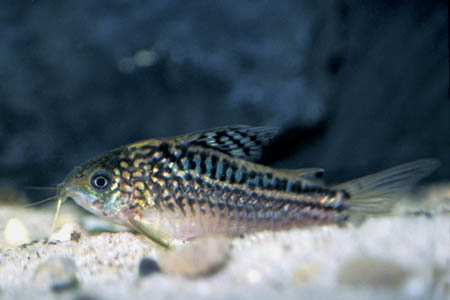
Corydoras elegansElegant Cory
Steindachner, 1876
Max length55mm SL2.2in SLTanknot recordedTemp20–26°C68–79°FpH6.0–7.5This species is popular in the aquarium hobby and unlike the majority of congeners tends to spend a fair amount of time away from the substrate, often forming groups in midwater. It has been placed in the unofficial 'C. elegans group', which contains a number of species exhibiting similarities in morphology and colour pattern, some of which remain unidentified in scientific terms.
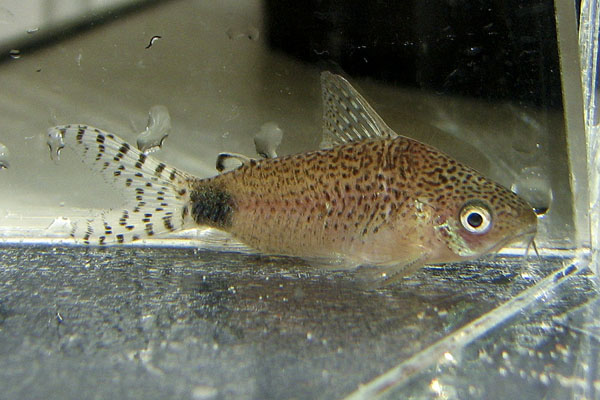
Corydoras guaporeGuaporé Cory
Knaack, 1961
Max length50mm SL2.0in SLTank90 × 30cm36 × 12inTemp22–28°C72–82°FpH5.0–7.0C. guapore is a sought after aquarium fish although it is not often traded. It exhibits slightly different behaviour to the majority of congeners in that it tends to form aggregations in midwater and spends a large proportion of its time away from the substrate. Its morphology exhibits corresponding adaptations towards a pelagic existence with a relatively large eye, a more terminal mouth position, more strongly-forked caudal-fin, and more symmetrical body shape than most other Corydoras species.
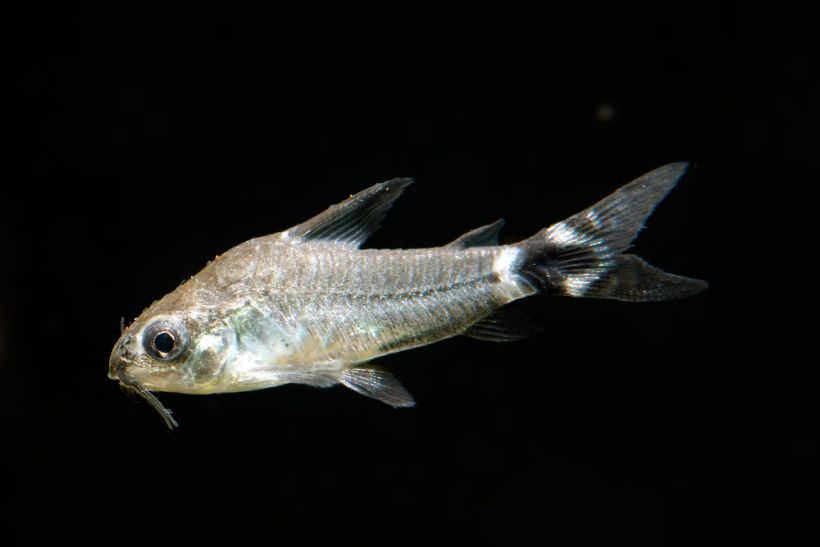
Corydoras hastatusTail-spot Pygmy Cory
Eigenmann & Eigenmann, 1888
Max length32mm SL1.3in SLTank60 × 30cm24 × 12inTemp20–26°C68–79°FpH6.0–7.5It exhibits slightly different behaviour to the majority of congeners in that it tends to swim in midwater and spends a large proportion of its time away from the substrate. Its morphology exhibits corresponding adaptations towards a pelagic existence with a relatively large eye, a more terminal mouth position, more strongly-forked caudal-fin, and more symmetrical body shape than most other Corydoras species.
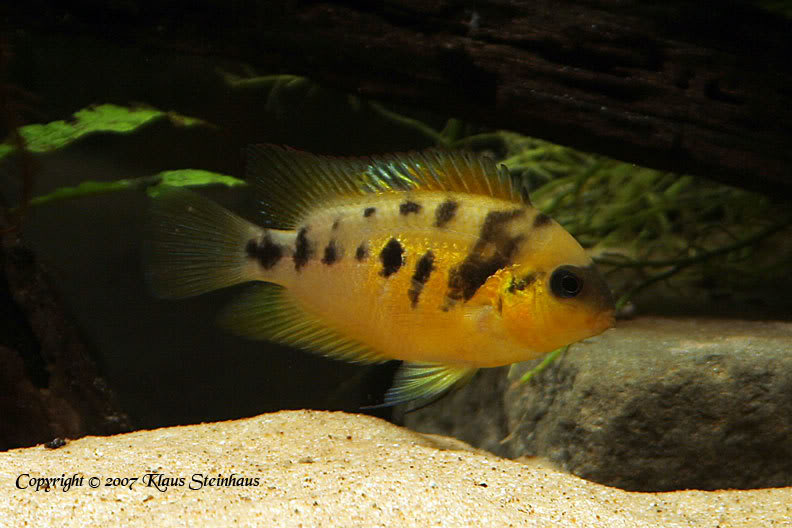
Cryptoheros nanoluteus
Allgayer, 1994
Max length65mm SL2.6in SLTank90 × 30cm36 × 12inTemp23–26°C73–79°FpH5.0–7.5Inhabits moderate to fast-flowing, well-oxygenated, lowland streams and rivers with pH measured to range between 5.4 and 8.0 and temperature 22-31°C/71.6-87.8°F, while conductivity at one habitat was 600 µS. Substrates may be composed of open mud or sand, or strewn with variably-sized boulders depending on locality, while aquatic plants have not been observed. It occurs sympatrically with the convict cichlid, Amatitlania nigrofasciata with oth...
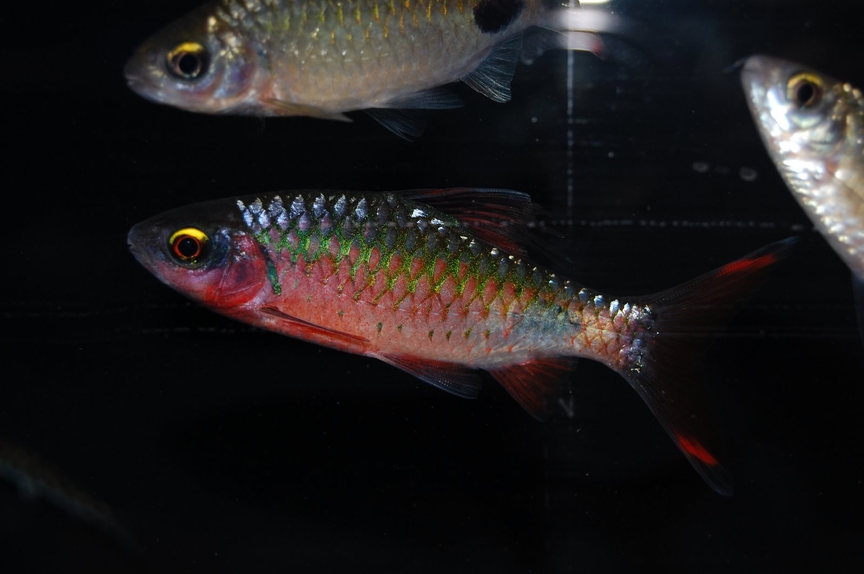
Dawkinsia filamentosaFilament Barb
Valenciennes, 1844
Max length120mm SL5in SLTank120 × 45cm48 × 18inTemp20–25°C68–77°FpH6.0–7.0Not difficult to keep in a well-maintained set-up, though we recommend aquascaping the tank to resemble a flowing stream/river with a substrate of variably-sized, water-worn rocks, sand, fine gravel and perhaps some small boulders. This can be further furnished with driftwood roots or branches, and while the majority of aquatic plants will fail to thrive in such surroundings hardy types such as Microsorum, Bolbitis or Anubias spp. can be grown attached to the décor.
Dekeyseria brachyuraButterfly Plec
authority not recorded
Max length140mm SL6in SLTank120 × 30cm48 × 12inTemp25–28°C77–82°FpH5.6–7.0Formerly known as Peckoltia pulcher, this species is also known as the pretty peckoltia, flounder plec (in reference to its flattened shape) or chameleon plec. This latter name is quite appropriate, as the fish will change colour depending on the colour of the substrate and other surfaces. It also has a distinctive night time colouration. It closely resembles the Rio Orinoco species L052 and these may turn out to be the same species, as the waters that they inhabit become connected during th...
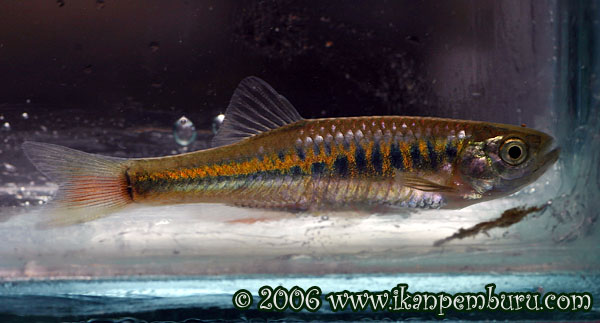
Devario interruptus
Day, 1870
Max length60mm SL2.4in SLTank75 × 30cm30 × 12inTemp16–21°C61–70°FpH6.5–7.5This species has mostly been collected from small (1-2 metres wide, 20-40 cm deep), moderate-to-swiftly-flowing streams with clear water, substrates of sand, gravel and rocks and no aquatic vegetation. Marginal vegetation was present in some cases, offering a degree of shade, and sympatric species included an unidentified Schistura sp., S. vinciguerrae, Misgurnus anguillicaudatus, Garra qiaojiensis,...
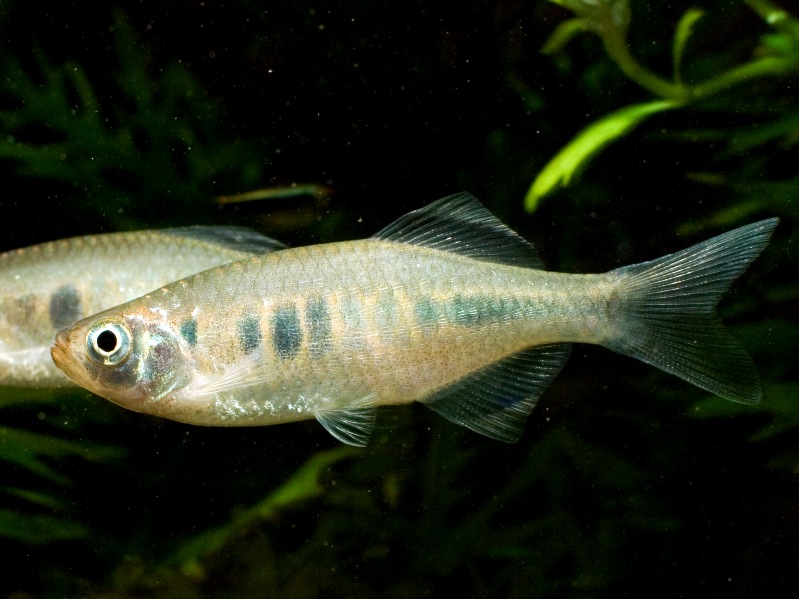
Devario xyropsBlue Moon 'Danio'
Fang & Kullander, 2009
Max length80mm SL3.1in SLTank120 × 45cm48 × 18inTemp18–26°C64–79°FpH6.0–8.0Thrives in an aquarium set up to resemble a flowing stream or river with a substrate of variably-sized, water-worn rocks, sand, fine gravel and perhaps some small boulders. This can be further furnished with driftwood roots or branches, and while the majority of aquatic plants will fail to thrive in such surroundings hardy types such as Microsorum, Bolbitis or Anubias spp. can be grown attached to the décor.
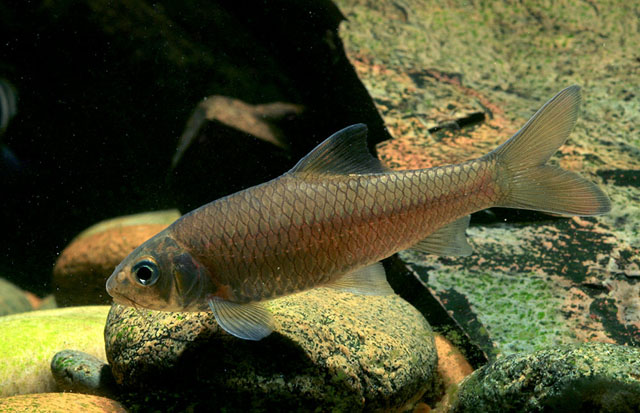
Discherodontus schroederi
Smith, 1945
Max length100mm SL3.9in SLTank120 × 30cm48 × 12inTemp23–26°C73–79°FpH6.0–7.5It's also been collected in more open areas but wherever it is found the substrate is composed of boulders, smaller stones, sand and/or gravel along with decomposing plant material. From images we've seen typical habitats are composed of short sections of rocky rapids interspersed by deeper pools with exposed bedrock. Rainboth describes how he collected a large group of...
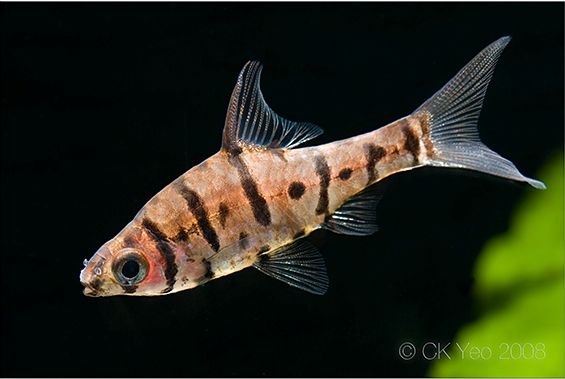
Eirmotus insignis
Tan & Kottelat, 2008
Max length36mm SL1.4in SLTank60 × 30cm24 × 12inTemp20–26°C68–79°FpH5.0–7.0Typically inhabits slow-moving, shallow, shady rainforest streams and swamps with dense submerged and marginal vegetation. The conditions are often rather turbid and the substrate composed of mud or fallen leaves, twigs and branches. Such environments characteristically contain soft, weakly acidic water and are often dimly-lit due to the rainforest canopy above. The fish are found sheltering among overhanging tree roots and aquatic vegetation.
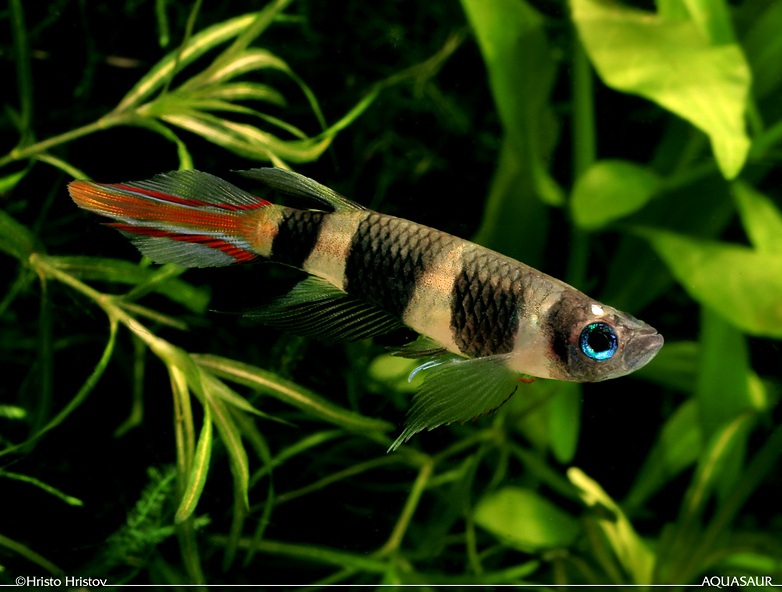
Epiplatys annulatusClown Killifish
Boulenger, 1915
Max length35mm SL1.4in SLTank45 × 30cm18 × 12inTemp20–26°C68–79°FpH4.0–7.0Perhaps looks best in a heavily-planted set-up or natural-style arrangement comprising a sandy substrate plus some driftwood roots and branches. The addition of dried leaf litter would further emphasise the natural feel and as well as offering additional cover for the fish brings with it the growth of microbe colonies as decomposition occurs. These can provide a valuable secondary food source for fry and the humic su...
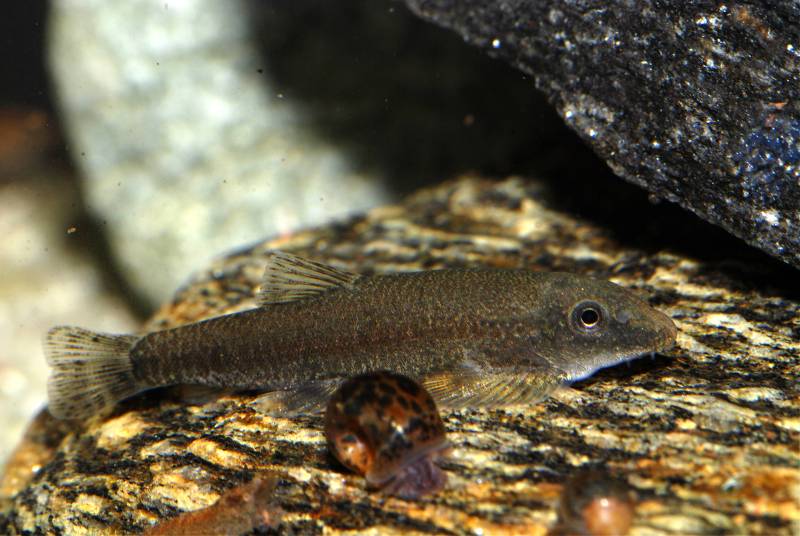
Erromyzon sp. 'ER01'
authority not recorded
Max length45mm SL1.8in SLTank60 × 30cm24 × 12inTemp18–24°C64–75°FpH6.5–8.0Erromyzon spp. are obligate dwellers of shallow, fast-flowing, highly-oxygenated headwaters/minor tributaries characterised by stretches of riffles and runs broken up by pools or cascades in some cases. Substrates are normally composed of smaller rocks, sand and gravel with jumbles of boulders, and while riparian/stream-side vegetation and patches of submerged leaf litter are common features aquatic plants aren't usually present.
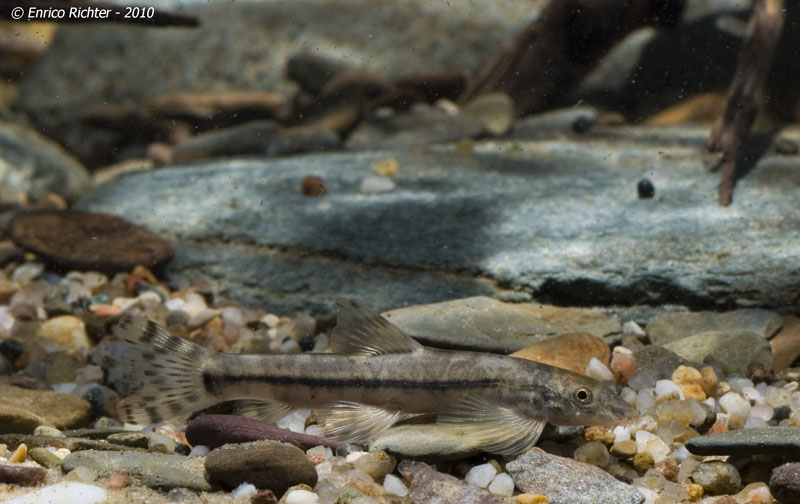
Formosania lacustrisTasseled-mouth Loach
Steindachner, 1908
Max length120mm SL5in SLTank120 × 30cm48 × 12inTemp20–24°C68–75°FpH6.0–7.5An obligate dwellers of swiftly-flowing streams and headwaters containing clear, oxygen-saturated water. It inhabits riffles and runs and according to studies shows a preference for shallower zones. Substrates are generally composed of gravel, rocks, boulders or bedrock carpeted with a rich biofilm formed by algae and other micro-organisms. Aquatic plants are uncommon and while riparian/streamside vegetation may be present...
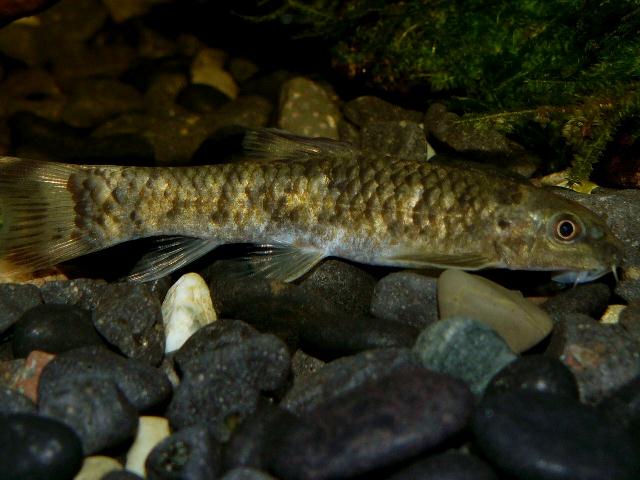
Garra poecilura
Kullander & Fang, 2004
Max length45mm SL1.8in SLTanknot recordedTempnot recordedpHnot recordedThe Naung Pin Thar Chaung is located in a hilly area mostly comprising bamboo forest. In 1998 the water was clear, colourless and flowing at a moderate pace over a substrate of rocks and gravel. It was 1-2 metres wide and maximum depth was only 0.5 metres. Due to the surrounding forest some stretches were shaded and others more open. Sympatric species included Garra spilota, Homalopteroides modestus, Mystus pulcher, and Xenentodon cancila, plus...
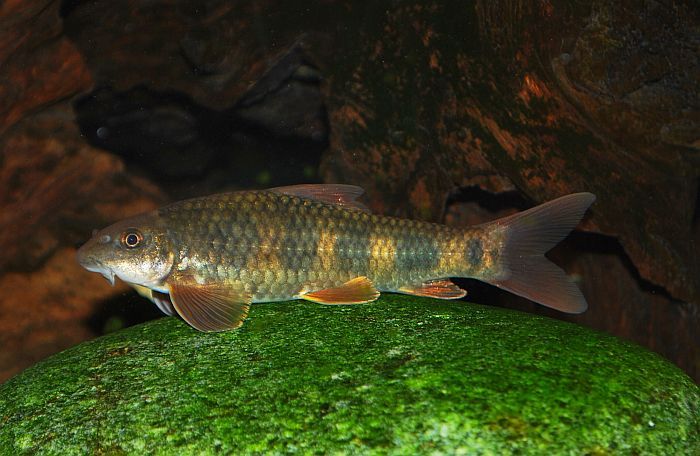
Garra spilota
Kullander & Fang, 2004
Max length69mm SL2.7in SLTank90 × 30cm36 × 12inTemp20–26°C68–79°FpH6.0–7.5The type locality is located in a hilly area mostly comprising bamboo forest. At time of collection the water was clear, colourless and flowing at a moderate pace over a substrate of rocks and gravel. It was 1-2 metres wide and maximum depth was only 0.5 metres. Due to the surrounding forest some stretches were shaded and others more open. Sympatric species included...
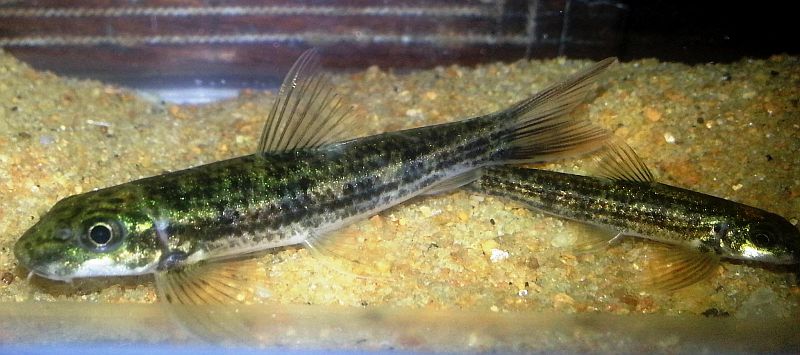
Garra surendranathanii
Shaji, Arun & Easa, 1996
Max length150mm SL6in SLTanknot recordedTempnot recordedpHnot recordedThe type series was collected from a stream-like tributary of the Chalakkudy River at an altitude of 483 m AMSL. In March 1996 the habitat measured around 15 m across and comprised shallow (~ 20 cm deep) water flowing slowly through moist deciduous forest over a substrate of pebbles and boulders.
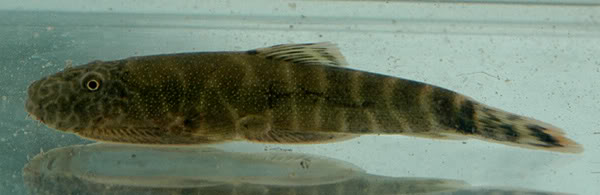
Gastromyzon introrsus
Tan, 2006
Max length95mm SL3.7in SLTank120 × 30cm48 × 12inTemp20–24°C68–75°FpH6.0–8.0The type locality was a fast-flowing, shallow (50 - 80 cm deep) river between 5-10 metres in width with a substrate of gravel and large rocks. PH was measured at 7.7 and the habitat was unshaded with on...