Results for “substrate”
Type a name: scientific, common, or one a species used to go by. Or narrow the catalogue with the filters.
Filters
Cyrtocara mooriiMalawi Blue Dolphin
authority not recorded
Max length250mm SL10in SLTank150 × 38cm60 × 15inTemp25–29°C77–84°FpH7.5–8.8A gentle giant ideal for the larger community of Malawi cichlids, this species was formerly named Haplochromis moorii. It is occasionally referred to by the common name, "Humphead Mouthbrooder". In nature, it exhibits an interesting feeding behaviour in which it will be attracted to clouds of sand thrown up by the activity of substrate-sifting species such as Fossorochromis rostratus or Taeniolethrinops praeorbitalis. Shoals of C. moorii will follow these species and feast on any mo...
Aulonocara baenschiNew Yellow Regal Peacock
Meyer & Riehl, 1985
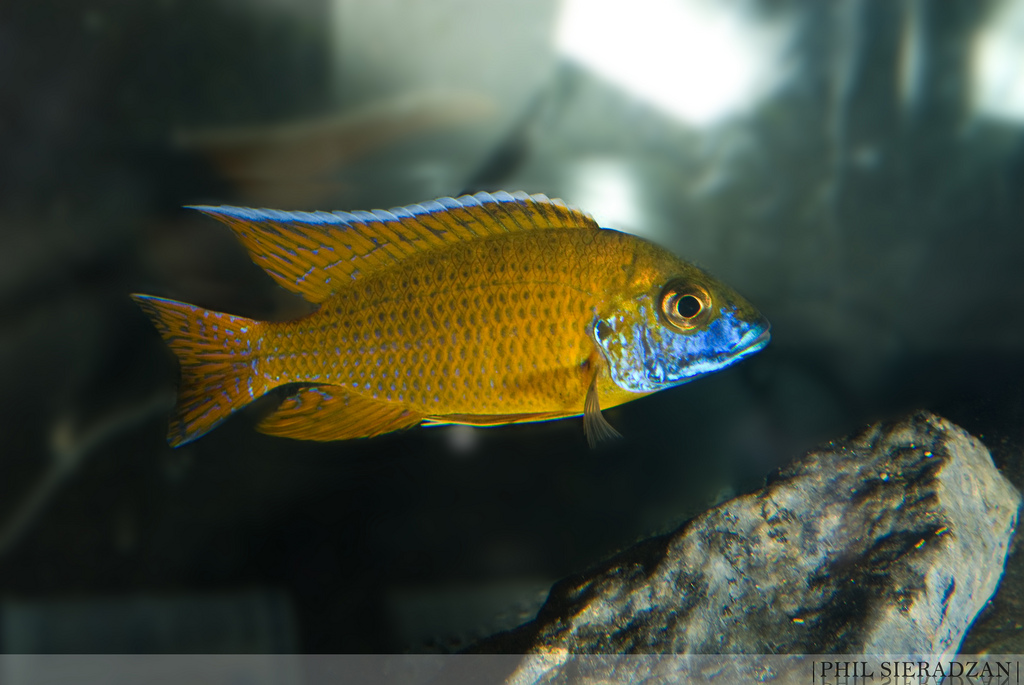
Max length♂ 120 · ♀ 90mm SL♂ 5 · ♀ 3.5in SLTank120 × 45cm48 × 18inTemp25–29°C77–84°FpH7.5–9.0This species may also be sold variously as 'yellow regal cichlid', 'Baensch's peacock', 'sunshine peacock' and 'Nkhomo-Benga peacock'. The easiest way to distinguish it from similar-looking congeners is to look at the profile of the snout, which is steeper and more curved than that of its congeners. Aulonocara spp. are benthophagous by nature employing a method of feeding whereby mouthfuls of substrate are taken and sifted for edible items with the remaining material expelled via the gills and mouth. They're equally-skilled at hunting as grazing, tending to hover above the substrate until tiny movements are detected, and possess enlarged sensory pores on the head which assist in this technique.
Aulonocara ethelwynnaeNorthern Aulonocara
Meyer, Riehl & Zetzsche, 1987
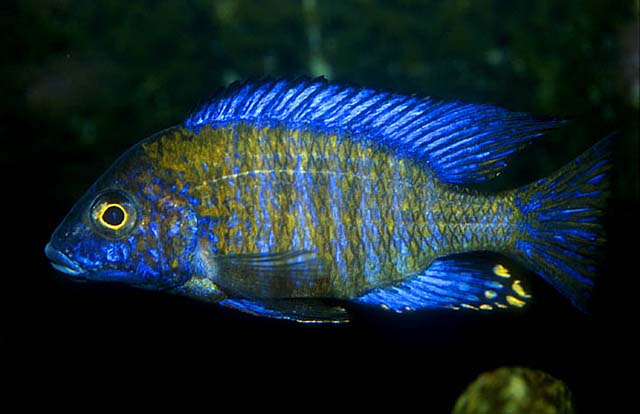
Max length110mm SL4in SLTank90 × 45cm36 × 18inTemp22–26°C72–79°FpH7.4–9.0Endemic to Lake Malawi where it was described from and only occurs around 'Chitendi Island', now normally referred to as Chitande island plus a short stretch of coastline between Ngara and Chilumba along the lake's northwestern shoreline. Aulonocara spp. are benthophagous by nature employing a method of feeding whereby mouthfuls of substrate are taken and sifted for edible items with the remaining material expelled via the gills and mouth. They're equally-skilled at hunting as grazing, tending to hover above the substrate until tiny movements are detected, and possess enlarged sensory pores on the head which assist in this technique.
Balitoropsis zollingeri
Bleeker, 1853
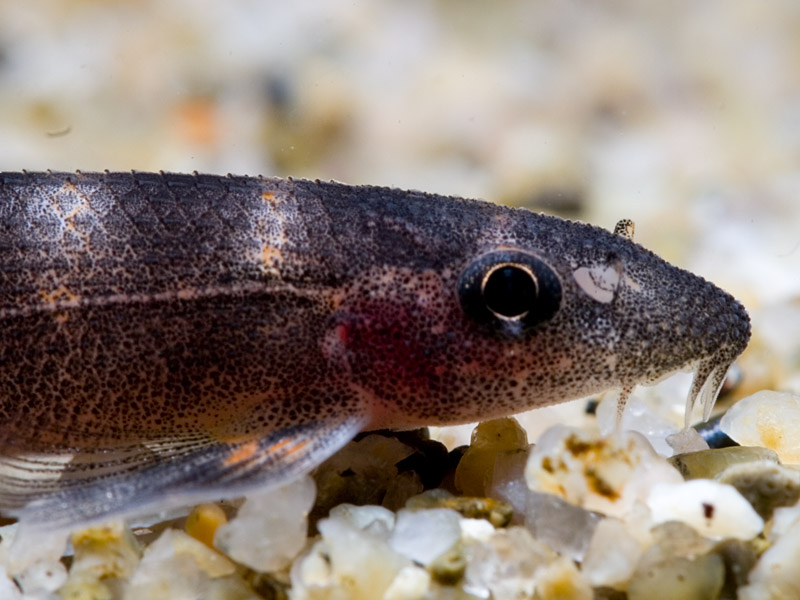
Max length70mm SL2.8in SLTank60 × 30cm24 × 12inTemp20–25.5°C68–78°FpH6.0–7.5An obligate dweller of swiftly-flowing streams and headwaters containing clear, oxygen-saturated water. It often inhabits riffles and runs and is likely to show a preference for shallower zones. Substrates are generally composed of gravel, rocks, boulders or bedrock carpeted with a rich biofilm formed by algae and other micro-organisms. Juveniles are often found in slower-moving stretches with gravel substrate and submerged tree roots. In both cases patches of aquatic plants are only occasionally pres...
Fossorochromis rostratus
authority not recorded
Max length250mm SL10in SLTank150 × 38cm60 × 15inTemp25–29°C77–84°FpH7.5–8.8F. rostratus was formerly classified as Haplochromis rostratus. When startled, it may bury itself in the substrate. It often displays its natural sand-sifting method of feeding in aquaria, and a substrate of sand is essential as gravel may injure the fish. In nature, it is only the largest dominant males that build nests, whilst the subdominant males and females shoal together. There also exists a feeding relationship between this species and Cyrtocara moorii in the wild, in which shoals of C. m...
Garra borneensis
Vaillant, 1902
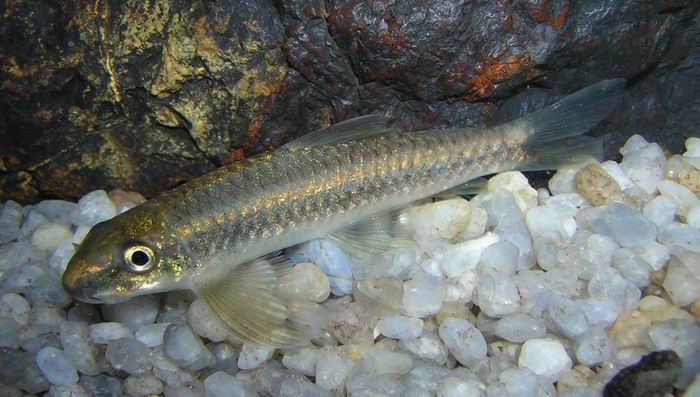
Max length115mm SL5in SLTanknot recordedTempnot recordedpHnot recordedSubstrates are generally composed of gravel, rocks, boulders or bedrock carpeted with a rich biofilm formed by algae and other micro-organisms. At a habitat in the Mendawai river basin in central Kalimantan, H. borneensis was collected from a foothill stream running swiftly over a rock and gravel substrate with clear water of pH 6.4.
Gnathonemus petersiiElephantnose Fish
authority not recorded
Max length225mm SL9in SLTank120 × 45cm48 × 18inTemp23–28°C73–82°FpH6.0–7.5Also known as Peter's elephantnose, this fascinating species is currently the most common Mormyrid in the hobby. Sadly, its popularity means it is often kept in unsuitable conditions. To deny the fish a soft substrate really is cruel, as it uses its "trunk" to locate food hidden in the substrate. It also needs dim lighting, and will commonly become withdrawn and pine away if kept under bright lights. If you cannot provide suitable lighting, add food to the tank at lights out to al...
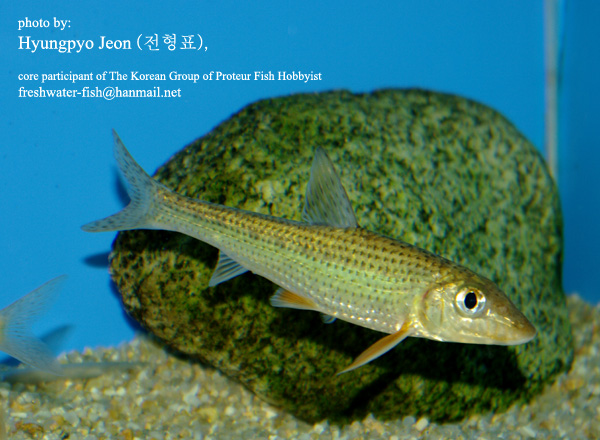
Hemibarbus longirostris
Regan, 1908
Max length250mm SL10in SLTanknot recordedTempnot recordedpHnot recordedA predominantly riverine fish preferring clear, well-oxygenated, running waters with substrates of sand, gravel, rock or mud, where adults tend to form schools just above the substrate in slower-moving sections.
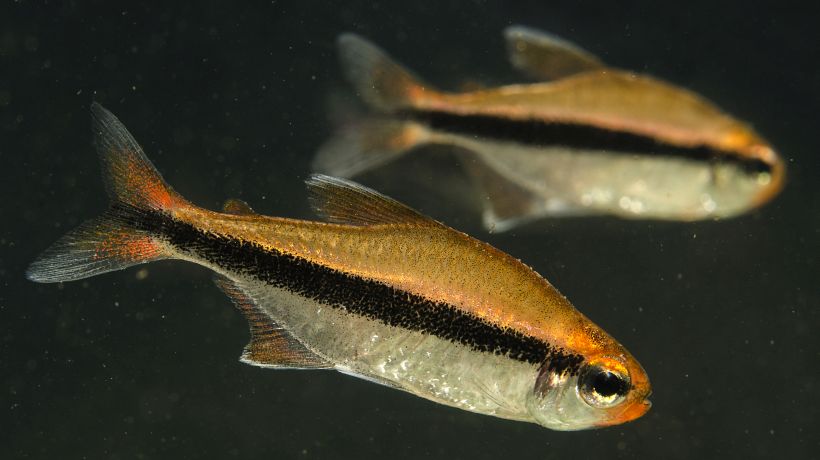
Hyphessobrycon vilmae
Géry, 1966
Max length30mm SL1.2in SLTank60 × 30cm24 × 12inTemp20–26°C68–79°FpH5.0–7.0Choice of décor is not especially critical although it tends to show better colouration when maintained in a well-furnished set-up with live plants and a dark substrate. A natural-looking arrangement might consist of a soft, sandy substrate with wood roots and bran...
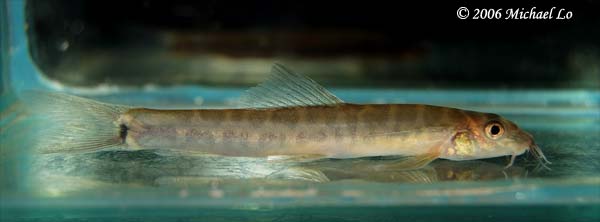
Nemacheilus saravacensis
Boulenger, 1894
Max length50mm SL2.0in SLTank60 × 30cm24 × 12inTemp23–26°C73–79°FpH4.5–7.0Images depict clear, tea-coloured forest streams with dense marginal vegetation and substrates of sand and/or small rocks and pebbles. It's also known from environments with sandy substrate and organic debris in the form of submerged roots/branches and le...
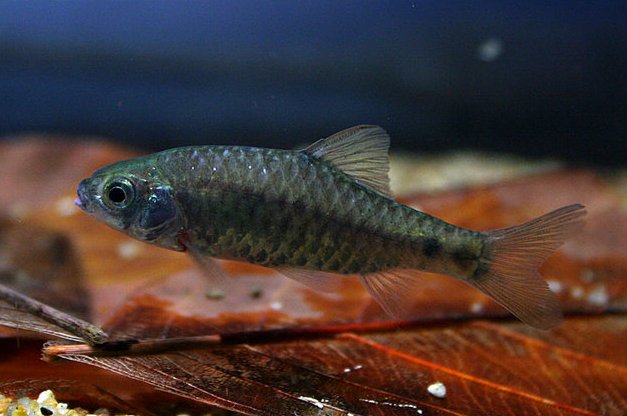
Pethia shalyniusShalyni Barb
Yazdani & Talukdar, 1975
Max length55mm SL2.2in SLTank75 × 30cm30 × 12inTemp16–24°C61–75°FpH6.0–7.5A benthopelagic fish mostly recorded from streams and minor tributaries at relatively high altitudes of more than 1200 metres AMSL with cool, clear, well-oxygenated water and substrates of bedrock, boulders, cobbles, and gravel. Aquatic plants aren't usually present though riparian vegetation may be well-developed. It's also present in some ponds and small lakes, including some stagnant water bodies with muddy substrates.
Placidochromis electraDeepwater Hap
authority not recorded
Max length200mm SL8in SLTank120 × 45cm48 × 18inTemp24–28°C75–82°FpH7.6–8.8The common name is derived from the fact that it was previously thought to be found only in much deeper water than we now know it inhabits. In nature, P. electra feeds from the surface of the substrate on invertebrates and other morsels stirred up by the action of digging substrate feeders such as Taeniolethrinops praeorbitalis. It is attracted to the clouds of sediment thrown up by these species. Several colour forms exist and these should not be kept together in aquaria as they may hybridis...
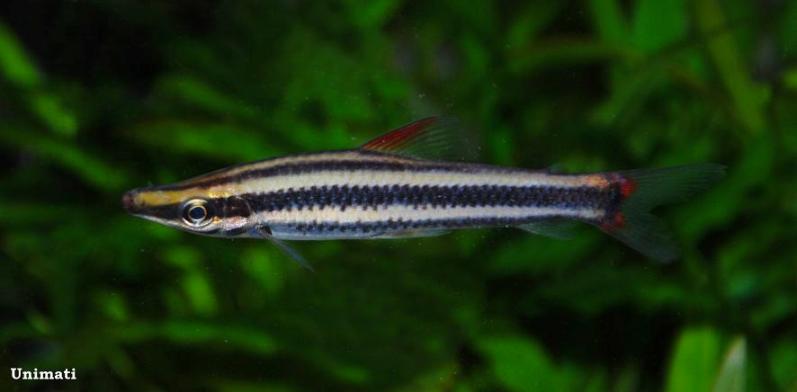
Anostomus anostomusStriped Headstander
Linnaeus, 1758
Max length200mm SL8in SLTank120 × 30cm48 × 12inTemp20–28°C68–82°FpH5.5–7.5A biotope-style set-up could consist of a sandy substrate, piles of smooth rocks and driftwood roots and branches, some of which should penetrate the water surface. Aquatic vegetation can be included if you wish but is likely to be eaten.
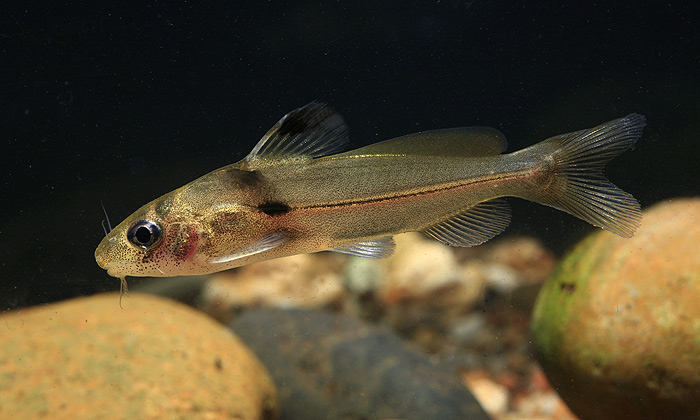
Batasio feruminatus
Ng & Kottelat, 2008
Max length60mm SL2.4in SLTank90 × 30cm36 × 12inTemp16–24°C61–75°FpH6.0–7.0Batasio spp. are obligate inhabitants of headwater streams and the upper reaches of smaller rivers characterised by shallow, fast-flowing, highly-oxygenated stretches of riffles and runs broken up by pools or cascades in some cases. Images of the Ataran correspondingly depict flowing sections of forest-shaded, seemingly well-oxygenated headwaters containing clear water, a mixed sand/rock substrate and lots of submerged driftwood/leaf litter.
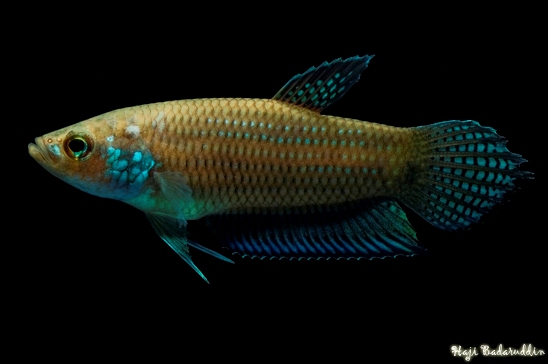
Betta stigmosa
Tan & Ng, 2005
Max length50mm SL2.0in SLTank60 × 30cm24 × 12inTemp22–28°C72–82°FpH5.0–7.0Known only forest hill streams with flowing, clear water. These are typically shaded from the sun by dense riparian vegetation. The substrate is composed of rocks or gravel, fallen leaves, branches and submerged tree roots, and presumably the fish show a preference for quieter marginal zones as with related congeners. The type locality was described as a 'swampy stream' and sympatric species incl...
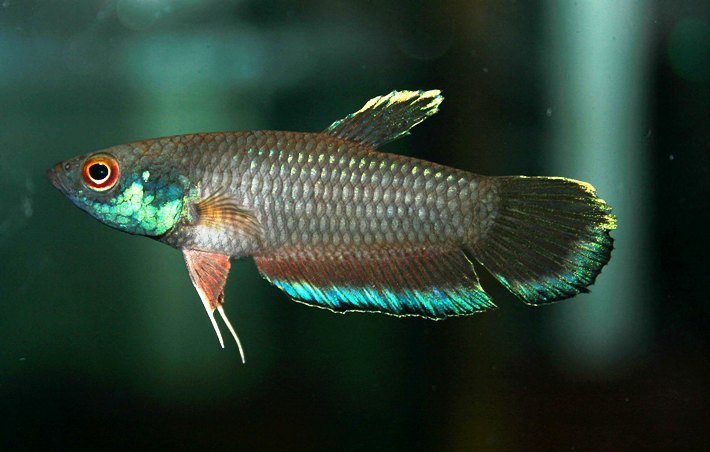
Betta taeniata
Regan, 1910
Max length55mm SL2.2in SLTank60 × 30cm24 × 12inTemp22–27°C72–81°FpH5.0–7.0At one locality close to Serian, Sarawak, the habitat comprised a swiftly-flowing, clear hill stream with a substrate of quartz gravel and variably-sized rocks. The pH was 7.0 and there was no aquatic vegetation. The stream was approximately 10 metres across at its widest point and between 5-80 cm deep. B. taeniata was found in sluggish stretches among submerged tree roots, leaf litter, or overhanging riparian vegetation.
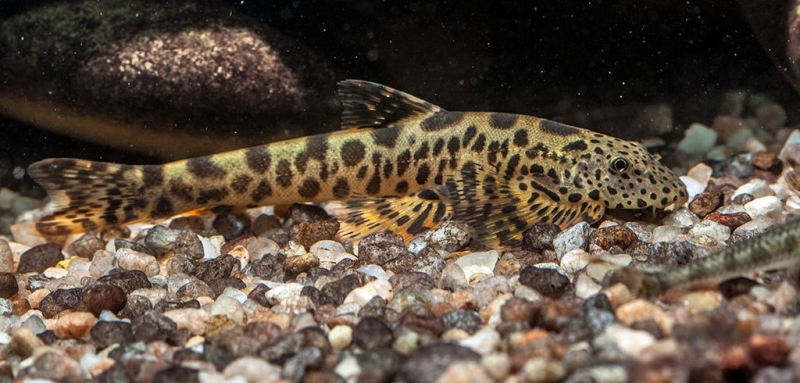
Bhavania australis
Jerdon, 1849
Max length100mm SL3.9in SLTank120 × 30cm48 × 12inTemp16–24°C61–75°FpH6.0–7.5An obligate dweller of shallow, fast-flowing, highly-oxygenated headwaters and minor tributaries characterised by stretches of riffles and runs broken up by pools or cascades in some cases. Substrates are normally composed of smaller rocks, sand and gravel with jumbles of boulders, and whil...
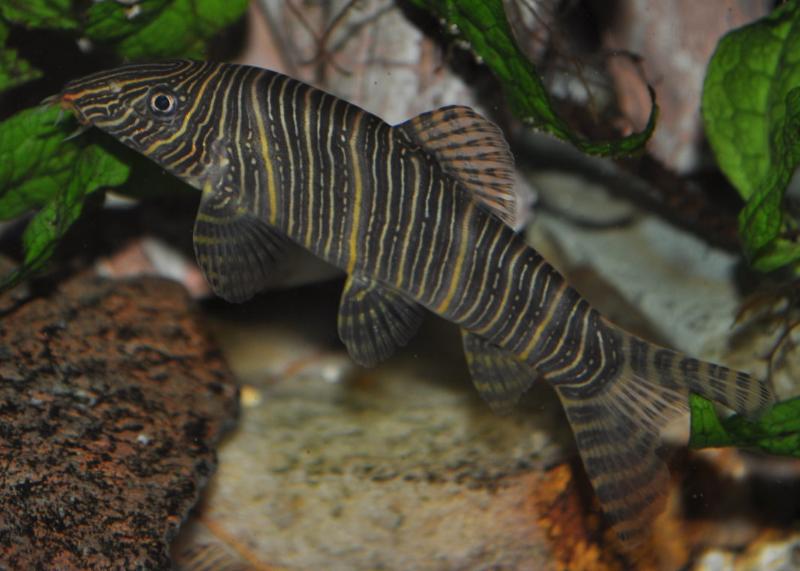
Botia striataZebra Loach
Narayan Rao, 1920
Max length90mm SL3.5in SLTank120 × 30cm48 × 12inTemp21–26°C70–79°FpH6.0–7.5In a survey of fish diversity in the Bhadra River (which joins the Tunga to form the Tungabhadra) it was recorded alongside numerous other species including Puntius chola, Balitora mysorensis, and Mystus armatus. Dry season water paramaters were temperature 69.8°F/21°C, pH 7.0, hardness ~ 2.5°. The substrate was composed of bedrock, boulders, cobbles, gravel, sand and leaf litter in descending order of abundance with a maximum depth of around...
Callochromis macropsBig-eyed Mouthbrooder
authority not recorded
Max length135mm SL5in SLTank120 × 45cm48 × 18inTemp24–27°C75–81°FpH7.8–9.5Members of the genus Callochromis feed in a similar way to the South American "eartheaters" such as Geophagus species. They extract invertebrates and other items hidden in the substrate by taking in mouthfulls of sand and sifting it through the gills. The common term "sand sifters" is applied to these and other Tanganyikan species that inhabit a similar ecological niche, such as Enantiopus and Xenotilapia spp. Several geographical colour forms of this species exist. These ...
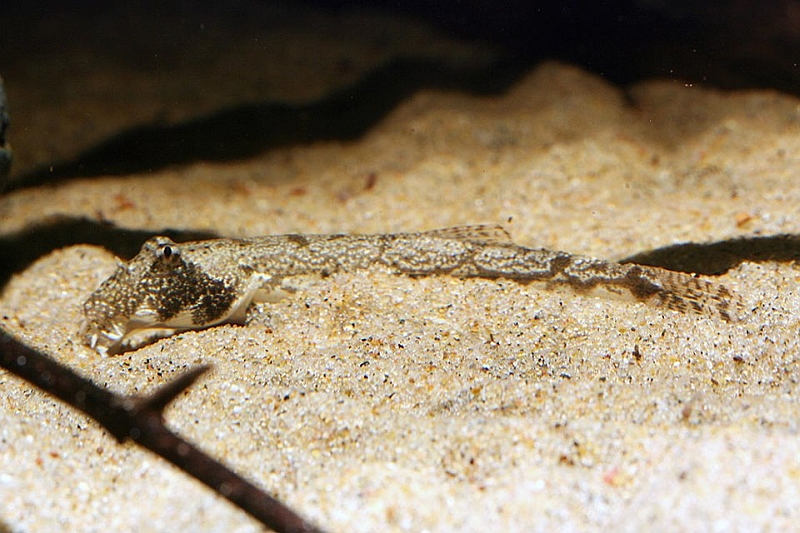
Canthophrys gongotaMoose-faced Loach
Hamilton, 1822
Max length110mm SL4in SLTank90 × 30cm36 × 12inTemp18–22°C64–72°FpH6.0–7.0Mostly known from slow-moving, relatively shallow tributaries and minor rivers with substrates of mud, sand or gravel. Aquatic plants are only occasionally present but riparian vegetation apparently grows thickly at some localities. In the Schutunga River, part of the Mansai River drinage which is itself a tributary of the Brahmaputra in West Bengal state, In...