Results for “synonym”
Type a name: scientific, common, or one a species used to go by. Or narrow the catalogue with the filters.
Filters
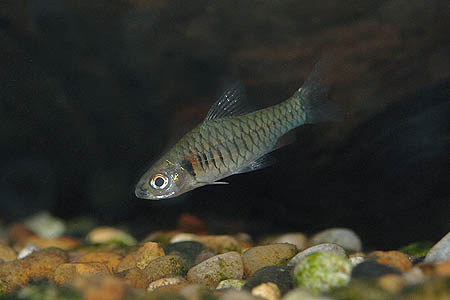
Clypeobarbus congicusCongo Barb
Boulenger, 1899
Max length60mm SL2.4in SLTank90 × 30cm36 × 12inTemp22–26°C72–79°FpH6.0–7.0Clypeobarbus was originally put forward as a subgenus of Barbus by Fowler in 1936 on the basis that member species possessed a midlateral row of enlarged, shield-like scales but he only included the type species 'Barbus' kemoensis (now a junior synonym of Clypeobarbus pleuropholis) in the group. Subsequent work by Poll and Lambert (1961), Jubb (1965) and Skelton (1993) resulted in several additional species being placed into the grouping although it appears that little of this work was widely-recognised until the recent study was published.
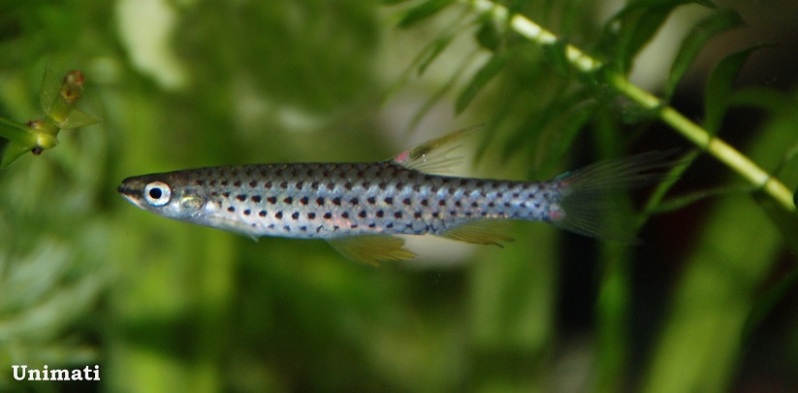
Copella callolepis
Regan, 1912
Max length42mm SL1.7in SLTank60 × 30cm24 × 12inTemp20–28°C68–82°FpH4.0–7.0This species is quite common in the aquarium trade although normally misidentified as the congeners C. nattereri or the very similar C. meinkeni. It was considered synonymous with C. nattereri for a number of years and was also referred to as C. cf. meinkeni by Zarske and Géry (2006) befo...
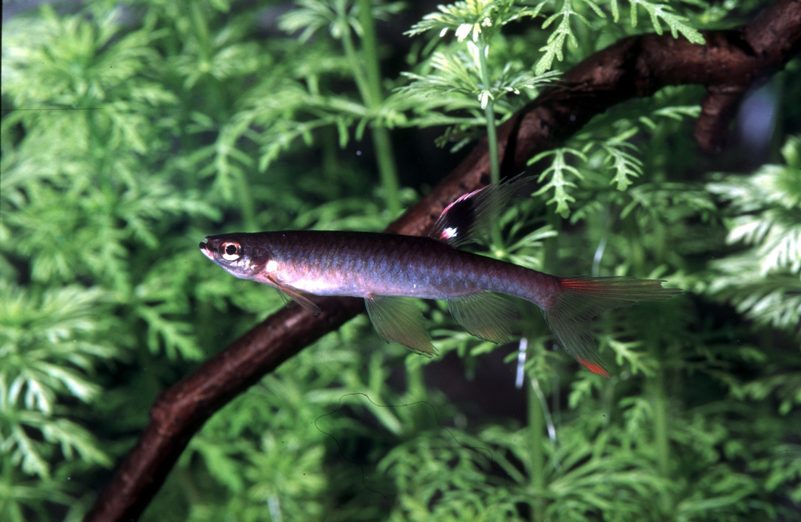
Copella carsevennensis
Regan, 1912
Max length40mm SL1.6in SLTank75 × 30cm30 × 12inTemp20–28°C68–82°FpH4.0–7.0C. carsevennensis has formerly been synonymised with C. arnoldi but was considered separate by Zarske (2011) using the following combination characters: absence (vs. presence) of a silvery-white to white patch in the centre of some of the flank scales in males, particularly in the lower half of the body; absence (vs. presence) of a horizontal dark body bar in nuptial males; absence (vs. presence) of thin black margins in the dorsal, ventral and anal fins; eggs deposited among submerged vegetation (vs. eg...
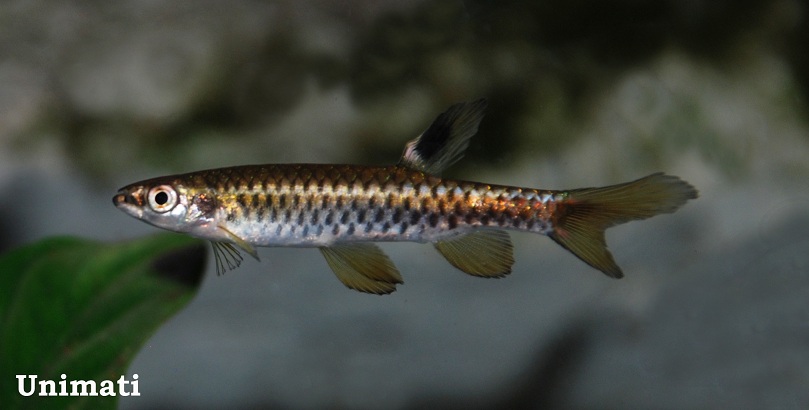
Copella eigenmanni
Regan, 1912
Max length45mm SL1.8in SLTank80 × 30cm31 × 12inTemp20–28°C68–82°FpH4.0–7.0This species does appear in the aquarium trade from time-to-time, often among shipments of other wild-caught fishes from the Orinoco basin. Populations from Colombia were formerly referred to as C. metae until Zarske (2011) synonymised the two when designating a lectoty...
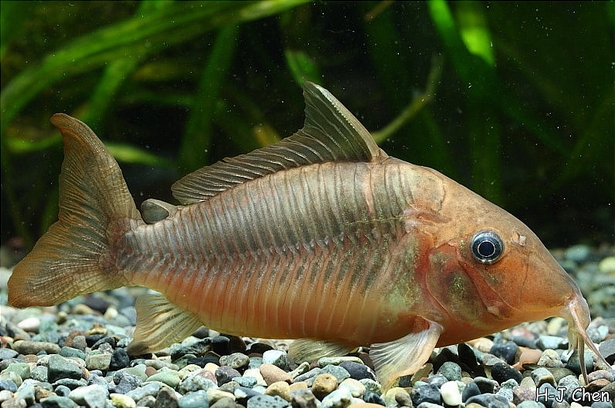
Corydoras britskiiGiant Brochis
Nijssen & Isbrücker, 1983
Max length90mm SL3.5in SLTank120 × 45cm48 × 18inTemp20–26°C68–79°FpH6.0–7.0Brochis was first synonymised with Corydoras by Britto (2003), since the latter genus cannot be considered monophyletic if the former is accepted as valid. This decision has been supported in subsequent phylogenetic studies by Shimabukuro-Dias et al. (2004) and Alexandrou et al. (2011), although the name Brochis is still common in aquarium literature. It is likely that the genus will be revalidated and expanded in the future following a required taxonomic review of the subfamily Corydoradinae as suggested by Alexandrou and Taylor (2011).
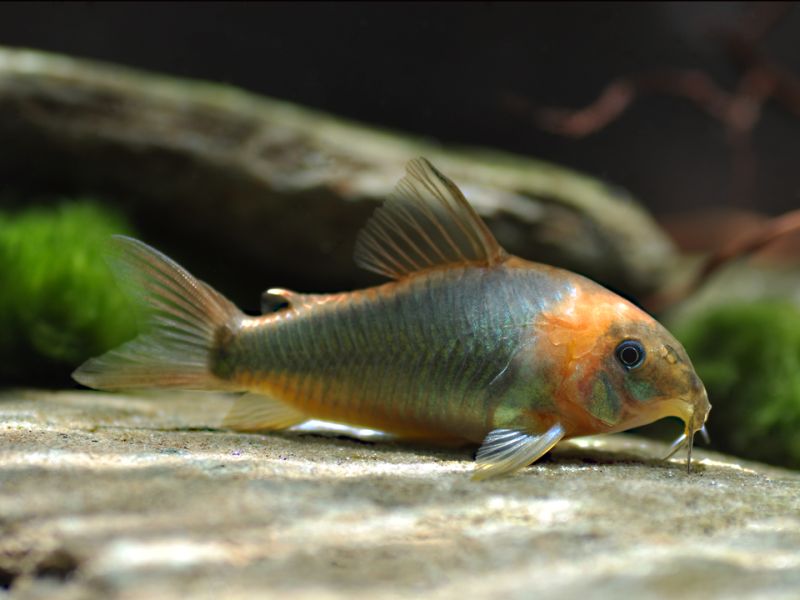
Corydoras eques
Steindachner, 1876
Max length50mm SL2.0in SLTank90 × 30cm36 × 12inTemp20–26°C68–79°FpH6.0–8.0Although described as a member of Corydoras this species was later moved into the genus Osteogaster by Cope (1894), but this was later synonymised with Corydoras by Gosline (1940). It is sometimes confused with C. venezuelanus, while two similar-looking, unidentified fishes from Peru have been assigned the codes CW007 and CW043, respectively.
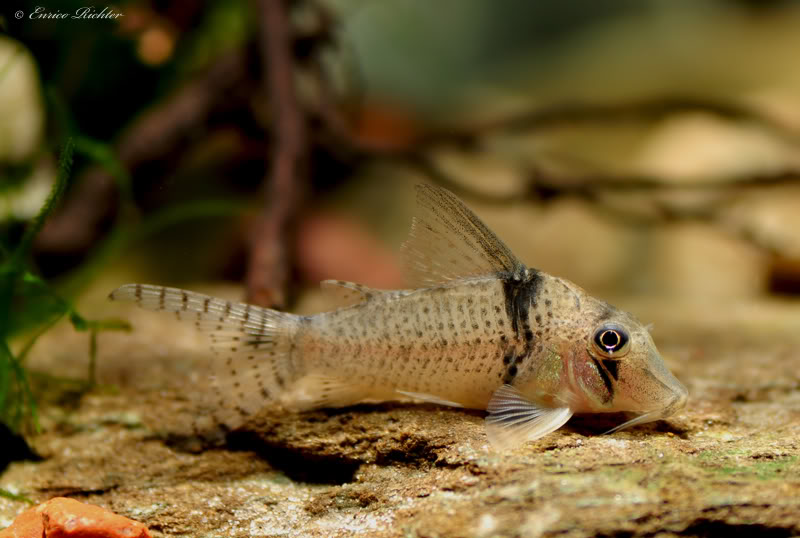
Corydoras pastazensisPastaza Cory
Weitzman, 1963
Max length70mm SL2.8in SLTank90 × 30cm36 × 12inTemp22–28°C72–82°FpH5.0–7.0The form from the Río Tigre, previously referred to as the subspecies C. p. orcesi (Weitzman & Nijssen, 1970) was raised to full species status as C. orcesi by Isbrücker (2001), but this decision does not appear to have been followed by all authorities some of which consider C. p. orcesi a synonym of C. pastazensis. The two species are relatively easy to tell apart by colour pattern; in C. pastazensis the dark vertical...
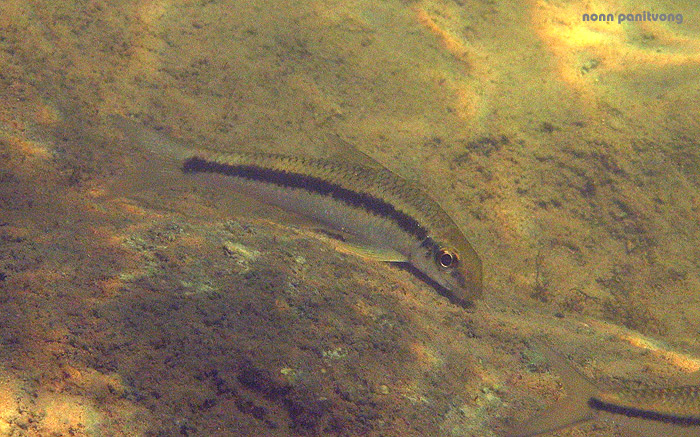
Crossocheilus burmanicus
Hora, 1936
Max length120mm SL5in SLTank150 × 45cm60 × 18inTemp20–26°C68–79°FpHnot recordedWe've been unable to obtain a diagnosis for this species to date but it can at least be distinguished from those congeners traded as 'Crossocheilus siamensis' (an invalid name synonymous with C. oblongus, which is itself of questionable identity), 'Siamese algae eater', or 'SAE' by the fact that the dark lateral stripe does not extend into the caudal-fin. Members of Crossocheilus are characterised by...
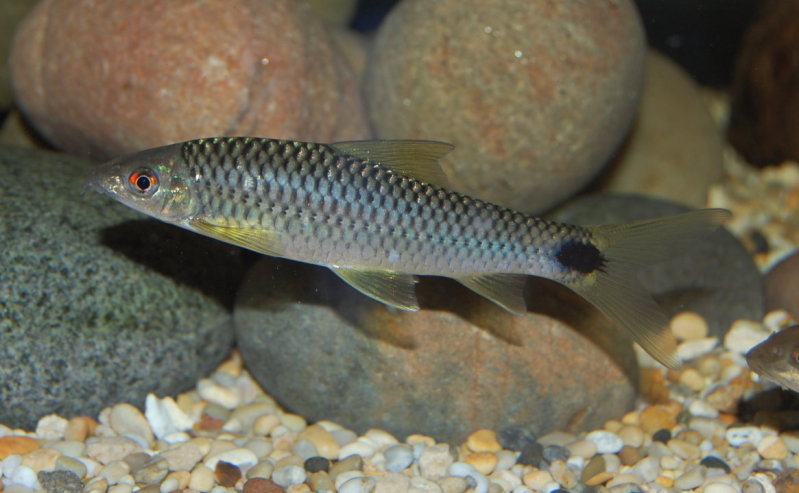
Crossocheilus reticulatus
Fowler, 1934
Max length170mm SL7in SLTank180 × 45cm72 × 18inTemp16–24°C61–75°FpH6.0–7.5While some laterally-striped members of the genus look very similar to one another the combination of silvery body, dark-edged scales and dark caudal peduncle blotch set C. reticulatus uniquely apart. The names Crossocheilus tchangi, Epalzeorhynchos coatesi and E. stigmaeus are all now considered synonyms of the species but were erected because the fish vary, most often in minor aspects of patt...
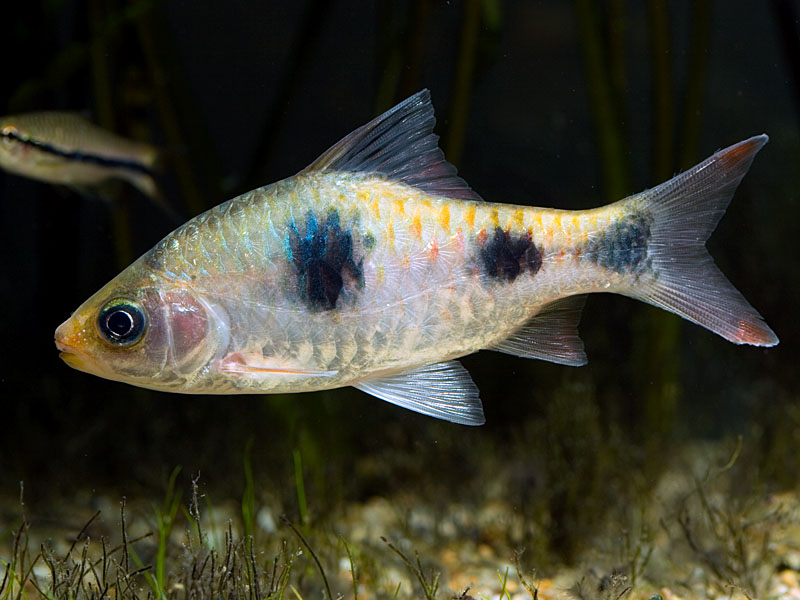
Dawkinsia rubrotinctus
Jerdon, 1849
Max length90mm SL3.5in SLTank120 × 45cm48 × 18inTemp18–25°C64–77°FpH6.0–7.5This species may have appeared in the aquarium trade under the misapplied names Puntius arulius or P. tambraparniei in the past, both of which are also now classified within Dawkinsia. See the relevant profiles for D. arulius and D. tambraparniei for additional information regarding that confusion, since here we concentrate on D. rubrotinctus. It was initially described by Jerdon in 1849 but placed in synonymy with P. arulius by Day (1878), where it remained for ov...
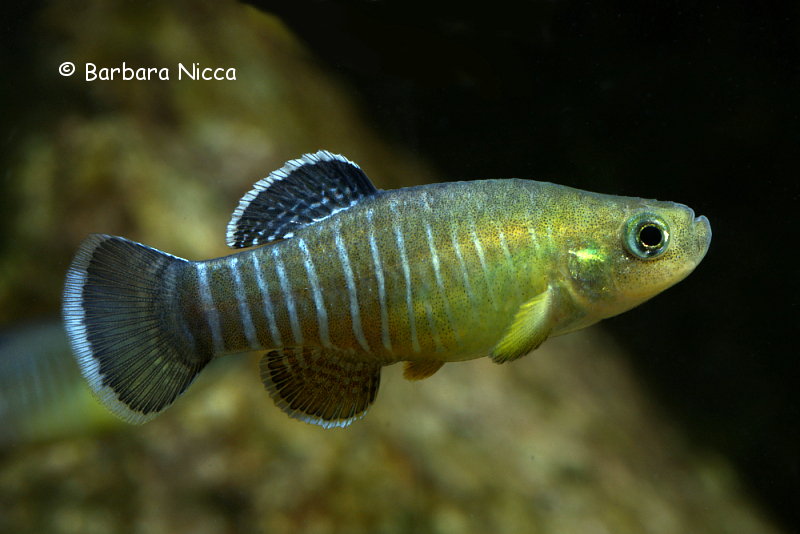
Esmaeilius persicusFarsi Toothcarp
Jenkins, 1910
Max length60mm SL2.4in SLTank120 × 30cm48 × 12inTemp8–32°C46–90°FpH6.5–8.0This species is still sometimes listed as a species of Lebias by some sources although that name has long been considered a synonym of Cyprinodon by most authorities and an ICZN committee voted to suppress the name in favour of Aphanius as recently as 2003. It was known as A. persicus until late 2011 when it was reclassified due to that name being preoccupied by a Late Miocene fossil species previously referred to as Brachylebias persicus Priem 1908. This change was necessary because Gau...
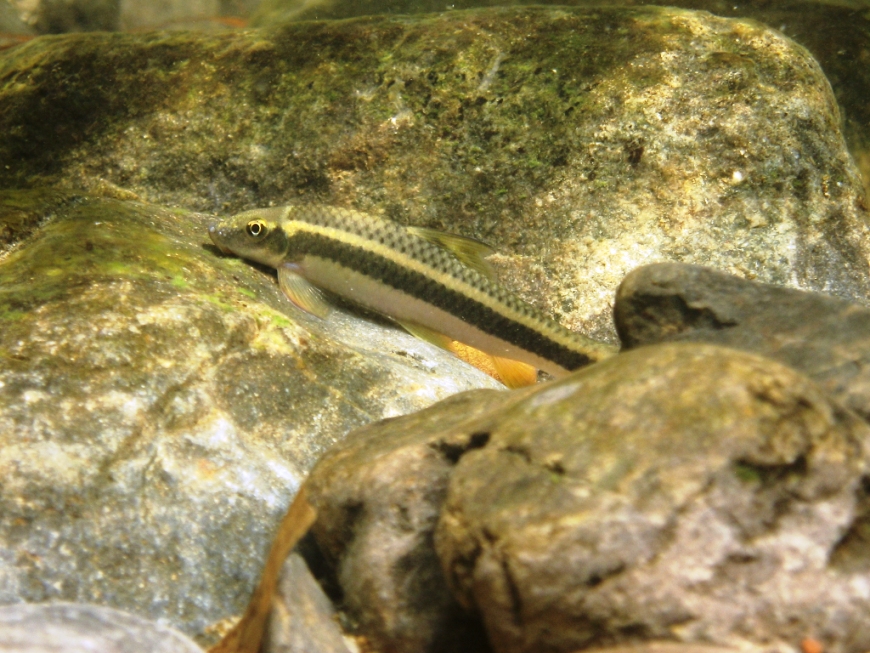
Garra cambodgiensisFalse SAE
Tirant, 1883
Max length150mm SL6in SLTank120 × 45cm48 × 18inTemp20–27°C68–81°FpH6.0–7.5Also known by the vernacular names ''black band garra', 'stone-lapping minnow' or 'false flying fox' and continues to be traded as Garra taeniata, an invalid name synonymous with G. cambodgiensis. It is often confused with those laterally-striped members of the genus Crossocheilus sold as 'Siamese algae eater' or 'Siamese flying fox', but in those species the dark lateral body stripe continues into the caudal-fin whereas in G. cambodgiensis it terminates...
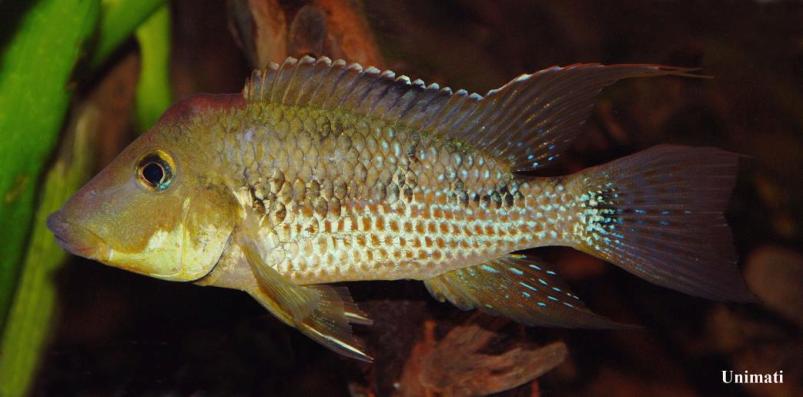
'Geophagus' steindachneriRed Hump Eartheater
Eigenmann & Hildebrand, 1922
Max length150mm SL6in SLTank120 × 45cm48 × 18inTemp20–30°C68–86°FpH6.0–7.5This species lends its name to the 'G.' steindachneri, an assemblage of closely-related species with unresolved generic placement which currently also includes 'G.' crassilabris and 'G.' pellegrini. It exists in a number of colour forms which vary with locality, some of which may eventually be described as separate taxa. Some of these may appear on trade lists under the synonym Geophagus hondae.
Gymnocorymbus bondiSilver Tetra
authority not recorded
Max length50mm SL2.0in SLTank60 × 38cm24 × 15inTemp22–27°C72–81°FpH5.5–7.5Not often seen in the hobby, probably because it's a fairly bland species when mature. Juveniles are more attractive, possessing reddish unpaired fins, but these fade as the fish mature. It is, however, both peaceful and hardy and is a good choice for the beginner. It is sometimes seen labelled as G. socolofi. This name is now considered a junior synonym of G. bondi....
Hypostomus cf. cochliodonSpotted Cochliodon
authority not recorded
Max length230mm SL9in SLTank120 × 45cm48 × 18inTemp21–24°C70–75°FpH6.3–7.2This undescribed species is part of the Hypostomus cochliodon complex, all of which were previously included in the genus Cochliodon. This is now considered a synonym of Hypostomus. Members of this group can be distinguished from congeners by several differences in morphology, most notably the hump-backed profile of mature fish and spoon-shaped dentition. These features, along with the fishes tendency to eat wood, are shared with the Panaque genus of the Ancistrinae subfamily, but the two genera...
Hypostomus plecostomoidesLDA42
authority not recorded
Max length250mm SL10in SLTank120 × 45cm48 × 18inTemp21–27°C70–81°FpH6.5–8.0This species is part of the Hypostomus cochliodon complex, all of which were previously included in the genus Cochliodon, which is now considered a synonym of Hypostomus. Members of this group can be distinguished from congeners by several differences in morphology, most notably the hump-backed profile of mature fish and spoon-shaped dentition. These features, along with the fishes tendency to eat wood, are shared with the Panaque genus of the Ancistrinae subfamily, but the two genera are known ...
Hypostomus sp.L229
authority not recorded
Max length250mm SL10in SLTank120 × 45cm48 × 18inTemp21–27°C70–81°FpH6.0–7.5This undescribed species is part of the Hypostomus cochliodon complex, all of which were previously included in the genus Cochliodon, which is now considered a synonym of Hypostomus. Members of this group can be distinguished from congeners by several differences in morphology, most notably the hump-backed profile of mature fish and spoon-shaped dentition. These features, along with the fishes tendency to eat wood, are shared with the Panaque genus of the Ancistrinae subfamily, but the two gener...
Hypostomus sp.
authority not recorded
Max length200mm SL8in SLTanknot recordedTemp23–27°C73–81°FpH6.0–7.5This undescribed species is part of the Hypostomus cochliodon species complex, all members of which were previously included in the genus Cochliodon, now considered a synonym of Hypostomus. Members of this group can be distinguished from congeners by several differences in morphology, most notably the hump-backed profile of mature fish and spoon-shaped dentition. These features, along with the fishes tendency to eat wood, are shared with the Panaque genus of the Ancistrinae subfamily, but the tw...
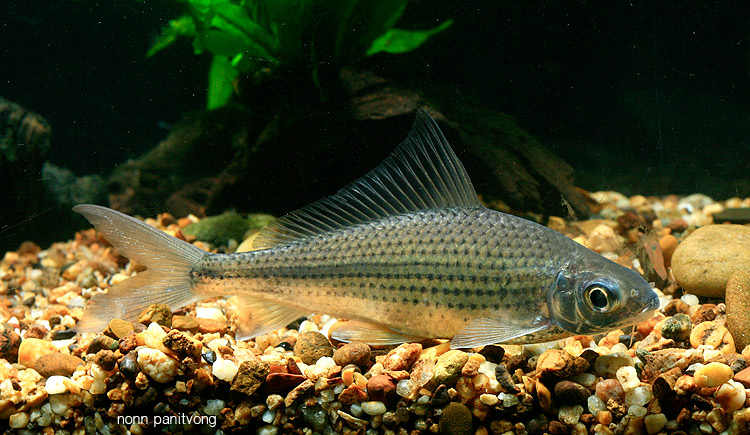
Labiobarbus leptocheilus
Valenciennes, 1842
Max length260mm SL10in SLTank240 × 60cm96 × 24inTemp20–26°C68–79°FpH6.0–8.0Different populations vary in appearance somewhat (see image of Salween specimen for example), and L. leptocheilus may turn out to represent a group of closely-related species rather than a single taxon. The population from the Cambodian Mekong has been considered to represent a distinct species, Labiobarbus lineatus, although that name is currently a synonym of L. leptocheilus following Kottelat (2013). It is widely used in the ornamental trade, however.
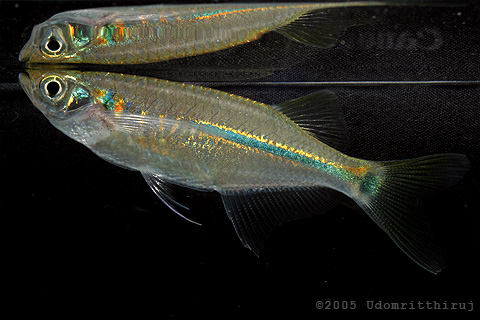
Laubuka siamensis
Fowler, 1939
Max length60mm SL2.4in SLTank120 × 30cm48 × 12inTemp20–28°C68–82°FpH6.0–7.5Considered synonymous with the congener L. laubuca for a number of years, thus reports of that species from anywhere in Indochina actually refer to the current concept of L. siamensis. Given the distribution of L. siamensis, it seems likely that many of the fish entering the aquarium trade are also this species and not L. laubuca. The two species can be distinguished by...