Results for “genus”
Type a name: scientific, common, or one a species used to go by. Or narrow the catalogue with the filters.
Filters
Pseudotropheus tropheops tropheops
authority not recorded
Max length200mm SL8in SLTank120 × 38cm48 × 15inTemp24–28°C75–82°FpH7.6–8.8This species has a confusing taxonomic past. There are currently 3 subspecies, Pseudotropheus tropheops tropheops, P. t. romandi and P. t. gracilior. P. macrophthalmus and P. microstoma were also once considered as subspecies of tropheops, but are now classed as distinct species. Furthermore, it is likely that the current subspecies and their various colour forms (of which there are many) will be themselves reclassifed into the currently invalid genus Tropheops! Incidentally, none of the subspec...
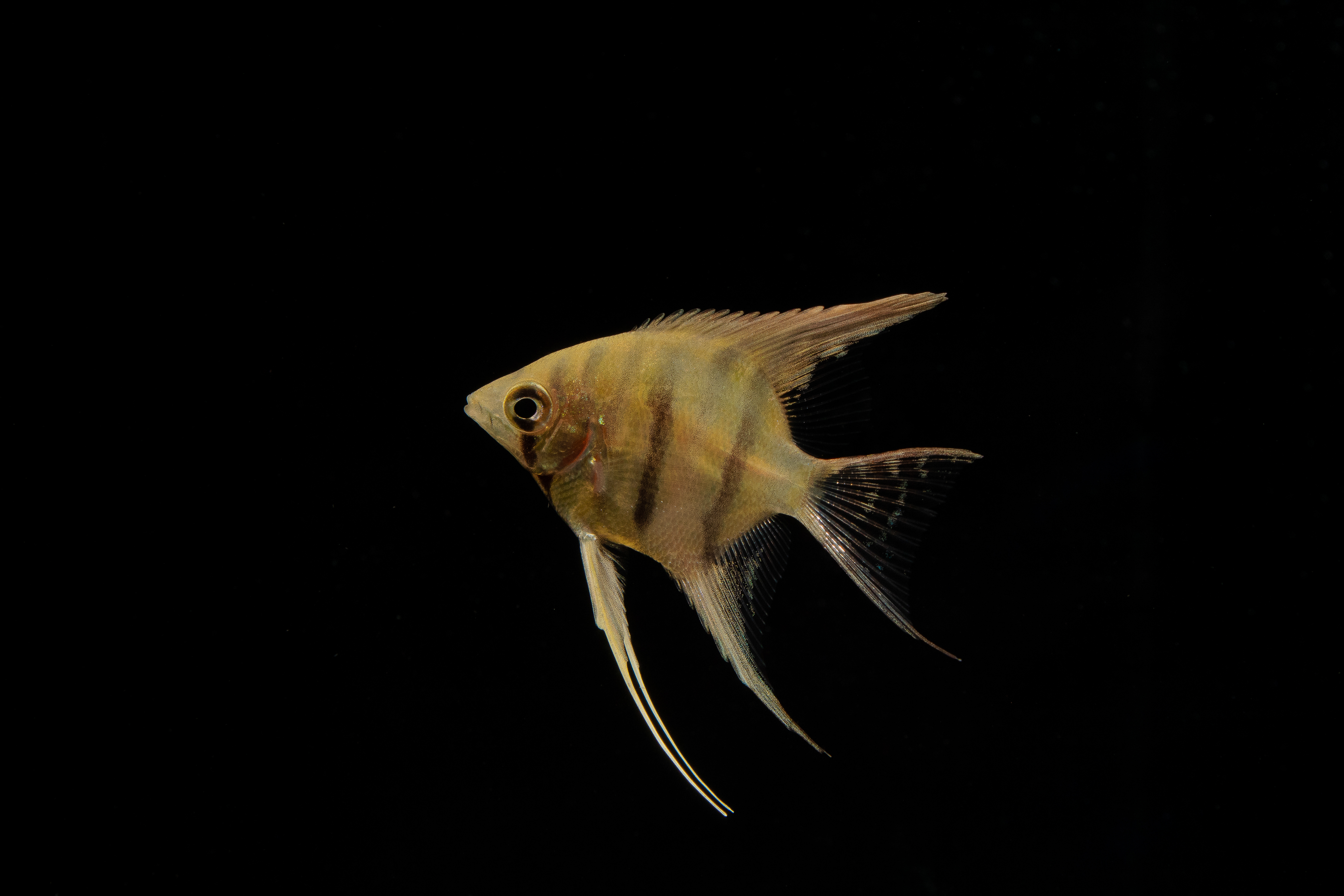
Pterophyllum leopoldiRoman Nose Angelfish
Gosse, 1963
Max length100mm SL3.9in SLTank90 × 30cm36 × 12inTemp22–29°C72–84°FpH5.0–7.0Pterophyllum leopoldi can be differentiated from other members of the genus by the presence of up to 11 vertical stripes on the body, though often only the 3 largest, boldest stripes can be seen. This species also shows a dark patch over the operculum. In adult specimens, a red/maroon hue over the back and fins is characteristic of the species, leading some to believe the most colourful natural form Angelfish. The name-sake roman nose possessed by the fish is also very distinctive and used as a meristic feature.
Pungu maclareni
authority not recorded
Max length100mm SL3.9in SLTank75 × 30cm30 × 12inTemp28–30°C82–86°FpH7.5–8.5This is currently the only described species in the genus Pungu. Because of it's its tiny natural range, habitat destruction due to excess water removal (the nearby town of Kumba relies on the lake for it's water supply), deforestation, the introduction of non-native species and overfishing, it is considered to be critically endangered and all efforts at captive breeding are to be encouraged. It is correspondingly rare in the hobby, and we suggest purchasing some only if you intend to ...
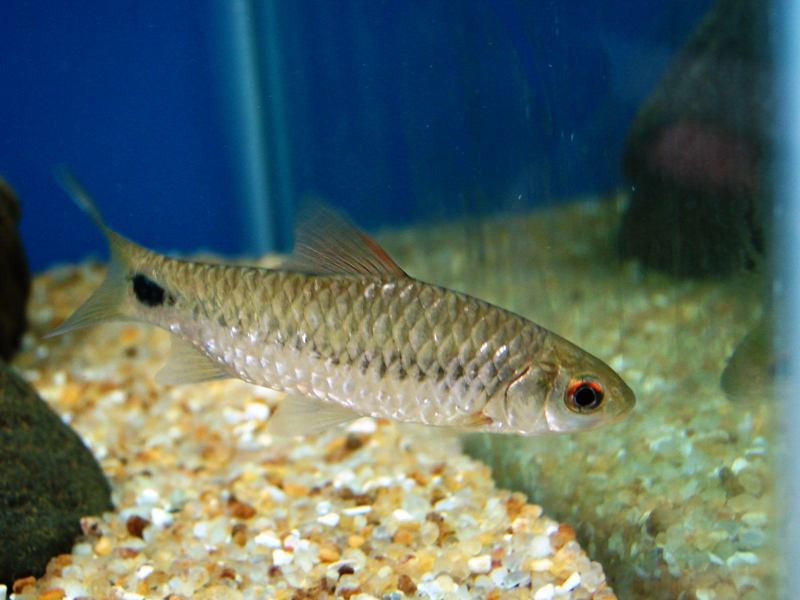
Puntius mahecola
Valenciennes, 1844
Max length75mm SL3.0in SLTank90 × 30cm36 × 12inTemp18–24°C64–75°FpH6.0–7.5This species has a chaotic taxonomic history with certain issues still to be resolved. While the name P. mahecola was misapplied to members of the genus Dawkinsia for over a century the fish itself has been widely misidentified as the congener P. amphibius (Valenciennes 1842). Its identity was partially resolved by Pethiyagoda and Kottelat (2005b) who demonstrated that though valid P. mahecola is not a Dawkinsia spp. but rather a smaller, relatively plain species with a single dark blotc...
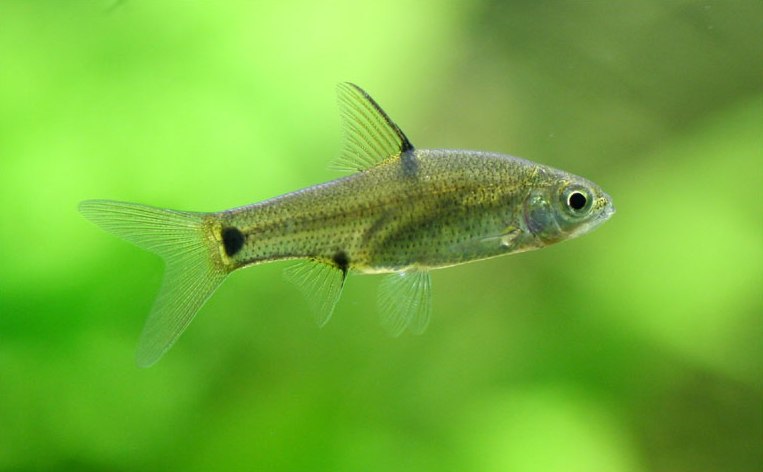
Puntius sharmai
Menon & Rema Devi, 1993
Max length40mm SL1.6in SLTank60 × 30cm24 × 12inTemp20–26°C68–79°FpH5.5–7.5This species is almost unheard of in the aquarium hobby outside of India but is maintained by some private collectors. It's distinguished from similar species by possessing a single pair of maxillary barbels, a relatively elongate body, and distinctive black spot above the anterior anal-fin base. The genus Puntius was for a number of years viewed as a polyphyletic catc...
Rasbora elegansElegant Rasbora
authority not recorded
Max length200mm SL8in SLTank120 × 45cm48 × 18inTemp22–25°C72–77°FpHnot recordedThis species is not especially popular in the hobby and is only infrequently seen on sale. It is clearly distinguishable from similar-looking members of the genus by lacking a dark stripe along the lateral line. Instead it possesses two spot-like markings on each flank, one below theorigin and lateral line and another at the caudal peduncle. The intensity of these can vary depending on the collection locality of the fish and they can be quite faint in some forms. There is also a third, smaller m...
Rasbora lacrimulaRed Cherry Rasbora
authority not recorded
Max length31mm SL1.2in SLTank45 × 30cm18 × 12inTemp22.2–25.6°C72–78°FpHnot recordedThis species is also traded as 'Bornean redfin rasbora', 'sunshine rasbora' and 'dwarf volcano rasbora' and first appeared in the hobby during the latter part of 2010. It can be told apart from all other members of the genus by a combination of the following characters: possession of small tubercules on the dorsal surface, posterior to theand continuing onto the upper part of caudal fin, visible as an irregular 'crest' when a specimen is viewed laterally; ...
Rasbosoma spilocercaDwarf Scissortail Rasbora
authority not recorded
Max length30mm SL1.2in SLTank45 × 30cm18 × 12inTemp22–26°C72–79°FpHnot recordedThis miniature look-a-like of the popular Rasbora trilineata is rarely seen in the aquatic hobby, probably as a result of its relatively plain patterning and rather delicate nature. However if a group is well looked-after they will exhibit some interesting behaviour and surprising colour. As it also makes an ideal resident of the ornamental planted aquaria that are currently so popular in the hobby we'd love to see it become more widely-available. The genus is currently monotypic and dis...
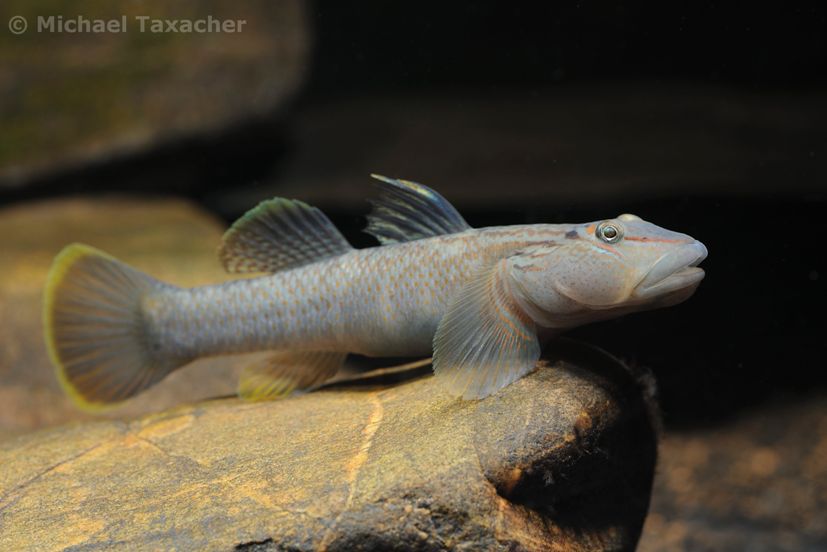
Rhinogobius gigas
Aonuma & Chen, 1996
Max length85mm SL3.3in SLTank80 × 30cm31 × 12inTemp18–28°C64–82°FpH6.0–8.0As is typical for the genus eggs are deposited on the ceiling of a cave or crevice and guarded by the male until hatching. Several potential sites should be offered in the form of rocks (flat slate tends to be easiest to handle, see below), terracotta pipes, plant pots, etc. A nuptial male will select a site and defend it agai...
Rineloricaria fallaxWhiptail Catfish
authority not recorded
Max length155mm SL6in SLTank90 × 30cm36 × 12inTemp15–25°C59–77°FpH5.8–7.8One of the most common of the numerous species sold as 'whiptail catfish', R. fallax is an excellent species for the newcomer to Loricariids or catfish breeding. It's certainly not the most active species, but when settled and housed with the correct kind of tankmates is by no means shy either. In 2002 it was briefly placed in the resurrected genus Hemiloricaria, but this lasted less than twelve months, after which it was transferred back to Rineloricaria. Currently only Rinelo...
Rineloricaria parvaWhiptail Catfish
authority not recorded
Max length110mm SL4in SLTank75 × 30cm30 × 12inTemp20–25°C68–77°FpH6.0–7.5One of the most common of the numerous species sold as 'whiptail catfish', R. parva is an excellent species for the newcomer to Loricariids or catfish breeding. It's certainly not the most active species, but when settled and housed with the correct kind of tankmates is by no means shy either. In 2002, it was briefly placed in the resurrected genus Hemiloricaria, but this lasted less than twelve months, at which point it was transferred back to Rineloricaria. Currently only Rin...
Sandelia bainsiiEastern Cape Rocky
authority not recorded
Max length325mm SL13in SLTank180 × 60cm72 × 24inTemp18–22°C64–72°FpH6.8–8.0There are only two described species in the genus Sandelia. Both have very limited natural ranges in parts of South Africa, which in itself is odd as they're completely isolated from other genera of anabantoids. This is probably due to some ancient radiation of species, but as yet remains unresolved. Sandelia spp. are also considered the most primitive of anabantoids, as they possess a less well-developed labyrinth organ than their relatives. You're unlikely to see any of these fo...
Sandelia capensisCape kurper
authority not recorded
Max length215mm SL8in SLTank120 × 45cm48 × 18inTemp18–22°C64–72°FpH6.5–7.2There are only two described species in the genus Sandelia. Both have limited natural ranges in parts of South Africa, which in itself is odd as they're completely isolated from other genera of anabantoids. This is probably due to some ancient radiation of species, but as yet remains unresolved. Sandelia spp. are also considered the most primitive of anabantids, as they possess a less well-developed labyrinth organ than their relatives. S. capensis is of considerable conservation importa...
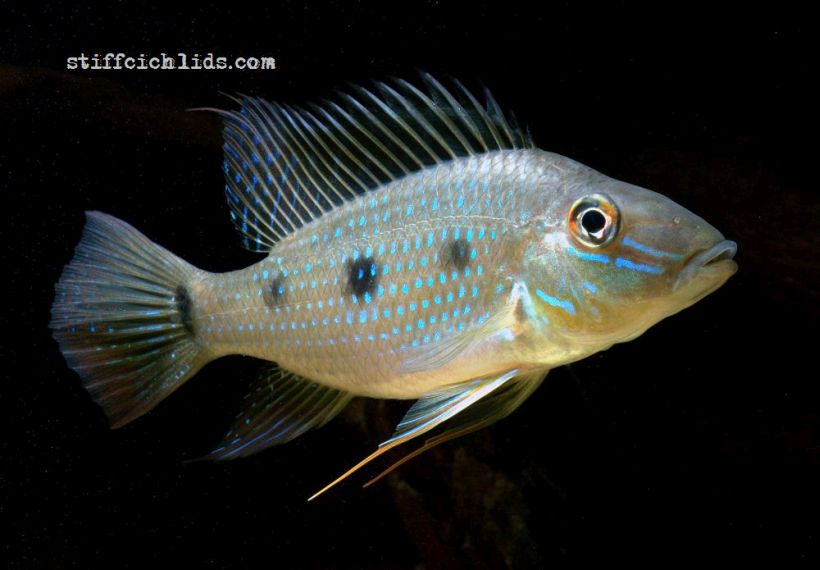
Satanoperca acuticepsSharphead Eartheater
Heckel, 1840
Max length170mm SL7in SLTank180 × 60cm72 × 24inTemp20–28°C68–82°FpH5.5–7.5This species is relatively rare in the ornamental trade, where it is sometimes confused with its similarly-patterned congeners S. daemon and S. lilith. These three species all possess 1-3 dark blotches on the side of the body and a relatively large ocellus on the upper caudal-fin base, characters that immediately separate them from the remainder of the genus which lack blotches on the body and have a relatively small ocellus on the upper caudal-fin base.
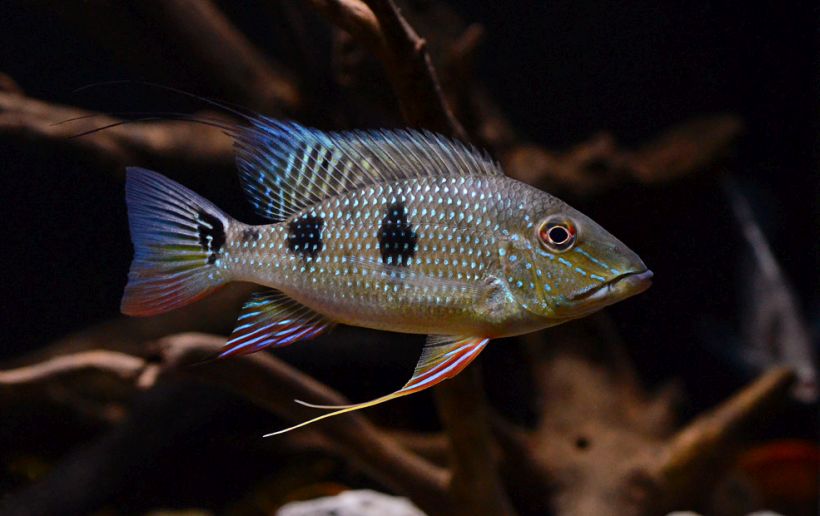
Satanoperca daemonThreespot Eartheater
Heckel, 1840
Max length250mm SL10in SLTank210 × 60cm84 × 24inTemp24–28°C75–82°FpH3.5–6.0S. daemon is relatively common in the aquarium trade but is by no means easy to maintain, with particular attention to space, diet, water quality, and chemistry required in order for it to thrive. It can be distinguished from other members of the genus by possessing two dark blotches on the flank and a prominent ocellus at the caudal-fin base. Among the named species it is most similar to...
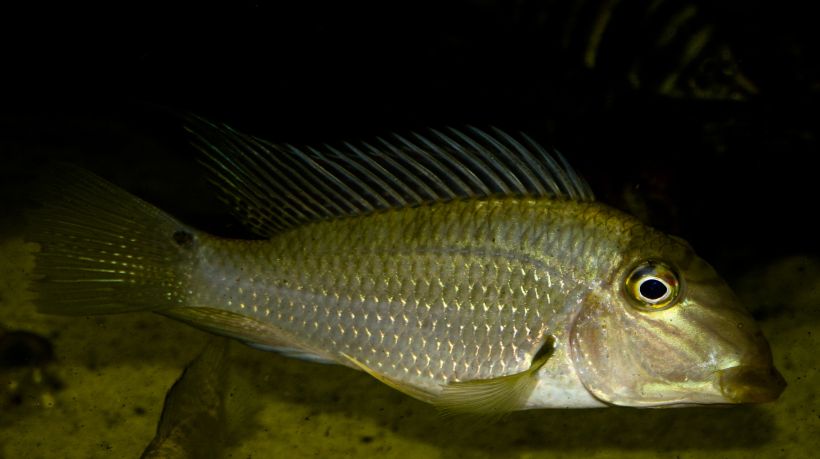
Satanoperca jurupariDemon Eartheater
Heckel, 1840
Max length185mm SL7in SLTank210 × 60cm84 × 24inTemp20–28°C68–82°FpH5.5–7.5S. jurupari is also known as 'demon fish', 'jurupari earth eater', 'green horse face', or simply 'jurupari' in the aquarium hobby. It can be distinguished from other members of the genus by the following combination of characters: presence of a relatively small dark ocellus on the upper caudal-fin base; absence of well-defined dark blot...
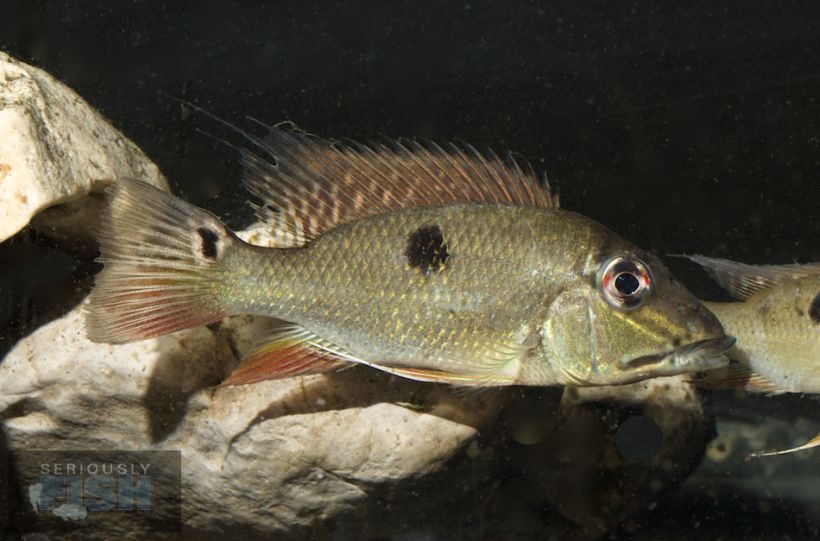
Satanoperca lilith
Kullander & Ferreira, 1988
Max length255mm SL10in SLTank210 × 60cm84 × 24inTemp20–28°C68–82°FpH5.0–7.5Despite its extensive natural distribution S. lilith is uncommon in the ornamental trade, where it is sometimes referred to as 'one-spotted demon fish' or 'one spot eartheater'. It can be distinguished from other members of the genus by possessing a single dark blotch on the flank and a prominent ocellus at the caudal-fin base. Among the named species it is most similar to S. daemon, but that species possesses two blotches on the flank.
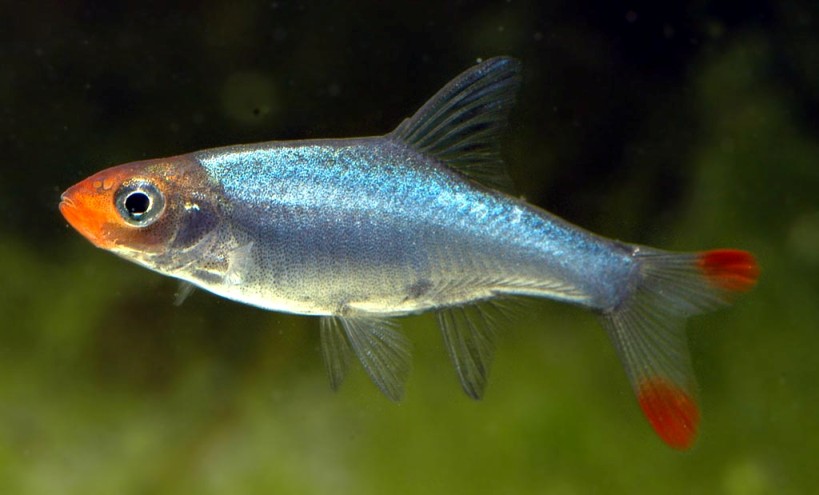
Sawbwa resplendens
Annandale, 1918
Max length35mm SL1.4in SLTank60 × 30cm24 × 12inTemp18–22°C64–72°FpH6.0–8.0S. resplendens is traded under several names including 'Asian rummynose', 'rummynose rasbora' and 'naked microrasbora'. It can be immediately distinguished from all other Asian cyprinids by the distinctive colour pattern. The genus Sawbwa is currently monotypic and endemic to the isolated lake basin of Inlé in Shan State, eastern Myanmar.
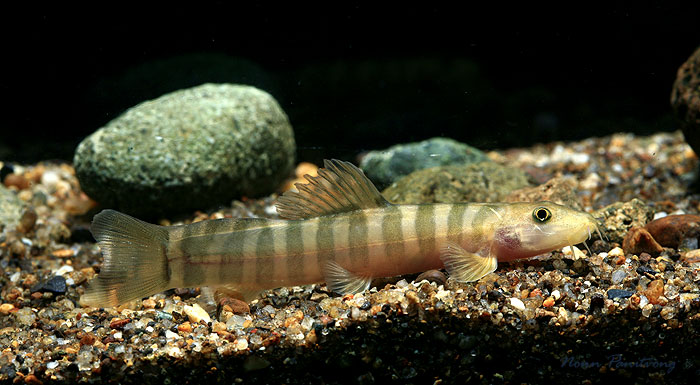
Schistura alticrista
Kottelat, 1990
Max length75mm SL3.0in SLTank90 × 30cm36 × 12inTemp21–26°C70–79°FpH6.0–7.5This species is very rare in the aquarium trade but available on occasion. It has 8-9 darkish body bars which usually split vertically as the fish mature, and like some conspecifics possesses a prominent dorsal adipose crest on the caudal peduncle. Schistura is the most species-rich genus among...
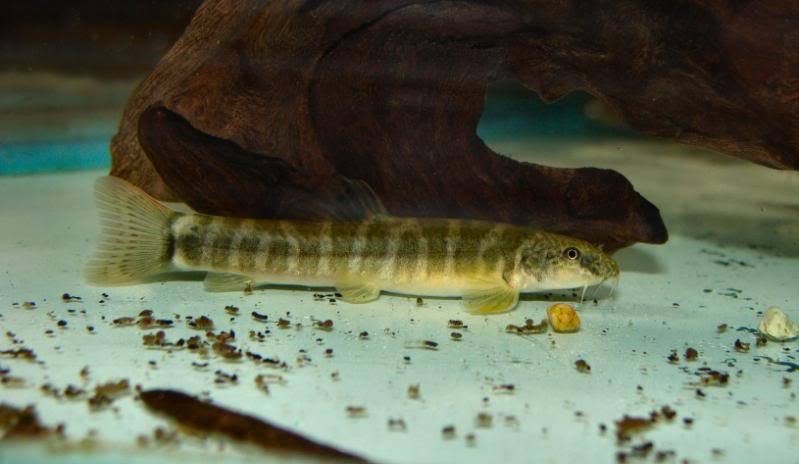
Schistura sp. 2Laos Redtail Loach
authority not recorded
Max length45mm SL1.8in SLTank80 × 30cm31 × 12inTemp20–26°C68–79°FpH6.0–7.5The identity of this fish is unclear but it has been traded as S. sp. 'Laos redtail'. Schistura is the most species-rich genus among nemacheilid loaches with some 190 members and it continues to grow with over 100 having been described since 1990. It may repre...