Results for “várzea”
Type a name: scientific, common, or one a species used to go by. Or narrow the catalogue with the filters.
Filters
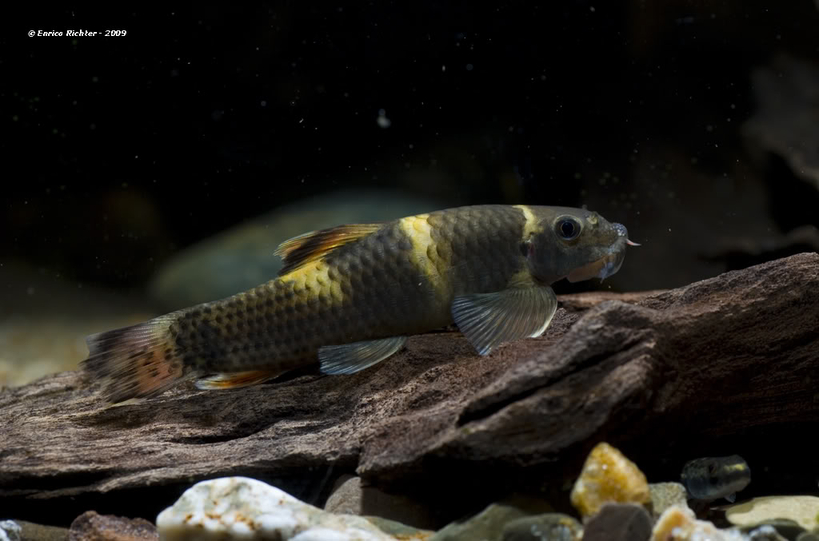
Garra flavatraPanda Garra
Kullander & Fang, 2004
Max length90mm SL3.5in SLTank90 × 30cm36 × 12inTemp22–27°C72–81°FpH6.5–7.5Garra species are usually included in the subfamily Labeoninae/Cyprininae (name varies with author) which by current thinking is further divided into several tribes and subtribes (Stiassny and Getahun, 2007). The putatively monophyletic subtribe Garraina comprises Garra plus numerous other genera including the well-known Crossocheilus and Epalzeorhynchos. Within this division their closest relatives are members of Discogobio, Discocheilus and Placocheilus (the lat...
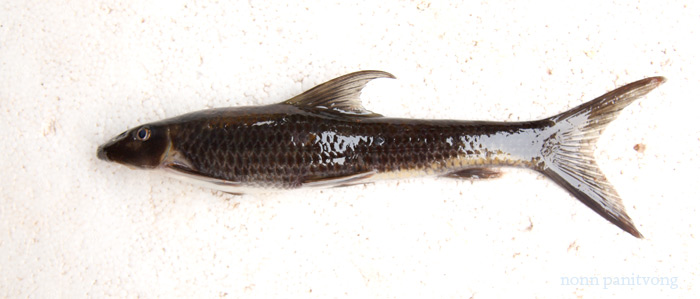
Garra theunensis
Kottelat, 1998
Max length300mm SL12in SLTanknot recordedTempnot recordedpHnot recordedThis species can be distinguished from congeners in Southeast Asia and China by the following combination of characters: plain brown body and fins, sometimes with 6-8 narrow, faintly distinct, longitudinal stripes; snout triangular in dorsal view, with small tubercules and without transverse groove...
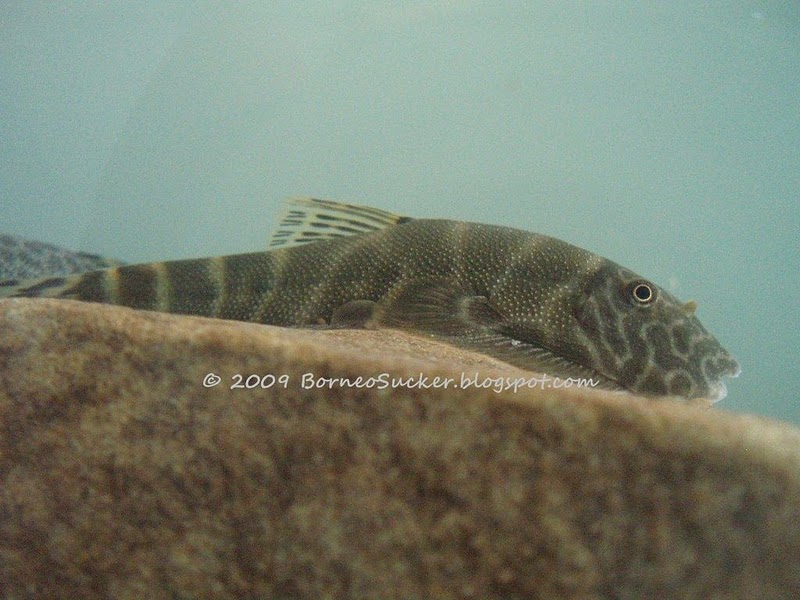
Gastromyzon extrorsus
Tan, 2006
Max length80mm SL3.1in SLTank75 × 30cm30 × 12inTemp20–24°C68–75°FpH6.0–8.0This species has probably not been seen in the aquarium trade yet but has been maintained by a few private collectors. It can be distinguished from congeners by the following combination of characters: secondary rostrum present; complete postoral pouch present; body colour brown with up to 9 thin gold stripes; head dorsum dark brown with gold reticulate pattern; subopercular groove absent; gill slit vertical; sublacrymal groove present; sno...
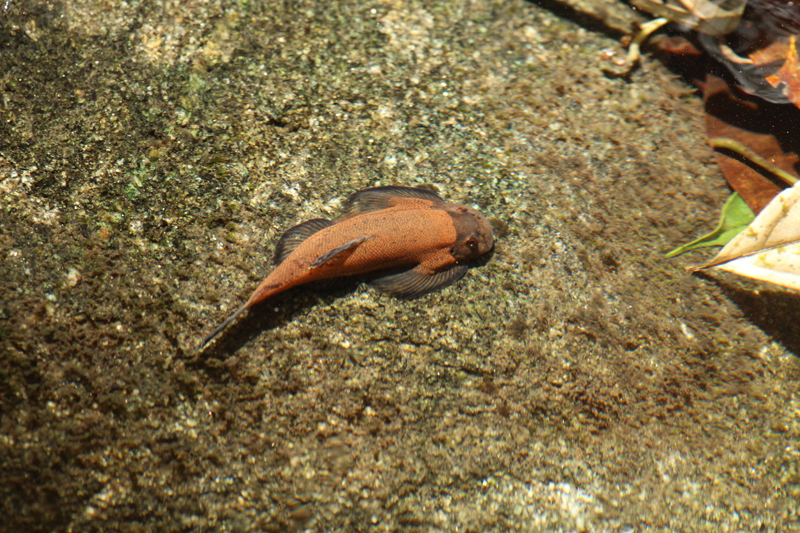
Gastromyzon lepidogaster
Roberts, 1982
Max length100mm SL3.9in SLTank120 × 30cm48 × 12inTemp18–24°C64–75°FpH6.0–8.5This species is variable in terms of colour. Large adults may be bright green, orange or barred but are apparently capable of changing from barred to plain in just a few seconds. These different forms have been recorded in the same natural habitats, and some individuals also possess prominent nuptial tubercules covering much of the body.
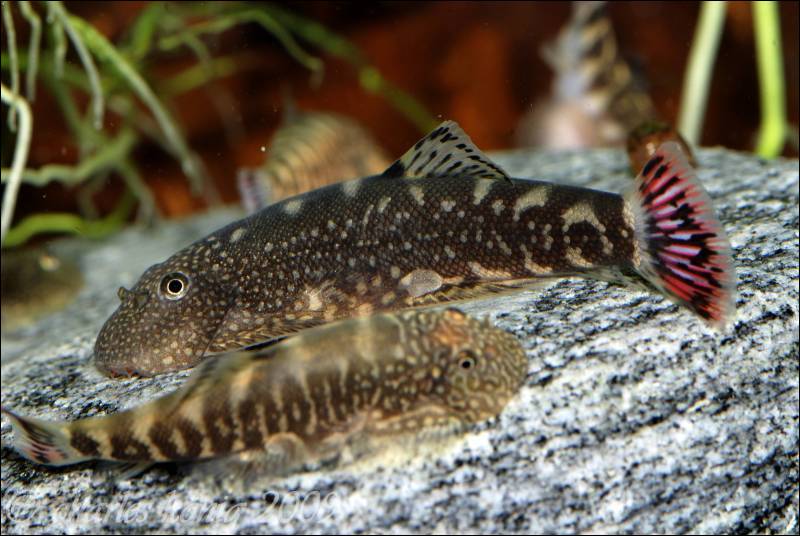
Gastromyzon ocellatus
Tan & Ng, 2004
Max length45mm SL1.8in SLTank60 × 30cm24 × 12inTemp20–24°C68–75°FpH6.0–7.5Some individuals do appear very similar to G. farragus, with noticeable spotting on the head, but can usually still be told apart by examining the caudal-fin which tends to contain only a single thick, dark vertical bar in G. farragus whereas in G. ocellatus there are more often two bars, one thick, one thinner. Intermediate forms do exist though meaning identification is sometimes tricky.
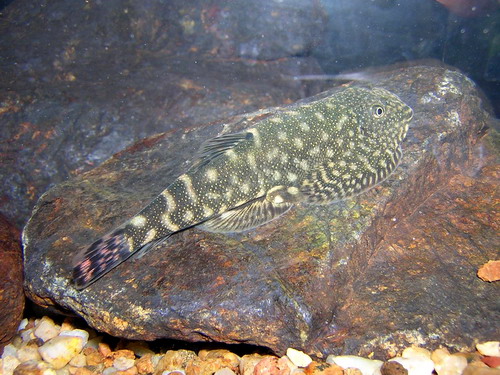
Gastromyzon sp. 'SK01'
authority not recorded
Max length50mm SL2.0in SLTank60 × 30cm24 × 12inTemp20–24°C68–75°FpH6.5–8.0This undescribed species has probably not been seen in the aquarium trade yet but is occasionally maintained private collectors. The 'SK' numbering system used here refers to 'South Kalimantan', home to several unidentified members of the genus. Gastromyzon spp. are placed into various 'species groups' (artificial assemblages of species which may or may not be monophyletic) for ease of reference, and based on colour and patterning G. sp. 'SK01' appears similar to members of the G. ridens group which also includes G. crenastus, G. stellatus and G. zebrinus.
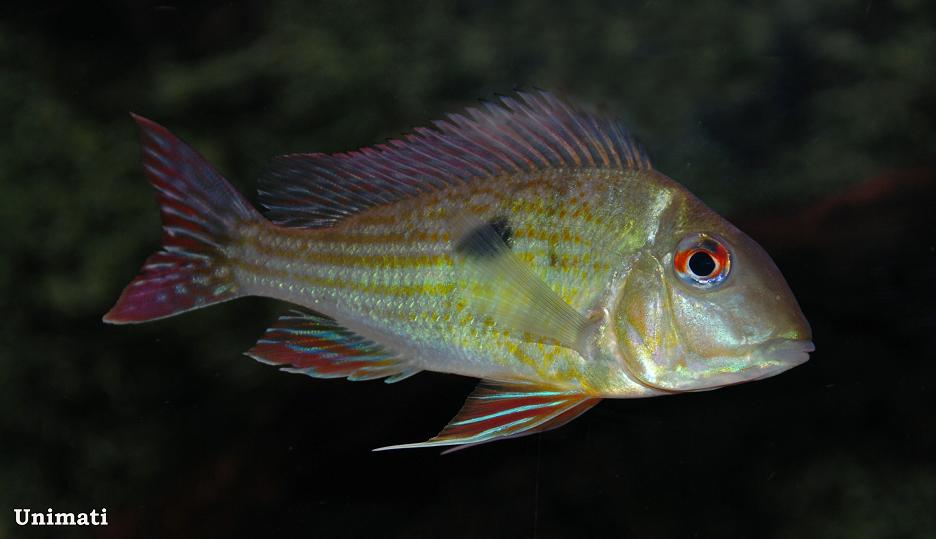
Geophagus abalios
López-Fernández & Taphorn, 2004
Max length200mm SL8in SLTank180 × 60cm72 × 24inTemp26–32°C79–90°FpH4.0–7.0It also occurs in the río Caura on the Guyana Shield plus the Ventauri and Mavaca drainages in the middle and upper Orinoco where it’s also known from some white water, referring to turbidity rather than turbulence, habitats. To the north its distribution appears limited by the Las Majaguas dam on the Río Cojedes, a tributary of the Apure where a probable introduced population inhabits the res...
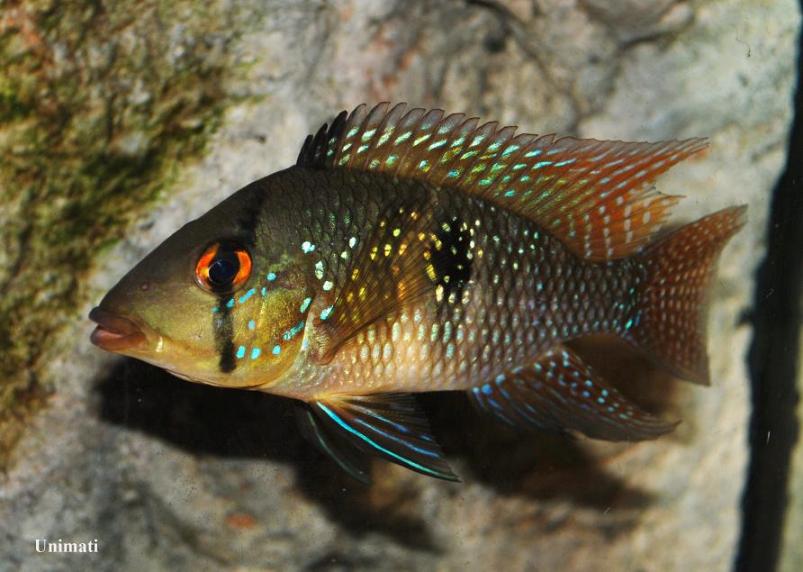
'Geophagus' brasiliensisPearl Cichlid
Quoy & Gaimard, 1824
Max length250mm SL10in SLTank150 × 45cm60 × 18inTemp18–28°C64–82°FpH6.0–8.0This species is also known as the 'pearlscale' or 'mother-of-pearl' cichlid in deference to the iridescent body scaling. It's also worth noting that fishes sold as Gymnogeophagus australis in Europe are 'G.' brasiliens is more often than not. Wild specimens exhibits significant dissimilarities in body colour and patterning depending on locality with basic colouration being dominated by varying shades of blue, green or yellow, for example. Some populations al...
Geophagus proximus
Castelnau, 1855
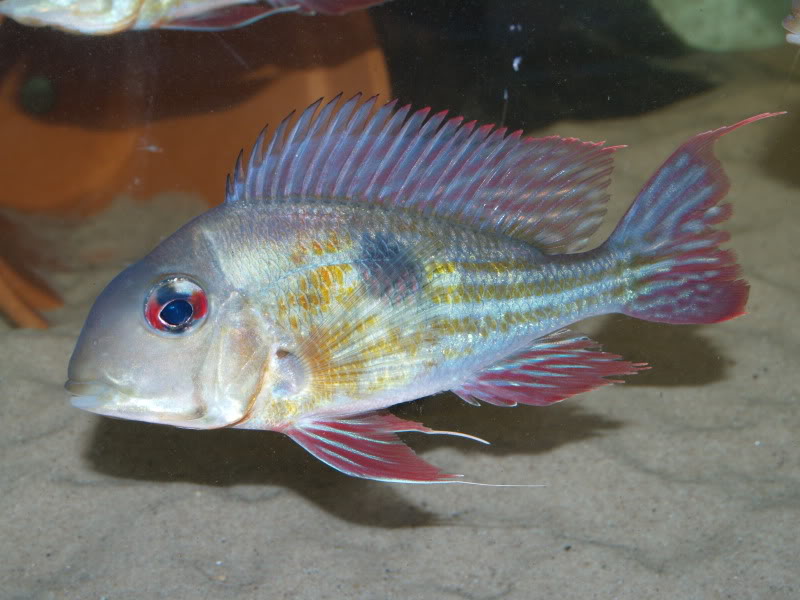
Max length225mm SL9in SLTank180 × 60cm72 × 24inTemp24–32°C75–90°FpH4.0–7.0This species is rare in the hobby though it's name is often attached to shipments of other Geophagus species. It's a member of the nominal G. surinamensis 'group' of closely-related species within the genus and can be identified by a combination of characters including: possession of dark preopercular marking; no vertical bars on the flanks; relatively large, roughly oblong-shaped dark midlateral marking; caudal fin brownish with 3-5 light stripes on upper lobe and less well-defined stripes or mottled pattern of light spots with narrow dark interspaces on lower lobe.
Geophagus sp. 'orange head'
authority not recorded
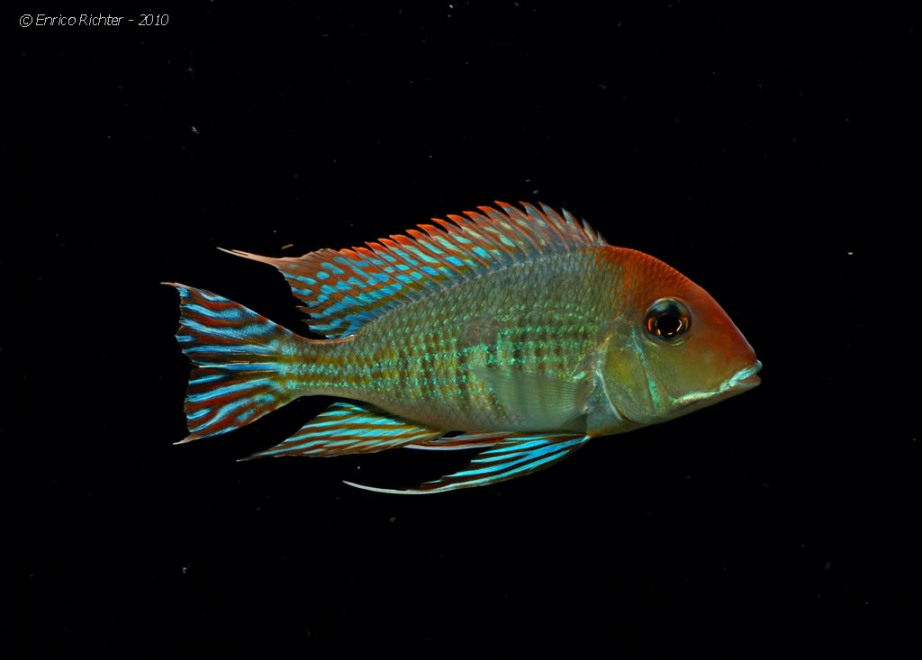
Max length250mm SL10in SLTank180 × 60cm72 × 24inTemp26–30°C79–86°FpH4.5–7.5There are at least two variants available one of which is often traded as G.sp. 'Araguaia orange head'. This is misleading since both are endemic to the Tapajós drainage (see 'Distribution'), and appears to date back to an error in collection locality when the fish were first exported. The two differ in the extent of orange colouration on the head which extends onto the opercle in G. sp. 'orange head (rio Arapiuns form) but is mostly restricted to the area above the ey...
'Geophagus' steindachneriRed Hump Eartheater
Eigenmann & Hildebrand, 1922
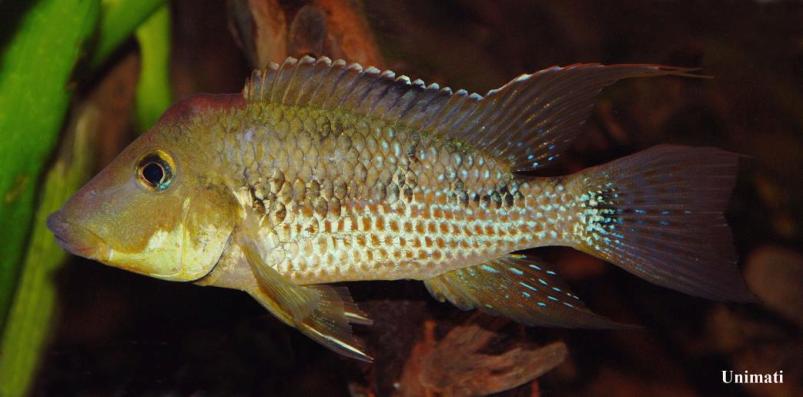
Max length150mm SL6in SLTank120 × 45cm48 × 18inTemp20–30°C68–86°FpH6.0–7.5This species lends its name to the 'G.' steindachneri, an assemblage of closely-related species with unresolved generic placement which currently also includes 'G.' crassilabris and 'G.' pellegrini. It exists in a number of colour forms which vary with locality, some of which may eventually be described as separate taxa. Some of these may appear on trade lists under the synonym Geophagus hondae.
Gymnarchus niloticusAba Aba
authority not recorded
Max length1650mm SL65in SLTank360 × 120cm142 × 48inTemp23–28°C73–82°FpH6.5–8.0G. niloticus is the only species in its genus and is utterly unique. Unlike other knifefish it has an extended dorsal rather thangiving rise to the alternative common name of upside-down knifefish. Despite this common name, it is actually more closely related to the Mormyrid group of species. It is a truly beautiful sight in motion despite its lack of bright colours, as it can move in virtually any direction with ease using its undulatingto 'steer'. It also produces a weak electrical d...
Gymnostomus lineatus
Smith, 1945
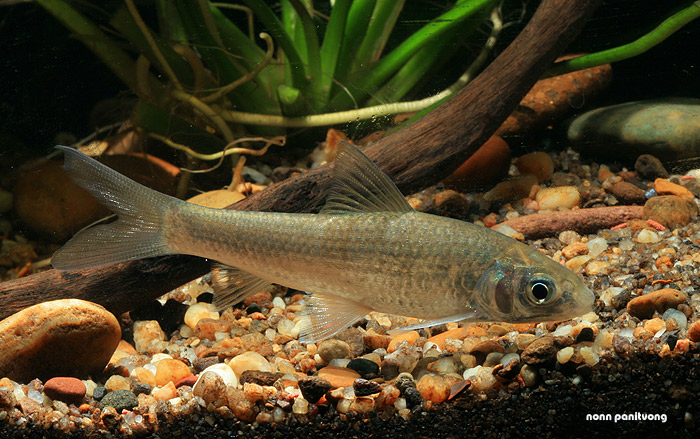
Max length150mm SL6in SLTanknot recordedTempnot recordedpHnot recordedRecorded from the middle to lower Mekong river basin in southern China (Yiunnan province), Laos, Thailand, and Cambodia, plus the Chao Phraya watershed in central Thailand. Type locality is 'Thailand: Lam Ton Lang, a tributary of Menam Sak [Mae Nam Pa Sak; Ban Lam Thong Lang, village northwest of Pakjong'.
Haplochromis latifasciatus
authority not recorded
Max length125mm SL5in SLTank120 × 30cm48 × 12inTemp23–28°C73–82°FpH7.2–8.2This beautiful species is critically endangered in nature but is not that rare in the hobby being quite easily bred. Many sources refer to it by the invalid scientific name Astatotilapia latifasciata and may also be seen for sale as Haplochromis sp. "zebra obliquidens" or H. obliquidens. Sadly it's thought that the latter fish has never even been exported and is extinct in nature. Furthermore, H. obliquidens is a Victorian species and does not even inhabit the same lake as H. l...
Hara jerdoniAsian Stone Catfish
authority not recorded
Max length30mm SL1.2in SLTank30 × 20cm12 × 8inTemp18–24°C64–75°FpH5.6–7.6This delightful little species can be distinguished from others in the genus by its elongated pectoral spines. It, and others in the genus (and also the closely related genus Erithistes), also go by the common name of moth catfish due to their patterning and shape when viewed from above....
Hemiancistrus sp.Blue Phantom Plec
authority not recorded
Max length180mm SL7in SLTank120 × 30cm48 × 12inTemp22–25°C72–77°FpH6.0–7.0This stunning species must surely rank among the most attractive Loricariids available in the hobby. There are several colour forms available, depending on collection locality. These vary in base colour and in the number, size and positioning of the spots on the body. The true identity of this fish is shrouded in confusion. It may or may not be Hemiancistrus subviridis, also known as the green phantom plec (L200), which it resembles very closely in morphology. The two are also found in diffe...
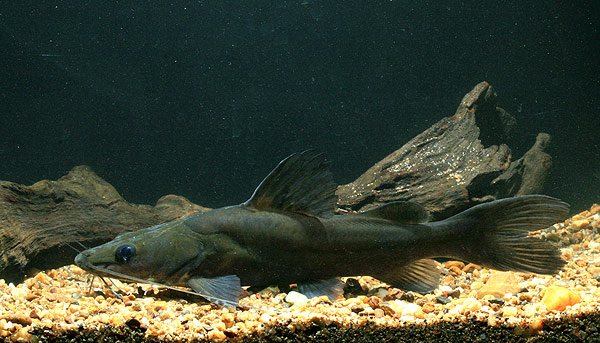
Hemibagrus filamentus
Fang & Chaux, 1949
Max length420mm SL17in SLTanknot recordedTempnot recordedpHnot recordedThis species appears to be unknown in the aquarium trade but is a valued food fish within its native range. Hemibagrus has been divided into a number of putative species groups which may or may not represent monophyletic assemblages, and following a major review by Ng and Kottelat (2013) H. filamentus is included in the H. nemurus group.
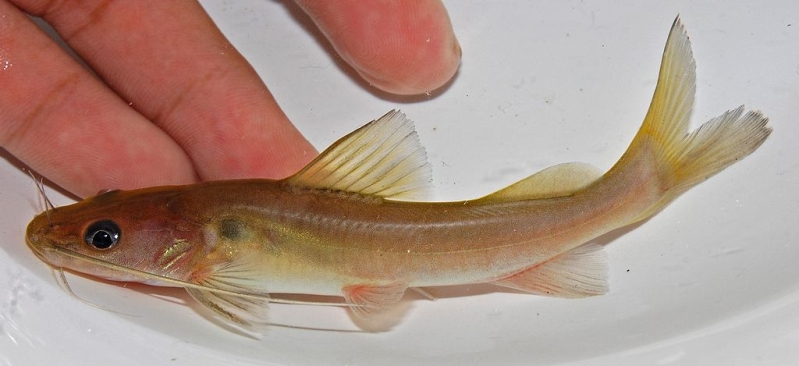
Hemibagrus planiceps
Valenciennes, 1840
Max length263mm SL10in SLTanknot recordedTempnot recordedpHnot recordedThis species is now considered endemic to Java but has been confused with the congeners H. gracilis (from eastern Peninsular Malaysia), H. velox (Sumatra) and H. bongan (Borneo) in the past, while the population formerly considered to inhabit northwestern Peninsular Malaysia has been described as H. divaricatus (Ng and Kottelat, 2013).
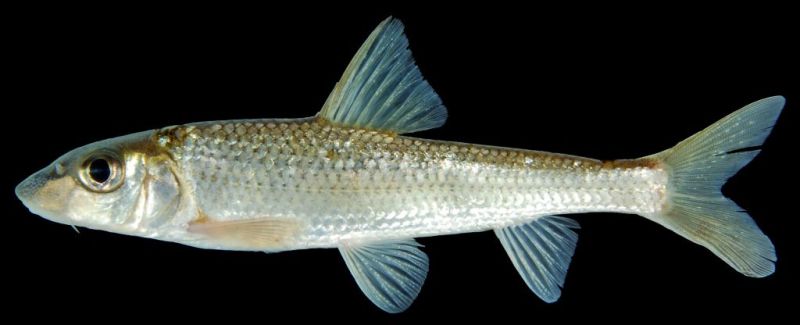
Hemibarbus maculatusSpotted Steed
Bleeker, 1871
Max length400mm SL16in SLTanknot recordedTempnot recordedpHnot recordedWidepread in eastern Asia between the Yangtze and Amur river basins, including China (mainland and islands of Taiwan and Hainan), Korea, Mongolia, Russia, and Japan. It probably been introduced to Vietnam and Laos, or records from these countries represent another species.
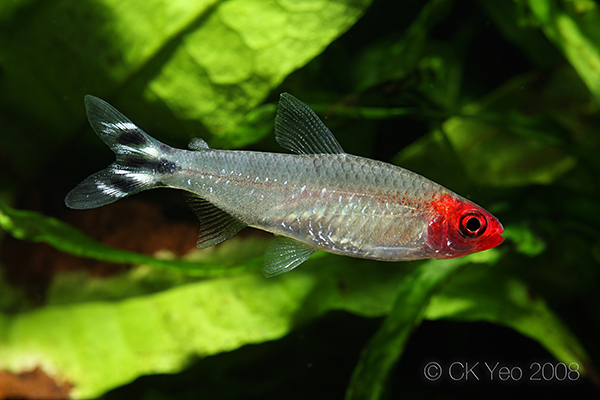
Hemigrammus bleheriFirehead Tetra
authority not recorded
Max length50mm SL2.0in SLTanknot recordedTemp23–26°C73–79°FpH5.5–7.0This is the species most commonly sold as 'rummy-nose tetra' in aquatic outlets. A selectively-bred "golden" variant has also been produced by commercial breeders and is available from time-to-time. The natural form is very similar to both the "true" rummy-nose, Hemigrammus rhodostomus and the 'false' rummy-nose, Petitella georgiae in appearance. The 3 species can distinguished by several factors. The first is by the extent to which the red colouration...