Results for “species”
Type a name: scientific, common, or one a species used to go by. Or narrow the catalogue with the filters.
Filters
Neolamprologus helianthusSunflower Lamprologus
authority not recorded
Max length80mm SL3.1in SLTanknot recordedTemp23–27°C73–81°FpH7.5–9.0This stunning species was only described in 1997 and is included in the so-called "Brichardi complex", which also includes N. brichardi, crassus, falcicula, gracilis, pulcher, savoryi and splendens. The species should not be mixed in aquaria as they will hybridise freely. N. helianthus can be distinguished from others in the complex by its overall yellow-orange patterning and v-shaped cheek marking....
Neolamprologus leleupiLemon Cichlid
authority not recorded
Max length100mm SL3.9in SLTanknot recordedTemp23–27°C73–81°FpH7.5–9.0One of the most popular Tanganyikan species in the hobby, N. leleupi is a stunning fish when in good condition. However, it is not as easy to maintain as its popularity suggests, due to its disagreeable attitude towards conspecifics and its sensitivity to deteriorating water conditions. It is a solitary species in nature, with male fish entering females' caves as they find them and spawning with receptive females. This explains the weak pair bond formed by spawning fish in aquaria and also ...
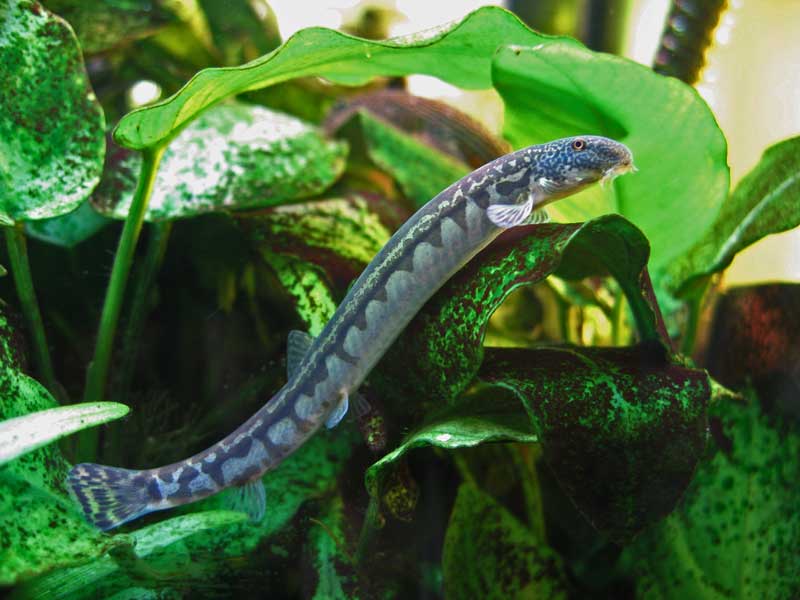
Niwaëlla delicataAjime Loach
Niwa, 1937
Max length110mm SL4in SLTank90 × 30cm36 × 12inTemp20–24°C68–75°FpH6.5–7.5During winter months N. delicata retreats to streams or underflows where it remains dormant between October and April (Kano, 2000) before emerging to spawn. Other species living alongside it in nature include Rhinogobius flumineus, Cottus pollux and Phoxinus spp. Niwaëlla is closely related to Cobitis and N. delicata, also the type species, was described as C. delicata (Niwa, 1937). The combination of characters used to tell it...
Ompok bimaculatusButter Catfish
authority not recorded
Max length450mm SL18in SLTank180 × 60cm72 × 24inTemp20–26°C68–79°FpH6.0–8.0This infrequently seen (in the trade) species is also known as the two spot glass catfish, for fairly obvious reasons. It is more than likely that a number of separate species are currently considered within this one, as there are clear morphological differences between populations. Pending a taxonomic revision, these currently all remain classified as O.bimaculatus. This would also seem to explain the apparent toleration of the fish to wildly different water chemistry. Xanthic and albino forms ...
Oreochromis niloticus niloticusNile Tilapia
authority not recorded
Max length600mm SL24in SLTank210 × 60cm84 × 24inTemp21–27°C70–81°FpH6.2–8.5One of the most invasive fish species in the world but also one of the most economically important, O. niloticus is bred in huge numbers in many countries as a food fish. It is often cross-bred with other Oreochromis species for colour in order to make the fish more appealing to consumers. The destructive effect of O. niloticus on non-native ecosystems into which it escapes or is released is mainly due to it's adaptibility. It has been recorded over a temperature range of 60-110°F an...
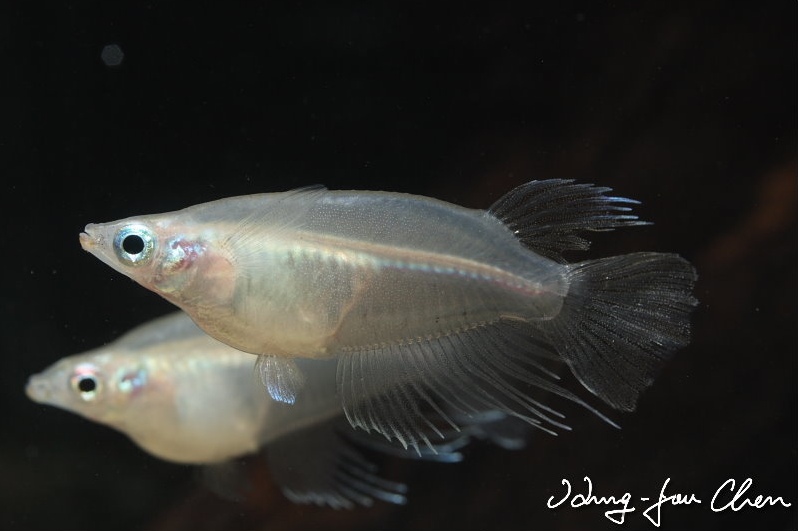
Oryzias dancenaIndian Ricefish
Hamilton, 1822
Max length35mm SL1.4in SLTank45 × 30cm18 × 12inTemp23–27°C73–81°FpH6.5–8.5This species continues to be mislabelled as O. melastigma, a name currently considered invalid by the majority of recent workers, or O. javanicus, a valid but distinct taxon. Roberts (1998) demonstrated that MClelland's description of Aplocheilus melastigmus, later renamed O. melastigma, does not correspond with any known Oryzias species from the Indian subcontinent or Myanmar since it's said to have a dark spot in the dorsal-fin and an excessively slim body, among other anomalies.
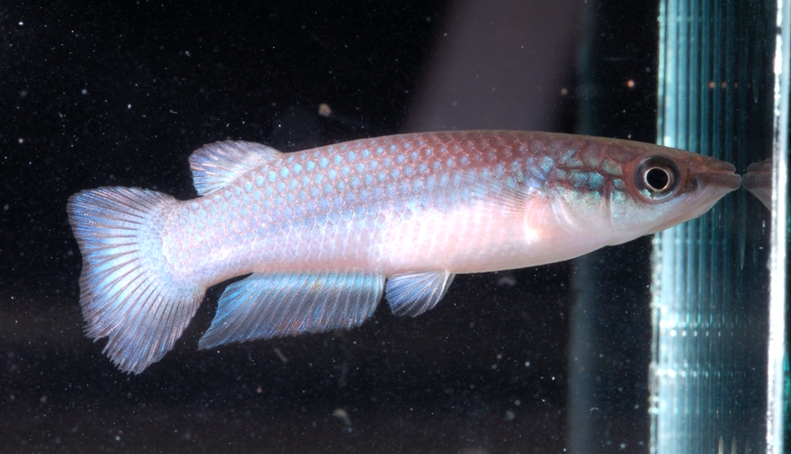
Pachypanchax omalonotusPowder-blue Panchax
Duméril, 1861
Max length90mm SL3.5in SLTank90 × 30cm36 × 12inTemp20–28°C68–82°FpH6.0–7.5For a number of decades this species was thought to occur throughout much of Madagsacar's western slope but populations immediately to the north and south of the range described above (see 'Distribution') are currently considered to represent unidentified species, while a number of populations from the Mahavavy du Sud and Betsiboka riv...
Pangasianodon gigasGiant Mekong Catifish
authority not recorded
Max length3000mm SL118in SLTanknot recordedTemp20–28°C68–82°FpH6.5–7.5Pangasianodon is separated from other pangasiid generea primarily on the basis of some morphological differences including a lack of teeth and massively reduced barbels in adult specimens. Sadly it's numbers are declining rapidly in nature, through a combination of unsustainable fisheries, damming and habitat destruction. Since 1990 wild stocks are thought to have undergone a decrease of over 80%. From an annual catch of over 60 specimens in 1990, only 8-11 were being caught per year in ...
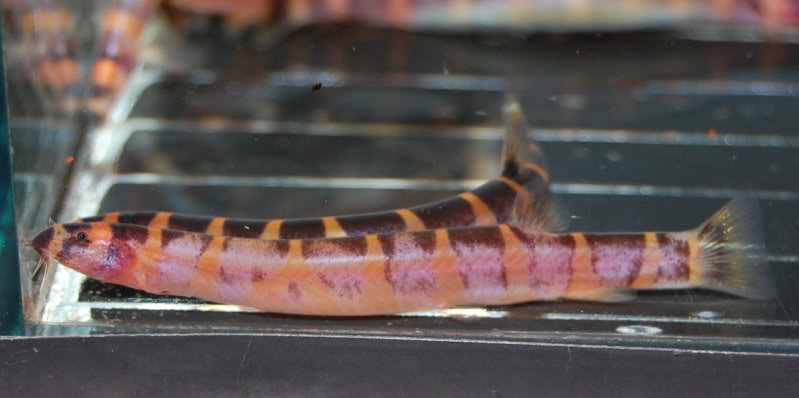
Pangio sp. 'PAN01'
authority not recorded
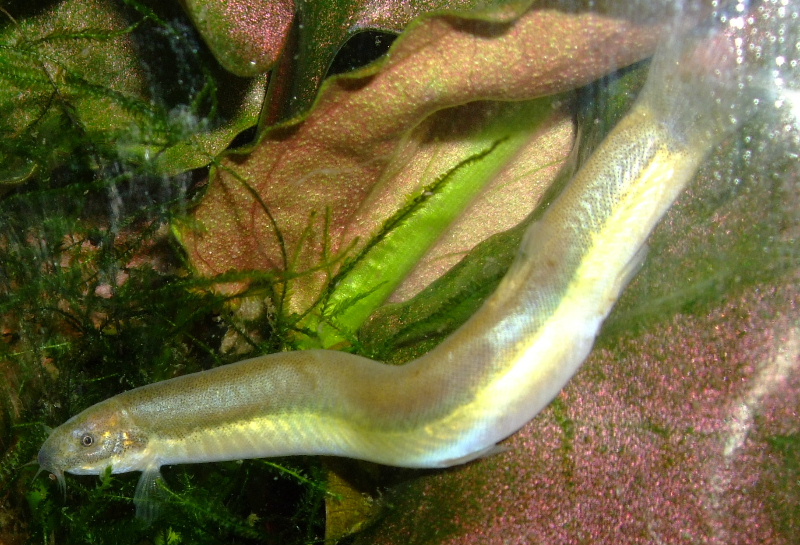
Max length100mm SL3.9in SLTank75 × 30cm30 × 12inTemp21–26°C70–79°FpH3.5–7.0The fish in our images above were imported together don't correspond to any of the described species of Pangio though they can be assigned to the P. kuhlii species group with a degree of certainty. Unfortunately the live appearance of P. kuhlii itself is a mystery to aquarists since it's currently considered endemic to Java and may have never been seen in the hobby.
Pangio sp. 'PAN02'
authority not recorded
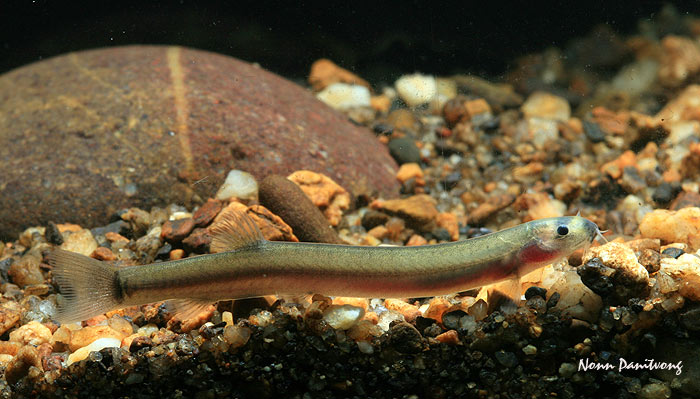
Max length50mm SL2.0in SLTank60 × 30cm24 × 12inTemp21–26°C70–79°FpH3.5–7.0The fish in our images don't correspond to any of the described members of the genus but can be assigned to the P. oblonga species group with a degree of certainty. It's apparently exported as a contaminant among shipments of a uniformly brown-coloured fish with unpublished genetic analyses suggesting the two might be variants of the same species (J. Bohlen, pers. comm.). Among congeners it may be related to P. alcoides Kottela...
Pangio sp. 'PAN04'Panda Loach
authority not recorded
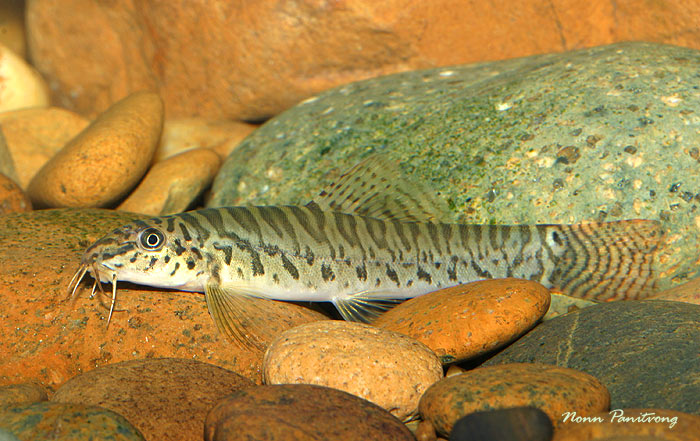
Max length80mm SL3.1in SLTank60 × 30cm24 × 12inTemp21–26°C70–79°FpH3.5–7.0This unidentified species has been traded since the mid-00s and appears to be a member of the P. khulii-oblonga species group as per Bohlen et al. (2011). There are two similar-looking forms; one has a darker body, dark pigmentation in the pectoral fins and barbels and a blue sheen on the head, while the...
Paracanthocobitis pictilisCherry-fin Loach
Kottelat, 2012
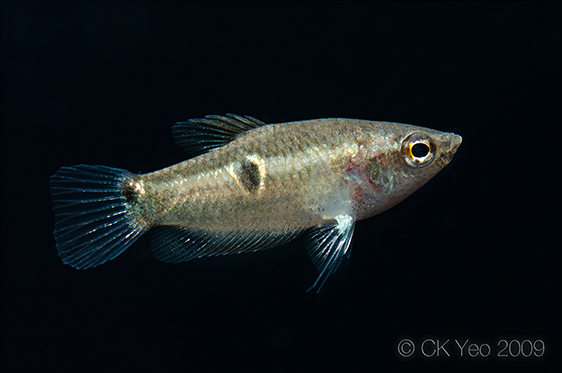
Max length91mm SL3.6in SLTank90 × 30cm36 × 12inTemp21–26°C70–79°FpH6.5–7.5Prior to description this species was considered to represent, and traded as, A. rubidipinnis, but that species is apparently endemic to the lower Irrawaddy basin in Myanmar and unknown in the aquarium hobby. Male individuals of A. pictilis, A. botia and A. mandalaysensis possess a suborbital slit rather than suborbital flap which immediately distinguishes...
Parasphaerichthys ocellatusEyespot Gourami
Prashad & Mukerji, 1929
Max length32mm SL1.3in SLTank45 × 30cm18 × 12inTemp15–25°C59–77°FpH6.5–7.5To date the species is known mostly from the upper Ayeyarwady River basin in northern Myanmar where it's been collected close to the city of Myitkyina in Kachin State as well as around nearby Lake Indawgyi, the largest inland lake in Southeast Asia and home to ten globally threatened bird species. The lake and surrounding area were designated a protected zone by the Ministry of Ecotourism in 1999 and now form the Indawgyi Lake Wildlife Sanc...
Pareutropius buffeiThree Striped African Glass Catfish
authority not recorded
Max length80mm SL3.1in SLTank75 × 30cm30 × 12inTemp24–28°C75–82°FpH6.0–7.5Formerly known as Eutropiellus buffei, this midwater swimming, diurnal catfish is very often sold as "Debauwi catfish". Pareutropius debauwi is a closely related species which is, in fact, seldom imported. Adults of the two species can be distinguished by several characteristics. In buffei there are three lateral stripes along the body, whilst debauwi possesses only one. Buffei also has black spots in the upper and lower parts of the caudal fin, and the fin itself has rounded lobes. Th...
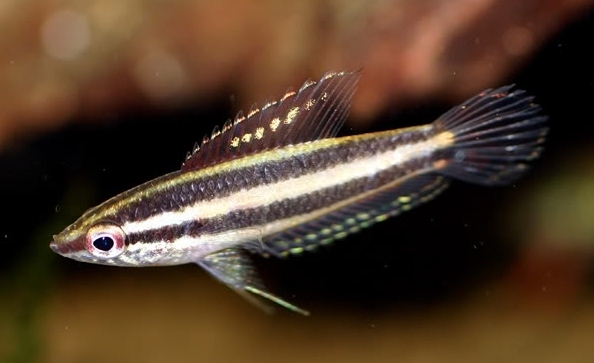
Parosphromenus bintan
Kottelat & Ng, 1998
Max length26mm SL1.0in SLTank40 × 20cm16 × 8inTemp22–28°C72–82°FpH3.0–6.5This species is not generally available in the aquarium hobby on a commercial basis but is occasionally collected and distributed by private aquarists. It's name is sometimes misapplied to commercial shipments of other species, and there also exist a number of other fish with rounded caudal-fins that may or may not be conspecific, including P. sp. 'blue line' and P. sp. 'Selatan' from Sumatra.
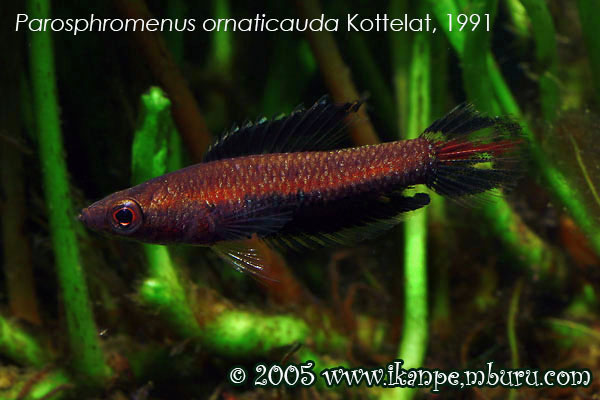
Parosphromenus ornaticauda
Kottelat, 1991
Max length30mm SL1.2in SLTank45 × 30cm18 × 12inTemp22–28°C72–82°FpH3.0–6.5This species has occasionally appears in the aquarium trade in substantial quantities but is not an easy species to maintain in captivity and often susceptible to disease post-import. It's sometimes sold as 'ornate licorice gourami'. It's among the smallest members of the gen...
Pelvicachromis subocellatusOcellated Kribensis
authority not recorded
Max length80mm SL3.1in SLTanknot recordedTemp22–26°C72–79°FpH5.5–7.5This is one of the less commonly seen Pelvicachromis species in the hobby. There are a few morphs available, including "Matadi" and "Moanda". Males and females of these should not be cross bred in order to keep the lines pure. It can be distinguished from others in the genus by it's higher, shorter body shape and by the fact that the spotting in the upper part of the is much lighter in this species than in others. A female condition is hard to confuse with anything else....
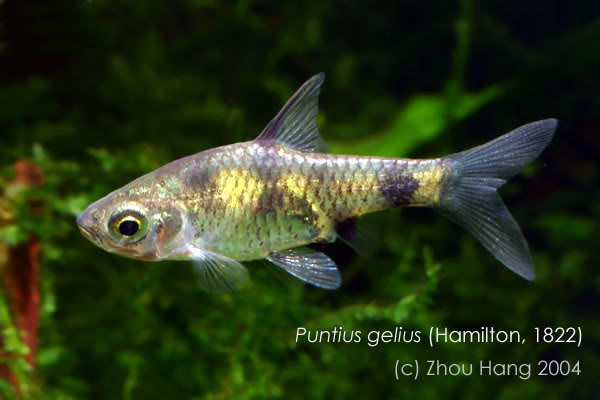
Pethia aurea
Knight, 2013
Max length25mm SL1.0in SLTank45 × 30cm18 × 12inTemp18–24°C64–75°FpH6.0–7.0This species was considered to be a phenotype of the similar-looking P. gelius prior to its description. Following Knight (2013) it is included a group of closely-related species alongside P. gelius and P. canius, the trio being distinguished from other members of the genus Pethia by the following combination of characters: lateral line incomplete with 3-4 por...
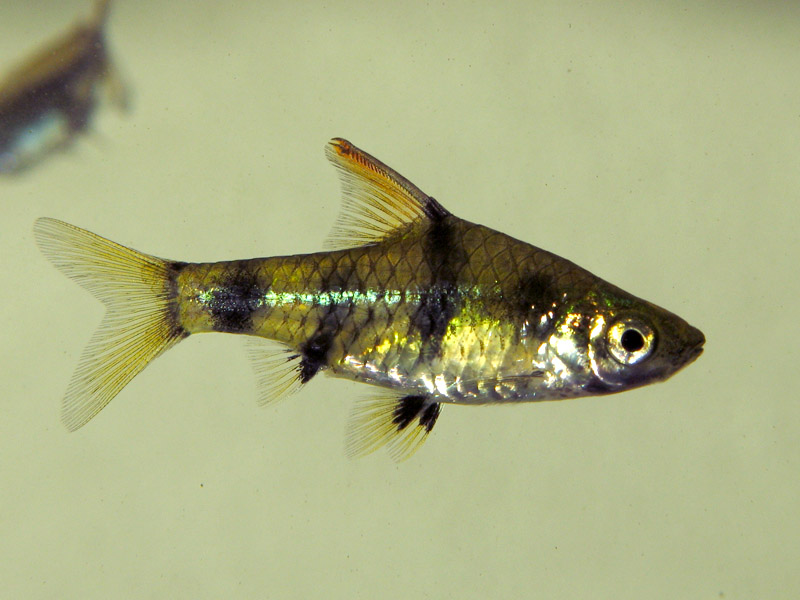
Pethia canius
Hamilton, 1822
Max length30mm SL1.2in SLTank60 × 30cm24 × 12inTemp18–24°C64–75°FpH6.0–7.0This species' identity was settled and a neotype designated by Knight (2013), with its validity having been discussed since the late 19th century. P. canius and the closely-related P. gelius were both described by Hamilton (1822) and share the type locality of 'northeastern Bengal'. Although Hamilton did not provide drawings M'Clelland (1839) included colour illustrations depicting two quite different-looking species.
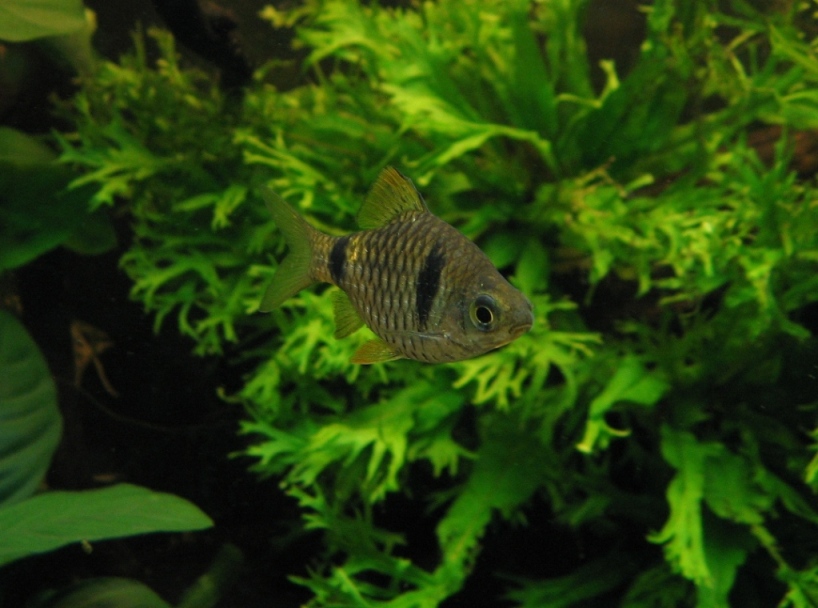
Pethia cumingiiCuming's Barb
Günther, 1868
Max length41mm SL1.6in SLTank60 × 30cm24 × 12inTemp20–27°C68–81°FpH5.5–7.0For many years this species was considered to occur in two colour forms with yellow or red dorsal, anal, and pelvic fins, respectively, but the red-finned variant has now been elevated to full species status as P. reval (Meegaskumbura et al. 2008). The latter is a smaller fish with a maximum SL of 33.6 mm recorded to date. As well as the obvious differences in body size and fin colour P. cumingii can be told apart from P. reval by the following...