Results for “várzea”
Type a name: scientific, common, or one a species used to go by. Or narrow the catalogue with the filters.
Filters
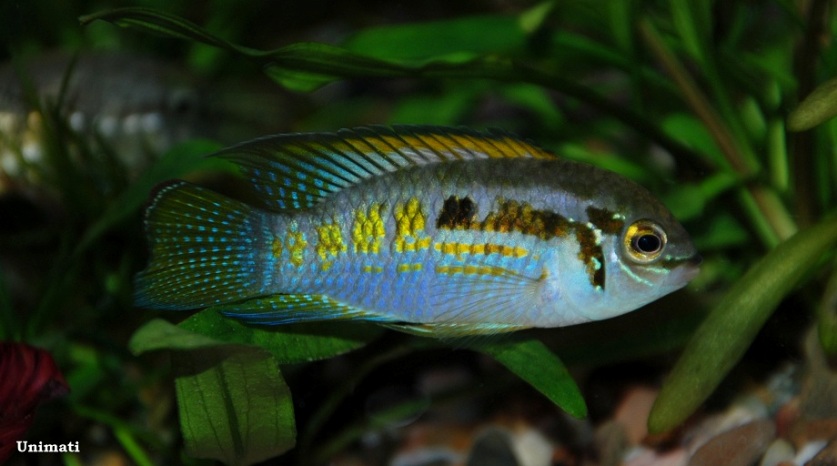
Laetacara araguaiae
Ottoni & Costa, 2009
Max length35mm SL1.4in SLTanknot recordedTempnot recordedpHnot recordedThis species was known as L. sp. 'Buckelkopf' in the aquarium hobby prior to publication of its official description. It's distinguished from all congeners by possessing 7-8 dorsal-fin rays (vs. 9–10 in L. dorsigera, L. fulvipinnis and L. thayeri, 8–9 in L. curviceps and L. flamannellus, and 9–11 in L. flavilabris).
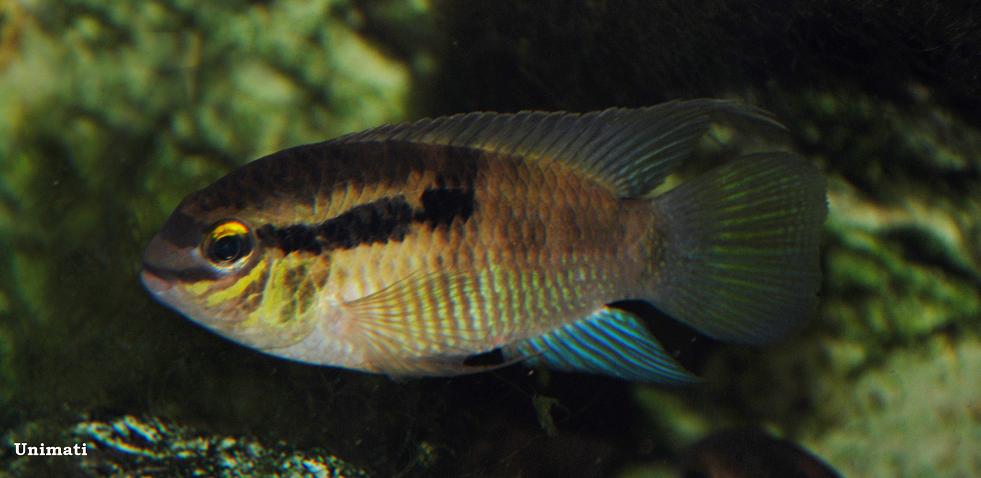
Laetacara thayeri
Steindachner, 1875
Max length65mm SL2.6in SLTanknot recordedTemp20–28°C68–82°FpH4.5–7.5This species is relatively rare in the aquarium trade. It can be differentiated from all congeners by a combination of possessing ctenoid (vs. cycloid) scales on the sides of the head plus lacking a dark spot at the caudal-fin base.
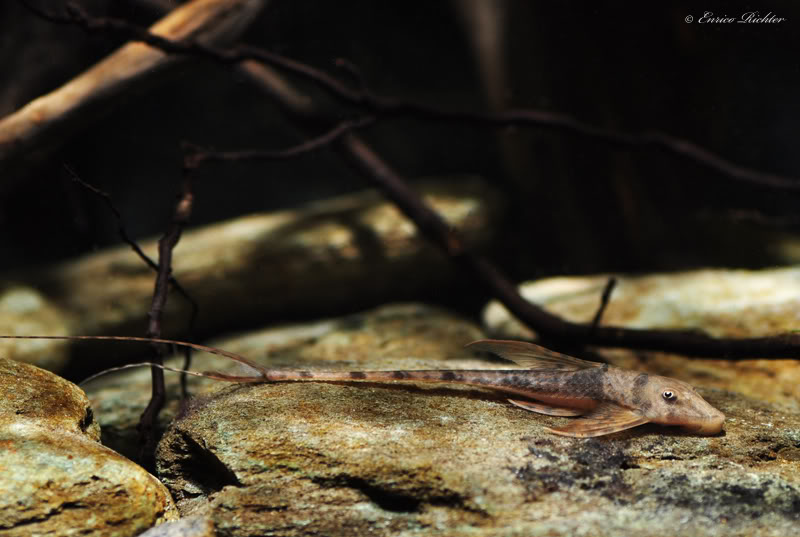
Lamontichthys filamentosusSturgeon Catfish
La Monte, 1935
Max length167mm SL7in SLTank120 × 45cm48 × 18inTemp22–30°C72–86°FpH5.5–7.5This species is relatively common in the aquarium hobby but is not easy to maintain and recommended only for experienced aquarists. It can be told apart from all congeners by specimens larger than 60 mm SL possessing an extended pectoral-fin spine forming an extremely long filament that may be more than four times the length of the first branched pectoral-fin ray (vs. not possessing such a filament in other species of Lamontichthys).
Lamprologus callipterus
authority not recorded
Max length150mm SL6in SLTank90 × 30cm36 × 12inTemp24–27°C75–81°FpH7.5–9.0In nature, the spawning nests of large male fish may measure several meters across and contain hundreds of snail shells. Interestingly, when they are protecting brooding females males do not eat and eventually become so weak that their territories are taken over by stronger fish. Immature and sub-dominant males can be seen over areas of open substrate where they feed voraciously in large shoals. Females are only ever found in areas containing the nests of dominant males. It appears that the ...
Lasiancistrus tentaculatusL092
authority not recorded
Max length120mm SL5in SLTank75 × 30cm30 × 12inTemp24–28°C75–82°FpH6.0–7.4This lovely little species was only described in 2005 and the same study also reclassified most of the species previously assigned to Laciancistrus. Many were found to be of different genera or representatives of the same species. Laciancistrus can be easily distinguished from Ancistrus (and indeed all other Loricariids) by the presence of whiskerlike odontotes growing among the cheek odontotes. These are very thin and clearly visible, and are indeed reminiscent of mammalian hairs. This part...
Lates angustifronsTanganyika Lates
authority not recorded
Max length2000mm SL79in SLTanknot recordedTemp22–28°C72–82°FpH7.5–9.5We've included this species on the site purely because there have been an alarming number of juvenile fish showing up in some aquatic stores, and as a result, in hobbyists tanks. This species is simply not suited to captive life in any respect. If you see one for sale, and they are undeniably an attractive fish, please don't be tempted to buy it. As responsible fishkeepers, we should consider the long term well-being of any fish that we buy, and housing a L. angustifrons for life is ev...
Lates niloticusNile Perch
authority not recorded
Max length1930mm SL76in SLTanknot recordedTemp22–28°C72–82°FpH7.0–8.5This species has been introduced into many areas in Africa for commercial purposes, and it's had a hugely detrimental effect on local fish populations in some of these environments. The most notable case is that of Lake Victoria, where much of the endemic cichlid population has been wiped out. L. niloticus is thought to have directly contributed to the extinction of over 200 endemic species in the lake by predation, or outcompeting them for food. The IUCN have included it in their list of t...
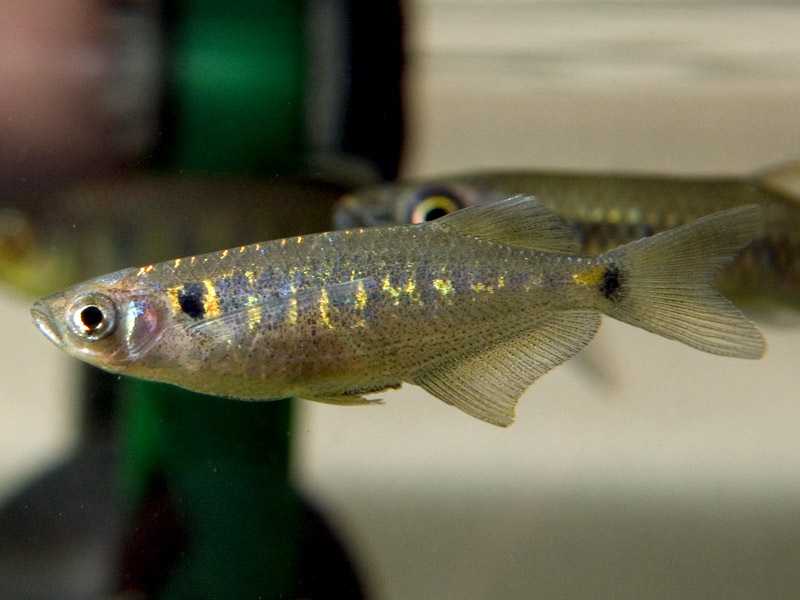
Laubuka laubucaIndian Glass Barb
Hamilton, 1822
Max length60mm SL2.4in SLTank120 × 30cm48 × 12inTemp18–24°C64–75°FpH6.0–8.0Probably endemic to northern India, Bangladesh, and Nepal. Records from Sri Lanka, southern India, Myanmar, Thailand, Laos, Cambodia, Vietnam, Malaysia, and Indonesia appear to represent other species. Given the distribution of L. siamensis, it seems likely that many of the fish entering the aquarium trade are this species and not L. laubuca. The two species can be distinguished b...
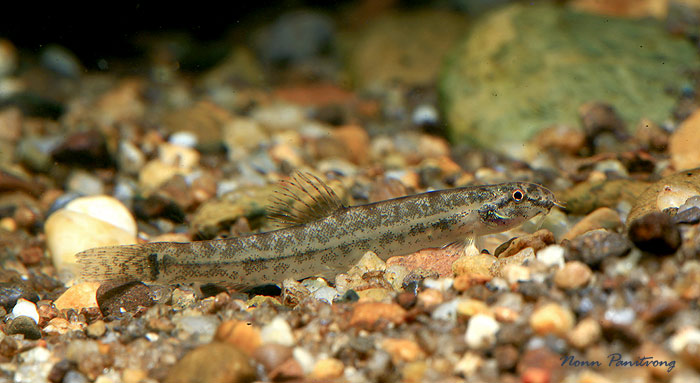
Lepidocephalichthys hasselti
Valenciennes, 1846
Max length60mm SL2.4in SLTank60 × 30cm24 × 12inTemp23–26°C73–79°FpH5.5–7.5At one locality close to Ban Na Hwai, Chiang Mai Province, Thailand L. hasselti was collected from a shallow (<0.5 m) pool in a swampy zone between forest and rice fields. The substrate was of mud, there was no aquatic vegetation and it was being used as drinking water by local animals, with the only effluent connected to a 'small creek'. Other species found there were Physoschistura pseudobrunneana, Rasbora hobelmani and Systomus cf. orphoides.
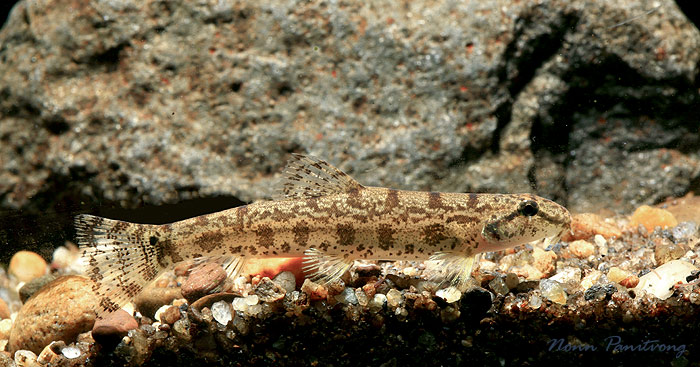
Lepidocephalichthys micropogon
Blyth, 1860
Max length55mm SL2.2in SLTank60 × 30cm24 × 12inTemp20–25°C68–77°FpH6.0–7.5According to Kottelat (2012) L. manipurensis Arunkumar, 2000, which was described from Moreh, Manipur state, northeastern India, close to the border with Myanmar, is a syonym of L. micropogon. Havird and Page (2010) differentiate the two based on caudal-fin patterning, predorsal length and ver...
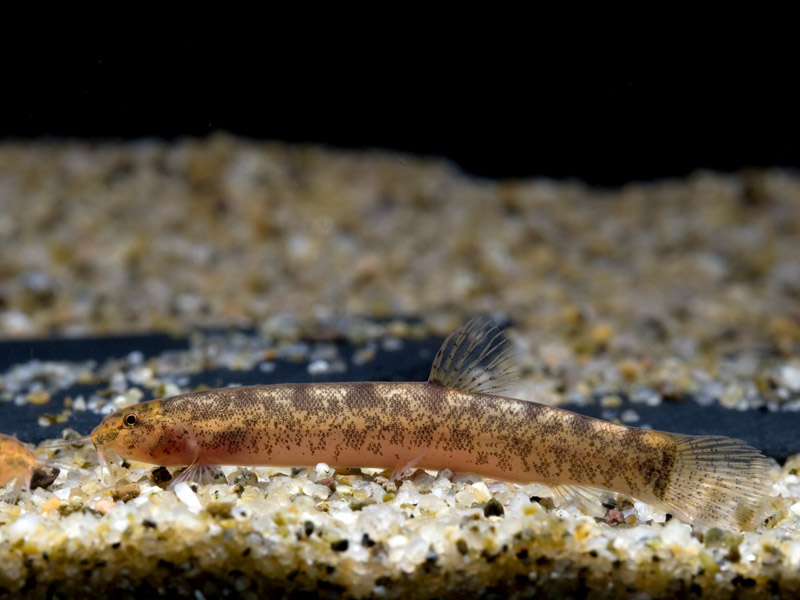
Lepidocephalichthys tomaculum
Kottelat & Lim, 1992
Max length39mm SL1.5in SLTank45 × 30cm18 × 12inTemp23–29°C73–84°FpH3.5–7.0This species is not traded often but may be available occasionally bycatch among shipments of other species. It can be told apart from congeners most easily by the following combination of characters: truncate caudal-fin; scaleless patch on top of head; caudal-fin with reticulated patterning, sometimes appearing as a series of thin vertical bars; body reddish brown with darker markings; 3-7 predorsal and 3-6 postdorsal thin, transverse dark bars running across the dorsal surface; relatively deep...
Lepidosiren paradoxaSouth American Lungfish
authority not recorded
Max length1250mm SL49in SLTank240 × 90cm96 × 36inTemp24–28°C75–82°FpH6.0–8.0Lungfish are among the most intriguing of "oddball" aquarium species, being able to survive in extreme conditions. They are very ancient fish, having remained virtually unchanged for millions of years. This is the only species known from South America, and is the sole representative of its genus. Most hail from Africa, with a single species native to Australia. They belong to the class Sarcopterygii (lobe-finned fishes), members of which are actually more closely related to terrestrial...
Leporacanthicus joselimaiSultan Plec
authority not recorded
Max length150mm SL6in SLTank120 × 30cm48 × 12inTemp25–27°C77–81°FpH6.0–7.5Leporacanthicus species are commonly referred to as "vampire plecs". This is derived from the unique upper jaw dentition exhibited by members of this genus, unsurprisingly consisting of two large teeth or "fangs". The exact use for these is unknown, but they're probably utilised to grip prey items such as snails or other aquatic invertebrates in some way. Another feature shared by all Leporacanthicus is a small bony growth of unknown use on top of the head. This particul...
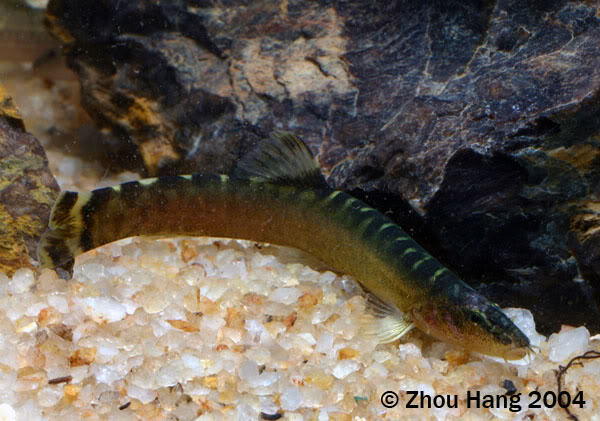
Leptobotia guilinensis
Chen, 1980
Max length100mm SL3.9in SLTank120 × 30cm48 × 12inTemp15.5–21°C60–70°FpH6.5–7.5L. elongata is the type species of the genus but according to current knowledge there exist 13 members in total, all of which are endemic to China and northern Vietnam. They're diagnosable by the following shared characters: possession of a simple (non-bifurcated), short sub-ocular spine not extending beyond the posterior edge of the eye; a laterally-compressed body; relatively deep caudal peduncle; pelvic fins reaching origin of anal-fin; anus below base of dorsal-fin and equidistant between pelvic and anal-fin origins.
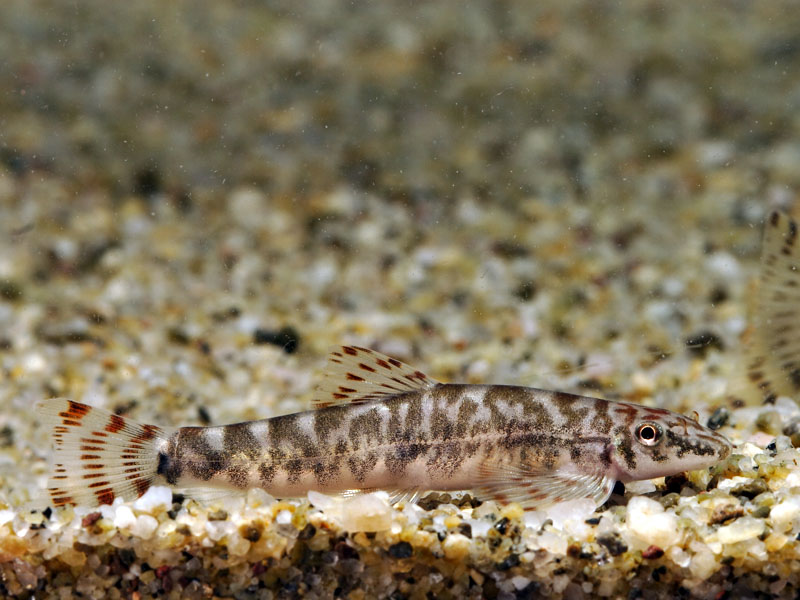
Liniparhomaloptera disparisBroken-band Hillstream Loach
Lin, 1934
Max length80mm SL3.1in SLTank80 × 30cm31 × 12inTemp20–24°C68–75°FpH6.5–8.0L. disparis is sometimes available as bycatch among shipments of other species such as Rhinogobius duospilus but also appears on trade lists under the fictitious scientific name 'Homaloptera hoffmani'. It can be told apart from similar-looking members of the genus Formosania by its noticeably shorter barbels and from Vanmanenia spp. by the fact that the rostral fold is not lobed and the mouth is relatively small (25% head width. In addition the lower lip in Liniparhomaloptera is not divided and has a flat, papillated edge.
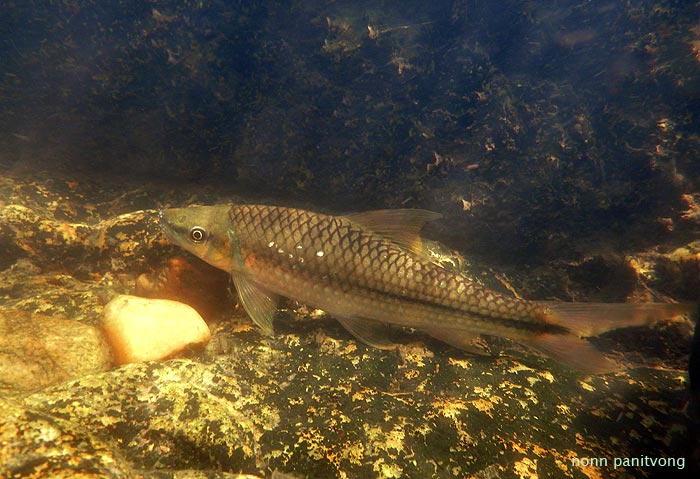
Lobocheilos rhabdoura
Fowler, 1934
Max length220mm SL9in SLTank180 × 60cm72 × 24inTemp20–26°C68–79°FpH6.0–8.0Lobocheilos species are specialised grazers of periphyton, benthic algae, and other organisms which grow attached to rocks and other solid surfaces, and they typically leave visible scrape marks in places where they have been feeding. They are by no means herbivorous and should be offered meaty foods such as live or frozen chironomid larvae (bloodworm), Tubifex, Artemia, chopped prawn, etc., along with good quality, sinking dried products, at lea...
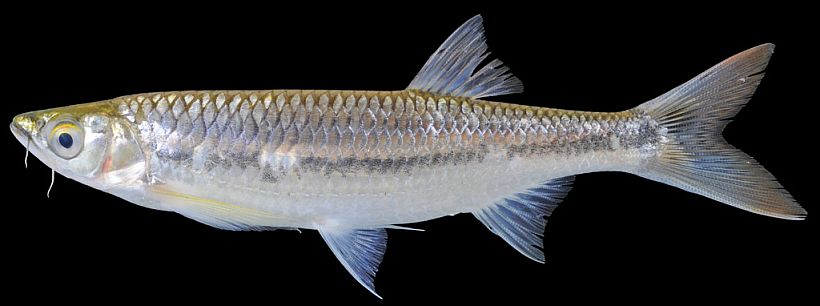
Luciosoma bleekeri
Steindachner, 1878
Max length210mm SL8in SLTank240 × 60cm96 × 24inTemp20–26°C68–79°FpH6.0–8.0L. bleekeri is most-easily distinguished from the congener L. setigerum, with which it is frequently confused, by absence (vs. presence) of a series of black spots on the lateral line scales.
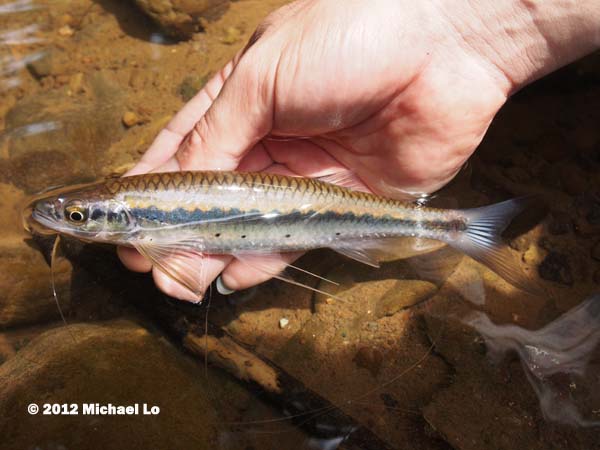
Luciosoma pellegrinii
Popta, 1905
Max length170mm SL7in SLTanknot recordedTempnot recordedpHnot recordedThe five species which currently comprise Luciosoma can be distinguished by elements of colour pattern. Popta described the colour pattern of L. pellegrinii as follows: body colour olive dorsally, with dark-edged scales, yellow ventrally; a lateral series of dark spots on the flank forming a midlateral band which extends onto the opercle but not the head; 4-8 blackish-brown, distinctly-separate spots on the lateral line; fins yellow; dorsal and anal fins with a blackish-brown band; anterior half of some pectoral-fin rays blackish-brown...
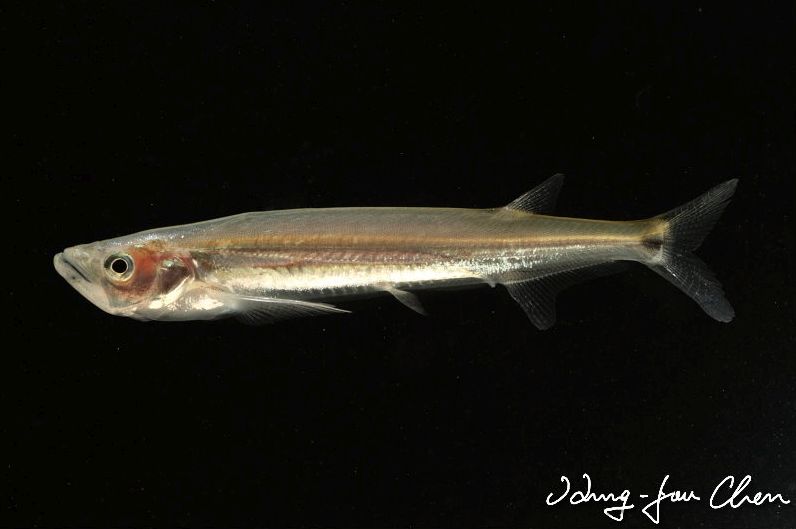
Macrochirichthys macrochirusGiant Sword Minnow
Valenciennes, 1844
Max length800mm SL31in SLTanknot recordedTemp20–26°C68–79°FpH6.0–8.0It is thought to have been extirpated from the Chao Phraya and Mae Klong rivers, Lake Songkhla, and the entire island of Java due to a variety of anthropogenic factors, and the Mekong populations have also been drastically reduced. In particular, it is sensitive to pollution and gillnetting, and is heavily overfished.
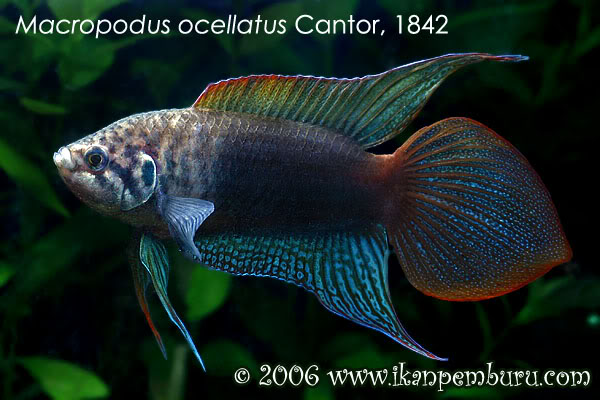
Macropodus ocellatusRoundtail Paradise Fish
Cantor, 1842
Max length80mm SL3.1in SLTank80 × 30cm31 × 12inTemp10–22°C50–72°FpH6.0–7.5M. ocellatus can be distinguished from congeners by the following combination of characters: caudal-fin rounded; eye stripe not connecting spot on posterior projection of opercle with eye; dorsal-fin rays filamentous posterior to a vertical through the posterior anal-fin rays in adults; 16-19 spinous dorsal-fin rays; 6-13 rakers on ceratobranchial of first gill arch; posterior tip or margin of body scales not darker than scales.