Results for “common name”
Type a name: scientific, common, or one a species used to go by. Or narrow the catalogue with the filters.
Filters
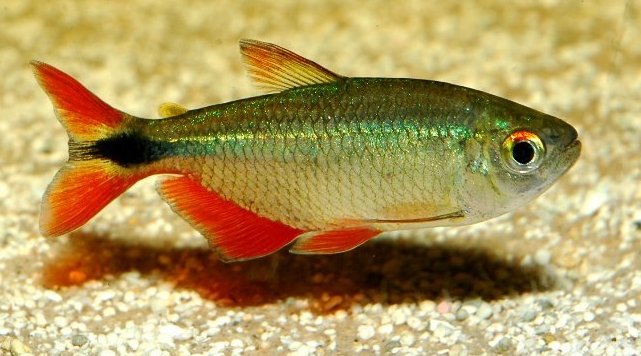
Hyphessobrycon anisitsiBuenos Aires Tetra
Eigenmann, 1907
Max length60mm SL2.4in SLTank90 × 30cm36 × 12inTemp16–28°C61–82°FpH5.5–8.5Widely-distributed throughout much of the Paraná and Uruguay river systems in Brazil, Paraguay, Argentina and Uruguay. Some records from Buenos Aires province, Argentina are now considered to refer to the congener H. togoi (Miquelarena and López, 2006) so the common vernacular name 'Buenos Aires tetra' may not...
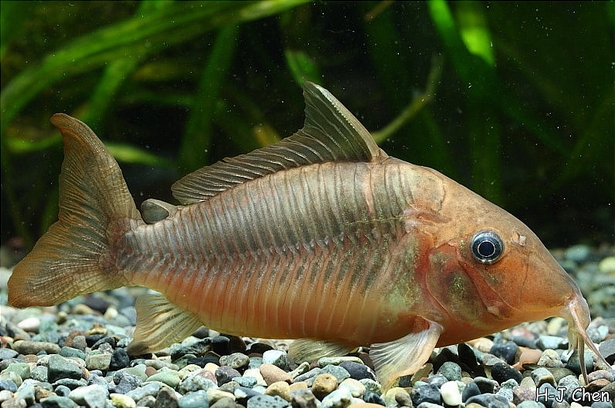
Corydoras britskiiGiant Brochis
Nijssen & Isbrücker, 1983
Max length90mm SL3.5in SLTank120 × 45cm48 × 18inTemp20–26°C68–79°FpH6.0–7.0Brochis was first synonymised with Corydoras by Britto (2003), since the latter genus cannot be considered monophyletic if the former is accepted as valid. This decision has been supported in subsequent phylogenetic studies by Shimabukuro-Dias et al. (2004) and Alexandrou et al. (2011), although the name Brochis is still common in aquarium literature. It is likely that the genus will be revalidated and expanded in the future following a required taxonomic review of the subfamily Corydoradinae as suggested by Alexandrou and Taylor (2011).
Mimagoniates microlepisBlue Tetra
authority not recorded
Max length60mm SL2.4in SLTank60 × 38cm24 × 15inTemp18–23°C64–73°FpH6.0–7.0Not to be confused with the other species commonly sold under the name "blue tetra", Knodus borki, this species is much scarcer in the hobby. It also makes a better resident of the community tank than its cousin, being less boisterous and lacking the tendency to nip the fins of other species....
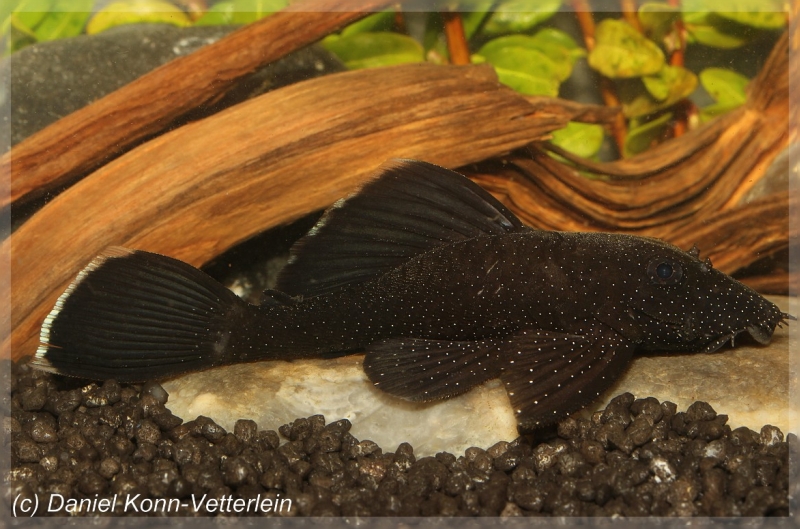
Ancistrus dolichopterusL183
Kner, 1854
Max length200mm SL8in SLTank120 × 45cm48 × 18inTemp26–30°C79–86°FpH5.0–7.0This species is not always identified correctly with its name used for the unidentified common bristlenose and other similar species, while the fish itself has been referred to as A. hoplogenys and assigned the L-number L183. Images and information describing it it in much of the available literature confirm this confusion.
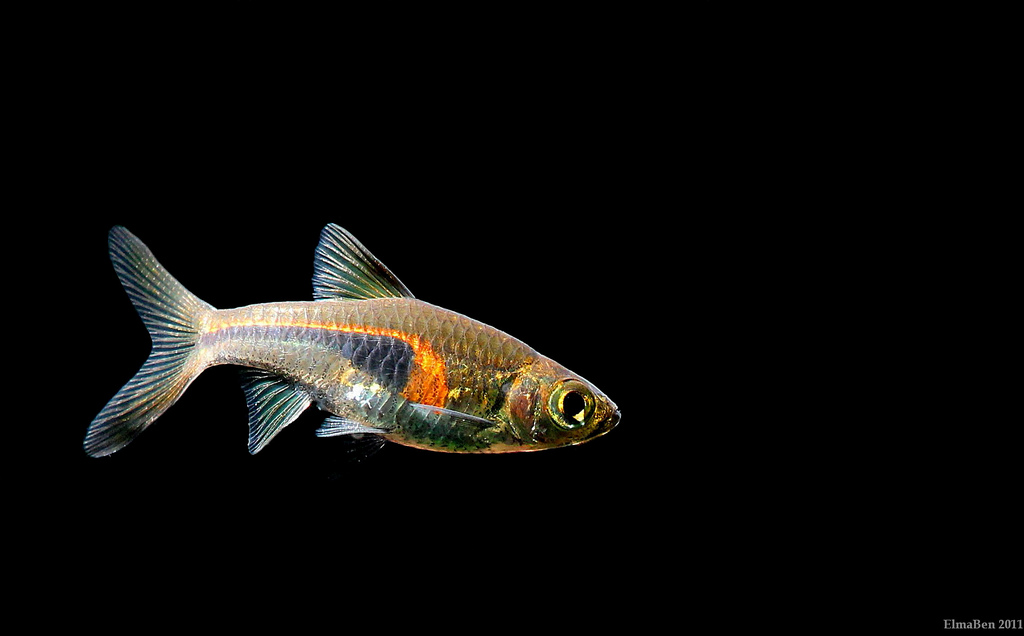
Trigonostigma hengeli
Meinken, 1956
Max length30mm SL1.2in SLTank60 × 30cm24 × 12inTemp23–28°C73–82°FpH5.0–7.5T. hengeli is sometimes seen for sale with the trade name of 'glowlight rasbora' due to the distinctive orange patterning on the posterior part of the body but we've refrained from using that name here because it's also commonly applied to Trigonopoma pauciperforatum. It can be confused with the similar-looking T. heteromorpha and T. espei although on close inspection they're actually quite easy to tell...
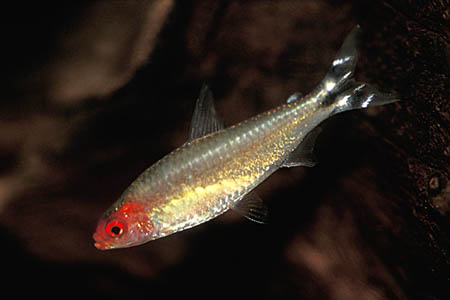
Petitella georgiaeFalse Rummy-nose
authority not recorded
Max length50mm SL2.0in SLTanknot recordedTemp22–26°C72–79°FpH5.5–7.0This is one of three species commonly sold under the name "rummy-nose tetra". The commonest of these is the firehead tetra, Hemigrammus bleheri, whilst the "true" rummy-nose is Hemigrammus rhodostomus. All three are very similar in appearance, but can be distinguished by several factors. The first is by the extent to which the red colouration on the head of the fish extends into the body. H. bleheri is the only one of the 3 in which the red extends beyond the gill covers. ...
Pseudotropheus socolofiPowder Blue Cichlid
authority not recorded
Max length115mm SL5in SLTank90 × 45cm36 × 18inTemp24–28°C75–82°FpH7.6–8.8This common mbuna also goes by the names "Eduard's mbuna" and "Pindani". It is one of the most popular Rift Lake cichlids in the hobby due to its striking colouration and somewhat peaceful nature (for a mbuna). Wild fish can now be quite difficult to find, as the vast majority of specimens offered for sale are tank-bred. An albino form exists in aquaria and has achieved a fair degree of popularity. A highly recommended beginner's mbuna....
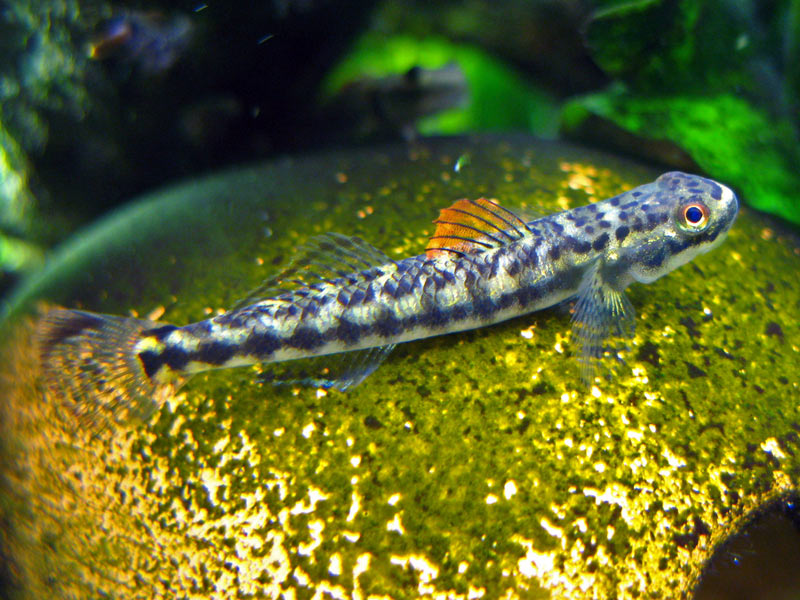
Stiphodon maculidorsalisOrange-fin Stiphodon
Maeda & Tan, 2013
Max length80mm SL3.1in SLTank80 × 30cm31 × 12inTemp20–28°C68–82°FpH6.5–7.5This species was referred to as S. sp. 'orange fin' or S. sp. 'ST01' prior to being offically named and is one of the more commonly-traded members of the genus, though often in batches containing only one gender, a mixture of species, or misidentified under an incorrect name such as S. zebrinus. It can be told apart from congeners by the following combination of characters: usually 9 soft second dorsal-fin rays; 15 soft pectoral-fin rays; first dorsal-fin in male poin...
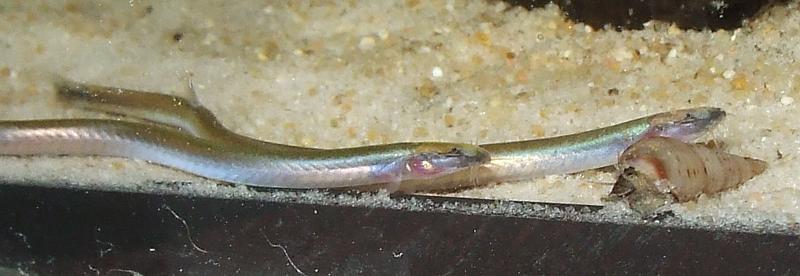
Pangio doriae
Perugia, 1892
Max length90mm SL3.5in SLTank60 × 30cm24 × 12inTemp21–26°C70–79°FpH3.5–7.0One of a handful of Pangio spp. traded under the generic name 'eel loach', though it's most commonly available as bycatch among shipments of other fishes. Some authors have suggested it may be synonymous with P. anguillaris bu...
Bunocephalus coracoideusBanjo Catfish
authority not recorded
Max length150mm SL6in SLTank60 × 38cm24 × 15inTemp20–27°C68–81°FpH5.8–7.8Bunocephalus is the largest genus within the Aspredinidae family and there are several undescribed species. B. coracoideus is the most common member seen in dealers' tanks. Its native name "Guitarrita" translates as "little guitar" and refers to the shape of the fish when viewed from above. Despite the regularity with which it is seen for sale, it isn't really a good catfish for the general community tank because it's a largely inactive, secretive species, ...
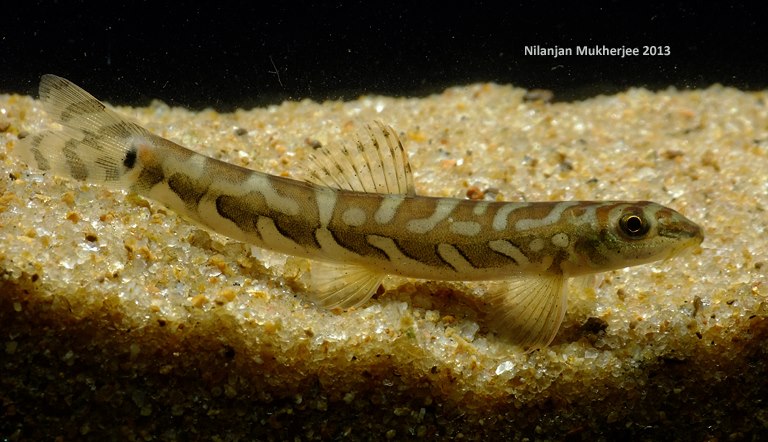
Mesonoemacheilus triangularisZodiac Loach
Day, 1865
Max length60mm SL2.4in SLTank75 × 30cm30 × 12inTemp18–25.5°C64–78°FpH6.0–7.5This species is also referred to by the alternative vernacular name 'Batik loach' and is the most-commonly traded member of the genus at present. It's easily-distinguished from congeners by body patterning which comprises a series of pale, oblique saddle-like markings edged in black and running along the dorsal surface, plus a similar set of bars originating from the otherwise plain ventral surface.
Potamotrygon castexiOtorongo Ray
authority not recorded
Max length600mm SL24in SLTanknot recordedTemp24–28°C75–82°FpHnot recordedIn Brazil P. castexi is currently banned from export, although it can still be legally obtained from other countries. There's a high level of polychromatism (differences in colour and pattern) displayed by this species, and in the hobby some of the colour forms have been given distinguishing names. Below is a list of some of the commoner varieties, along with some defining characteristics: Otorongo Ray (also known as "Jaguar" Ray, P25, P26, P28 or P35): This popular variant has...
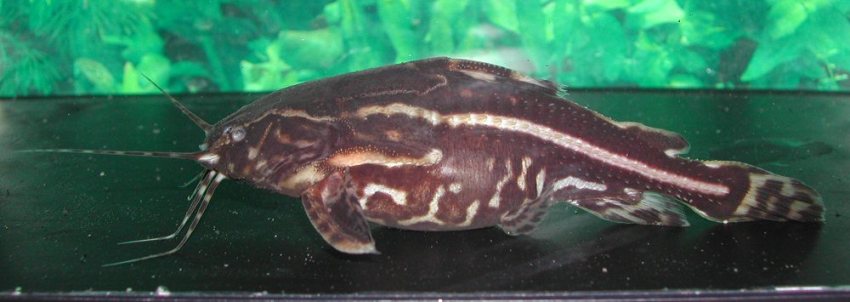
Acanthodoras cataphractusChocolate Talking Catfish
Linnaeus, 1758
Max length115mm SL5in SLTank120 × 30cm48 × 12inTemp22–26°C72–79°FpH6.0–7.5This species, which may also be referred to by the alternative vernacular names 'spiny catfish', 'painted talking catfish' or 'chocolate raphael', isn't particularly common in the trade and most often exported only as bycatch among shipments of Platydoras armatulus. It appears very similar to the congener A. spinosissimus with the most useful external distinguishing character being the presence of pale blotches on the dorsal surface, between the dorsal and caud...
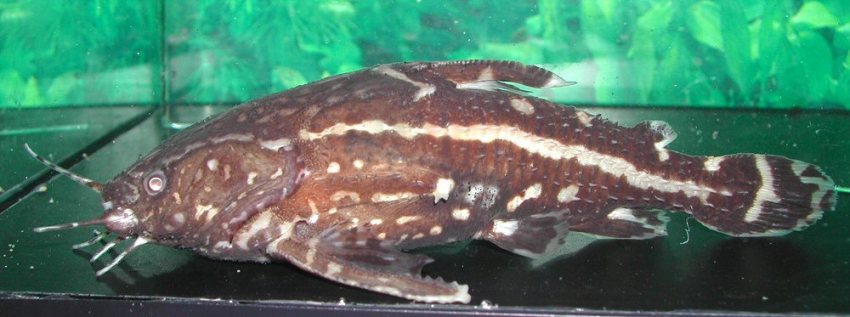
Acanthodoras spinosissimusChocolate Talking Catfish
Eigenmann & Eigenmann, 1888
Max length137mm SL5in SLTank120 × 30cm48 × 12inTemp22–26°C72–79°FpH6.0–7.5This species, which may also be referred to by the alternative vernacular names 'spiny catfish', 'painted talking catfish' or 'chocolate raphael', isn't particularly common in the trade and most often exported only as bycatch among shipments of Platydoras armatulus. It appears very similar to A. cataphractus with the most useful external distinguishing character being the presence of pale blotches on the dorsal surface, between the dorsal and caudal fins, in....
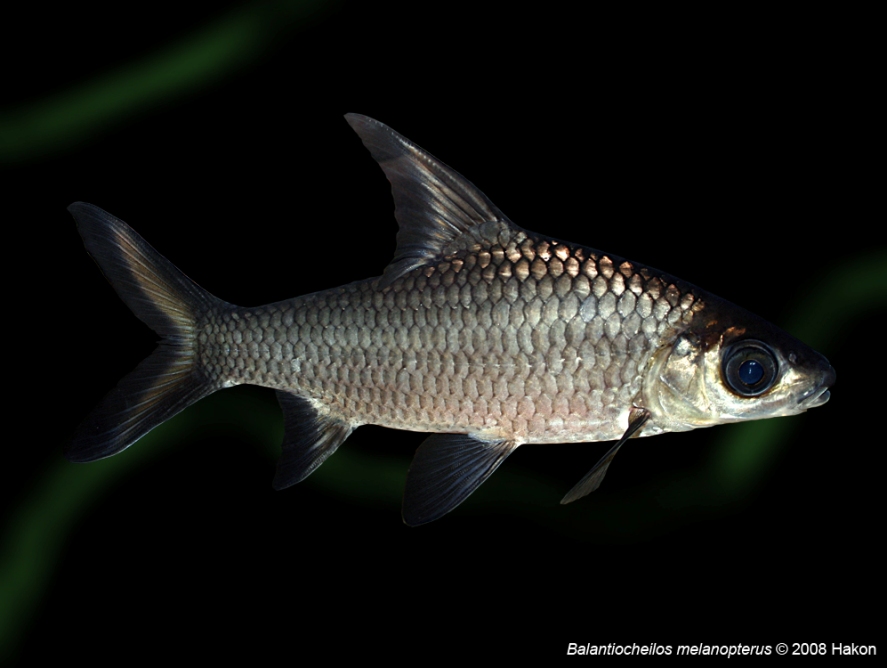
Balantiocheilos melanopterusSilver Shark
Bleeker, 1850
Max length350mm SL14in SLTank240 × 60cm96 × 24inTemp20–28°C68–82°FpH6.0–8.0May also be seen on sale under the trade names 'Bala shark' or 'tricolor shark minnow' and perhaps among the most commonly-encountered ornamental fish species. It is unfortunate that the vast majority of those traded are juveniles and tend to come supplied with little to no information provided regarding their potential size and requirements, a fairly ironic situation given the apparently precarious status of wild populations.
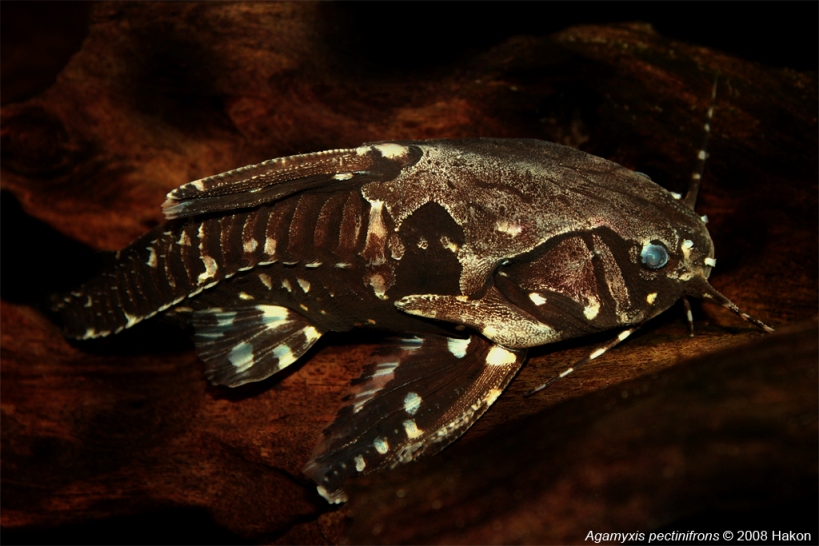
Agamyxis pectinifronsSpotted Talking Catfish
Cope, 1870
Max length150mm SL6in SLTank120 × 30cm48 × 12inTemp22–26°C72–79°FpH5.5–7.5This species, which may also be referred to by the alternative vernacular names 'spotted raphael', 'white-spotted' or 'white-barred' catfish, is very common in the trade and despite its adult size is recommended to beginners and experienced aquarists alike since it is hardy, attractive and relatively-long-lived. The light body markings are highly variable in terms of exact placement and may be either white or pale to darkish yellow in colour. It is very similar i...
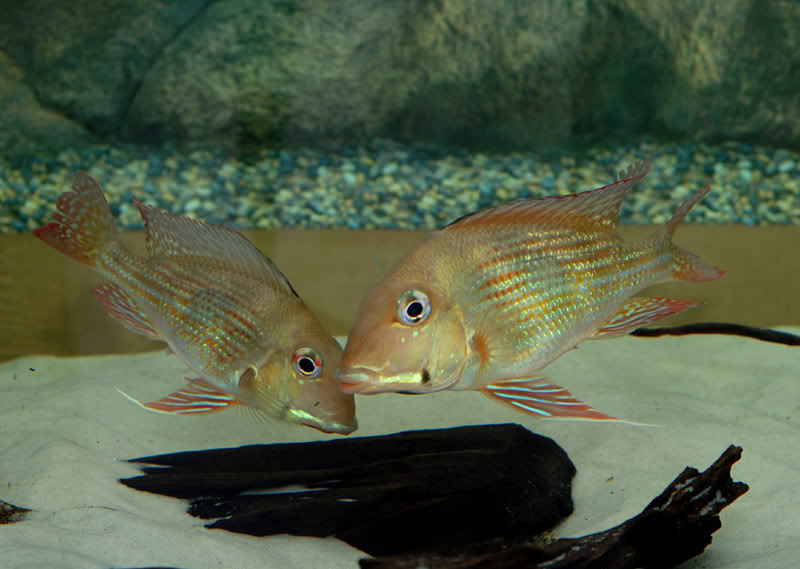
Geophagus brachybranchus
Kullander & Nijssen, 1989
Max length200mm SL8in SLTank180 × 60cm72 × 24inTemp26–30°C79–86°FpH5.0–7.0This species is generally rare in the aquarium hobby though oddly appears to be one of the commoner species in Australia where it's often referred to by the vernacular name 'black-throated eartheater'. It's a member of the nominal G. surinamensis 'group' of closely-related species within the genus and can be identified by a combination of characters including: presence of dark preopercular markings; no vertical bars on the flanks even when stressed/preserved; base of filaments on the first gill arch mostly covered by a flap of skin; exposed part of bra...
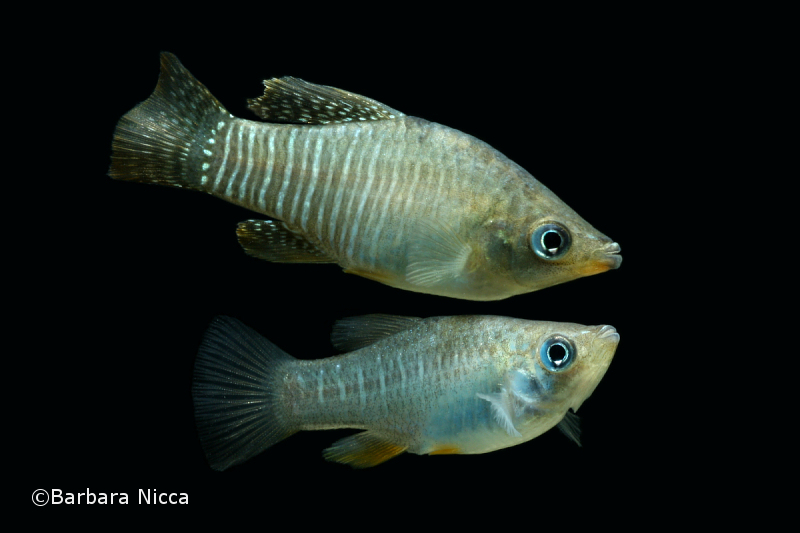
Fundulus xenicusDiamond Killifish
Jordan & Gilbert, 1882
Max length50mm SL2.0in SLTanknot recordedTemp21–35°C70–95°FpH7.5–9.0This species is not a common aquarium species but is occasionally available from specialist retailers or breeders. It was initially named Adinia multifasciata by Girard (1859) before later being redescribed as Fundulus xenicus (mispelled 'Fundnlus') by Jordan and Gilbert (1882). Body stout and trapezoidal in adults, body depth usually 2 to 3 times in standard length; scales large, fewer than 30 scales along midlateral scale row...
Pseudogastromyzon myersi
authority not recorded
Max length60mm SL2.4in SLTank75 × 30cm30 × 12inTempnot recordedpH6.0–7.5This species is traded under various vernacular names including 'Chinese hillstream loach', 'Chinese butterfly plec' and 'Hong Kong Otocinclus. It's the commonest member of the genus in the hobby but has been frequently misidentified as the congener P. cheni in the past with the two often said to be indistinguishable in terms of colour pattern. Some sources additionally suggest the sole defining external character to be that in P. cheni the distance between the resp...
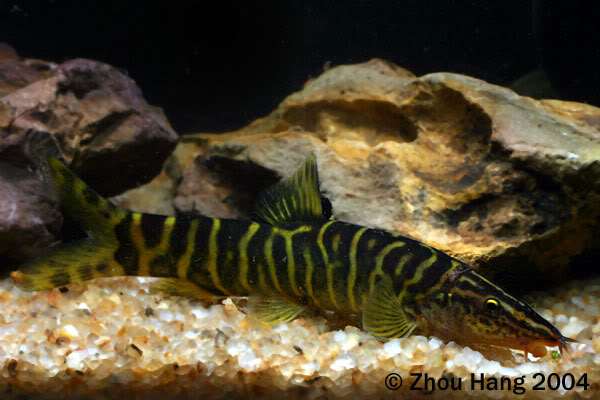
Sinibotia pulchraGolden Zebra Loach
Wu, 1939
Max length110mm SL4in SLTank120 × 30cm48 × 12inTemp20–25.5°C68–78°FpH6.5–8.0This species is also sold under the vernacular names 'golden Chinese loach' and '12-banded Chinese loach'. Along with S. robusta it's the most commonly-traded member of the genus, and the two are often imported in mixed batches, presumably because they occur and are thus collected together in nature. Like most congeners it has a highly flexible, sinuous body which makes it very interesting to observe. S. pulchra can be differentiated from...