Results for “marginal”
Type a name: scientific, common, or one a species used to go by. Or narrow the catalogue with the filters.
Filters
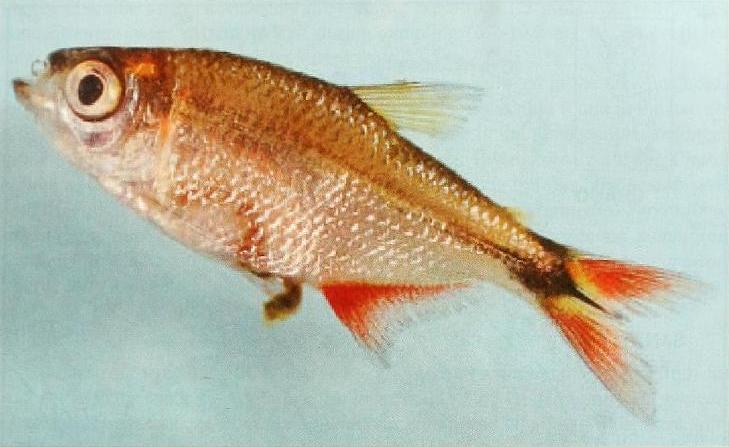
Hyphessobrycon auca
Almirón, Casciotta, Bechara & Ruíz Díaz, 2004
Max length55mm SL2.2in SLTanknot recordedTempnot recordedpHnot recordedThe two ponds where H. auca was collected were located on a sand bar deposited by the nearby Paraná river during the Pleistocene. At time of collection the substrates were composed of sand with submerged vegetation dominated by Egeria najas plus floating Eichhornia in marginal areas.
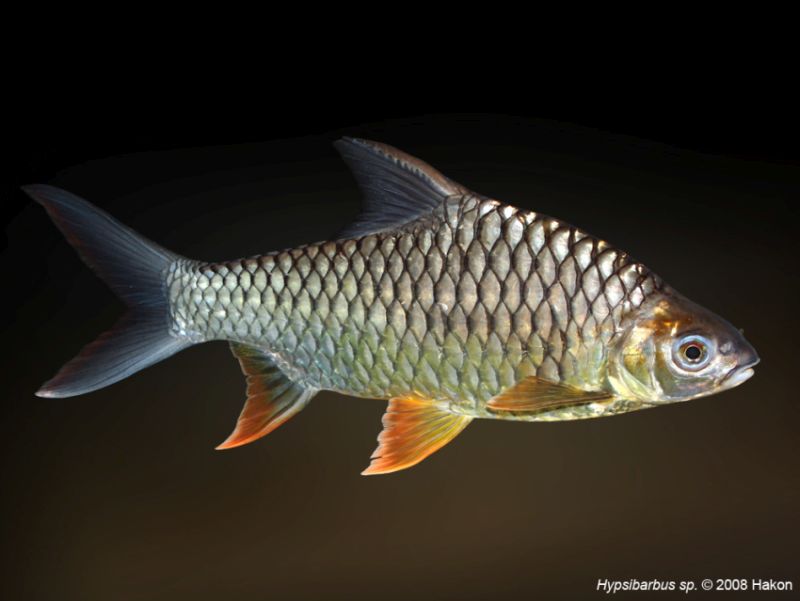
Hypsibarbus wetmorei
Smith, 1931
Max length250mm SL10in SLTank240 × 60cm96 × 24inTemp20–26°C68–79°FpH6.0–8.0H. wetmorei is distinguished from congeners by the following combination of characters: upper body reddish brown; robust body, not compressed; usually 4½ scale rows between lateral line and dorsal-fin origin; 8-12 rakers on first gill arch; 7-9 predorsal scales; 14 circumpeduncular scale rows; usually two scale rows separating vent and anal-fin; <29 lateral line scales; 9-14 serrations on the spinous dorsal-fin ray; distance between distal serrae on posterior margin of last unbranched dorsal-fin ray much greater than the width of their bases.
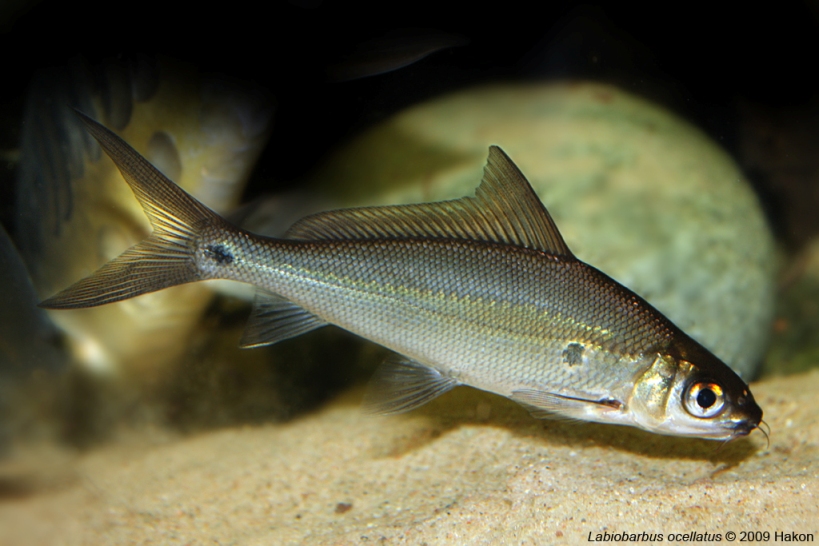
Labiobarbus ocellatus
Heckel, 1843
Max length180mm SL7in SLTank150 × 45cm60 × 18inTemp20–28°C68–82°FpH6.0–7.5It can be distinguished from congeners by the following combination of characters: 61-68 scales in the lateral series; a small, well-defined, sometimes ocellated black spot on the shoulder and another in the centre of the caudal peduncle; body without longitudinal stripes formed by spots on scales; caudal fin uniformly dusky or colourless, lobes without stripes or black margins.
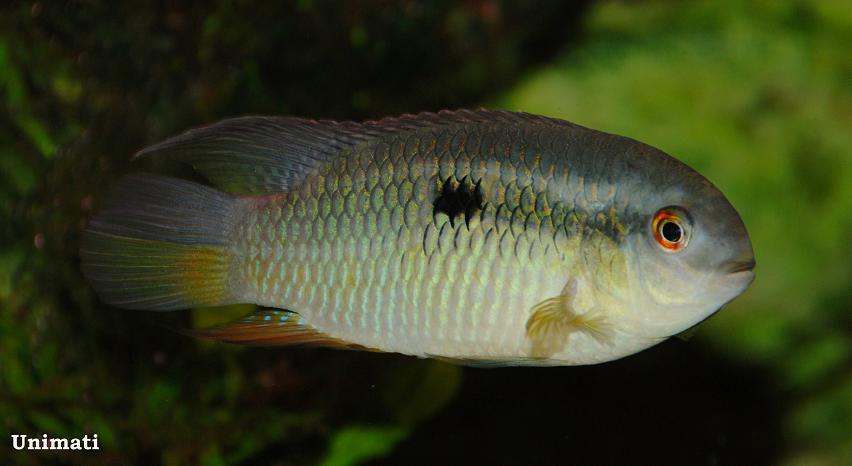
Laetacara fulvipinnis
Staeck & Schindler, 2007
Max length75mm SL3.0in SLTanknot recordedTemp20–28°C68–82°FpH4.0–7.0Has been collected from habitats containing clear, soft, acidic, tea-coloured blackwater, most typically among leaf litter or submerged vegetation in very shallow (10-50 cm depth) water along the margins of streams and other minor tributaries. At a village called El Niñal close to the mouth of the rio Pasimoni in the Casiquiare drainage pH was...
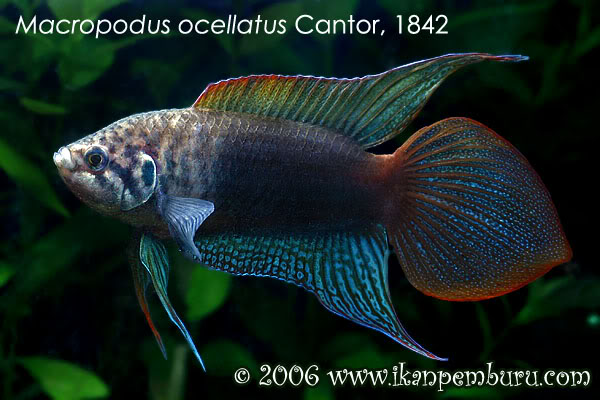
Macropodus ocellatusRoundtail Paradise Fish
Cantor, 1842
Max length80mm SL3.1in SLTank80 × 30cm31 × 12inTemp10–22°C50–72°FpH6.0–7.5M. ocellatus can be distinguished from congeners by the following combination of characters: caudal-fin rounded; eye stripe not connecting spot on posterior projection of opercle with eye; dorsal-fin rays filamentous posterior to a vertical through the posterior anal-fin rays in adults; 16-19 spinous dorsal-fin rays; 6-13 rakers on ceratobranchial of first gill arch; posterior tip or margin of body scales not darker than scales.
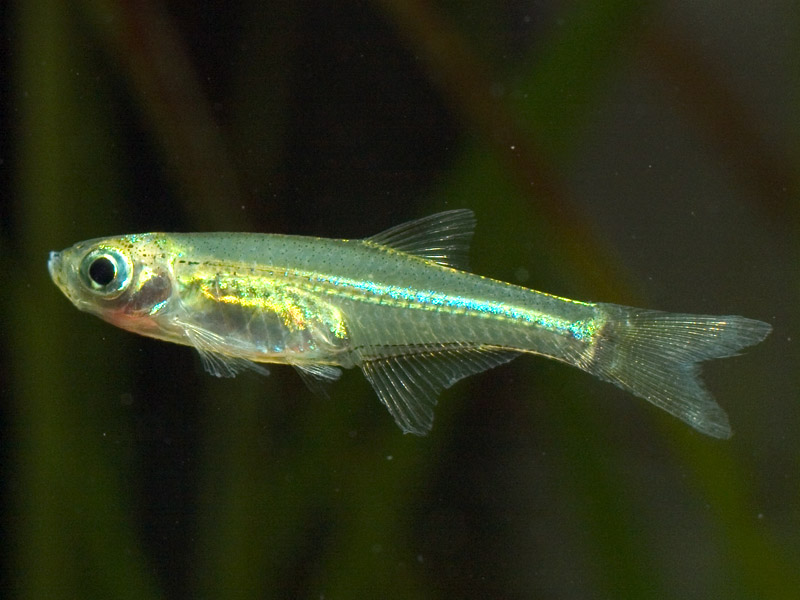
Microdevario gatesi
Herre, 1939
Max length23mm SL0.9in SLTank45 × 30cm18 × 12inTemp20–27°C68–81°FpH6.0–7.5The genus Microdevario was raised by Fang et al. (2009) after phylogenetic analyses revealed that some species formerly included in Microrasbora to be more closely allied with Devario and in need of reclassification. Microdevario is largely separated from Devario and other closely related genera such as Chela and Laubuca by virtue of internal characters but also the following: small adult size; anal and dorsal fins with concave-shaped distal margin; absence of barbels; absence of perforated scales; 9-10 branched anal-fin rays; 7 branched dorsal-fin rays; less abdominal than caudal vertebrae.
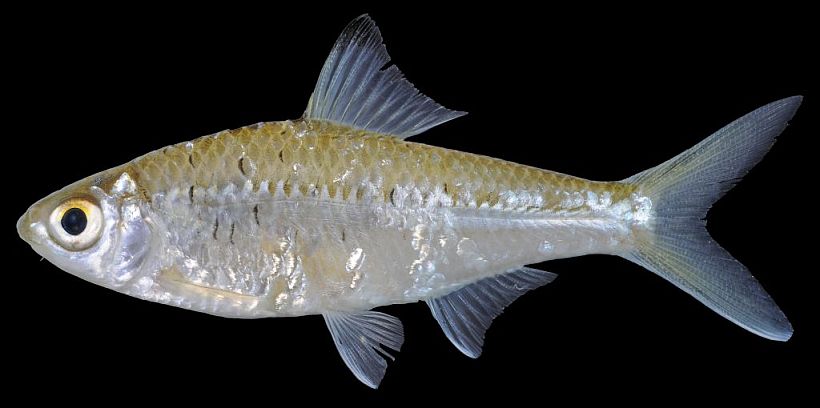
Mystacoleucus lepturus
Huang, 1979
Max length95mm SL3.7in SLTanknot recordedTempnot recordedpHnot recordedThis species can be distinguished from congeners by the following combination of characters: body relatively slender, depth fitting 3.4-3.8 times in SL; 32-33 + 2 lateral line scales; 14 circumpeduncular scale rows; presence of a single pair of barbels; black distal margin on dorsal-fin; numerous body scales with dark, crescent-shaped markings.
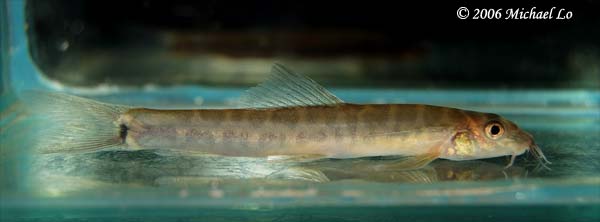
Nemacheilus saravacensis
Boulenger, 1894
Max length50mm SL2.0in SLTank60 × 30cm24 × 12inTemp23–26°C73–79°FpH4.5–7.0Images depict clear, tea-coloured forest streams with dense marginal vegetation and substrates of sand and/or small rocks and pebbles. It's also known from environments with sandy substrate and organic debris in the form of submerged roots/branches and le...
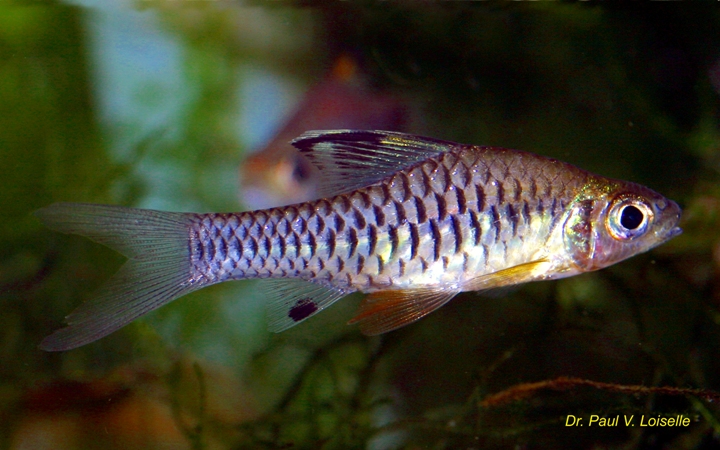
Oreichthys cosuatis
Hamilton, 1822
Max length43mm SL1.7in SLTank60 × 30cm24 × 12inTemp24–28°C75–82°FpH6.5–7.5An assortment of undescribed Oreichthys spp. from India, Myanmar and Thailand are currently traded as O. cosuatis. It can be distinguished from other described members of the genus by lacking a black blotch on the caudal peduncle, plus the following combination of characters: 2-3 perforated scales in lateral line; ½6½ between pelvic-fin origin and dorsal midline; presence of dark stripe in centre of anal-fin, forming a triangular blotch in adult individuals; dorsal-fin with whitish tip and broad, black, subdistal margin in the upper portion of the fin; 11-13 rows...
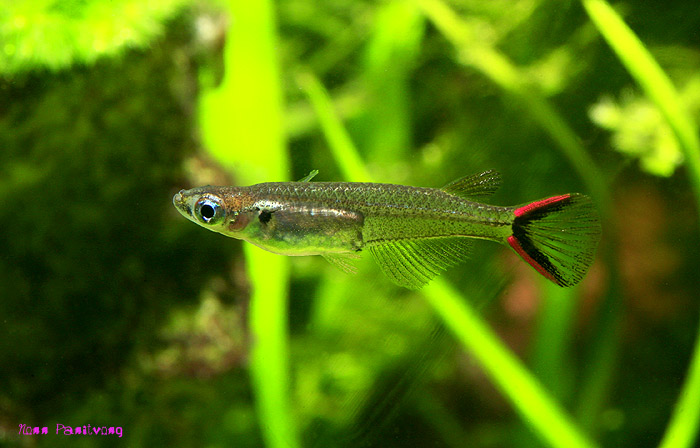
Oryzias mekongensisMekong Ricefish
Uwa & Magtoon, 1986
Max length21mm SL0.8in SLTank40 × 20cm16 × 8inTemp23–27°C73–81°FpH6.0–7.5It can be further distinguished from congeners by the following combination of characters: small adult size; bright orange-red marginal bands on caudal-fin lobes in males; caudal-fin rounded and elongate; 5-7 dorsal-fin rays; relatively few (13-18) anal-fin rays without bony contact organs, the last ray branched; 6-8 pectoral-fin rays. Members of the family Adrianichthyidae are...
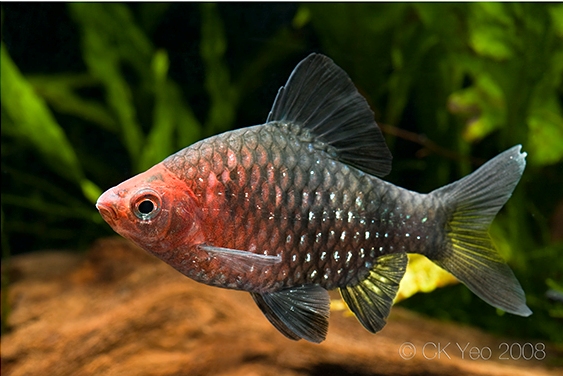
Pethia nigrofasciataBlack Ruby Barb
Günther, 1868
Max length55mm SL2.2in SLTank80 × 30cm31 × 12inTemp20–27°C68–81°FpH5.5–7.5Little sun is able to penetrate the forest floor so aquatic habitats are shaded and water temperature may be relatively cool, while conductivity and hardness are generally low and pH slightly acid. Macrophytes are uncommon though there may be dense, marginal vegetation, sometimes overhanging the full width of the stream, the roots of which may penetrate the banks underwater. Typical substrates are sandy but covered by a layer of leaf litter with fallen twigs and branches.
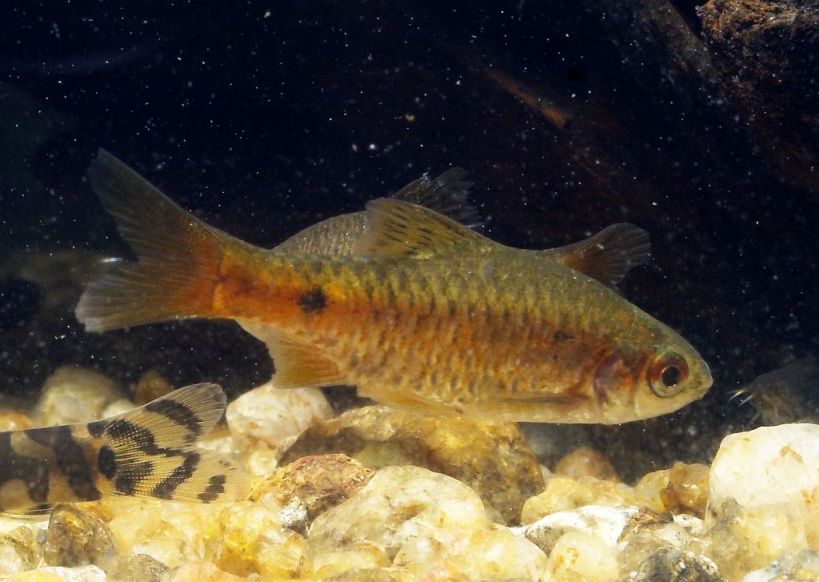
Pethia pookodensisPookode Lake Barb
Mercy & Jacob, 2007
Max length42mm SL1.7in SLTank75 × 30cm30 × 12inTemp20–25°C68–77°FpH5.5–7.5Described from Pookode Lake in Wayanad district, Kerala state, southern India and possibly endemic there although some unconfirmed records exist from within the surrounding Wayanad Wildlife Sanctuary. Pookode is a small freshwater lake surrounded by forest with a surface area of around 2 km² and is the source of the Panamaram River, a tributary within the much larger Kabani system. Its maximum depth is around 6.5 metres and in marginal areas dense patches of water lilies can be found.
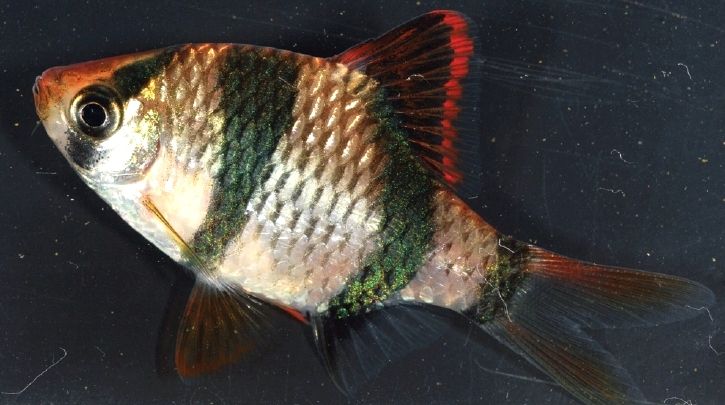
Puntigrus navjotsodhii
Tan, 2012
Max length48mm SL1.9in SLTanknot recordedTempnot recordedpHnot recordedThe type series was collected from a small clear-water stream with a pH of 6.0, forming a series of riffles and deeper pools, with a maximum width of 5 metres and depth ranging from 10 cm to 1 metre. The substrate was composed of sand gravel and rocks, with some leaf litter and overhanging marginal vegetation.
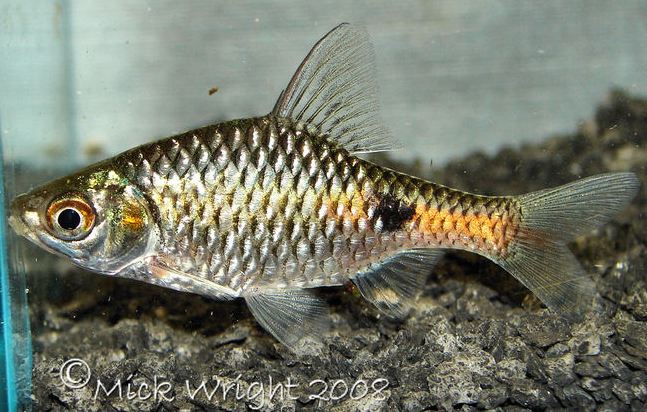
Puntius terioOnespot Barb
Hamilton, 1822
Max length90mm SL3.5in SLTank80 × 30cm31 × 12inTemp18–26°C64–79°FpH6.5–7.5This species is uncommon in the aquarium trade which is a little surprising given its huge natural range. Different populations can vary in colour pattern to an extent though all share the defining aspects given by Hamilton, comprising a diffuse yellow-golden marking on the operculum plus a dark spot on the caudal peduncle. The latter is usually surrounded by a variably-sized golden-yellow margin, and the dorsal-fin often contains irregular dark spots and streaks, these sometimes forming a longitudinal band.
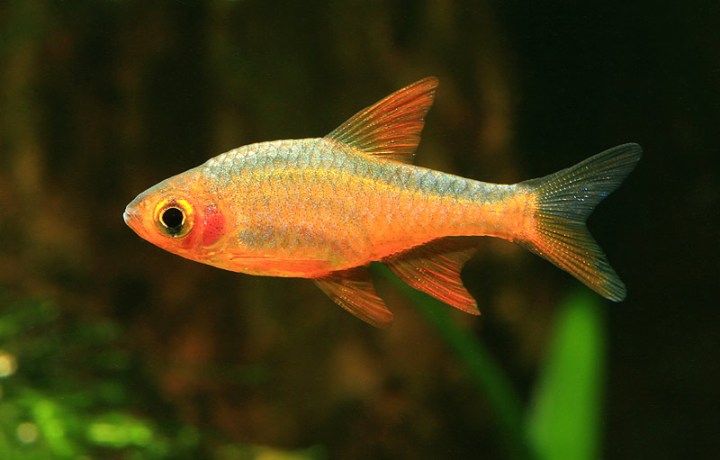
Rasboroides vateriflorisFire Rasbora
Deraniyagala, 1930
Max length40mm SL1.6in SLTank60 × 30cm24 × 12inTemp23–27°C73–81°FpH5.5–7.0These are still regarded as valid by some authorities although it's widely accepted that they represent variants of R. vaterifloris due to a lack of type material hindering conclusive study. Rasboroides nigromarginata (Meinken, 1956) has also been used to refer to a reddish form in which males differ from other populations in possessing dark fin margins, but the name is currently considered synonymous with R. vaterifloris by most sources despite the fish being rediscovered in 2010.
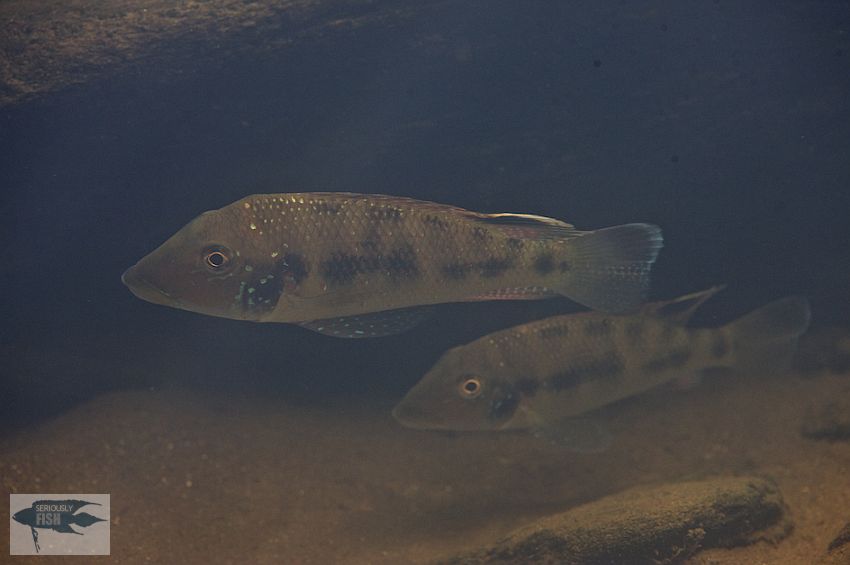
Retroculus acherontos
Landin, Mareira & Figueiredo, 2015
Max length194mm SL8in SLTanknot recordedTempnot recordedpHnot recordedKnown only from affluents within the upper rio Tocantins basin draining into the enormous Serra da Mesa hydroelectric reservoir in Goiás state, Brazil. It has been collected from the rios Maranhão, das Almas, Traíras, and Palmerinha/Palmeira(?). Type locality is 'Brazil, Goiás, Rio Tocantins basin, Rio das Almas, tributary of left margin of Rio Maranhão, 14˚37′51.2″S, 49˚1′56.6″W'.
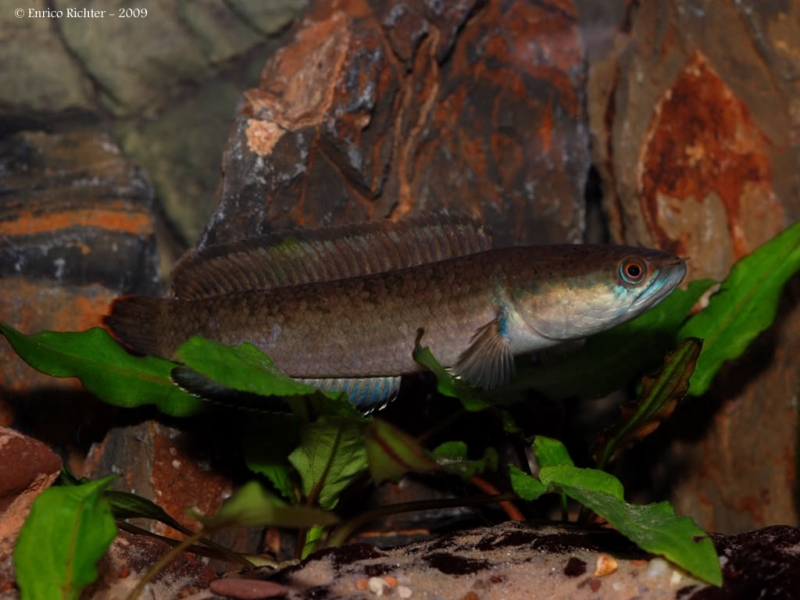
Channa gachuaDwarf Snakehead
Hamilton, 1822
Matched on Ophicephalus marginatus, a name it was formerly known by
Max length200mm SL8in SLTank120 × 45cm48 × 18inTemp18–28°C64–82°FpH5.0–8.0Generally considered to have an enormous natural range extending from Iran to Taiwan and Bali, with records existing from Iran, Iraq, Afghanistan, Pakistan, Nepal, India, Sri Lanka, Bangladesh, Bhutan, China, Myanmar, Thailand, Laos, Cambodia, Vietnam, Malaysia, Indonesia, and Singapore. However there exists significant evidence to suggest that C. gachua as currently understood represents a complex of similar-looking species, and a taxonomic review of the group is clearly required.
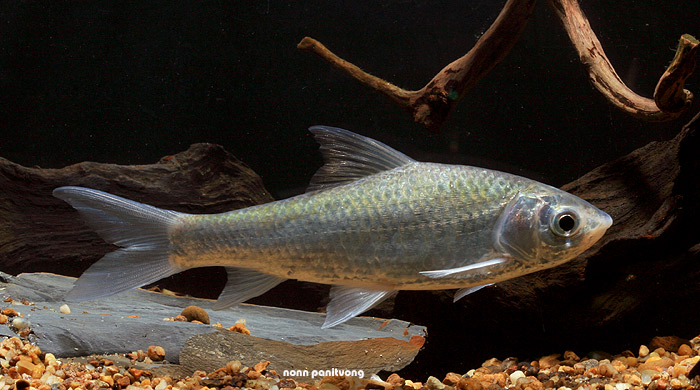
Gymnostomus siamensisSiamese Mud Carp
Sauvage, 1881
Matched on Cirrhinus marginipinnis, a name it was formerly known by
Max length150mm SL6in SLTanknot recordedTempnot recordedpHnot recordedG. siamensis can be distinguished from congeners by the following combination of characters: possession of 5½ lateral line scales; body relatively deep, depth fits 3.2-3.4 times in SL; head large and broad, width fits 5.5-6.7 times in SL; snout not or only weakly projecting; body plain silver in colour with no dark marking on caudal peduncle.