Hypsibarbus wetmorei
Formerly Puntius wetmorei Smith, 1931 · Puntius daruphani Smith, 1934 · Barbus beasleyi Fowler, 1937 · Puntius daruphani tweediei Menon, 1954
Last revised 2026Edit this page
On this page13 sections
Quick factsEdit
Difficulty7 of 8 measures
Rated difficult because it needs a tank at least 2 m long.
- Space
- very large tank
- Water
- flexible
- Temp
- flexible
- Diet
- unknown
- Temperament
- peaceful
- Social
- needs to be in a group
- Compatibility
- fine with others
Other demands
Each of these can raise the rating on its own, whatever the measures above say.
- Hardiness
- needs a well-established tank
- Needs a tank at least 2 m long
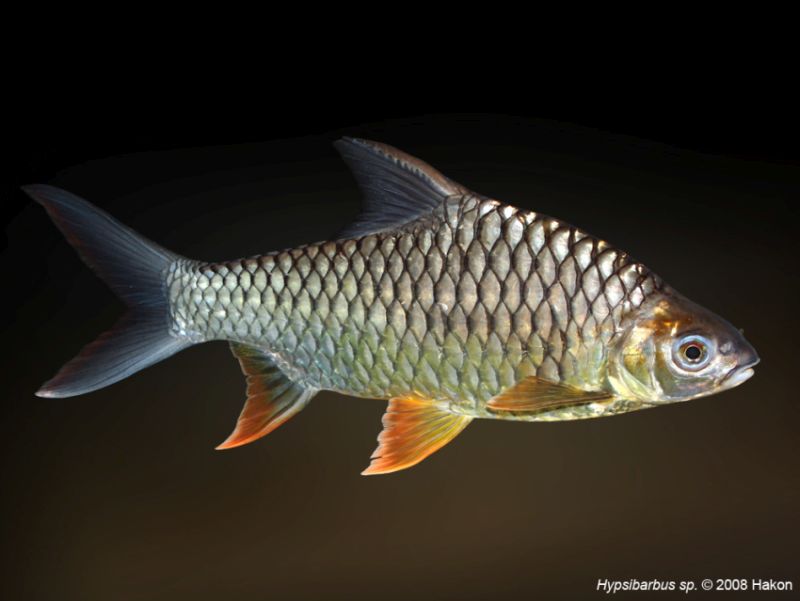
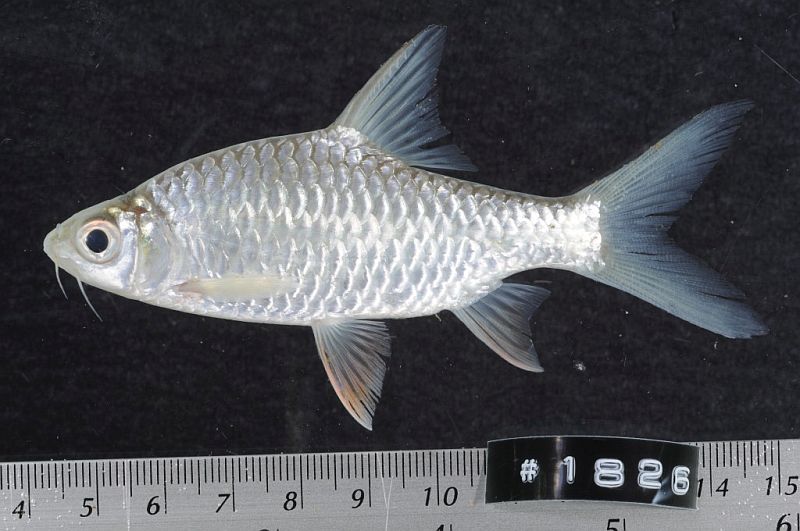
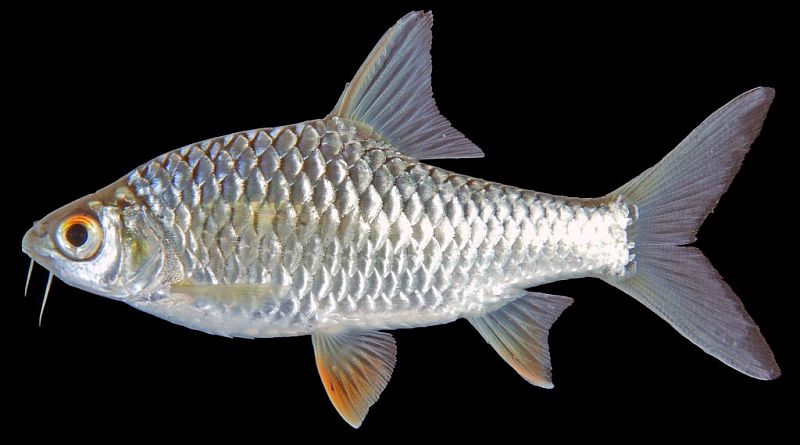
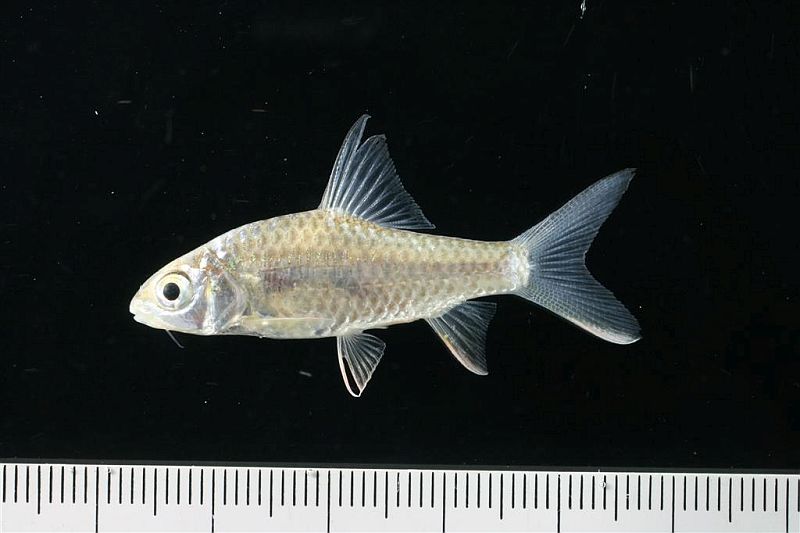
Hypsibarbus wetmorei is a cyprinid widespread in mainland Southeast Asia, from the lower Mekong basin south to the Pahang River in Malaysia. Its orange to red pectoral, pelvic and anal fins separate it from the very similar H. vernayi (yellow), and yellow-finned fish traded as H. wetmorei or 'lemon fin barb' appear likely to be that species. It prefers flowing water with abundant riparian vegetation and grows to 250 mm.
Etymology
EditHypsibarbus: from the Ancient Greek ὕψι (húpsi), and the generic name Barbus, presumably in allusion to the deep body shape in members of this genus.
wetmorei: named in honour of ornithologist Alexander Wetmore (1886-1978), assistant secretary of the Smithsonian Institution, in charge of the United States National Museum.
Distribution
EditWidespread in mainland Southeast Asia, including the lower Mekong basin in Laos, Thailand, and Cambodia, the Tapi, Chao Phraya and Mae Klong systems in Thailand, and various smaller watersheds in southern Thailand and northern Peninsular Malaysia, as far south as the Pahang River.
Type locality is 'Thailand: Mae Nam Chao Phraya at Chainad'.
Habitat
Write a noteEditDisplays a preference for flowing water with abundant riparian vegetation, and does not occur in standing waters such as reservoirs or other man-made impoundments.
It is migratory on a seasonal basis, but it is unclear whether the entire population moves upriver to the same spawning sites, or subpopulations undertake shorter migrations.
Aquarium size
Write a noteEditAn aquarium with base dimensions of 240 ∗ 60 cm96 ∗ 24 in or equivalent should be the smallest considered.
Maintenance
Write a noteEditChoice of décor is not as critical as water quality and the amount of open swimming-space provided.
However should you possess the means to provide and decorate a sufficiently-sized aquarium for long term care this species would look superb in a set-up designed to resemble a flowing river with a substrate of variably-sized rocks and gravel, some large water-worn boulders and driftwood branches.
Like many other species that hail from running waters it is likely to be intolerant of organic wastes and require spotless water with a high level of dissolved oxygen in order to thrive.
Water conditions
EditThese recommendations come from this profile’s own figures. They contain affiliate links, so we may earn a commission.
Diet
Write a noteEditWild fish are known to feed on shrimps and snails, suggesting a benthic foraging behaviour.
In the aquarium Hypsibarbus spp. are unproblematic feeders but should be offered a varied diet comprising live and frozen foods such as chironomid larvae (bloodworm), Daphnia, and Artemia along with good quality dried flakes, granules and plenty of vegetable matter.
Behaviour and compatibility
Write a noteEditNot aggressive unless space is confined, but may eat small fishes and molest slow-moving or timid fishes with its constant activity and vigorous feeding behaviour.
Hypsibarbus are schooling species that should ideally be maintained in groups of half a dozen or more individuals.
Sexual dimorphism
Write a noteEditSexually mature females are likely to be deeper-bodied and may grow larger than males.
Reproduction
Write a noteEditUnreported.
Notes
EditH. wetmorei is distinguished from congeners by the following combination of characters: upper body reddish brown; robust body, not compressed; usually 4½ scale rows between lateral line and dorsal-fin origin; 8-12 rakers on first gill arch; 7-9 predorsal scales; 14 circumpeduncular scale rows; usually two scale rows separating vent and anal-fin; <29 lateral line scales; 9-14 serrations on the spinous dorsal-fin ray; distance between distal serrae on posterior margin of last unbranched dorsal-fin ray much greater than the width of their bases.
H. wetmorei is very similar to H. vernayi, but can be told apart by possessing orange to red (vs. yellow in H. vernayi) pectoral, pelvic, and anal fins. It thus appears likely that yellow-finned fish marketed as H. wetmorei or 'lemon fin barb' in the ornamental trade are actually H. vernayi, with both species are available on a regular basis. The two share a broadly similar geographic distribution, so they may even be collected together.
Hypsibarbus species are valued food fishes throughout their range although most species arre thought to be in decline due to human activity, particularly damming of rivers and agriculture.
The genus is diagnosed as follows: two pairs of barbels; strongly serrated dorsal-fin spine; 8 branched pelvic-fin rays; skin of lower lip discontinuous with lower jaw, separated by a shallow groove; anal-fin base approximately 60% HL; scales with black margins resulting in reticulated appearance; fins often with extended falcate tips; anal and pelvic fins often brightly-coloured.
References
- Rainboth, W. J. (1996). The taxonomy, systematics, and zoogeography of Hypsibarbus, a new genus of large barbs (Pisces, Cyprinidae) from the rivers of southeastern Asia. University of California Publications in Zoology v. 129, i-xiii + 1-199
- Rainboth, W. J. (1996). FAO species identification field guide for fishery purposes. FAO, Rome, 1-265
- Kottelat, M. (2013). The fishes of the inland waters of southeast Asia: a catalogue and core bibiography of the fishes known to occur in freshwaters, mangroves and estuaries. The Raffles Bulletin of Zoology Supplement 27, 1-663
- Kottelat, M. (2001). Fishes of Laos. WHT Publications, Colombo, 1-198
- Smith, H. M. (1931). Descriptions of new genera and species of Siamese fishes. Proceedings of the United States National Museum 79(2873), 1-48
Species images · 7
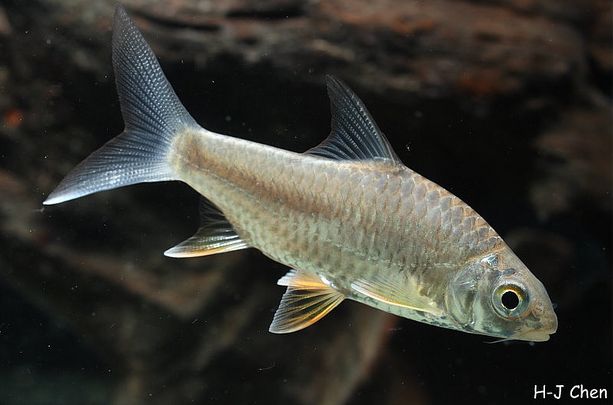
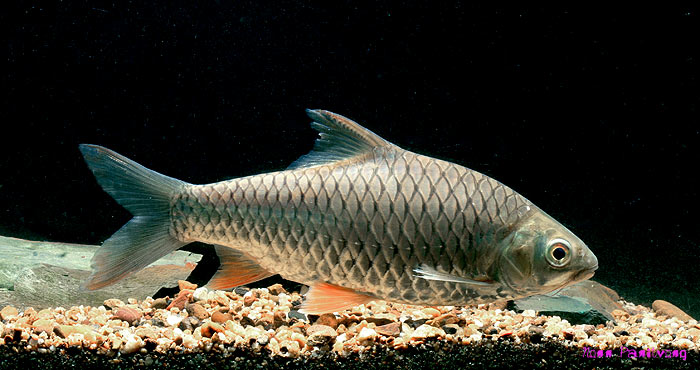
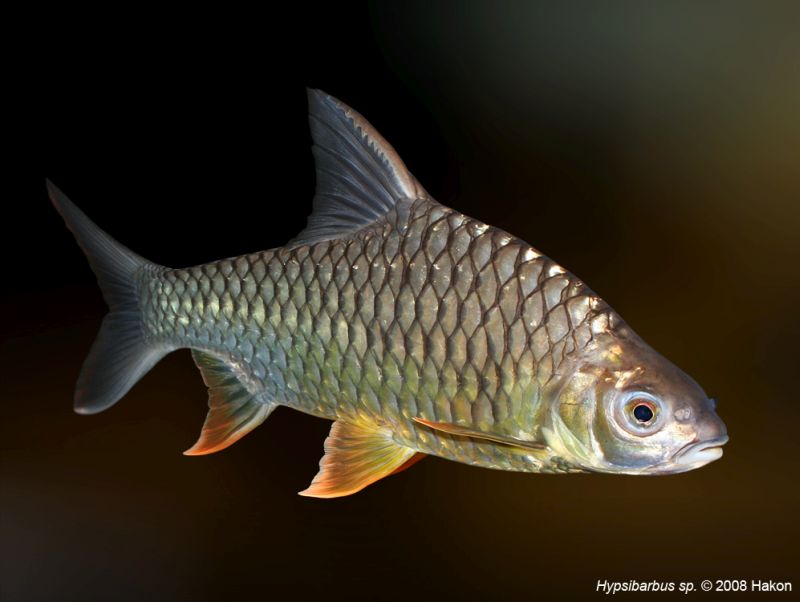
These photographs are used with each photographer's permission.
Send a photographDistribution
Profile completeness21 of 24
Community
Questions about Hypsibarbus wetmorei?
Ask on Discord