Results for “population”
Type a name: scientific, common, or one a species used to go by. Or narrow the catalogue with the filters.
Filters
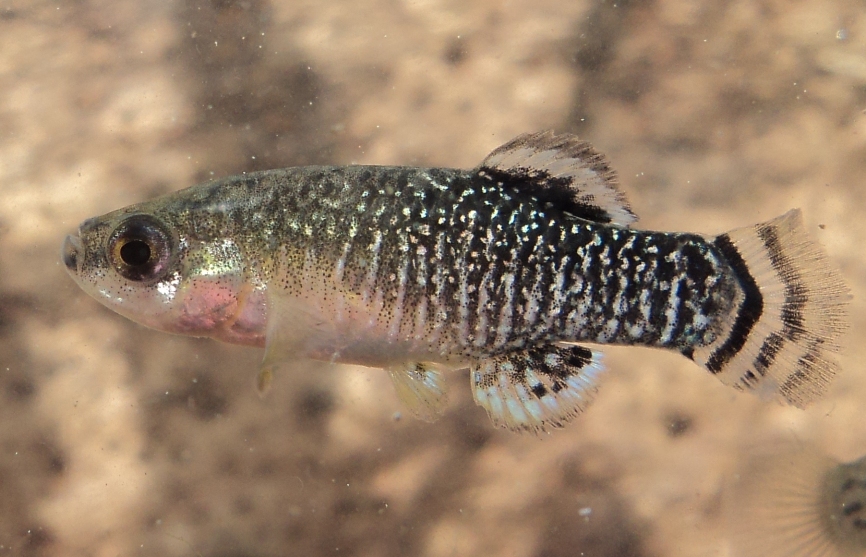
Apricaphanius iberusSpanish Toothcarp
Valenciennes, 1846
Max length50mm SL2.0in SLTank120 × 30cm48 × 12inTemp2–30°C36–86°FpH7.0–9.0Populations of Aphanius from Spain's southern, Atlantic coastline and Algeria previously considered representative of A. iberus have now been elevated to full species status with the names A. baeticus (Doadrio, Carmona & Fernández-Delgado, 2002) and A. saourensis (Blanco, Hrbek & Doadrio, 2006), respectively. All three species look broadly similar although A. saourensis can be easily identified as the patterning in males is mottled and does not form vertical bars, while femal...
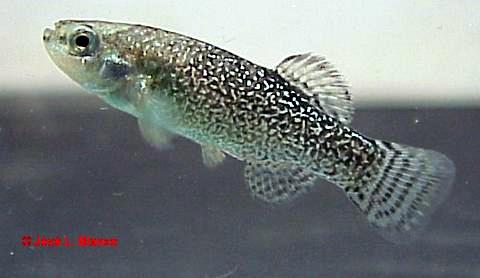
Apricaphanius saourensisSahara Toothcarp
Blanco, Hrbek & Doadrio, 2006
Max length45mm SL1.8in SLTank120 × 30cm48 × 12inTemp2–30°C36–86°FpH7.5–9.0All Algerian Aphanius populations were considered to be representative of A. iberus until this species was described in 2006. It differs both morphologically and genetically from A. iberusand A. baeticus, probably diverging about 5.3 million years ago during the opening of the Straits of Gibraltar. It is most easily distinguished by the distinct mottled body patterning which in males of the other two species forms distinct vertical bars and in females dark spot-like markings. A. iberusis now k...
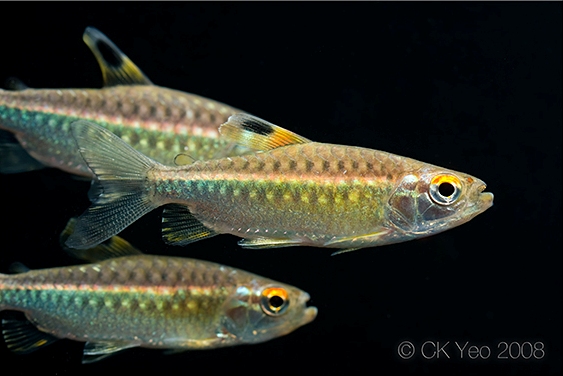
Arnoldichthys spilopterusAfrican Red-eyed Tetra
Boulenger, 1909
Max length100mm SL3.9in SLTank120 × 30cm48 × 12inTemp24–27°C75–81°FpH6.0–7.5Endemic to Nigeria, where it occurs in the Ogun and lower Niger river systems. Despite its popularity in the aquarium hobby it's relatively scarce in the wild and is known from less than 10 localities, all lying in an area where deforestation and pollution are uncontrolled and continue to occur extensively.
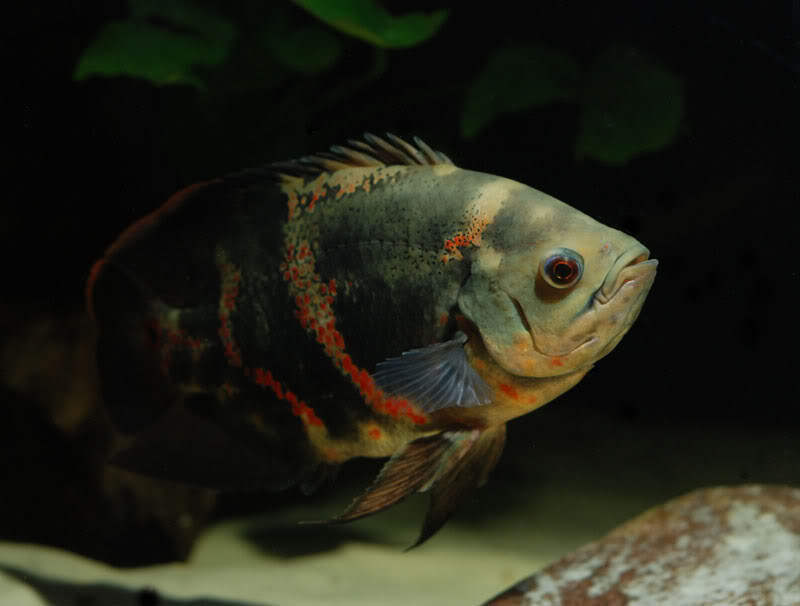
Astronotus ocellatusOscar
Agassiz, 1831
Max length350mm SL14in SLTank150 × 60cm60 × 24inTemp20–28°C68–82°FpH6.0–7.5This species is also referred to as 'velvet cichlid', 'red oscar', 'tiger oscar', or 'marble cichlid'. It is a popular aquarium fish although its adult size and typical life-span of 10-20 years must be taken into account before purchase. Numerous ornamental strains are now available, and while care is more-or-less identical for all of them a degree of additional care must be taken with the 'long-finned' variety which is a little less competitive than other forms.
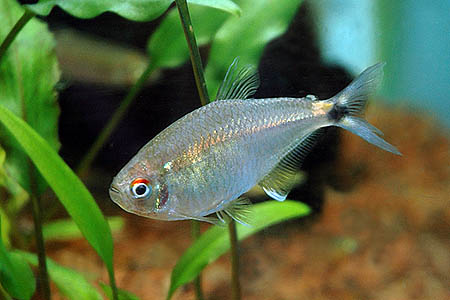
Astyanax bimaculatusTwo Spot Astyanax
Linnaeus, 1758
Max length150mm SL6in SLTank120 × 60cm48 × 24inTemp20–28°C68–82°FpH5.5–7.5A. bimaculatus is not a popular aquarium fish but is available on occasion exception, most often as a contaminant among shipments of other species. It's identity is also in question to an extent with the name currently applied to what is considered to represent a species complex comprising at least four taxa.
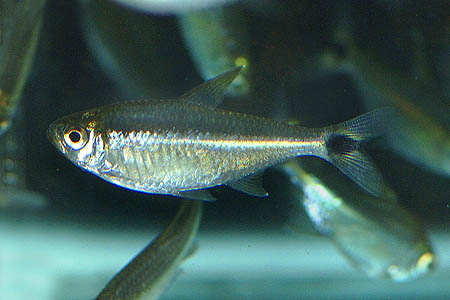
Astyanax kennedyiKennedy's Tetra
Géry, 1964
Max length50mm SL2.0in SLTank80 × 30cm31 × 12inTemp26–29°C79–84°FpH5.5–7.0Endemic to pthe upper Amazon basin in Peru, around the city of Iquitos. Most Astyanax spp. are not popular in the aquarium hobby, though the genus is among the most speciose within the family Characidae. A. kennedyi is no exception; you'll rarely see it offered for sale but may find the occasional specimen mixed among other species in shipments of wild fishes from Peru.
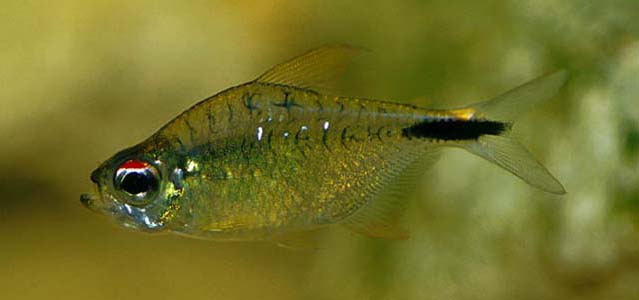
Astyanax leopoldiLeopold's Tetra
Géry, Planquette & Le Bail, 1988
Max length60mm SL2.4in SLTank60 × 30cm24 × 12inTemp23–27°C73–81°FpH5.5–7.0Most Astyanax spp. are not popular in the aquarium hobby, though the genus is among the most speciose within the family Characidae. A. leopoldi is no exception in that you'll rarely see it offered for sale but may find the occasional specimen mixed among other species in shipments of wild fishes from Peru.
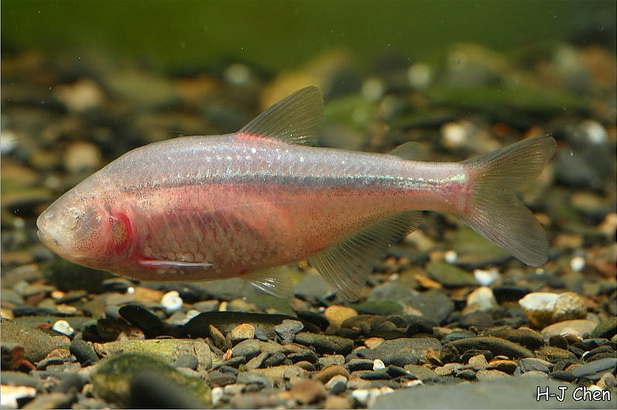
Astyanax mexicanusBlind Cave Tetra
De Filippi, 1853
Max length95mm SL3.7in SLTank80 × 30cm31 × 12inTemp20–25°C68–77°FpH6.5–8.0While the surface-dwelling form of this species is fairly unremarkable and rarely-seen in the hobby, the blind form is very popular indeed. The two may have diverged as recently as within the last 10,000 years, with the blind form losing its eyes and much of its pigment. This probably happened because the fish needed better development in other sensory areas. Losing unnecessary and energy-consuming aspects of its physiology allowed it to devote more energy to developments such as increased numbers of taste receptors on the head.
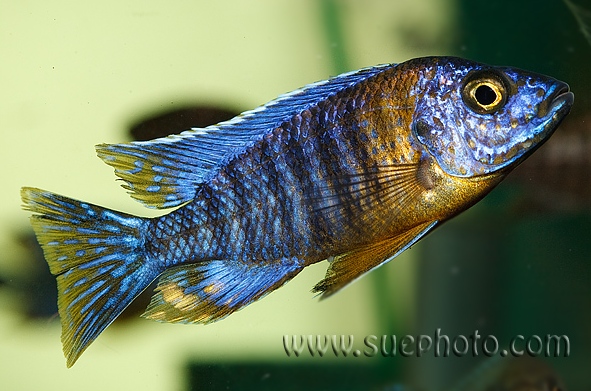
Aulonocara hansbaenschiRed Shoulder Peacock
Meyer, Riehl & Zetzsche, 1987
Max length120mm SL5in SLTank90 × 45cm36 × 18inTemp24–29°C75–84°FpH7.4–9.0Some eminent authors believe this species to be a geographical variant of the highly variable congener A. stuartgranti rather than a distinct taxon but since most popular resources continue to view it as valid we also list it here. At Masinje it has been observed to show a distinct preference for rocky caves and crevices in relatively shallow (3-6 metres deep) water. This is in contrast to most other members of the genus, which tend to forage over sand, but similar to behaviour seen in A. jacobfreibergi.
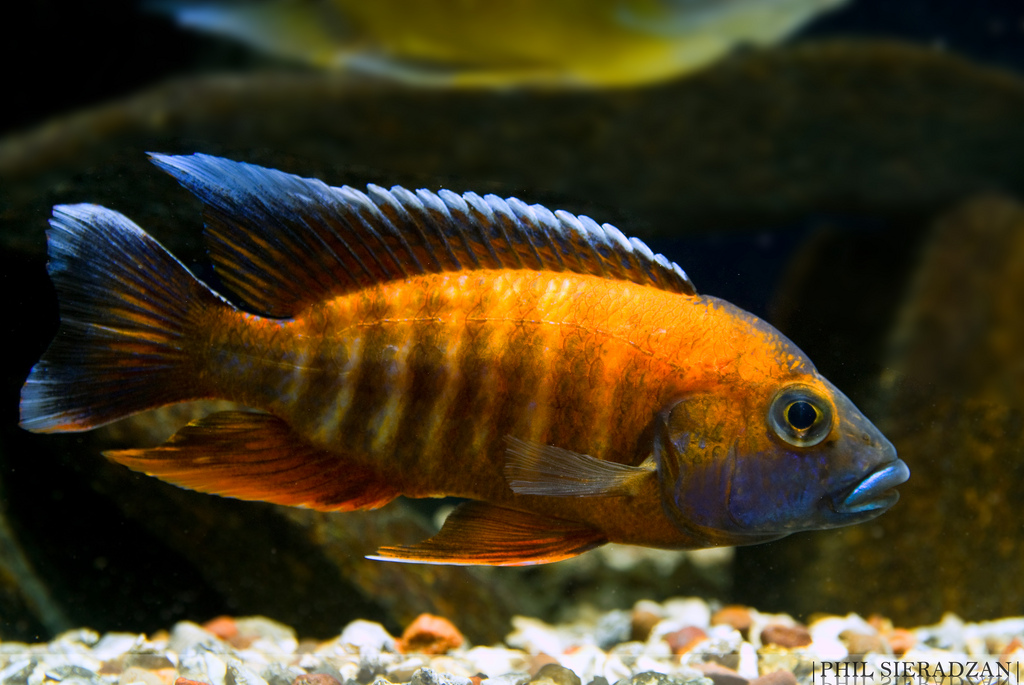
Aulonocara jacobfreibergiMalawi Butterfly
Johnson, 1974
Max length170mm SL7in SLTank120 × 60cm48 × 24inTemp25–29°C77–84°FpH7.5–9.0This was one of the first Aulonocara spp. to enter the hobby and its popularity has endured. It's known by several other vernacular names including 'Freiberg's peacock', 'fairy cichlid' and 'African butterfly' as well as the erroneous 'scientific' names Trematocranus trevori, T. jacobfreigbergi and T. regina. A naturally-occurring, yellowish form from Undu reef, Tanzania is often referred to as 'lemon jake'. It can be told apart from most other members of the genus by the broad, pale distal margins in the dorsal, anal and caudal fins, more deeply-forked caudal fin and larger adult size.
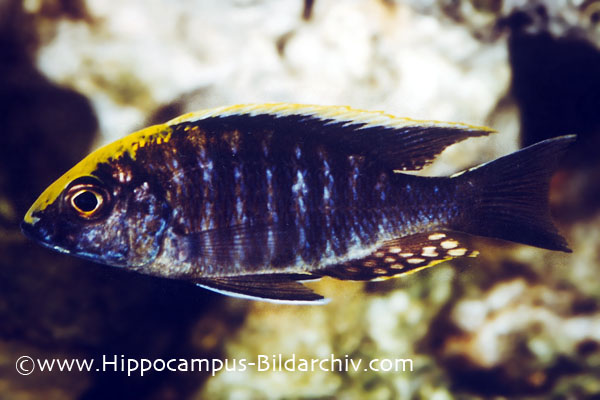
Aulonocara maylandiSulphurhead Peacock
Trewavas, 1984
Max length100mm SL3.9in SLTank120 × 30cm48 × 12inTemp25–29°C77–84°FpH7.5–9.0This species exists in two distinctive phenotypes, with male individuals from West reef and Eccles reef possessing a bright yellow stripe of colour running from the tip of the snout over the anterior portion of the dorsal surface and along the distal margin of the dorsal fin. This form is commonly referred to as 'sulphurhead' or 'sulfurhead' in the aquarium hobby. At Kande Island males exhibit a similar overall colour patterm but the dorsal stripe is whitish in colour and both males and females possess an enlarged lower pharyngeal bone. This population was described...
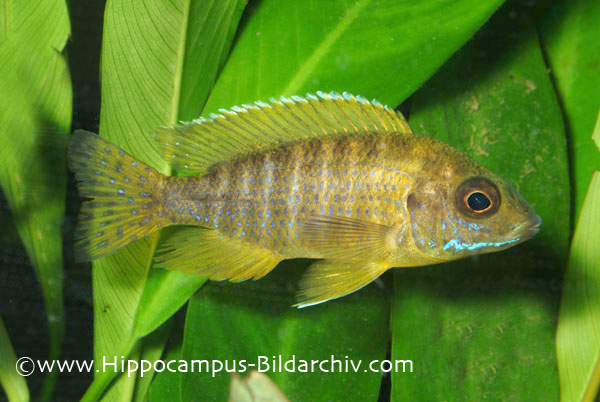
Aulonocara sp. 'stuartgranti maleri'Sunshine Peacock
authority not recorded
Max length120mm SL5in SLTank120 × 45cm48 × 18inTemp25–29°C77–84°FpH7.5–9.0It remains unclear whether this fish represents an as yet undescribed species or not but in either case the unofficial, vernacular name is confusing due to it being based on that of a described taxon. As a result it is often referred to as A. stuartgranti 'Maleri' or 'Maleri Islands', either through error or because some authors believe it to be conspecific with A. stuartgranti. The population from the Maleri Islands is traded as 'yellow regal peacock' (not to be confused with the 'new yellow regal peacock', i.e., A. baenschi) and the one from Chidunga Rocks as 'sunshine peacock' or 'orange peacock'.
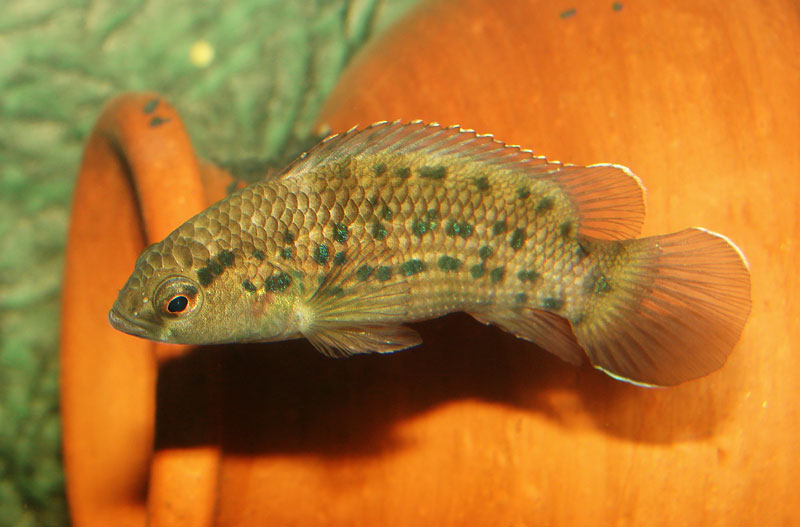
Badis assamensis
Ahl, 1937
Max length75mm SL3.0in SLTank75 × 30cm30 × 12inTemp15–25°C59–77°FpH6.0–7.5Like most badids this species is poorly documented and has yet to find significant popularity in the aquarium hobby. It is easily confused with B. blosyrus at first glance as the body patterning of the two is almost identical but can be distinguished by its slightly larger adult size, noticeably shorter jaw profile and some other, mostly internal, meristic characters. Prior to 2002 the family Badidae inc...
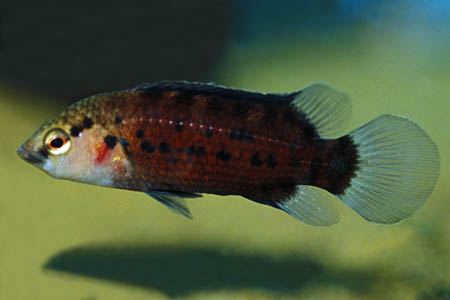
Badis blosyrus
Kullander & Britz, 2002
Max length70mm SL2.8in SLTank75 × 30cm30 × 12inTemp15–25°C59–77°FpH6.0–7.5Like most badids this species is poorly documented and has yet to find significant popularity in the aquarium hobby. It is easily confused with B. assamensis at first glance as the body patterning of the two is almost identical but can be distinguished by its slightly smaller adult size, noticeably elongated, more well-developed jaw profile and some other, mostly internal, meristic characters.
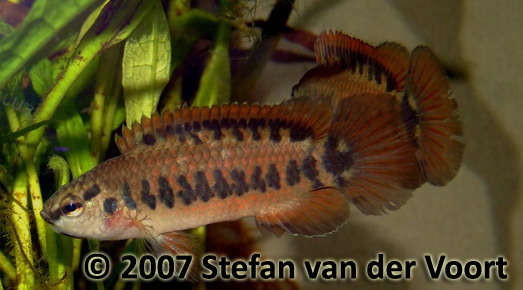
Badis ferrarisi
Kullander & Britz, 2002
Max length60mm SL2.4in SLTank60 × 30cm24 × 12inTemp15–25°C59–77°FpH6.5–7.5Like most badids this species is poorly documented and has yet to find significant popularity in the aquarium hobby. It is arguably the most attractive member of the genus and we hope to see it more widely available; the fish in our images representing what is thought to be the only batch exported from Myanmar to date. It is most closely related...
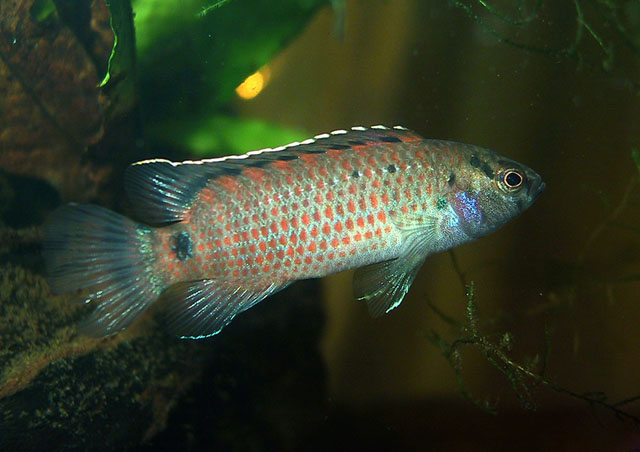
Badis khwae
Kullander & Britz, 2002
Max length60mm SL2.4in SLTank60 × 30cm24 × 12inTemp22–26°C72–79°FpH6.5–7.5Like most badids this species is poorly documented and has yet to find significant popularity in the aquarium hobby, though given its restricted natural distribution it is unlikely ever to be available in large numbers. Within the genus it is most easily confused with B. ruber and B. siamensis but both these species have rows of dark spot-like markings on the flanks which are lacking in B. khwae. The three also differ in the shape of the dark marking on the caudal peduncle; in B. ruber it is rel...
Badis kyar
Kullander & Britz, 2002
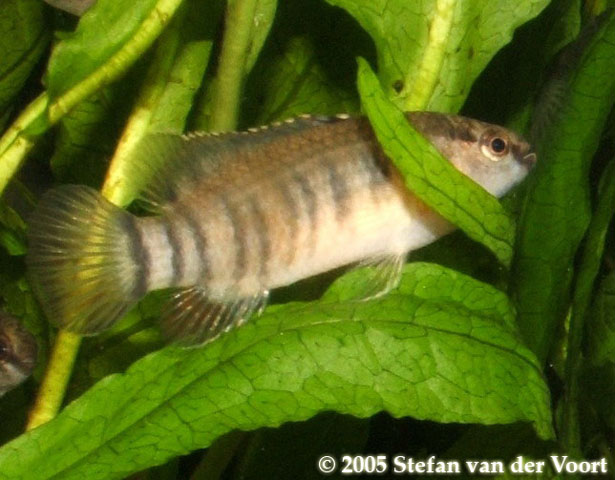
Max length60mm SL2.4in SLTank60 × 30cm24 × 12inTemp15–25°C59–77°FpH7.0–9.0Like most badids B. kyar is poorly documented in aquarium literature and has yet to find significant popularity in the hobby, though given its restricted natural distribution it is unlikely ever to be available in large numbers. The fish in our image is a specimen included in the only batch of this species known to have been exported to date. This species has a very slender body shape (which may be an adaptation to its habitat) and in this respect is similar to B. pyema. However B. kyar possesse...
Badis pyema
Kullander & Britz, 2002
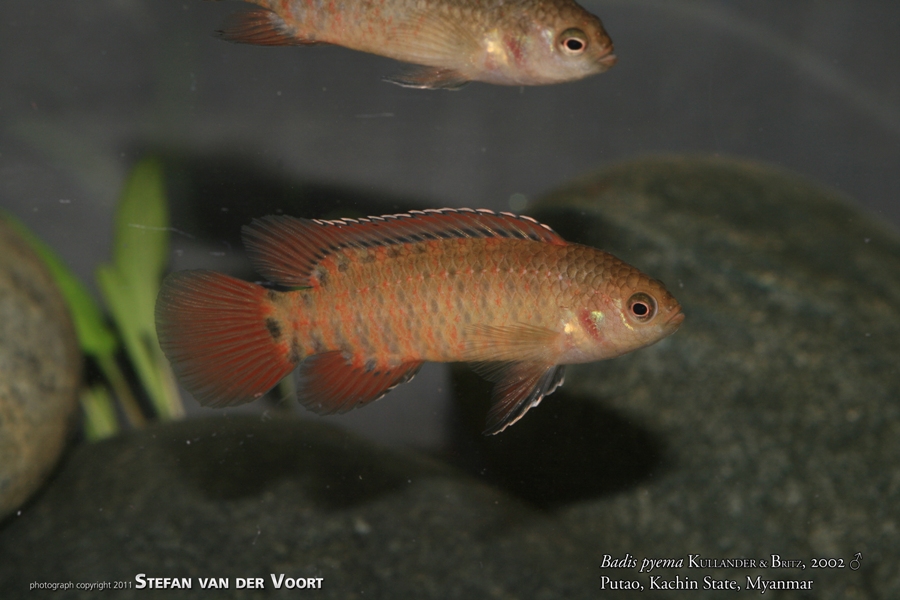
Max length45mm SL1.8in SLTank60 × 30cm24 × 12inTemp15–25°C59–77°FpH6.5–7.5Like most badids B. pyema is poorly documented in aquarium literature and has yet to find significant popularity in the hobby, though given its restricted natural distribution it is unlikely ever to be available in large numbers and has only been collected on three occasions to date. It has a very slender body shape, likely an adaptation to its habitat, and in this respect is similar to B. kyar. However B. kyar possesses relatively solid dark, uniform vertical bars on the flanks whereas in B. p...
Badis siamensis
Klausewitz, 1957
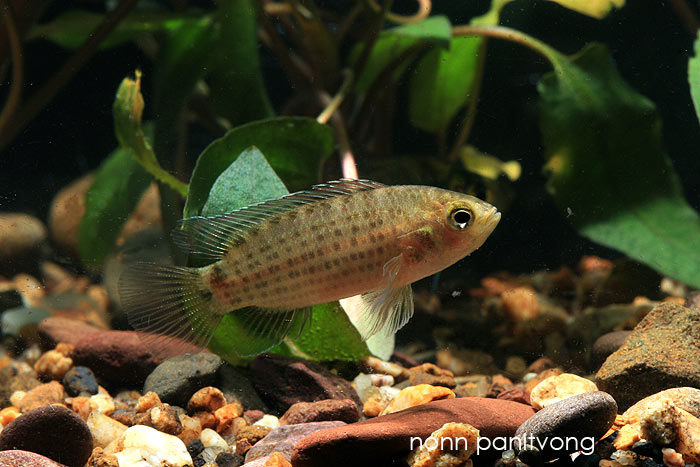
Max length60mm SL2.4in SLTank60 × 30cm24 × 12inTemp22–26°C72–79°FpH6.5–7.5Like most badids this species is poorly documented and has yet to find significant popularity in the aquarium hobby; to date it has only been exported in very limited numbers. It was for a number of years known as Badis badis siamensis and will be seen labelled as such in older literature. Within the genus it is most easily confused with B. khwae and B. ruber but can be identified by the flank patterning which consists of rows of horizontally-arranged dark markings. In B. ruber these appear mor...
Balantiocheilos melanopterusSilver Shark
Bleeker, 1850
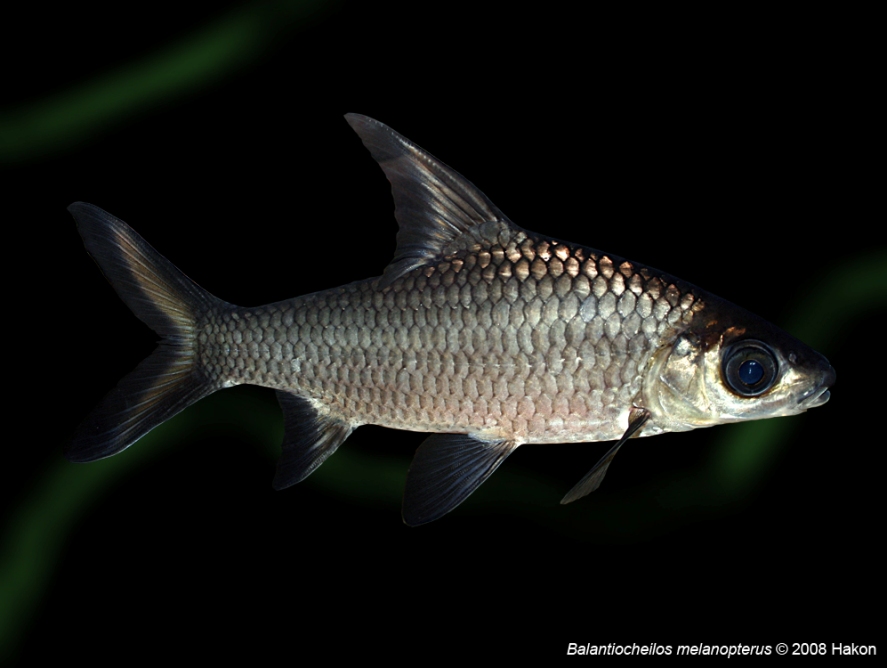
Max length350mm SL14in SLTank240 × 60cm96 × 24inTemp20–28°C68–82°FpH6.0–8.0May also be seen on sale under the trade names 'Bala shark' or 'tricolor shark minnow' and perhaps among the most commonly-encountered ornamental fish species. It is unfortunate that the vast majority of those traded are juveniles and tend to come supplied with little to no information provided regarding their potential size and requirements, a fairly ironic situation given the apparently precarious status of wild populations.