Search the catalogue
Type a name: scientific, common, or one a species used to go by. Or narrow the catalogue with the filters.
Filters
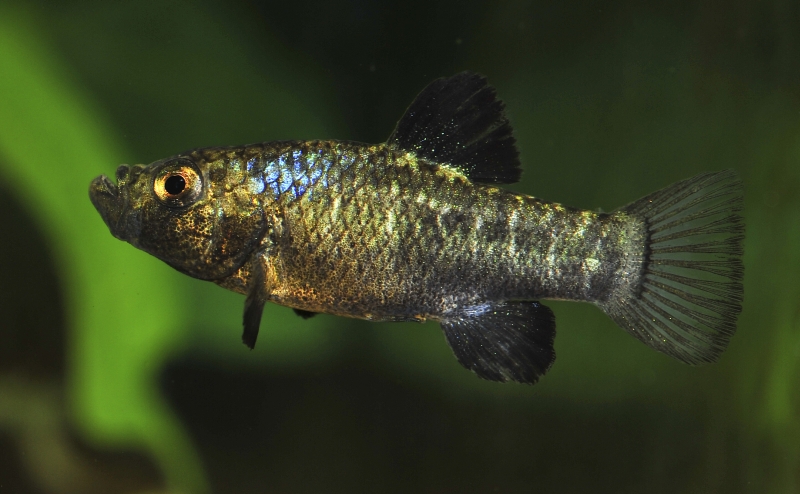
Cyprinodon desquamatorScale-eating pupfish
Martin & Wainwright, 2013
Max length31mm SL1.2in SLTanknot recordedTempnot recordedpHnot recordedThis species is a specialised lepidophage with approximately 50 % of the diet comprising the scales of other fishes. Physical adaptations to this behaviour include its elongate body and jaw mechanism permitting a fast biting action.
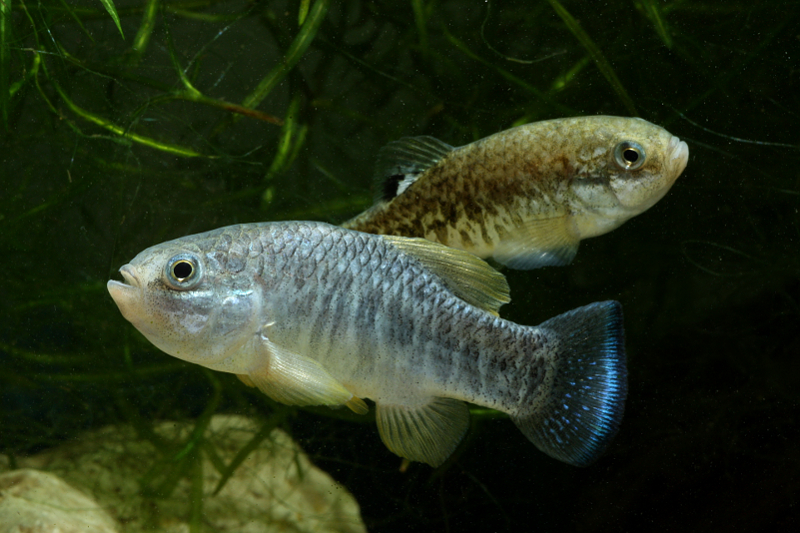
Cyprinodon julimesJulimes Pupfish
De la Maza-Benignos & Vela-Valladores, 2009
Max lengthnot recordedTank60 × 30cm24 × 12inTempnot recordedpHnot recordedEl Pandeño de los Pando has a surface area of around 287 m² with depth ranging from 40-80 cm but there is an abandoned artificial channel which has an area of approximately 437 m². Water temperature fluctuates between 38-48°C/100.4-118.4°F and the spring is considered one of the hottest environments inhabited by fish in the world.
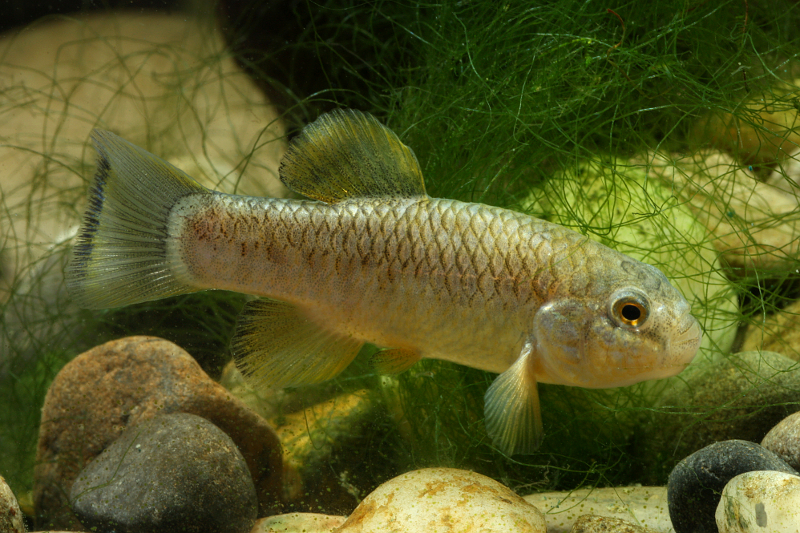
Cyprinodon pachycephalus
Minckley & Minckley, 1986
Max length45mm SL1.8in SLTank60 × 30cm24 × 12inTempnot recordedpHnot recordedNeed not be too complicated so long as there are plenty of broken lines-of-sight. Provide plenty of cover in the form of aquatic plants, wool mops, etc., and if using filtration air-powered, sponge-type units are best as these will not harm eggs or fry. Lighting is unimportant but can be use...
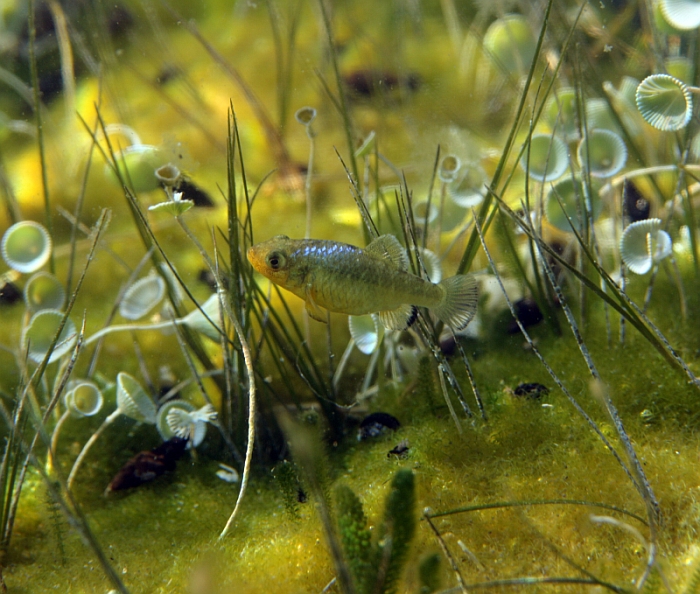
Cyprinodon variegatusSheepshead 'Minnow'
Lacepède, 1803
Max length50mm SL2.0in SLTank60 × 30cm24 × 12inTempnot recordedpHnot recordedTends to be most common in brackish to hypersaline environments such as coastal salt marshes, lagoons and estuaries. On San Salvador Island, Bahamas, it appears to be the parent of a species group occurring in sympatry and exploiting diverse but specific resources with some spectacular morphological adaptations.
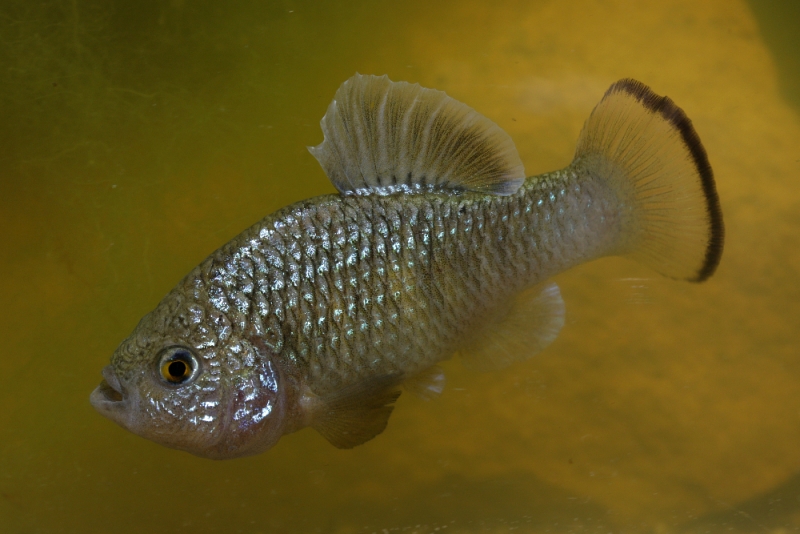
Cyprinodon veronicaeCharco Palma Pupfish
Lozano-Vilano & Contreras-Balderas, 1993
Max length50mm SL2.0in SLTank60 × 30cm24 × 12inTempnot recordedpHnot recordedThe surrounding area is semi-arid and the Bolsón de Sandia was once a beautiful oasis with a number of springs, abundant vegetation and diverse wildlife but has dried up over the last twenty to thirty years due to indiscriminate water extraction for agriculture and other human uses. Three endemic species of Cyprinodon, namely C. veronicae, C. longidorsalis and C. ceciliae, have been described from separate springs within the system...
Cyrtocara mooriiMalawi Blue Dolphin
authority not recorded
Max length250mm SL10in SLTank150 × 38cm60 × 15inTemp25–29°C77–84°FpH7.5–8.8A gentle giant ideal for the larger community of Malawi cichlids, this species was formerly named Haplochromis moorii. It is occasionally referred to by the common name, "Humphead Mouthbrooder". In nature, it exhibits an interesting feeding behaviour in which it will be attracted to clouds of sand thrown up by the activity of substrate-sifting species such as Fossorochromis rostratus or Taeniolethrinops praeorbitalis. Shoals of C. moorii will follow these species and feast on any mo...
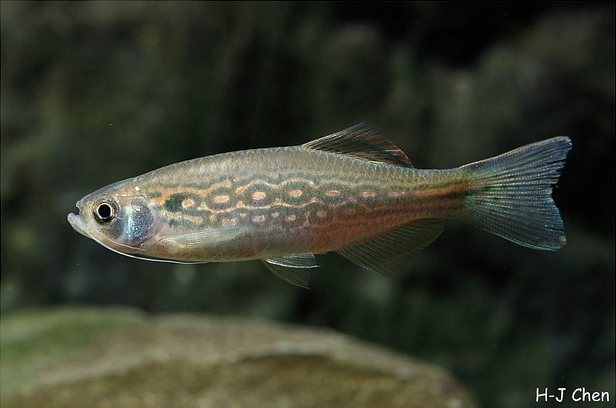
Danio dangilaMoustached Danio
Hamilton, 1822
Max length130mm SL5in SLTank120 × 45cm48 × 18inTemp16–24°C61–75°FpH6.5–7.5In the Barak River drainage, which flows through the north-east Indian states of Nagaland and Assam before bifurcating at the Bangladesh border, symaptric species include Barilius bakeri, B. barna, B. bendelisis, B. dogarsinghi, Laubuca laubuca, Esomus danricus, Devario aequipinnatus, D. annandalei, D. devario, Rasbora daniconius, R. rasbora,...
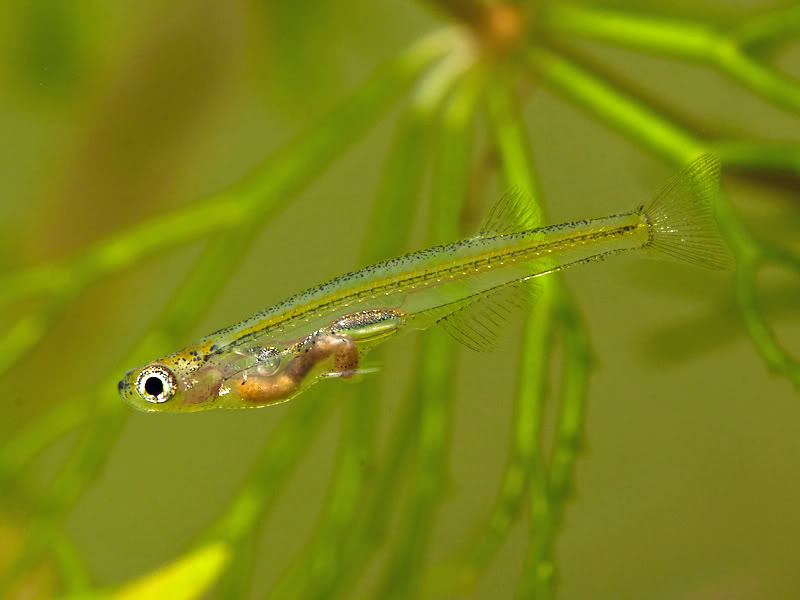
Danionella dracula
Conway & Rüber, 2009
Max length17mm SL0.7in SLTank45 × 30cm18 × 12inTemp20–26°C68–79°FpH6.5–7.5This species is available in the trade on occasion and has been sold as Danionella sp. 'neon green' or 'flourescent green'. The specific name was inspired by its jaw morphology which according to current knowledge is unique among cypriniform fishes. Both upper and lower jaws contain a series of toothlike odontoid processes; these are only rudimentary in females but in males appear to form rows of teeth of which the front pair is large and fang-like. The upper fangs project th...
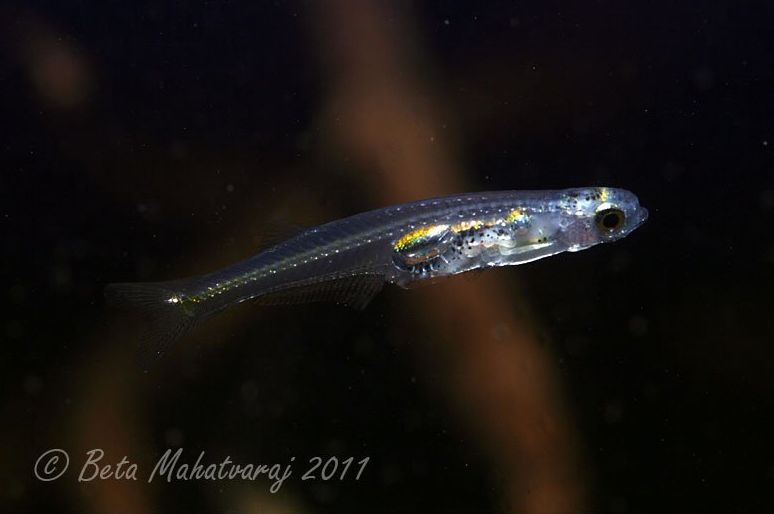
Danionella priapus
Britz, 2009
Max length16mm SL0.6in SLTank45 × 30cm18 × 12inTemp18–24°C64–75°FpH6.0–8.0As far as we know this species has not been bred in aquaria although Pete Liptrot and Paul Dixon of the Bolton Museum Aquarium, UK, have achieved great success with an unidentified congener. They first noticed fry from their group of 24 adults after moving the school to a dedicated set-up planted with mature Java moss and have since rewarded with regular batches of fry.
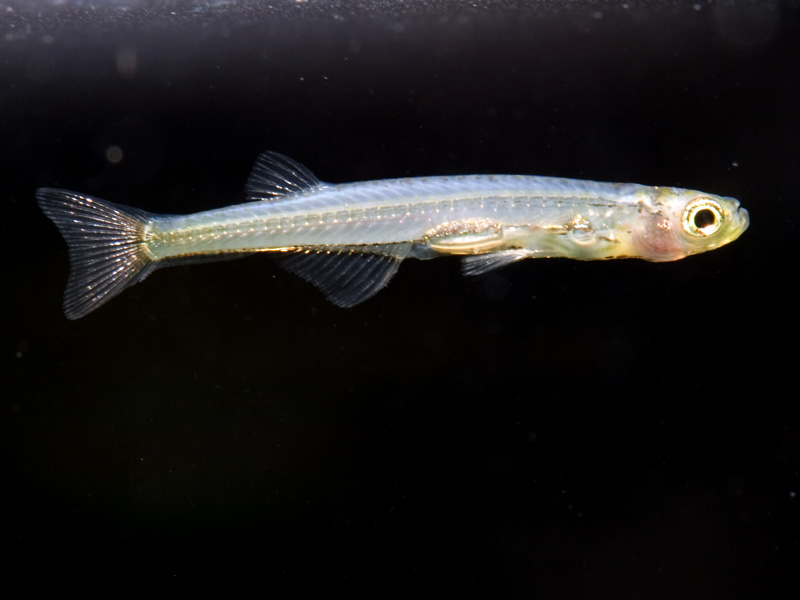
Danionella translucida
Roberts, 1986
Max length11mm SL0.4in SLTank45 × 30cm18 × 12inTemp18–24°C64–75°FpH6.0–8.0The anatomical structure of miniaturised cyprinids can vary greatly; there are two putative groups with some species possessing intermediate features to some degree. The first contains those fishes which though small are essentially proportionally dwarfed versions of their larger relatives. The other includes those in which anatomical development stops at a point where adult still resemble a larval form of their larger ancestor, as in...
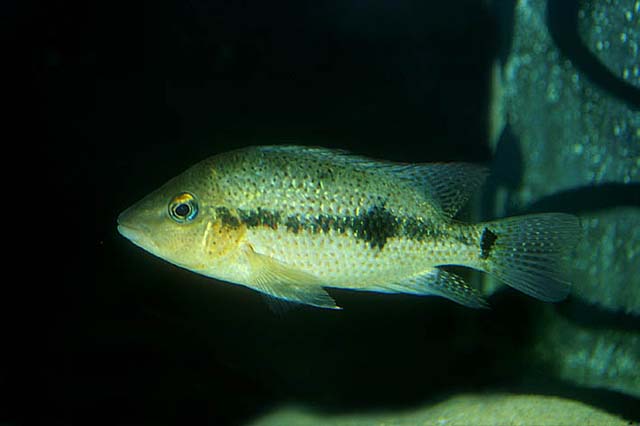
Darienheros calobrensisRedspot Cichild
Meek & Hildebrand, 1913
Max length250mm SL10in SLTank120 × 45cm48 × 18inTemp22–27°C72–81°FpH6.5–7.5A. calobrensis is not as common in the hobby as some other species in the genus (most notably A. citrinellus). It was considered a member of the genus Cichlasoma for some time, before being restored to its original position in Amphilophus. However it exhibits several characteristics that seem to set it apart from its congeners. As a result many experts believe it will probably be moved into a newly-erected genus at some point in the future. You may also see it listed as a member of Astatheros oc...
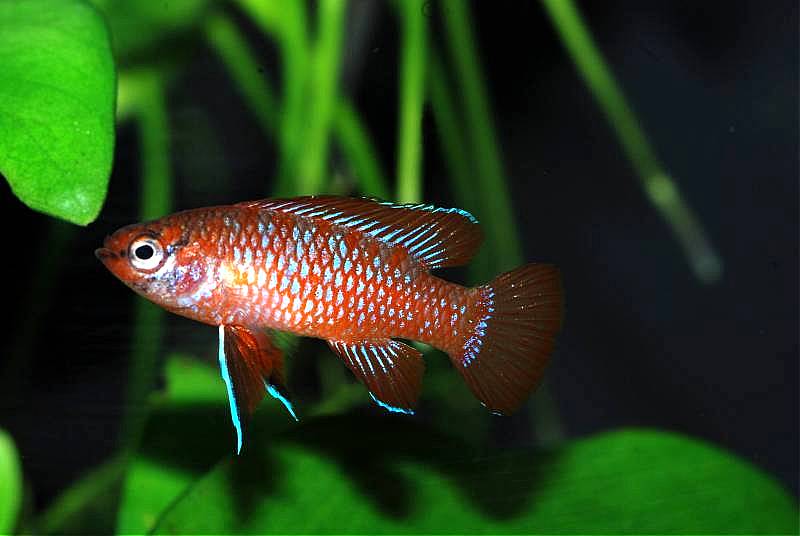
Dario darioScarlet Badis
Hamilton, 1822
Max length20mm SL0.8in SLTank45 × 30cm18 × 12inTemp18–26°C64–79°FpH6.5–8.5This species is among the more well-known badids in the aquarium hobby, and is a popular choice for 'nano' aquaria since it is among the smallest percoid fishes known. It is easily told apart from congeners since it is the only species in which males possess a series of seven iridescent blue vertical bars on the flanks.
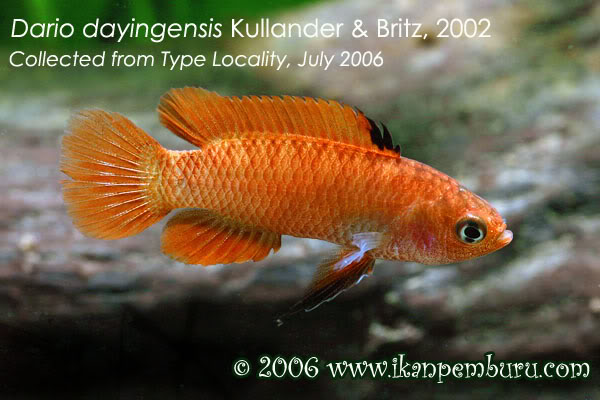
Dario dayingensis
Kullander & Britz, 2002
Max length35mm SL1.4in SLTank45 × 30cm18 × 12inTemp20–24°C68–75°FpH6.0–7.5This species has not appeared in the ornamental fish trade to date though has been maintained by a handful of private collectors and enthusiasts. It was known for some years prior to description and identified as Badis dario (as Dario dario was known at the time) but is actually much closer to D. hysginon.
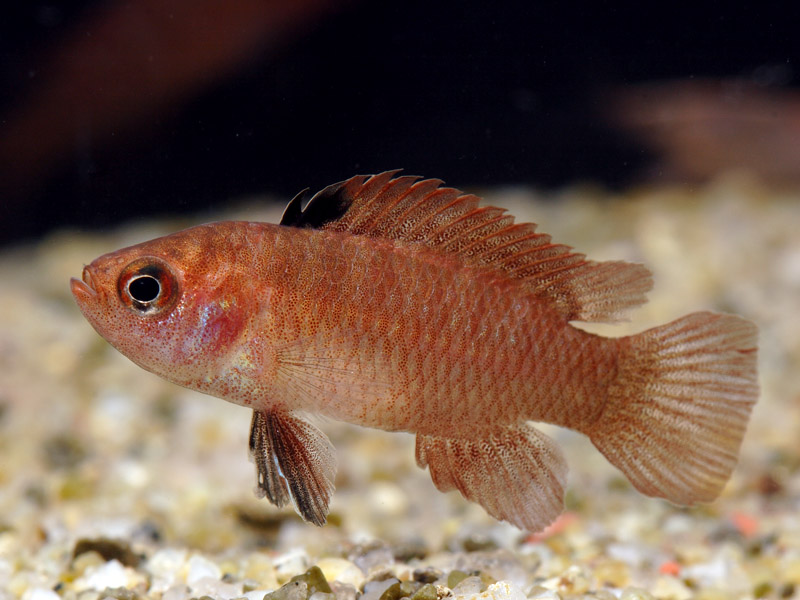
Dario hysginon
Kullander & Britz, 2002
Max length20mm SL0.8in SLTank45 × 30cm18 × 12inTemp20–24°C68–75°FpH6.5–7.5This species is traded under various names such as 'red melon Dario' or 'flame red Dario'. Among congeners D. dayingensis is most similar since it differs only in a few meristic counts and by its slightly larger adult size. D. hysginon can be told apart by possessing 22-24, usually 23, lateral scales (vs. 24-25 in D. dayingensis), 8½ (vs. 9½) scales in the transverse scale row, a...
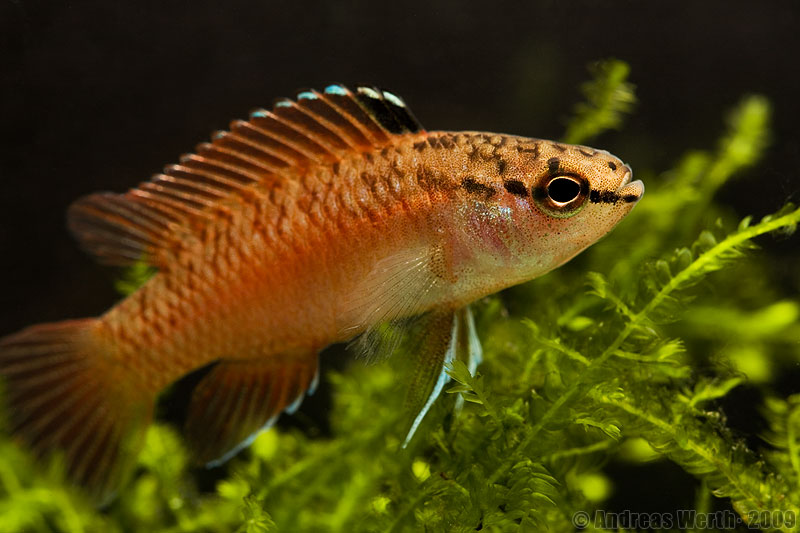
Dario kajal
Britz & Kullander, 2013
Max length20mm SL0.8in SLTank45 × 30cm18 × 12inTemp16–24°C61–75°FpH6.5–7.5This species was referred to as Dario sp. ‘Jaintia Hills’ or D. sp. ‘Bangladesh’ prior to its description. Type locality is 'India, Meghalaya, Jaintia Hills, Seinphoh stream at Umolong, 7 km from Jowai town, 25°31’36’’N 92°08’27’’E, 1320 m asl', and in India it has not been found elsewhere to date.
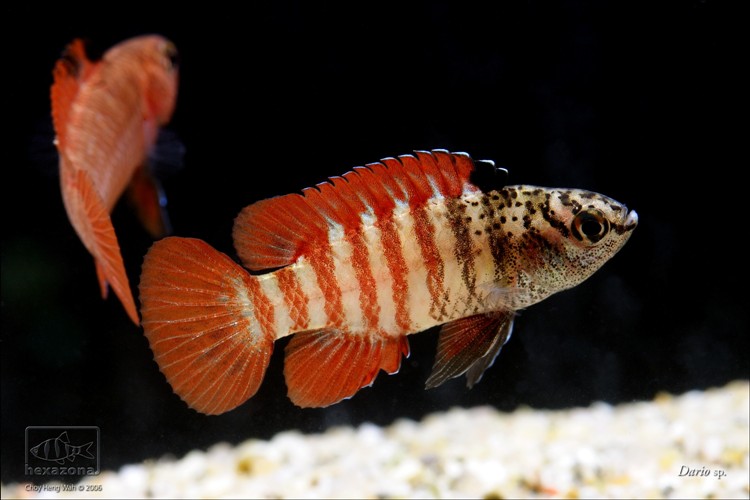
Dario sp. 'Myanmar'Black Tiger Dario
authority not recorded
Max length35mm SL1.4in SLTank45 × 30cm18 × 12inTemp20–24°C68–75°FpH7.0–9.0This fish first became available to hobbyists in 2005 and has also been referred to as Dario sp. 'pyjamas' or 'fire red tiger badis'. Despite the striking differences in colour pattern it's officially recognised as a colour form of D. hysginon as per Kullander and Britz (2002) although D. sp. 'Myanmar' is now known to have an appreciably larger adult size (S. van der Voort, pers. comm.).
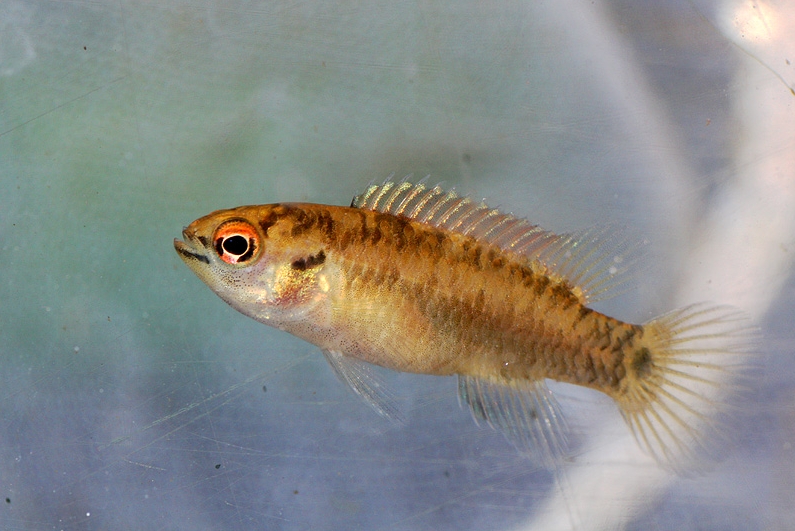
Dario urops
Britz, Ali & Philip, 2012
Max length28mm SL1.1in SLTanknot recordedTempnot recordedpHnot recordedThis species has not yet entered the aquarium trade but is maintained by a handful of private collectors. Though described in 2012 it was in fact first collected in the latter half of the 19th century with Day (1875-1878) having mentioned the presence of Badis dario in ‘Wynaad’ and its occurrence "along the Western Ghats" (the chain of mountains in southwestern India).
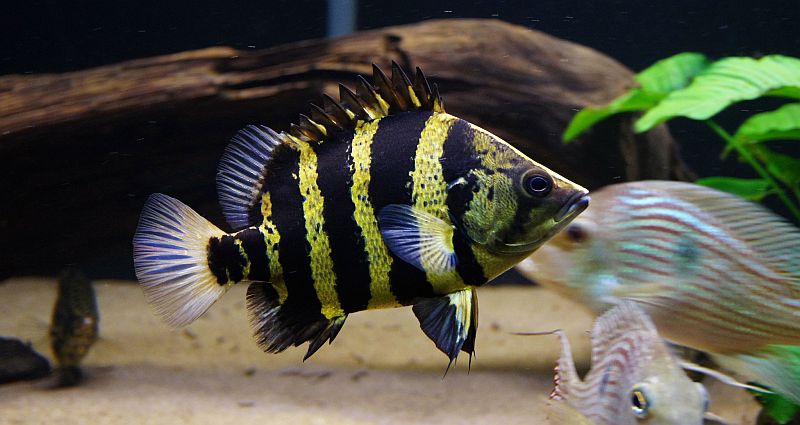
Datnioides campbelliNew Guinea Tiger Perch
Whitley, 1939
Max length350mm SL14in SLTank210 × 60cm84 × 24inTemp20–28°C68–82°FpH7.5–9.0Apparently restricted to the southern portion of New Guinea, between the Lorentz River in Papua province, Indonesia, and Kikori River in Gulf province, Papua New Guinea. The majority of records pertain to the lower Fly River basin in Western province, southwestern Papua New Guinea.
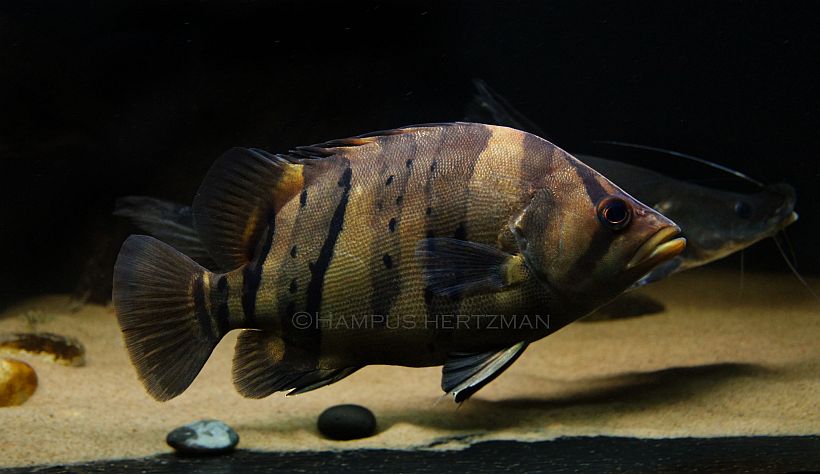
Datnioides microlepisIndonesian Tiger Perch
Bleeker, 1854
Max length500mm SL20in SLTanknot recordedTemp20–28°C68–82°FpH5.5–7.5In aquarium literature this species is also referred to as 'fine scaled tiger fish', 'Indonesian tiger fish', 'Sumatran tiger fish', 'Indo datnoid', and 'Indo dat'. The common name of 'tiger fish' is also used in reference to the African alestid genus Hydrocynus, and the more appropriate 'tiger perch' was suggested by Roberts and Kottelat (1994).
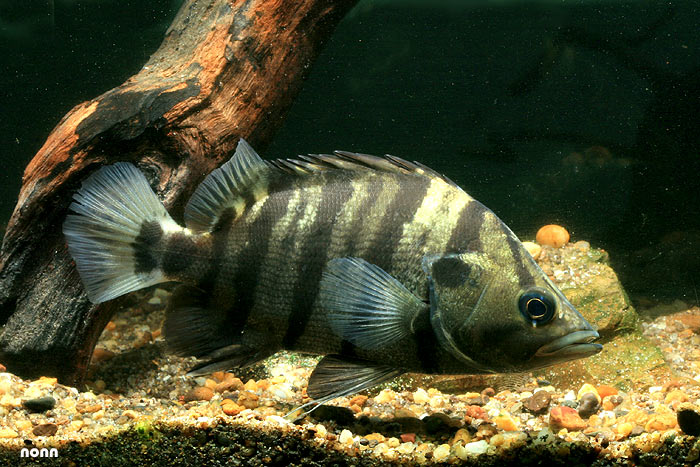
Datnioides polotaSilver Tiger Perch
Hamilton, 1822
Max length300mm SL12in SLTank180 × 60cm72 × 24inTemp20–28°C68–82°FpH7.5–9.0D. polota is sometimes referred to as D. quadrifasciatus (Sevastianov, 1809) but the original name of the latter, Chaetodon quadrifasciatus Sevastianov, 1809, is a junior primary homonym of the older Chaetodon quadrifasciatus Bloch & Schneider 1801, thus Coius polota Hamilton, 1822 takes precedence.