Results for “várzea”
Type a name: scientific, common, or one a species used to go by. Or narrow the catalogue with the filters.
Filters
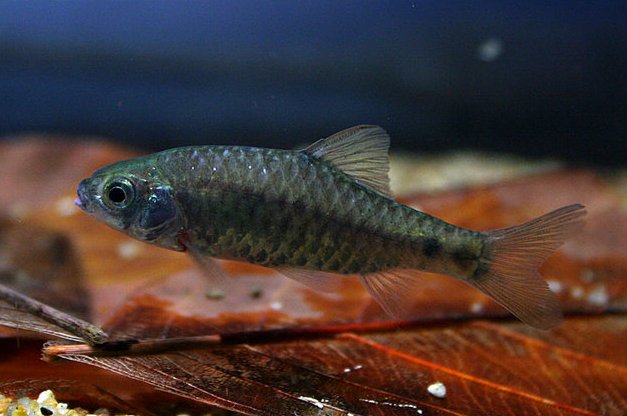
Pethia shalyniusShalyni Barb
Yazdani & Talukdar, 1975
Max length55mm SL2.2in SLTank75 × 30cm30 × 12inTemp16–24°C61–75°FpH6.0–7.5A benthopelagic fish mostly recorded from streams and minor tributaries at relatively high altitudes of more than 1200 metres AMSL with cool, clear, well-oxygenated water and substrates of bedrock, boulders, cobbles, and gravel. Aquatic plants aren't usually present though riparian vegetation may be well-developed. It's also present in some ponds and small lakes, including some stagnant water bodies with muddy substrates.
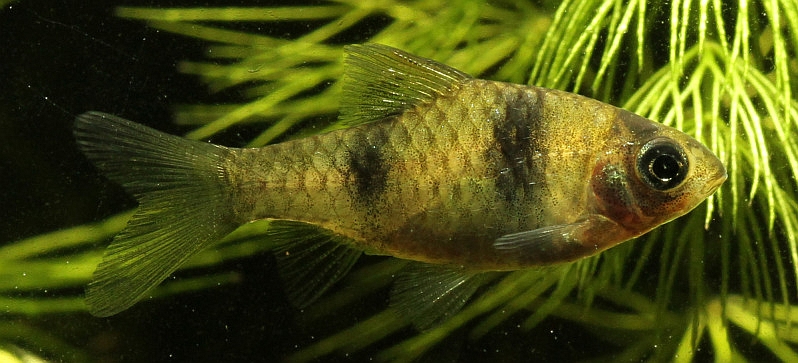
Pethia sp. 'Myanmar'
authority not recorded
Max length55mm SL2.2in SLTank75 × 30cm30 × 12inTemp18–24°C64–75°FpH6.0–7.5This fish has been widely misidentified and sold as the congener P. tiantian and its vernacular name of 'Burmese bumble-bee barb' but actually appears to be an undescribed member of the genus Pethia. This assemblage was erected by Pethiy...
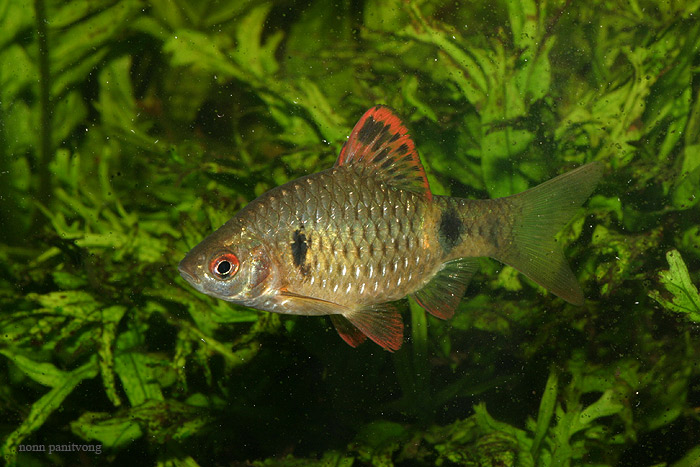
Pethia stoliczkana
Day, 1871
Max length50mm SL2.0in SLTank75 × 30cm30 × 12inTemp18–26°C64–79°FpH6.0–7.5This species is confused with P. ticto in much of the available literature and is sometimes listed as a synonym of it. Although some populations of the two species possess a similar colour pattern (there are reports of a P. ticto variant from the south of West Bengal state in India with a red, black-flecked dorsal-fin, for example) they do not occur in the same waters in nature and can be distinguished by examining the lateral line. This is complete in...
Petrochromis famula
authority not recorded
Max length150mm SL6in SLTank120 × 30cm48 × 12inTemp24–27°C75–81°FpH7.5–9.0The mouthparts of this species are highly specialised, reflecting its natural feeding habits of rasping algae and other organisms from rock surfaces. It feeds almost exclusively on unicellular algae and has very thick, extended lips and brush-like, mobile pads of teeth. The mouthparts thus form a rasping 'plate', used when the fish is feeding. It is somewhat rare in the hobby, perhaps due to its violent reputation or the fact that this is not a particularly gregarious species in nature...
Phractocephalus hemioliopterusRed-tail Catfish
authority not recorded
Max length1340mm SL53in SLTanknot recordedTemp21–26°C70–79°FpH6.0–7.5Although this profile has been included for information purposes, we do not recommend keeping this species in the home unless you are one of the select few with the facilities available to house it for life. The aquarium dimensions quoted above should be considered an absolute minimum and in reality this fish requires a phenomenal volume of water if it is to be housed long term. Unfortunately, the price of red-tails has fallen considerably in recent years and "kittens" are readily a...
Pimelodus maculatusSpotted Pim
authority not recorded
Max length180mm SL7in SLTank120 × 60cm48 × 24inTemp20–24°C68–75°FpH6.4–7.4There are currently 32 genera and over 80 species included in the family Pimelodidae (including Pimelodus), making it the second largest and one of the most diverse amongst catfish. Most experts agree however, that a full systematic revision of the family is needed, as little information about the phylogenetic (evolutionary relatedness) relationships between the various genera exists. Taxonomy information at the species level is also basic at best. It's therefore likely that at least some o...
Pimelodus ornatusOrnate Pim
authority not recorded
Max length280mm SL11in SLTank150 × 60cm60 × 24inTemp24–25°C75–77°FpH6.0–7.2There are currently 32 genera included in the family Pimelodidae (including Pimelodus), making it the second largest and one of the most diverse amongst catfish. However most experts agree that a full systematic revision of the family is needed, as little information about the phylogenetic (evolutionary relatedness) relationships between the various genera exists. Taxonomy information at the species level is also basic at best. It's therefore likely that at least some of the Pimelodids will...
Pimelodus pictusPictus Cat
authority not recorded
Max length120mm SL5in SLTank120 × 45cm48 × 18inTemp22–25°C72–77°FpH5.8–6.8There are currently 32 genera and over 80 species included in the family Pimelodidae (including Pimelodus), making it the second largest and one of the most diverse amongst catfish. However most experts agree that a full systematic revision of the family is needed, as little information about the phylogenetic (evolutionary relatedness) relationships between the various genera exists. Taxonomy information at the species level is also basic at best. It's therefore likely that at least some of...
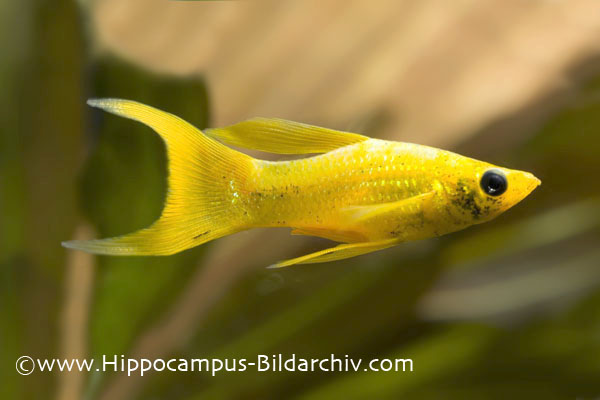
Poecilia latipinnaSailfin Molly
Lesueur, 1821
Max length125mm SL5in SLTank76 × 38cm30 × 15inTemp21–26°C70–79°FpH7.0–8.5The wild fish can exhibit several different types of patterning. P. latipinna has been selectively bred into many different colour morphs for the aquarium trade, and has also been crossbred with other molly species, particularly P. sphenops. They will also interbreed readily in the aquarium and in order to avoid this we suggest keeping only one species of molly per tank. There also exists a (in our opinion) grotesque 'balloon' variety of this fish in which the body is malformed and rou...
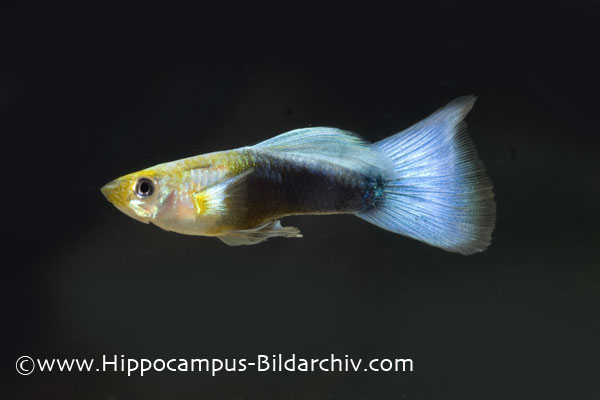
Poecilia reticulataGuppy
Peters, 1859
Max length60mm SL2.4in SLTank45 × 30cm18 × 12inTemp17–28°C63–82°FpH7.0–8.5One of the most popular aquarium fish in the world, the guppy is instantly recognisable to most people. There are many aquarium bred varieties of this species available, most have elongated finnage and gaudy colouration. The wild form is seldom seen for sale. Unfortunately many commercially bred guppies are not very hardy due to inbreeding and over-production and are prone to disease and premature death. We therefore recommend the purchase of quality stock from breeders or society auctions. P. ...
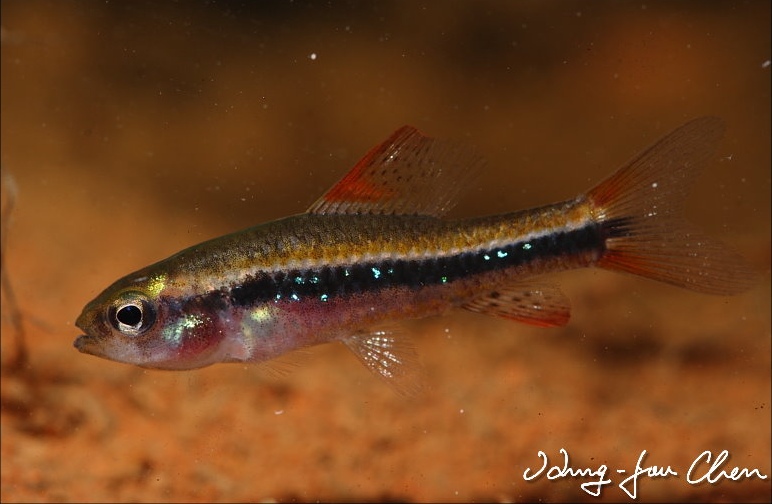
Poecilocharax weitzmaniBlack Darter Tetra
Géry, 1965
Max length50mm SL2.0in SLTank45 × 30cm18 × 12inTemp21–28°C70–82°FpH3.0–6.5Quite widely distributed having been recorded from Brazil, Colombia, Peru and Venezuela. It's been collected from the upper parts of several major river drainages including the Río Negro, Río Orinoco (including the Río Inírida and Casiquiare canal) and Río Solimões. The type series was collected from 'Igarapé Préto', Brazil, said to be 60 kilometres to the south of the Colombian border city Leticia. Populations from Colombia and Brazil tend to be more intensely-coloured, and the Peruvian populations may apparently represent an undescribed species.
Polypterus bichir bichirNile Bichir
authority not recorded
Max length720mm SL28in SLTank180 × 60cm72 × 24inTemp22–28°C72–82°FpH6.0–8.0An incredibly hardy, nocturnal species with very poor vision, P. delhezi relies on its excellent sense of smell to locate food. This species, along with others of its genus, is one of the last surviving relatives of very ancient species. Fossils of earlier relatives have been found that date back to the Triassic Period, which occured during the early development of the dinosaurs more than 200 million years ago. They have several interesting adaptations. The swim bladder is divided into 2 par...
Polypterus delheziArmoured Bichir
authority not recorded
Max length350mm SL14in SLTank120 × 45cm48 × 18inTemp24–30°C75–86°FpH6.0–8.0An incredibly hardy, nocturnal species with very poor vision, P. delhezi relies on its excellent sense of smell to locate food. This species, along with others of its genus, is one of the last surviving relatives of very ancient species. Fossils of earlier relatives have been found that date back to the Triassic Period, which occured during the early development of the dinosaurs more than 200 million years ago. They have several interesting adaptations. The swim bladder is divided into 2 par...
Polypterus endlicheri endlicheriSaddled Bichir
authority not recorded
Max length750mm SL30in SLTank210 × 120cm84 × 48inTemp22–27°C72–81°FpH6.0–8.0An incredibly hardy, nocturnal species with very poor vision, P. endlicheri endlicheri relies on its excellent sense of smell to locate food. This species, along with others of its genus, are some of the last surviving relatives of very ancient species. Fossils of earlier relatives have been found that date back to the Triassic Period, which occured during the early development of the dinosaurs more than 200 million years ago. They have several interesting adaptations. The swim bladder is div...
Polypterus ornatapinnisOrnate Bichir
authority not recorded
Max length600mm SL24in SLTank180 × 60cm72 × 24inTemp25–28°C77–82°FpH6.0–8.0An incredibly hardy, nocturnal species with very poor vision, []iP. ornatapinnis relies on its excellent sense of smell to locate food. This species along with others of its genus are some of the last surviving relatives of very ancient species. Fossils of earlier relatives have been found that date back to the Triassic Period, which occured during the early development of the dinosaurs more than 200 million years ago. They have several interesting adaptations. The swim bladder is divided int...
Polypterus palmas palmasMarbled Bichir
authority not recorded
Max length325mm SL13in SLTank120 × 45cm48 × 18inTemp25–28°C77–82°FpH6.0–7.0An incredibly hardy, nocturnal species with very poor vision, P. delhezi relies on its excellent sense of smell to locate food. This species, along with others of its genus, is one of the last surviving relatives of very ancient species. Fossils of earlier relatives have been found that date back to the Triassic Period, which occured during the early development of the dinosaurs more than 200 million years ago. They have several interesting adaptations. The swim bladder is divided into 2 par...
Polypterus retropinnisWest African Bichir
authority not recorded
Max length350mm SL14in SLTank120 × 45cm48 × 18inTemp25–28°C77–82°FpH6.0–8.0Also known as the Speckled Bichir, this is an incredibly hardy, nocturnal species with very poor vision. P. retropinnis relies on its excellent sense of smell to locate food. This species along with others of its genus are some of the last surviving relatives of very ancient species. Fossils of earlier relatives have been found that date back to the Triassic Period, which occured during the early development of the dinosaurs more than 200 million years ago. They have several interesting adapt...
Polypterus senegalus senegalusSenegal Bichir
authority not recorded
Max length500mm SL20in SLTank150 × 60cm60 × 24inTemp24–28°C75–82°FpH6.2–7.8An incredibly hardy, nocturnal species with very poor vision, P. senegalus relies on its excellent sense of smell to locate food. This species, along with others of its genus, are some of the last surviving relatives of very ancient species. Fossils of earlier relatives have been found that date back to the Triassic Period, which occured during the early development of the dinosaurs more than 200 million years ago. They have several interesting adaptations. The swim bladder is divided into 2 ...
Polypterus teugelsi
authority not recorded
Max length400mm SL16in SLTank150 × 60cm60 × 24inTemp25–28°C77–82°FpH7.0–7.5An incredibly hardy, nocturnal species with very poor vision, P. teugseli relies on its excellent sense of smell to locate food. This species along with others of its genus are some of the last surviving relatives of very ancient species. Fossils of earlier relatives have been found that date back to the Triassic Period, which occured during the early development of the dinosaurs more than 200 million years ago. They have several interesting adaptations. The swim bladder is divided into 2 parts...
Polypterus weeksiiMottled Bichir
authority not recorded
Max length550mm SL22in SLTank150 × 60cm60 × 24inTempnot recordedpHnot recordedP. weeksii is one of the "upper-jawed" tribe of polypterids so named on account of the upper jaw being longer than or equal in length to the lower jaw. It is one of the rarer bichir species in the hobby. Like other bichirs it is an incredibly hardy, nocturnal species with very poor vision, relying on its excellent sense of smell to locate food. This species along with others of its genus are some of the last surviving relatives of very ancient species. Fossils of earlier relatives have...