Search the catalogue
Type a name: scientific, common, or one a species used to go by. Or narrow the catalogue with the filters.
Filters
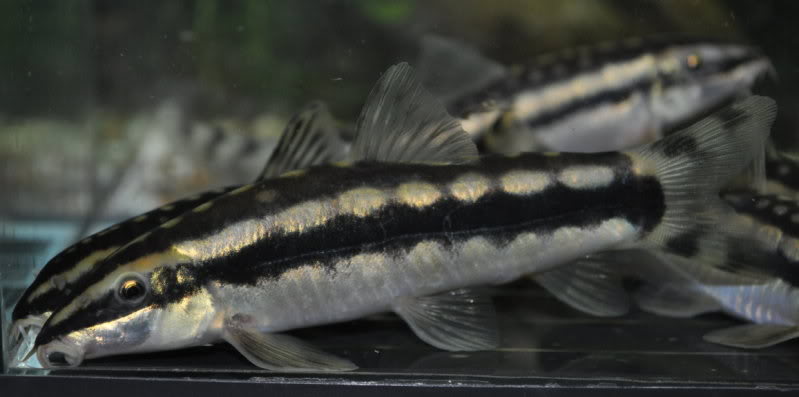
Ambastaia nigrolineataBlack-Lined Loach
Kottelat & Chu, 1987
Max length80mm SL3.1in SLTank90 × 30cm36 × 12inTemp20–25°C68–77°FpH6.5–7.5This specie is relatively rare in the aquarium trade and much sought after by enthusiasts as a result. It looks relatively similar to A. sidthimunki but according to the original description by Kottelat and Chu (1987) can be told apart by colour patterning which uniquely consists of a solid da...
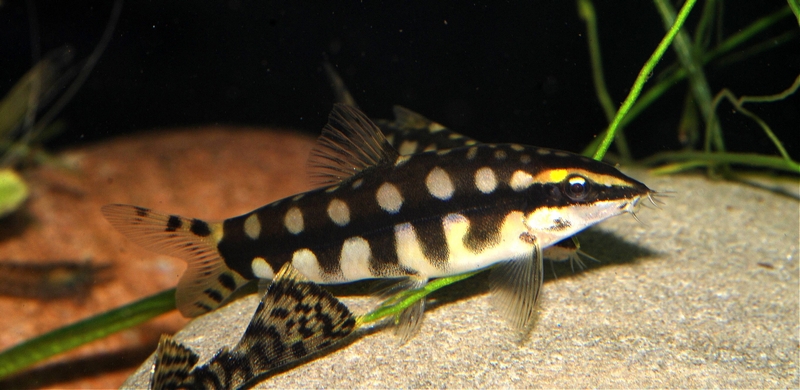
Ambastaia sidthimunkiDwarf Chain Loach
Klausewitz, 1959
Max length60mm SL2.4in SLTank80 × 30cm31 × 12inTemp20–30°C68–86°FpH5.5–7.5This species was lost to the hobby for several years prior to the turn of the century and when commercially-produced stock first came onto the market prices were very high. It's now readily available, though, and while never particularly cheap is considerably less expensive.
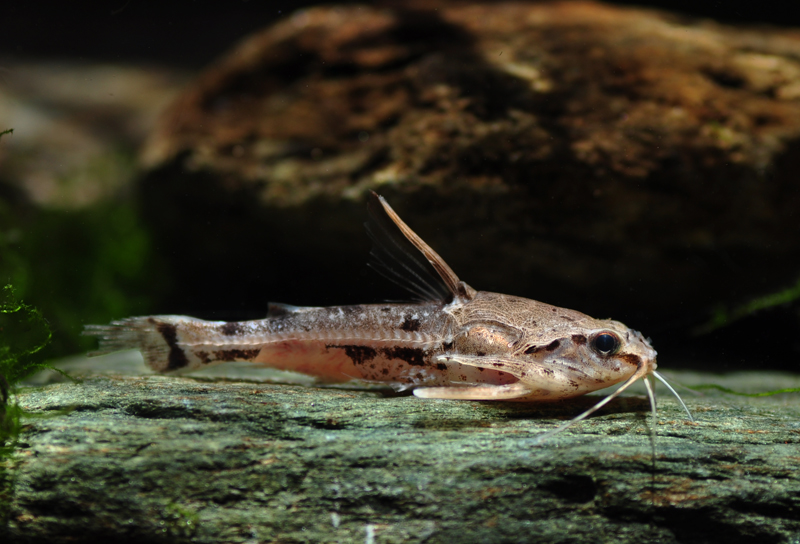
Amblydoras nauticusMarbled Talking Catfish
Cope, 1874
Max length75mm SL3.0in SLTank60 × 30cm24 × 12inTemp23–28°C73–82°FpH5.5–7.5This species was previously thought to be, and is often still sold as, A. hancockii, a name currently considered synonymous with Platydoras hancockii (Valenciennes 1840). It's also known by the vernacular names of blue-eyed catfish or Hancock's doradid, and in many ways is an ideal beginners' catfish, being hardy and tolerant of a wide range of water conditions...
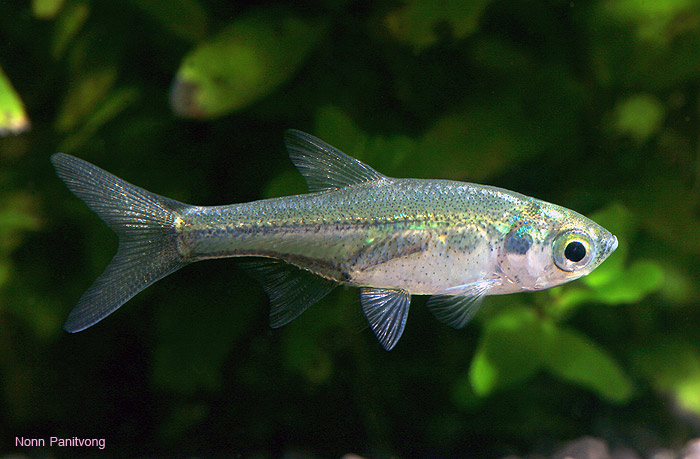
Amblypharyngodon chulabhornaePrincess Carplet
Vidthayanon & Kottelat, 1990
Max length40mm SL1.6in SLTank90 × 30cm36 × 12inTemp18–28°C64–82°FpH6.0–8.0The genus Amblypharyngodon currently contains five valid species, and A. chulabhornae can be distinguished from congeners by the following combination of characters: 42-50 (vs. 50-79) scales in the lateral row; lateral line incomplete with 6-7 (vs. 7-23) perforated scales; 4-5 scales on a transverse row between the lateral line and pelvic-fin base. All members of the genus lack barbels.
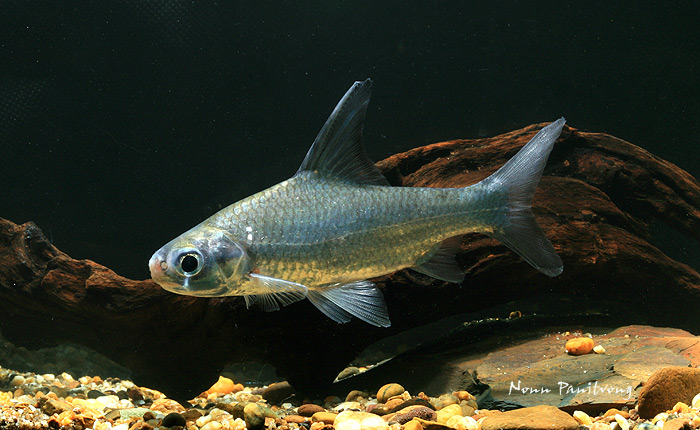
Amblyrhynchichthys micracanthus
Ng & Kottelat, 2004
Max length200mm SL8in SLTanknot recordedTempnot recordedpHnot recordedNative to the Mekong River drainage in Laos (where Vientiane province represents the upper limit of its range), Thailand, Cambodia, and Vietnam, and the Tapi, Chao Phraya, and Mae Klong systems in Thailand. Type locality is '22 kilometers upstream from Phnom Penh, Tonle Sap River, Kandal Province, Cambodia'.
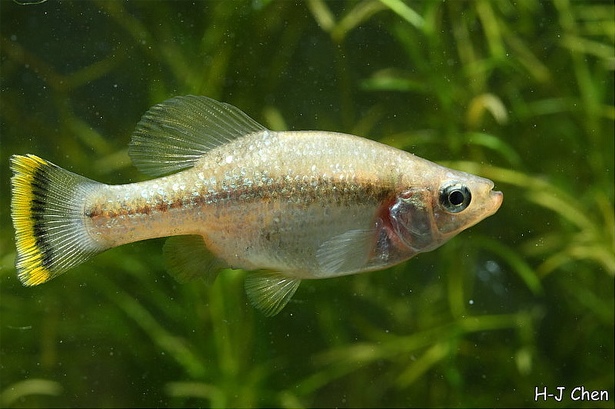
Ameca splendensButterfly Goodeid
Miller & Fitzsimons, 1971
Max length90mm SL3.5in SLTank90 × 30cm36 × 12inTemp24°C75°FpH7.0–8.0Despite often being referred to as extinct in the wild this monotypic species is still surviving at a few localities. It's not particularly scarce in the hobby with strong captive populations existing, some of which have been selectively bred to produce variations in colour and patterning. As with other goodeids, there is less of a size difference between the sexes than in many other livebearers. This is thought to be related to the relatively primitive...
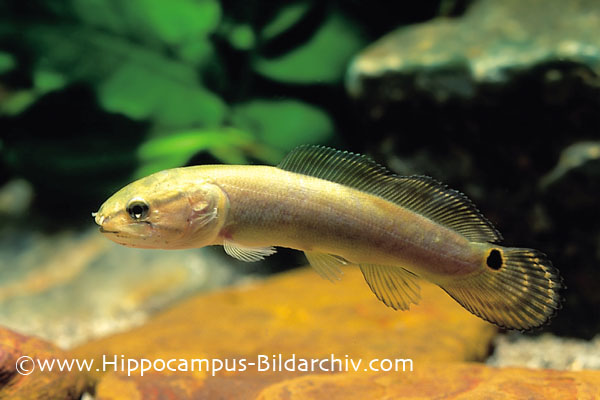
Amia calvaBowfin
Linnaeus, 1766
Max length900mm SL35in SLTank180 × 60cm72 × 24inTemp15–24°C59–75°FpH6.0–7.5Rare in the hobby, the bowfin is a stunning specimen fish for the aquarist with the means to house it properly. It is the sole remaining species in the family Amiidae, an ancient and primitive group that is related to the garfish. It possesses the ability to breathe atmospheric air, via an enormous, highly vascularised accessory breathing organ that extends throughout the entire body cavity. The gills are stiffened in order to prevent them collapsing outside the water and, provided it's kep...
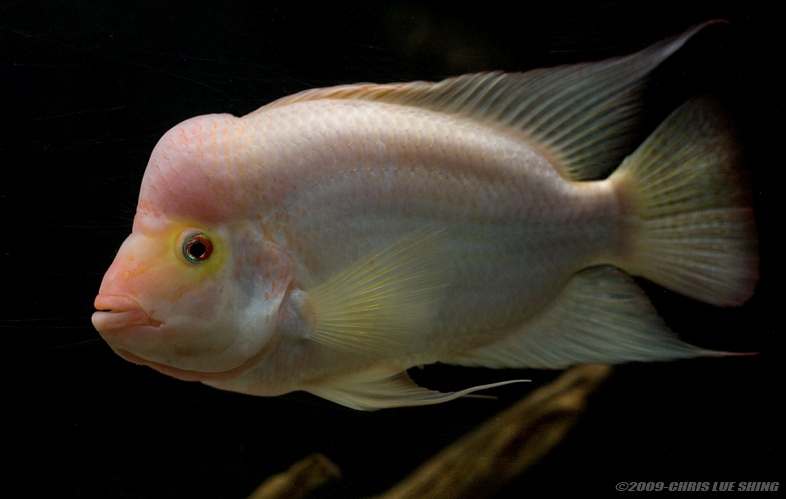
Amphilophus citrinellusMidas Cichlid
Günther, 1864
Max length350mm SL14in SLTanknot recordedTemp21–26°C70–79°FpH6.0–8.0Previously included as a member of the genus Cichlasoma, the midas cichlid is often confused with the red devil, A. labiatus. The two can be distinguished through differences in morphology. As suggested by its scientific name, A. labiatus often possesses characteristically large lips, although this is variable and should not be used as a defining indicator of species. More reliable differences include the bigger nuchal hump and more thick-set appearance in A. citrinellus. The midas exists in many n...
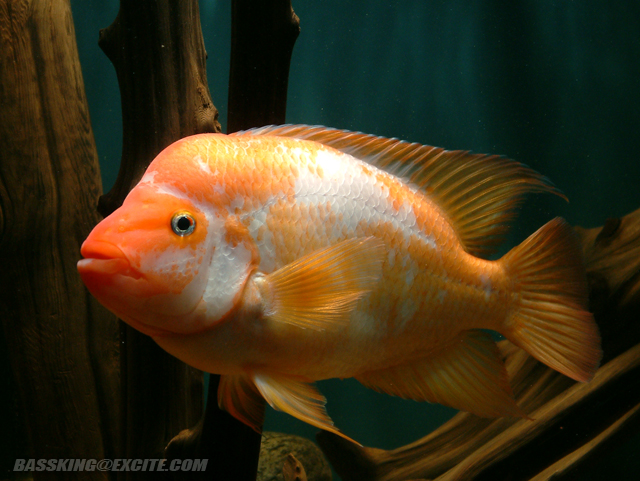
Amphilophus labiatusRed Devil Cichlid
Günther, 1864
Max length350mm SL14in SLTanknot recordedTemp21–26°C70–79°FpH6.0–8.0Previously included as a member of the genus Cichlasoma, the red devil is often confused with the midas cichlid, A. citrinellus. The two can be distinguished through differences in morphology. As suggested by its scientific name, A. labiatus possesses characteristically large lips, although in reality this is variable and should not be used as a defining indicator of species. Certainly, tank bred fish tend not to have these large lips. More reliable differences include the bigger nuchal hump and mo...
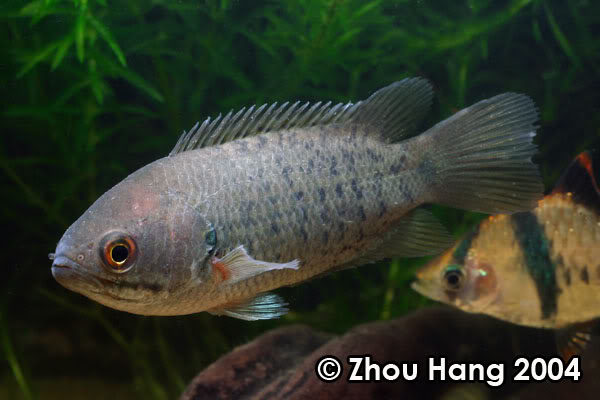
Anabas testudineusClimbing Perch
Bloch, 1792
Max length200mm SL8in SLTanknot recordedTemp15–30°C59–86°FpH5.5–8.0This species isn't especially popular in the aquarium trade but is undoubtedly interesting despite its lack of colour. In addition to its survival ability in the absence of water it's also capable of producing audible sounds though the purpose of these has not been fully-studied. Naturally-occurring xanthic and albino forms have also been recorded. There is considerable confusion as to the taxonomic status of the two species currently occupying this genus, with ichthyologists widely...
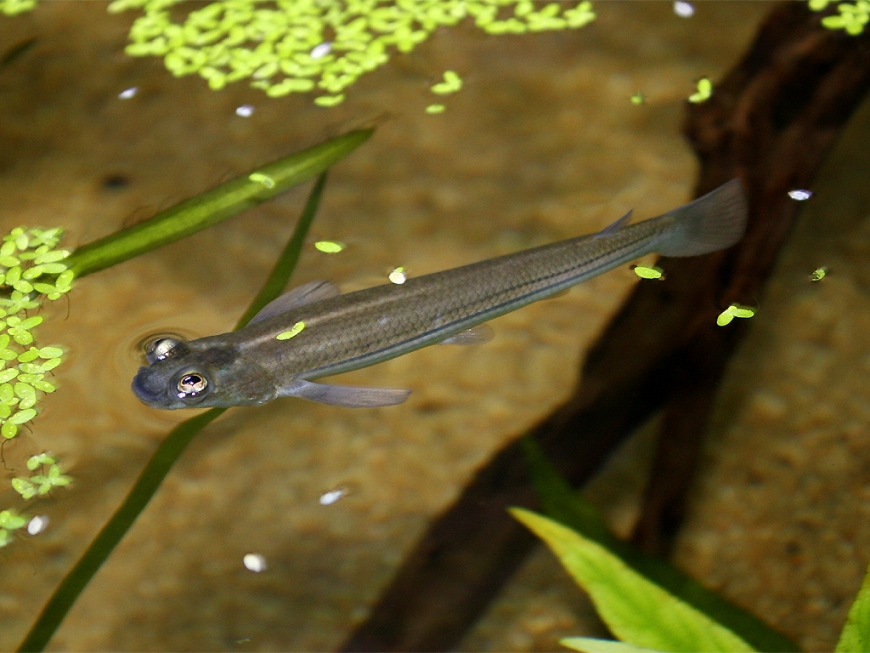
Anableps anablepsFour-Eyed Fish
Linnaeus, 1758
Max length260mm SL10in SLTank150 × 45cm60 × 18inTemp25–31°C77–88°FpH7.5–9.0The eye of Anableps species is split horizontally by a band of epithelial tissue. It has two corneas, two pupils, a single, egg-shaped lens and one retina that's also split into two sections. The lens is oval and asymmetric with the upper part flattened as in the human eye and the lower section curved as in most other fishes. The upper cornea is thicker and enriched with glycogen which possibly helps to protect it from drying and UV irradiation. Two horizontal flaps of the iris are thought ...
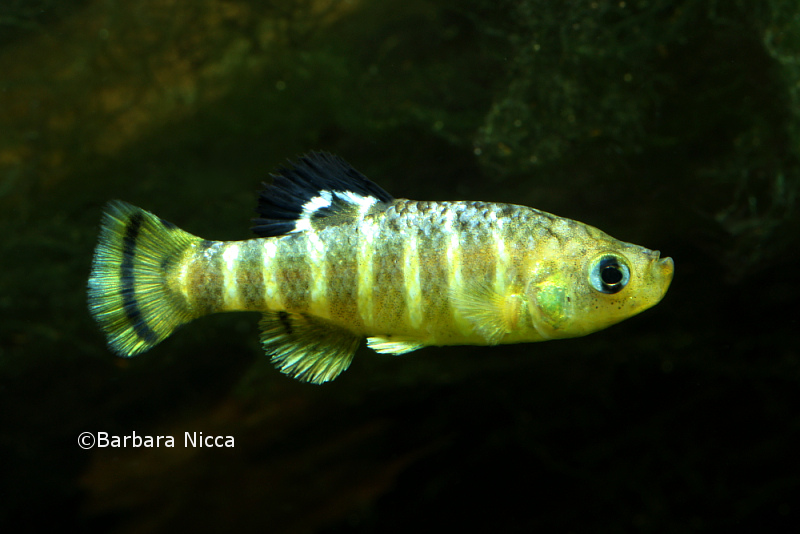
Anatolichthys anatoliaeAnatolian Toothcarp
Leidenfrost, 1912
Max length55mm SL2.2in SLTank120 × 30cm48 × 12inTemp2–30°C36–86°FpH7.0–8.5A. anatoliae is the most widely-distributed of the Anatolian Aphanius species although like most of its congeners is not easy to come by in the hobby. You are unlikely to find it on sale in aquatic stores although it may be available via specialist breeders or associations from time-to-time. While Aphanius spp. are certainly not as colourful as some of their relatives their interesting behaviour and continuous activity make them fascinating aquarium subjects and well worth a try if you possess the de...
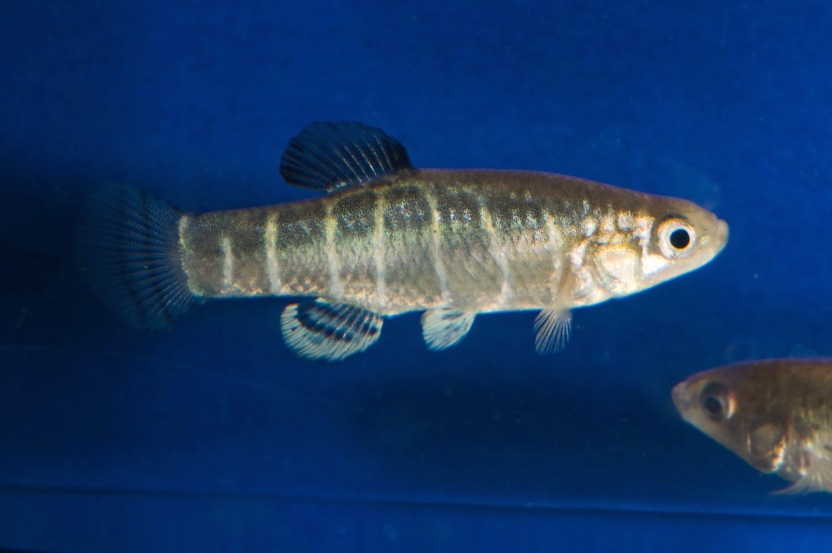
Anatolichthys danfordiiDanford's Toothcarp
Boulenger, 1890
Max length50mm SL2.0in SLTank120 × 30cm48 × 12inTemp10–30°C50–86°FpH7.0–8.5This species has something of a confused history having been previously been considered synonymous with both A. sophiae and A. fasciatus. Another species, A. chantrei is still listed as valid by some sources but is now known to be a junior synonym of A. danfordii. This became clear during a 1999 study in which the type specimens of A. danfordii were found to be indistinguishable from the Aphanius population living in the Sultan Swamps, the type locality of A. chantrei. You're unlikely t...
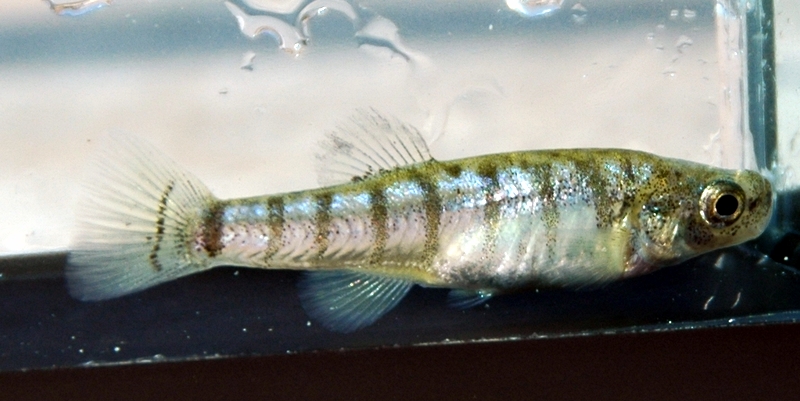
Anatolichthys saldaeSalda Toothcarp
Akşiray, 1955
Max length50mm SL2.0in SLTank120 × 30cm48 × 12inTemp6.5–22°C44–72°FpH8.0–10.0The elongated, slender body profile, angular lower jaw and reduced scalation exhibited by this little-known subspecies have seen it placed in the disused genera Anatolichthys and Kosswigichthys in the past and it's still inexplicably listed as a species of Lebias by some sources (for the record Lebias has long been considered a synonym of Cyprinodon by most authorities and an ICZN committee voted to suppress the name in favour of Aphanius as recently as 2003). You're unlikely to find i...
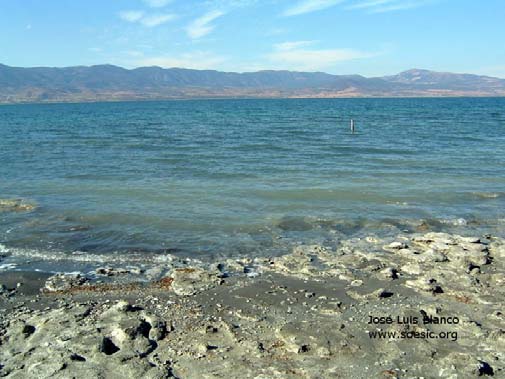
Anatolichthys sureyanusBurdur Toothcarp
Neu, 1937
Max length50mm SL2.0in SLTank120 × 30cm48 × 12inTemp5–22°C41–72°FpH8.0–10.0The elongated, slender body profile, angular lower jaw and reduced scalation exhibited by this little-known subspecies have seen it placed in the disused genera Anatolichthys and Kosswigichthys in the past. It has also been referred to, and still is in some cases, as A. transgrediens or more often A. burdurensis/burduricus. Some of these names were erected due to the differences in scalation that can be observed among the population in Lake Burdur but studies by Villwock and others revealed that...
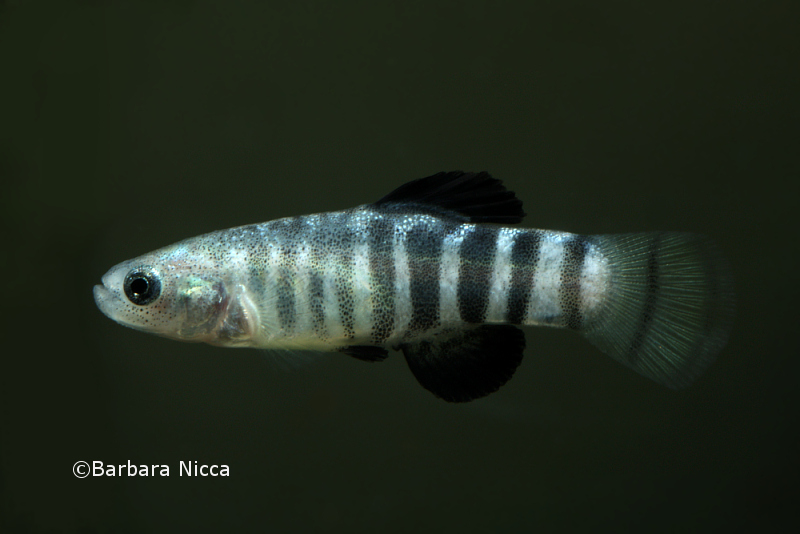
Anatolichthys transgrediensAcı Toothcarp
Ermin, 1946
Max length50mm SL2.0in SLTanknot recordedTempnot recordedpH8.0–10.0The modified lower jaw and reduced scalation exhibited by this little-known species have seen it placed in the disused genera Anatolichthys and Turkichthys in the past and it is still sometimes listed as a species of Lebias although that generic name has long been considered a synonym of Cyprinodon by most authorities and an ICZN committee voted to suppress the name in favour of Aphanius as recently as 2003. You're unlikely to find it on sale in aquatic stores although it ma...
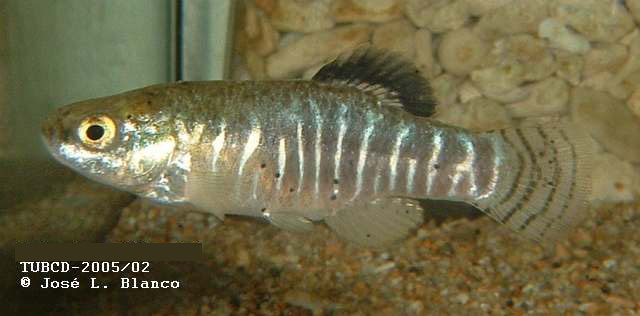
Anatolichthys villwockiSakarya Toothcarp
Hrbek & Wildekamp, 2003
Max length60mm SL2.4in SLTank120 × 30cm48 × 12inTemp2–30°C36–86°FpH6.5–8.5Prior to its description this species had been considered a form of A. anatoliae and also referred to as A. sp. aff. danfordii but collections in the early part of this century motivated new studies and resulted in its elevation to full species level. Phylogenetic analyses have shown it to represent the sister group to all other Anatolian Aphanius spp. The Anatolia region represents a centre of diversity for the genus with ten endemic species described to date. These are thought to have diverged ...
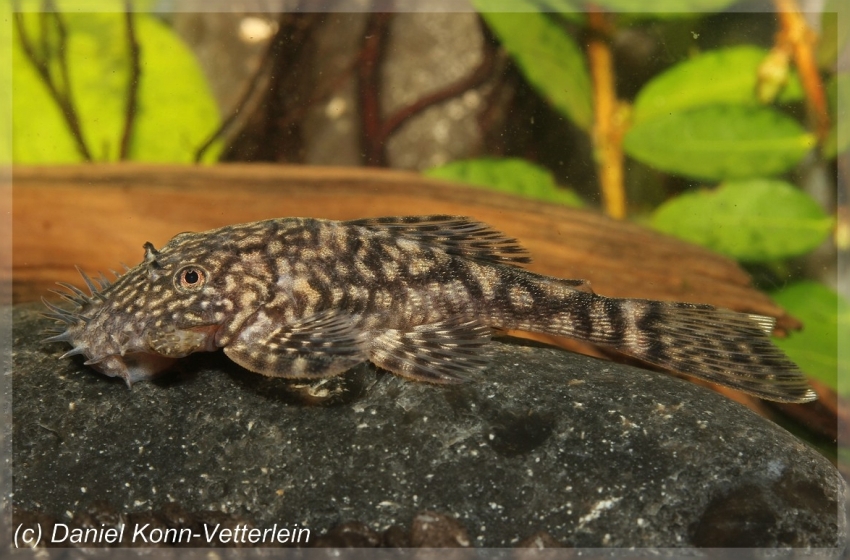
Ancistrus claroLDA 008
Knaack, 1999
Max length70mm SL2.8in SLTank60 × 30cm24 × 12inTemp23–28°C73–82°FpH6.0–7.5This species is sometimes confused with unidentified fishes such as A. sp. 'L352'. It can be told apart from closely-related congeners by possession of relatively long maxillary barbels which are free from the lower lip, and a colour pattern consisting of small spots on the head and vermiform lines on the body in males, and small spots all over the head and body in females.
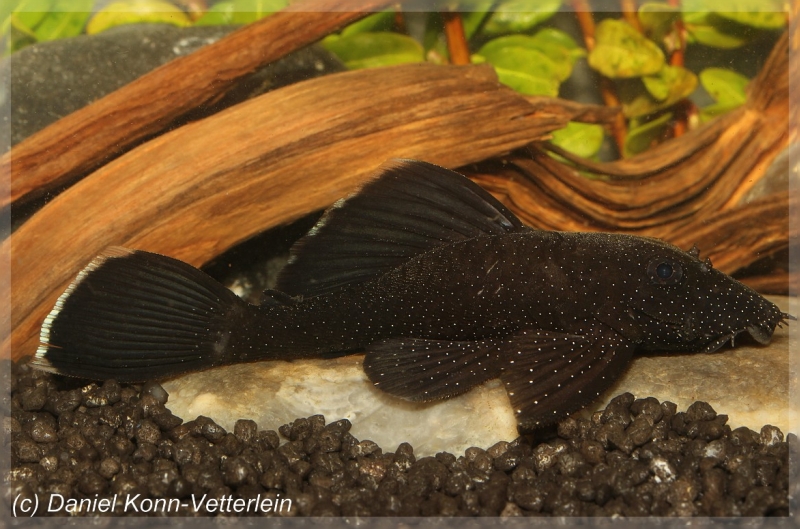
Ancistrus dolichopterusL183
Kner, 1854
Max length200mm SL8in SLTank120 × 45cm48 × 18inTemp26–30°C79–86°FpH5.0–7.0This species is not always identified correctly with its name used for the unidentified common bristlenose and other similar species, while the fish itself has been referred to as A. hoplogenys and assigned the L-number L183. Images and information describing it it in much of the available literature confirm this confusion.
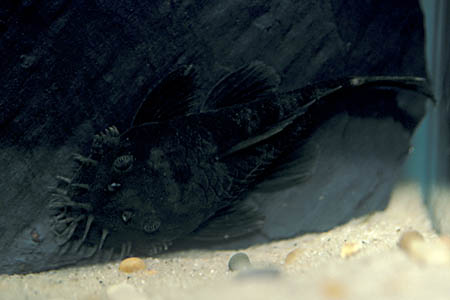
Ancistrus ranunculusL034
Muller, Rapp Py-Daniel & Zuanon, 1994
Max length130mm SL5in SLTank80 × 30cm31 × 12inTemp25–30°C77–86°FpH6.0–7.0A somehwhat odd-looking species with a distinctive wide head and overall flattened profile. Unfortunately this fish is not the easiest fish to keep alive in the aquarium since it requires rather specialised conditions and is often in poor condition post-import. As a juvenile, it often sports a pattern of light spots on the body, leading to confusion with the similarly shaped L255 species.In A. ranunculus, these spots fade as the fish mature,...