Results for “habitat”
Type a name: scientific, common, or one a species used to go by. Or narrow the catalogue with the filters.
Filters
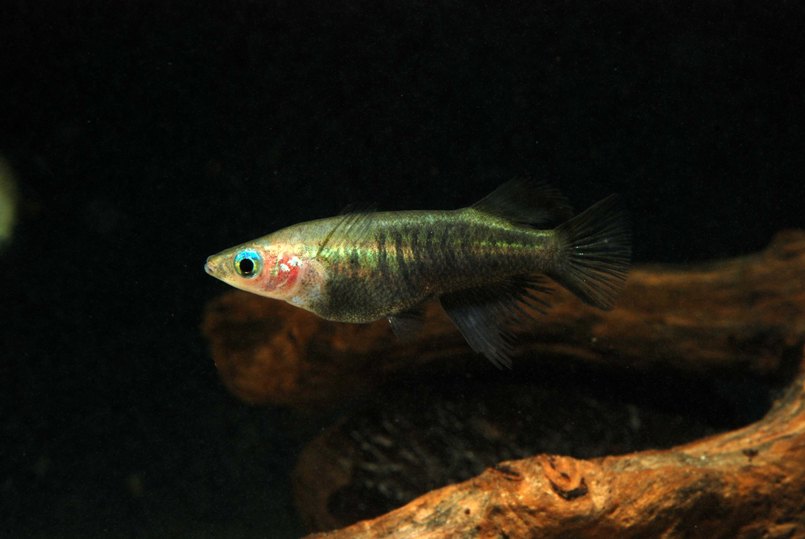
Oryzias eversi
Herder, Hadiaty & Nolte, 2012
Max length40mm SL1.6in SLTank75 × 30cm30 × 12inTemp18–24°C64–75°FpH6.0–7.5The type locality is a karst pool around 30-40 m in length, 10m in width and up to 4 m deep. It contains still, transparent water, has a single inflow and outflow, is surrounded by rainforest and in September 2010 the water temperature was 21.5°C/70.7°F. The habitat is used by locals as a bathing pool and sympatric species included a nat...
Pangasianodon gigasGiant Mekong Catifish
authority not recorded
Max length3000mm SL118in SLTanknot recordedTemp20–28°C68–82°FpH6.5–7.5Pangasianodon is separated from other pangasiid generea primarily on the basis of some morphological differences including a lack of teeth and massively reduced barbels in adult specimens. Sadly it's numbers are declining rapidly in nature, through a combination of unsustainable fisheries, damming and habitat destruction. Since 1990 wild stocks are thought to have undergone a decrease of over 80%. From an annual catch of over 60 specimens in 1990, only 8-11 were being caught per year in ...
Paratilapia polleni
authority not recorded
Max length280mm SL11in SLTank120 × 45cm48 × 18inTemp17–28°C63–82°FpH6.5–8.0Now the only species in the genus Paratilapia, P. polleni is known as the "marakely" to many natives in Madagascar, which means "black fish". As with most Madagascan cichlid species, it is highly endangered in the wild due to habitat destruction and competition from introduced species and all attempts at captive breeding are to be encouraged. There is still some confusion as to the identity of the "true" P. polleni as there are both large and small-spotted forms...
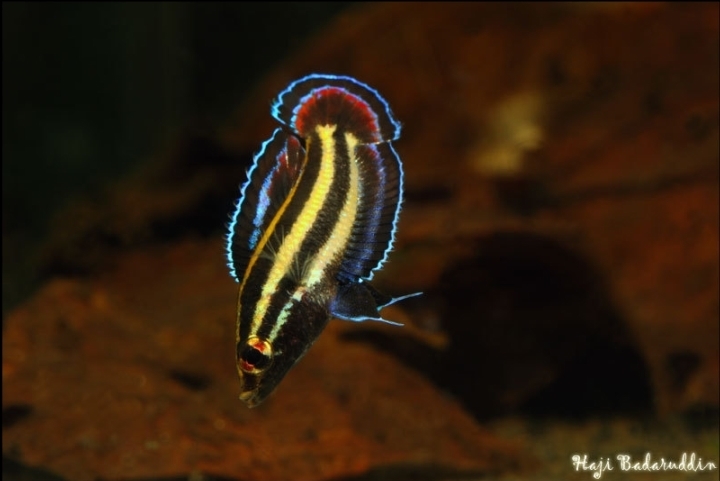
Parosphromenus alfredi
Kottelat & Ng, 2005
Max length26mm SL1.0in SLTank40 × 20cm16 × 8inTemp22–28°C72–82°FpH3.0–6.5Type locality is 'Kota Tinggi, Mawai-Desaru road, Johor, Peninsula Malaysia' and this species is endemic to a small portion of eastern Johor state, Peninsular Malaysia around the towns of Kota Tinggi, Mawai and Desaru. A great deal of its original habitat has been lost via deforestation and other human alterations and it's considered in grave danger of extinction.
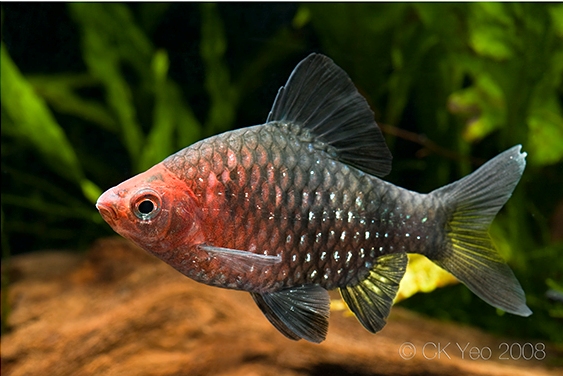
Pethia nigrofasciataBlack Ruby Barb
Günther, 1868
Max length55mm SL2.2in SLTank80 × 30cm31 × 12inTemp20–27°C68–81°FpH5.5–7.5Little sun is able to penetrate the forest floor so aquatic habitats are shaded and water temperature may be relatively cool, while conductivity and hardness are generally low and pH slightly acid. Macrophytes are uncommon though there may be dense, marginal vegetation, sometimes overhanging the full width of the stream, the roots of which may penetrate the banks underwater. Typical substrates are sandy but covered by a layer of leaf litter with fallen twigs and branches.
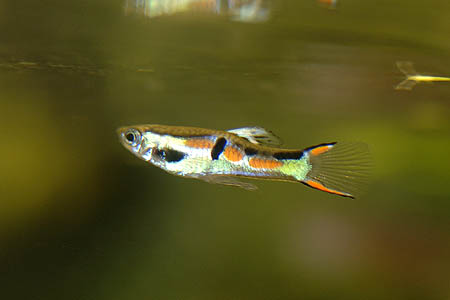
Poecilia wingeiEndler's Livebearer
Poeser, Kempkes & Isbrucker, 2005
Max length25mm SL1.0in SLTank45 × 30cm18 × 12inTemp24–30°C75–86°FpH7.0–8.5Endler's Livebearer was actually discovered in 1937 by Franklyn F. Bond before being rediscovered by John Endler in 1975 in Laguna de Patos, Cumana, northeastern Venezuela. It was found coexisting, but not interbreeding with, a wild form of P. reticulata. Both species are native to this area of Venezuela, but P. reticulata was much less common in areas where P. wingei was thriving. This is thought to be partially related to habitat type, as guppies are usually found in colder, running water...
Protopterus annectens annectensAfrican Lungfish
authority not recorded
Max length1000mm SL39in SLTank180 × 75cm72 × 30inTemp24–30°C75–86°FpHnot recordedLungfish are among the most intriguing of "oddball" aquarium subjects, being able to survive in the most extreme conditions. They are very ancient fish, having remained virtually unchanged for millions of years. The natural habitat of P. a. annectens is wet for only part of the year and the fish has developed several incredible adaptations in order to counteract this. When the waters begin to recede, the fish will find a suitable nesting site, usually amongst heavy vegetation. Here...
Protopterus dolloiSlender Lungfish
authority not recorded
Max length1300mm SL51in SLTank180 × 75cm72 × 30inTemp24–30°C75–86°FpH6.0–7.5Lungfish are among the most intriguing of "oddball" aquarium subjects, being able to survive in the most extreme conditions. They are very ancient fish, having remained virtually unchanged for millions of years. Some of the natural habitats of P. dolloi are wet for only part of the year, and it has developed several incredible adaptations in order to counteract this. When the waters begin to recede, the fish will find a suitable nesting site, usually amongst heavy vegetation. Here ...
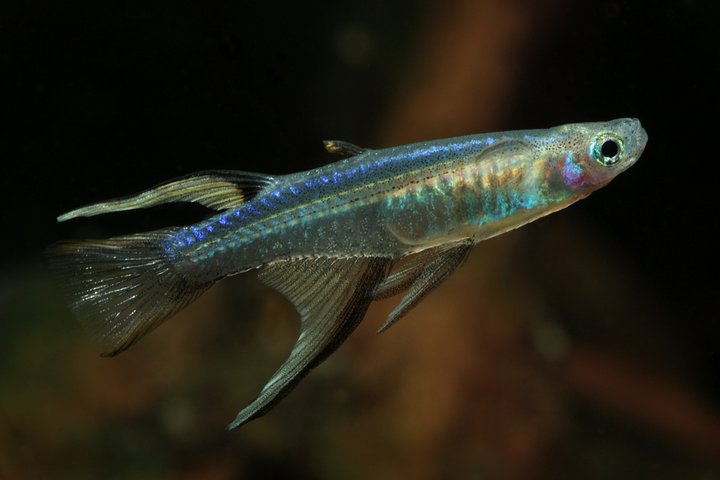
Pseudomugil cyanodorsalisNeon Blue-eye
Allen & Sarti, 1983
Max length35mm SL1.4in SLTank45 × 30cm18 × 12inTemp21–31°C70–88°FpH7.0–8.5Euryhaline and thus capable of withstanding significant fluctuations in salinity and other water conditions. It's been recorded in full marine conditions as well as pure freshwater environments, and commonly inhabits coastal mangrove creeks and swamps. Such changes may occur on a daily or seasonal basis depending on locality, with some habitats influenced by daily tides whereas others become hypersal...
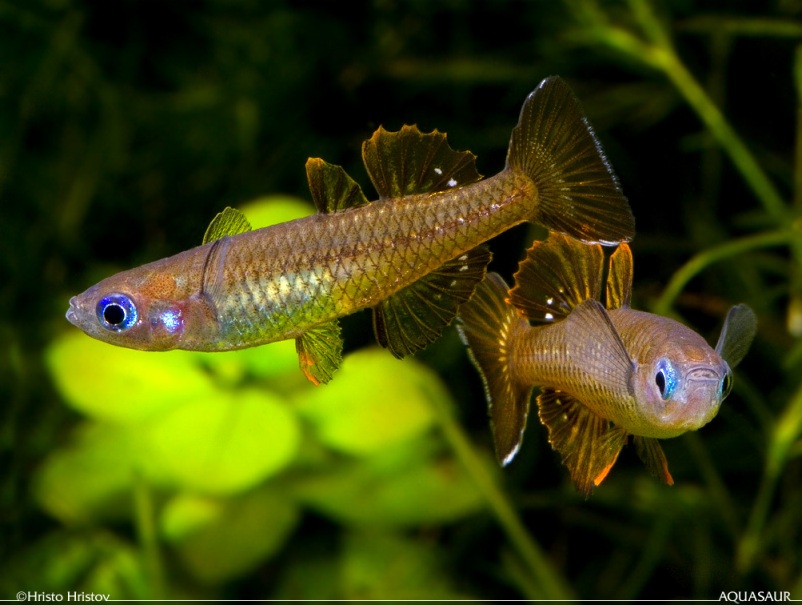
Pseudomugil tenellusDelicate Blue-eye
Taylor, 1964
Max length55mm SL2.2in SLTank75 × 30cm30 × 12inTemp25–32°C77–90°FpH5.5–7.5Euryhaline and mostly inhabits coastal floodplains where it's found in both fresh and brackish habitats, including tidal estuaries and salt marshes. It's particularly common in swamps, billabongs, and slow-moving streams where aquatic vegetation grows densely, but some populations have colonised upper sections of freshwater streams. Larger individuals may also move into main river channels. Tappin (2010) gives the following ranges of parameters based on those taken from various localities: temperature 27 - 38 °C, pH 5...
Pungu maclareni
authority not recorded
Max length100mm SL3.9in SLTank75 × 30cm30 × 12inTemp28–30°C82–86°FpH7.5–8.5This is currently the only described species in the genus Pungu. Because of it's its tiny natural range, habitat destruction due to excess water removal (the nearby town of Kumba relies on the lake for it's water supply), deforestation, the introduction of non-native species and overfishing, it is considered to be critically endangered and all efforts at captive breeding are to be encouraged. It is correspondingly rare in the hobby, and we suggest purchasing some only if you intend to ...
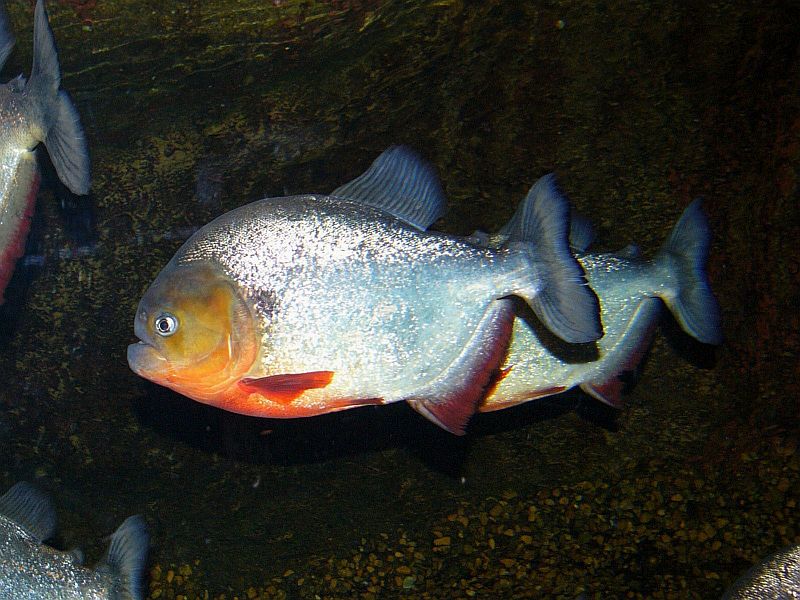
Pygocentrus caribaBlack Spot Piranha
Humboldt, 1821
Max length350mm SL14in SLTank240 × 90cm96 × 36inTemp20–28°C68–82°FpH4.0–7.0Has been recorded from major river channels, smaller tributaries, and floodplain lakes, many of which comprise acidic, mineral-poor blackwater environments with brownish, tannin-stained water, although it has been observed to inhabit clear waters as well. Many of its habitats lie within the Venezuelan and Colombian llanos, a vast, highly biodiverse system of tropical savannah grasslands, seasonally-flooded plains and forests covering an area measuring almost 600,000 square kilo...
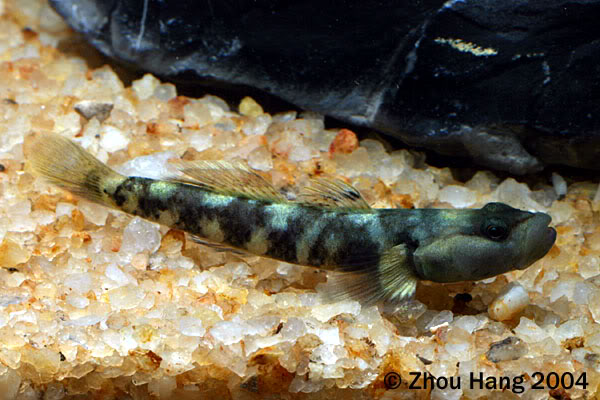
Rhinogobius yaoshanensis
Luo, 1989
Max length45mm SL1.8in SLTank60 × 30cm24 × 12inTemp16–24°C61–75°FpH6.0–8.0This species' name has appeared quite regularly on ornamental fish trade lists since the mid-00's but it's unclear whether the species itself has ever been exported since fish labelled as such do not appear to fully match the most recent key (see below). That said, its natural habitats lie in the same region as the loach Yaoshania pachychilus so it's reasonable to assume that some specimens may have been collected, and the fish in our images were ca...
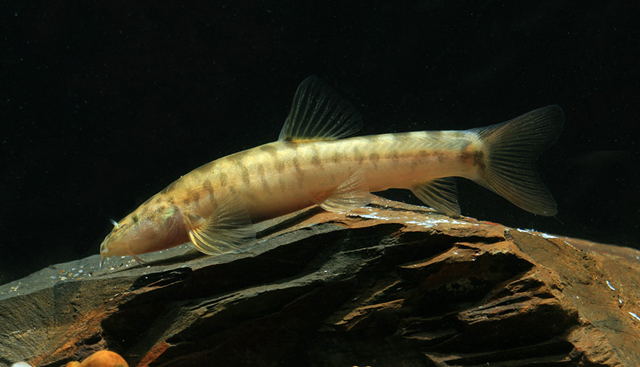
Schistura jarutanini
Kottelat, 1990
Max length67mm SL2.6in SLTanknot recordedTempnot recordedpHnot recordedThis species' conservation status clearly precludes its suitability as an aquarium fish so it's included here for reasons of interest only. It's protected by Thai national law and illegal to remove from its habitat. Species exhibiting morphological, physiological or behavioral adaptations to a subterranean existence are often referred to as troglomorphic.
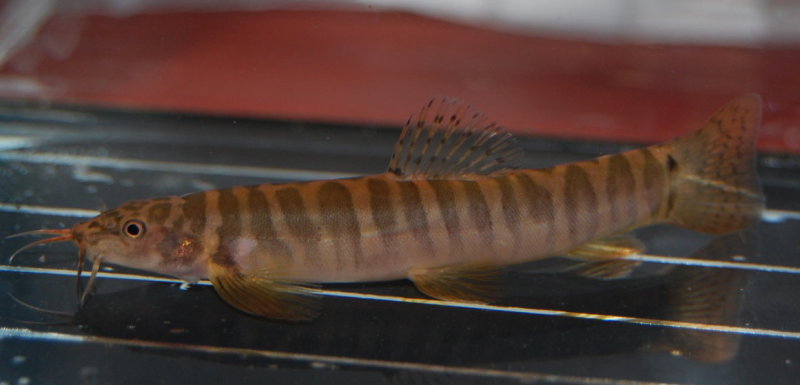
Schistura kohchangensisOrnate Tiger Sand Loach
Smith, 1933
Max length75mm SL3.0in SLTank90 × 30cm36 × 12inTemp20–26°C68–79°FpH6.0–7.5On Koh Chang one habitat consisted of a stream flowing from the waterfall Nam Tok Mai Yom which empties into the Gulf of Thailand after less than 1 km. The stream was dry in its lower reaches and had a substrate of boulders and pebbles. Sympatric fi...
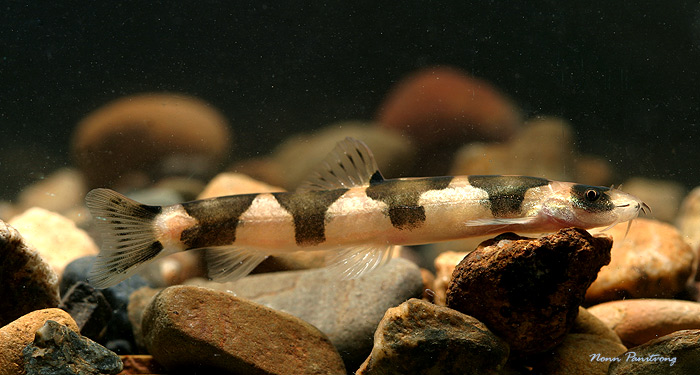
Schistura pridiiMini Dragon Loach
Vidthayanon, 2003
Max length40mm SL1.6in SLTank60 × 30cm24 × 12inTemp18–24°C64–75°FpH7.0–8.5Endemic to a handful of tributary streams within the upper Chao Phraya river system in northern Thailand. Six populations are known to date, with the majority lying inside the Doi Chiang Dao Wildlife Sanctuary. Some of its habitats are under threat by over-grazing, deforestation, deliberate forest fires, and collection for the aquarium trade.
Steatocranus casuariusBlockhead Cichlid
authority not recorded
Max length120mm SL5in SLTank75 × 30cm30 × 12inTemp24–28°C75–82°FpH6.0–7.5An easily kept cichlid whose character more than compensates for its somewhat drab colouration, S. casuarius is sometimes seen for sale as "Humphead", "Lionhead" or "Buffalohead" cichlid. It is a reophilic fish meaning it inhabits fast waters. Its swimbladder is modified to reduce buoyancy and thus prevent it from being swept away by the strong currents in it's natural habitat. In the aquarium it spends most of it's time resting on the substrate or hiding ...
Stomatepia pindu
authority not recorded
Max length90mm SL3.5in SLTank75 × 30cm30 × 12inTemp28–30°C82–86°FpH7.5–8.5Because of it's its tiny natural range, habitat destruction due to excess water removal (the nearby town of Kumba relies on the lake for it's water supply), deforestation, the introduction of non-native species and overfishing, it is considered to be critically endangered. All efforts at captive breeding are to be encouraged. However, it is correspondingly rare in the hobby. The area around Lake Barombi Mbo has been suggested to be designated a protected area, but as yet this has not o...
Synodontis dhonti
authority not recorded
Max length400mm SL16in SLTank120 × 45cm48 × 18inTemp24–28°C75–82°FpH7.5–8.5S. dhonti's natural deep water habitat and solitary lifestyle make collection for the hobby difficult and so it is rarely seen for sale. When juvenile it may be confused with other Tanganyikan Synos but it loses its spotted patterning as it matures....
Synodontis granulosa
authority not recorded
Max length270mm SL11in SLTank150 × 60cm60 × 24inTemp24–28°C75–82°FpH7.8–8.5One of the most stunning and sought after species of Synodontis and though the cost of ownership has dropped slightly, it still commands a high price. Its natural deep water habitat, limited range and solitary lifestyle make collection for the hobby difficult and so it is rarely seen for sale. It also appears that the areas of the lake in which it occurs are threatened with ecological disaster. In the aquarium S. granulosa is intelligent and can develop into a real character, with many speci...