Results for “pre-”
Type a name: scientific, common, or one a species used to go by. Or narrow the catalogue with the filters.
Filters
Monocirrhus polyacanthusSouth American Leaf Fish
authority not recorded
Max length100mm SL3.9in SLTank75 × 30cm30 × 12inTemp23–29°C73–84°FpH5.0–6.8An incredibly-adapted species, this fish is camouflaged to mimic a dead leaf, both in body shape and pattern. It can change colour to match its surroundings and has a projection from its bottom lip that resembles a leaf stalk. When hunting, it stalks its prey in a head-down stance, appearing to drift towards it like a dead leaf drifting in a current. In reality, the fish is propelled by tiny movements of its transparent fins. When it strikes at an item of prey the entire mouth protrudes outwards...
Parasphaerichthys lineatus
Britz & Kottelat, 2002
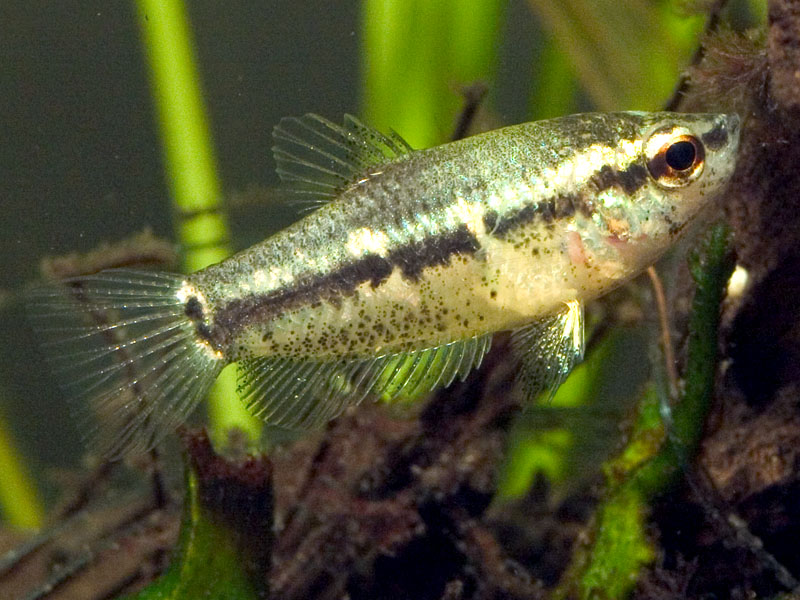
Max length19mm SL0.7in SLTank40 × 20cm16 × 8inTemp22–27°C72–81°FpH6.5–8.0This species is sometimes traded under the names 'mini chocolate gourami', 'Burmese chocolate gourami' or mislabelled as the congener P. ocellatus, these two currently comprising the only known members of the genus. P. lineatus can be told apart from P. ocellatus via the following combination of characters: smaller body size (maximum standard length 18.7 mm vs. 32.0 mm); absence of ocellus-type marking in middle of each flank (vs. presence); presence of dark, stripe (vs. abs...
Pethia shalyniusShalyni Barb
Yazdani & Talukdar, 1975
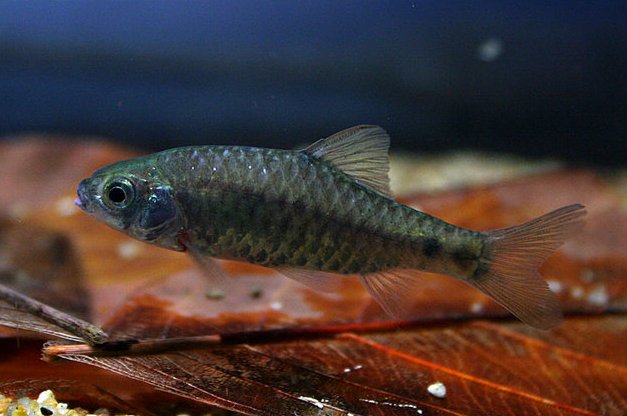
Max length55mm SL2.2in SLTank75 × 30cm30 × 12inTemp16–24°C61–75°FpH6.0–7.5A benthopelagic fish mostly recorded from streams and minor tributaries at relatively high altitudes of more than 1200 metres AMSL with cool, clear, well-oxygenated water and substrates of bedrock, boulders, cobbles, and gravel. Aquatic plants aren't usually present though riparian vegetation may be well-developed. It's also present in some ponds and small lakes, including some stagnant water bodies with muddy substrates.
Polycentropsis abbreviataAfrican Leaf Fish
authority not recorded
Max length80mm SL3.1in SLTank60 × 38cm24 × 15inTemp26–31°C79–88°FpH6.0–6.5Like the closely related Polycentrus species from South America, with which it is sometimes confused, this fish is camouflaged to mimic a dead leaf, both in body shape and pattern. It can also change colour to match its surroundings. When hunting, it stalks its prey in a head-down stance, appearing to drift towards it like a dead leaf drifting in a current. In reality the fish is propelled by tiny movements of its transparent hind fins. When it strikes at an item of prey, the entire mouth pro...
Satanoperca leucostictaWhitespot Eartheater
Müller & Troschel, 1849
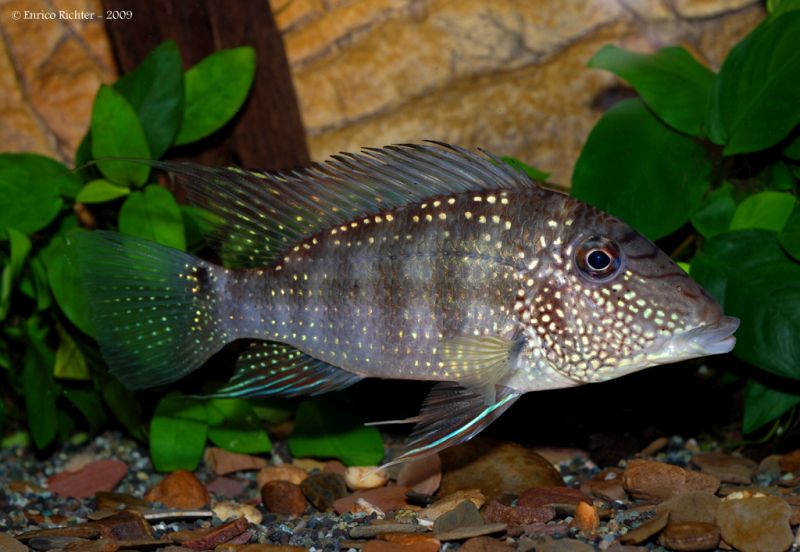
Max length150mm SL6in SLTank180 × 60cm72 × 24inTemp20–28°C68–82°FpH5.5–7.5S. leucosticta is frequently available in the ornamental trade and farmed for the purpose in several countries. It is often confused with its congener S. jurupari in aquarium literature and on websites, but is easily recognised by presence (vs. absence) of prominent white spots or vermiform markings on the sides of the head. Although the presence of white spots on the head does not distinguish it from all known Satanoperca populations (see below), it can...
Abramites hypselonotusMarbled Headstander
Günther, 1868
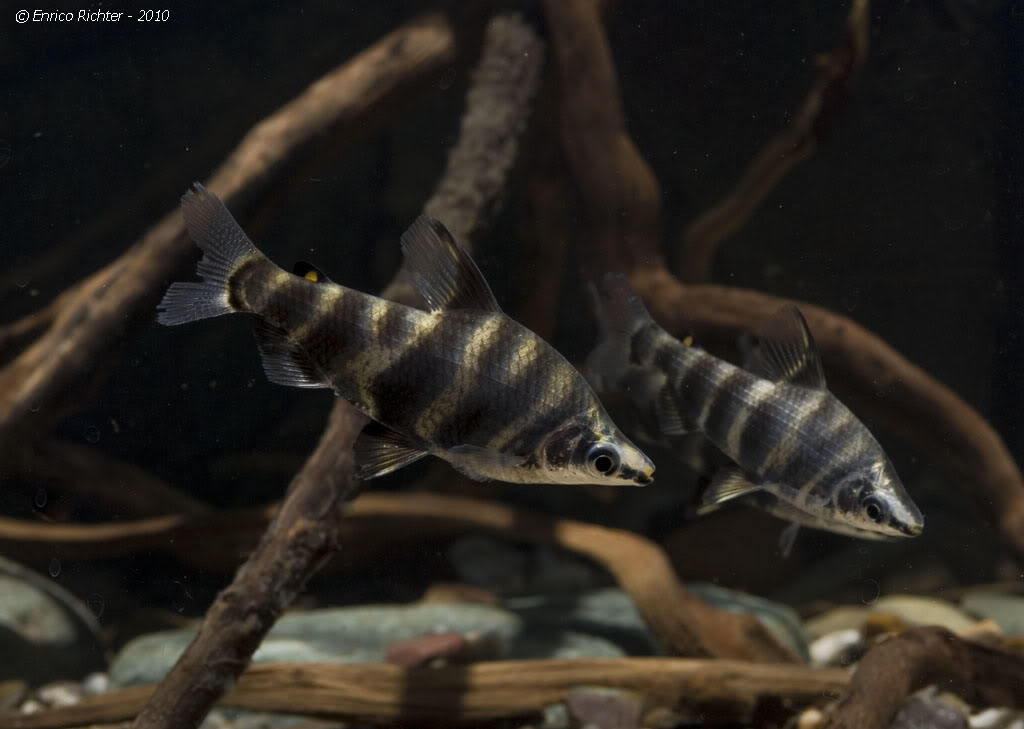
Max length140mm SL6in SLTank120 × 30cm48 × 12inTemp20–30°C68–86°FpH5.5–7.5Abramites spp. are separated from other anostomids primarily on the basis of their relatively deeper bodies and presence of a prominent, post-pelvic median keel, a feature unique to the genus. At time of writing A. eques is the only other species recognised and is native to the Río Magdalena drainage in western Colombia. It can be distinguished by possession of 13-14 bra...
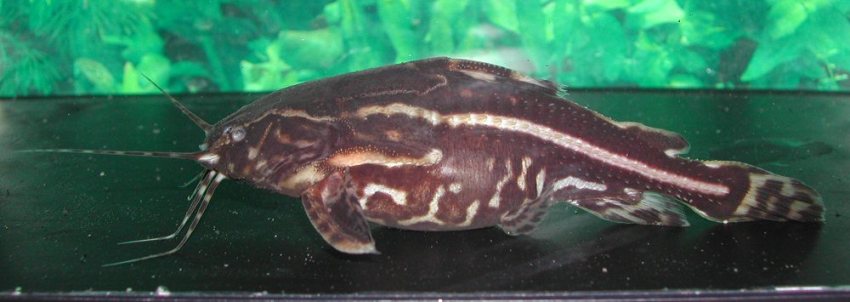
Acanthodoras cataphractusChocolate Talking Catfish
Linnaeus, 1758
Max length115mm SL5in SLTank120 × 30cm48 × 12inTemp22–26°C72–79°FpH6.0–7.5This species, which may also be referred to by the alternative vernacular names 'spiny catfish', 'painted talking catfish' or 'chocolate raphael', isn't particularly common in the trade and most often exported only as bycatch among shipments of Platydoras armatulus. It appears very similar to the congener A. spinosissimus with the most useful external distinguishing character being the presence of pale blotches on the dorsal surface, between the dorsal and caud...
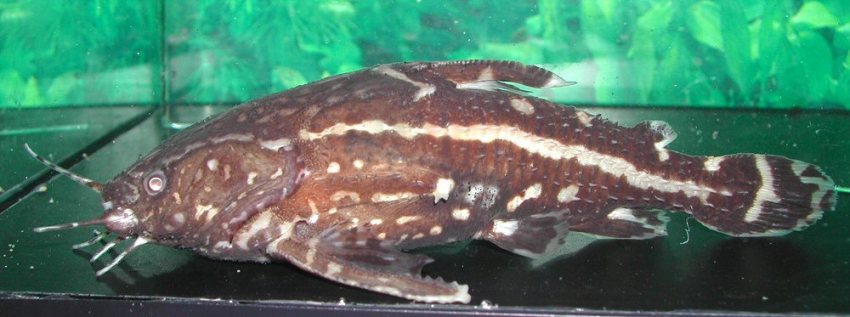
Acanthodoras spinosissimusChocolate Talking Catfish
Eigenmann & Eigenmann, 1888
Max length137mm SL5in SLTank120 × 30cm48 × 12inTemp22–26°C72–79°FpH6.0–7.5This species, which may also be referred to by the alternative vernacular names 'spiny catfish', 'painted talking catfish' or 'chocolate raphael', isn't particularly common in the trade and most often exported only as bycatch among shipments of Platydoras armatulus. It appears very similar to A. cataphractus with the most useful external distinguishing character being the presence of pale blotches on the dorsal surface, between the dorsal and caudal fins, in....
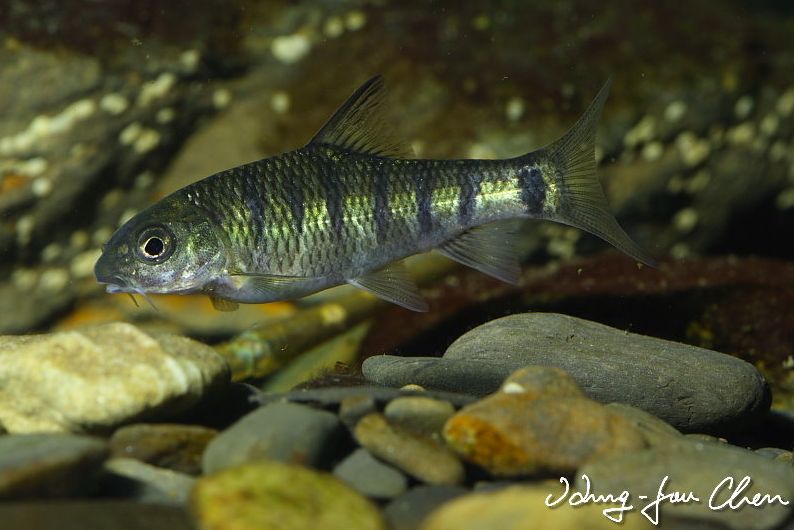
Acrossocheilus paradoxusTaiwan Banded Barb
Günther, 1868
Max length200mm SL8in SLTank180 × 45cm72 × 18inTemp15–25°C59–77°FpH6.0–8.0The genus Acrossocheilus is restricted to southern China, northern Vietnam and northern Laos. It can be distinguished from related genera by the following combination of characters: rostral fold present; lips fleshy and continuous around corners of mouth; lower lip with a median interruption; mouth inferior; horny sheath on lower jaw; two pairs of barbels; last simple ray of dorsal fin osseous with a serrated or smooth posterior margin.
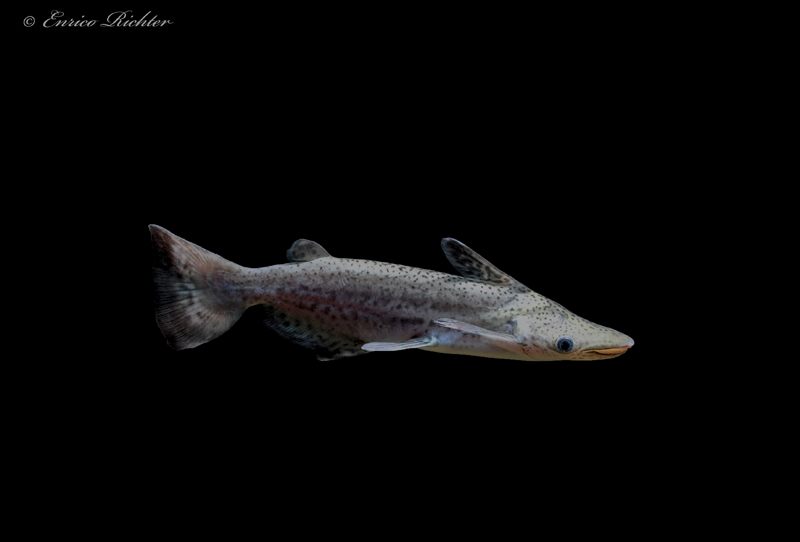
Ageneiosus marmoratusBottlenose Catfish
Eigenmann, 1912
Max length185mm SL7in SLTank150 × 60cm60 × 24inTemp22.5–26°C73–79°FpH6.0–7.0This species may also be seen on sale as 'Guyana slopehead catfish' 'dolphin catfish' or 'hammerhead catfish'. The attractive juvenile patterning is largely lost as the fish grow but this nevertheless remains an impressive predatory species for the larger aquarium. The genus Ageneiosus was at one point classified in the family Ageneiosidae alongside the genus Tetranematichthys, but this was not accepted by all...
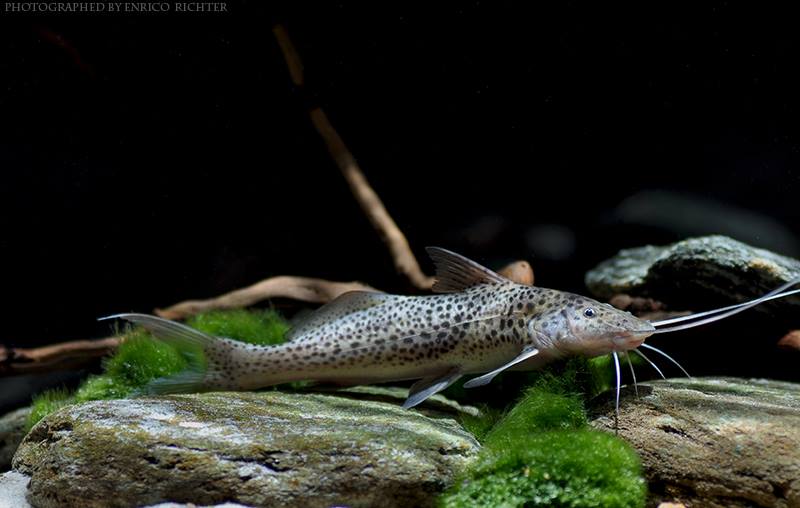
Aguarunichthys torosusBolt Catfish
Stewart, 1986
Max length346mm SL14in SLTanknot recordedTempnot recordedpHnot recordedAn obligate predator feeding on other fishes in nature, but quality dried foods are normally accepted in captivity. It should also be offered meaty fare such as strips of white fish, live earthworms, shrimp, etc., for optimum health.
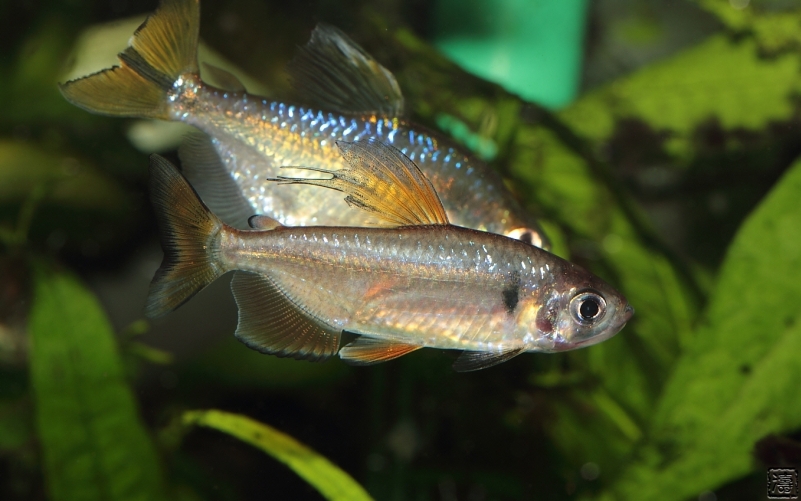
Alestopetersius nigropterusAfrican Rainbow Tetra
Poll, 1967
Max length60mm SL2.4in SLTank120 × 30cm48 × 12inTemp22–26°C72–79°FpH5.0–7.0This fish is normally traded as A. nigropterus or A. cf. ansorgii although neither appears to be its correct name meaning it remains unidentified at present. A. nigropterus is a valid congener that is not in the aquarium trade with little to no export from Lake Mai-Ndombe, to which it is endemic, while A. ansorgii is a synonym of Nannopetersius ansorgii.
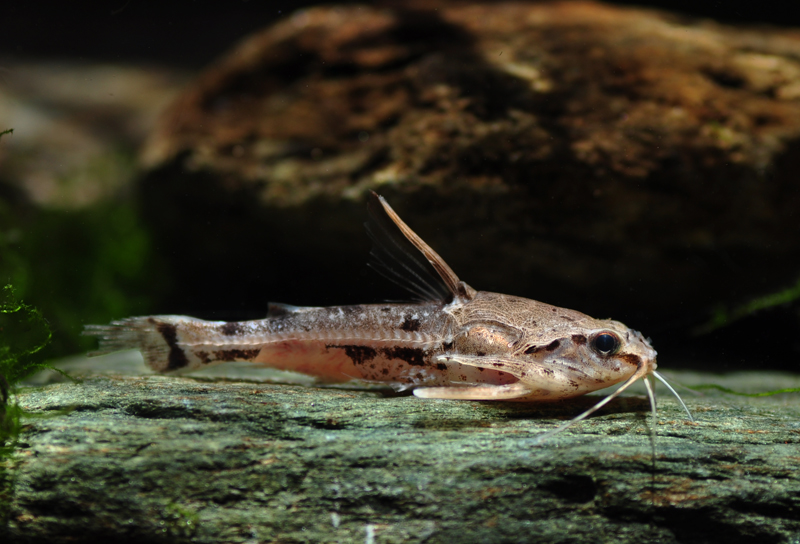
Amblydoras nauticusMarbled Talking Catfish
Cope, 1874
Max length75mm SL3.0in SLTank60 × 30cm24 × 12inTemp23–28°C73–82°FpH5.5–7.5This species was previously thought to be, and is often still sold as, A. hancockii, a name currently considered synonymous with Platydoras hancockii (Valenciennes 1840). It's also known by the vernacular names of blue-eyed catfish or Hancock's doradid, and in many ways is an ideal beginners' catfish, being hardy and tolerant of a wide range of water conditions...
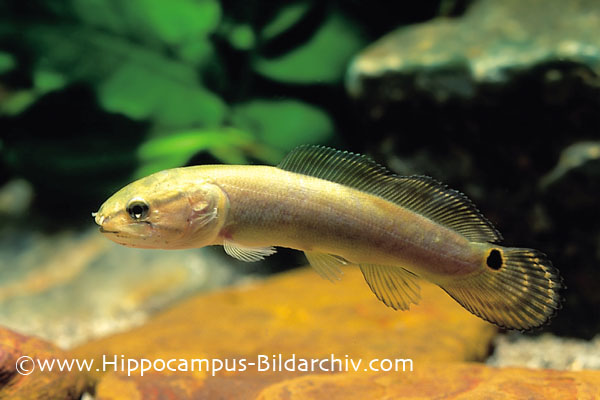
Amia calvaBowfin
Linnaeus, 1766
Max length900mm SL35in SLTank180 × 60cm72 × 24inTemp15–24°C59–75°FpH6.0–7.5Rare in the hobby, the bowfin is a stunning specimen fish for the aquarist with the means to house it properly. It is the sole remaining species in the family Amiidae, an ancient and primitive group that is related to the garfish. It possesses the ability to breathe atmospheric air, via an enormous, highly vascularised accessory breathing organ that extends throughout the entire body cavity. The gills are stiffened in order to prevent them collapsing outside the water and, provided it's kep...
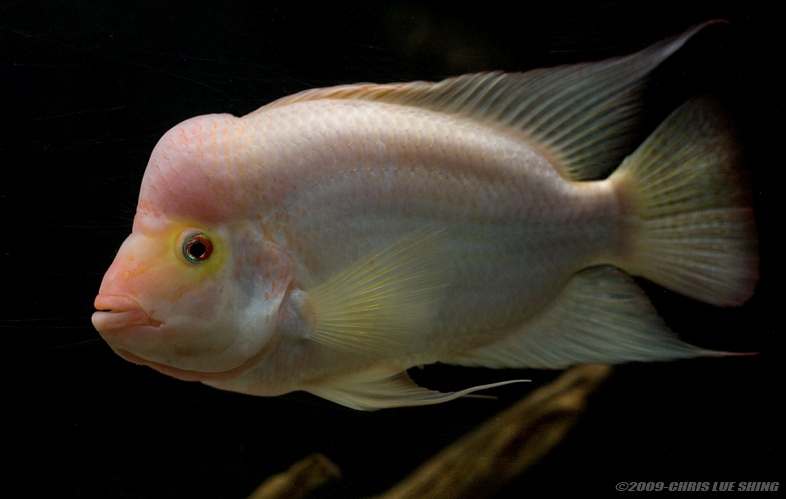
Amphilophus citrinellusMidas Cichlid
Günther, 1864
Max length350mm SL14in SLTanknot recordedTemp21–26°C70–79°FpH6.0–8.0Previously included as a member of the genus Cichlasoma, the midas cichlid is often confused with the red devil, A. labiatus. The two can be distinguished through differences in morphology. As suggested by its scientific name, A. labiatus often possesses characteristically large lips, although this is variable and should not be used as a defining indicator of species. More reliable differences include the bigger nuchal hump and more thick-set appearance in A. citrinellus. The midas exists in many n...
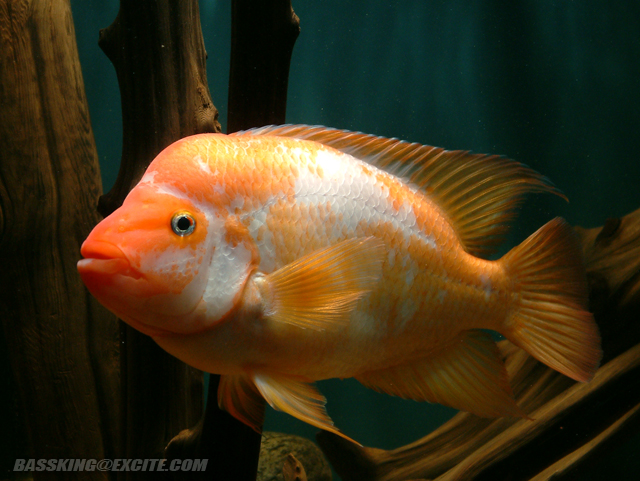
Amphilophus labiatusRed Devil Cichlid
Günther, 1864
Max length350mm SL14in SLTanknot recordedTemp21–26°C70–79°FpH6.0–8.0Previously included as a member of the genus Cichlasoma, the red devil is often confused with the midas cichlid, A. citrinellus. The two can be distinguished through differences in morphology. As suggested by its scientific name, A. labiatus possesses characteristically large lips, although in reality this is variable and should not be used as a defining indicator of species. Certainly, tank bred fish tend not to have these large lips. More reliable differences include the bigger nuchal hump and mo...
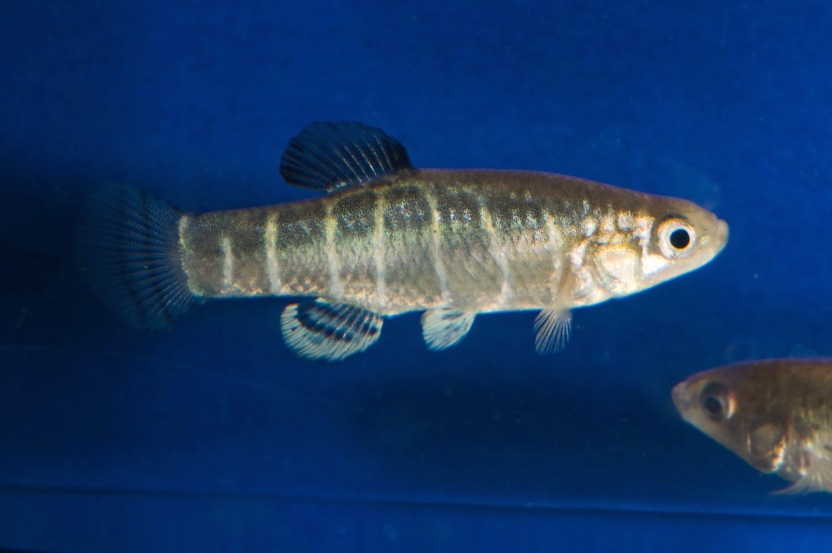
Anatolichthys danfordiiDanford's Toothcarp
Boulenger, 1890
Max length50mm SL2.0in SLTank120 × 30cm48 × 12inTemp10–30°C50–86°FpH7.0–8.5This species has something of a confused history having been previously been considered synonymous with both A. sophiae and A. fasciatus. Another species, A. chantrei is still listed as valid by some sources but is now known to be a junior synonym of A. danfordii. This became clear during a 1999 study in which the type specimens of A. danfordii were found to be indistinguishable from the Aphanius population living in the Sultan Swamps, the type locality of A. chantrei. You're unlikely t...
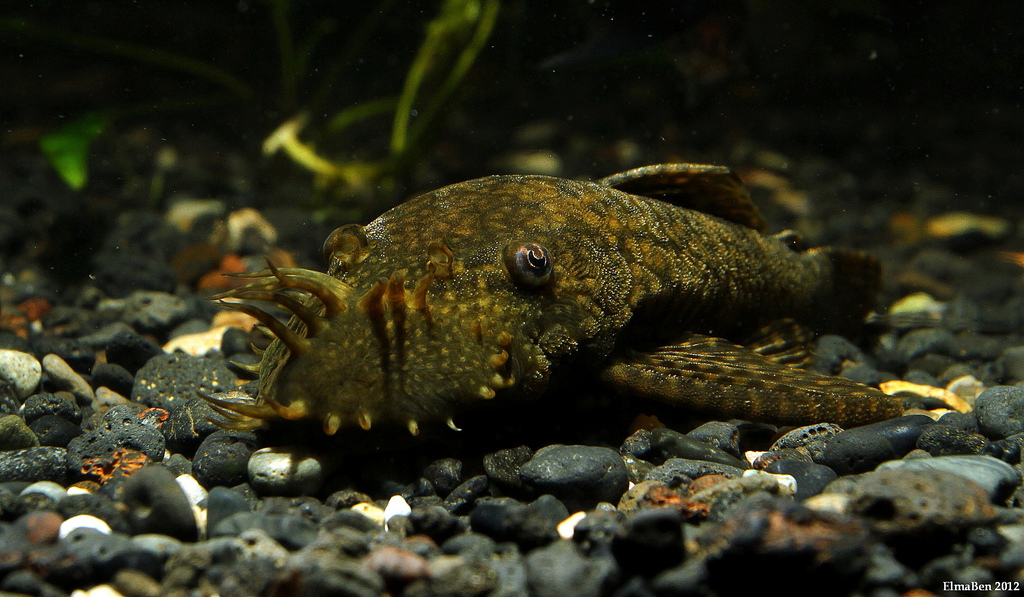
Ancistrus sp. '3'Common Bristlenose Catfish
authority not recorded
Max length125mm SL5in SLTank60 × 30cm24 × 12inTemp21–26°C70–79°FpH5.5–7.5This is the ubiquitous 'bristlenose' catfish in the aquarium hobby and is bred commerically on a large scale although it's precise origin is unknown with some of the opinion that it may be a hybrid. Several line-bred ornamental varieties exist, including piebald, albino and long-finned forms of both the standard and albino fish, of which long-finned fish are sometimes sold as 'butterfly' or 'veiltail' catfish.
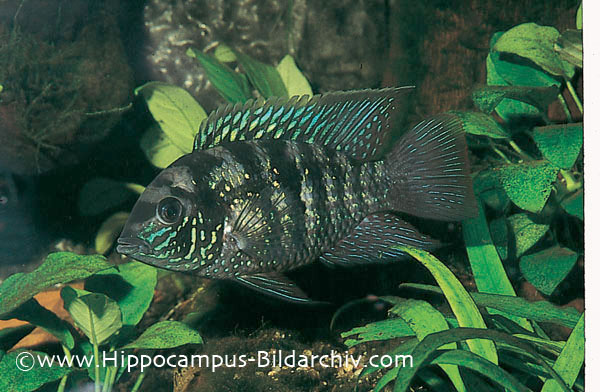
Andinoacara pulcherBlue Acara
Gill, 1858
Max length150mm SL6in SLTanknot recordedTemp22–28°C72–82°FpH6.5–8.0This species was previously known as 'Aequidens' pulcher but has been considered s member of the genus Andinoacara since 2009.
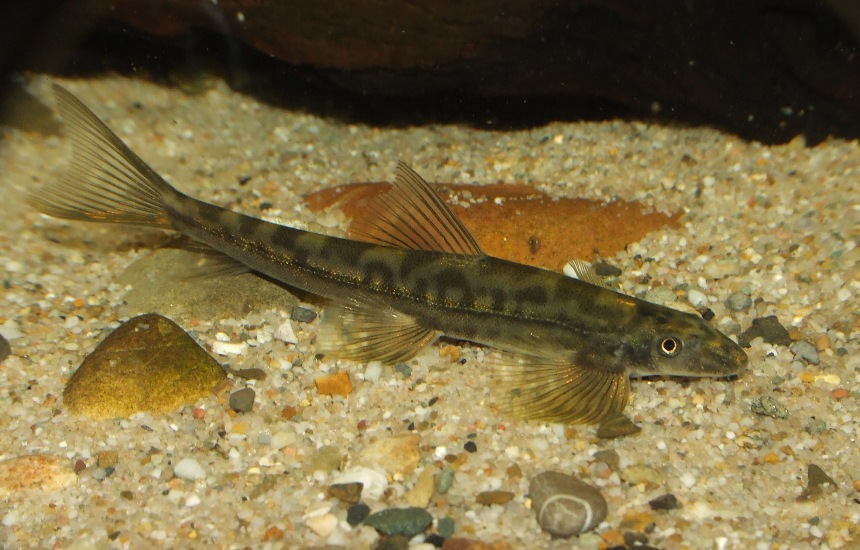
Annamia cf. thuathienensis
Nguyen, 2005
Max length100mm SL3.9in SLTank120 × 30cm48 × 12inTemp16–22°C61–72°FpH6.0–7.5Annamia spp. may be confused with related genera such as those of the genus Balitoropsis. They can be identified by their more depressed body shape, elongate lower caudal-fin lobe, and the presence of a single unbranched ray in the pectoral and pelvic fins. At least one undescribed member of the genus is thought to exist.