Results for “sp.”
Type a name: scientific, common, or one a species used to go by. Or narrow the catalogue with the filters.
Filters
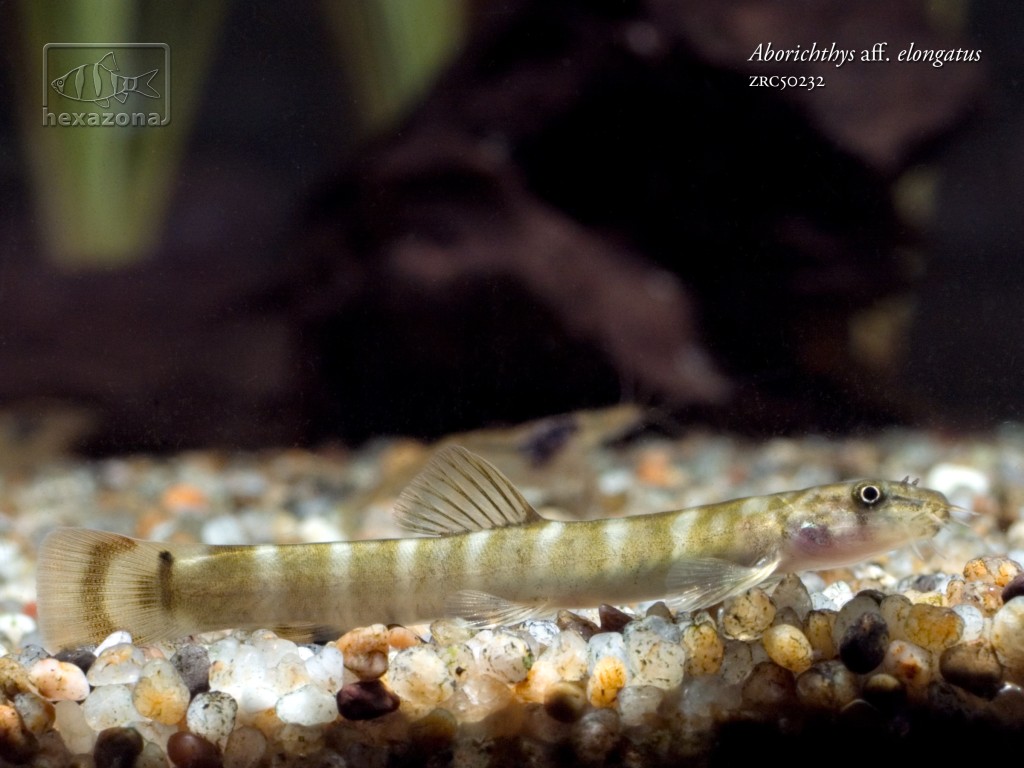
Aborichthys sp. 'AR02'
authority not recorded
Max length35mm SL1.4in SLTank45 × 30cm18 × 12inTemp21–26°C70–79°FpH6.0–7.5This fish occasionally turns up as a contaminant in shipments of A. sp. 'AR01'. The latter is usually traded as A. elongatus but that species appears endemic to higher altitude waters of the Brahmaputra drainage in Darjeeling District which borders Jalpaiguri to the north east. These flow down from the Sivalik Hills whereas the Raidak I originates in Bhutan. Only three species of Aborichthys have been officially described to date meaning this is likely to represent an undescribed speci...
Corydoras spectabilisMillenium Cory
authority not recorded
Max length70mm SL2.8in SLTank60 × 38cm24 × 15inTemp23–27°C73–81°FpH6.5–7.2This species was named the millenium cory because it was the first catfish species to be described in the year 2000. It was in fact described in late 1999, but the date of the journal containing the information was 01/2000. There are 4 other species of cory that may be confused with C. spectabilis at first glance. These are C. guapore, C. ourastigma, C. similis and C. caudimaculatus. They can be distinguished quite easily upon close examination, however. C. guapore, whilst exhibiting similar pat...
Mastacembelus ellipsiferTanganyikan Spiny Eel
authority not recorded
Matched on the common name Tanganyikan Spiny Eel
Max length450mm SL18in SLTank120 × 45cm48 × 18inTemp23–27°C73–81°FpH8.0–9.5M. ellipsifer is a stunning eel that makes a nice 'alternative' species for the Tanganyikan community tank. The species in the family Mastacembelidae are known as "spiny" eels because the dorsal rays are very hard. Care must therefore be exercised when handling them to avoid injuries. The swim bladder in these eels has also disappeared completely, an adaptation to their bottom-dwelling lifestyle. The African species such as this one can be distinguished from their Asian relat...
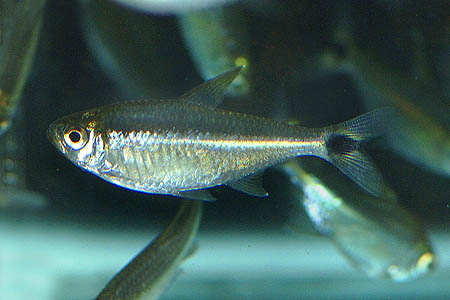
Astyanax kennedyiKennedy's Tetra
Géry, 1964
Max length50mm SL2.0in SLTank80 × 30cm31 × 12inTemp26–29°C79–84°FpH5.5–7.0Endemic to pthe upper Amazon basin in Peru, around the city of Iquitos. Most Astyanax spp. are not popular in the aquarium hobby, though the genus is among the most speciose within the family Characidae. A. kennedyi is no exception; you'll rarely see it offered for sale but may find the occasional specimen mixed among other species in shipments of wild fishes from Peru.
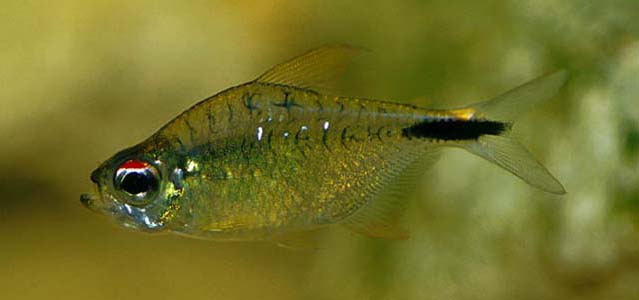
Astyanax leopoldiLeopold's Tetra
Géry, Planquette & Le Bail, 1988
Max length60mm SL2.4in SLTank60 × 30cm24 × 12inTemp23–27°C73–81°FpH5.5–7.0Most Astyanax spp. are not popular in the aquarium hobby, though the genus is among the most speciose within the family Characidae. A. leopoldi is no exception in that you'll rarely see it offered for sale but may find the occasional specimen mixed among other species in shipments of wild fishes from Peru.
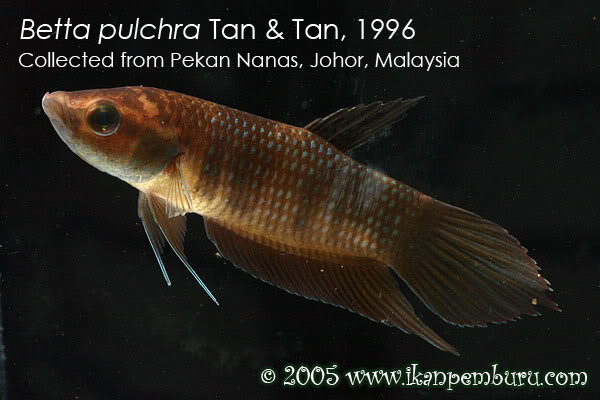
Betta pulchra
Tan & Tan, 1996
Max length60mm SL2.4in SLTank80 × 30cm31 × 12inTemp22–27°C72–81°FpH3.5–6.5Restricted to remnant blackwater habits in heavily-disturbed areas of former peat swamp forest, the original vegetation having been cleared to make space for plantations of oil pal, pineapple and rubber. It's now typically found among overhanging marginal vegetation of irrigation canals, with sympatric species including Belontia hasseltii, Betta bellica, B. imbellis, Sphaerichthys osphromenoides, Parosphromenus sp., and Trichopsis vittata. PH in its natural waters has been recorded over the range 3.9 - 4.2.
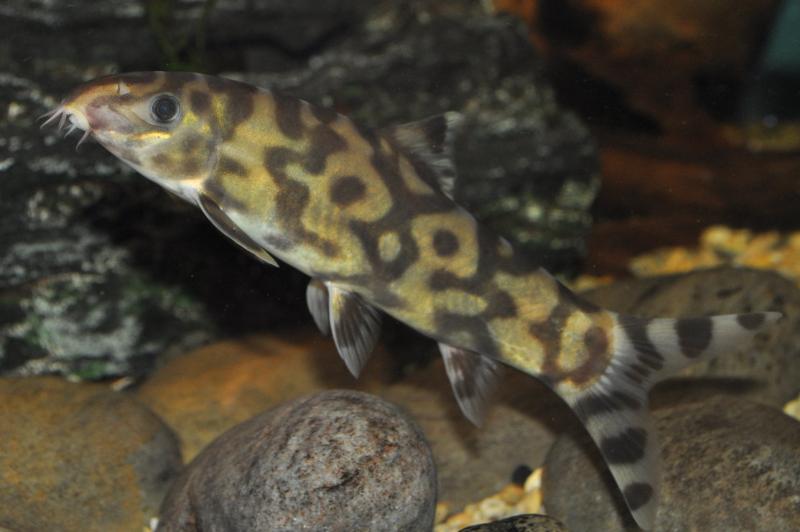
Botia histrionica
Blyth, 1860
Max length130mm SL5in SLTank120 × 45cm48 × 18inTemp22–28°C72–82°FpH6.0–7.5Adult patterning of the different geographical forms can vary considerably though young specimens all possess 5 solid dark bars on each flank and are often confused with those species exhibiting a similar juvenile pattern, particularly B. kubotai. However the horizontal dark bars on the flanks in B. kubotai typically split at quite a young age and/or develop horizontally-orientated 'peaks' whereas those in B. histrionica remain solid for longer and the central bar usually has a pale spot at the top so forms a 'y' shape.
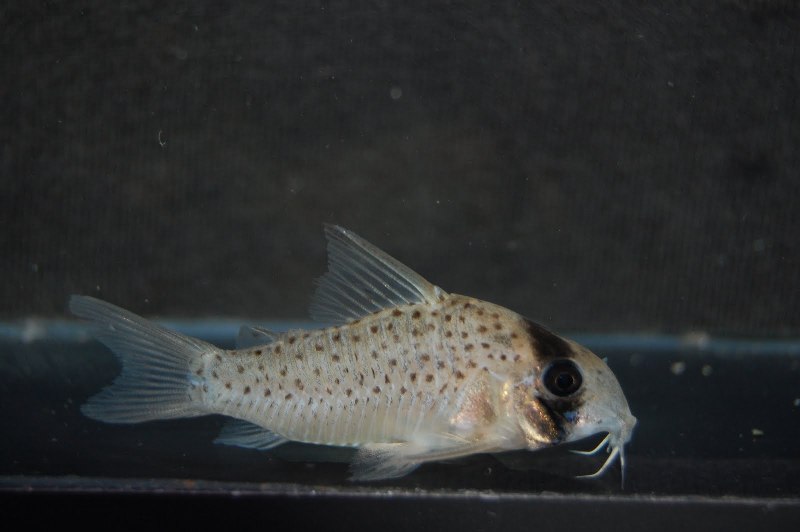
Corydoras atropersonatusFairy Cory
Weitzman & Nijssen, 1970
Max length50mm SL2.0in SLTanknot recordedTemp21–27°C70–81°FpH5.0–7.0This species is sometimes confused any of several similar-looking fishes such as C. sychri or C. sp. C097. While the former is a more elongate fish with a longer snout and quite easy to identify, C097 resembles C. atropersonatus more closely, despite being traded as C. sychri 'longnose'. Its snout is longer than that of C. atropersonatus but shorter than that of C. sychri, and the dark spots on the body tend to be more well-defined and spaced out than in the other two.
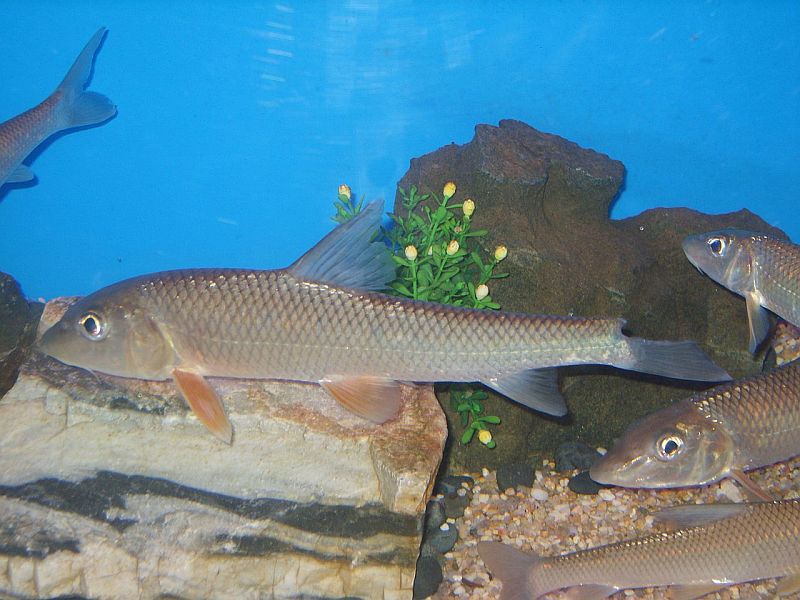
Hemibarbus labeoBarbel Steed
Pallas, 1776
Max length450mm SL18in SLTanknot recordedTempnot recordedpHnot recordedThis species can be distinguished from other members of the genus by the following combination of characters: absence of dark spots on body in adults; body elongate with slightly convex dorsal profile; head longer than body is deep; snout much longer than postorbital head length; lips well developed, lateral lobes of lower lip broad and thick with folds, median process small; barbel thickness shorter or equal to eye diameter; dorsal spine strong, ⅔ of HL; dorsal-fin origin closer to tip of snout than caudal-fin base base; 15+ gill rakers; 6½ branched anal-fin rays; posterior simple dorsal-fin rays ossified and spinous.
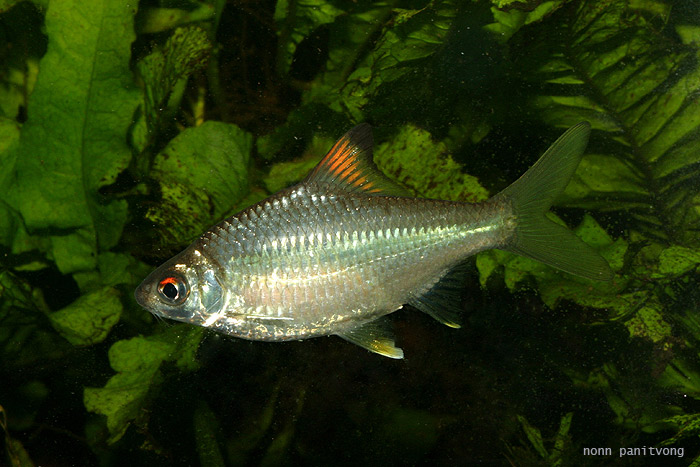
Mystacoleucus argenteus
Day, 1888
Max length140mm SL6in SLTank120 × 45cm48 × 18inTemp20–27°C68–81°FpH6.0–7.5All Mystacoleucus species possess a procumbent predorsal spine orientated towards the head, though it can be difficult to spot with the naked eye. This can become entangled in an aquarium net so care must be taken when handling the fish. The trait is shared by members of Tor, Spinibarbus and Paraspinibarbus although there exists no strong evidence to suggest that these genera form a monophyletic lineage and it is...
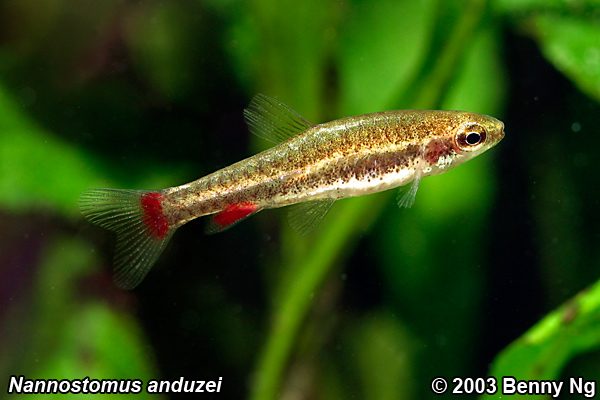
Nannostomus anduzei
Fernandez & Weitzman, 1987
Max length16mm SL0.6in SLTank45 × 30cm18 × 12inTemp22–28°C72–82°FpH5.0–7.0This is the smallest member of the genus and rarely traded in numbers, though it's a relatively common contaminant among shipments of wild fishes from Manaus. Unlike other Nannostomus spp. it does not exhibit a specific colour pattern of spots or bars at night-time, rather displaying an overall paleness. The family Lebiasinidae is included in the order Characiformes and sometimes split into the nominal subfamilies Lebiasininae a...
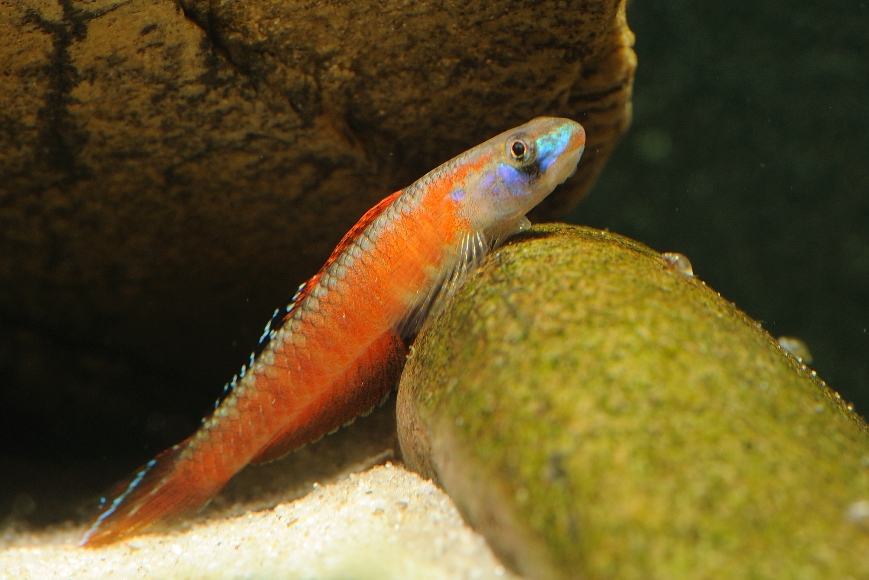
Stiphodon rutilaureus
Watson, 1996
Max length35mm SL1.4in SLTank60 × 30cm24 × 12inTemp22–28°C72–82°FpH6.5–7.5This species is not traded commercially at present and the specimen pictured above was brought back from northern Papua New Guinea by private collectors in 2008. It's diagnosable from other members in the genus by possession of 10 segmented rays in the second dorsal fin, males with filamentous spines in the firstandusually with 14 rays. Colour patterning in males is also distinctive (see 'Sexual Dimorphism'). The Gobiidae is the most speciose vert...
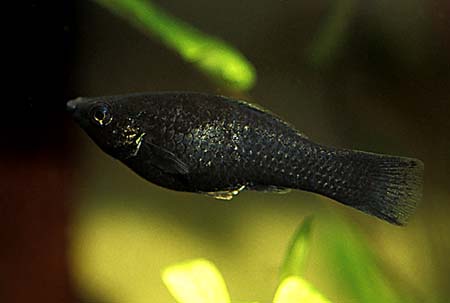
Poecilia sphenopsShort-finned Molly/Black Molly
Valenciennes, 1846
Max length80mm SL3.1in SLTank90 × 30cm36 × 12inTemp21–28°C70–82°FpH7.0–8.5A hugely popular aquarium fish. Many aquarium-bred colour morphs of this species are available, including the ubiquitous black molly. There are also Gold, Green, Lyretail, Silver and Dalmation varieties. Some of these are the results of P. sphenops being crossed with P. latipinnis. The 2 species will also interbreed readily in the aquarium and in order to avoid this we suggest keeping only one of them per tank. There also exists a (in our opinion) grotesque 'balloon' variety of this fi...
Pseudomystus sp. cf stenomusFalse Asian Bumblebee Catfish
authority not recorded
Max length150mm SL6in SLTanknot recordedTemp20–27°C68–81°FpH6.0–7.6This fish is usually imported as Pseudomystus stenomus but actually seems to be an undescribed species, as it's collected from the Malay Peninsula. P. stenomus is endemic to the island of Java and supposedly exhibits a higher degree of light-coloured patterning on the body. The genus Pseudomystus contains many similarly-patterned species, of which the most common in the hobby is the Asian bumblebee catfish, P. siamensis. This can easily be distinguished from P. sp. cf stenomus by its cha...
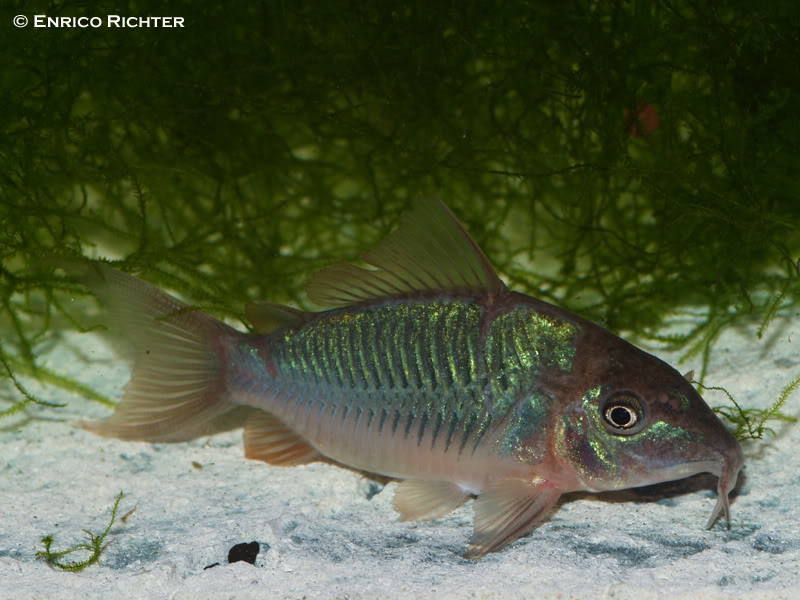
Corydoras splendensEmerald 'Brochis'
Castelnau, 1855
Matched on Callichthys splendens, a name it was formerly known by
Max length80mm SL3.1in SLTank120 × 45cm48 × 18inTemp20–28°C68–82°FpH5.0–8.0This species was formerly included in the genus Brochis alongside C. britskii and C. multiradiatus, and is sometimes referred to as 'common brochis'. Juveniles have a mottled colour pattern and are sometimes traded as 'hi-fin cory' due to their enlarged dorsal-fin. C. splendens can be told apart from other ex-Brochis species by possession of 10-12 dorsal-fin rays...
Barbodes binotatusSpotted Barb
Valenciennes, 1842
Matched on the common name Spotted Barb
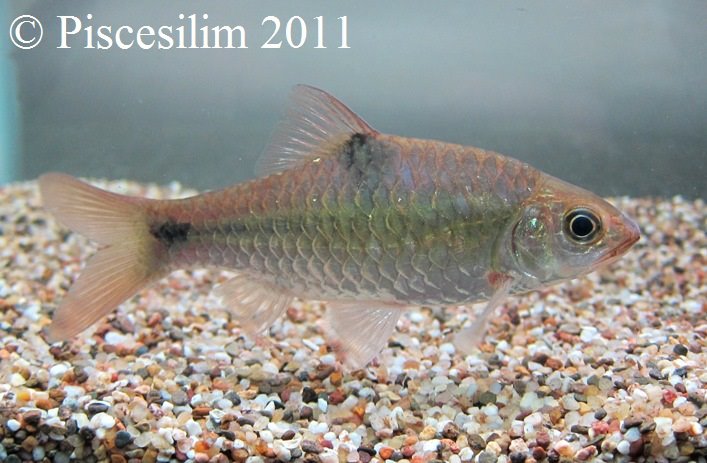
Max length200mm SL8in SLTank120 × 45cm48 × 18inTemp18–30°C64–86°FpH6.0–7.5This species is so ubiquitous across its natural range that it's often referred to simply as 'common barb'. Basic adult colour pattern consists of a small, dark spot at the base of the dorsal-fin origin and another on the caudal peduncle but overall appearance varies somewhat depending on origin, with the anterior dark spot enlarged ventrally forming a bar or posterior spot extending into the caudal-fin, for example. The spots may also appear darker or lighter in some individuals.
Crenuchus spilurusSailfin Characin
Günther, 1863
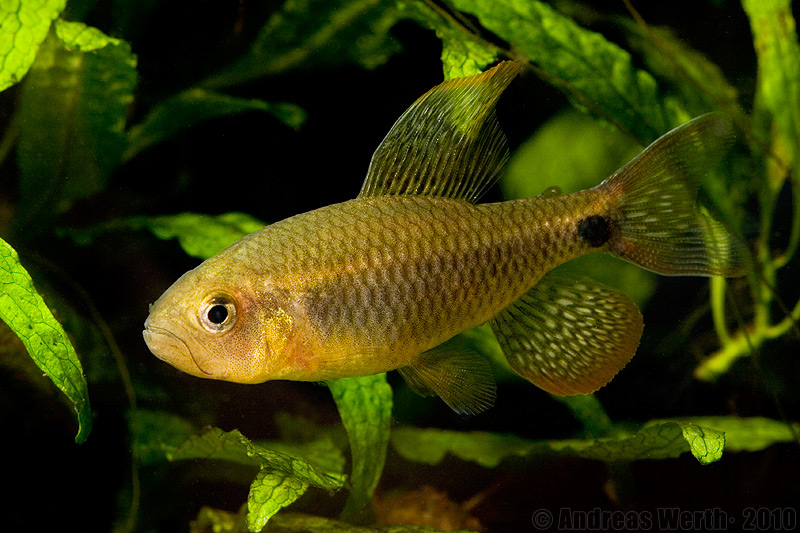
Max length70mm SL2.8in SLTank75 × 30cm30 × 12inTemp20–28°C68–82°FpH4.0–6.5This species is currently the only described member of its genus although colour pattern and morphology vary considerably across its range. You may see reference to this species being the only fish species to possess infra-red vision, but other species also possess this ability and we suspect that infra-red plays an important role in the reproductive cycle of many fishes.
Sphaerichthys selatanensisCrossband Chocolate Gourami
Vierke, 1979
Matched on Sphaerichthys osphronemoides selatanensis, a name it was formerly known by
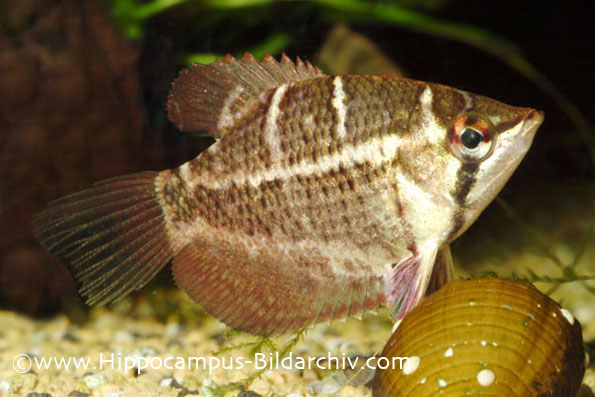
Max length45mm SL1.8in SLTank60 × 30cm24 × 12inTemp26–31°C79–88°FpH4.0–6.5This species is only occasionally seen in the hobby and sometimes sold as 'cherry chocolate gourami'. It was originally described as a subspecies of S. osphromenoides since the two are very similar-looking but has been considered a species in its own right since the late 1980s. The two differ in the number ofrays (7 in S. selatanensis vs. 9-10 in S. osphromenoides),rays (7 vs. 8),...
Agamyxis pectinifronsSpotted Talking Catfish
Cope, 1870
Matched on the common name Spotted Talking Catfish
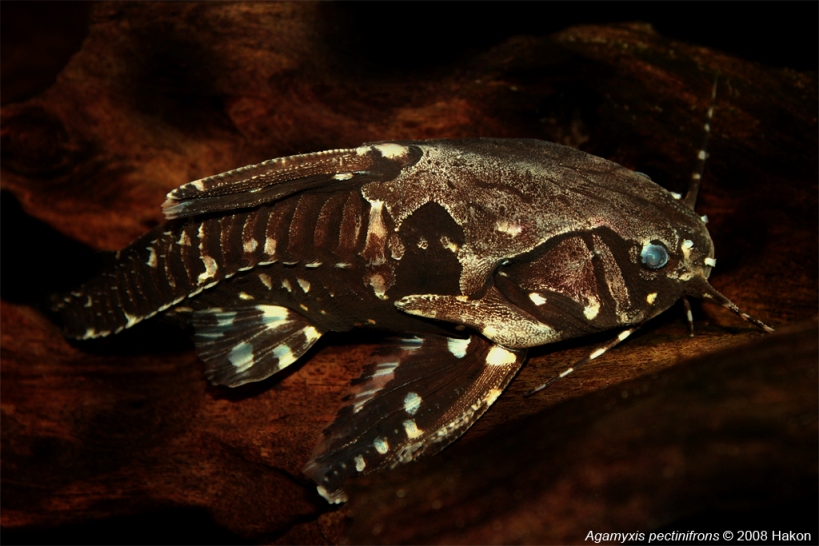
Max length150mm SL6in SLTank120 × 30cm48 × 12inTemp22–26°C72–79°FpH5.5–7.5This species, which may also be referred to by the alternative vernacular names 'spotted raphael', 'white-spotted' or 'white-barred' catfish, is very common in the trade and despite its adult size is recommended to beginners and experienced aquarists alike since it is hardy, attractive and relatively-long-lived. The light body markings are highly variable in terms of exact placement and may be either white or pale to darkish yellow in colour. It is very similar i...
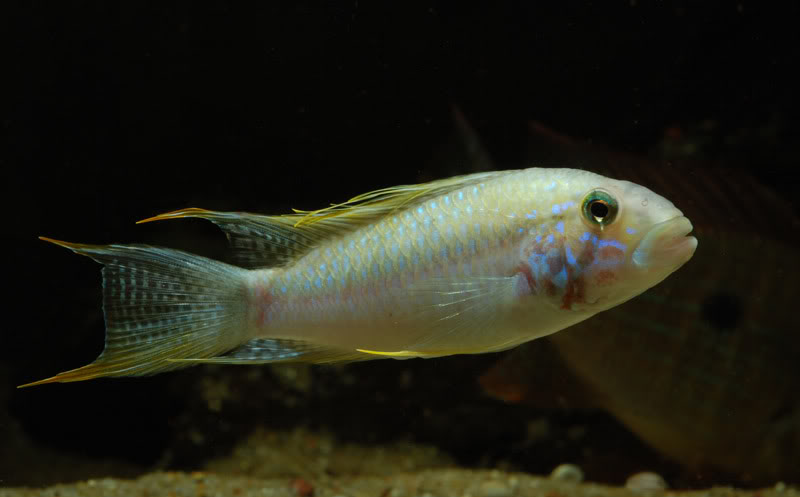
Apistogramma sp. 'Kelleri'
authority not recorded
Max length♂ 80 · ♀ 65mm SL♂ 3.1 · ♀ 2.6in SLTank60 × 30cm24 × 12inTemp22–29°C72–84°FpH4.0–6.0This undescribed species was first collected and subsequently appeared in the aquarium hobby during 2008. It was exported again in late 2009 and early 2010 under the names A. sp. 'Jutai' and A. sp. 'diamond face', and said to have been collected in the Río Jutai, Amazonas state, Brazil. The Jutai is a south bank tributary of the Solimões but lies several hundred kilometres downstream of Leticia so this information, from a purportedly trustworthy source, initiall...