Results for “specimen”
Type a name: scientific, common, or one a species used to go by. Or narrow the catalogue with the filters.
Filters
Horabagrus brachysomaSun Catfish
authority not recorded
Max length450mm SL18in SLTanknot recordedTemp23–25°C73–77°FpH6.0–7.5Also known as the bullseye, solar, eclipse or golden red-tailed catfish, this species is relatively common in the trade. Unfortunately, it's a victim of some rather misplaced marketing, as it's often sold as being suitable for the general community tank found in homes worldwide. The majority of specimens seen for sale measure only 2-3", which only serves to make the situation worse. Obviously, given its adult size it's totally unsuitable for this kind of setup, but makes a fi...
Hydrocynus goliathGiant Tigerfish
authority not recorded
Max length2100mm SL83in SLTanknot recordedTemp24–28°C75–82°FpH6.5–7.5A voracious piscivore this species is perfectly designed for its lifestyle. It is very streamlined and muscular and has one of the most amazing sets of teeth of any freshwater fish. These are dagger-shaped and interlock, meaning the fish can rip chunks out of its prey. The teeth are visible even when the animal's mouth is closed, which makes for a fearsome sight. It is one of the world's most infamous game fish and specimens weighing over 100 pounds have been recorded. We cannot st...
Hydrocynus vittatusAfrican Tiger Fish
authority not recorded
Max length1050mm SL41in SLTank300 × 90cm118 × 36inTemp24–28°C75–82°FpH6.5–8.0A voracious piscivore that hunts in large shoals in the wild, this species is perfectly designed for its lifestyle. It is very streamlined and muscular and has one of the most amazing sets of teeth of any freshwater fish. These are dagger-shaped and interlock, meaning the fish can rip chunks out of its prey. The teeth are visible even when the animal's mouth is closed, which makes for a fearsome sight. It is a popular game fish in its native range, with the largest specimen caught weighi...
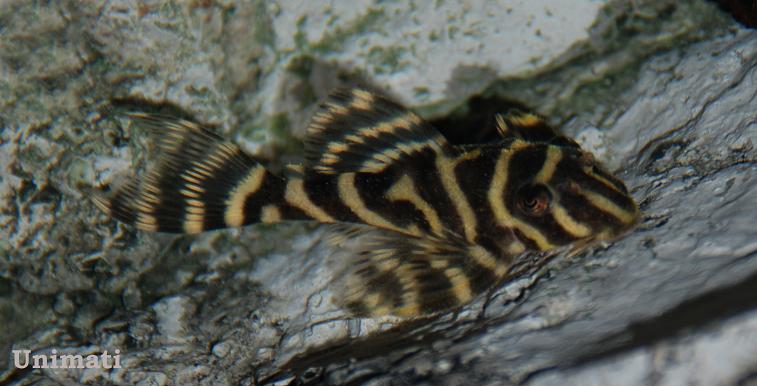
Hypancistrus sp.L333
authority not recorded
Max length150mm SL6in SLTank120 × 45cm48 × 18inTemp26–30°C79–86°FpH5.5–7.5This unidentified species possesses a highly variable colour pattern with the pale, randomly-arranged spots and blotches on the body ranging in colour from whitish to yellowish to rusty orange depending on the specimen. It's regularly confused with similar-looking relativ...
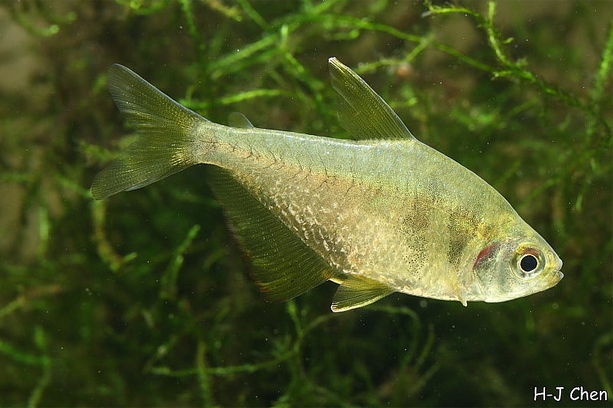
Hyphessobrycon bifasciatusYellow Tetra
Ellis, 1911
Max length45mm SL1.8in SLTanknot recordedTemp20–25°C68–77°FpH5.0–7.5Generally peaceful making it an ideal resident of the well-researched community aquarium. It is perhaps best-maintained alongside similarly-sized characids, gasteropelecids, lebiasinids, smaller callichthyid or loricariid catfishes and non-predatory, medium-sized cichlids. Try to buy a mixed-sex group of at least 8-10 specimens, incl...
Hyphessobrycon metaePurple Tetra
Eigenmann & Henn, 1914
Max length40mm SL1.6in SLTank80 × 30cm31 × 12inTemp20–28°C68–82°FpH4.0–7.0A beautiful species that's not often seen for sale in the hobby, and is usually a little more expensive than other tetras when available. This is mainly due to the wild caught nature of most specimens entering the trade. It can be a little delicate when initially imported, and is sensitive to deteriorating water conditions in general. As a result, it's not a good choice for the beginner, and should only be added to well-matured tanks. As with the closely related Hemigrammus, the ta...
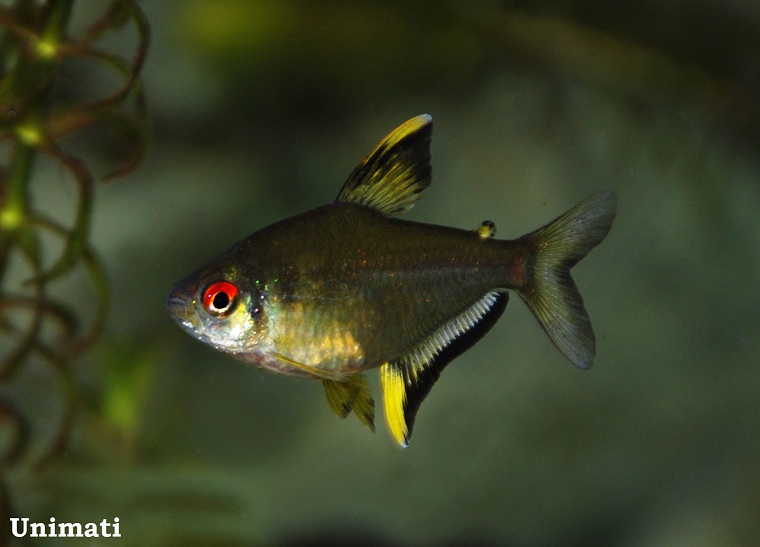
Hyphessobrycon pulchripinnisLemon Tetra
Ahl, 1937
Max length40mm SL1.6in SLTank80 × 30cm31 × 12inTemp20–28°C68–82°FpH5.0–7.5This species is a popular aquarium fish and is bred on a commercial basis in several countries, with a selectively-bred albino form also available. Wild specimens are rarely collected due to the low price of the farmed fish, but the origin of the commercial strain is questionable. The species was considered endemic to the rio Tapajós basin, but in the early 1990s fish appearing identical to the aquarium form were photographed in the...
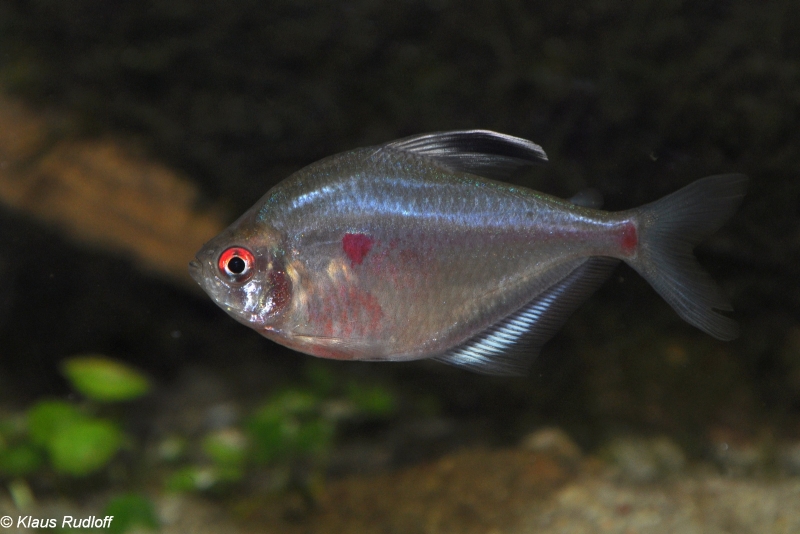
Hyphessobrycon socolofiLesser Bleeding Heart Tetra
Weitzman, 1977
Max length56mm SL2.2in SLTank90 × 30cm36 × 12inTemp22–28°C72–82°FpH4.0–7.5This species is an opportunistic omnivore by nature. The stomach contents of wild specimens from the rio Padauari were composed of fruit remains and aquatic insects with the former constituting 99% and latter 1% of all items consumed. Stomachs of individuals from igarapé Água Boa cont...
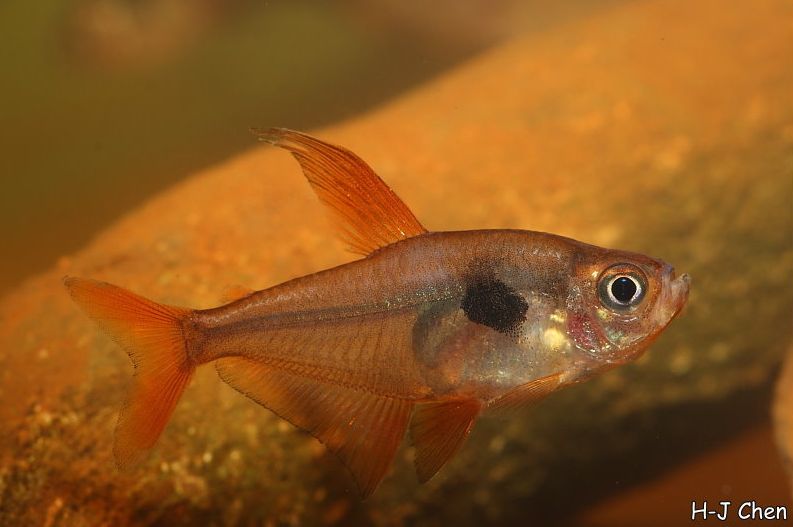
Hyphessobrycon sweglesiRed Phantom Tetra
Géry, 1961
Max length35mm SL1.4in SLTank80 × 30cm31 × 12inTemp20–28°C68–82°FpH4.5–7.5At least two colour forms have been traded, one of which is more intensely-coloured and has been referred to as H. sweglesi 'red' or 'rubra'. The bright red pigmentation is retained in long-term captive specimens, suggesting that it is not considered to be an artefact of diet, but we suspect it might reflect conditions at the collection locality with the reddest fish putatively inhabiting blackwater and plainer forms clearwater environments. Zarske (2014) found the two forms to be identical in terms of morphology an...
Julidochromis ornatusGolden Julie
authority not recorded
Max length80mm SL3.1in SLTanknot recordedTemp23–27°C73–81°FpH7.5–9.0Julidochromis are commonly known as "Julies" in the hobby. This is one of the most common Julie species encountered in aquaria and may also be sold as the Yellow or Ornate Julie. The majority of specimens available are tank bred and do not exhibit as bright colouration as wild fish. As with other Julies, large water changes should be avoided as this can cause mated pairs to turn on one another. Several geographical morphs of this species are available, as is an aquarium sport albino...
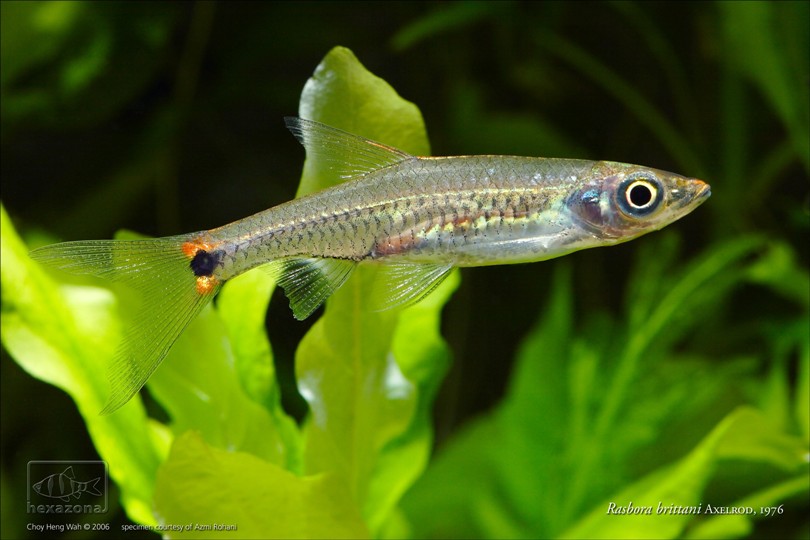
Kottelatia brittani
Axelrod, 1976
Max length60mm SL2.4in SLTank75 × 30cm30 × 12inTemp20–26°C68–79°FpH6.0–7.5This species was described from 'Johore River, Segamat, Malaysia', which corresponds to Segamat District within the the Johor River watershed, Johor state, southern Peninsular Malaysia, but the type specimens were obtained via a Singapore wholesaler so it's possible that a mistake was made as there exist no other records of the species in Peninsular Malaysia. It's also been recorded from the Kapuas drainage...
Labidochromis caeruleusCaeruleus
authority not recorded
Max length100mm SL3.9in SLTank90 × 45cm36 × 18inTemp24–28°C75–82°FpH7.7–8.6This species is one of the most popular Rift Lake cichlids in the hobby, due to its striking colouration and somewhat peaceful (for a mbuna) nature. It exists in many different colour forms in nature, and the ubiquitous "electric yellow" morph, so popular in the hobby, is actually one of the rarer forms in nature, with the blue and white variety being more widespread. Wild fish are correspondingly rare in the hobby, with the vast majority of specimens offered for sale being tank-bred. ...
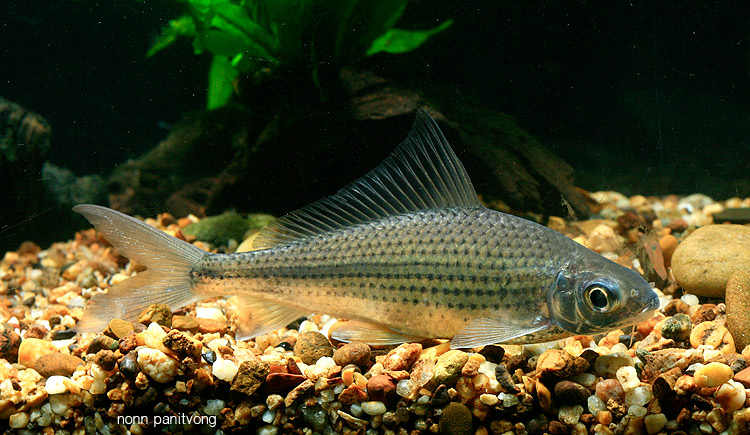
Labiobarbus leptocheilus
Valenciennes, 1842
Max length260mm SL10in SLTank240 × 60cm96 × 24inTemp20–26°C68–79°FpH6.0–8.0Different populations vary in appearance somewhat (see image of Salween specimen for example), and L. leptocheilus may turn out to represent a group of closely-related species rather than a single taxon. The population from the Cambodian Mekong has been considered to represent a distinct species, Labiobarbus lineatus, although that name is currently a synonym of L. leptocheilus following Kottelat (2013). It is widely used in the ornamental trade, however.
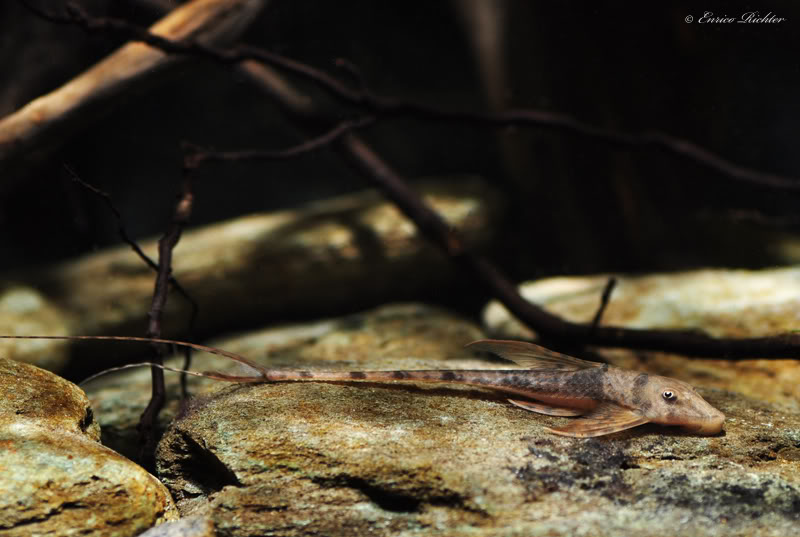
Lamontichthys filamentosusSturgeon Catfish
La Monte, 1935
Max length167mm SL7in SLTank120 × 45cm48 × 18inTemp22–30°C72–86°FpH5.5–7.5This species is relatively common in the aquarium hobby but is not easy to maintain and recommended only for experienced aquarists. It can be told apart from all congeners by specimens larger than 60 mm SL possessing an extended pectoral-fin spine forming an extremely long filament that may be more than four times the length of the first branched pectoral-fin ray (vs. not possessing such a filament in other species of Lamontichthys).
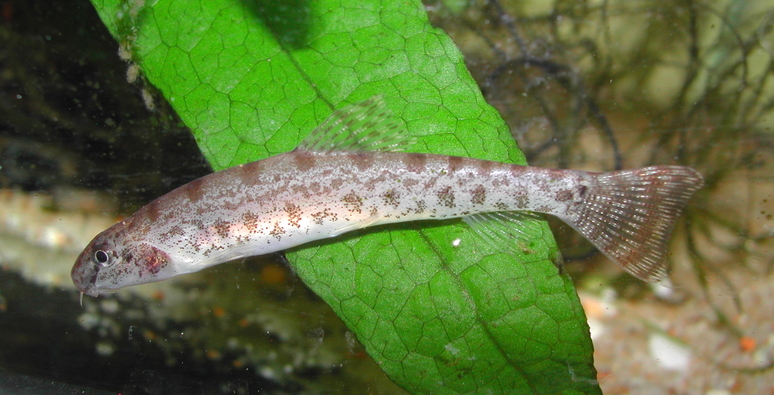
Lepidocephalichthys goalparensis
Pillai & Yazdani, 1976
Max length45mm SL1.8in SLTank45 × 30cm18 × 12inTemp22.8–26.1°C73–79°FpH6.0–7.5This species is almost unheard of in the hobby with the specimen pictured above the only one we're aware of. It was imported into the United Kingdom in late 2011 as bycatch among a shipment of mastacembelid eels from northern India, and the identification was subsequently confirmed by Justin Havird, senior author of the most recent revision of the genus.
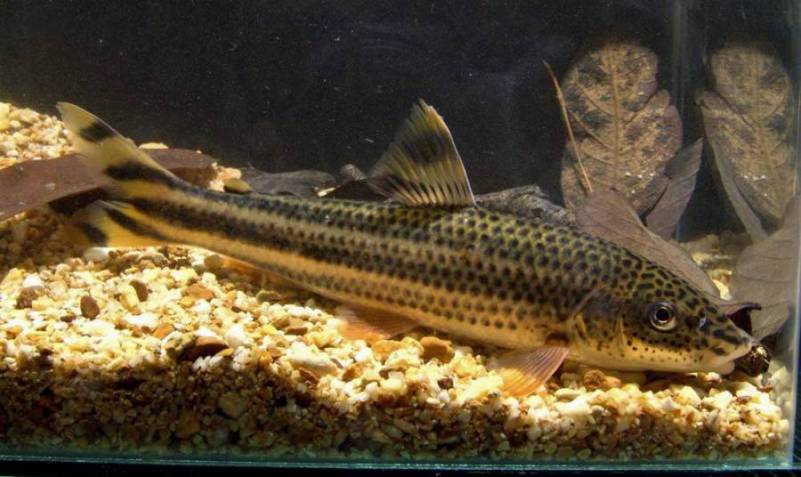
Leporellus vittatus
Valenciennes, 1850
Max length300mm SL12in SLTank210 × 60cm84 × 24inTemp18–26°C64–79°FpH5.5–7.5Type locality is given simply as 'Amazon River, Brazil' and according to current thinking this species has a huge natural range encompassing the Amazon River system in Brazil and Peru plus the Paraná-Paraguay drainage in southern Brazil and Paraguay and rio São Francisco basin in southern Brazil. Specimens in our images were collected fro...
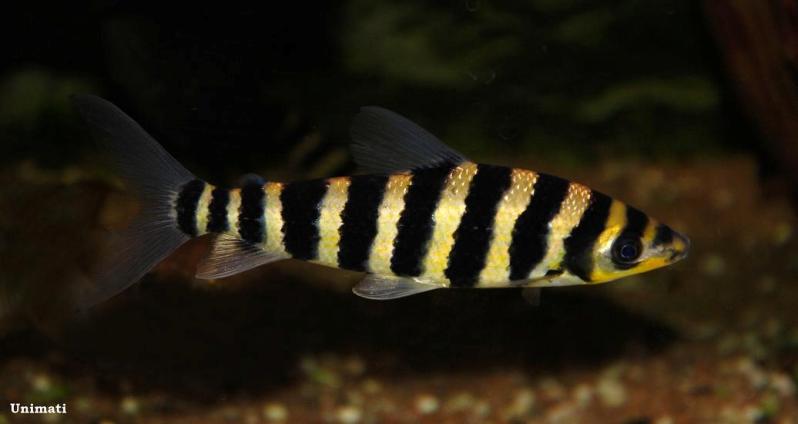
Leporinus fasciatusBanded Leporinus
Bloch, 1794
Max length270mm SL11in SLTank210 × 60cm84 × 24inTemp20–28°C68–82°FpH5.0–7.5This species is also referred to as 'black-anded leporinus', 'striped leporinus' and 'eight-banded leporinus'. Young specimens are often traded for aquaria without warning as to their potential size and requirements, and as a result it's fairly ubiquitous in public aquarium displays.
Loricaria simillimaMarbled Whiptail
authority not recorded
Max length180mm SL7in SLTanknot recordedTemp24–27°C75–81°FpH5.6–7.8The pictures here show the fish that is most commonly referred to as L. simillima, but there is a great deal of uncertainty surrounding its true identity. As suggested above, it seems unlikely that its natural distribution is so wide, and we are probably dealing with several species or subspecies. This argument is strengthened by the fact that several differently coloured fish are imported as this species, with darker specimens being collected from acidic blackwaters and lighter fish hailing fro...
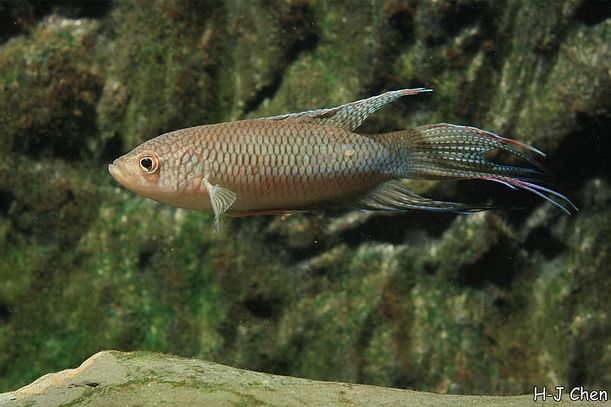
Macropodus erythropterus
Freyhof & Herder, 2002
Max length80mm SL3.1in SLTank80 × 30cm31 × 12inTemp20–30°C68–86°FpH6.0–8.0This species is frequently mistaken for the similar-looking congener M. spechti Schreitmüller 1936, which is easily-identified by the absence of reddish pigmentation in the dorsal, anal, and caudal fins. There has been some debate as to whether these two represent the same taxon, however, with Winstanley and Clements (2008) proposing that M. erythropterus be considered a synonym of M. spechti because they were unable to separate the two species by morphological characters, and specimens with red pigmentation on the unpaired fins were coll...
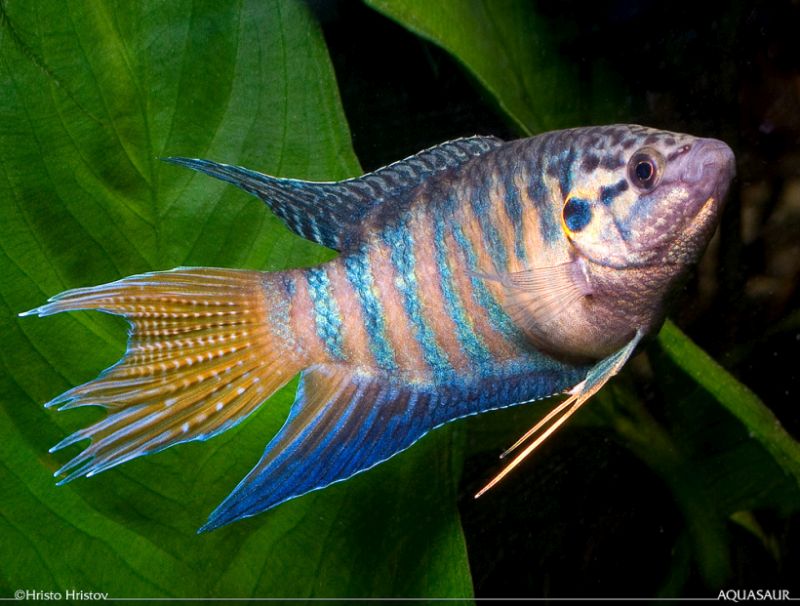
Macropodus opercularisParadise Fish
Linnaeus, 1758
Max length80mm SL3.1in SLTank80 × 30cm31 × 12inTemp10–22°C50–72°FpH6.0–8.0M. opercularis is a classic aquarium fish, having been introduced to the hobby by a French soldier named Gerault in 1869. Of the initial 100 specimens shipped, 22 survived and were successfully bred later that same year by another Frenchman, the Parisian Pierre Carbonnier. This gives the species the distinction of being one of the very first ornamental fish imported to Europe. It is also known as 'Chinese fighting fish', 'paradise gourami', and 'blue paradise fish'.