Results for “dorsal-fin”
Type a name: scientific, common, or one a species used to go by. Or narrow the catalogue with the filters.
Filters
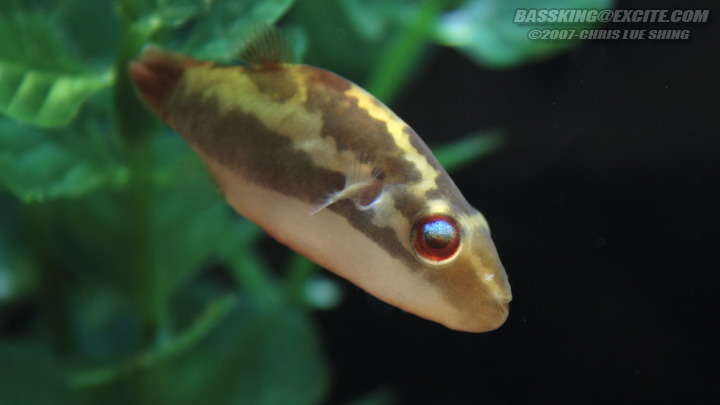
Carinotetraodon irrubescoRed-tailed Redeye Puffer
Tan, 1999
Max length45mm SL1.8in SLTank60 × 30cm24 × 12inTemp20–28°C68–82°FpH6.0–7.5This species is uncommon in the aquarium hobby. It is similar to the congeners C. borneensis and C. lorteti but can be told apart by males possessing a red (vs. bluish to greyish with black and white distal bands in C. lorteti) caudal-fin and lacking (vs. possessing) a black blotch at the base of the dorsal-fin.
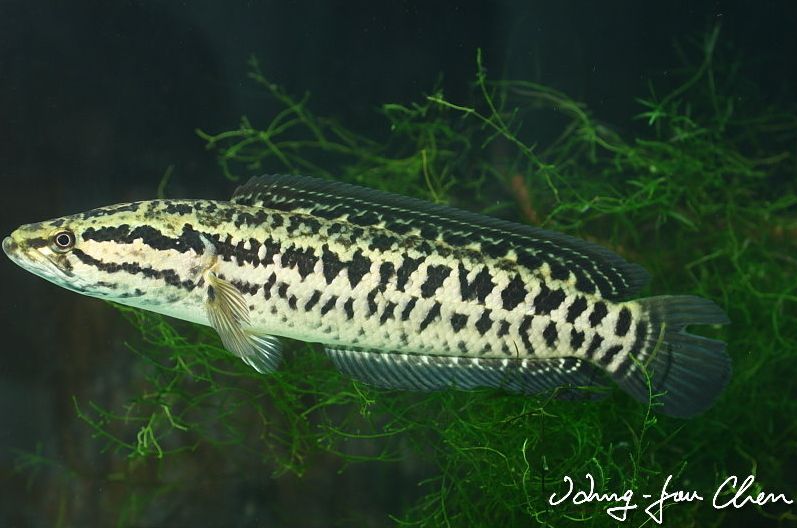
Channa maculataBlotched Snakehead
Lacepède, 1801
Max length300mm SL12in SLTanknot recordedTempnot recordedpHnot recordedThis species is frequently confused with C. argus but can be distinguished by the following characters: dorsal-fin rays 38-45 (vs. 47-50 in C. argus); anal fin rays 26-29 (vs. 31-36); lateral line scales 50-56 (vs. 60-66); 2-3 rounded blotches on caudal peduncle (vs. no blotches on caudal peduncle). It is widely-distributed in Pacific coastal drainages of southeastern China (e.g. the Yangtze, Minjiang, Hangjiang River, and Pearl (Nanjiu...
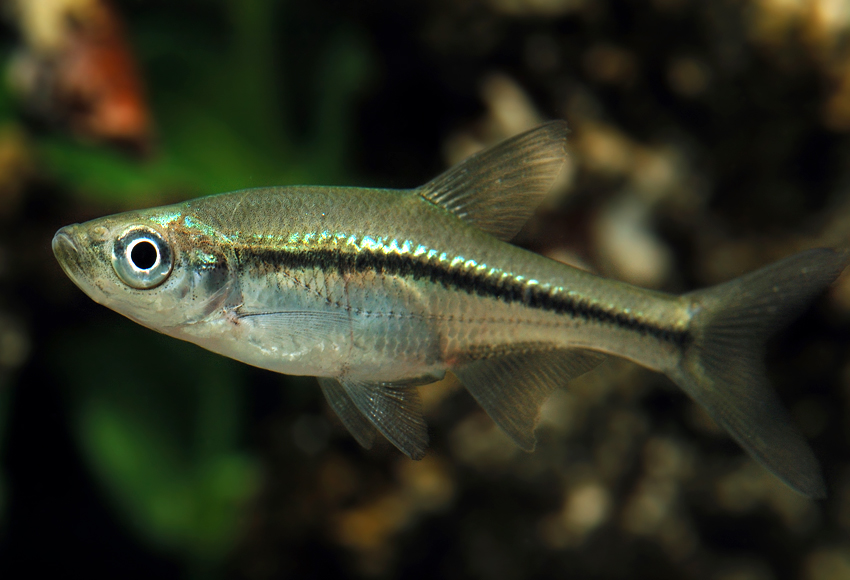
Metzia formosae
Oshima, 1920
Max length75mm SL3.0in SLTanknot recordedTempnot recordedpHnot recordedAlthough it is included in the genus Metzia this grouping remains somewhat unresolved in terms of taxonomy and it may contain more than a single genetic lineage. For example, members share a number of characters with the genera Ischikauia Jordan and Snyder 1900, Hemiculterella Warpachowski 1887, and several species of Anabarilius Cockerell 1923, including a bipartite gas bladder, a non-spinous dorsal-fin ray, and a sharp ventral keel between the pelvic-fin insertion and anus.
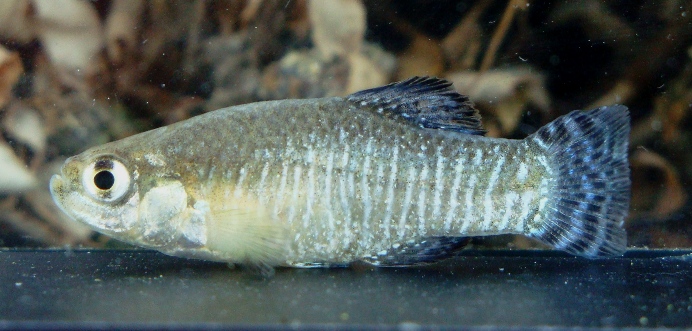
Apricaphanius baeticusBaetican Toothcarp
Doadrio, Carmona & Fernández-Delgado, 2002
Max length50mm SL2.0in SLTank120 × 30cm48 × 12inTemp2–30°C36–86°FpH7.0–9.0Prior to its description this species was considered a geographic variant of A. iberus but the 2002 paper revealed the pair to be genetically quite distinct and also highlighted some morphological differences. It is distinguished from A. iberus by possessing 8-9 (usually 8 ) branched dorsal-fin rays (vs. 8-9, sometimes 10), 9-11 branched anal-fin rays (vs. 8-9), a deeper, more elongate body shape, noticeably shorter snout, relatively thick (vs. thin) vertical bars in males and a flank patterning consisting of a few la...
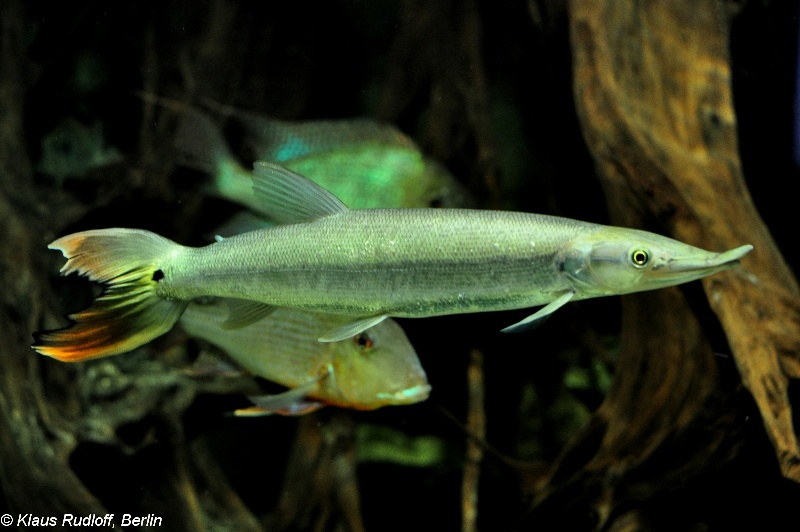
Boulengerella cuvieri
Spix & Agassiz, 1829
Max length800mm SL31in SLTanknot recordedTemp22–28°C72–82°FpH5.0–7.5It's known by various vernacular names including 'Pirá-pacu', 'Pira-pucu' or 'Diente de cao' (central Amazon), 'Bicuda' or 'Uena' (rio Tocantins), 'Bicuda' (rio Tapajós), 'Aguejeta' or 'Picua' (Venezuela), and 'Moruwi' or 'Pirapoko' (Guyana). The entire dorsal-fin base is located anteriorly to a vertical through the anal-fin origin and this character distinguishes it from all other ctenolucids except B. lucius and B. xyrekes.
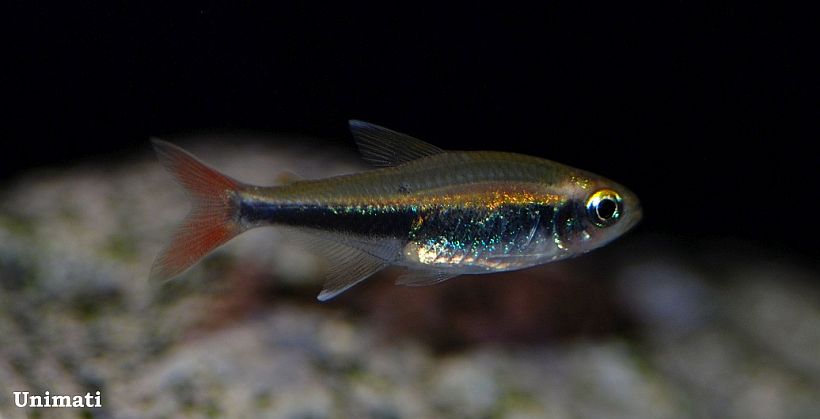
Hyphessobrycon loretoensisLoreto Tetra
Ladiges, 1938
Max length25mm SL1.0in SLTank60 × 30cm24 × 12inTemp22–28°C72–82°FpH5.0–7.0The most recent diagnosis appears to be that of Géry (1977), in which it was separated from other members of the group by the following combination of characters: dorsal-fin insertion at or slightly anterior to mid-body; caudal-fin brick red to orange-red; body depth fits less than 3.6 times in SL; head length fits 3.5-4.0 times in SL; caudal peduncle length u...
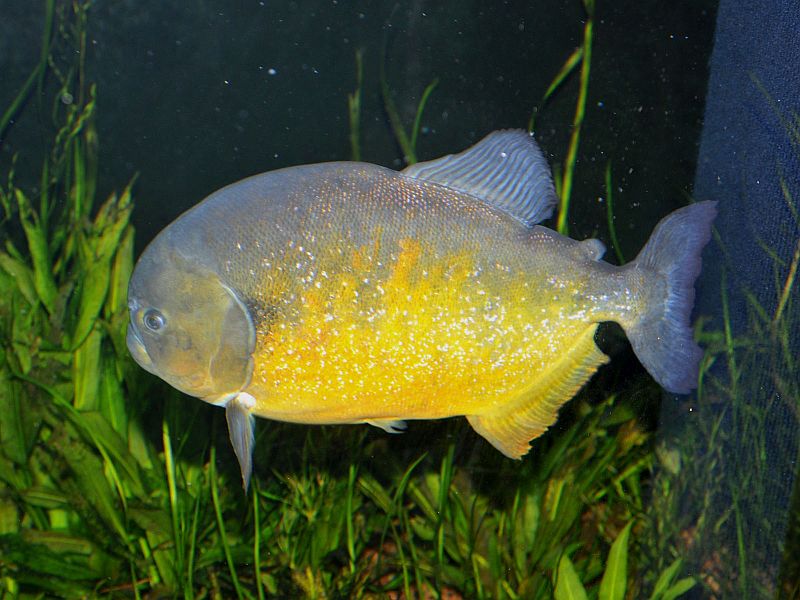
Pygocentrus pirayaPiraya
Cuvier, 1819
Max length350mm SL14in SLTanknot recordedTemp20–28°C68–82°FpH6.0–8.0Following Fink (1993), P. piraya can be distinguished from congeners by the following combination of characters: adipose fin with rays in larger specimens (vs. always without rays in other Pygocentrus species); branched dorsal-fin rays 15-18, usually 16 (vs. 14-18, usually 15); usually 7 neural spines anterior to first pterygiophore (vs. usually 6); vertebrae 36-39, usually 38 (vs. 35-38, usually 36). It can also be identified by colour pattern since it possesses distinctive bright yellow-orange pigmentation on the lower jaw, opercle and lateral body in life.
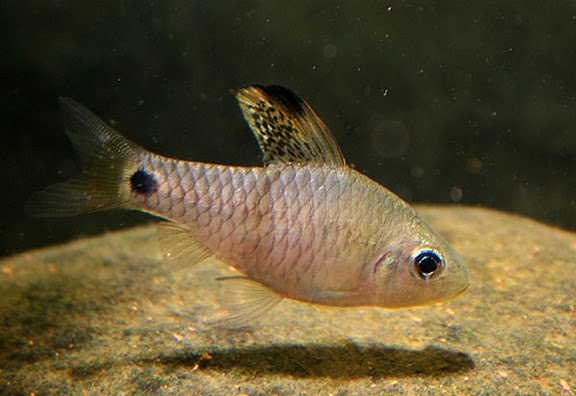
Oreichthys crenuchoidesDrape Fin Barb
Schäfer, 2009
Max length45mm SL1.8in SLTank60 × 30cm24 × 12inTemp23–28°C73–82°FpH6.0–7.5This fish is sometimes traded as Oreichthys cosuatis, O. sp. 'high fin', O. 'umangii' (a nomen nudum that has only ever been applied to an image of a fish in the book 'Ornamental Aquarium Fish of India'; K. L.Tekriwal and A. A. Rao 1999), Puntius 'arunavii' or 'neon highfin barb'. It can be distinguished from congeners by the following combination of characters: absence of a dark marking in the anal-fin (vs. presence in other species); ½7½ scales scales between pelvic-fin origin and dorsal midline (vs. ½6½ in O. cosuatis and...
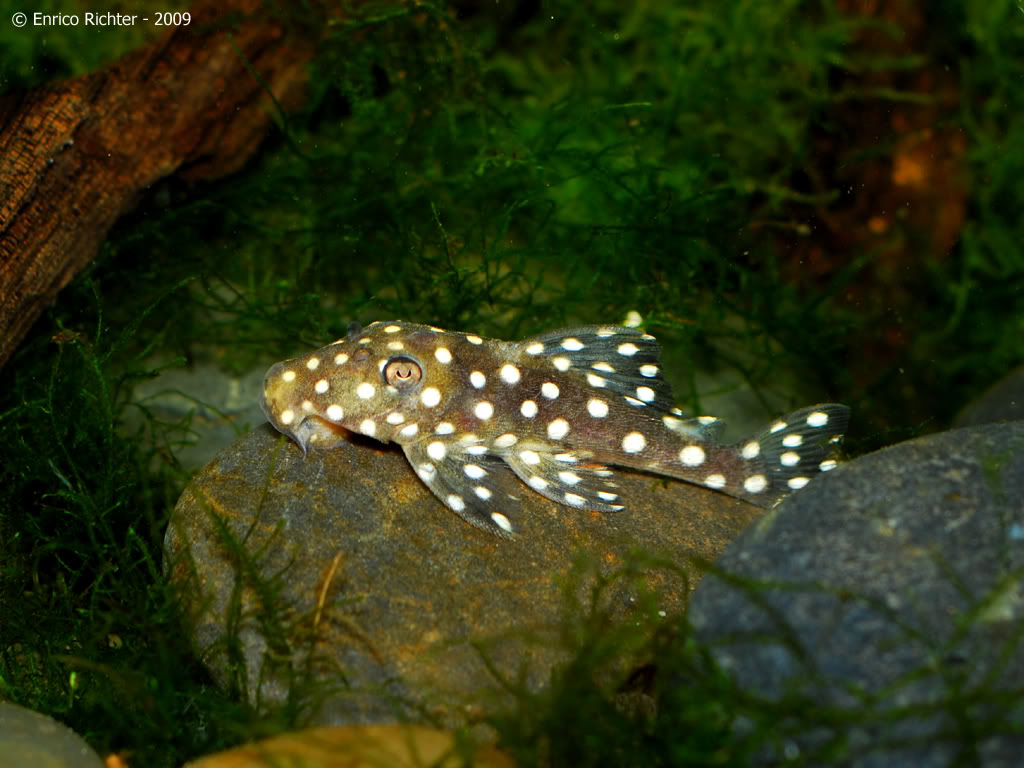
Baryancistrus sp. L142Big White Spot Pleco
authority not recorded
Max length250mm SL10in SLTank120 × 45cm48 × 18inTemp27–32°C81–90°FpH6.0–7.5The genus Baryancistrus can be distinguished from all other loricariids by possession of an enlarged membrane located posteriorly to the last branched dorsal-fin ray. This membrane may or may not reach the supporting structure of the adipose fin and in this way members can be told apart from the genera Oligancistrus, Parancistrus, and Spectracanthicus, in which the dorsal and adipose fins are completely connected, and Hemiancistrus...
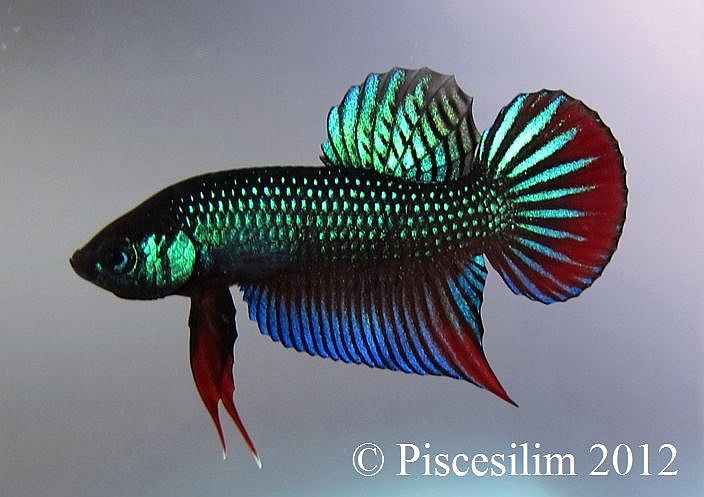
Betta imbellisCrescent Betta
Ladiges, 1975
Max length60mm SL2.4in SLTank45 × 30cm18 × 12inTemp20–28°C68–82°FpH5.0–7.5B. imbellis is included in the Betta splendens complex of closely-related species within the genus, of which members share the following set of characters: head length short 22-31 % SL; often a brightly-coloured body; iris of the eye with iridescent green or blue patches; body elongate or slender; opercles parallel when head viewed dorsally; caudal-fin rays red or brown and contrasting with the iridescent interradial membranes; unpaired fins without an irides...
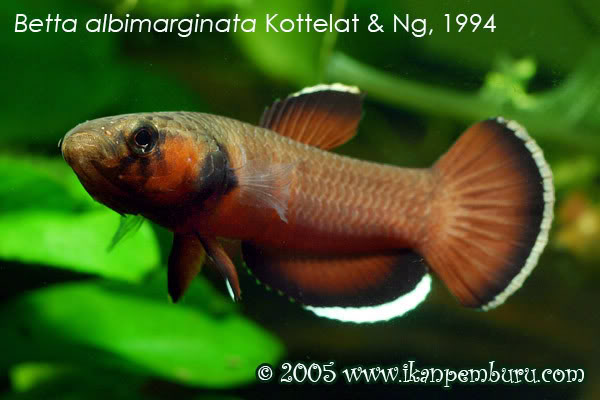
Betta albimarginata
Kottelat & Ng, 1994
Max length30mm SL1.2in SLTank45 × 30cm18 × 12inTemp23–28°C73–82°FpH4.0–6.5Additonally, fin patterning in B. albimarginata, except the pectoral fins, consists of a broad white distal band, broad dark submarginal band with sharp outer margin and less sharp inner margin, and a plain red inner portion, while in B. channoides the dorsal fin is almost entirely red with only a thin white distal band and the dark submarginal band in the caudal fin does not extend into the uppermost portion of the fin. Base body colouration tends towards a brick-red shade in displaying male B. albimarginata, scarlet in B. channoides (pers. obv.).
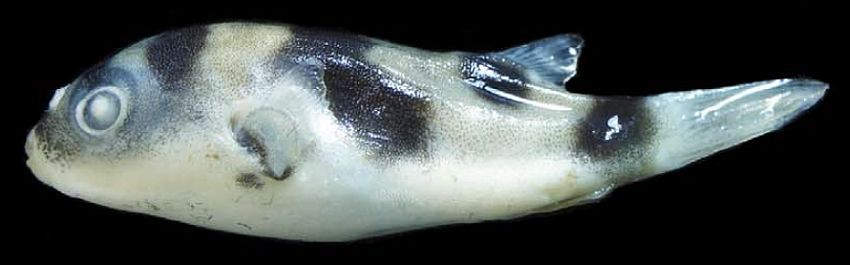
Colomesus tocantinensis
Amaral, Brito, Silva & Carvalho, 2013
Max length35mm SL1.4in SLTanknot recordedTempnot recordedpHnot recordedIt is distinguished from congeners by the following combination of characters: anal-fin with 6-7 basal pterygiophores and 9 rays (vs. 10-11 rays in C. asellus and C. psittacus; dorsal-fin with 10 bas...
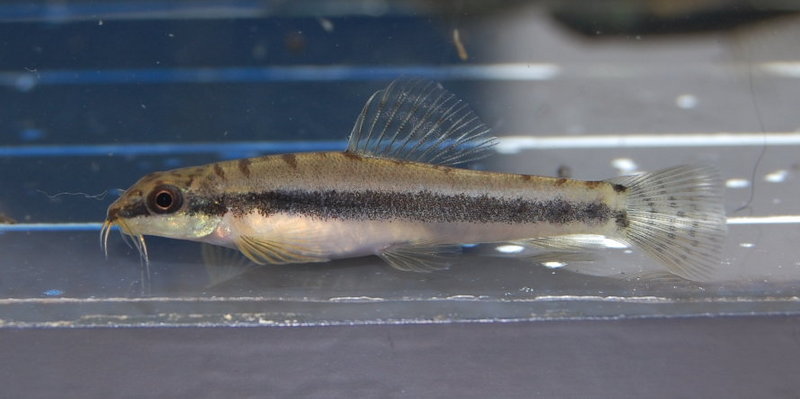
Paracanthocobitis zonalternans
Blyth, 1860
Max length78mm SL3.1in SLTank60 × 30cm24 × 12inTemp20–25°C68–77°FpH6.0–7.5According to Kottelat (1990) the chief distinguishing characters for the genus are: possession of 9-18½ branched dorsal-fin rays; colour pattern without black basal caudal bar, but with an ocellus at upper base of caudal-fin; upper lip with or without several rows of papillae; lower lip with a broad median interruption and a widened, papillated pad on each side.
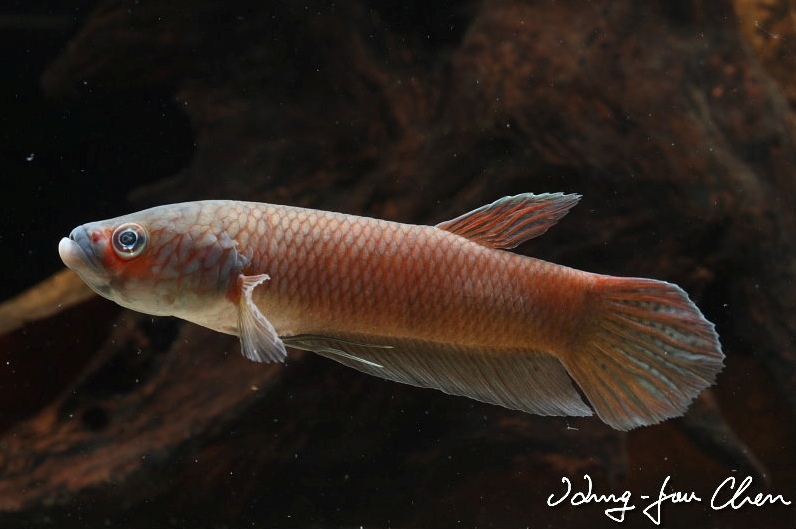
Betta ideii
Tan & Ng, 2006
Max length110mm SL4in SLTank90 × 30cm36 × 12inTemp20–26°C68–79°FpH5.5–7.5Prior to official description this species was traded as B. sp. 'Laut'. It's included in the Betta unimaculata complex of closely-related species within the genus, , of which members share the following set of characters: body long and slender with depth at dorsal fin origin 18-25 % SL; head large and blunt with width 19-24 % SL; long maxilla and lower lip with distance from tip of lower jaw to posterior end of maxilla 27-54 % HL; caudal-fin rounded in sha...
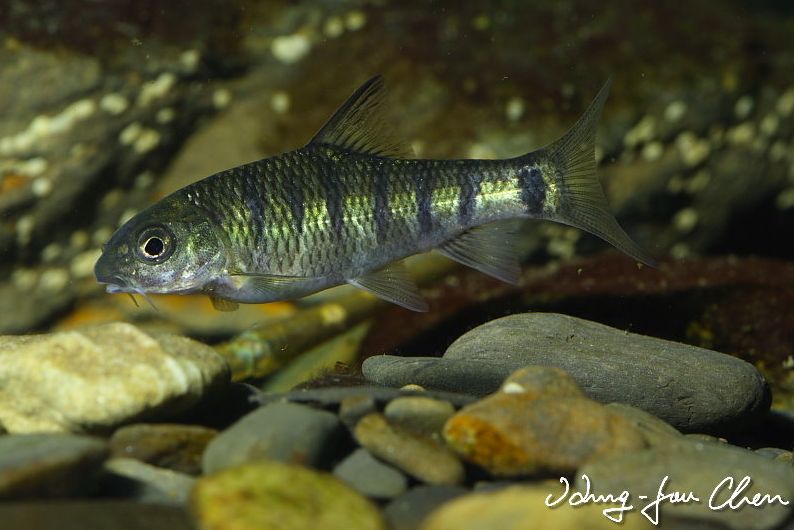
Acrossocheilus paradoxusTaiwan Banded Barb
Günther, 1868
Max length200mm SL8in SLTank180 × 45cm72 × 18inTemp15–25°C59–77°FpH6.0–8.0The genus Acrossocheilus is restricted to southern China, northern Vietnam and northern Laos. It can be distinguished from related genera by the following combination of characters: rostral fold present; lips fleshy and continuous around corners of mouth; lower lip with a median interruption; mouth inferior; horny sheath on lower jaw; two pairs of barbels; last simple ray of dorsal fin osseous with a serrated or smooth posterior margin.
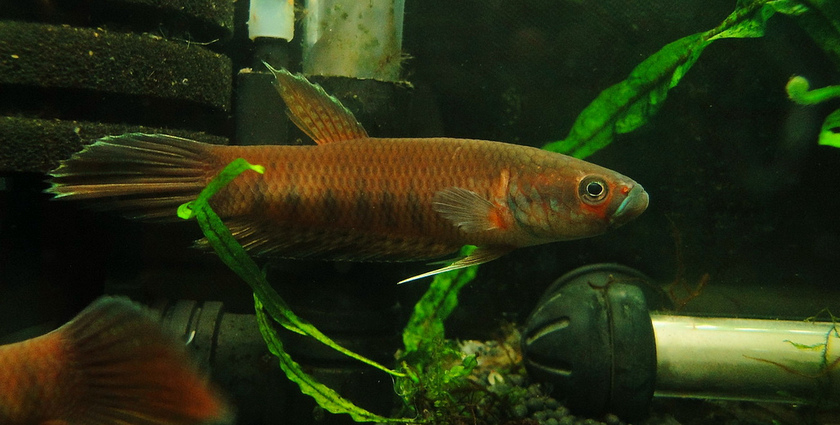
Betta patoti
Weber & de Beaufort, 1922
Max length100mm SL3.9in SLTank80 × 30cm31 × 12inTemp21–27°C70–81°FpH4.0–7.0This species is included in the Betta unimaculata complex of closely-related species within the genus, of which members share the following set of characters: body long and slender with depth at dorsal fin origin 18-25 % SL; head large and blunt with width 19-24 % SL; long maxilla and lower lip with distance from tip of lower jaw to poste...
Cynotilapia afraDogtooth Cichlid
authority not recorded
Max length100mm SL3.9in SLTank100 × 30cm39 × 12inTemp25–29°C77–84°FpH7.5–8.5C. afra is easily confused with some species of Pseudotropheus, but can be distinguished by its smaller adult size and unicuspid (as opposed to bicuspid) teeth. Also in this species the black bars on the flanks continue into the dorsal fin, unlike in Pseudotropheus zebra, for example. It exists in many different colour forms in nature. These forms should not be mixed in aquaria as they may spawn with each other, producing unwanted hybrid fry. Despite this ability to interbreed, it's probabl...
Lamprologus kungweensisOcellated Shell-dweller
authority not recorded
Max length80mm SL3.1in SLTank75 × 30cm30 × 12inTemp23–27°C73–81°FpH7.5–9.0L. kungweensis can be distinguished from similar species such as L. hecqui by the gold colour on the top of the eye. It also has a distinctive black spot towards the back of the dorsal fin. It is not often seen in the hobby....
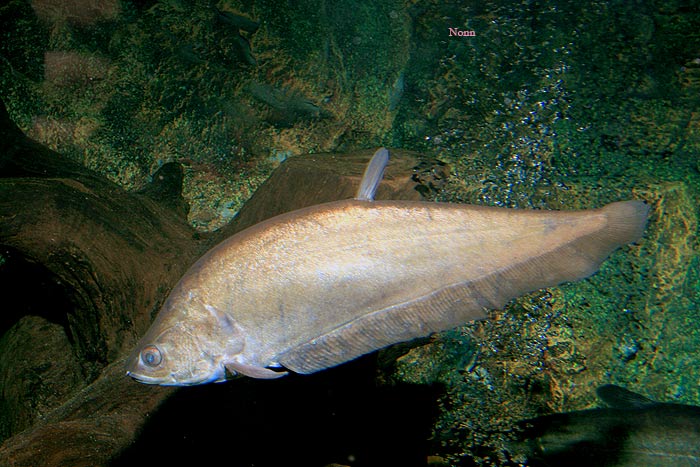
Notopterus notopterusBronze Featherback
Pallas, 1769
Max length600mm SL24in SLTanknot recordedTemp20–28°C68–82°FpH6.0–8.0This species is also referred to as 'Asian knifefish' or 'ghost knifefish' in the aquarium trade in the aquarium trade but arguably has no place in the ornamental hobby given its adult size and specialised requirements. It is sometimes confused with the African species Xenomystus nigri but is easily told apart by its larger adult size and presence (vs. absence) of a dorsal fin.
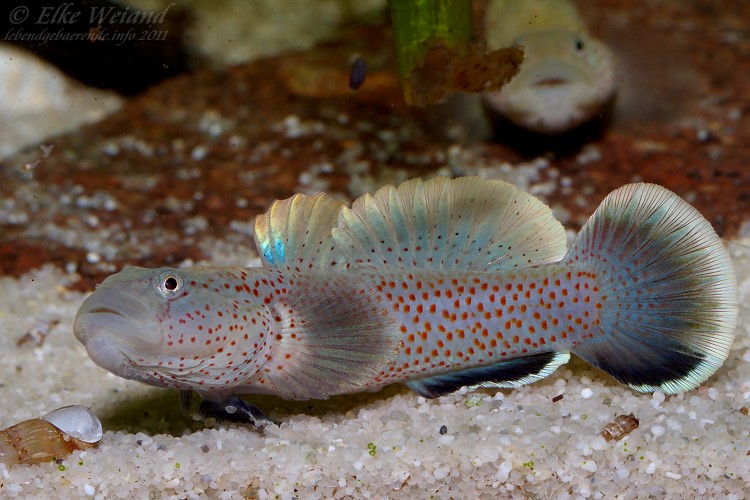
Rhinogobius rubromaculatusRed-spotted Goby
Lee & Chang, 1996
Max length55mm SL2.2in SLTank60 × 30cm24 × 12inTemp18–24°C64–75°FpH6.0–8.0This species occurs in a couple of colour forms with fish from northern and central Taiwan possessing a greyish base body colour and those from the Linbian river, southern Taiwan having a dark marking in the anterior portion of the first dorsal fin and larger, more intense red spots on the body. The latter form is also smaller in size, lays smaller eggs, does not exhibit extreme sexual dimorphism and has been refe...